
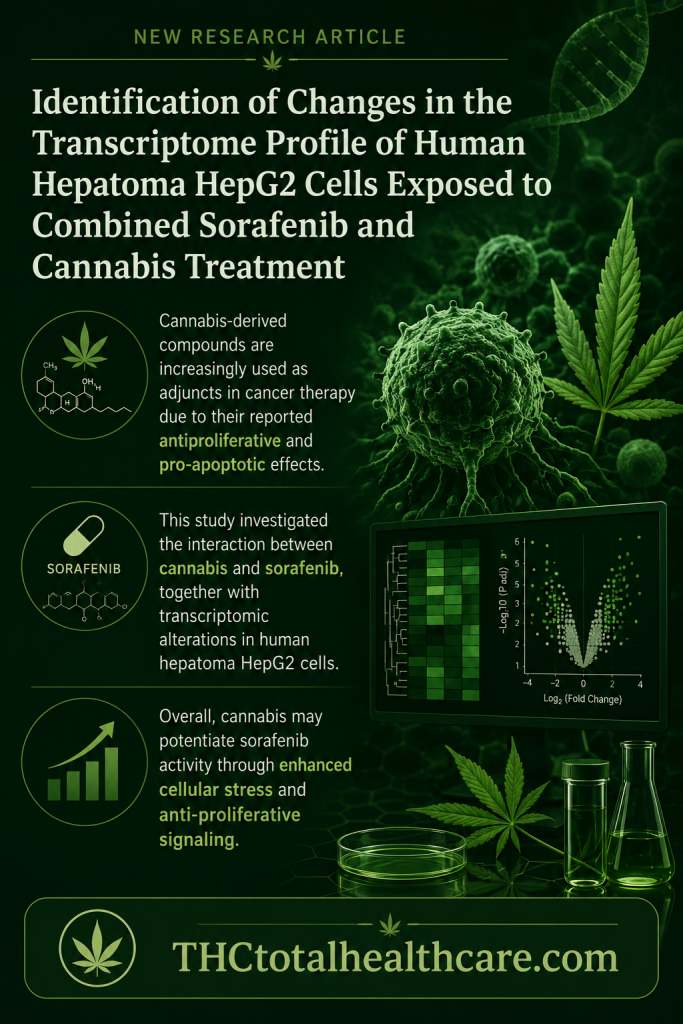
Combining cannabis-derived compounds with established cancer therapies may influence tumor biology in ways that neither treatment produces alone. In this study, researchers examined human HepG2 liver cancer cells treated with sorafenib together with cannabis and identified significant changes in gene-expression patterns linked to cell survival, metabolism, stress responses, and cancer progression. The combined treatment altered multiple molecular pathways relevant to hepatocellular carcinoma, providing evidence that cannabis may modify the cellular response to sorafenib. The findings support further investigation of cannabinoid-based combination strategies in liver cancer treatment.
“Cannabis-derived compounds are increasingly used as adjuncts in cancer therapy due to their reported antiproliferative and pro-apoptotic effects. However, potential drug-herb interactions with standard anticancer agents-namely sorafenib-remain unclear.
This study investigated the interaction between cannabis and sorafenib, together with transcriptomic alterations in human hepatoma HepG2 cells.
Cell viability was assessed using the MTT assay, and drug interactions were evaluated using the Combenefit program. RNA sequencing was performed to characterize gene expression changes across treatment groups.
Combination analysis demonstrated concentration-dependent synergistic effects at intermediate doses. Transcriptomic profiling revealed that the combination treatment induced a broader and more distinct set of differentially expressed genes compared with single treatments.
Integrated enrichment analyses showed consistent activation of stress- and inflammation-related pathways, including tumor necrosis factor-α via nuclear factor-kappaB (TNF/NF-κB), mitogen-activated protein kinase (MAPK), janus kinase/signal transducers and activators of transcription (JAK-STAT), oxidative stress, and p53-mediated apoptosis, alongside suppression of metabolic and proliferative processes. While several pathways were shared across treatments, the combination group exhibited a more coordinated transcriptional response, including enrichment of integrated stress response, cytokine signaling, endoplasmic reticulum stress, and epigenetic regulation. These findings were supported by increased reactive oxygen species production and apoptosis, particularly in the combination group.
Overall, cannabis may potentiate sorafenib activity through enhanced cellular stress and anti-proliferative signaling.”