
“Alzheimer’s disease (AD) initiates with subtle neuroimmune alterations that precede overt synaptic loss and neuronal death, yet the early sequence linking Aβ exposure to glial activation remains incompletely understood.
To capture early neuroimmune dynamics with greater physiological relevance, we employed primary mixed neuron-glia cultures derived from the hippocampi of postnatal day 1 (P1) mice. Unlike conventional coculture systems, these hippocampal mixed cultures preserve intrinsic neuron-astrocyte-microglia communication and recapitulate key features of the in vivo hippocampal microenvironment.
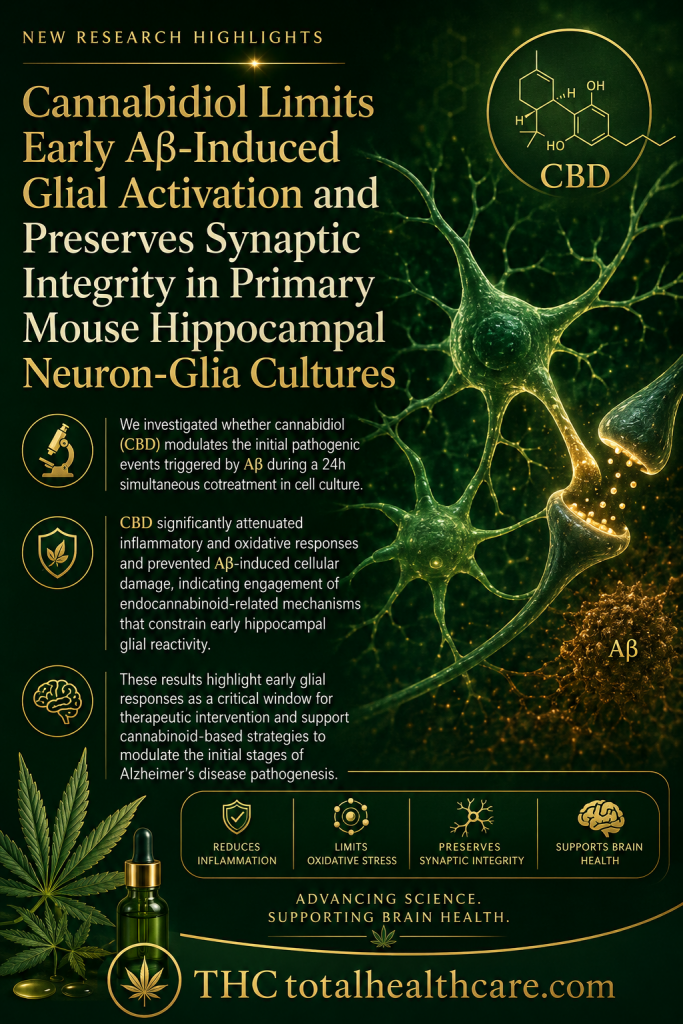
Using this model, we investigated whether cannabidiol (CBD) modulates the initial pathogenic events triggered by Aβ25-35 during a 24h simultaneous cotreatment in cell culture.
Aβ exposure induced robust hippocampal glial activation, oxidative stress, and elevated levels of proinflammatory mediators, particularly IL-1β, IL-6, and TNF-α. Notably, hippocampal synaptic and neurogenic markers (5HT1A, Gria1, GRIN1, DCX, PSD-95) remained largely unaltered at this early stage, revealing a temporal dissociation in which glial-driven inflammation precedes synaptic dysfunction.
CBD significantly attenuated inflammatory and oxidative responses and prevented Aβ-induced cellular damage, indicating engagement of endocannabinoid-related mechanisms that constrain early hippocampal glial reactivity. Although CBD did not fully normalize all glial alterations, it preserved hippocampal synaptic integrity and halted progression toward neuronal dysfunction.
Together, these findings identify early hippocampal glial inflammation as a primary target of CBD and provide mechanistic insight into the temporal sequence linking Aβ exposure to neuroimmune activation.
These results highlight early glial responses as a critical window for therapeutic intervention and support cannabinoid-based strategies to modulate the initial stages of Alzheimer’s disease pathogenesis.”