
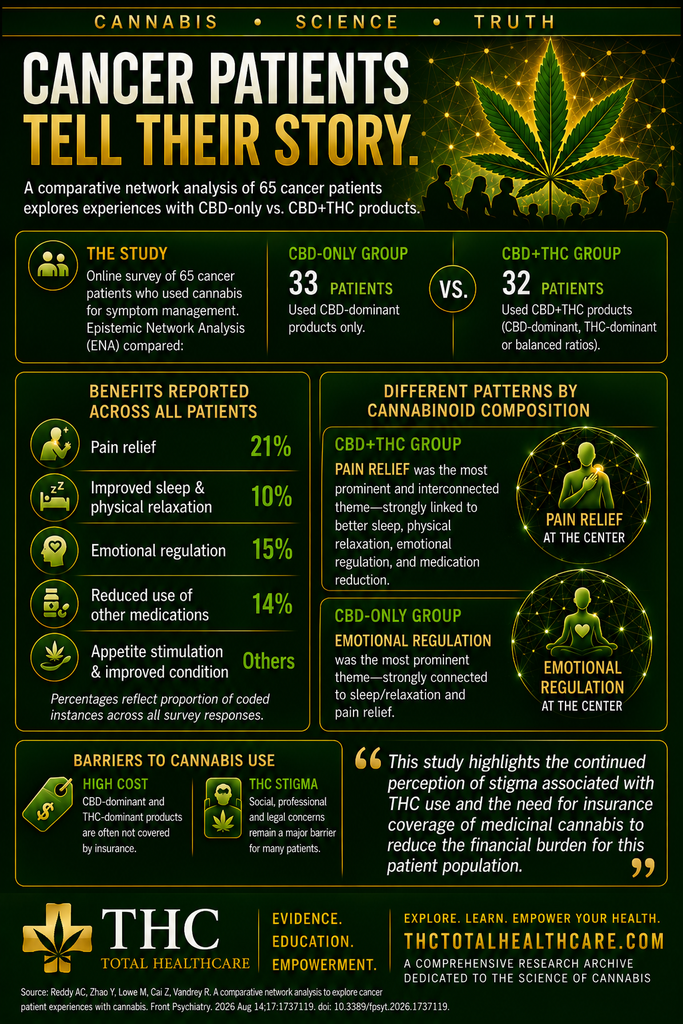
This study examined how people with cancer described the benefits and barriers they encountered when using CBD-only products compared with products containing both CBD and THC.
The findings point to a meaningful difference in patient experience: pain relief was especially prominent among those using CBD+THC products, while participants across the study also reported benefits including improved sleep, physical relaxation, emotional regulation, and reduced use of other medications.
“Introduction: Approximately 20% of cancer patients report cannabis use, yet only 30% of oncologists feel sufficiently informed to make recommendations on its use. This study aimed to visualize the network of themes that arise within cancer patients’ reported experiences with cannabis.
Materials and methods: Data was collected via an online survey of 65 patients who self-reported the use of cannabis in their treatment for cancer, details about the cannabis product(s) being used, their perceived benefits and problems associated with cannabis use, their reasons for starting cannabis use, and any reasons for stopping cannabis use. Epistemic Network Analysis (ENA) was used to compare two groups of cancer patients: 1) those who only used CBD-dominant products (CBD-only group) versus 2) those who used cannabidiol (CBD)- and delta-9-tetrahydrocannabinol (THC)-containing products (either CBD-dominant and THC-dominant cannabis products or cannabis products containing a balanced ratio of both CBD and THC; CBD+THC group).
Results: Cannabis use conferred therapeutic benefits for several health issues commonly encountered by cancer patients. Common benefits reported across the cohort of patients included pain relief, improved sleep, physical relaxation, emotional regulation, and reduction of concomitant medication. The most frequently reported barriers to cannabis use were the stigma associated with THC use and the high cost of CBD-dominant and THC-dominant products. Pain relief emerged as the most prominent, interconnected theme reported by the CBD+THC group, whereas emotional regulation was the most prominent theme for the CBD-only group.
Conclusion: Symptom relief differed based on the cannabinoid composition of the cannabis products. The following trends emerged, which must be confirmed with larger samples: pain relief was more prominent in responses from users of CBD+THC, whereas emotional regulation was more prominent in only the users of CBD-only products. These findings are a step toward assisting cancer patients and providers with clinical decision-making on cannabis use. This study highlights the continued perception of stigma associated with THC use and the need for insurance coverage of medicinal cannabis to reduce the financial burden for this patient population. Finally, this study exemplifies the value of ENA in studying the therapeutic utility of cannabis with qualitative data.”
https://pubmed.ncbi.nlm.nih.gov/42666469
“Pain relief is more frequently reported among users of CBD+THC products.”
“Emotional regulation is more frequently reported among users of only CBD.”
“Overall, pain relief was the most frequently discussed benefit and was associated with other benefits: emotional regulation, sleep or physical relaxation, and medication reduction. Primary patient concerns were stigma and cost.”
https://www.frontiersin.org/journals/psychiatry/articles/10.3389/fpsyt.2026.1737119/full