
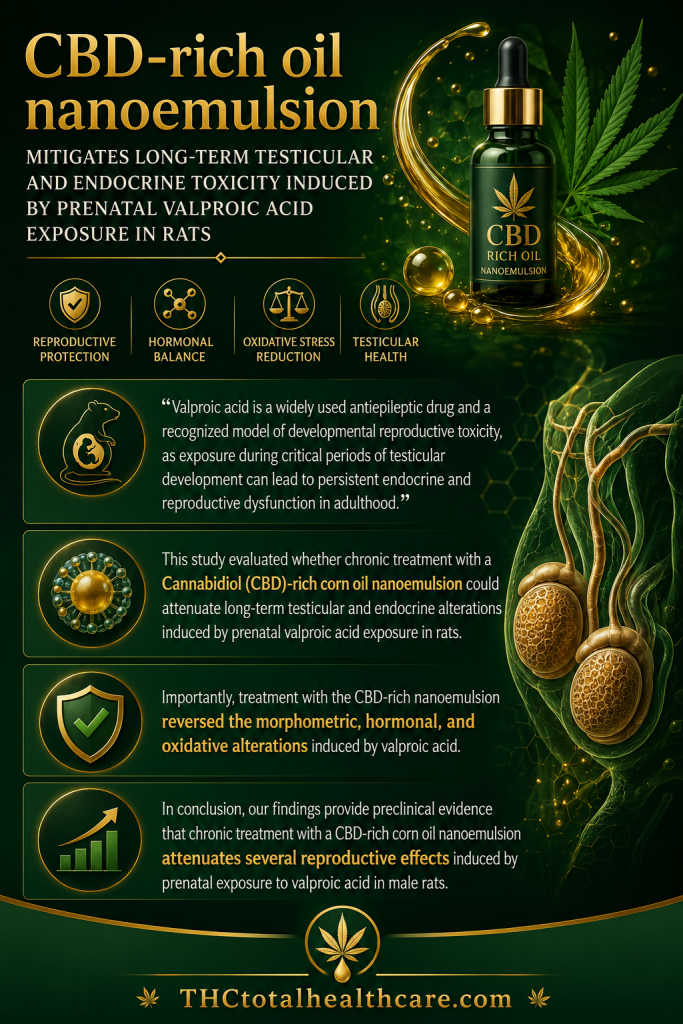
Prenatal exposure to valproic acid can produce lasting effects on reproductive and endocrine development, making it a useful model for studying long-term developmental toxicity. In this preclinical study, researchers found that a CBD-rich oil nanoemulsion reduced testicular damage and improved several hormonal and reproductive markers in rats exposed to valproic acid before birth. The treatment was associated with improvements in oxidative stress, tissue structure, and endocrine function, suggesting that CBD-rich formulations may influence multiple pathways involved in reproductive injury. The findings support further investigation of cannabinoid-based approaches for protecting against long-term developmental and endocrine damage.
“Valproic acid is a widely used antiepileptic drug and a recognized model of developmental reproductive toxicity, as exposure during critical periods of testicular development can lead to persistent endocrine and reproductive dysfunction in adulthood.
Cannabidiol (CBD) has therapeutic potential in several pathological conditions but exhibits low oral bioavailability due to its lipophilic nature.
This study evaluated whether chronic treatment with a CBD-rich corn oil nanoemulsion could attenuate long-term testicular and endocrine alterations induced by prenatal valproic acid exposure in rats.
CBD-rich nanoemulsions were prepared and physicochemically characterized. On gestational day 12.5, pregnant rats received a single intraperitoneal dose of valproic acid (500mg/kg). In adulthood, male offspring from valproic acid-exposed dams were treated orally with CBD nanoemulsions at doses of 1 or 2mg/animal, administered twice daily. After euthanasia, testes were collected for morphometric, biochemical, and hormonal analyses.
Prenatal exposure to valproic acid induced persistent testicular alterations, including reduced Leydig cell number, decreased serum testosterone levels, reduced seminiferous epithelium height, and increased seminiferous tubule diameter. Increased activities of superoxide dismutase and glutathione S-transferase suggested an adaptive antioxidant response. These findings are consistent with long-term testicular and endocrine dysfunction following developmental exposure to an endocrine-disrupting drug.
Importantly, treatment with the CBD-rich nanoemulsion reversed the morphometric, hormonal, and oxidative alterations induced by valproic acid.
Overall, these results indicate that nanoformulated CBD may mitigate long-term reproductive toxicity induced by prenatal valproic acid exposure, highlighting the importance of drug formulation in determining the biological effects of cannabinoids on the male reproductive system.”
https://pubmed.ncbi.nlm.nih.gov/42342051
“In conclusion, our findings provide preclinical evidence that chronic treatment with a CBD-rich corn oil nanoemulsion attenuates several reproductive effects induced by prenatal exposure to valproic acid in male rats.”
https://www.sciencedirect.com/science/article/abs/pii/S0890623826001401?via%3Dihub