
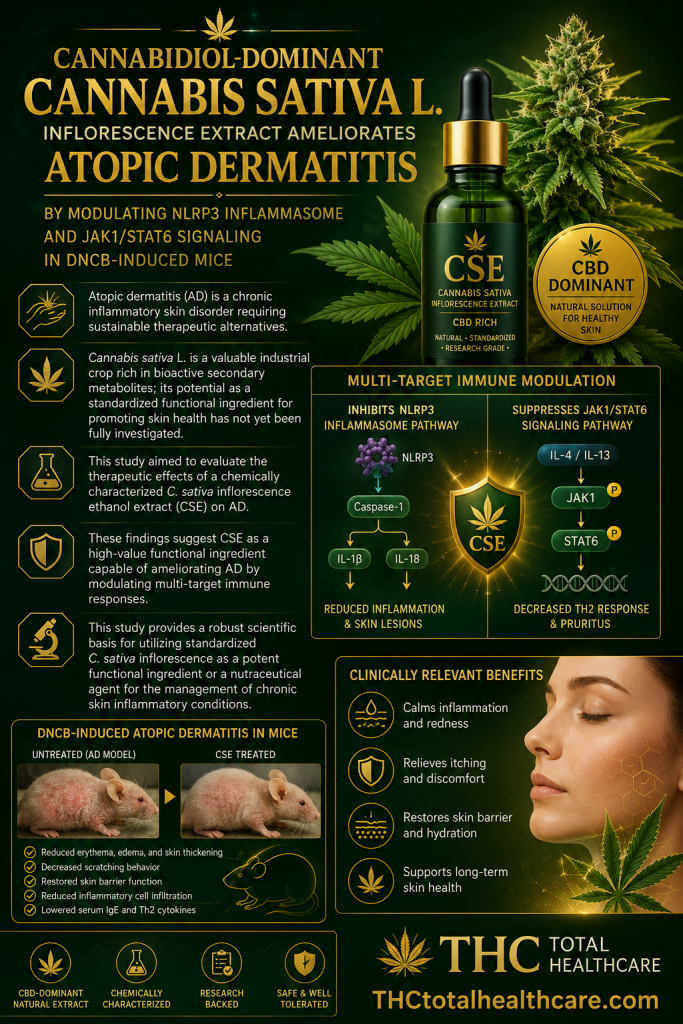
Atopic dermatitis is driven by chronic skin inflammation, immune dysregulation, and disruption of the skin barrier. In a mouse model, a CBD-dominant Cannabis sativa flower extract reduced dermatitis severity, inflammatory cytokines, and immune-cell infiltration while modulating the NLRP3 inflammasome and JAK1/STAT6 signaling pathways. The researchers concluded that the extract may have therapeutic potential for atopic dermatitis through combined anti-inflammatory and immunomodulatory effects.
“Background/objectives: Atopic dermatitis (AD) is a chronic inflammatory skin disorder requiring sustainable therapeutic alternatives. Cannabis sativa L. is a valuable industrial crop rich in bioactive secondary metabolites; its potential as a standardized functional ingredient for promoting skin health has not yet been fully investigated. This study aimed to evaluate the therapeutic effects of a chemically characterized C. sativa inflorescence ethanol extract (CSE) on AD.
Methods: To evaluate the efficacy of CSE, phytochemical profiling was performed using UPLC, and its underlying molecular mechanisms were investigated in a DNCB-induced mouse model.
Results: UPLC analysis was employed to establish the phytochemical profile, identifying 15 cannabinoids and quantifying 8 major components. CBDA was the most abundant component, with a content of 261.79 mg/g in the extract. In a DNCB-induced mouse model, CSE significantly reduced mast cell infiltration and serum IgE levels while downregulating Th2-associated cytokines. At the molecular level, CSE inhibited the activation of the MAPK, NLRP3 inflammasome, and JAK1/STAT6 signaling pathways. Crucially, CSE treatment substantially increased the expression of skin barrier proteins, such as filaggrin and involucrin, thereby enhancing skin hydration.
Conclusions: These findings suggest CSE as a high-value functional ingredient capable of ameliorating AD by modulating multi-target immune responses. This study provides a robust scientific basis for utilizing standardized C. sativa inflorescence as a potent functional ingredient or a nutraceutical agent for the management of chronic skin inflammatory conditions.”
https://pubmed.ncbi.nlm.nih.gov/42514451
“In conclusion, this study provides a comprehensive scientific basis for the use of CSE by demonstrating its multi-target modulation of inflammatory pathways, specifically the MAPK/NLRP3 and JAK1/STAT6 pathways. These results indicate that CSE is a promising candidate for the management of AD. Despite the recognized limitations, such as the need for comparative studies with isolated compounds, our findings suggest that CSE possesses substantial potential as a valuable nutraceutical and cosmeceutical resource. Ultimately, CSE represents a high-value material with significant prospects for both therapeutic and industrial applications.”