
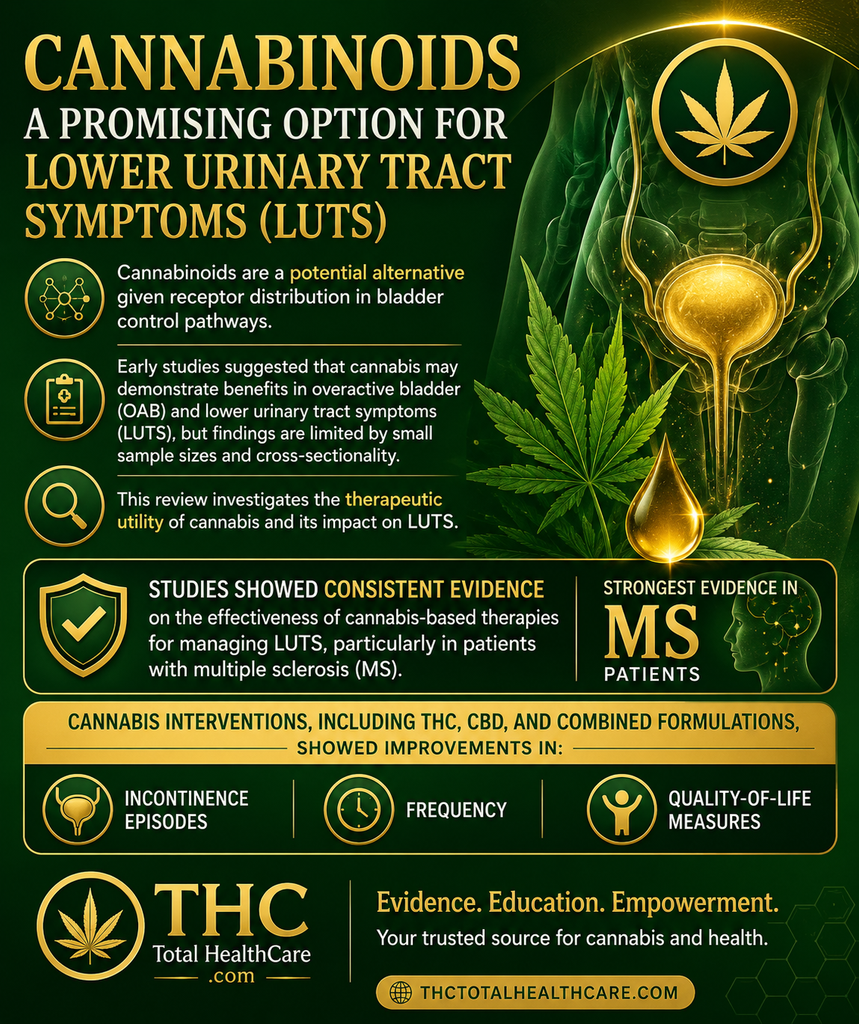
Cannabis-based therapies may offer another approach to managing lower urinary tract symptoms such as urinary urgency, frequency, and incontinence. A 2026 scoping review found encouraging evidence that THC, CBD, and combined cannabinoid formulations can improve several urinary symptoms and quality-of-life measures, with the most consistent evidence found among patients with multiple sclerosis.
“Introduction: Anticholinergics and β3-agonists remain the mainstay for bladder dysfunction but are limited by side effects and poor adherence. Cannabinoids are a potential alternative given receptor distribution in bladder control pathways. Early studies suggested that cannabis may demonstrate benefits in overactive bladder (OAB) and lower urinary tract symptoms (LUTS), but findings are limited by small sample sizes and cross-sectionality. This review investigates the therapeutic utility of cannabis and its impact on LUTS.
Methods: This scoping review was conducted following Cochrane and PRISMA guidelines. Eligible studies included adults with OAB symptoms due to neurogenic disease, benign prostatic hyperplasia (BPH), or cystitis, treated with cannabis vs. placebo, no treatment, or active therapies. Outcomes included urinary function and quality of life. Databases searched included MEDLINE, EMBASE, and CENTRAL. Non-English studies were excluded.
Results: From 998 abstracts, 31 full-text articles were reviewed and 12 were included. Studies showed consistent evidence on the effectiveness of cannabis-based therapies for managing LUTS, particularly in patients with multiple sclerosis (MS). Cannabis interventions, including THC, CBD, and combined formulations, showed some improvements in incontinence episodes, frequency, and quality-of-life measures. Mild adverse effects, including dizziness and dry mouth, were common (2-18%) and sometimes led to treatment discontinuation. Nine of 12 studies were done on MS populations, and only three studies were randomized controlled trials.
Conclusions: Evidence for the benefits of cannabis in treating LUTS is limited and largely observational. While preliminary findings are encouraging, randomized trials focusing on patient-centered outcomes are needed to clarify its role in clinical practice.”