
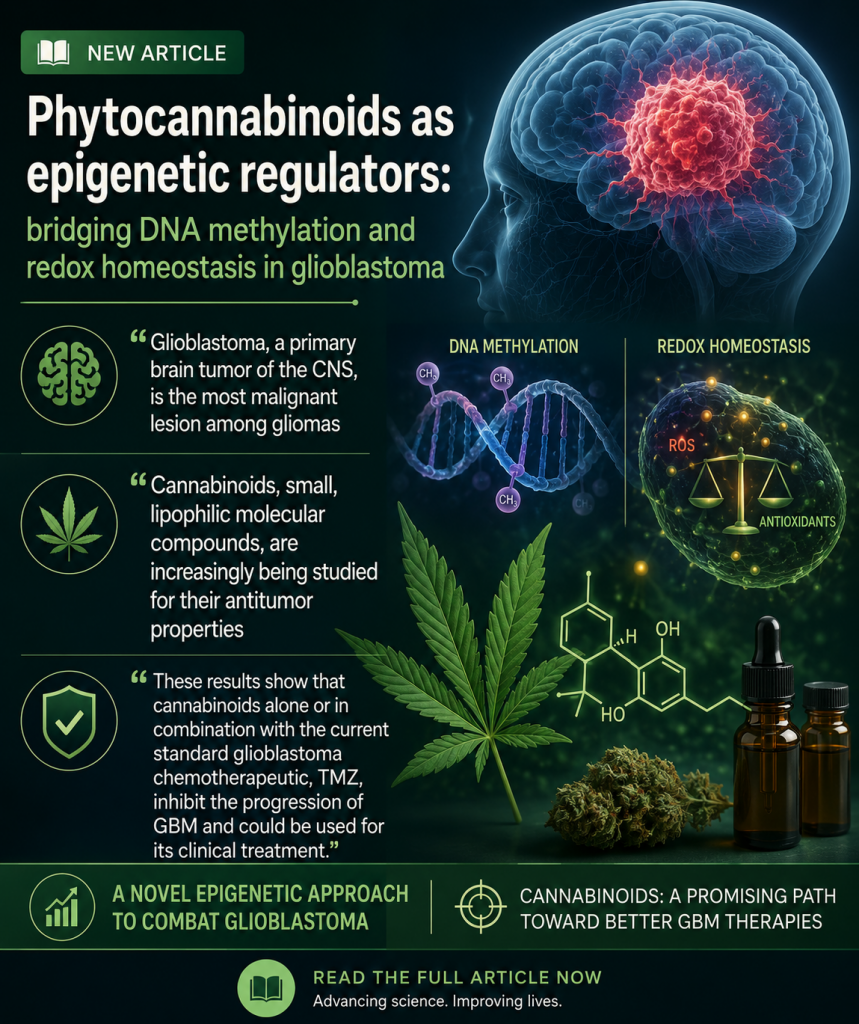
“Glioblastoma, a primary brain tumor of the CNS, is the most malignant lesion among gliomas. It has a median survival time of about 12-15 months after diagnosis and limited treatment options.
That neoplastic processes result from changes in the cell’s redox potential and the overproduction of reactive oxygen species. As a consequence, the epigenetic marker, m5C of DNA, is oxidized with ROS to 5-hydroxymethylcytosine, but guanosine is damaged to 8-oxo-dG, a general probe of oxidative stress. If so, the m5C, as well as 8-oxo-dG content in DNA, are subject to dynamic changes induced by environmental and endogenous cellular factors. These markers can be used to evaluate new therapeutic agents, among others.
Currently, there are no effective drugs against human glioblastoma.
Cannabinoids, small, lipophilic molecular compounds, are increasingly being studied for their antitumor properties.
Using the precise nucleotide post-labelling method and thin-layer chromatographic analysis we monitored the effect of CBD, THC, and CFE, as well as their combination with temozolomide, on changes of global m5C and 8-oxo-dG contents.
These results show that cannabinoids alone or in combination with the current standard glioblastoma chemotherapeutic, TMZ, inhibit the progression of GBM and could be used for its clinical treatment. The mechanism of cannabinoids’ actions on glioblastoma cells is also proposed.”
https://pubmed.ncbi.nlm.nih.gov/42118523
“Recently, cannabinoids have gained attention for their anticancer properties. They are found, among others, in Cannabis sativa L.”
“This paper shows that CBD and THC induce hypermethylation and proposes a novel mechanism of action for cannabinoids in glioblastoma.”
https://link.springer.com/article/10.1007/s13353-026-01070-x