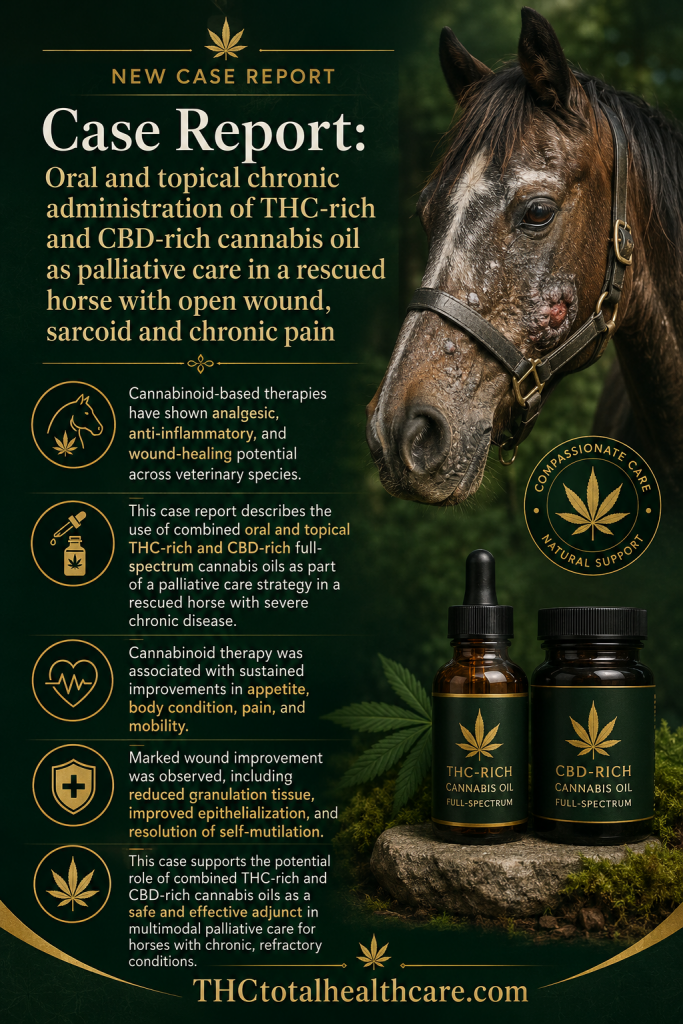
Case Report: Oral and topical chronic administration of THC-rich and CBD-rich cannabis oil as palliative care in a rescued horse with open wound, sarcoid and chronic pain

“Cannabinoid-based therapies have shown analgesic, anti-inflammatory, and wound-healing potential across veterinary species; however, clinical data on long-term use of THC-rich formulations in horses remain scarce.

This case report describes the use of combined oral and topical THC-rich and CBD-rich full-spectrum cannabis oils as part of a palliative care strategy in a rescued horse with severe chronic disease.

A senior mixed-breed gelding was rescued with a large, chronic ulcerative lesion of the left hind limb, severe malnutrition, non-weight-bearing lameness (AAEP grade 5/5), and refractory pain. Diagnostic workup identified a fibroblastic equine sarcoid complicated by complete suspensory tendon rupture, early osteomyelitis, and chronic joint disease. Conventional medical and surgical options were limited due to poor response, disease severity, and resource constraints.

A long-term palliative protocol was initiated using oral THC-rich and CBD-rich full-spectrum cannabis oils (1:1 ratio; 100 mg/mL each) with gradual dose escalation to a target of 0.5 mg/kg of each compound every 12 hours. The same formulation was applied topically to the wound once to twice daily. Treatment duration was 10 months, with concurrent multimodal analgesia as needed.

Cannabinoid therapy was associated with sustained improvements in appetite, body condition, pain, and mobility. Marked wound improvement was observed, including reduced granulation tissue, improved epithelialization, and resolution of self-mutilation.

No clinically relevant adverse effects or laboratory abnormalities occurred during routine dosing. Transient ataxia and sedation were noted only at high rescue doses near end of life. Despite eventual disease progression and euthanasia due to refractory pain, quality of life was substantially improved for most of the treatment period.

This case supports the potential role of combined THC-rich and CBD-rich cannabis oils as a safe and effective adjunct in multimodal palliative care for horses with chronic, refractory conditions. Controlled studies are warranted to define optimal dosing and indications.”

https://pubmed.ncbi.nlm.nih.gov/42311392

“Across veterinary species, cannabinoids have shown therapeutic potential with favorable safety and tolerability profiles.”

“The aim of this case report is to describe a long-term multimodal clinical approach using cannabinoids (THC and CBD) in a rescued horse affected by a wound/sarcoid and joint disease, as part of a palliative care strategy for pain management, inflammation control, and wound-healing enhancement.”

“This case suggests that long-term administration of THC-rich and CBD-rich cannabis oils may be a useful adjunct for palliative management in horses with chronic, refractory conditions.”

“Cannabinoid therapy was associated with improved comfort, mobility, and quality of life, supporting its potential role within multimodal palliative care.”

https://www.frontiersin.org/journals/veterinary-science/articles/10.3389/fvets.2026.1794084/full
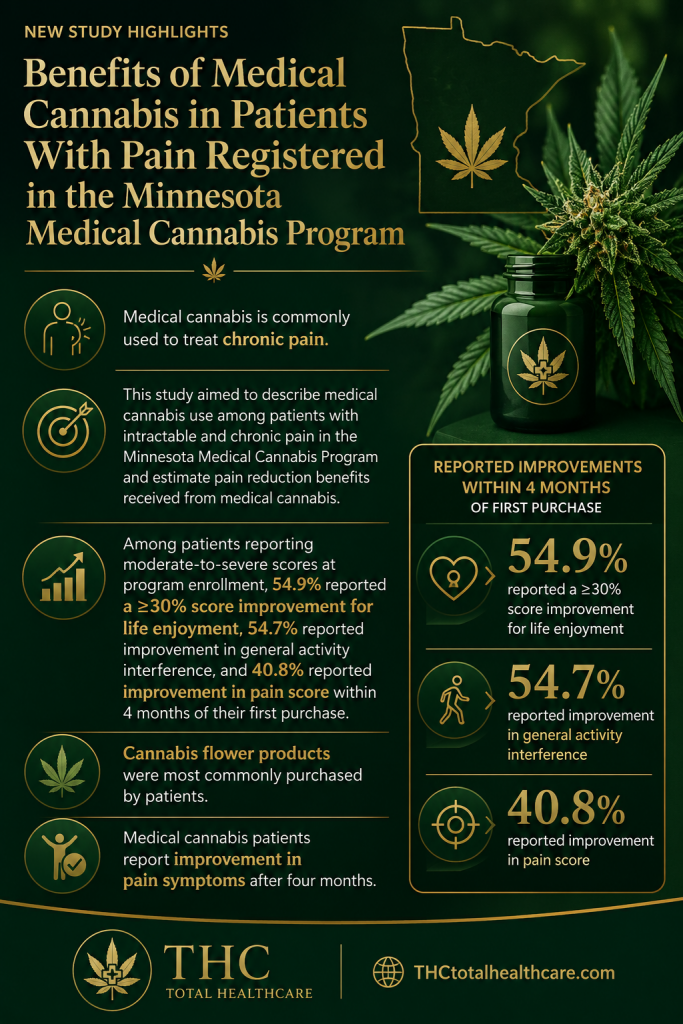

Benefits of Medical Cannabis in Patients With Pain Registered in the Minnesota Medical Cannabis Program

Purpose: Medical cannabis is commonly used to treat chronic pain. Clinical trials typically use only one type and dosage of medical cannabis product, which is not reflective of real-world use. The use of a state-run medical cannabis program can bridge the gap between clinical research and real-world use of medical cannabis to estimate the benefits of cannabis use on patient symptoms. This study aimed to describe medical cannabis use among patients with intractable and chronic pain in the Minnesota Medical Cannabis Program and estimate pain reduction benefits received from medical cannabis.

Methods: Patients who enrolled in the Minnesota Medical Cannabis Program between March 2022 and February 2023 for chronic pain and purchased medical cannabis for at least 8 months were included in this study. Patients were required to complete the Patient Self-Evaluation before each medical cannabis purchase, which included the PEG (Pain, Enjoyment of Life, and General Activity) scale. The main outcome of this analysis was a ≥30% change in PEG component score within 4 months of first medical cannabis purchase. The proportion of patients who maintained that reduction for an additional 4 months was also calculated. Medical cannabis product purchases were queried from the first 4 months in the program and categorized by route of administration and tetrahydrocannabinol:cannabidiol ratio. Medical cannabis purchasing profiles were created using k-means clustering to group patients who purchased similar proportions of product types. Adjusted logistic regression models were run to investigate the association between medical cannabis purchasing profile and reporting ≥30% reduction in PEG score.

Findings: Among patients reporting moderate-to-severe scores at program enrollment, 54.9% reported a ≥30% score improvement for life enjoyment, 54.7% reported improvement in general activity interference, and 40.8% reported improvement in pain score within 4 months of their first purchase. Cannabis flower products were most commonly purchased by patients. High tetrahydrocannabinol:cannabidiol products were the most commonly purchased in all medical cannabis product categories. K-means clustering created 5 product purchasing profiles, which were not associated with PEG score improvement outcomes after adjustment for number of purchasing transactions.

Implications: Medical cannabis patients report reduction in PEG scores within 4 months of first medical cannabis purchase using a variety of medical cannabis products. Future research on medical cannabis should determine the frequency of use of different products and administration methods to further investigate how cannabis can be used for effective pain management in patients with chronic pain.”

https://pubmed.ncbi.nlm.nih.gov/42303550

“Medical cannabis patients report improvement in pain symptoms after four months.”

https://www.clinicaltherapeutics.com/article/S0149-2918(26)00187-6/fulltext

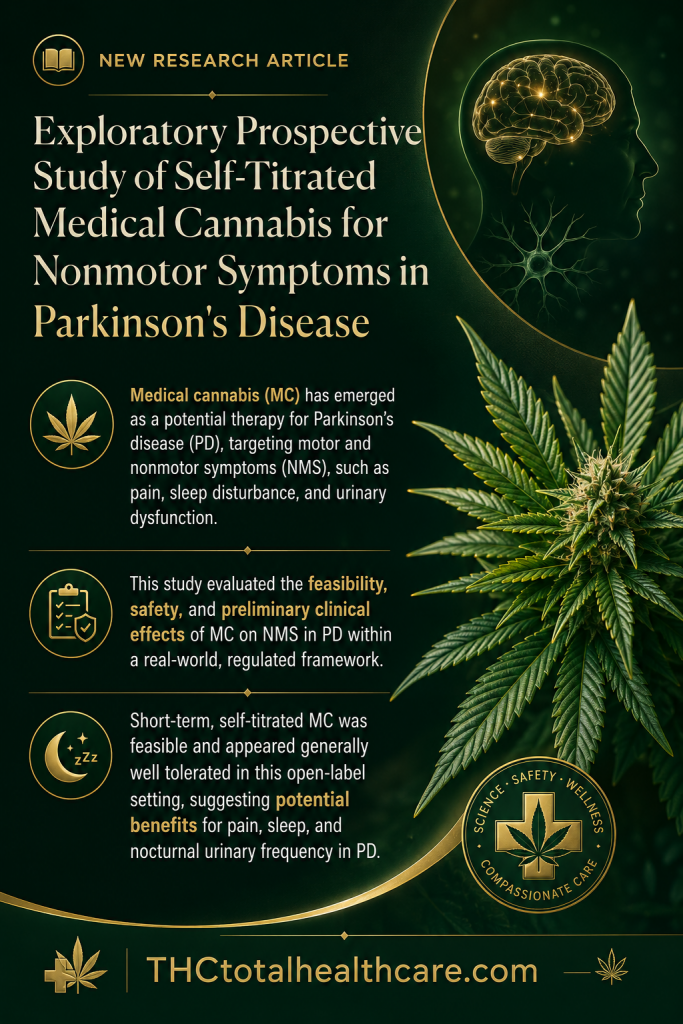
Exploratory Prospective Study of Self-Titrated Medical Cannabis for Nonmotor Symptoms in Parkinson’s Disease

Background: Medical cannabis (MC) has emerged as a potential therapy for Parkinson’s disease (PD), targeting motor and nonmotor symptoms (NMS), such as pain, sleep disturbance, and urinary dysfunction. Cannabinoid receptors in central and peripheral systems, including the bladder, provide a mechanistic basis for symptom modulation. This study evaluated the feasibility, safety, and preliminary clinical effects of MC on NMS in PD within a real-world, regulated framework.

Methods: In this single-center, open-label, prospective cohort, 68 patients with PD initiating MC were assessed at baseline and at 3 months using validated scales: the Non-Motor Symptoms Scale (NMSS), King’s Parkinson’s Disease Pain Scale (KPPS), PD Sleep Scale-2 (PDSS-2), PD Quality-of-Life Questionnaire-8 (PDQ-8), and International Prostate Symptom Score (IPSS), along with 2-day urinary diaries. Participants used either cannabis oil extract or inflorescence products with varying THC/CBD (Δ9-tetrahydrocannabinol/cannabidiol) ratios. Adverse events and withdrawals were recorded. Cannabinoid composition was analyzed via ultra-high-performance liquid chromatography and correlated with clinical outcomes.

Results: Fifty participants (mean age 65.6 ± 11.0 years; 68% male) completed follow-up. MC use was associated with improvements in NMSS total (Δ 14.5, p = 0.001), PDSS-2 (Δ 5.9, p < 0.001), KPPS (Δ 8.1, p = 0.004), PDQ-8 (Δ 1.5, p = 0.040), and the NMSS urinary domain (Δ 2.1, p = 0.050). Nighttime urinary frequency decreased (median Δ 0.5, p = 0.016), while daytime parameters were unchanged. No correlations were found between cannabinoid composition or THC/CBD enrichment type and clinical response. The dropout rate was 26.5%, mainly due to loss to follow-up.

Conclusions: Short-term, self-titrated MC was feasible and appeared generally well tolerated in this open-label setting, suggesting potential benefits for pain, sleep, and nocturnal urinary frequency in PD. These exploratory findings warrant randomized controlled trials focused on these domains and incorporating standardized dosing, pharmacokinetic monitoring, and predefined cognitive safety assessments to determine efficacy, safety, and optimal dosing.”

https://pubmed.ncbi.nlm.nih.gov/42304702

https://journals.sagepub.com/doi/10.1177/25785125261458680

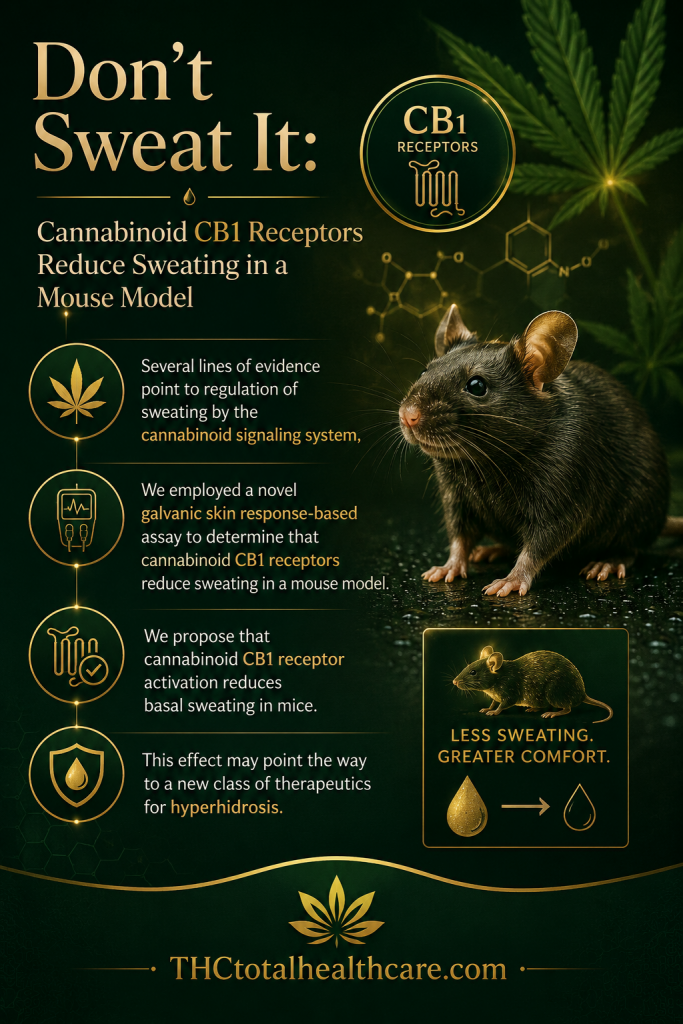
Don’t Sweat It: Cannabinoid CB1 Receptors Reduce Sweating in a Mouse Model

“Numerous exocrine glands play key physiological roles in the body that include tearing, salivation, and lactation, as well as the control of body temperature via sweating. Malfunction of sweat glands can be deeply problematic or-in the case of anhidrosis-life-threatening. The prevalence of sweating disorders is high, affecting millions. The few available therapies are generally of limited effectiveness.

Several lines of evidence point to regulation of sweating by the cannabinoid signaling system, an arrangement that would mirror cannabinoid regulation of tearing and salivation.

Mice sweat in their paws via glands that closely resemble human eccrine sweat glands, including regulation by muscarinic signaling and by temperature. We applied a galvanic skin response-based assay to investigate cannabinoid regulation of sweating in awake, unanesthetized mice. The muscarinic agonist pilocarpine increased conductance while the antagonist glycopyrrolate reduced conductance, validating the model as a measure of sweating. The cannabinoid receptor agonist CP55940 substantially reduced conductance in wild-type and CB2 but not CB1 receptor knockout mice.

The phytocannabinoid tetrahydrocannabinol (THC) also reduced conductance, while the non-psychoactive cannabidiol (CBD) did not. Using immunohistochemistry, we detected CB1 receptors in periglandular cholinergic axons, the anandamide-synthesizing enzyme NAPE-PLD in myoepithelial cells, and the anandamide metabolizing enzyme FAAH in acinar cells. This indicates that a local CB1/anandamide-based circuit is present in mouse walking pads.

In summary, we employed a novel galvanic skin response-based assay to determine that cannabinoid CB1 receptors reduce sweating in a mouse model. This may point to a previously unappreciated effect on sweating in cannabis users.”

https://pubmed.ncbi.nlm.nih.gov/42287607

“In summary, we have made use of a galvanic skin response-based assay to measure the conductivity in the hind paws of awake, unanesthetized mice as a measure of sweating. We find the galvanic skin responses to be stable and consistent over time and, importantly, to be responsive to stimuli that increase or decrease basal sweating. Using this model, we determined that cannabinoid CB1 receptor activation reduces the galvanic skin response.

We propose that cannabinoid CB1 receptor activation reduces basal sweating in mice.

This effect may point the way to a new class of therapeutics for hyperhidrosis.”

https://faseb.onlinelibrary.wiley.com/doi/10.1096/fj.202601143R

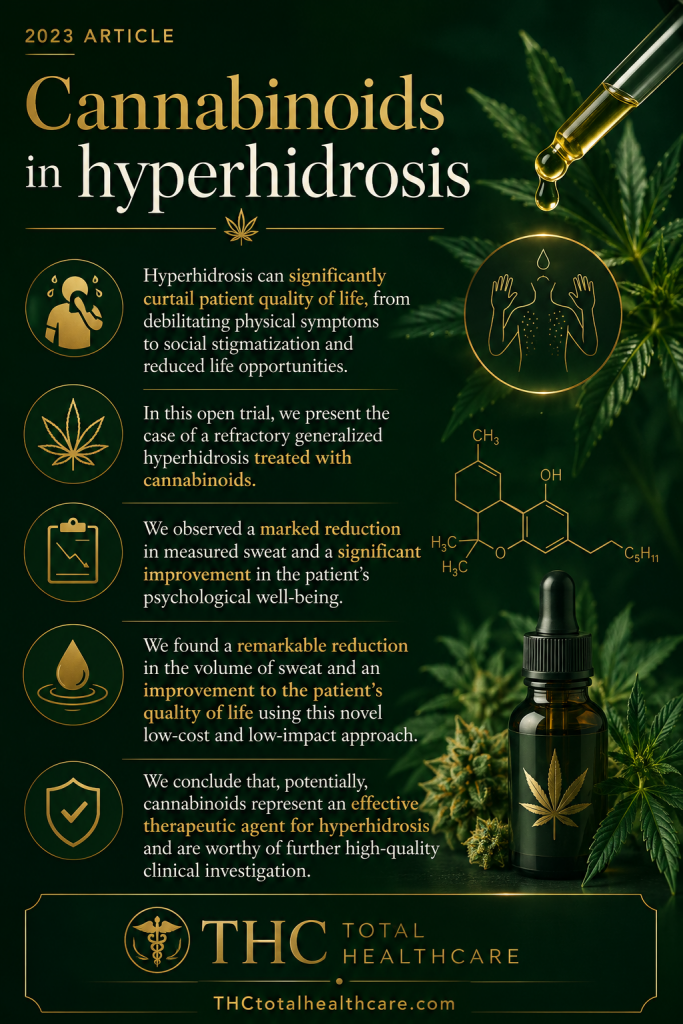
Cannabinoids in hyperhidrosis

“In our literature search for alternative treatments, we identified multiple unscientific and anecdotal sources claiming that cannabis can inhibit sweating. Our search of the medical literature revealed no evidence of a treatment attempt using cannabinoids, and thus, we initiated our study of one case with refractory generalized hyperhidrosis treated with cannabinoids from March to May 2021.

We observed a marked reduction in measured sweat and a significant improvement in the patient’s psychological well-being.

We conclude that, potentially, cannabinoids represent an effective therapeutic agent for hyperhidrosis and are worthy of further high-quality clinical investigation.”

“Hyperhidrosis can significantly curtail patient quality of life, from debilitating physical symptoms to social stigmatization and reduced life opportunities. Current treatments often prove unsatisfactory, especially in sufferers of generalized hyperhidrosis. In this open trial, we present the case of a refractory generalized hyperhidrosis treated with cannabinoids.

We found a remarkable reduction in the volume of sweat and an improvement to the patient’s quality of life using this novel low-cost and low-impact approach.”

“In summary, we report a case of precisely analyzed effects of cannabinoid therapy in generalized hyperhidrosis.

We believe cannabinoids hold potential as a low side-effect and well-tolerated therapy, especially in refractory cases of hyperhidrosis.

This reflects not only in the reduced perspiration, but also in the significant improvement in the participant’s quality of life.”

https://pubmed.ncbi.nlm.nih.gov/36200741/

https://www.tandfonline.com/doi/full/10.1080/09546634.2022.2127308#d1e182

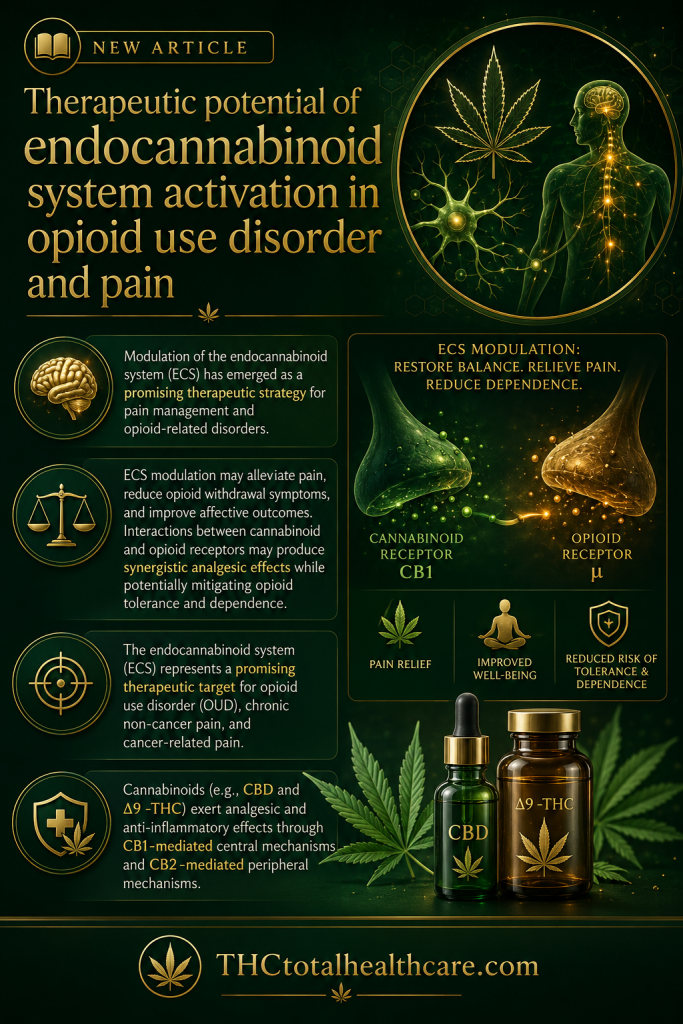
Therapeutic potential of endocannabinoid system activation in opioid use disorder and pain

Introduction: Opioid use disorder (OUD) and chronic pain remain major global health challenges. Although opioid-based therapies provide effective analgesia, their long-term use is limited by safety concerns, dependence, and variable efficacy. Modulation of the endocannabinoid system (ECS) has emerged as a promising therapeutic strategy for pain management and opioid-related disorders.

Areas covered: This narrative review summarizes current evidence on ECS-targeted interventions for OUD, chronic non-cancer pain, and cancer-related pain. Relevant literature was identified through PubMed using search terms related to the ECS, cannabinoid receptors (CB1 and CB2), phytocannabinoids (Δ9 -tetrahydrocannabinol [THC] and cannabidiol [CBD]), synthetic cannabinoids, fatty acid amide hydrolase (FAAH) and monoacylglycerol lipase (MAGL) inhibitors, and opioid – cannabinoid interactions. Particular emphasis is placed on mechanistic interactions between ECS and opioid signaling pathways, as well as evidence from preclinical and clinical studies evaluating therapeutic efficacy and safety.

Expert opinion: ECS modulation may alleviate pain, reduce opioid withdrawal symptoms, and improve affective outcomes. Interactions between cannabinoid and opioid receptors may produce synergistic analgesic effects while potentially mitigating opioid tolerance and dependence. However, clinical translation remains limited by small sample sizes, heterogeneous study populations, and variability in trial design. Well-controlled clinical trials are needed to establish optimal dosing strategies, evaluate long-term safety, and clarify the therapeutic role of ECS-targeted interventions in OUD and pain management.”

https://pubmed.ncbi.nlm.nih.gov/42295097

“The endocannabinoid system (ECS) represents a promising therapeutic target for opioid use disorder (OUD), chronic non-cancer pain, and cancer-related pain.”

“Cannabinoids (e.g., CBD and Δ9 -THC) exert analgesic and anti-inflammatory effects through CB1-mediated central mechanisms and CB2-mediated peripheral mechanisms.”

https://www.tandfonline.com/doi/full/10.1080/14728222.2026.2690138

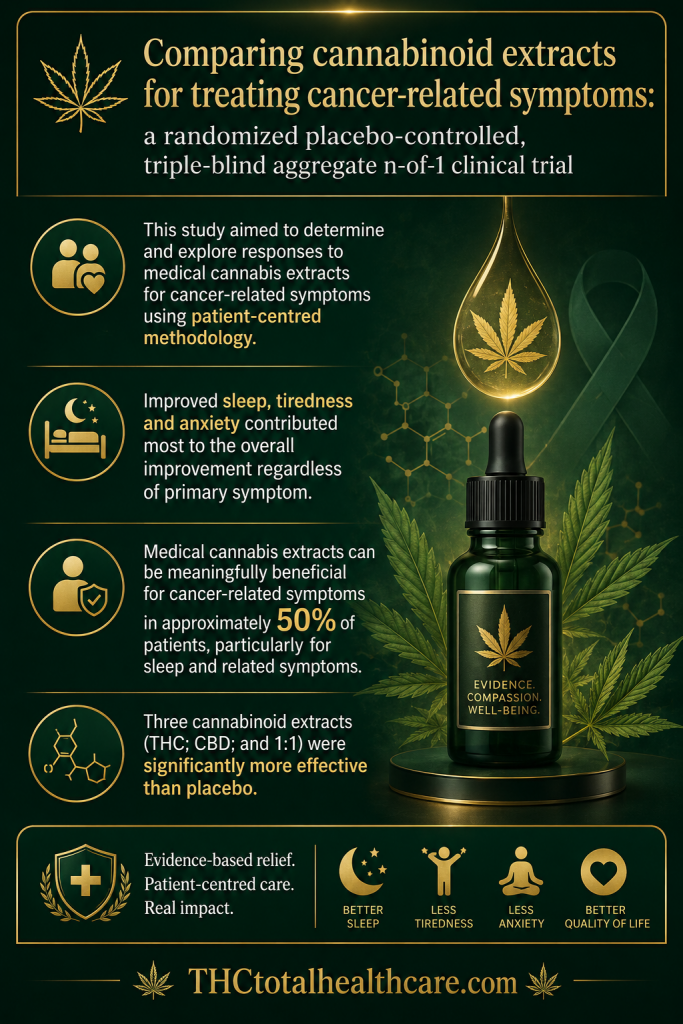
Comparing cannabinoid extracts for treating cancer-related symptoms: a randomized placebo-controlled, triple-blind aggregate n-of-1 clinical trial

Context Despite widespread use of medical cannabinoids for cancer-related symptom management, systematic reviews consistently call for more clinical trial evidence.

Objectives This study aimed to determine and explore responses to medical cannabis extracts for cancer-related symptoms using patient-centred methodology.

Methods An aggregate N-of-1 study of clinically stable but symptomatic outpatients from 8 Canadian cancer centres, comparing three blinded sublingual extracts (THC; CBD; 1:1) with placebo, self-titrated within a prescribed schedule for four consecutive days each in randomized sequence for up to three cycles (total 16-48 days). The primary outcome was the frequency of at least a 1.4-point (20%) improvement in a 7-point Patient Global Impression of Change (PGIC) for at least one extract over placebo.

Results The primary outcome was achieved in 50/89 (56%) participants (p<0.001), with no significant preference of one extract over another on average, but a clear preference between extracts for most individuals. Changes in a modified Edmonton Symptom Assessment score and participant preference (n=91) confirmed these findings. Improved sleep, tiredness and anxiety contributed most to the overall improvement regardless of primary symptom. There were no demographic predictors of response. Mild adverse effects were common with all extracts including placebo but resolved rapidly on dose reduction/cessation. Moderate/severe adverse effects were rare but associated with THC.

Conclusions Medical cannabis extracts can be meaningfully beneficial for cancer-related symptoms in approximately 50% of patients, particularly for sleep and related symptoms. A starting dose of 2.5mg of THC/CBD three times a day was well-tolerated. Personalization of treatment is required to optimize response.

Key Messages Three cannabinoid extracts (THC; CBD; and 1:1) were significantly more effective than placebo based on a Patient Global Impression of Change, a modified Edmonton Symptom Assessment System and participant preference. The most helpful extract differed between individuals. Benefits were mostly in sleep, anxiety, and daytime tiredness irrespective of primary symptom.”

https://www.medrxiv.org/content/10.64898/2026.05.31.26354558v1

Chemical Characterization and Biological Potential of the Essential Oils from the Flowers of Two Cannabis sativa L. Cultivars from Komga, South Africa

Cannabis sativa L. is a medicinal plant cultivated globally due to its remarkable historical and scientific relevance. Through the consumption of its flowers, also referred to as inflorescences, which contain a high content of cannabinoids, terpenes and polyphenols, the therapeutic properties of C. sativa can be harnessed.

This study therefore aimed to determine the chemical profile, antioxidant and anti-inflammatory activities of the essential oils (EOs) obtained from the fresh and dried flowers of two C. sativa cultivars, Lifter and Cherrywine, grown in Komga, South Africa, to assess which cultivar has greater biological potential.

The chemical profiles of the hydro-distilled EOs were analyzed by gas chromatography-mass spectrometry (GC-MS), while the in vitro antioxidant and anti-inflammatory activity of the EOs was analyzed using the DPPH and EAD methods, respectively. The identified constituents from the EOs were molecularly docked against NOX2 and NIK (NF-κB-inducing kinase) protein, which are implicated in oxidative stress. The afforded EOs were yellow (pale and bright yellow) in color with a sweet to mildly sweet aroma description.

A total of 51 constituents were identified in both fresh and dry oils from the Lifter cultivar, while the Cherrywine cultivar contained a total of 44 constituents. Eighteen compounds, were found to be the main chemical constituents consistent in the flower EOs of both cultivars, notably, caryophyllene (10.71-19.96%), levo-β-pinene (1.37-13.21%), humulene (5.88-9.77%), caryophyllene oxide (4.32-7.49%), D-limonene (1.40-5.48%), α-pinene (2.22-5.22%), nerolidol (0.63-4.97%), cis-β-ocimene (0.22-4.37%), linalool (1.12-4.28%), selina-3,7(11)-diene (0.15-4.23%), humulene-1,2-epoxide (1.23-3.32%), guaiol (0.17-2.60%), (+)-β-selinene (1.20-2.51%), trans-α-bergamotene (0.68-2.37%), β-ocimene (0.90-2.27%), fenchol exo- (0.15-1.27), terpineol (0.14-1.38%) and α-terpineol (0.19-0.75%). The fresh Lifter flower oil (LFO) showed 50% inhibition at 100 μg/mL, with an IC50 of 69.50 ± 4.05 µg/mL against DPPH, suggesting moderate to low radical scavenging activity. The maximum percentage inhibition response of DLFO, CFO and DCFO remained below 50% at all concentrations.

The antioxidant activity of fresh LFO may be attributed to its overall chemical composition. The flower oils showed in vitro inhibition of protein denaturation; however, the high standard deviation relative to the mean IC50 values limited the ability to rank the samples’ potencies. Further in silico studies on the putative constituents in the Lifter and Cherrywine cultivars revealed β-bisabolene and α-curcumene as potential molecular targets, with binding energy scores of -7.7 and -7.9 kcal/mol, respectively.

Thus, the study findings highlight the promising biological importance of C. sativa inflorescences in the management of oxidative stress-related conditions. Further studies may investigate the influence of environmental growing conditions on their chemical composition, total ROS analysis, pharmacokinetic properties, and in vivo efficacy against oxidative damage to DNA, proteins and lipids. Evaluating the toxicity of the flower EOs is also recommended.”

https://pubmed.ncbi.nlm.nih.gov/42280118

https://www.mdpi.com/1420-3049/31/11/1814


Therapeutic Drug Monitoring of Cannabinoids: Therapeutic Reference Ranges for Delta-9-tetrahydrocannabinol in Medical Cannabis, Nabiximols, Dronabinol and Nabilone

“Medical cannabis, nabiximols, dronabinol and nabilone are used for various medical conditions.

Despite their pronounced pharmacokinetic variability and complex concentration-effect relationships, therapeutic drug monitoring recommendations are lacking. We aimed to identify therapeutic reference ranges based on blood concentration-clinical effect relationships. Studies reporting blood concentrations and clinical effects/adverse effects or assessing cannabinoid receptors 1 and 2 occupancy were selected through a systematic literature search in the MEDLINE database via PubMed. Twenty-three articles were selected for vaporized/smoked medical cannabis, three for nabiximols, nine for dronabinol and one for nabilone. No article was identified for delta-9-tetrahydrocannabinol-dominant cannabis extracts.

For vaporized/smoked medical cannabis, an orienting therapeutic reference range of 15-30 ng/mL delta-9-tetrahydrocannabinol was identified for pain reduction in diabetic peripheral neuropathy, while concentrations of <20 ng/mL delta-9-tetrahydrocannabinol were significantly correlated with intraocular pressure reduction and 7.5-10 ng/mL with improvement of tic symptoms. Half-maximum effective concentrations of 7-29 ng/mL delta-9-tetrahydrocannabinol were reported for “high” effects.

For nabiximols, a preliminary therapeutic reference range of 1-10 ng/mL delta-9-tetrahydrocannabinol was determined for treating neuropathic pain and spasticity in adults with multiple sclerosis. For chemotherapy-induced nausea and vomiting, a preliminary therapeutic reference range of 1-5 ng/mL for nabilone and 5-15 ng/mL delta-9-tetrahydrocannabinol for dronabinol was assessed.

In conclusion, relatively low concentrations may be sufficient to achieve therapeutic effects across all substances studied, with medical cannabis demonstrating these effects at lower concentrations than typically observed in recreational use. Nevertheless, adverse effects at therapeutic reference ranges cannot be excluded.”

https://pubmed.ncbi.nlm.nih.gov/42269696

https://www.thieme-connect.de/products/ejournals/abstract/10.1055/a-2853-4984

Targeting Phantom Limb Pain with Cannabinoids in a Rat Model

“Introduction: Phantom limb pain (PLP) is a debilitating neuropathic condition arising after limb loss or nerve injury, with limited effective treatments. Cannabinoids, including cannabidiol (CBD), β-caryophyllene (BCP), and Δ9-tetrahydrocannabinol (THC), possess analgesic and anti-inflammatory properties. This study evaluated their combined efficacy as preventive or delayed interventions in a rodent model of PLP.

Methods: To model PLP, a chronic constriction injury was used to mimic pre-amputation pain, followed by formalin-induced localized inflammation and complete sciatic nerve transection to simulate extremity amputation. Cannabinoid treatments (CBD/BCP/THC, CBD/BCP, or THC) or vehicle control were administered either preemptively on the day of axotomy (prevention paradigm) or after the emergence of pain behaviors (reversal paradigm). Progression of pain behaviors were assessed over a 72-day period, and modulation of spinal cytokine levels, glial reactivity, and GABAergic signaling was evaluated.

Results: Preemptive THC or CBD/BCP reduced PLP onset and severity, while the full combination was less effective. In contrast, with delayed treatment, CBD/BCP and the CBD/BCP/THC combination were most effective in mitigating PLP. Pain reduction was correlated with restoration of spinal GABAergic inhibition. All cannabinoid treatments decreased microglial and astrocyte reactivity and shifted cytokines toward an anti-inflammatory state.

Conclusion: Cannabinoid-based interventions demonstrate significant therapeutic promise for PLP, showing efficacy as both early and delayed treatments. Findings suggest that THC may exert greater therapeutic effects when administered pre-emptively, while CBD and BCP may offer greater therapeutic advantages in established pain states. These findings highlight the therapeutic potential of tailored cannabinoid interventions for neuropathic pain and underscore the importance of optimizing dosing strategies for maximal analgesic effect.”

https://pubmed.ncbi.nlm.nih.gov/42267080

“Cannabis contains a complex mixture of cannabinoids, terpenes, and flavonoids that have demonstrated therapeutic potential in a variety of pathologies and conditions. Their anti-inflammatory, analgesic, and antioxidant activities are believed to play a central role in mediating pain relief.”

“Our findings support the therapeutic potential of cannabinoid-based treatments in both preventing and reversing PLP, with efficacy varying by cannabinoid pairing and timing of treatment.

Together, these results underscore the therapeutic promise of cannabinoid-based treatments while highlighting the need to carefully consider how specific compounds and dosing strategies interact in different stages of pain.”

https://karger.com/mca/article/9/1/92/946968/Targeting-Phantom-Limb-Pain-with-Cannabinoids-in-a