Dynamic Mechanism for Subtype Selectivity of Endocannabinoids

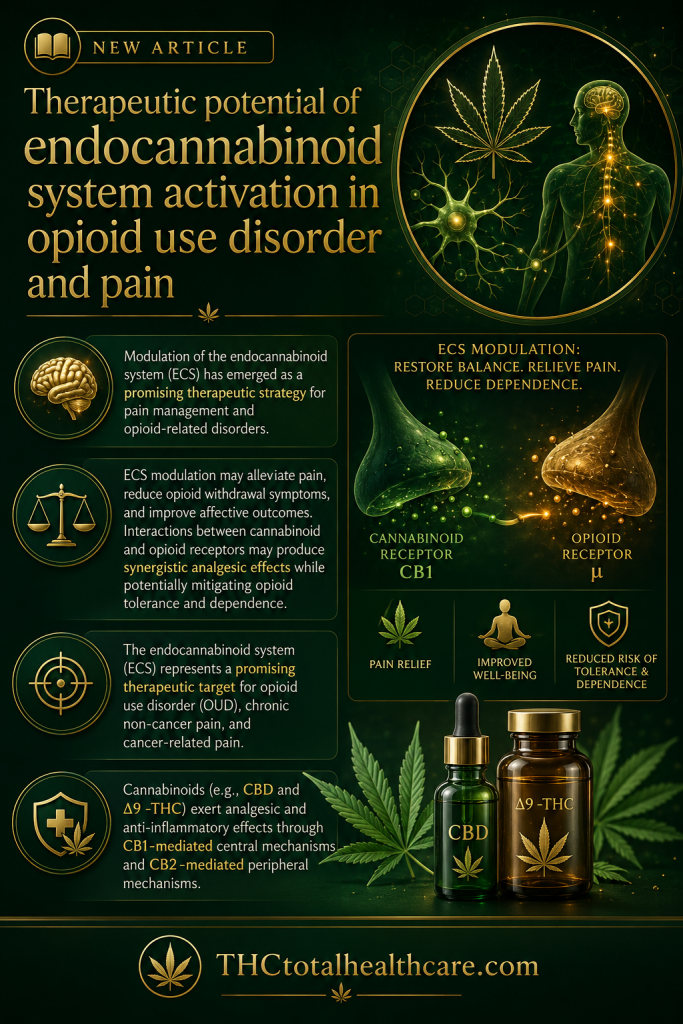
“Endocannabinoids are naturally occurring lipid-like molecules that bind to cannabinoid receptors (CB1 and CB2) and regulate many of human bodily functions via the endocannabinoid system.

There is a tremendous interest in developing selective drugs that target the CB receptors.

However, the biophysical mechanisms responsible for the subtype selectivity for endocannabinoids have not been established. Recent experimental structures of CB receptors show that endocannabinoids potentially bind via membrane using the lipid access channel in the transmembrane region of the receptors. Furthermore, the N-terminus of the receptor could move in and out of the binding pocket thereby modulating both the pocket volume and its residue composition.

On the basis of these observations, we propose two hypotheses to explain the selectivity of the endocannabinoid, anandamide for CB1 receptor. First, the selectivity arises from distinct enthalpic ligand-protein interactions along the ligand binding pathway formed due to the movement of N-terminus and subsequent shifts in the binding pocket composition. Second, selectivity arises from the volumetric differences in the binding pocket allowing for differences in ligand conformational entropy.

To quantitatively test these hypotheses, we perform extensive molecular dynamics simulations (∼0.9 milliseconds) along with Markov state modeling and deep learning-based VAMPnets to provide an interpretable characterization of the anandamide binding process to cannabinoid receptors and explain its selectivity for CB1.

Our findings reveal that the distinct N-terminus positions along lipid access channels between TM1 and TM7 lead to different binding mechanisms and interactions between anandamide and the binding pocket residues. To validate the critical stabilizing interactions along the binding pathway, relative free energy calculations of anandamide analogs are used. Moreover, the larger CB2 pocket volume increases the entropic effects of ligand binding by allowing higher ligand fluctuations but reduced stable interactions. Therefore, the opposing enthalpy and entropy effects between the receptors shape the endocannabinoid selectivity.

Overall, the CB1 selectivity of anandamide is explained by the dominant enthalpy contributions due to ligand-protein interactions in stable binding poses. This study shed lights on potential selectivity mechanisms for endocannabinoids that would aid in the discovery of CB selective drugs.”

https://pubmed.ncbi.nlm.nih.gov/41962866

“By situating these results within the broader landscape of pharmacological and structural evidence, we provide a cohesive mechanistic framework for endocannabinoid selectivity that can inform the rational design of CB1-selective therapeutics.”

https://www.jbc.org/article/S0021-9258(26)00304-2/fulltext

Effect of cannabinol, tetrahydrocannabivarin and cannabidiol on voluntary alcohol consumption

Aims: Previous studies have demonstrated that the endocannabinoid system plays a significant role in the development of alcohol use disorder (AUD), and CB1 receptor antagonists/inverse agonists show promise as a novel AUD pharmacotherapy. However, these compounds failed in clinical trials due to the severe psychiatric side effects. Non-psychoactive phytocannabinoids may have a better safety profile and could be used as an alternative approach to treat AUD. The aim of this study was to test the potential of three phytocannabinoids in reducing alcohol consumption: CB1 receptor partial agonist cannabinol (CBN), neutral antagonist tetrahydrocannabivarin (THCV) and negative allosteric modulator cannabidiol (CBD).

Methods: Male Wistar rats were subjected to a long-term voluntary alcohol drinking procedure that lasted for several months. Thereafter, rats were given three once daily administrations of CBN, THCV, or CBD. Their side-effect profile was examined by recording changes in water consumption, body weight and locomotor activity. Ultrasonic vocalisations were recorded in alcohol-naïve group-housed rats to monitor if treatment induced discomfort, distress, or other changes in emotional states.

Results: Our data demonstrated that all phytocannabinoids reduced voluntary alcohol consumption; however, the compounds differed in their effectiveness and side-effect profile. Treatment with CBN and THCV reduced alcohol intake and alcohol preference and had a mild sedative effect. CBD had a minor effect on alcohol consumption, did not affect alcohol preference, reduced the locomotor activity and lowered the positive emotional states of rats. None of the compounds caused discomfort or distress.

Conclusions: We conclude that CBN and THCV may have potential in treating AUD.”

https://pubmed.ncbi.nlm.nih.gov/41947574

“Cannabis plants have long been used both medicinally and recreationally, mainly due to the psychoactive compound delta9-tetrahydrocannabinol (THC, a partial agonist of the CB1 receptor). However, the health benefits of these plants may be attributable to over a hundred of other, non-psychoactive compounds or their metabolites, collectively termed phytocannabinoids.”

“In summary, the present study demonstrated that CBN and THCV were more effective in reducing the maintenance of voluntary alcohol consumption and had a better safety profile compared to CBD. The effect of all three phytocannabinoids on alcohol consumption may be related to their action on the CB1 receptor.”

https://academic.oup.com/alcalc/article/61/3/agag019/8607733

The iron fist of nature: Cannabinoid derivatives alter iron homeostasis and activate ferroptotic pathways in glioblastoma cells

“Glioblastoma multiforme is the most commonly diagnosed type of brain tumor, with a poor prognosis and a high rate of recurrence. Because of its highly aggressive nature and the lack of efficient treatment options, novel therapeutic strategies are needed.

Ferroptosis is an iron-dependent, unique type of cell death, which provides an alternative way to eradicate cancer cells that are resistant to apoptosis and other cell death mechanisms.

CP55-940 (CP) and WIN 55212-2 (WIN) are synthetic cannabinoid receptor agonists with various biological activities, including neuroprotective and anticancer effects; however, their mechanism of action has not been fully uncovered.

In the present study, the potential of CP and WIN in glioblastoma cells was investigated.

Cell viability was determined with the MTT assay. Labile iron pool and reactive oxygen species generation were visualized with confocal microscopy. Malondialdehyde assay was performed to detect lipid peroxidation. Gene expressions of ferroptotic hallmarks, glutathione peroxidase-4, and transferrin receptor 1 were determined by RT-qPCR. Protein expression levels of iron-responsive element-binding protein 2, solute carrier family 7 member 11, and glutathione peroxidase-4 were analyzed by western blotting.

Results demonstrated that CP and WIN significantly induce ferroptotic pathways in glioblastoma cells via increased oxidative stress, labile iron pool, and lipid peroxidation. Furthermore, it was determined for the first time that both compounds significantly upregulate the transferrin receptor 1 gene expression.

In conclusion, the present study demonstrated for the first time that cannabinoid derivatives CP and WIN alter iron regulation and initiate ferroptosis in glioblastoma cells, rendering them potential candidates in therapy.

SIGNIFICANCE STATEMENT: We explored the ferroptotic activity of cannabinoid derivatives (CP and WIN) in glioblastoma cells for the first time. Additionally, we report for the first time that cannabinoid derivatives alter cellular iron levels, causing increased labile iron pool via upregulating the transferrin gene significantly.”

https://pubmed.ncbi.nlm.nih.gov/41962357

https://jpet.aspetjournals.org/article/S0022-3565(26)00518-5/abstract

CP 55,940 is a synthetic cannabinoid which mimics the effects of naturally occurring THC (one of the psychoactive compounds found in cannabis). CP 55,940 was created by Pfizer in 1974 but was never marketed. It is currently used as a research tool to study the endocannabinoid system.”

WIN 55,212-2 is a chemical described as an aminoalkylindole derivative, which produces effects similar to those of cannabinoids such as tetrahydrocannabinol (THC) but has an entirely different chemical structure.”

The role of cannabinoid ligands in neurodegenerative diseases: emerging anti-inflammatory, immunomodulation and disease-modifying perspectives

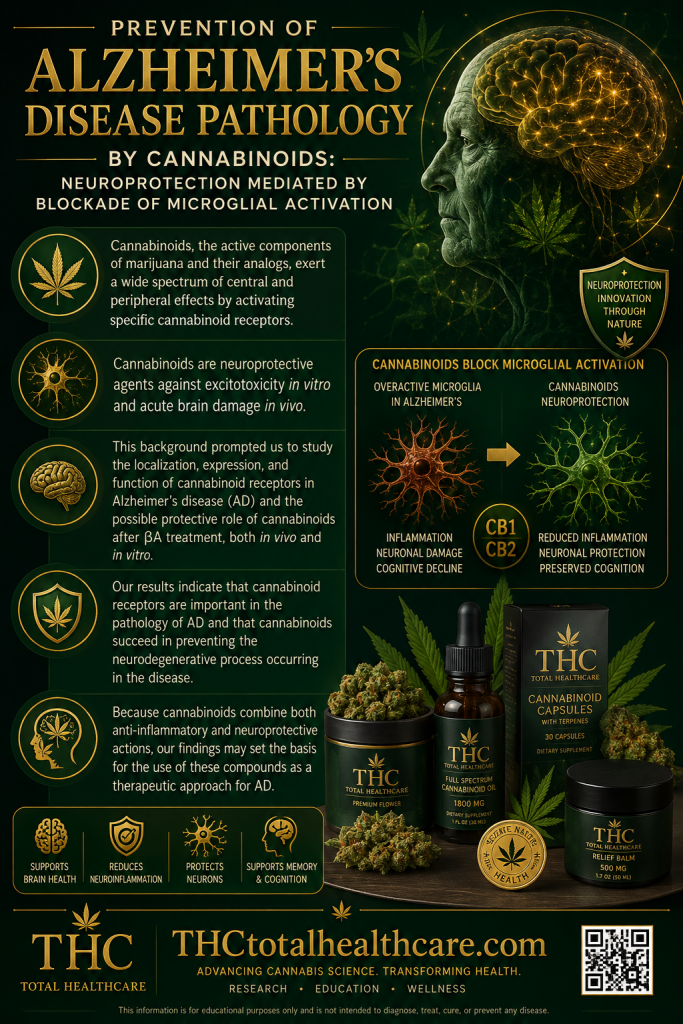
“Neurodegenerative diseases (NDs) constitute a growing global health burden driven by population aging and remain without disease-modifying therapies. Although chronic neuroinflammation and aberrant protein aggregation are widely recognized as shared pathological hallmarks of major NDs – including Alzheimer’s, Parkinson’s, Huntington’s diseases and multiple sclerosis – the causal relationships linking immunoinflammatory signaling to neurodegenerative progression remain contentious. Therapeutic strategies targeting neuroinflammation have thus far yielded limited clinical success, underscoring the need for mechanistically grounded and context-specific interventions.

The endocannabinoid system (ECS) is a key regulator of synaptic function, glial activity, and immune homeostasis in the central nervous system (CNS), and its dysregulation has been consistently reported in neurodegenerative settings. However, ECS alterations across NDs are heterogeneous and often disease- and stage-dependent, with conflicting findings regarding cannabinoid receptor expression, endocannabinoid tone, and functional outcomes.

Moreover, while preclinical studies demonstrate robust anti-inflammatory and neuroprotective effects of cannabinoid ligands, clinical translation has been constrained by issues of receptor specificity, psychoactive side effects, limited brain penetration, and an incomplete understanding of long-term ECS modulation.

In this Review, we critically evaluate current evidence linking ECS signaling to neuroinflammatory mechanisms in neurodegeneration, highlighting both convergent pathways and unresolved controversies. We discuss the translational implications of ECS-targeted strategies, including the development of selective receptor modulators, allosteric and/or bitopic/dualsteric ligands, and enzyme inhibitors, as well as emerging approaches to mitigate adverse effects and improve therapeutic precision.

By integrating mechanistic insights with clinical challenges, this Review delineates key obstacles and opportunities for advancing ECS-based interventions toward disease-modifying therapies for neurodegenerative disorders.”

https://pubmed.ncbi.nlm.nih.gov/41937092

“These findings are particularly relevant for the development of next-generation cannabinoid therapeutics designed to selectively engage beneficial signaling pathways while minimizing adverse effects.”

https://www.sciencedirect.com/science/article/pii/S1043661826001003?via%3Dihub


Radical Revelations: The Interplay of Nitrosative Stress, the Endocannabinoid System, and Treatment of Age-Related Disorders

“The crosstalk between the endocannabinoid system (ECS) and reactive nitrogen species (RNS) has emerged as an important area of investigation in recent years.

Although many aspects of this interaction remain elusive, accumulating evidence demonstrates that the ECS plays a critical role in regulating RNS-mediated signaling under physiological conditions. This modulation can be either inhibitory or stimulatory, depending on the specific receptor subtype, cell type, and tissue location involved.

While ECS-RNS interactions support normal cellular homeostasis, their dysregulation contributes to various disease states, particularly neurodegenerative disorders. Studies in both rodent models and human subjects show that ECS modulation can reduce anxiety, attenuate neuroinflammatory responses, and slow disease progression in neurodegenerative conditions.

This review examines how cannabinoid-based interventions modulate nitrosative stress and neuroinflammation in Alzheimer’s disease (AD) and Parkinson’s disease (PD), highlighting their potential as targeted therapeutics that address multiple pathological mechanisms simultaneously and may offer advantages over conventional treatment approaches.”

https://pubmed.ncbi.nlm.nih.gov/41898672

“cannabinoid treatment offers a promising alternative to conventional treatments by addressing symptomology and the underlying molecular mechanisms of these diseases. Cannabinoid treatment uniquely addresses AD and PD pathology via crosstalk between the RNS and ECS, which provides hope for disease modification as an alternative to/supplement to conventional treatments.”

https://www.mdpi.com/1422-0067/27/6/2813


The Diminished Availability of 2-AG in Aged Synaptic Terminals is Ameliorated by a Full-Spectrum Cannabis Extract with a High THC Content

“We have previously demonstrated that the endocannabinoid system is dysregulated in the synaptic terminals of the cerebral cortex in aged rats. Specifically, the availability of the neuroprotective endocannabinoid 2-arachidonoylglycerol (2-AG) is reduced due to impairments in the enzymes involved in its metabolism, a deficit only partially compensated by the binding of cannabinoid receptor ligands.

Given that ∆9-tetrahydrocannabinol (THC) acts as a ligand for cannabinoid receptors (CBR), we designed the present study to investigate the effects of a full-spectrum cannabis extract with a high THC content, the THC-free fraction of this cannabis extract, and pure THC on the previously mentioned aging model. Thus, 2-AG metabolic enzymes were assayed incubating synaptosomes from aged and adult rat cerebral cortex, with ethanolic cannabis extract, the THC-free fraction of this cannabis extract or pure THC, and the corresponding radiolabeled substrates.

Our key findings indicate that the age-related decline in 2-AG bioavailability: (a) is exacerbated in the presence of either the THC-free fraction from the cannabis extract or pure THC, primarily due to a significant decrease in 2-AG synthesis; and (b) is partially mitigated by the inhibition of 2-AG hydrolysis when the extract contains THC.

These results provide compelling evidence for the regulation of 2-AG metabolism by a full-spectrum cannabis extract with high THC content, supporting the theory of the entourage effect among cannabis phytochemicals.

This highlights the potential of high THC content extracts as therapeutic agents for restoring the decreased 2-AG levels observed in the aging brain.”

https://pubmed.ncbi.nlm.nih.gov/41880097

https://link.springer.com/article/10.1007/s11064-026-04739-1

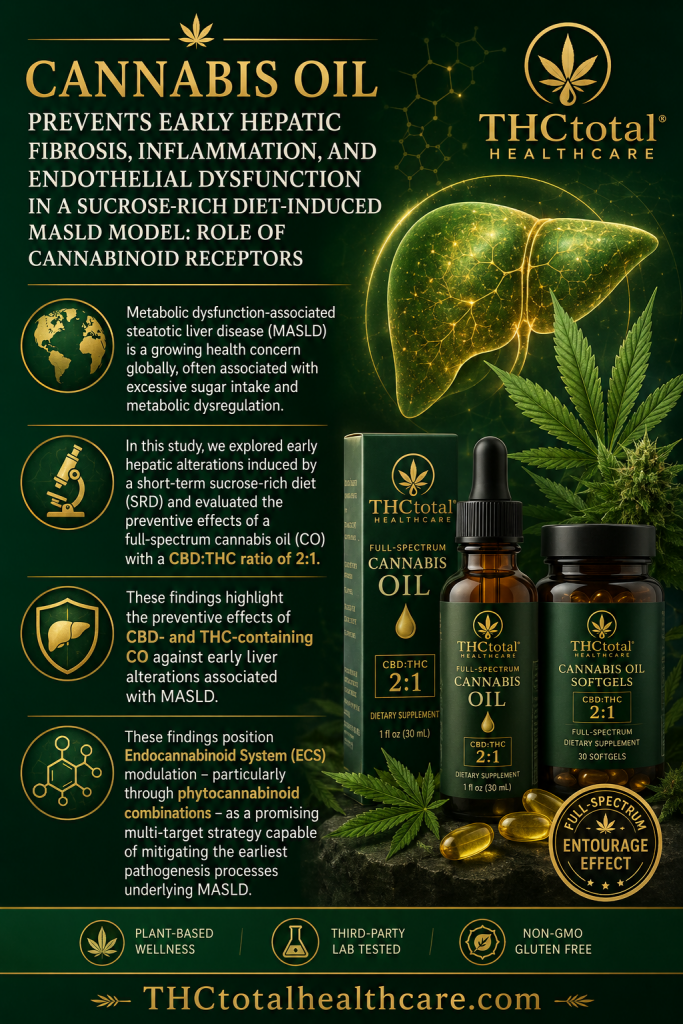
Cannabis oil modulates liver alterations and endocannabinoid system changes in a female rat model of diet-induced MASLD

“Introduction: Metabolic dysfunction-associated steatotic liver disease (MASLD) is closely linked to alterations in liver lipid metabolism, oxidative stress, fibrosis, and dysregulation of the endocannabinoid system (ECS). Although increasing evidence supports a role for cannabinoids in metabolic disorders, most preclinical studies have been conducted in male models, leaving female-specific responses largely unexplored.

Methods: This study evaluated the effects of oral administration of a full-spectrum cannabis oil (CBD:THC 2:1) on MASLD-related alterations and ECS regulation in female Wistar rats fed a sucrose-rich diet (SRD). Rats were assigned to reference diet (RD), SRD, or SRD plus cannabis oil (1 mg/kg/day) for 3 weeks.

Results: SRD-fed rats developed liver steatosis and increased NAFLD activity score (NAS), accompanied by enhanced de novo lipogenesis, reduced mitochondrial fatty acid oxidation, increased oxidative stress, early fibrotic changes, and ECS overactivation. Cannabis oil administration improved liver lipid metabolism, reduced NAS and fibrosis markers, attenuated lipid peroxidation and oxidative stress, increased NrF2 and decreased NF-κB p65 expression, and normalized hepatic CB1 expression and circulating endocannabinoid levels.

Discussion: These findings demonstrate that full-spectrum cannabis oil is associated with improved MASLD-related outcomes and modulation of ECS tone in a female-specific model of diet-induced metabolic liver disease.”

https://pubmed.ncbi.nlm.nih.gov/41883411

“For millions of years, medicinal plants have been employed in the treatment and handling of liver diseases”

 “Our results indicate that cannabis oil with this particular CBD:THC ratio may serve as a natural nutraceutical to help prevent metabolic disorders linked to hepatic steatosis, oxidative stress, liver fibrosis, and MASLD.”

https://www.frontiersin.org/journals/nutrition/articles/10.3389/fnut.2026.1770150/full

A sesquiterpene-rich essential oil from Cannabis sativa L. attenuates symptoms and neuroinflammation in experimental autoimmune encephalomyelitis model through a CB2-mediated signalling

Background: The efficacy of cannabinoid-based medication as analgesic and neuroprotective in multiple sclerosis (MS) has been described, but little is known on other cannabis active compounds, such as terpenes.

Purpose: To investigate the therapeutic potential and molecular mechanism of non-psychotropic Cannabis sativa L. essential oil (EO) in an animal model of MS.

Methods: Chemical composition of EO was analyzed using GC-MS and GC-FID. Mouse model of experimental autoimmune encephalomyelitis (EAE) was employed to evaluate EO efficacy on pain (hot and cold plate test, von Frey test), motor disability (clinical score, rotarod), emotional alterations (sucrose splash test, tail suspension test, open field, light-dark box test) (n = 11). Tissues and LPS-stimulated BV2 cells were analyzed by Western blot, immunofluorescence, Luxol Fast Blue (LFB), hematoxylin and eosin (H&E) staining, UHPLCHRMS analysis.

Results: β-caryophyllene, α-humulene, and caryophyllene oxide were the most abundant EO constituents. Intranasal administration of EO attenuated thermal and mechanical hypersensitivity, promoted motor function recovery, and induced antidepressant- and anxiolytic-like effects in EAE mice. EO increased LFB staining and MBP content while reducing H&E staining. In spinal cord and hippocampal tissues, EO reduced proinflammatory microglia (CD11b/IBA-1 ratio), restored the IL-17/IL-10 balance, and promoted a shift of microglia toward an anti-inflammatory phenotype by increasing CD206 and FoxP3 expression. Mechanistically, EO markedly upregulated CB2 receptor expression in both EAE mice and LPS-stimulated BV2 cells. The protective effect of EO was abolished by a CB2 antagonist (AM630) but not by CB1 blockade (AM251).

Conclusion: Intranasal EO alleviates EAE symptoms and comorbidities through a CB2-mediated attenuation of neuroinflammation and demyelination.”

https://pubmed.ncbi.nlm.nih.gov/41875735

“Studies on the use of medical cannabis in the treatment of MS suggest a reduction in pain and spasticity and most clinical trials have shown symptom improvement with cannabis-based drugs administration”

“Present findings provide the first evidence that a sesquiterpene-rich EO obtained from non-psychoactive C. sativa mitigates EAE neurological symptoms, alleviating pain hypersensitivity, motor disability and mood-related comorbidities through a CB2-mediated anti-neuroinflammatory mechanism.”

https://www.sciencedirect.com/science/article/pii/S0944711326003041?via%3Dihub

Bridging reward and resilience: the endocannabinoid system as a unifying mechanism in exercise-induced protection against major depressive disorder

“Major depressive disorder (MDD) refers to a complex mental disorder defined by hindered reward system and hindered stress resilience. The limitations of traditional monoamine antidepressants have prompted the academic community to study new pathological processes and intervention strategies. Major depressive disorder arises from a complex interplay of psychological, social, and biological factors.

Among the latter, dysfunction of the endocannabinoid system (ECS) has emerged as a critical pathological mechanism contributing to the core symptoms.

This review demonstrates the key idea that exercise as a powerful non-pharmacological intervention can increase stress resilience and exert antidepressant effects by positively activating the ECS.

Exercise, especially moderate intensity aerobic exercise, can significantly increase the levels of major endogenous cannabinoids AEA and 2-AG, and exert effects at multiple levels by activating CB1 receptors: at the acute level, it can immediately promote mood, generate analgesic effects and improve the termination of the stress response; At the long-term level, it can drive synaptic plasticity, facilitate hippocampal neurogenesis, and regulate neuroimmunity, thereby obtaining lasting structural improvement of emotional and stress neural circuits.

These processes work together to reshape the brain’s reward function and establish internal resilience against stress. In comparison to drug therapy, ECS-regulated exercise interventions have the unique benefits of high safety, systemic advantages, and endogenous reward reinforcement.

Thus, individualized exercise therapy for ECS represents a promising mechanism-induced non-pharmacological intervention approach offering a new aspect and perspective for the prevention and rehabilitation of depression.”

https://pubmed.ncbi.nlm.nih.gov/41877874

https://www.frontiersin.org/journals/psychiatry/articles/10.3389/fpsyt.2026.1766980/full

“Exercise activates the endocannabinoid system”

https://pubmed.ncbi.nlm.nih.gov/14625449

Enhancing the endocannabinoid system to treat residual disease in relapse-free multiple sclerosis

“The recent introduction of High-Efficacy Therapies (HETs) in clinical practice has drastically reduced the frequency of acute inflammatory episodes and relapses, in patients with Multiple Sclerosis (MS), gradually shifting the interest of clinicians toward preventing disease progression and treating symptoms associated with the residual disease. This article summarizes the output of a recent meeting (June 2025, in Rome) among an Italian group of neurologists, who discussed about published evidence supporting the involvement of the endocannabinoid system (ECS) in MS spasticity and its associated symptoms. Sharing their clinical experiences about the silent progression of the disease, in patients with Relapse-Free Multiple Sclerosis (RFMS), treated with HETs, authors propose a new algorithm to treat residual disease in RFMS, by enhancing ECS with both cannabinoid agents and lifestyle interventions (diet and physical activity).”

https://pubmed.ncbi.nlm.nih.gov/41859417

“authors developed a treatment algorithm, emphasizing the importance of timely intervention both with an increase in endogenous cannabinoids, through diet and physical activity, and with the use of an exogenous cannabinoid agent such as nabiximols.”

https://www.frontiersin.org/journals/neurology/articles/10.3389/fneur.2026.1747131/full

Nabiximols (brand name Sativex) is a pharmaceutical-grade, oromucosal spray containing a 1:1 ratio of cannabinoids THC and CBD derived from Cannabis sativa.”