Background: Chronic neuropathic pain (NP) is frequently accompanied by anxiety- and depression‑like symptoms, reflecting maladaptive interactions between nociceptive and affective brain networks. The anterior insular cortex (AIC) integrates sensory and emotional dimensions of pain and represents a potential target for pharmacological modulation. Cannabidiol (CBD) exhibits analgesic and anxiolytic/antidepressant‑like properties through interactions with endocannabinoid and serotonergic systems.
Objectives: We investigated whether CBD microinjection into the AIC modulates NP and its affective comorbidities, and whether these effects depend on CB1 and 5‑HT1A receptors.
Methods: Male Wistar rats were subjected to chronic constriction injury (CCI) of the sciatic nerve. Fourteen days later, guide cannulae were implanted into the AIC. On day 21 post‑CCI, animals received intra‑AIC microinjections of CBD (15, 30, or 60 nmol/200 nL) or vehicle. Mechanical (von Frey test) and cold (acetone test) allodynia, anxiety‑like behavior (open field and elevated plus maze tests), and depression‑like behavior (forced swim and sucrose spray tests) were assessed by different psychobiological tests. The role of cannabinoid and serotonergic receptors was addressed by intra‑AIC pretreatment with either the CB1 receptor antagonist AM251 or the 5‑HT1A receptor antagonist WAY-100,635 in independent groups.
Results: AIC pretreatment with CBD dose‑dependently reduced mechanical and cold allodynia and anxiety‑ and depression‑like behaviors, with the most robust effects observed at 60 nmol. AIC Pretreatment with either AM251 or WAY-100,635 abolished the antinociceptive and affective effects of CBD.
Conclusion: CBD administration within the AIC produces integrated analgesic, anxiolytic, and antidepressant-like effects in a model of neuropathic pain. These effects are consistent with the involvement of CB1 and 5-HT1A receptor signaling. The findings identify the AIC as a relevant cortical substrate linking nociceptive and affective processes and support CBD as a promising psychopharmacological strategy for NP associated with emotional comorbidities.”
“In conclusion, this study demonstrates that CBD microinjection into the AIC attenuates mechanical and cold allodynia while also reducing anxiety- and depression-like behaviors in an experimental model of NP.”
“Overall, these findings highlight the AIC as a potential neural substrate involved in the interaction between chronic pain and its emotional comorbidities and identify CBD as a promising psychopharmacological approach for NP conditions associated with affective dysfunction.”
“Background/Objectives: Chronic low back pain (CLBP) affects approximately 20% of the global population and is a leading cause of years lived with disability. Long-term, real-world evidence for inhaled cannabis in patients refractory to conventional multimodal therapy remains scarce. We assessed the five-year efficacy and safety of inhaled cannabis in CLBP patients who had documented failure of ≥1 year of opioid analgesics, anticonvulsants, antidepressants, NSAIDs, and physiotherapy, with each patient serving as their own historical control.
Methods: We analyzed prospectively collected clinical data from 241 consecutive adults with treatment-refractory CLBP (mean age 49.3 ± 14.9 years; 37.8% female; mean pain duration 15.1 years) initiated on inhaled medical cannabis (predominantly smoking, THC 4-22%, CBD 2-22%) in a single-center tertiary orthopedic clinic between 2020 and 2025 (Hasharon Hospital, Rabin Medical Center, Israel; IRB protocols 0807-21-RMC and 0634-25-RMC). Year-0 outcomes during conventional therapy were compared with outcomes at Years 1-5 on cannabis. Primary outcomes were the Numeric Rating Scale (NRS), Oswestry Disability Index (ODI), and Brief Pain Inventory severity/interference (BPI-S/BPI-I). Concomitant-medication trajectories were a secondary outcome. The primary analysis was a mixed model for repeated measures (MMRM) with random intercept and slope, REML estimation, and time as a categorical fixed effect. Multiple imputation (MAR, m = 20, Rubin’s rules) was the primary missing-data approach; complete-case and tipping-point pattern-mixture sensitivity analyses were used. A multivariate Hotelling T2 provided a joint test across the four correlated PROMs. Concomitant-medication discontinuation was modeled with GEE logistic regression and exact McNemar tests. Time to discontinuation was estimated by Kaplan-Meier and Cox regression. The Bonferroni-adjusted significance threshold for the four primary outcomes was α = 0.0125. BioWell gas-discharge-visualization (GDV) parameters were exploratory only.
Results: Of 241 patients, 238 (98.8%) provided Year-5 data and 224 (92.9%) remained on cannabis at Year 5; only five patients (2.1%) discontinued for adverse events or inefficacy. All four primary PROMs improved markedly and durably. MMRM-estimated Year-5 minus Year-0 changes were: NRS -5.36 (95% CI -5.65, -5.07), ODI -17.68 (95% CI -19.73, -15.63), BPI-S -6.73 (95% CI -6.99, -6.47), and BPI-I -3.41 (95% CI -3.65, -3.16); all four contrasts had |z| ≥ 16.9 and p < 10-20. MI-pooled estimates were within 0.05 of MMRM (FMI < 0.03 for all outcomes). Hotelling T2 was F(4, 232) = 872.8, p < 10-20. At Year 5, 89.2% achieved ≥30% NRS reduction, 77.2% ≥ 50%, and 93.4% met the NRS minimum clinically important difference (MCID); ODI MCID 65.6%, BPI-S MCID (≥1 pt) 98.3%, BPI-I MCID (≥1 pt) 91.3%. Concomitant opioid use fell from 100% at baseline to 4.6% at Year 5 (within-patient absolute risk reduction 95.4%, McNemar exact p = 1.16 × 10-69), NSAID from 100% to 7.1%, SSRI/SNRI from 80.5% to 5.4%, and gabapentinoid from 38.6% to 2.5%. The ARR-derived NNT for opioid discontinuation was 1.05; this NNT is referenced to each patient’s own documented maximal-conventional-therapy state and is not equivalent to a between-arm randomized-trial NNT. Cannabis dose × time interaction was consistent with no pharmacological tolerance (β = -0.0044 per gram-month per year, p = 0.074). Across 1205 patient-years of cannabis exposure (calculated as 241 patients × 5 follow-up years from Year 1 through Year 5; baseline Year 0 represents pre-cannabis state and is not included in person-time on cannabis), 1338 organ-system AE events were recorded at 1.110/patient-year (Poisson 95% CI 1.05-1.17); 99.8% of graded events were mild (grade 1), with ocular (476 events, 0.40/PY), cognitive (460, 0.38/PY), and gastrointestinal (368, 0.31/PY) reactions predominating. The Year-3 retention dip reflected a documented telemedicine-clinic phenomenon during 2022-2024, with patients returning to in-person follow-up by Year 4-5. BioWell GDV discriminated NRS ≥ 4 only at chance level (BWS AUC 0.574, 95% CI 0.54-0.60; BWV AUC 0.51).
Conclusions: In a treatment-refractory CLBP cohort with five-year longitudinal follow-up, inhaled cannabis was associated with large, sustained, and statistically robust improvements in pain, disability, and pain interference, accompanied by near-total displacement of opioids, NSAIDs, antidepressants, and gabapentinoids. These observational associations, although mechanically less susceptible to bias for the binary medication-discontinuation outcomes than for self-reported PROMs, cannot be interpreted causally in the absence of a concurrent randomized control arm and may reflect a combination of pharmacological effect, regression to the mean from a high pre-treatment baseline, expectancy and self-selection effects intrinsic to an actively chosen open-label therapy, and secular trends in pain reporting. The within-patient benefit-risk profile-ARR-derived NNT ≈ 1 for opioid sparing against a predominantly mild adverse-event burden-supports consideration of cannabis as a potentially clinically meaningful, opioid-sparing option in patients who have failed multimodal conventional therapy, pending confirmation in randomized comparative trials.”
“Inhaled medical cannabis has emerged as a candidate analgesic for refractory chronic-pain syndromes.
Mechanistically, exogenous Δ9-tetrahydrocannabinol (THC) and cannabidiol (CBD) modulate the endocannabinoid system through CB1- and CB2-receptor signaling, with downstream effects on descending pain modulation, peripheral nociceptor sensitization, and affective dimensions of suffering.”
“These data support consideration of inhaled cannabis as a potentially clinically meaningful, opioid-sparing option for patients who have failed conventional multimodal therapy.”
Background: Opioid withdrawal is a significant challenge for people seeking to reduce or eliminate opioid use, and unmanaged withdrawal increases the risk of relapse and overdose. Using cannabis to manage opioid withdrawal has been reported by people who use opioids, yet it is not clear whether this leads to reductions in opioid use. Moreover, because pain is prevalent among people who use unregulated opioids (PWUO) and may contribute to ongoing opioid use, the effects of cannabis use to manage withdrawal symptoms may differ among individuals experiencing moderate to severe pain. We investigated the relationship between cannabis use to manage unregulated opioid withdrawal and self-reported reductions in opioid use among PWUO.
Methods: Data were derived from a cross-sectional questionnaire administered to cannabis-using PWUO in Vancouver, Canada, between December 2019 and November 2021. Multivariable logistic regression estimated the associations between cannabis use for opioid withdrawal and self-reported reductions in opioid use. A sub-analysis explored if these associations varied among participants living with and without moderate to severe pain.
Results: Among 197 participants, 89 (45.2%) reported cannabis use to manage symptoms of opioid withdrawal in the past six months. In multivariable analysis, cannabis use for opioid withdrawal was significantly associated with self-reported reductions in opioid use (adjusted Odds Ratio [AOR] = 2.16, 95% Confidence Interval [CI]: 1.13-4.19) in the same time period. In a sub-analysis, this association was only significant among participants with moderate to severe pain (AOR = 6.55; 95% CI: 2.44-19.63).
Conclusions: We observed a significant association between self-reported use of cannabis to manage unregulated opioid withdrawal and reductions in opioid use among cannabis-using PWUO living with pain. Aligned with other studies, these findings support conducting experimental trials of cannabinoids to support individuals experiencing opioid withdrawal and living with pain.”
“Cannabinoid-based therapies have gained increasing attention for the management of chronic and treatment-resistant pain, although their clinical application is limited by the poor aqueous solubility and variable bioavailability of Δ9-tetrahydrocannabinol (THC).
In this study, we developed and characterized a nanoemulsion (THC-NE) for buccal administration of a Cannabis sativa L. extract (Bedrocan®), with the aim of improving solubility, stability and bioavailability.
The optimized formulation, composed of pharmaceutically acceptable excipients, showed a narrow droplet size distribution (DH ≈ 73 nm, PDI ≈ 0.2), a THC content consistent with the theoretical value (3.53 ± 0.56 mg/mL), and good physicochemical stability at 4°C for at least 90 days. The formulation maintained its properties upon extensive dilution in simulated buccal fluids and after spray nebulization, supporting its suitability for oromucosal delivery. In vitro release studies confirmed sustained THC release from THC-NE, whereas negligible release was observed from the oil extract, highlighting the role of nanoformulation in enhancing solubilization and controlled release.
An observational study was conducted in 18 patients with chronic pain unresponsive to standard treatments. After a median follow-up of 189 days, mean pain scores (NRS) decreased significantly from 8.6 ± 0.9 to 5.4 ± 2.8 (p < 0.001), with 83% of patients achieving a ≥ 20% reduction. Among responders, the mean NRS decreased by 45% and treatment persistence was found to be high, with 64% of patients still remaining under therapy after six months. A total of 17 adverse events were reported in 11 patients, most of which were mild to moderate and transient. Additionally, treatment interruption occurred in three patients due to adverse events, in other three owing to limited efficacy and in two for logistical reasons.
Overall, these findings indicate that buccal administration of THC-NE represents a promising patient-friendly approach for cannabis-based therapy, offering improved solubility, controlled release and meaningful clinical benefit in patients with refractory chronic pain.”
“Among the bioactive compounds found in Cannabis sativa, Δ9-tetrahydrocannabinol (THC) has been identified as the primary psychoactive component, exhibiting significant analgesic, antispastic, and neuroprotective properties. “
“This study demonstrates that NE technology can be successfully applied to develop a stable and efficient buccal formulation of Cannabis sativa extract. The optimized THC-NE proved to be physicochemically stable, robust under dilution, and suitable for administration via standard spray devices, while ensuring enhanced release of THC compared to the oily extract.”
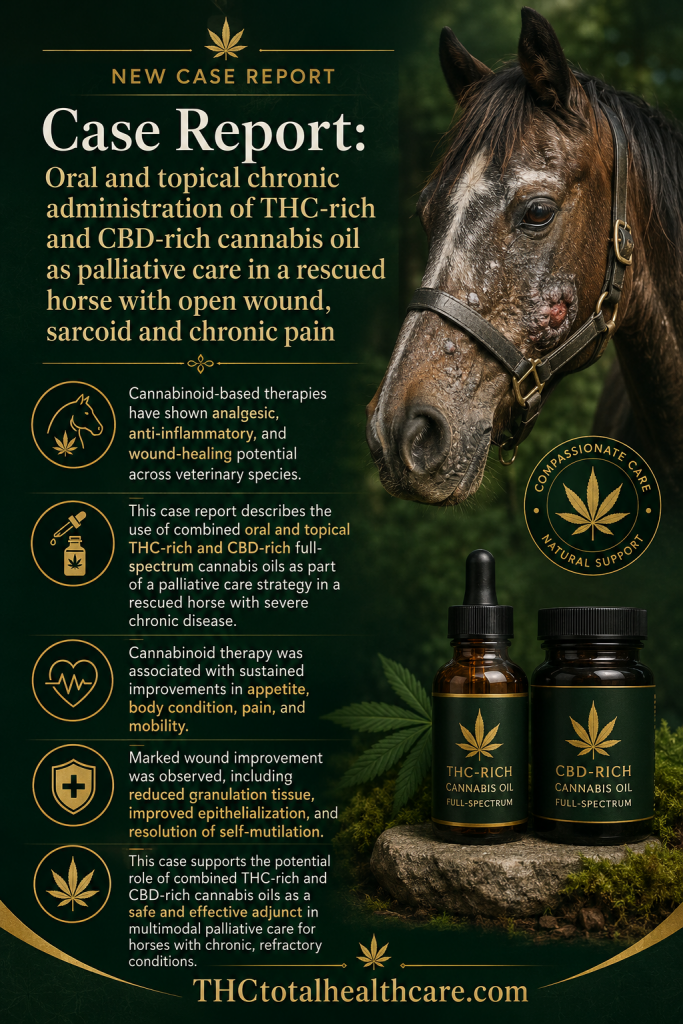
“Cannabinoid-based therapies have shown analgesic, anti-inflammatory, and wound-healing potential across veterinary species; however, clinical data on long-term use of THC-rich formulations in horses remain scarce.
This case report describes the use of combined oral and topical THC-rich and CBD-rich full-spectrum cannabis oils as part of a palliative care strategy in a rescued horse with severe chronic disease.
A senior mixed-breed gelding was rescued with a large, chronic ulcerative lesion of the left hind limb, severe malnutrition, non-weight-bearing lameness (AAEP grade 5/5), and refractory pain. Diagnostic workup identified a fibroblastic equine sarcoid complicated by complete suspensory tendon rupture, early osteomyelitis, and chronic joint disease. Conventional medical and surgical options were limited due to poor response, disease severity, and resource constraints.
A long-term palliative protocol was initiated using oral THC-rich and CBD-rich full-spectrum cannabis oils (1:1 ratio; 100 mg/mL each) with gradual dose escalation to a target of 0.5 mg/kg of each compound every 12 hours. The same formulation was applied topically to the wound once to twice daily. Treatment duration was 10 months, with concurrent multimodal analgesia as needed.
Cannabinoid therapy was associated with sustained improvements in appetite, body condition, pain, and mobility. Marked wound improvement was observed, including reduced granulation tissue, improved epithelialization, and resolution of self-mutilation.
No clinically relevant adverse effects or laboratory abnormalities occurred during routine dosing. Transient ataxia and sedation were noted only at high rescue doses near end of life. Despite eventual disease progression and euthanasia due to refractory pain, quality of life was substantially improved for most of the treatment period.
This case supports the potential role of combined THC-rich and CBD-rich cannabis oils as a safe and effective adjunct in multimodal palliative care for horses with chronic, refractory conditions. Controlled studies are warranted to define optimal dosing and indications.”
“Across veterinary species, cannabinoids have shown therapeutic potential with favorable safety and tolerability profiles.”
“The aim of this case report is to describe a long-term multimodal clinical approach using cannabinoids (THC and CBD) in a rescued horse affected by a wound/sarcoid and joint disease, as part of a palliative care strategy for pain management, inflammation control, and wound-healing enhancement.”
“This case suggests that long-term administration of THC-rich and CBD-rich cannabis oils may be a useful adjunct for palliative management in horses with chronic, refractory conditions.”
“Cannabinoid therapy was associated with improved comfort, mobility, and quality of life, supporting its potential role within multimodal palliative care.”
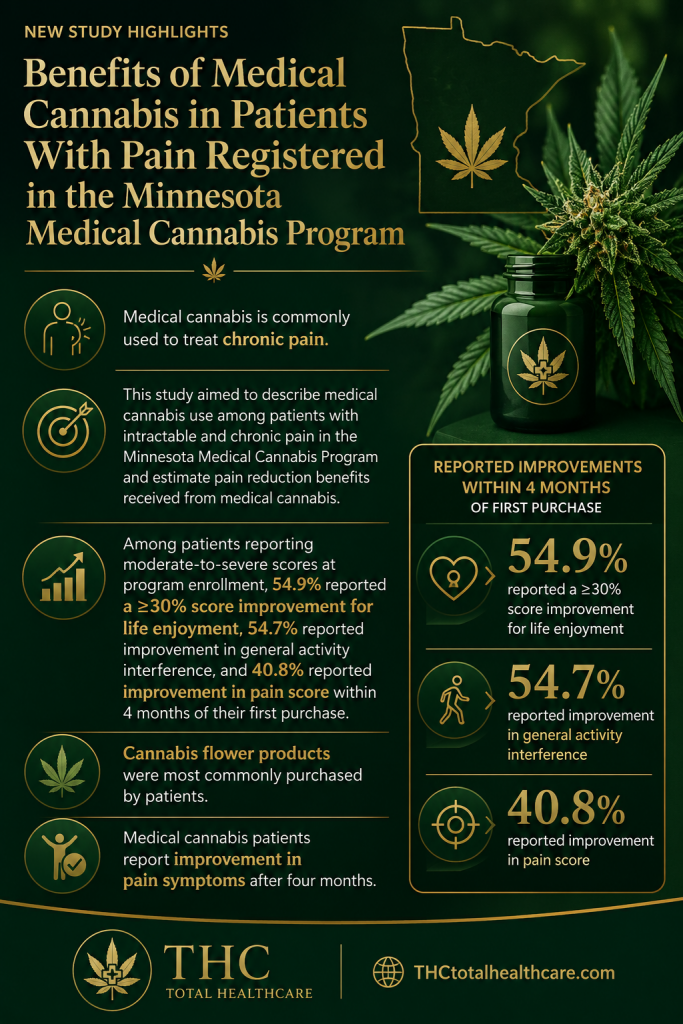
“Purpose: Medical cannabis is commonly used to treat chronic pain. Clinical trials typically use only one type and dosage of medical cannabis product, which is not reflective of real-world use. The use of a state-run medical cannabis program can bridge the gap between clinical research and real-world use of medical cannabis to estimate the benefits of cannabis use on patient symptoms. This study aimed to describe medical cannabis use among patients with intractable and chronic pain in the Minnesota Medical Cannabis Program and estimate pain reduction benefits received from medical cannabis.
Methods: Patients who enrolled in the Minnesota Medical Cannabis Program between March 2022 and February 2023 for chronic pain and purchased medical cannabis for at least 8 months were included in this study. Patients were required to complete the Patient Self-Evaluation before each medical cannabis purchase, which included the PEG (Pain, Enjoyment of Life, and General Activity) scale. The main outcome of this analysis was a ≥30% change in PEG component score within 4 months of first medical cannabis purchase. The proportion of patients who maintained that reduction for an additional 4 months was also calculated. Medical cannabis product purchases were queried from the first 4 months in the program and categorized by route of administration and tetrahydrocannabinol:cannabidiol ratio. Medical cannabis purchasing profiles were created using k-means clustering to group patients who purchased similar proportions of product types. Adjusted logistic regression models were run to investigate the association between medical cannabis purchasing profile and reporting ≥30% reduction in PEG score.
Findings: Among patients reporting moderate-to-severe scores at program enrollment, 54.9% reported a ≥30% score improvement for life enjoyment, 54.7% reported improvement in general activity interference, and 40.8% reported improvement in pain score within 4 months of their first purchase. Cannabis flower products were most commonly purchased by patients. High tetrahydrocannabinol:cannabidiol products were the most commonly purchased in all medical cannabis product categories. K-means clustering created 5 product purchasing profiles, which were not associated with PEG score improvement outcomes after adjustment for number of purchasing transactions.
Implications: Medical cannabis patients report reduction in PEG scores within 4 months of first medical cannabis purchase using a variety of medical cannabis products. Future research on medical cannabis should determine the frequency of use of different products and administration methods to further investigate how cannabis can be used for effective pain management in patients with chronic pain.”
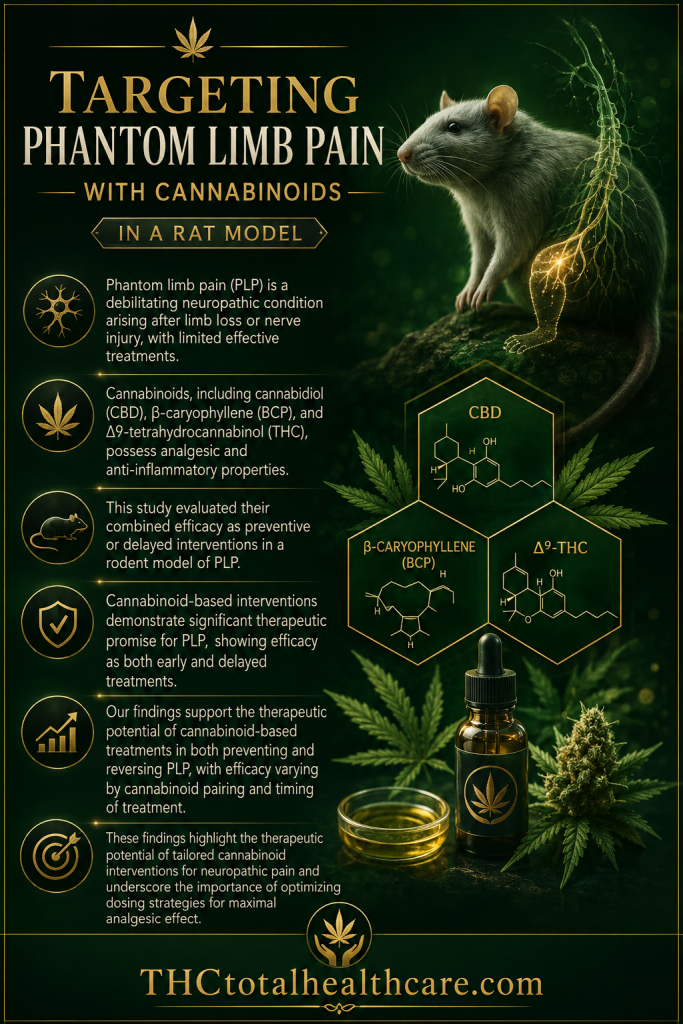
“Introduction: Phantom limb pain (PLP) is a debilitating neuropathic condition arising after limb loss or nerve injury, with limited effective treatments. Cannabinoids, including cannabidiol (CBD), β-caryophyllene (BCP), and Δ9-tetrahydrocannabinol (THC), possess analgesic and anti-inflammatory properties. This study evaluated their combined efficacy as preventive or delayed interventions in a rodent model of PLP.
Methods: To model PLP, a chronic constriction injury was used to mimic pre-amputation pain, followed by formalin-induced localized inflammation and complete sciatic nerve transection to simulate extremity amputation. Cannabinoid treatments (CBD/BCP/THC, CBD/BCP, or THC) or vehicle control were administered either preemptively on the day of axotomy (prevention paradigm) or after the emergence of pain behaviors (reversal paradigm). Progression of pain behaviors were assessed over a 72-day period, and modulation of spinal cytokine levels, glial reactivity, and GABAergic signaling was evaluated.
Results: Preemptive THC or CBD/BCP reduced PLP onset and severity, while the full combination was less effective. In contrast, with delayed treatment, CBD/BCP and the CBD/BCP/THC combination were most effective in mitigating PLP. Pain reduction was correlated with restoration of spinal GABAergic inhibition. All cannabinoid treatments decreased microglial and astrocyte reactivity and shifted cytokines toward an anti-inflammatory state.
Conclusion: Cannabinoid-based interventions demonstrate significant therapeutic promise for PLP, showing efficacy as both early and delayed treatments. Findings suggest that THC may exert greater therapeutic effects when administered pre-emptively, while CBD and BCP may offer greater therapeutic advantages in established pain states. These findings highlight the therapeutic potential of tailored cannabinoid interventions for neuropathic pain and underscore the importance of optimizing dosing strategies for maximal analgesic effect.”
“Cannabis contains a complex mixture of cannabinoids, terpenes, and flavonoids that have demonstrated therapeutic potential in a variety of pathologies and conditions. Their anti-inflammatory, analgesic, and antioxidant activities are believed to play a central role in mediating pain relief.”
“Our findings support the therapeutic potential of cannabinoid-based treatments in both preventing and reversing PLP, with efficacy varying by cannabinoid pairing and timing of treatment.
Together, these results underscore the therapeutic promise of cannabinoid-based treatments while highlighting the need to carefully consider how specific compounds and dosing strategies interact in different stages of pain.”
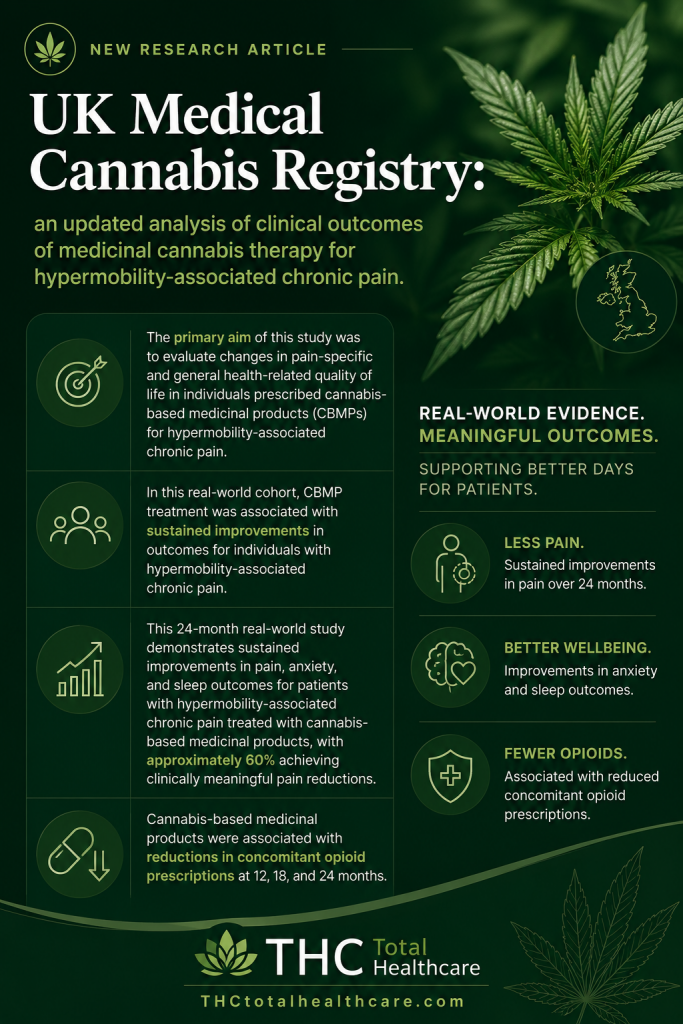
“Introduction/objective: The primary aim of this study was to evaluate changes in pain-specific and general health-related quality of life in individuals prescribed cannabis-based medicinal products (CBMPs) for hypermobility-associated chronic pain.
Methods: The case series utilised data from the UK Medical Cannabis Registry. Primary outcomes were changes in Brief Pain Inventory (BPI), Pain Visual Analogue Scale (VAS), Short-Form McGill Pain Questionnaire-2 (SF-MPQ-2), EQ-5D-5L index value, Generalised Anxiety Disorder-7 (GAD-7), and Single-item Sleep Quality Scale (SQS) over 24 months. Repeated measures analysis of variance was used to assess changes over time, with post hoc pairwise comparisons performed for significant findings.
Results: A total of 240 patients were analysed. Changes were observed across all patient-reported outcome measures (PROMs) on repeated measures analysis of variance (p < 0.001). Post hoc pairwise comparisons for the BPI subscales, SF-MPQ-2 and Pain VAS demonstrated improvement from baseline to all subsequent timepoints (p < 0.001). By 24 months, 56.67% (n = 136) and 61.25% (n = 147) of participants reported clinically significant improvements in BPI severity and interference respectively. Clinically significant improvements were also reported for SF-MPQ-2 (47.08%, n = 113) and Pain VAS scores (60.00%, n = 144).
Conclusion: In this real-world cohort, CBMP treatment was associated with sustained improvements in outcomes for individuals with hypermobility-associated chronic pain. These findings support the need for further controlled studies to determine causality.
Key Points • This 24-month real-world study demonstrates sustained improvements in pain, anxiety, and sleep outcomes for patients with hypermobility-associated chronic pain treated with cannabis-based medicinal products, with approximately 60% achieving clinically meaningful pain reductions.
• Cannabis-based medicinal products were associated with reductions in concomitant opioid prescriptions at 12, 18, and 24 months.
• This represents the largest and longest-duration observational study of medical cannabis therapy specifically in hypermobility spectrum disorders and Ehlers-Danlos syndrome, addressing a critical evidence gap in chronic pain management.
• Adverse events were predominantly mild-to-moderate in severity, with poor baseline sleep quality and current cannabis use identified as positive predictors of pain improvement, informing patient selection and treatment optimisation.”
“This study provides a 24-month real-world evaluation of CBMPs in patients with hypermobility-associated chronic pain. It demonstrates long-term sustained improvement in pain, anxiety and sleep-related outcomes, underpinning health-related quality of life. Despite its observational design, the study provides important insight into potentially addressing an area of significantly unmet therapeutic need.”
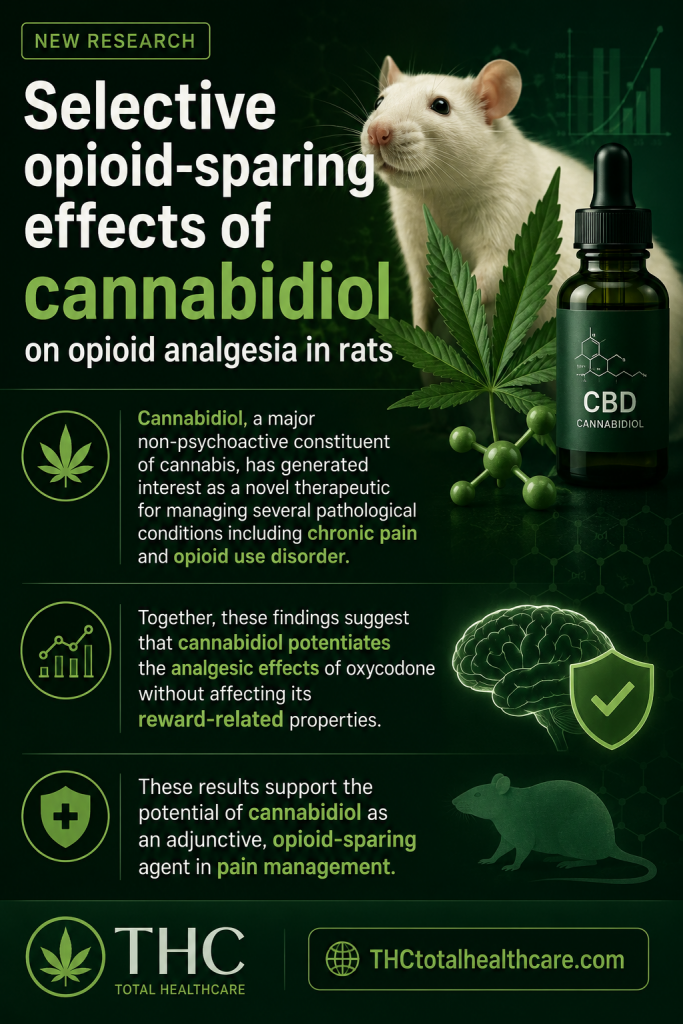
“Cannabidiol, a major non-psychoactive constituent of cannabis, has generated interest as a novel therapeutic for managing several pathological conditions including chronic pain and opioid use disorder.
Here, we evaluated the effects of cannabidiol (3.2 or 10.0 mg/kg) on the antinociceptive and the reward-related effects of the opioid analgesic oxycodone (0.56 mg/kg) in rats (male and female Sprague-Dawley) using an operant facial pain assay, locomotor activity monitoring, and the conditioned place preference paradigm.
Cannabidiol enhanced the antinociceptive effect of oxycodone without affecting oxycodone-induced rearing behavior, or the acquisition and expression of oxycodone conditioned place preference under the conditions tested.
Together, these findings suggest that cannabidiol potentiates the analgesic effects of oxycodone without affecting its reward-related properties. These results support the potential of cannabidiol as an adjunctive, opioid-sparing agent in pain management.
PERSPECTIVE: Opioids remain important for treating moderate to severe pain, but adverse effects and misuse liability limit their use. These preclinical findings suggest cannabidiol may enhance oxycodone antinociception under acute painful conditions, without increasing abuse-relevant effects under the conditions tested, supporting further study as an opioid-sparing adjunct.”
“Chronic pain is highly prevalent and inadequately managed by current therapeutic strategies, which present significant limitations such as the development of tolerance, dependence, and cognitive impairment. Therefore, searching for new pain management strategies is an ultimate goal.
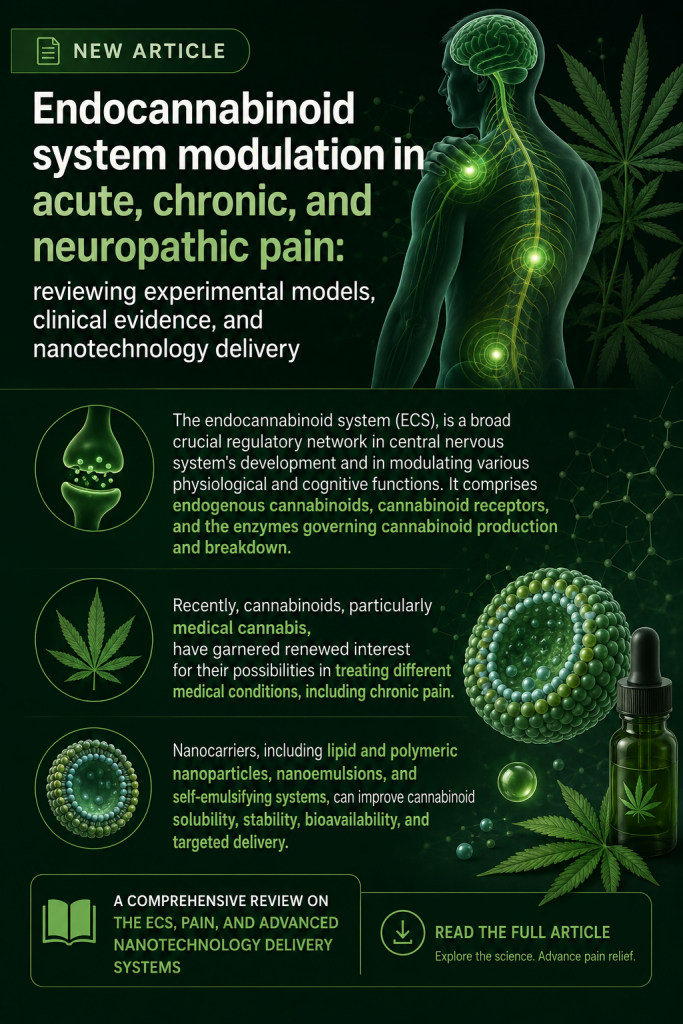
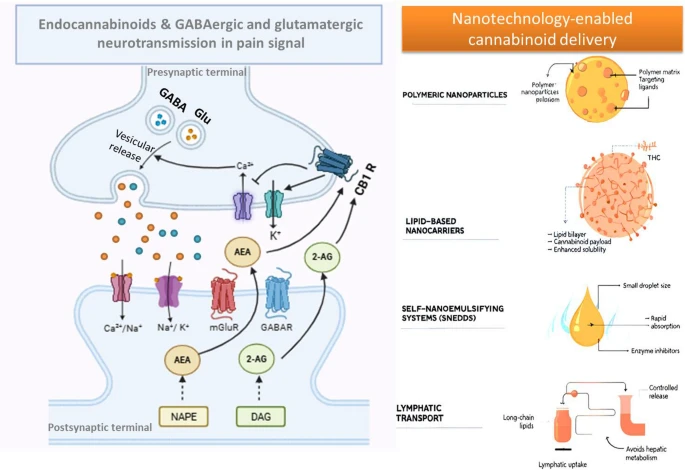
The endocannabinoid system (ECS), is a broad crucial regulatory network in central nervous system’s development and in modulating various physiological and cognitive functions. It comprises endogenous cannabinoids, cannabinoid receptors, and the enzymes governing cannabinoid production and breakdown.
Recently, cannabinoids, particularly medical cannabis, have garnered renewed interest for their possibilities in treating different medical conditions, including chronic pain.
Although the risk of lethal overdose is negligible, the prevalence of non-serious adverse effects is significant and requires careful clinical consideration. Currently, there is a paucity of sufficient efficacy and long-term safety data to fully support the systematic use of medical cannabis for chronic non-malignant pain conditions.
Further research is crucial to unlock the future potential of these approaches and to delineate essential directions for exploring the ECS and its role in pain management. Advances in nanotechnology have enabled novel delivery platforms that address key limitations of cannabinoid-based therapies.
Nanocarriers, including lipid and polymeric nanoparticles, nanoemulsions, and self-emulsifying systems, can improve cannabinoid solubility, stability, bioavailability, and targeted delivery. Through controlled release and site-specific targeting, these systems hold promise for enhancing the analgesic efficacy and safety of cannabinoid therapeutics.”