Phenolic Constituents Drive Antimicrobial and Antibiotic-Enhancing Activities of Cannabis sativa Seed Extracts Obtained by Two Extraction Methods

“Hemp seeds (Cannabis sativa L.) are a rich source of phenolic compounds with antioxidant and antimicrobial potential.

Still, their genotype-dependent variability and ability to enhance antibiotic efficacy remain insufficiently explored. This study compared three Romanian hemp seed cultivars (Lovrin 110, Silvana, and LV 585) extracted by conventional hydroalcoholic extraction (CE) and ultrasound-assisted extraction (UAE) to evaluate their phenolic composition, antimicrobial effects, and synergistic interactions with amoxicillin and miconazole.

HPLC identified genotype- and method-dependent differences, with UAE extracts showing substantially higher levels of epicatechin, quercetin, rosmarinic acid, resveratrol, and ferulic acid. These patterns showed stronger antimicrobial inhibition against Gram-positive and Gram-negative bacteria and yeasts, confirmed by MIC, fold-reduction, and percent enhancement assays. The most pronounced synergy occurred in Streptococcus pyogenesStaphylococcus aureusBacillus cereus, and Candida albicans. PCA revealed two dominant phenolic-activity axes: a rosmarinic/resveratrol/ferulic axis associated with potent inhibition in Escherichia coli and C. albicans, and a quercetin-driven axis linked to Gram-positive bacteria.

Overall, UAE extracts displayed superior phenolic enrichment and bioactivity, demonstrating that specific phenolic structures-not total phenolic content-govern antimicrobial performance and antibiotic-enhancing potential in hemp seed extracts.”

https://pubmed.ncbi.nlm.nih.gov/41514973

Cannabis sativa L. (hemp) is an herbaceous, anemophilous species in the Cannabaceae family. It is considered one of the oldest domesticated crops. Due to its long history of use, it is now seen as a versatile, sustainable crop with a relatively low environmental impact and significance across sectors such as agriculture, phytoremediation, food and feed production, cosmetics, construction materials, and pharmaceuticals.”

“Hemp seed has historically served as a medicinal resource, used to address a range of conditions such as arthritis, asthma, menstrual discomfort, atopic dermatitis, cancer, hypertension, and other inflammatory diseases.”

“These findings identify hemp seeds—particularly when extracted by UAE—as promising natural antimicrobial agents and effective adjuvants for conventional antibiotics and antifungals.”

https://www.mdpi.com/2223-7747/15/1/27

Broad-spectrum bactericidal synergy of silver-cannabichromene-cannabigerol triple combinations against healthcare-associated pathogens

Aims: Healthcare-associated infections (HAI) place substantial burden on healthcare systems globally, with growing antimicrobial resistance (AMR) restricting treatment options, increasing patient mortality and raising the cost of care. Silver is a broad-spectrum antimicrobial used widely to help control HAI. However, its utility is limited by AMR and concentration-dependent cytotoxicity. To address these challenges, we systematically evaluated the antimicrobial amplification properties of non-intoxicating cannabinoids, naturally occurring molecules having a narrow spectrum of antimicrobial activity, aiming to increase the antimicrobial effect of silver against gram-positive and gram-negative HAI pathogens.

Methods and results: Administered individually, silver and cannabinoid compounds CBD, CBC, CBG, CBDA, CBCA and CBGA produced modest bacteriostatic effects on time-kill analysis. Pairwise silver-cannabinoid combinations were neither synergistic nor bactericidal consistently against both Escherichia coli and Pseudomonas aeruginosa. Whereas triple combinations comprising silver (as silver sulfate or nanoparticles), CBC and CBG were consistently synergistic and bactericidal against Staphylococcus aureus (MRSA), E. coli and P. aeruginosa on time-kill analysis, and achieved up to 64-fold lowering of silver MIC on checkerboard assay. Silver-CBC-CBG triple combinations further precluded emergence of MRSA resistance on 20-day serial passaging, ameliorated the potential for cytotoxicity in fibroblasts and keratinocytes, and demonstrated significant clearing of biofilms formed by MRSA (p < 0.001) and P. aeruginosa (p < 0.001).

Conclusions: The increased potency, broad-spectrum bactericidal action and anti-biofilm properties of these novel synergistic silver-CBC-CBG triple combinations may provide a useful solution for bacterial silver resistance and the control of HAI.”

https://pubmed.ncbi.nlm.nih.gov/41983582

https://academic.oup.com/jambio/advance-article/doi/10.1093/jambio/lxag092/8654259

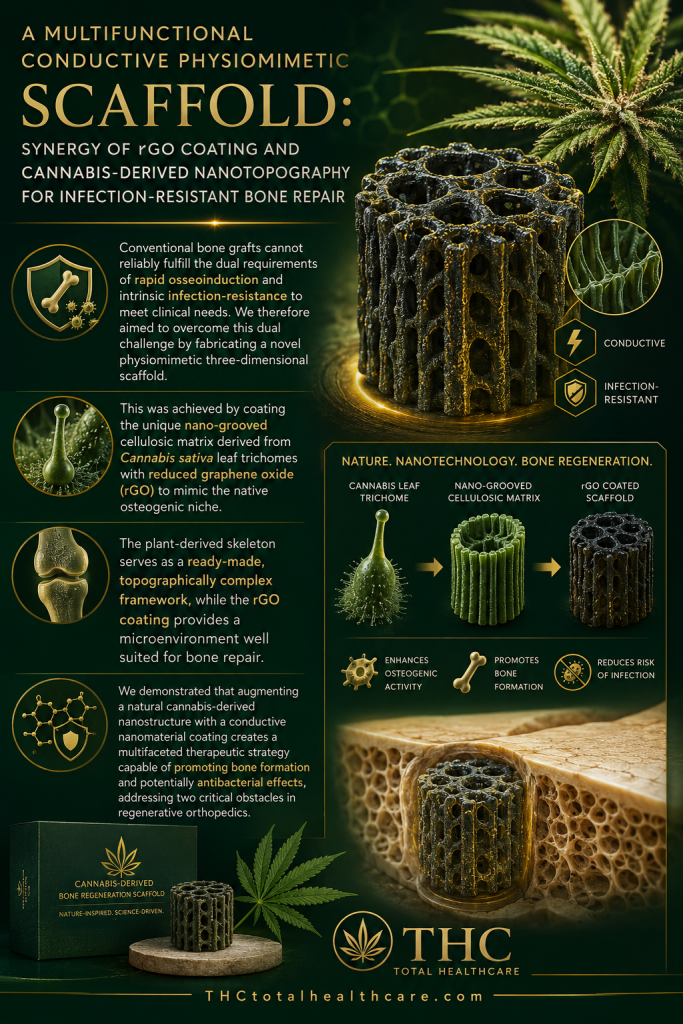
A multifunctional conductive physiomimetic scaffold: synergy of rGO coating and cannabis-derived nanotopography for infection-resistant bone repair

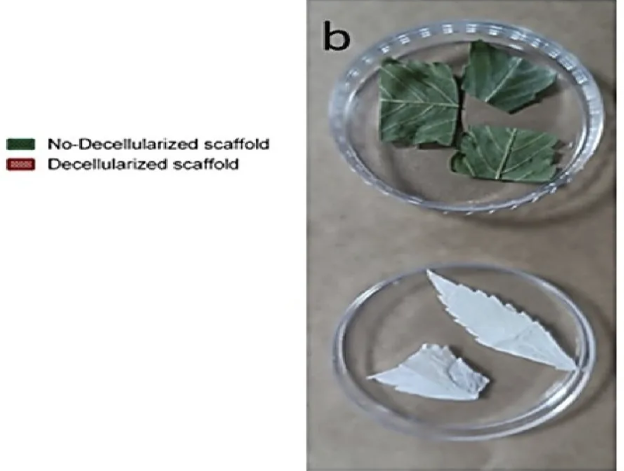
“Conventional bone grafts cannot reliably fulfill the dual requirements of rapid osseoinduction and intrinsic infection-resistance to meet clinical needs. We therefore aimed to overcome this dual challenge by fabricating a novel physiomimetic three-dimensional scaffold.

This was achieved by coating the unique nano-grooved cellulosic matrix derived from Cannabis sativa leaf trichomes with reduced graphene oxide (rGO) to mimic the native osteogenic niche.

The plant-derived skeleton serves as a ready-made, topographically complex framework, while the rGO coating provides a microenvironment well suited for bone repair. Comprehensive characterization verified a measurable surface energy, hydrophilicity, roughness, and proper conductivity due to rGO coating. Moreover, in vitro examination confirmed that rGO biofunctionalization synergized with the innate nano-topography, dynamically accelerated the osteogenic differentiation of human adipose-derived stem cells. An upregulated expression of key bone markers, COL1A1RUNX2, and OPN, sustained alkaline phosphatase activity, and augmented deposition of collagen and mineralized matrix exhibited the potential of the proposed approach for efficient osteal regeneration. An equally important finding was the scaffold’s inherent antibacterial property against Gram-positive and Gram-negative pathogens.

We demonstrated that augmenting a natural cannabis-derived nanostructure with a conductive nanomaterial coating creates a multifaceted therapeutic strategy capable of promoting bone formation and potentially antibacterial effects, addressing two critical obstacles in regenerative orthopedics.”

https://pubmed.ncbi.nlm.nih.gov/41958836

“In conclusion, the rGO-functionalized cannabis-derived scaffold offers a multifaceted therapeutic route toward bone repair, while bioinspired microenvironment is not only structurally supportive but also biologically instructive and inherently protective against microbial threats.”

https://www.frontiersin.org/journals/bioengineering-and-biotechnology/articles/10.3389/fbioe.2026.1766388/full


Efficacy of Cannabidiol in Reducing Virulence of Listeria monocytogenes

Listeria monocytogenes (LM) is a major foodborne pathogen causing illnesses ranging from gastroenteritis to severe systemic infections. The key virulence factors include bacterial motility, hemolysin and lecithinase production, and invasion of host tissues.

This study investigated the anti-virulence effects of cannabidiol (CBD), the main non-psychoactive compound in Cannabis sativa, against LM.

The minimum inhibitory concentration (MIC, 2289 μM; 719.8 µg/mL) and sub-inhibitory concentration (SIC, 11.92 μM; 3.75 µg/mL) of CBD were determined for LM strains Scott A and ATCC 19115. Cultures were treated with SIC, 6× SIC, 1/4× MIC, and MIC to assess effects on motility, hemolysin and lecithinase production, and adhesion and invasion of human intestinal (Caco-2) and brain endothelial (HBMEC) cells, alongside virulence gene expression by RT-qPCR. Cannabidiol’s efficacy was also determined using a Galleria mellonella larval infection model at SIC and 6× SIC.

Cannabidiol at 6× SIC significantly reduced motility, toxin production, and host cell adhesion and invasion (p < 0.05). RT-qPCR revealed downregulation of key virulence genes, including prfAhlyplcAplcBiapmotAmotBactAinlA, and inlB. In vivo, CBD enhanced larval survival in a dose-dependent manner and cytotoxicity was observed at concentrations above 33.75 µg/mL.

These results indicate that CBD, at non-bactericidal levels, effectively suppresses multiple virulence mechanisms in LM, highlighting its potential as a novel anti-virulence agent for food safety and therapeutic applications.”

https://pubmed.ncbi.nlm.nih.gov/41898547

“Cannabidiol has been reported to exert antibacterial activity through multiple, primarily membrane-associated mechanisms.”

“Collectively, these findings suggest that CBD holds promise as a prophylactic or therapeutic agent, or as an adjunct to conventional antibiotics, in mitigating listeriosis.”

https://www.mdpi.com/1422-0067/27/6/2682

Cannabis sativa in the fight against drug-resistant bacteria and fungi

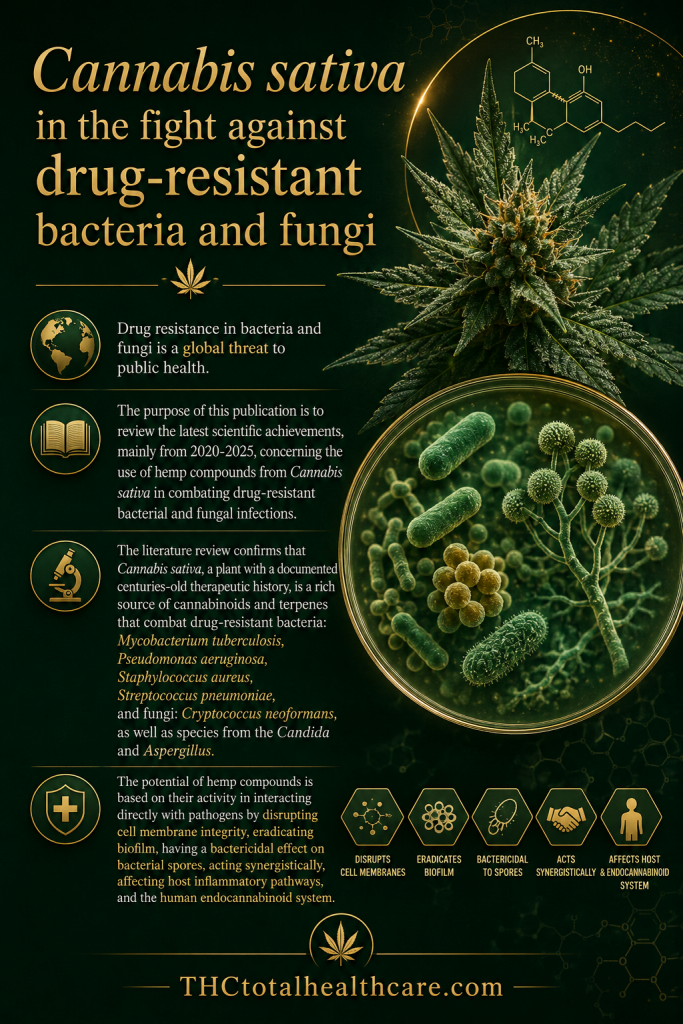
“Drug resistance in bacteria and fungi is a global threat to public health. The purpose of this publication is to review the latest scientific achievements, mainly from 2020-2025, concerning the use of hemp compounds from Cannabis sativa in combating drug-resistant bacterial and fungal infections.

The literature review confirms that C.sativa, a plant with a documented centuries-old therapeutic history, is a rich source of cannabinoids and terpenes that combat drug-resistant bacteria: Mycobacterium tuberculosis, Pseudomonas aeruginosa, Staphylococcus aureus, Streptococcus pneumoniae, and fungi: Cryptococcus neoformans, as well as species from the Candida and Aspergillus.

The potential of hemp compounds is based on their activity in interacting directly with pathogens by disrupting cell membrane integrity, eradicating biofilm, having a bactericidal effect on bacterial spores, acting synergistically, affecting host inflammatory pathways, and the human endocannabinoid system.”

https://pubmed.ncbi.nlm.nih.gov/41607163

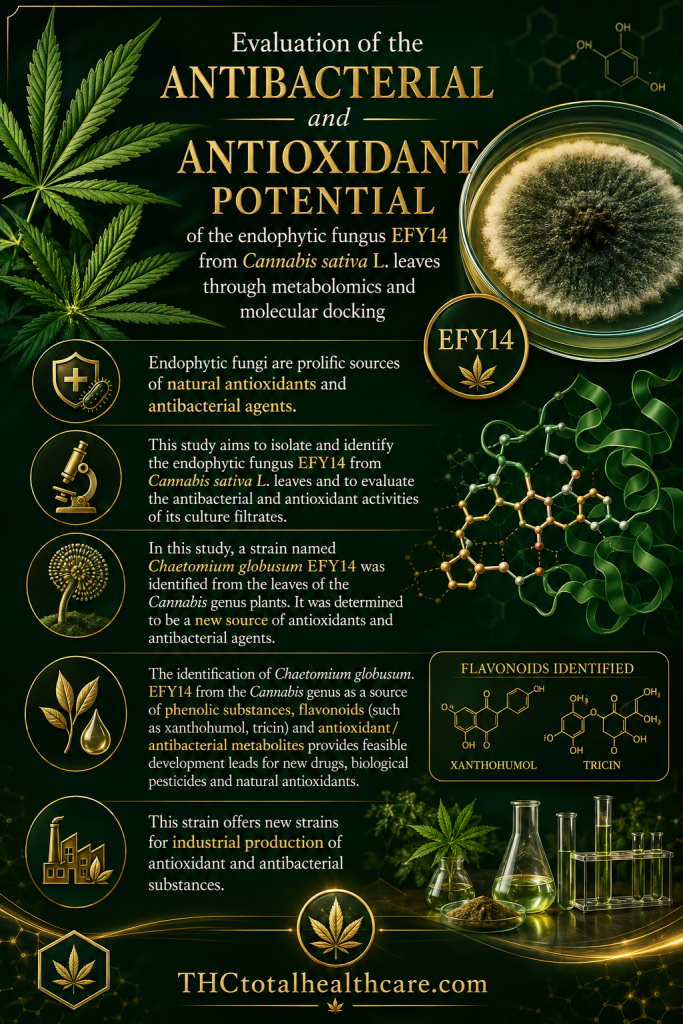
Evaluation of the antibacterial and antioxidant potential of the endophytic fungus EFY14 from Cannabis sativa L. leaves through metabolomics and molecular docking

“Endophytic fungi are prolific sources of natural antioxidants and antibacterial agents.

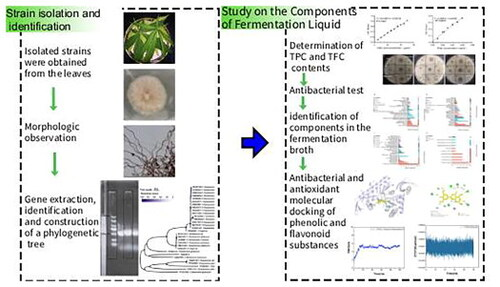
This study aims to isolate and identify the endophytic fungus EFY14 from Cannabis sativa L. leaves and to evaluate the antibacterial and antioxidant activities of its culture filtrates.

Non-targeted metabolomics was employed to chemically profile the EFY14 crude extract, a potential biological targets were predicted through molecular docking and molecular dynamics simulations. EFY14 was taxonomically identified as belonging to the Chaetomium genus.

Its extract contained 20.823 ± 1.449 mg gallic acid equivalent (GAE)/L total phenolic and 0.230 ± 0.007 mg rutin equivalent (RE)/mL total flavonoids, displaying antioxidant and antibacterial activities. Metabolomic profiling identified flavonoids and phenolic compounds, including 4′,7-dihydroxy-8-methylisoflavone, scopoletin, xanthohumol, tricin, sophoraflavanone G, prenyl glucoside, melilotoside and maltol. Molecular docking indicated potential molecular targets for these metabolites.

These findings suggest that EFY14 derived endophytic fungi from C. sativa L. may represent a novel source of antioxidant and antibacterial compounds.”

https://pubmed.ncbi.nlm.nih.gov/41527465

“In this study, a strain named Chaetomium globusum EFY14 was identified from the leaves of the Cannabis genus plants. It was determined to be a new source of antioxidants and antibacterial agents. Additionally, the Cannabidiolic acid component was detected through metabolomics. The extract is rich in phenolic and flavonoid substances and has DPPH scavenging activity as well as inhibitory activity against E.coli, B.subtilis, and S.aureus. The metabolites verified through metabolomics and molecular docking provide promising candidate substances for drug development and agricultural biological control, as well as new methods for cannabinoid synthesis.”

“This research is highly relevant for professionals in the fields of pharmaceuticals, agriculture and natural products. The identification of Chaetomium globusum. EFY14 from the Cannabis genus as a source of phenolic substances, flavonoids (such as xanthohumol, tricin) and antioxidant/antibacterial metabolites provides feasible development leads for new drugs, biological pesticides and natural antioxidants. This strain offers new strains for industrial production of antioxidant and antibacterial substances.”

https://www.tandfonline.com/doi/full/10.1080/14786419.2025.2609961

Cannabidiol (CBD) and Other Cannabinoids as a Promising Alternative Antibacterial Agent-Pilot Study on Enterococcus faecalis and Enterococcus faecium Clinical Strains

“Gram-positive cocci of the Enterococcus genus, despite their prevalence in the environment and the microbiota of healthy people, have become a serious threat in hospitals as opportunistic pathogens. These bacteria have many virulence factors and intrinsic resistance to existing drugs, which significantly narrows the group of effective antimicrobials. Due to the spread of Multi-Drug-Resistant (MDR) strains, there is a need to search for new substances as potential antibiotics.

Our work aimed to evaluate the antimicrobial effect of commercially available products (five oils containing cannabidiol (CBD) and its derivatives and one 99% CBD product in the form of crystals) on 20 clinical strains of E. faecalis and E. faecium. We determined the Minimal Inhibitory Concentration (MIC) of CBD oils using the microdilution method in Mueller-Hinton broth (MHB).

The CBD displayed antibacterial properties against all tested Enterococcus spp. strains (MIC ≤ 1 μg/mL). The higher concentration of CBD resulted in a larger antibacterial effect. The obtained MICs of pure CBD and CBD crystals were statistically lower (W = 97, p < 0.001) for E. feacium than E. faecalis.

This work confirms the antibacterial activity of CBD on Enterococcus spp., providing a solid basis for further research that can help identify new therapeutic options and gain a deeper understanding of the CBD mechanism of action.”

https://pubmed.ncbi.nlm.nih.gov/41515438

“These preliminary investigations provide meaningful insights into the activity of CBD against Enterococcus spp. and highlight their potential as a novel antibacterial agent.”

https://www.mdpi.com/1420-3049/31/1/144


Ultrasound-Assisted Green Extraction of Antioxidant and Antimicrobial Resins from Cannabis sativa for Potential Pharmaceutical Applications

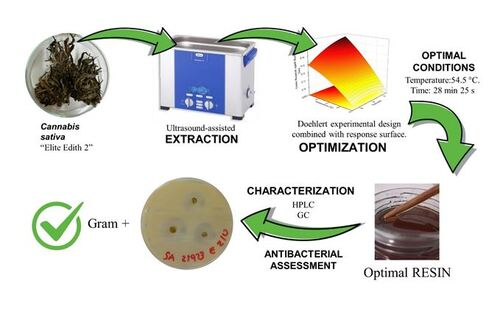
Objective: To develop a green and efficient ultrasound-assisted extraction (UAE) process to obtain bioactive resins from Cannabis sativa with potential pharmaceutical applications, optimizing extraction parameters to maximize antioxidant capacity and total polyphenol content.

Significance: UAE using ethanol under mild temperature and time conditions as a green technique was applied to reduce solvent consumption, energy demand, and extraction time while preserving thermolabile bioactive compounds. Optimizing UAE enables the recovery of cannabinoid- and terpene-rich extracts that may serve as natural active pharmaceutical ingredients or functional excipients for drug development. This study integrate a Doehlert-based optimization of UAE with a functional evaluation of antioxidant efficiency and antimicrobial activity, providing a comprehensive framework for the development of cannabis-derived pharmaceutical ingredients.

Methods: A Doehlert experimental design combined with response surface methodology was employed to optimize temperature and extraction time. The optimized extract was characterized for its phytochemical composition. Antimicrobial activity was evaluated against Gram-positive and Gram-negative bacterial strains to assess potential therapeutic relevance.

Results: Under optimal conditions (54.5 °C, 28 min 25 s), the extract showed a total phenolic content of approximately 0.11 mg gallic acid/mg resin and an IC50 value of about 0.24 mg resin/mL extract, indicating enhanced antioxidant performance compared to non-optimized conditions. Also, showed selective bactericidal activity against Staphylococcus aureus ATCC 25923 and Staphylococcus epidermidis ATCC 12228, while Gram-negative strains remained resistant.

Conclusions: UAE extraction efficiently recovered antioxidant and selectively antimicrobial compounds from Cannabis sativa resins under mild, eco-friendly conditions, supporting their potential use as bioactive ingredients in pharmaceuticals.”

https://pubmed.ncbi.nlm.nih.gov/41489477

https://www.tandfonline.com/doi/full/10.1080/03639045.2025.2612300

Extract engineering of Cannabis sativa yields novel antibacterial cannabinoids targeting Staphylococcus aureus and methicillin-resistant Staphylococcus aureus

“Cannabis sativa is a phytochemically rich plant producing over 500 compounds, with cannabinoids recognized as its most bioactive constituents.

However, the natural exploration and exploitation of novel, pharmacologically active cannabinoids remain limited due to their trace abundance in the plant. To address this challenge, we employed an extract engineering strategy in which enriched fractions of major cannabinoids were chemically transformed through oxone/acetone oxidation under mild conditions.

This approach enabled the purification of seven cannabinoid analogs, including rare and previously undescribed compounds, in appreciable quantities. The structures of these analogs were elucidated using high-resolution mass spectrometry combined with comprehensive 1D and 2D NMR spectroscopy.

Antibacterial susceptibility assay revealed that out of seven compounds, Compound 1, 5, and 7 exerted significant inhibitory activity against both Staphylococcus aureus and methicillin-resistant S. aureus (MRSA) pathogens.

A Checkerboard study revealed the synergistic interaction between active hits and Rifampin in both S. aureus and MRSA. The biofilm-based assay demonstrated the antibiofilm potential of the identified hits. The mechanistic exploration elucidated the cell membrane-based targeting of the potent hits, validated through scanning electron microscopy. Moreover, the Propidium iodide assay performed using flow cytometry and fluorescence microscopy revealed the membrane disruption effect of the identified hits. In addition, the ATP quantification study demonstrated a major decline in ATP levels along with an augmentation in ROS production in the MRSA pathogen.

Thus, this work establishes extract engineering as a powerful strategy to unlock rare cannabinoid scaffolds and highlights their potential as leads for combating multidrug-resistant Staphylococcus infections.”

https://pubmed.ncbi.nlm.nih.gov/41478197


“Cannabis sativa
 has diverse phytochemical composition and therapeutic potential.”

“In summary, comprehensive antistaphylococcal evaluation of the cannabinoid-based molecules demonstrated strong antibacterial activity against both S. aureus and MRSA pathogens, along with synergistic interaction when combined with standard drugs. Notably, the potent molecules expressed low propensity for the development of resistance in the MRSA strain. Moreover, the antibiofilm action of the potent hits highlighted their curative role…”

https://www.sciencedirect.com/science/article/abs/pii/S0045206825013288?via%3Dihub

Antibacterial Effect of Cannabinoids on Bacteria Associated with Persistent Endodontic Infections

“Cannabinoids have been shown to have effective antibacterial applications.

With the limitations of current intracanal endodontic medicaments and the rise of bacterial resistance, it is important to investigate novel treatment strategies for endodontic infections. The aim of this study was to test the antibacterial efficacy of cannabinoids on bacteria in persistent endodontic infections: Enterococcus faecalisStreptococcus mutans, and Fusobacterium nucleatum.

Planktonic bacteria were exposed to a negative control (no exposure), a positive control (3% NaOCl), and the experimental groups Cannabidiol (CBD), Cannabinol (CBN), and Tetrahydrocannabinol (THC). The Minimum Inhibitory Concentration (MIC) and Minimum Bactericidal Concentration (MBC) were also investigated. Biofilms were cultured and treated with cannabinoids. A crystal violet assay (CVA) and live/dead analysis assessed the biofilm degradation and inhibition, respectively. A statistical analysis was performed using an ANOVA.

CBD, CBN, and THC reached a MIC for both E. faecalis and S. mutans in planktonic forms. The MBC was found for the tested cannabinoids on planktonic E. faecalis. No MBC was found for S. mutans. The live/dead analysis of E. faecalis and S. mutans biofilms showed a decrease in the viability of the biofilm with an increased cannabinoid concentration. The CVA revealed that cannabinoids only degrade the E. faecalis biofilm. Planktonic F. nucleatum had no MIC for tested cannabinoids.

Cannabinoids have inhibitory effects on E. faecalis and S. mutans in the planktonic and biofilm states. No inhibitory effects of F. nucleatum were found at tested concentrations of all three cannabinoids.

The findings suggest that cannabinoids have distinct antibacterial effects on certain pathogens associated with persistent endodontic infections.”

https://pubmed.ncbi.nlm.nih.gov/41465362

https://www.mdpi.com/1422-0067/26/24/11936