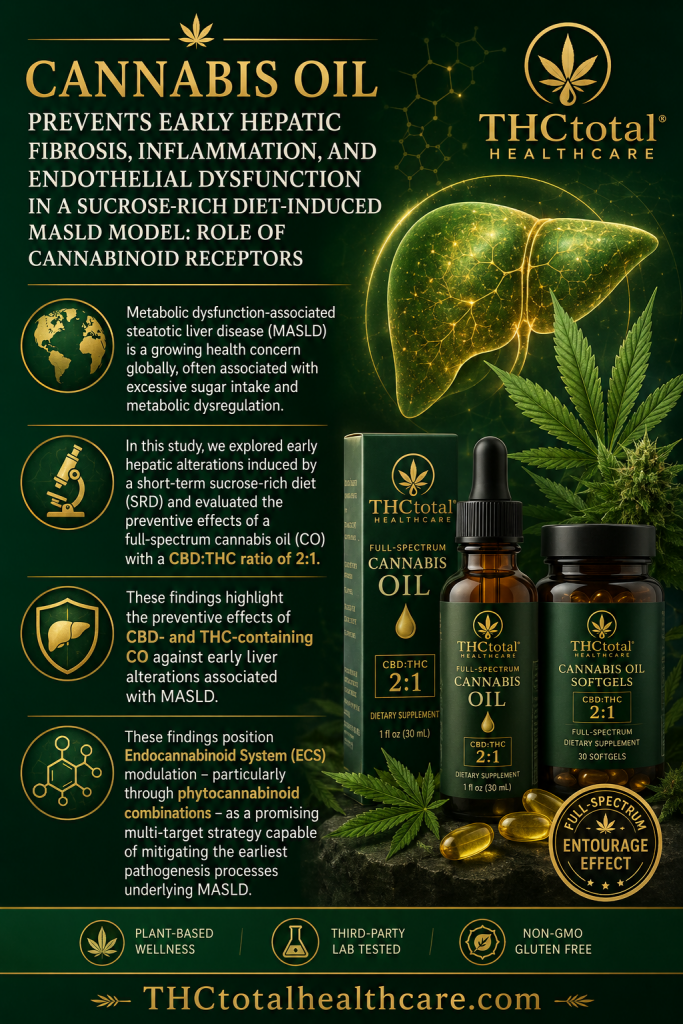
“Introduction: Metabolic dysfunction-associated steatotic liver disease (MASLD) is a growing health concern globally, often associated with excessive sugar intake and metabolic dysregulation. In this study, we explored early hepatic alterations induced by a short-term sucrose-rich diet (SRD) and evaluated the preventive effects of a full-spectrum cannabis oil (CO) with a CBD:THC ratio of 2:1.
Methods: Male Wistar rats were assigned to three groups: reference diet, SRD, and SRD plus CO (SRD + CO). CO was administered daily to the SRD + CO group from the onset of SRD exposure and throughout the 3-week experimental period. Liver fibrosis was assessed through hydroxyproline content, total collagen, TGF-β, and CB1R expression. Endothelial dysfunction was evaluated by measuring nitric oxide (NO) levels, endothelial nitric oxide synthase, myeloperoxidase, and VCAM-1 expression. Inflammatory responses were analyzed through hepatic expression of IL-10, TNF-α, PAI-1, MCP-1, F4/80, and CB2R. Transmission electron microscopy was performed on liver tissue to evaluate ultrastructural alterations.
Results: SRD induced significant hepatic fibrosis, endothelial dysfunction, and inflammation. Ultrastructural analysis revealed nuclear alterations, including chromatin condensation, reduced mitochondrial number, intracellular lipid accumulation, increased glycogen deposits, and stromal changes characterized by perisinusoidal and periportal fibrosis with inflammatory cell infiltration. CO administration attenuated these pathological features and was accompanied by modulation of cannabinoid receptor expression.
Conclusion: These findings highlight the preventive effects of CBD- and THC-containing CO against early liver alterations associated with MASLD.”
“Phytocannabinoids, such as cannabidiol (CBD) and Δ9-tetrahydrocannabinol (THC), interact with the ECS and various other signaling pathways, providing antioxidant, anti-inflammatory, and antifibrotic properties. Full-spectrum cannabis extracts, which combine phytocannabinoids like CBD and THC, have emerged as therapeutic candidates in preclinical studies for the treatment of liver disorders associated with metabolic dysfunction. Previous studies conducted by our group have demonstrated hepatoprotective and antioxidant effects following the administration of full-spectrum COs in rats fed an SRD for 3 weeks.”
“The present study was designed to evaluate the preventive effects of daily CO administration during the early stages of SRD-induced MASLD.”
“Daily CO administration prevented these alterations and the SRD-induced increase in cannabinoid receptor protein levels.”
“These findings position ECS modulation – particularly through phytocannabinoid combinations – as a promising multi-target strategy capable of mitigating the earliest pathogenesis processes underlying MASLD.”
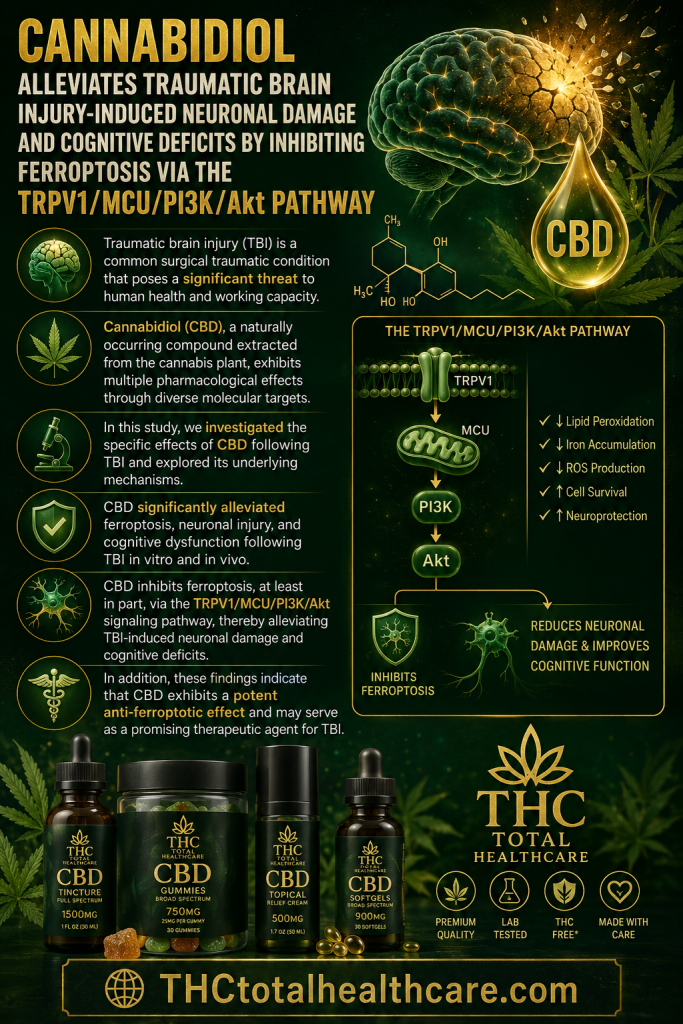
“Background: Traumatic brain injury (TBI) is a common surgical traumatic condition that poses a significant threat to human health and working capacity. However, effective treatments to improve its prognosis remain limited. Cannabidiol (CBD), a naturally occurring compound extracted from the cannabis plant, exhibits multiple pharmacological effects through diverse molecular targets. To date, the role and underlying molecular mechanisms of CBD in the context of TBI have not been fully elucidated. In this study, we investigated the specific effects of CBD following TBI and explored its underlying mechanisms.
Methods: An in vitro ferroptosis model was established using HT-22 cells, and an in vivo TBI model was established in mice. Techniques such as Western blotting, immunofluorescence staining, and behavioral analysis were employed to evaluate the effects of CBD on ferroptosis, pathological changes, and neurological function after TBI, as well as to explore the associated molecular mechanisms.
Results: CBD significantly alleviated ferroptosis, neuronal injury, and cognitive dysfunction following TBI in vitro and in vivo. Further investigation revealed that CBD mitigated mitochondrial dysfunction by reducing Ca2⁺ overload via the TRPV1/MCU signaling pathway. Moreover, utilizing methodologies such as recombinant adeno-associated virus (rAAV) injection and transcriptome analysis, mitochondrial calcium uniporter (MCU) was identified as a core regulator of ferroptosis in neurons following TBI. Neuronal MCU knockdown attenuated the progression of ferroptosis and improved neurological outcomes after TBI. Finally, integrated findings confirmed that CBD inhibit ferroptosis after TBI through the TRPV1/MCU/PI3K/Akt signaling pathway.
Conclusions: CBD inhibits ferroptosis, at least in part, via the TRPV1/MCU/PI3K/Akt signaling pathway, thereby alleviating TBI-induced neuronal damage and cognitive deficits. In addition, these findings indicate that CBD exhibits a potent anti-ferroptotic effect and may serve as a promising therapeutic agent for TBI.”
“Respiratory system diseases represent a major global health burden, characterized by high prevalence and significant morbidity and mortality.
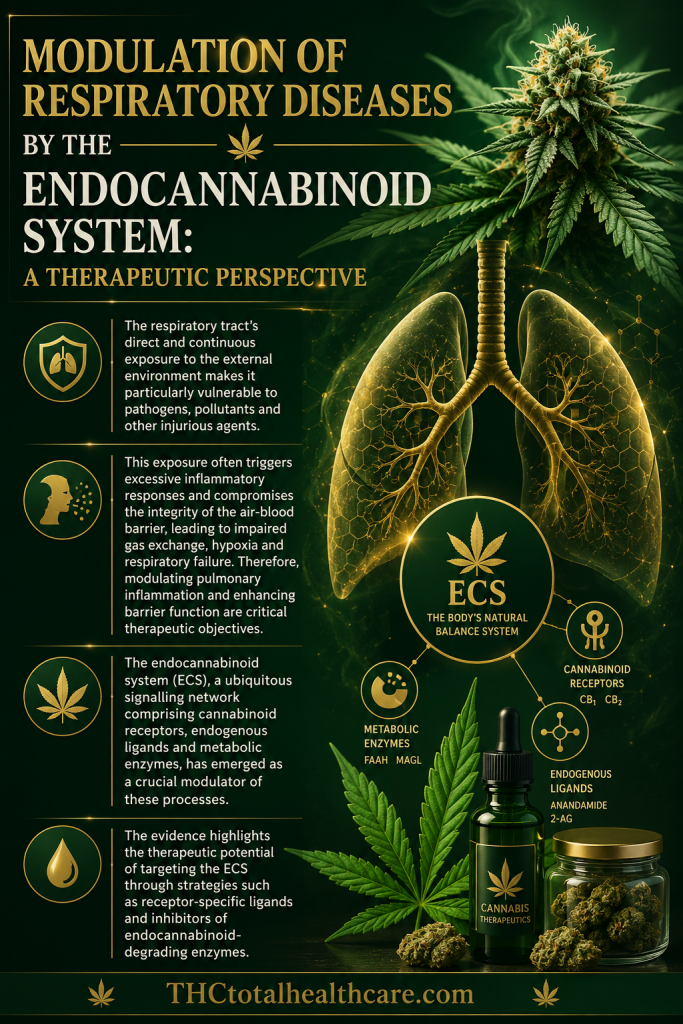
The respiratory tract’s direct and continuous exposure to the external environment makes it particularly vulnerable to pathogens, pollutants and other injurious agents. This exposure often triggers excessive inflammatory responses and compromises the integrity of the air-blood barrier, leading to impaired gas exchange, hypoxia and respiratory failure. Therefore, modulating pulmonary inflammation and enhancing barrier function are critical therapeutic objectives.
The endocannabinoid system, a ubiquitous signalling network comprising cannabinoid receptors, endogenous ligands and metabolic enzymes, has emerged as a crucial modulator of these processes.
This review summarizes the role of the ECS in major respiratory diseases, including asthma, pulmonary fibrosis, respiratory syncytial virus infection and acute lung injury.
The evidence highlights the therapeutic potential of targeting the ECS through strategies such as receptor-specific ligands and inhibitors of endocannabinoid-degrading enzymes. However, the context-dependent nature of ECS modulation necessitates precise intervention.
Future efforts should focus on developing selective therapeutics and validating their efficacy in clinical settings, positioning the ECS as a sophisticated target for innovative respiratory disease management.”
“Lung diseases such as asthma, fibrosis and infections are major health problems worldwide. The lungs are constantly exposed to the outside air, making them vulnerable to harmful substances that cause inflammation and damage. This review explores how a natural signalling system in our body—called the endocannabinoid system—helps control lung inflammation and repair. We summarize recent findings on how this system affects different lung diseases and discuss new treatment strategies that target it. While promising, these approaches need to be precisely targeted because the system works differently depending on the specific disease. Understanding this system could lead to better treatments for patients with lung diseases.”
“The endocannabinoid system plays a pivotal role in modulating key pathological processes in respiratory diseases, including inflammation, fibrosis, airway hyperresponsiveness and barrier dysfunction. CB2R activation generally exerts anti-inflammatory and anti-fibrotic effects, while CB1R influences airway tone and tissue remodelling. Enhancing endocannabinoid levels through inhibition of metabolic enzymes such as FAAH and MAGL also shows therapeutic potential in attenuating lung injury. However, the context-dependent and pleiotropic nature of ECS signalling necessitates precise, disease-specific targeting.
Future efforts should focus on developing receptor-selective agents and advancing translational studies to harness the ECS as a viable therapeutic strategy in respiratory medicine.”
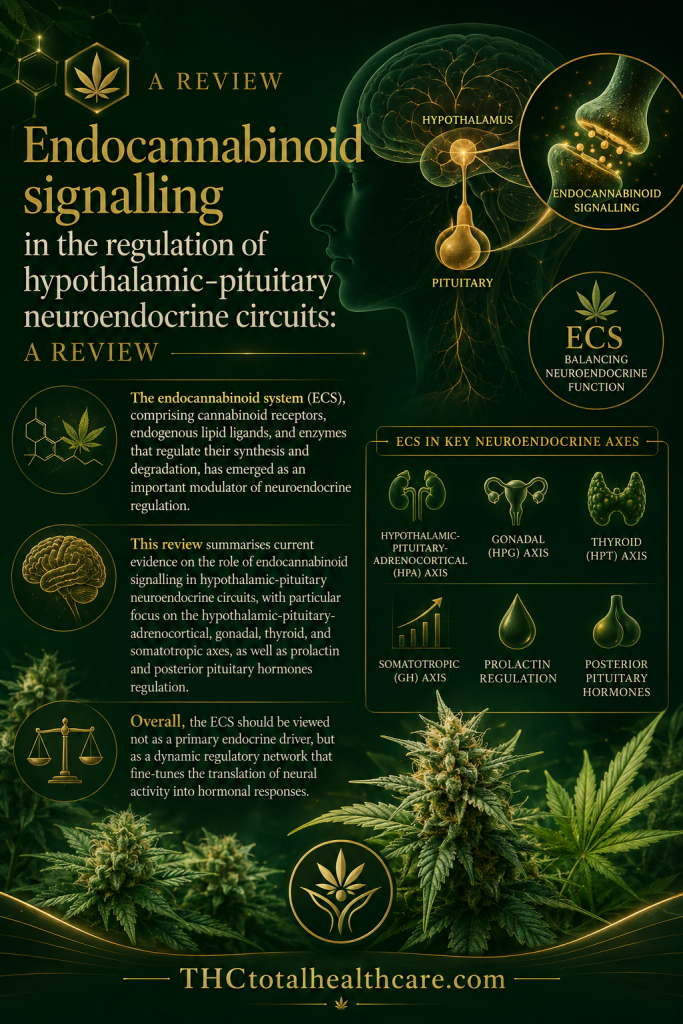
“The endocannabinoid system (ECS), comprising cannabinoid receptors, endogenous lipid ligands, and enzymes that regulate their synthesis and degradation, has emerged as an important modulator of neuroendocrine regulation.
This review summarises current evidence on the role of endocannabinoid signalling in hypothalamic-pituitary neuroendocrine circuits, with particular focus on the hypothalamic-pituitary-adrenocortical, gonadal, thyroid, and somatotropic axes, as well as prolactin and posterior pituitary hormones regulation.
Available data indicate that endocannabinoid signalling predominantly influences neuroendocrine function by modulating synaptic transmission within hypothalamic circuits. Acting mainly as retrograde messengers at presynaptic CB1 receptors, endocannabinoids regulate excitatory and inhibitory inputs to neurosecretory neurons and thus shape endocrine output in a context-dependent manner.
Among the systems discussed, the hypothalamic-pituitary-adrenocortical axis is the best characterised, with relatively well-defined links between glucocorticoid feedback and rapid endocannabinoid-mediated suppression of synaptic input to corticotropin-releasing hormone neurons.
In other neuroendocrine systems, evidence supports a predominantly modulatory, often inhibitory, role for endocannabinoid signalling, although the underlying cellular processes remain less well-defined and are largely based on preclinical studies. Interactions with glucocorticoids, gonadal steroids and neuropeptidergic pathways further underscore the integrative nature of ECS signalling.
Overall, the ECS should be viewed not as a primary endocrine driver, but as a dynamic regulatory network that fine-tunes the translation of neural activity into hormonal responses.”
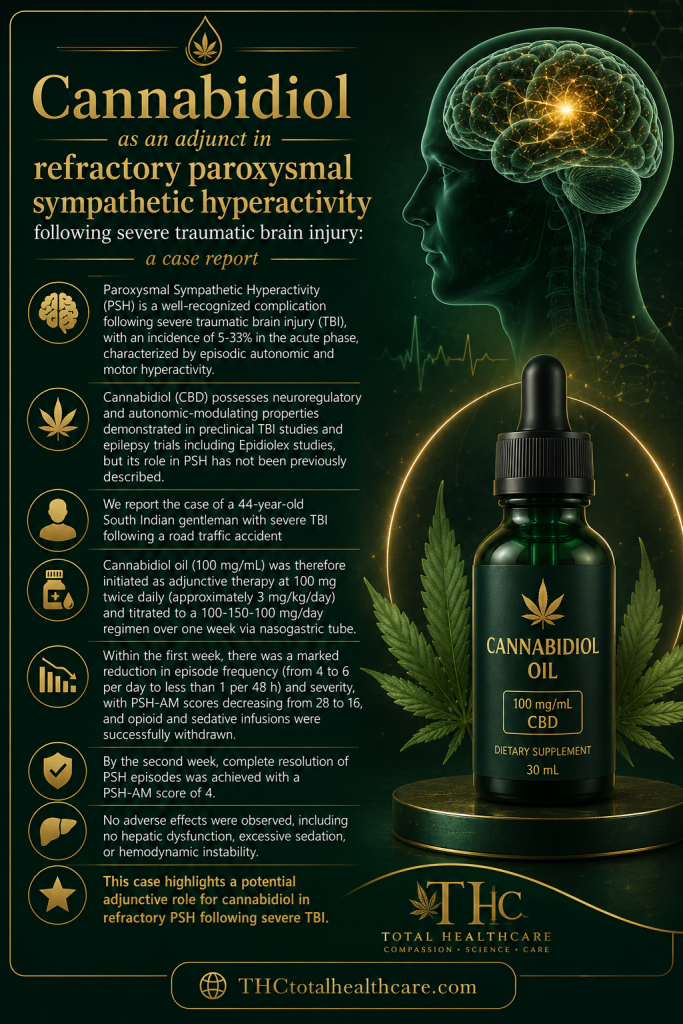
“Background: Paroxysmal Sympathetic Hyperactivity (PSH) is a well-recognized complication following severe traumatic brain injury (TBI), with an incidence of 5-33% in the acute phase, characterized by episodic autonomic and motor hyperactivity. Management is often challenging, and a subset of patients develop refractory PSH despite optimized first- and second-line therapies. Cannabidiol (CBD) possesses neuroregulatory and autonomic-modulating properties demonstrated in preclinical TBI studies and epilepsy trials including Epidiolex studies, but its role in PSH has not been previously described.
Case presentation: We report the case of a 44-year-old South Indian gentleman with severe TBI following a road traffic accident (GCS 5: E1V1M3) with CT brain showing bilateral frontotemporo-parietal acute subdural hematoma with mass effect. He underwent emergency bilateral decompressive craniectomy and required mechanical ventilation with tracheostomy. Three weeks post-injury, he developed recurrent PSH episodes (4-6 episodes per day) characterized by severe tachycardia (heart rate 140-180 bpm), hypertension (systolic blood pressure > 180 mmHg), hyperthermia (up to 40 °C), diaphoresis, and dystonic posturing. The diagnosis of PSH was established using the Paroxysmal Sympathetic Hyperactivity Assessment Measure (PSH-AM), with a total score of 28 (Clinical Feature Scale: 18, Diagnosis Likelihood Tool: 10), indicating probable PSH. Infective, metabolic, epileptic, and structural causes were excluded. Despite treatment with multiple conventional agents at maximum tolerated doses-including bromocriptine (titrated from 1.25 mg twice daily to 40 mg/day), baclofen (10 mg/day), gabapentin (titrated from 150 mg/day to 300 mg/day), propranolol (15 mg three times daily), clonidine (0.2 mg/day), dexmedetomidine infusion (72-h infusion), and fentanyl (infusion followed by patches)-the autonomic storms persisted, fulfilling criteria for refractory PSH.
Cannabidiol oil (100 mg/mL) was therefore initiated as adjunctive therapy at 100 mg twice daily (approximately 3 mg/kg/day) and titrated to a 100-150-100 mg/day regimen over one week via nasogastric tube. Within the first week, there was a marked reduction in episode frequency (from 4 to 6 per day to less than 1 per 48 h) and severity, with PSH-AM scores decreasing from 28 (CFS: 18, DLT: 10) to 16 (CFS: 6, DLT: 10), and opioid and sedative infusions were successfully withdrawn. By the second week, complete resolution of PSH episodes was achieved with a PSH-AM score of 4. No adverse effects were observed, including no hepatic dysfunction, excessive sedation, or hemodynamic instability.
Conclusions: This case highlights a potential adjunctive role for cannabidiol in refractory PSH following severe TBI. While causality cannot be inferred from a single observation, the sustained clinical improvement after failure of conventional therapies warrants further prospective investigation.”
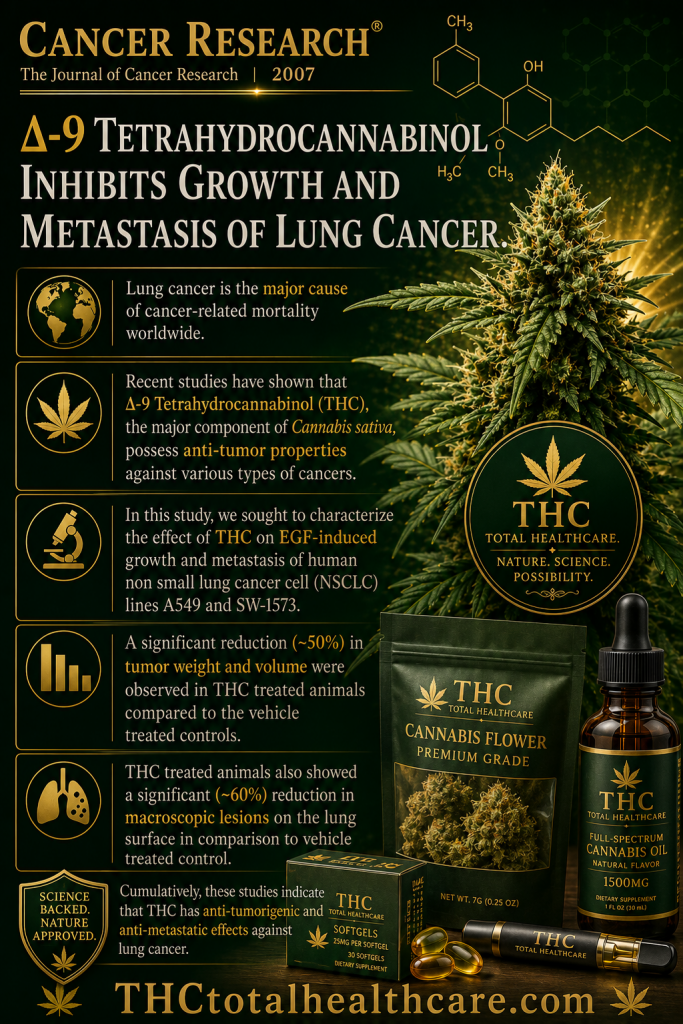
“Lung cancer is the major cause of cancer-related mortality worldwide.
Many of these over-express epidermal growth factor receptor (EGFR), and are usually highly aggressive and resistant to chemotherapy.
Recent studies have shown that Δ-9 Tetrahydrocannabinol (THC), the major component of Cannabis sativa, possess anti-tumor properties against various types of cancers. However, not much is known about its effect on lung cancer.
In this study, we sought to characterize the effect of THC on EGF-induced growth and metastasis of human non small lung cancer cell (NSCLC) lines A549 and SW-1573.
We demonstrate that these cell lines and primary tumor samples derived from lung cancer patients express cannabinoids receptors CB1 and CB2, the known targets for THC action. We further show that THC inhibits EGF-induced growth in these cell lines. In addition THC attenuated EGF-stimulated chemotaxis and chemoinvasion.
Next we characterized the effect of THC on in vivo lung cancer growth and metastasis in a murine model.
A549 cells were implanted in SCID mice (n=6 per group) through subcutaneous and intravenous injections to generate subcutaneous and lung metastatic cancer, respectively. THC (5mg/kg body wt.) was administered once daily through intraperitoneal injections for 21 days. The mice were analyzed for tumor growth and lung metastasis.
A significant reduction (~50%) in tumor weight and volume were observed in THC treated animals compared to the vehicle treated animals. THC treated animals also showed a significant (~60%) reduction in macroscopic lesions on the lung surface in comparison to vehicle treated control.
Immunohistochemical analysis of the tumor samples from THC treated animals revealed anti-proliferative and anti-angiogenic effects of THC with significant reduction in staining for Ki67, a proliferative marker and CD31, an endothelial marker indicative of vascularization. Investigation into the signaling events associated with reduced EGF-induced functional effects revealed that THC also inhibits EGF-induced Akt phosphorylation. Akt is a central signaling molecule of EGFR-mediated signaling pathways and it regulates a diverse array of cellular functions, including proliferation, angiogenesis, invasion and apoptosis.
Cumulatively, these studies indicate that THC has anti-tumorigenic and anti-metastatic effects against lung cancer.
Novel therapies against EGFR overexpressing, aggressive and chemotherapy resistant lung cancers may include targeting the cannabinoids receptors.”
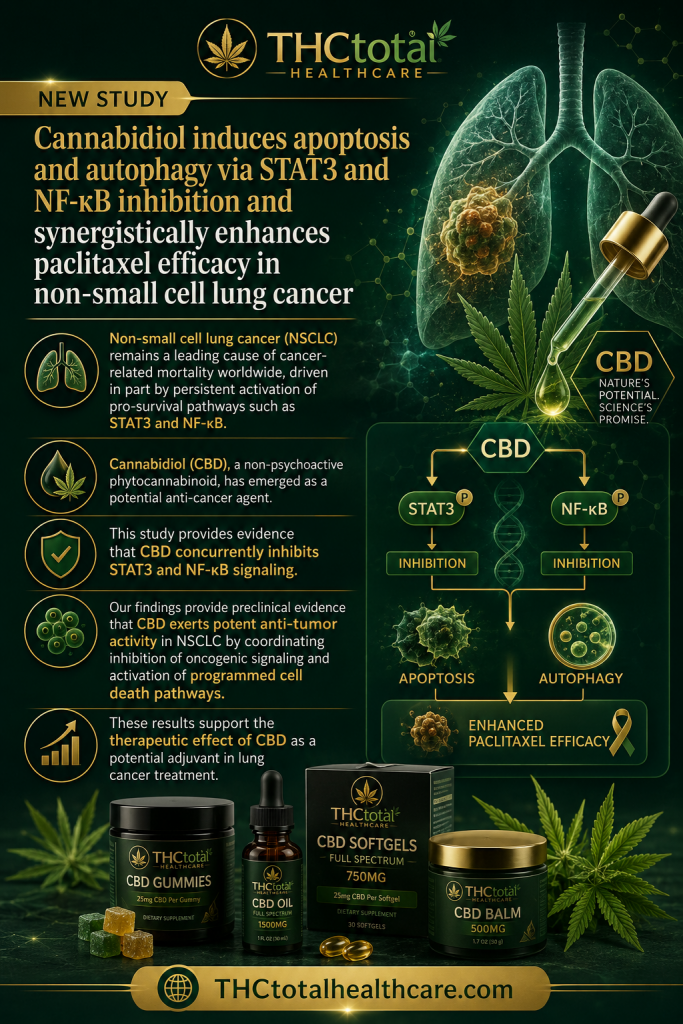
“Non-small cell lung cancer (NSCLC) remains a leading cause of cancer-related mortality worldwide, driven in part by persistent activation of pro-survival pathways such as STAT3 and NF-κB.”
“Cannabidiol (CBD), a non-psychoactive phytocannabinoid, has emerged as a potential anti-cancer agent; however, its mechanisms in NSCLC remain incompletely defined. In particular, CBD has not been systematically investigated for its ability to simultaneously suppress both constitutive and inducible STAT3/NF-κB activation, while coordinating apoptosis and autophagy in NSCLC. Furthermore, its role as a chemosensitizer in combination with paclitaxel remains to be validated in vivo.”
“Human NSCLC cell lines (A549, PC9, and H1299) were treated with cannabidiol (CBD), alone or in combination with paclitaxel. Apoptosis and autophagy were evaluated via caspase-3/7 activity, Western blotting, and immunocytochemistry. The effects of CBD on STAT3 and NF-κB signaling were assessed using EMSA, luciferase reporter assays, and nuclear translocation analysis. Anti-tumor efficacy was further validated in a xenograft mouse model.”
Results
“Here, we demonstrate that CBD reduced cell viability in NSCLC cells (A549 and PC9), while showing less cytotoxicity in normal lung fibroblasts. Mechanistically, CBD induced apoptosis and autophagy and suppressed STAT3 and NF-κB activation at the levels of phosphorylation, nuclear localization, and transcriptional activity. These effects were also observed in inducible signaling models using IL-6–stimulated H1299 cells. Importantly, CBD enhanced the efficacy of paclitaxel, a commonly used chemotherapeutic agent, by synergistically inducing apoptosis and autophagy and further suppressing STAT3/NF-κB signaling. In a xenograft mouse model, CBD treatment significantly reduced tumor growth without affecting body weight, and combination therapy with paclitaxel led to the most pronounced tumor suppression. Tumor tissue analyses confirmed that CBD downregulated phosphorylated STAT3 and p65, reduced proliferation marker Ki-67, and increased expression of cleaved PARP, LC3 II, and other cell death-associated proteins.”
Conclusion
“Our findings provide preclinical evidence that CBD exerts potent anti-tumor activity in NSCLC by coordinating inhibition of oncogenic signaling and activation of programmed cell death pathways. To our knowledge, this study provides evidence that CBD concurrently inhibits STAT3 and NF-κB signaling, affecting both constitutive and inducible activation in NSCLC, and enhances paclitaxel efficacy in vivo, thereby establishing a novel mechanistic and translational basis for its therapeutic potential.”
“These results support the therapeutic effect of CBD as a potential adjuvant in lung cancer treatment.”
“Cannabidiol (CBD), a non-psychoactive phytocannabinoid derived from Cannabis sativa, has gained attention for its broad pharmacological actions, including anti-inflammatory, anti-proliferative, and pro-apoptotic effects.”
“Of particular interest, CBD has been shown to exert potent anti-cancer activities across various tumor types by modulating multiple intracellular pathways.”
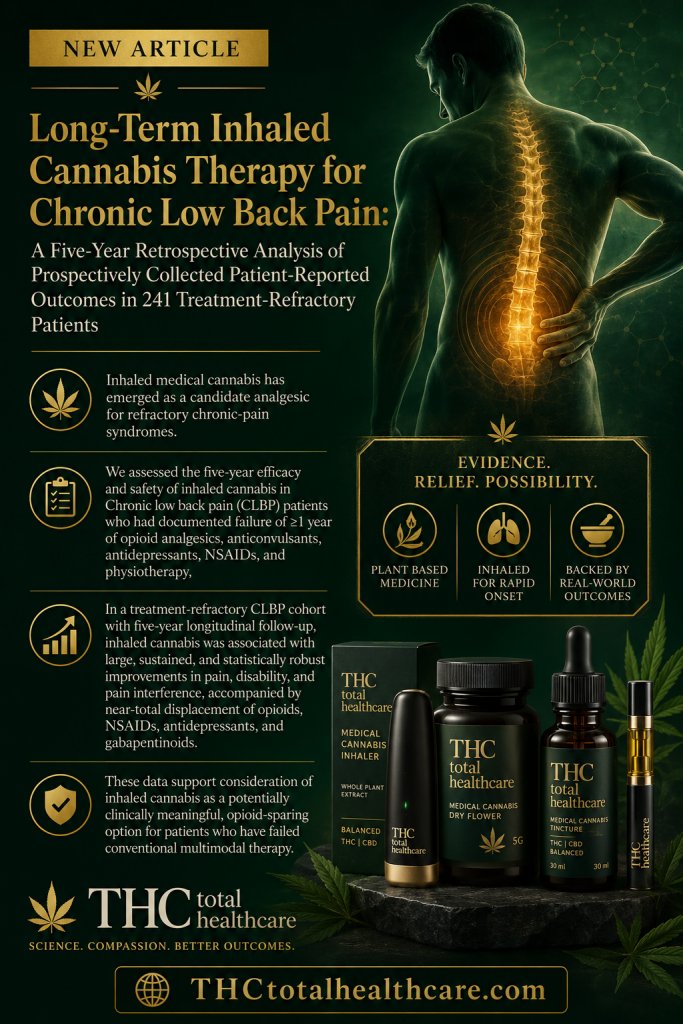
“Background/Objectives: Chronic low back pain (CLBP) affects approximately 20% of the global population and is a leading cause of years lived with disability. Long-term, real-world evidence for inhaled cannabis in patients refractory to conventional multimodal therapy remains scarce. We assessed the five-year efficacy and safety of inhaled cannabis in CLBP patients who had documented failure of ≥1 year of opioid analgesics, anticonvulsants, antidepressants, NSAIDs, and physiotherapy, with each patient serving as their own historical control.
Methods: We analyzed prospectively collected clinical data from 241 consecutive adults with treatment-refractory CLBP (mean age 49.3 ± 14.9 years; 37.8% female; mean pain duration 15.1 years) initiated on inhaled medical cannabis (predominantly smoking, THC 4-22%, CBD 2-22%) in a single-center tertiary orthopedic clinic between 2020 and 2025 (Hasharon Hospital, Rabin Medical Center, Israel; IRB protocols 0807-21-RMC and 0634-25-RMC). Year-0 outcomes during conventional therapy were compared with outcomes at Years 1-5 on cannabis. Primary outcomes were the Numeric Rating Scale (NRS), Oswestry Disability Index (ODI), and Brief Pain Inventory severity/interference (BPI-S/BPI-I). Concomitant-medication trajectories were a secondary outcome. The primary analysis was a mixed model for repeated measures (MMRM) with random intercept and slope, REML estimation, and time as a categorical fixed effect. Multiple imputation (MAR, m = 20, Rubin’s rules) was the primary missing-data approach; complete-case and tipping-point pattern-mixture sensitivity analyses were used. A multivariate Hotelling T2 provided a joint test across the four correlated PROMs. Concomitant-medication discontinuation was modeled with GEE logistic regression and exact McNemar tests. Time to discontinuation was estimated by Kaplan-Meier and Cox regression. The Bonferroni-adjusted significance threshold for the four primary outcomes was α = 0.0125. BioWell gas-discharge-visualization (GDV) parameters were exploratory only.
Results: Of 241 patients, 238 (98.8%) provided Year-5 data and 224 (92.9%) remained on cannabis at Year 5; only five patients (2.1%) discontinued for adverse events or inefficacy. All four primary PROMs improved markedly and durably. MMRM-estimated Year-5 minus Year-0 changes were: NRS -5.36 (95% CI -5.65, -5.07), ODI -17.68 (95% CI -19.73, -15.63), BPI-S -6.73 (95% CI -6.99, -6.47), and BPI-I -3.41 (95% CI -3.65, -3.16); all four contrasts had |z| ≥ 16.9 and p < 10-20. MI-pooled estimates were within 0.05 of MMRM (FMI < 0.03 for all outcomes). Hotelling T2 was F(4, 232) = 872.8, p < 10-20. At Year 5, 89.2% achieved ≥30% NRS reduction, 77.2% ≥ 50%, and 93.4% met the NRS minimum clinically important difference (MCID); ODI MCID 65.6%, BPI-S MCID (≥1 pt) 98.3%, BPI-I MCID (≥1 pt) 91.3%. Concomitant opioid use fell from 100% at baseline to 4.6% at Year 5 (within-patient absolute risk reduction 95.4%, McNemar exact p = 1.16 × 10-69), NSAID from 100% to 7.1%, SSRI/SNRI from 80.5% to 5.4%, and gabapentinoid from 38.6% to 2.5%. The ARR-derived NNT for opioid discontinuation was 1.05; this NNT is referenced to each patient’s own documented maximal-conventional-therapy state and is not equivalent to a between-arm randomized-trial NNT. Cannabis dose × time interaction was consistent with no pharmacological tolerance (β = -0.0044 per gram-month per year, p = 0.074). Across 1205 patient-years of cannabis exposure (calculated as 241 patients × 5 follow-up years from Year 1 through Year 5; baseline Year 0 represents pre-cannabis state and is not included in person-time on cannabis), 1338 organ-system AE events were recorded at 1.110/patient-year (Poisson 95% CI 1.05-1.17); 99.8% of graded events were mild (grade 1), with ocular (476 events, 0.40/PY), cognitive (460, 0.38/PY), and gastrointestinal (368, 0.31/PY) reactions predominating. The Year-3 retention dip reflected a documented telemedicine-clinic phenomenon during 2022-2024, with patients returning to in-person follow-up by Year 4-5. BioWell GDV discriminated NRS ≥ 4 only at chance level (BWS AUC 0.574, 95% CI 0.54-0.60; BWV AUC 0.51).
Conclusions: In a treatment-refractory CLBP cohort with five-year longitudinal follow-up, inhaled cannabis was associated with large, sustained, and statistically robust improvements in pain, disability, and pain interference, accompanied by near-total displacement of opioids, NSAIDs, antidepressants, and gabapentinoids. These observational associations, although mechanically less susceptible to bias for the binary medication-discontinuation outcomes than for self-reported PROMs, cannot be interpreted causally in the absence of a concurrent randomized control arm and may reflect a combination of pharmacological effect, regression to the mean from a high pre-treatment baseline, expectancy and self-selection effects intrinsic to an actively chosen open-label therapy, and secular trends in pain reporting. The within-patient benefit-risk profile-ARR-derived NNT ≈ 1 for opioid sparing against a predominantly mild adverse-event burden-supports consideration of cannabis as a potentially clinically meaningful, opioid-sparing option in patients who have failed multimodal conventional therapy, pending confirmation in randomized comparative trials.”
“Inhaled medical cannabis has emerged as a candidate analgesic for refractory chronic-pain syndromes.
Mechanistically, exogenous Δ9-tetrahydrocannabinol (THC) and cannabidiol (CBD) modulate the endocannabinoid system through CB1- and CB2-receptor signaling, with downstream effects on descending pain modulation, peripheral nociceptor sensitization, and affective dimensions of suffering.”
“These data support consideration of inhaled cannabis as a potentially clinically meaningful, opioid-sparing option for patients who have failed conventional multimodal therapy.”
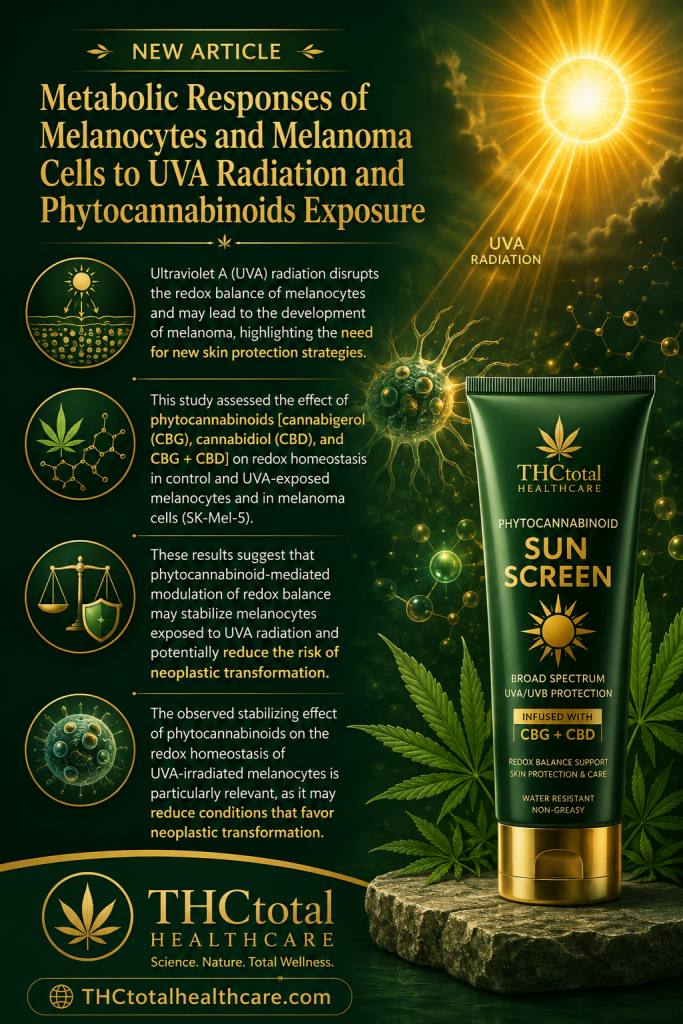
“Ultraviolet A (UVA) radiation disrupts the redox balance of melanocytes and may lead to the development of melanoma, highlighting the need for new skin protection strategies.
This study assessed the effect of phytocannabinoids [cannabigerol (CBG), cannabidiol (CBD), and CBG + CBD] on redox homeostasis in control and UVA-exposed melanocytes and in melanoma cells (SK-Mel-5).
UVA radiation increased the activity of prooxidant enzymes in both melanocytes and SK-Mel-5 cells and, consequently, the level of reactive oxygen species (ROS) (approx. 2-fold). It also activated nuclear factor erythroid 2 (Nrf2), as reflected by increased expression of heme oxygenase 1 (HO-1) (melanocytes approx. 2-fold; SK-Mel-5 approx. 7-fold). Concomitantly, antioxidant mechanisms were impaired, as demonstrated by reduced superoxide dismutase (SOD1/SOD2) activity and impaired glutathione and thioredoxin function. These changes were accompanied by increased levels of oxidative damage markers (isoprostanes, 4-hydroxynonenal-4-HNE, and 4-HNE-protein adducts) (43-100%) and increased inflammatory signaling, including increased expression of nuclear factor kappa B (NF-κB) subunits (melanocytes: p52 ~2-fold, p65 ~75%; SK-Mel-5: ~4-4.5-fold) and tumor necrosis factor alpha (TNF-α; ~30%).
Phytocannabinoid treatment modulated these UVA-induced changes.
In SK-Mel-5 cells, phytocannabinoids normalized the activity of prooxidant enzymes and consequently reduced ROS levels (~30%). They also reduced Nrf2 activation and HO-1 expression; however, CBG increased HO-1 level in melanocytes (~25-40%). Furthermore, phytocannabinoids enhanced antioxidant defense by increasing SOD activity, particularly in melanocytes (~10-40%), and restoring the glutathione and thioredoxin systems. Markers of oxidative damage were reduced by approximately 23-37% after treatment. Furthermore, phytocannabinoids attenuated NF-κB activation (p52 ~18-28%, p65 ~25-29% in melanocytes; ~20% in SK-Mel-5), while TNF-α levels remained unchanged. The effects in non-irradiated cells were modest (<15%).
These results suggest that phytocannabinoid-mediated modulation of redox balance may stabilize melanocytes exposed to UVA radiation and potentially reduce the risk of neoplastic transformation. However, the observed protective effects in SK-Mel-5 cells require further investigation and detailed molecular analysis.”
“The observed stabilizing effect of phytocannabinoids on the redox homeostasis of UVA-irradiated melanocytes is particularly relevant, as it may reduce conditions that favor neoplastic transformation.”
“Cannabinoids are potential anticancer agents for the add-on treatment of malignant tumors.
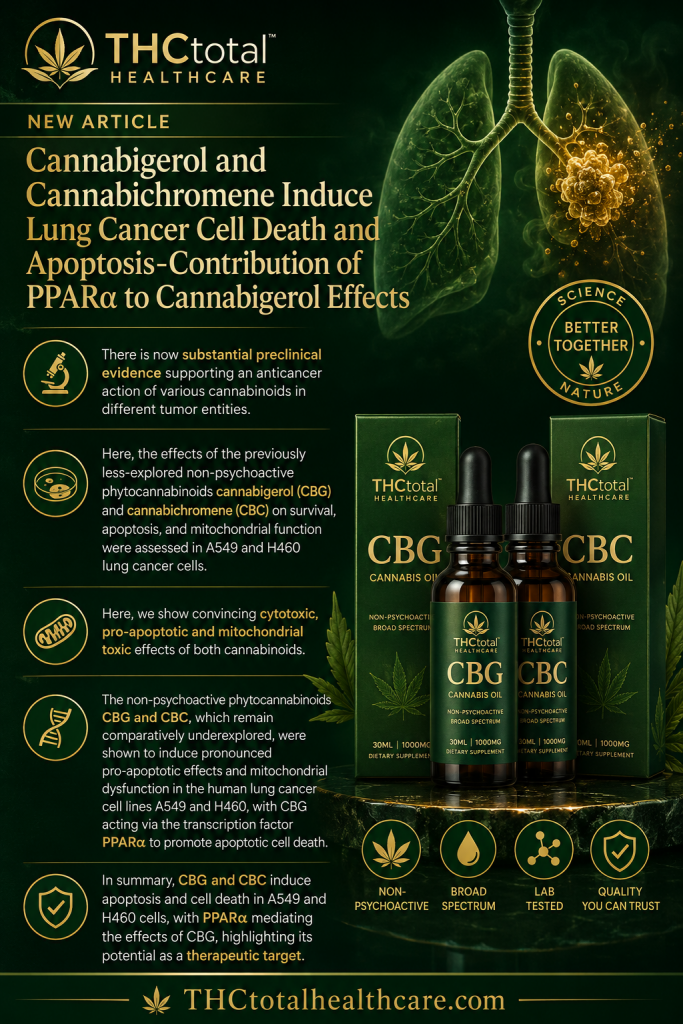
Here, the effects of the previously less-explored non-psychoactive phytocannabinoids cannabigerol (CBG) and cannabichromene (CBC) on survival, apoptosis, and mitochondrial function were assessed in A549 and H460 lung cancer cells.
CBG and CBC triggered concentration-dependent cell death, autophagy, and mitochondrial apoptosis in both cell lines, with apoptosis indicated by Annexin V staining, activation of caspase-8, -9, and -3/7, loss of mitochondrial membrane potential, and elevated cytosolic levels of mitochondrial cytochrome c. CBG also upregulated ATF4, a stress-responsive transcription factor involved in autophagy and apoptotic signaling, and enhanced PARP cleavage. Both cannabinoids increased mitochondrial superoxide formation and reduced the mitochondrial oxygen consumption rate, with CBG additionally decreasing NDUFB8, a subunit of respiratory chain complex I.
Pharmacological receptor modulation showed that CBG- and CBC-induced cell death occurred independently of CB1, CB2, TRPV1, TRPM8, and PPARγ, whereas CBG-mediated cell death relied on PPARα, which also contributed to its apoptotic effects.
In summary, CBG and CBC induce apoptosis and cell death in A549 and H460 cells, with PPARα mediating the effects of CBG, highlighting its potential as a therapeutic target.”
“There is now substantial preclinical evidence supporting an anticancer action of various cannabinoids in different tumor entities.”
“This study investigates the effects of CBG and CBC on lung cancer cell survival, apoptosis, and mitochondrial function and bioenergetics, with particular emphasis on the role of PPARα in this process.
Here, we show convincing cytotoxic, pro-apoptotic and mitochondrial toxic effects of both cannabinoids.
More importantly, this study demonstrates for the first time a mediating role of PPARα in the induction of tumor cell death and apoptosis by CBG, which makes this non-psychoactive phytocannabinoid an interesting compound in the search for new targeted therapies for the treatment of malignant tumors.”
“The non-psychoactive phytocannabinoids CBG and CBC, which remain comparatively underexplored, were shown to induce pronounced pro-apoptotic effects and mitochondrial dysfunction in the human lung cancer cell lines A549 and H460, with CBG acting via the transcription factor PPARα to promote apoptotic cell death.”