Δ-9 Tetrahydrocannabinol inhibits growth and metastasis of lung cancer

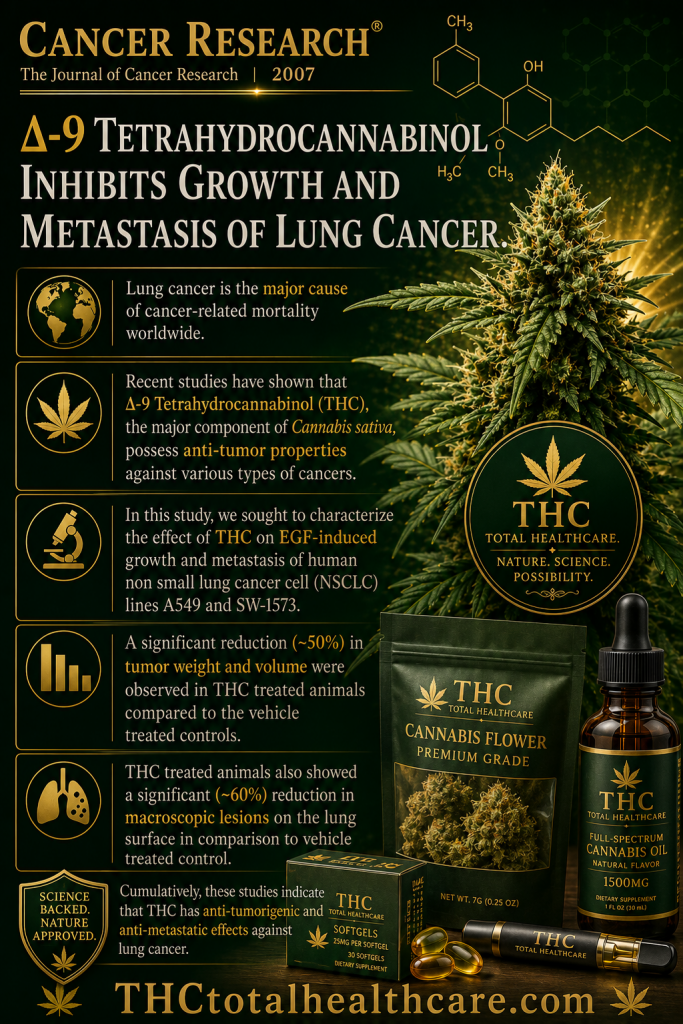
“Lung cancer is the major cause of cancer-related mortality worldwide.

Many of these over-express epidermal growth factor receptor (EGFR), and are usually highly aggressive and resistant to chemotherapy.

Recent studies have shown that Δ-9 Tetrahydrocannabinol (THC), the major component of Cannabis sativa, possess anti-tumor properties against various types of cancers. However, not much is known about its effect on lung cancer.

In this study, we sought to characterize the effect of THC on EGF-induced growth and metastasis of human non small lung cancer cell (NSCLC) lines A549 and SW-1573.

We demonstrate that these cell lines and primary tumor samples derived from lung cancer patients express cannabinoids receptors CB1 and CB2, the known targets for THC action. We further show that THC inhibits EGF-induced growth in these cell lines. In addition THC attenuated EGF-stimulated chemotaxis and chemoinvasion.

Next we characterized the effect of THC on in vivo lung cancer growth and metastasis in a murine model.

A549 cells were implanted in SCID mice (n=6 per group) through subcutaneous and intravenous injections to generate subcutaneous and lung metastatic cancer, respectively. THC (5mg/kg body wt.) was administered once daily through intraperitoneal injections for 21 days. The mice were analyzed for tumor growth and lung metastasis.

A significant reduction (~50%) in tumor weight and volume were observed in THC treated animals compared to the vehicle treated animals. THC treated animals also showed a significant (~60%) reduction in macroscopic lesions on the lung surface in comparison to vehicle treated control.

Immunohistochemical analysis of the tumor samples from THC treated animals revealed anti-proliferative and anti-angiogenic effects of THC with significant reduction in staining for Ki67, a proliferative marker and CD31, an endothelial marker indicative of vascularization. Investigation into the signaling events associated with reduced EGF-induced functional effects revealed that THC also inhibits EGF-induced Akt phosphorylation. Akt is a central signaling molecule of EGFR-mediated signaling pathways and it regulates a diverse array of cellular functions, including proliferation, angiogenesis, invasion and apoptosis.

Cumulatively, these studies indicate that THC has anti-tumorigenic and anti-metastatic effects against lung cancer.

Novel therapies against EGFR overexpressing, aggressive and chemotherapy resistant lung cancers may include targeting the cannabinoids receptors.”
https://aacrjournals.org/cancerres/article/67/9_Supplement/4749/537355/9-Tetrahydrocannabinol-inhibits-growth-and


Cannabidiol induces apoptosis and autophagy via STAT3 and NF-κB inhibition and synergistically enhances paclitaxel efficacy in non-small cell lung cancer

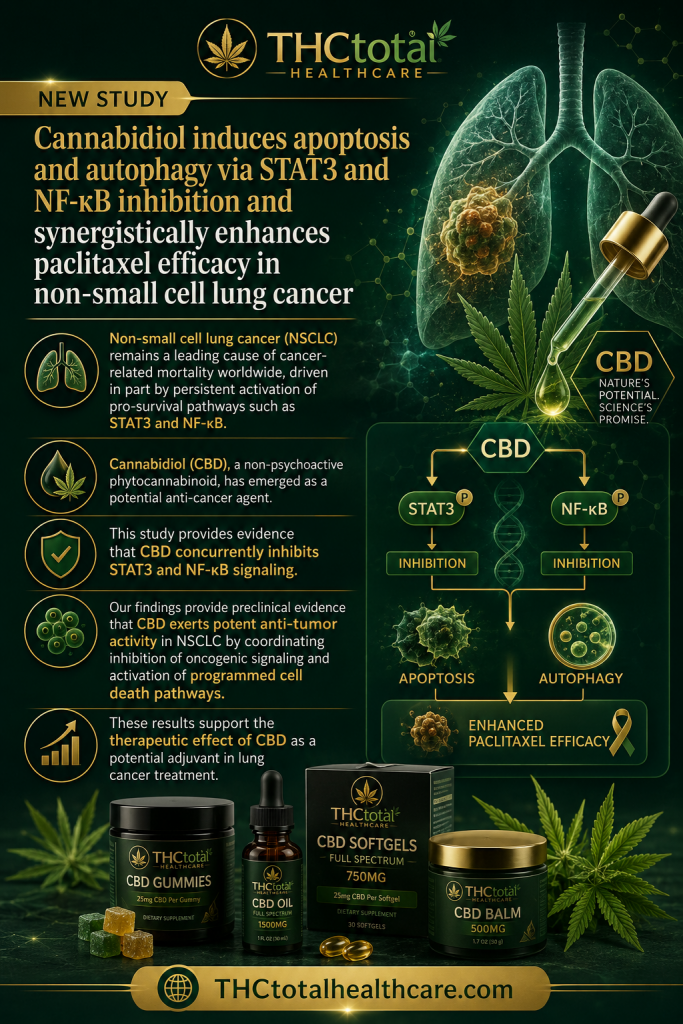
“Non-small cell lung cancer (NSCLC) remains a leading cause of cancer-related mortality worldwide, driven in part by persistent activation of pro-survival pathways such as STAT3 and NF-κB.”

“Cannabidiol (CBD), a non-psychoactive phytocannabinoid, has emerged as a potential anti-cancer agent; however, its mechanisms in NSCLC remain incompletely defined. In particular, CBD has not been systematically investigated for its ability to simultaneously suppress both constitutive and inducible STAT3/NF-κB activation, while coordinating apoptosis and autophagy in NSCLC. Furthermore, its role as a chemosensitizer in combination with paclitaxel remains to be validated in vivo.”

“Human NSCLC cell lines (A549, PC9, and H1299) were treated with cannabidiol (CBD), alone or in combination with paclitaxel. Apoptosis and autophagy were evaluated via caspase-3/7 activity, Western blotting, and immunocytochemistry. The effects of CBD on STAT3 and NF-κB signaling were assessed using EMSA, luciferase reporter assays, and nuclear translocation analysis. Anti-tumor efficacy was further validated in a xenograft mouse model.”

Results

“Here, we demonstrate that CBD reduced cell viability in NSCLC cells (A549 and PC9), while showing less cytotoxicity in normal lung fibroblasts. Mechanistically, CBD induced apoptosis and autophagy and suppressed STAT3 and NF-κB activation at the levels of phosphorylation, nuclear localization, and transcriptional activity. These effects were also observed in inducible signaling models using IL-6–stimulated H1299 cells. Importantly, CBD enhanced the efficacy of paclitaxel, a commonly used chemotherapeutic agent, by synergistically inducing apoptosis and autophagy and further suppressing STAT3/NF-κB signaling. In a xenograft mouse model, CBD treatment significantly reduced tumor growth without affecting body weight, and combination therapy with paclitaxel led to the most pronounced tumor suppression. Tumor tissue analyses confirmed that CBD downregulated phosphorylated STAT3 and p65, reduced proliferation marker Ki-67, and increased expression of cleaved PARP, LC3 II, and other cell death-associated proteins.”

Conclusion

“Our findings provide preclinical evidence that CBD exerts potent anti-tumor activity in NSCLC by coordinating inhibition of oncogenic signaling and activation of programmed cell death pathways. To our knowledge, this study provides evidence that CBD concurrently inhibits STAT3 and NF-κB signaling, affecting both constitutive and inducible activation in NSCLC, and enhances paclitaxel efficacy in vivo, thereby establishing a novel mechanistic and translational basis for its therapeutic potential.”

“These results support the therapeutic effect of CBD as a potential adjuvant in lung cancer treatment.”

“Cannabidiol (CBD), a non-psychoactive phytocannabinoid derived from Cannabis sativa, has gained attention for its broad pharmacological actions, including anti-inflammatory, anti-proliferative, and pro-apoptotic effects.”

“Of particular interest, CBD has been shown to exert potent anti-cancer activities across various tumor types by modulating multiple intracellular pathways.”

https://www.sciencedirect.com/science/article/abs/pii/S094471132600721X

https://pubmed.ncbi.nlm.nih.gov/42364563

Cannabigerol and Cannabichromene Induce Lung Cancer Cell Death and Apoptosis-Contribution of PPARα to Cannabigerol Effects

“Cannabinoids are potential anticancer agents for the add-on treatment of malignant tumors.

Here, the effects of the previously less-explored non-psychoactive phytocannabinoids cannabigerol (CBG) and cannabichromene (CBC) on survival, apoptosis, and mitochondrial function were assessed in A549 and H460 lung cancer cells.

CBG and CBC triggered concentration-dependent cell death, autophagy, and mitochondrial apoptosis in both cell lines, with apoptosis indicated by Annexin V staining, activation of caspase-8, -9, and -3/7, loss of mitochondrial membrane potential, and elevated cytosolic levels of mitochondrial cytochrome c. CBG also upregulated ATF4, a stress-responsive transcription factor involved in autophagy and apoptotic signaling, and enhanced PARP cleavage. Both cannabinoids increased mitochondrial superoxide formation and reduced the mitochondrial oxygen consumption rate, with CBG additionally decreasing NDUFB8, a subunit of respiratory chain complex I.

Pharmacological receptor modulation showed that CBG- and CBC-induced cell death occurred independently of CB1, CB2, TRPV1, TRPM8, and PPARγ, whereas CBG-mediated cell death relied on PPARα, which also contributed to its apoptotic effects.

In summary, CBG and CBC induce apoptosis and cell death in A549 and H460 cells, with PPARα mediating the effects of CBG, highlighting its potential as a therapeutic target.”

https://pubmed.ncbi.nlm.nih.gov/42352060

“There is now substantial preclinical evidence supporting an anticancer action of various cannabinoids in different tumor entities.”

“This study investigates the effects of CBG and CBC on lung cancer cell survival, apoptosis, and mitochondrial function and bioenergetics, with particular emphasis on the role of PPARα in this process.

Here, we show convincing cytotoxic, pro-apoptotic and mitochondrial toxic effects of both cannabinoids.

More importantly, this study demonstrates for the first time a mediating role of PPARα in the induction of tumor cell death and apoptosis by CBG, which makes this non-psychoactive phytocannabinoid an interesting compound in the search for new targeted therapies for the treatment of malignant tumors.”

“The non-psychoactive phytocannabinoids CBG and CBC, which remain comparatively underexplored, were shown to induce pronounced pro-apoptotic effects and mitochondrial dysfunction in the human lung cancer cell lines A549 and H460, with CBG acting via the transcription factor PPARα to promote apoptotic cell death.”

https://www.mdpi.com/2076-3921/15/6/754

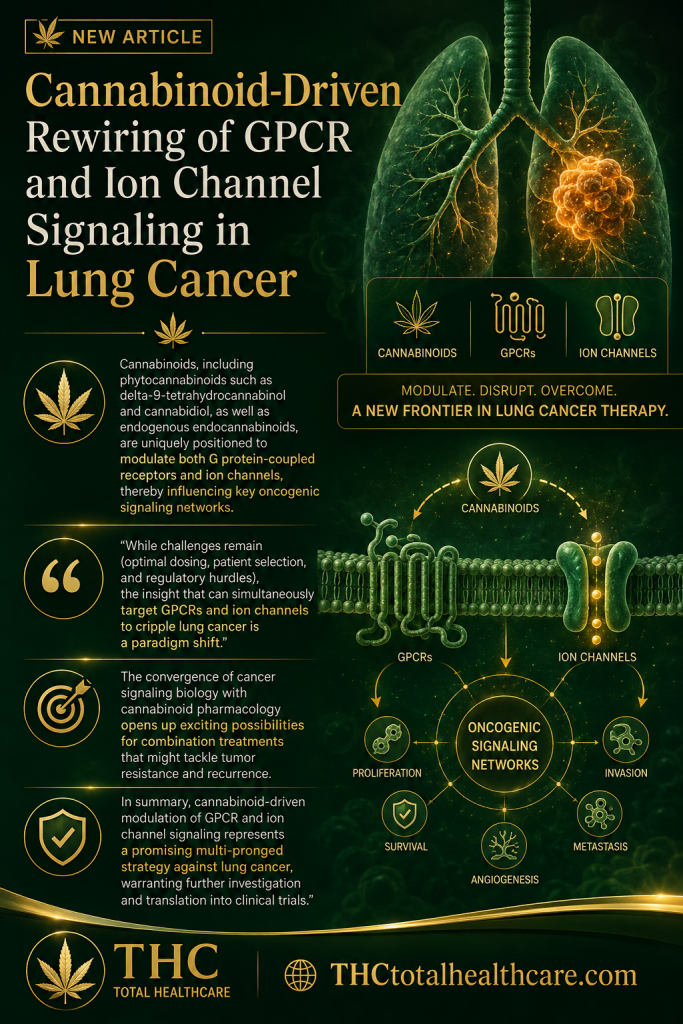
Cannabinoid-Driven Rewiring of GPCR and Ion Channel Signaling in Lung Cancer

“Lung cancer remains the leading cause of cancer-related mortality worldwide, with non-small cell lung cancer accounting for the majority of cases and exhibiting persistent challenges related to therapy resistance and metastatic progression. Increasing evidence indicates that dysregulated G protein-coupled receptor signaling and ion channel activity function cooperatively as master regulators of tumor cell proliferation, migration, survival, and therapeutic response.

Cannabinoids, including phytocannabinoids such as delta-9-tetrahydrocannabinol and cannabidiol, as well as endogenous endocannabinoids, are uniquely positioned to modulate both G protein-coupled receptors and ion channels, thereby influencing key oncogenic signaling networks.

This review synthesizes current knowledge on the role of major ion channel families, including transient receptor potential channels, potassium channels, and sodium channels, and principal G protein-coupled receptor pathways involved in lung cancer progression. We further discuss how cannabinoids reprogram these interconnected signaling systems through canonical cannabinoid receptors, non-classical targets such as G protein-coupled receptor 55 and adenosine receptors, and direct modulation of ion channel activity.

Special attention is given to G protein-coupled receptor-ion channel coupling within membrane microdomains and to the capacity of cannabinoids to act as biased ligands, redirecting downstream pathways, such as the phosphoinositide 3-kinase-protein kinase B-mechanistic target of rapamycin and epidermal growth factor receptor signaling, toward apoptosis and reduced metastatic potential. Emerging strategies, including cannabinoid-based combination therapies, selective receptor biasing, and targeted delivery systems, are also highlighted.

Altogether, cannabinoid-driven rewiring of G protein-coupled receptor and ion channel signaling represents a promising mechanistic framework for developing innovative therapeutic approaches against lung cancer.”

https://pubmed.ncbi.nlm.nih.gov/42072396

“While challenges remain (optimal dosing, patient selection, and regulatory hurdles), the insight that can simultaneously target GPCRs and ion channels to cripple lung cancer is a paradigm shift. The convergence of cancer signaling biology with cannabinoid pharmacology opens up exciting possibilities for combination treatments that might tackle tumor resistance and recurrence. In summary, cannabinoid-driven modulation of GPCR and ion channel signaling represents a promising multi-pronged strategy against lung cancer, warranting further investigation and translation into clinical trials.”

https://www.mdpi.com/2227-9059/14/4/856

The use of cannabis in supportive care and treatment of brain tumor

“Cannabinoids are multitarget substances. Currently available are dronabinol (synthetic delta-9-tetrahydrocannabinol, THC), synthetic cannabidiol (CBD) the respective substances isolated and purified from cannabis, a refined extract, nabiximols (THC:CBD = 1.08:1.00); and nabilone, which is also synthetic and has properties that are very similar to those of THC.

Cannabinoids have a role in the treatment of cancer as palliative interventions against nausea, vomiting, pain, anxiety, and sleep disturbances. THC and nabilone are also used for anorexia and weight loss, whereas CBD has no orexigenic effect. The psychotropic effects of THC and nabilone, although often undesirable, can improve mood when administered in low doses. CBD has no psychotropic effects; it is anxiolytic and antidepressive.

Of particular interest are glioma studies in animals where relatively high doses of CBD and THC demonstrated significant regression of tumor volumes (approximately 50% to 95% and even complete eradication in rare cases). Concomitant treatment with X-rays or temozolomide enhanced activity further.

Similarly, a combination of THC with CBD showed synergistic effects. Although many questions, such as on optimized treatment schedules, are still unresolved, today’s scientific results suggest that cannabinoids could play an important role in palliative care of brain tumor patients.”

https://pubmed.ncbi.nlm.nih.gov/31385997

“For medicinal use, evidence goes back 5000 years to the Chinese emperor Chen Nung. Archeological findings suggest that palliative cancer treatment with cannabis was already in use 2500 years ago.”

“Cannabinoids Can be Used in Palliative Care for a Wide Range of Symptoms.”

“Cannabinoids Reduce Nausea and Vomiting.”

“Increase of Appetite and Weight is Only Seen with CB1 Agonists such as THC.”

“Cannabinoids Moderately but Consistently Improve Chronic Pain.”

“Cannabinoids Demonstrate Antitumor Effects on Glioma Cells.”

“Cannabinoids are Highly Effective in Animal Glioma Models.”

“Anticancer Effects of Cannabinoids may be able to Prolong Life.”

“Funded by the National Institutes of Health to find evidence that marijuana damages the immune system, the study found instead that THC slowed the growth of 3 kinds of cancer in mice—lung and breast cancer, and a virus-induced leukemia. The US Drug Enforcement Agency quickly shut down the Virginia study and all further cannabis/tumor research even though the researchers demonstrated remarkable antitumor effects.”

https://academic.oup.com/nop/article/4/3/151/2918616?login=false

The potential role of cannabidiol (CBD) in lung cancer therapy: a systematic review of preclinical and clinical evidence

pubmed logo

“Background: Lung cancer is one of the most prevalent and lethal cancers worldwide, with limited therapeutic options in advanced stages. Cannabinoids have recently attracted attention as potential anticancer agents; however, cannabidiol (CBD), a non-psychoactive compound derived from Cannabis sativa, has emerged as the most promising candidate. Unlike Δ9-tetrahydrocannabinol (THC), CBD lacks psychoactive properties, is generally well tolerated, and demonstrates a favorable safety profile. Moreover, CBD influences multiple cancer-relevant pathways-including apoptosis, epithelial-to-mesenchymal transition (EMT), and immune modulation-that are particularly relevant to non-small cell lung cancer (NSCLC). These features provide a strong rationale for focusing on CBD in lung cancer therapy.

Methods: A systematic search was conducted in PubMed, Scopus, Web of Science, and Google Scholar, using defined keywords such as “CBD,” “lung cancer,” and “non-small cell lung cancer.” Studies from 2007 to 2025 were screened following PRISMA guidelines, and 19 studies met the inclusion criteria.

Results: Nineteen studies met the inclusion criteria, comprising 13 in vitro studies, 4 in vivo animal studies, and 2 clinical reports. Across these studies, CBD was administered at concentrations ranging from low micromolar levels (1-10 µM) in cell-based experiments to oral doses of 200-600 mg/day in human cases. Mechanistically, CBD induced apoptosis through pathways such as PPAR-γ activation, mitochondrial dysfunction, and oxidative stress. It inhibited epithelial-to-mesenchymal transition (EMT), downregulated invasive markers, and modulated the tumor microenvironment by enhancing CD8 + T cell and NK cell activity. Furthermore, CBD showed synergistic effects with conventional therapies (e.g., cisplatin, radiotherapy) by increasing drug uptake and overcoming resistance.

Conclusions: CBD holds promise as an adjunct in lung cancer therapy, addressing key cancer hallmarks such as tumor growth, metastasis, and treatment resistance. While preclinical evidence is robust, clinical trials remain limited. Future research should focus on optimizing dosing regimens, evaluating long-term safety, and validating these findings in large-scale human studies.”

https://pubmed.ncbi.nlm.nih.gov/41126219/

“Cannabidiol (CBD) demonstrates strong preclinical activity against lung cancer, targeting multiple hallmarks of cancer including apoptosis induction, suppression of EMT and metastasis, modulation of immune responses, and sensitization to chemotherapy and radiotherapy.”

https://cancerci.biomedcentral.com/articles/10.1186/s12935-025-04010-7

UHPLC-Q-TOF-MS profiling and multifaceted antioxidant, antihyperglycemic and anticancer potential of Cannabis sativa sugar leaves: An unexplored source of cannabidiol, terpenes and polyphenols

“Cannabis sativa is one of the most extensively researched plant species that holds promising therapeutic and ethnomedicinal significance.

Various parts of the species including fan leaves, flowers and trichomes are well documented for their richness in cannabidiol (CBD) and tetrahydrocannabidiol (THC) contents. However, an overlooked part of C. sativa, the sugar leaves, which are wasted during harvesting has plethora of CBD and THC and yet to investigated.

In this study we investigated the ethanol extract of sugar leaves of C. sativa (CSLE) for chemical composition through UHPLC-Q-TOF-MS analysis and pharmacological potential by using various in vitro antioxidant, antidiabeticnitric oxide inhibition and anticancer studies. Furthermore, in silicomolecular docking analysis was performed for 10 selected compounds against α-glucosidase and α-amylase.

The UHPLC-Q-TOF-MS profiling of CSLE revealed the tentative identification of 37 compounds including CBD, THC, terpenes and flavonoids. The cytotoxicity studies presented highest activity against breast cancer cell lines (MDA-MB-231, IC50= 18.12 ± 1.13 µg/mL) followed by lung, liver and colorectal cancer cell lines.

Similarly, CSLE showed significant antidiabetic activity by inhibiting α-glucosidase (IC50= 3.13 ± 2.78 µg/mL) and α-amylase. The in vitro antioxidant assays gave highest activity in ABTS followed by DPPH method as well as potentially inhibited nitric oxide (NO) formation. The computational analysis revealed good docking interaction of CBD, THC, selected terpene and flavonoids against α-glucosidase and α-amylase.

Overall, the findings present the sugar leaves of C. sativa as the undisputed rich source of CBD, THC, terpenes and flavonoids with multifaceted therapeutic potential in diabetes, inflammation and different types of cancers. However, there is need of further investigations on toxicity profile and in-depth pharmacological evaluation through in vivo disease bearing animal models.”

https://www.sciencedirect.com/science/article/abs/pii/S2950199725001429

“The research titled “UHPLC-Q-TOF-MS profiling and multifaceted antioxidant, antihyperglycemic and anticancer potential of Cannabis sativa sugar leaves: An unexplored source of cannabidiol, terpenes and polyphenols” identifies sugar leaves of Cannabis sativa as a potential source for multiple therapeutic compounds, including cannabidiol, terpenes, and polyphenols. Through UHPLC-Q-TOF-MS analysis, the study found that these sugar leaf extracts exhibit antioxidant, antihyperglycemic (anti-diabetic), and anticancer activities against various cancer cell lines. The specific compounds present in the sugar leaves, when combined with other plant compounds like terpenes and flavonoids, demonstrate a phenomenon known as the entourage effect, which could enhance their therapeutic potential.”

Neutrophil extracellular traps and cannabinoids: potential in cancer metastasis

pubmed logo

“Cancer is the second leading cause of global mortality after cardiovascular diseases, with breast, lung, colon, and prostate cancers being the most common. WHO projects around 30 million new cancer cases worldwide by 2045, with breast cancer being the most common in women and lung cancer in men.

Metastasis is responsible for nearly 90% of cancer-related deaths. Breast and lung cancers tend to metastasize to the bones, lymph nodes, lungs, liver, and brain. Lungs remains one of the most common organs to which various forms of cancer metastasize.

An important factor in metastasis is NETosis – it can initially help to eliminate cancer cells, but it can also promote metastasis. Phytocannabinoids, compounds derived from Cannabis sativa, and the endocannabinoid system (ECS) offer promising therapeutic potential to inhibit NETosis and consequently cancer development and metastasis.

Although the precise effects of phytocannabinoids on neutrophil functions and NETosis are not fully understood and require further research in the context of cancer, preliminary studies suggest their potential to inhibit NET release in various disease models.

This review consolidates current knowledge and provides new insights into how phytocannabinoids and the ECS may serve as effective therapeutic tools to limit cancer metastasis.”

https://pubmed.ncbi.nlm.nih.gov/40599866/

“Research indicates that metastatic progression is responsible for most deaths caused by breast cancer, with metastatic processes accounting for nearly 90% of cancer-related mortality.”

“Phytocannabinoids, together with the endocannabinoid system (ECS), represent a highly promising therapeutic avenue for attenuating neutrophil effector functions, particularly the process of NETosis.

We believe that these compounds have significant potential as agents capable of effectively inhibiting metastatic progression.

Phytocannabinoids, derived primarily from the Cannabis sativa plant, are a group of organic compounds that interact with the endocannabinoid system (ECS) in the human body.”

“Both phytocannabinoids and the endocannabinoid system (ECS) show significant therapeutic potential in cancer treatment. Research indicates that these agents affect the proliferation, apoptosis, migration, and invasiveness of cancer cells. In addition, they modulate the tumor microenvironment, particularly the cells of the immune system.”

https://www.frontiersin.org/journals/oncology/articles/10.3389/fonc.2025.1595913/full

Cannabidiol potentiates p53-driven autophagic cell death in non-small cell lung cancer following DNA damage: a novel synergistic approach beyond canonical pathways

pubmed logo

“The search for more effective and safer cancer therapies has led to an increasing interest in combination treatments that use well-established agents.

Here we explore the potential of cannabidiol (CBD), a compound derived from cannabis, to enhance the anticancer effects of etoposide in non-small cell lung cancer (NSCLC). Although CBD is primarily used to manage childhood epilepsy, its broader therapeutic applications are being actively investigated, particularly in oncology.

Our results revealed that, among various tested chemotherapeutic drugs, etoposide showed the most significant reduction in NSCLC cell viability when combined with CBD.

To understand this synergistic effect, we conducted extensive transcriptomic and proteomic profiling, which showed that the combination of CBD and etoposide upregulated genes associated with autophagic cell death while downregulating key oncogenes known to drive tumor progression. This dual effect on cell death and oncogene suppression was mediated by inactivation of the PI3K-AKT-mTOR signaling pathway, a crucial regulator of cell growth and survival, and was found to be dependent on the p53 status.

Interestingly, our analysis revealed that this combination therapy did not rely on traditional cannabinoid receptors or transient receptor potential cation channels, indicating that CBD exerts its anticancer effects through novel, noncanonical mechanisms.

The findings suggest that the combination of CBD with etoposide could represent a groundbreaking approach to NSCLC treatment, particularly in cases where conventional therapies fail. By inducing autophagic cell death and inhibiting oncogenic pathways, this therapeutic strategy offers a promising new avenue for enhancing treatment efficacy in NSCLC, especially in tumors with p53 function.”

https://pubmed.ncbi.nlm.nih.gov/40307570/

“In conclusion, the combination of CBD and etoposide presents a compelling therapeutic strategy for NSCLC, leveraging mechanisms of autophagy, apoptosis and oncogene suppression. These findings not only provide a strong rationale for further exploration in preclinical and clinical settings but also suggest the potential to address key challenges in NSCLC treatment, such as drug resistance and the limitations of existing therapies. Furthermore, this combination therapy holds particular promise for patients with p53 mutations or those who have developed resistance to EGFR inhibitors (for example, osimertinib) or ALK-targeted drugs (for example, alectinib), providing a promising alternative approach for improving the outcomes of patients with NSCLC.”

https://www.nature.com/articles/s12276-025-01444-x

“Etoposide derives from podophyllotoxin, a toxin found in the American Mayapple.”

“Cannabidiol (CBD) is a cannabinoid found in the Cannabis sativa plant.”

Cannabidiol effects in stem cells: A systematic review

“Stem cells play a critical role in human tissue regeneration and repair. In addition, cancer stem cells (CSCs), subpopulations of cancer cells sharing similar characteristics as normal stem cells, are responsible for tumor metastasis and resistance to chemo- and radiotherapy and to tumor relapse.

Interestingly, all stem cells have cannabinoid receptors, such as cannabidiol (CBD), that perform biological functions. The aim of this systematic review was to analyze the effect of CBD on both somatic stem cells (SSCs) and CSCs.

Of the 276 articles analyzed, 38 were selected according to the inclusion and exclusion criteria. A total of 27 studied the effect of CBD on SSCs, finding that 44% focused on CBD differentiation effect and 56% on its protective activity. On the other hand, 11 articles looked at the effect of CBD on CSCs, including glioblastoma (64%), lung cancer (27%), and breast cancer (only one article).

Our results showed that CBD exerted a differentiating and protective effect on SCCs. In addition, this molecule demonstrated an antiproliferative effect on some CSCs, although most of the analyses were performed in vitro.

Therefore, although in vivo studies should be necessary to justify its clinical use, CBD and its receptors could be a specific target to act on both SSCs and CSCs.”

https://pubmed.ncbi.nlm.nih.gov/39653426/

https://iubmb.onlinelibrary.wiley.com/doi/10.1002/biof.2148