

“Background: The efficacy of cannabinoid-based medication as analgesic and neuroprotective in multiple sclerosis (MS) has been described, but little is known on other cannabis active compounds, such as terpenes.
Purpose: To investigate the therapeutic potential and molecular mechanism of non-psychotropic Cannabis sativa L. essential oil (EO) in an animal model of MS.
Methods: Chemical composition of EO was analyzed using GC-MS and GC-FID. Mouse model of experimental autoimmune encephalomyelitis (EAE) was employed to evaluate EO efficacy on pain (hot and cold plate test, von Frey test), motor disability (clinical score, rotarod), emotional alterations (sucrose splash test, tail suspension test, open field, light-dark box test) (n = 11). Tissues and LPS-stimulated BV2 cells were analyzed by Western blot, immunofluorescence, Luxol Fast Blue (LFB), hematoxylin and eosin (H&E) staining, UHPLCHRMS analysis.
Results: β-caryophyllene, α-humulene, and caryophyllene oxide were the most abundant EO constituents. Intranasal administration of EO attenuated thermal and mechanical hypersensitivity, promoted motor function recovery, and induced antidepressant- and anxiolytic-like effects in EAE mice. EO increased LFB staining and MBP content while reducing H&E staining. In spinal cord and hippocampal tissues, EO reduced proinflammatory microglia (CD11b/IBA-1 ratio), restored the IL-17/IL-10 balance, and promoted a shift of microglia toward an anti-inflammatory phenotype by increasing CD206 and FoxP3 expression. Mechanistically, EO markedly upregulated CB2 receptor expression in both EAE mice and LPS-stimulated BV2 cells. The protective effect of EO was abolished by a CB2 antagonist (AM630) but not by CB1 blockade (AM251).
Conclusion: Intranasal EO alleviates EAE symptoms and comorbidities through a CB2-mediated attenuation of neuroinflammation and demyelination.”
https://pubmed.ncbi.nlm.nih.gov/41875735
“Studies on the use of medical cannabis in the treatment of MS suggest a reduction in pain and spasticity and most clinical trials have shown symptom improvement with cannabis-based drugs administration”
“Present findings provide the first evidence that a sesquiterpene-rich EO obtained from non-psychoactive C. sativa mitigates EAE neurological symptoms, alleviating pain hypersensitivity, motor disability and mood-related comorbidities through a CB2-mediated anti-neuroinflammatory mechanism.”
https://www.sciencedirect.com/science/article/pii/S0944711326003041?via%3Dihub
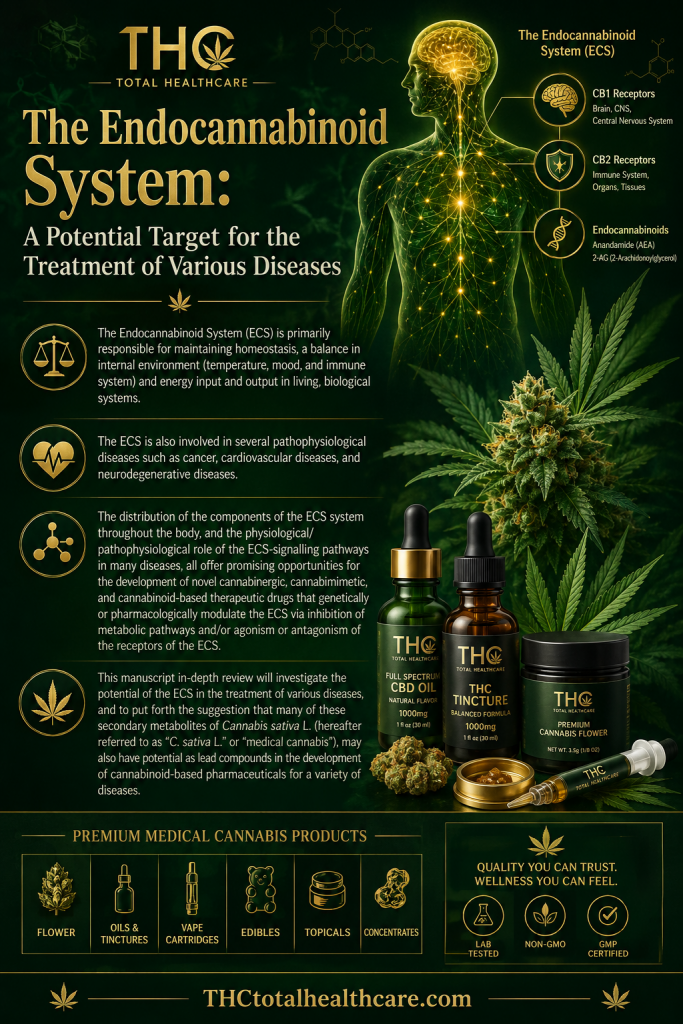
 “The Endocannabinoid System (ECS) is primarily responsible for maintaining homeostasis, a balance in internal environment (temperature, mood, and immune system) and energy input and output in living, biological systems.
 “In this study cannabidiol (CBD) was administered orally to determine its effects and mechanisms in the experimental autoimmune encephalomyelitis (EAE) model of multiple sclerosis (MS). We hypothesized that 75 mg/kg of oral CBD given for 5 days after initiation of disease would reduce EAE severity through suppression of either the early peripheral immune or late neuroimmune response.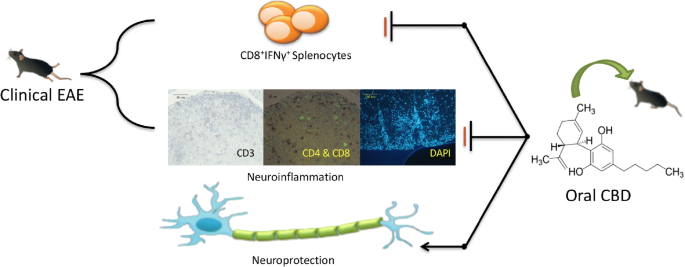
 “The consistency, efficacy, and safety of cannabis-based medicines have been demonstrated in humans, leading to the approval of the first cannabis-based therapy to alleviate spasticity and pain associated with multiple sclerosis (MS). Indeed, the evidence supporting the therapeutic potential of
  “Cannabidiol (CBD) has been shown by our laboratory to attenuate experimental autoimmune encephalomyelitis (EAE), an animal model of multiple sclerosis (MS).
 “T helper (Th)-17 mediate inflammation in both peripheral tissues and the central nervous system. Signal transducer and activator of transcription factor3 (STAT3) is required for Th-cell pathogenicity and its activation in the brain has been demonstrated during the acute phase of experimental autoimmune encephalomyelitis (EAE) through the mammalian target of rapamycin (mTOR) signaling. Rapamycin (RAPA), an inhibitor of mTOR, can drive Forkhead box P3 (FOXP3+) induction as a regulatory factor.
 “Multiple sclerosis (MS) is a chronic and disabling disorder of the central nervous system (CNS) characterized by neuroinflammation leading to demyelination.
 “Currently, a combination of marijuana cannabinoids including delta-9-tetrahydrocannabinol (THC) and
  “There is a growing surge of investigative research involving the beneficial use of cannabinoids as novel interventional alternatives for multiple sclerosis (MS) and associated neuropathic pain (NPP).
 “Multiple sclerosis (MS) is an autoimmune disease leading to the destruction of myelin with consequent axonal degeneration and severe physical debilitation. The disease can be treated with immunosuppressive drugs that alleviate the symptoms and retard disease aggravation. One such drug in clinical use is glatiramer acetate (Copaxone).
The non-psychotropic immunosuppressive
“Multiple sclerosis (MS) is an autoimmune disease leading to the destruction of myelin with consequent axonal degeneration and severe physical debilitation. The disease can be treated with immunosuppressive drugs that alleviate the symptoms and retard disease aggravation. One such drug in clinical use is glatiramer acetate (Copaxone).
The non-psychotropic immunosuppressive