Cannabisin A and B from hemp seed hulls improve glucose homeostasis by re-engaging insulin, leptin, and AMPK pathways via selective PTP1B inhibition

Background: Protein-tyrosine phosphatase 1B (PTP1B) is a master negative regulator of insulin and leptin receptor tyrosine kinase (RTK) signaling, and its chronic overactivation is strongly implicated in metabolic dysfunction. However, natural compounds capable of simultaneously inhibiting PTP1B and stimulating AMPK-the two major metabolic control nodes-remain scarce.

Methods: Two phenylpropionamide lignanamides, Cannabisin A (CA) and Cannabisin B (CB), were isolated from hemp seed hulls and their functions were evaluated using a multimodal workflow integrating molecular docking (AutoDock 4.2), mixed-type Lineweaver-Burk kinetic modeling, and 100 ns molecular dynamics simulations (CHARMM36/TIP3P). Functional assays included in vitro models such as enzyme inhibition, insulin- and leptin-stimulated glucose uptake assays in C2C12 myotubes and hepatocytes (Hepa1C1C7 and primary hepatocytes from high-fat diet mice), and in vivo models such as a multiple low-dose streptozotocin (MLD-STZ)-induced diabetic mouse model (C57BL/6J). In silico analyses of human transcriptomic and GWAS data (GEO, HuGeAMP) were conducted to assess translational relevance. BioTransformer-based metabolic predictions were used to explore absorption feasibility.

Results: CA and CB inhibited PTP1B with IC₅₀ values of 0.37 and 0.84 μM, respectively. Kinetic analysis demonstrated competitive-dominant (CA) and mixed-type (CB) inhibition, while MD simulations confirmed stable binding via catalytic-site residues (Asp48, Asp181, Arg221, Phe182). In PA-challenged C2C12 cells, both compounds restored glucose uptake and reactivated p-IRS-1, p-AKT, p-AMPK, and p-JAK2/STAT3. Similar recovery was observed in hepatocyte models, including suppression of SREBP-1c and enhancement of GLUT2 in primary HFD hepatocytes. In vivo, oral administration of CA/CB (1.5 and 3 mg/kg) in MLD-STZ diabetic mice improved fasting glucose in a dose-dependent manner, restored OGTT and ITT responses, and reactivated IRS-1/AKT/JAK2 signaling in skeletal muscle and AMPK/AKT/GLUT2 signaling in liver. Human transcriptome data and BioTransformer PK modeling showed that orally administered CA and CB can acquire sufficient polarity through O-demethylation and hydroxylation to exert PTP1B inhibitory effects in obesity and type 2 diabetes.

Conclusion: CA and CB are natural dual-target antidiabetic agents that inhibit PTP1B while activating AMPK, enabling coordinated re-engagement of insulin, leptin, and metabolic signaling. Their multi-tissue efficacy in vitro, ex vivo, and in vivo, combined with human-dataset alignment, highlights their translational potential as first-in-class insulin/leptin sensitizers derived from hemp seed hulls.”

https://pubmed.ncbi.nlm.nih.gov/41831381

Cannabis sativa L. (Cannabaceae) has long been cultivated for fiber, seed oil, and medicinal uses.”

“In this study, we identified two phenylpropionamides—Cannabisin A (CA) and Cannabisin B (CB)—from hemp seed hulls as first-in-class dual-node metabolic regulators.”

https://www.sciencedirect.com/science/article/abs/pii/S0944711326002904?via%3Dihub

Cannabidiol and diabetic heart disease: Mechanistic evidence and translational challenges

“Diabetic heart disease (DHD) is a major contributor to global cardiovascular morbidity, driven by a complex interplay of metabolic, inflammatory, oxidative, and fibrotic mechanisms. These interconnected pathways are not fully addressed by current cardiometabolic therapies, highlighting the need for novel multi-target interventions.

Cannabidiol (CBD), a non-psychoactive phytocannabinoid, has emerged as a potential modulator of several key processes implicated in DHD pathogenesis.

Preclinical evidence demonstrates that CBD attenuates oxidative stress by reducing reactive oxygen species (ROS) production, suppresses nuclear factor-κB (NF-κB)-mediated inflammatory signaling, preserves endothelial function by improving nitric oxide (NO) bioavailability, and inhibits transforming growth factor-β (TGF-β)-driven fibrotic remodeling.

These effects have been observed across in vitro and in vivo models of diabetic cardiomyopathy, where CBD improves both myocardial and vascular function. Mechanistically, CBD exerts its actions through negative allosteric modulation of CB₁ receptors and interaction with non-cannabinoid targets, including transient receptor potential vanilloid 1 (TRPV1), peroxisome proliferator-activated receptor gamma (PPARγ), and G protein-coupled receptor 55 (GPR55).

Despite this robust preclinical foundation, clinical evidence supporting the efficacy of CBD in DHD remains limited. Existing human studies are largely restricted to non-diabetic populations or short-term metabolic and hemodynamic outcomes, and do not address disease-specific cardiac endpoints. Furthermore, translational challenges, including variability in dosing, product standardization, and potential drug-drug interactions, remain significant barriers to clinical implementation.

Collectively, CBD represents a promising investigational candidate with multi-target potential to modulate the core pathophysiology of DHD. However, well-designed, disease-specific clinical trials are required to establish its therapeutic relevance and safety in diabetic populations.”

https://pubmed.ncbi.nlm.nih.gov/41966803

“Diabetic heart disease involves oxidative, inflammatory, and fibrotic pathways.”

“Cannabidiol (CBD) targets multiple pathological processes implicated in diabetic heart disease, including oxidative stress, inflammation, endothelial dysfunction, and fibrotic remodeling.”

“Cannabidiol (CBD), a non-psychoactive phytocannabinoid derived from Cannabis sativa, has attracted increasing interest due to its pleiotropic pharmacological actions across multiple molecular targets.”

https://www.sciencedirect.com/science/article/pii/S0753332226003872?via%3Dihub

Cannabinol derivatives, a new series of α-glucosidase inhibitors: synthesis, structure-activity relationship, and kinetic study

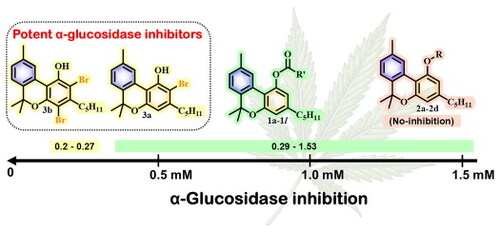
“A new series of cannabinol derivatives was synthesised and assessed for their inhibitory effects against α-glucosidase. Of nineteen derivatives evaluated, the brominated analogues (3a and 3b) demonstrated the most potent inhibition against rat intestinal α-glucosidase. Structure-activity relationship analysis suggested that the phenolic hydroxy group and the introduced bromine atoms play crucial roles in enhancing inhibitory potency. Enzyme kinetic studies further revealed that 3a and 3b retarded both maltase and sucrase via a non-competitive mechanism.”

https://pubmed.ncbi.nlm.nih.gov/41785417

https://www.tandfonline.com/doi/full/10.1080/14786419.2026.2638950

“Three new α-glucosidase inhibitors from aqueous extract of Cannabis sativa leaves: isolation, characterisation, and kinetic study”

https://pubmed.ncbi.nlm.nih.gov/39756038

Alpha-glucosidase inhibitors are oral antidiabetic medications used to treat type 2 diabetes”

Medical Cannabis for the Treatment of Peripheral Neuropathy due to Diabetes: A Systematic Review

Introduction: This systematic review evaluated randomized controlled trials (RCTs) conducted specifically in participants with diabetes and painful peripheral neuropathy to assess the effectiveness and safety of medical cannabis, isolated cannabinoids, or nationally approved cannabis-based medicines as adjuvant treatment, compared with placebo or baseline.

Materials and methods: Controlled clinical studies and RCTs in adults with diabetic peripheral neuropathy were eligible. Animal and in vitro studies were excluded. We searched PubMed, Google Scholar, Cochrane Library, and Scopus and screened 15,377 records; 35 full-text articles were assessed for eligibility, and 4 RCTs were included in the qualitative synthesis.

Results: Three of four studies reported statistically significant reductions in neuropathic pain with cannabinoid-based interventions compared with placebo, whereas one trial did not demonstrate superiority. In two trials using vaporized or sublingual Δ9-tetrahydrocannabinol (THC), doses in the range of approximately 16-18 mg were associated with clinically meaningful pain relief in participants. Adverse effects, including dizziness and cognitive symptoms, were common but generally mild-to-moderate, and discontinuations due to adverse effects varied across studies.

Discussion/conclusion: Evidence from four small, heterogeneous RCTs suggests that cannabinoid-based therapies may reduce pain in some patients with diabetic peripheral neuropathy; however, the limited number of studies, variability in formulations and comparators, and risk of bias preclude firm conclusions regarding efficacy. Observed THC doses around 16-18 mg/day delivered via vaporized or sublingual routes should be viewed as preliminary, hypothesis-generating ranges rather than definitive recommendations. Larger, contemporary RCTs with rigorous risk-of-bias control, standardized outcomes, and detailed safety reporting are needed.”

https://pubmed.ncbi.nlm.nih.gov/41714301

“three of four identified studies demonstrated statistically significant reductions in pain compared with placebo or baseline, suggesting that cannabinoid-based interventions may offer analgesic benefit for some patients with diabetic peripheral neuropathy.”

https://journals.sagepub.com/doi/10.1177/25785125261425444

Bioactive metabolites and antidiabetic activity of Cannabis sativa-derived endophytic fungi

“Cannabis sativa L. (Cannabaceae) has long been valued in traditional medicine, including Ayurveda, for managing disorders such as diabetes, cancer, and kidney diseases.

Although the plant itself is known to influence glucose metabolism, the therapeutic potential of its associated endophytic fungi remains underexplored. In this study, 56 fungal isolates were obtained from different tissues of C. sativa and evaluated for antidiabetic activity.

Two isolates, identified by ITS1/4 rDNA sequencing as Aspergillus micronesiensis and Nodulisporium verrucosum, exhibited strong inhibitory effects on α-amylase, α-glucosidase, DPP-IV, and lipase (IC₅₀ < 100 µg/mL). Their ethyl acetate extracts demonstrated low cytotoxicity, enhanced cell viability, and significantly promoted insulin secretion in MIN6 pancreatic β-cells. GC-MS analysis revealed bioactive metabolites, including 1-butyl-4-tert-butylbenzene, 7,9-di-tert-butyl-1-oxaspiro (4,5) deca-6,9-diene-2,8-dione, 2-methylcinnamic acid, and tetraneurin-A, which are reported to possess antidiabetic potential. FTIR further confirmed the presence of functional groups corresponding to these compounds.

Together, these findings highlight C. sativa-derived endophytic fungi as promising sources of novel antidiabetic agents, bridging traditional knowledge with modern drug discovery.”

https://pubmed.ncbi.nlm.nih.gov/41249583

https://link.springer.com/article/10.1007/s00203-025-04539-1

“The term “endophytic fungi” refers to fungi that live in plant tissues throughout the entire or partial life cycle by establishing a mutually beneficial symbiotic relationship with its host plant without causing any adverse effect or disease.” https://pmc.ncbi.nlm.nih.gov/articles/PMC8877053/


Protective Effects of Hemp (Cannabis sativa) Root Extracts against Insulin-Deficient Diabetes Mellitus In Mice

“The pharmacological potential of industrial hemp (Cannabis sativa) has been widely studied. However, the majority of studies have focused on cannabidiol, isolated from the inflorescence and leaf of the plant.

In the present study, we evaluated the anti-diabetic potential of hemp root water (HWE) and ethanol extracts (HEE) in streptozotocin (STZ)-induced insulin-deficient diabetic mice.

The administration of HWE and HEE ameliorated hyperglycemia and improved glucose homeostasis and islet function in STZ-treated mice (p < 0.05). HWE and HEE suppressed β-cell apoptosis and cytokine-induced inflammatory signaling in the pancreas (p < 0.05). Moreover, HWE and HEE normalized insulin-signaling defects in skeletal muscles and apoptotic response in the liver and kidney induced by STZ (p < 0.05).

Gas chromatography-mass spectrometry analysis of HWE and HEE showed possible active compounds which might be responsible for the observed anti-diabetic potential.

These findings indicate the possible mechanisms by which hemp root extracts protect mice against insulin-deficient diabetes, and support the need for further studies geared towards the application of hemp root as a novel bioactive material.”

https://pubmed.ncbi.nlm.nih.gov/37175224/

“In conclusion, the present study demonstrated that HWE and HEE counteracted STZ-induced hyperglycemia and islet dysfunction via the inhibition of β-cell apoptosis in mice. The inhibition of β-cell apoptosis by HWE and HEE was associated with the suppression of cytokine-induced inflammatory signaling. In addition, HWE and HEE attenuated apoptosis in the liver and kidney and improved insulin signaling in skeletal muscle. These findings provide novel scientific evidence for the pharmaceutical application of hemp root, which has been considered a minor part of the plant in Cannabis-based medicinal and functional food studies.”

https://www.mdpi.com/1420-3049/28/9/3814

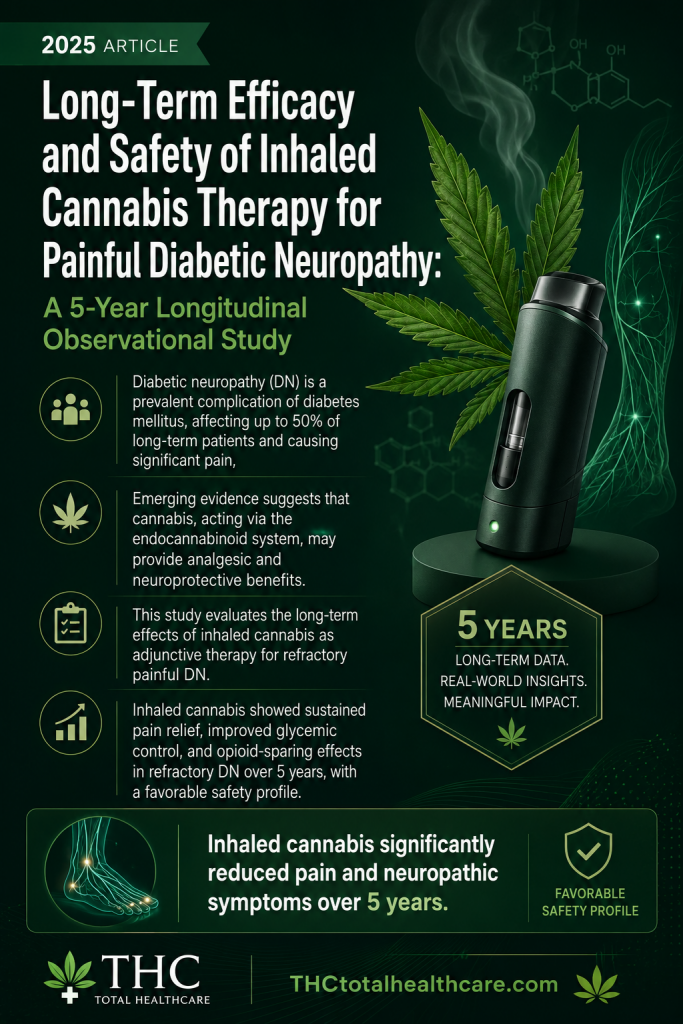
Long-Term Efficacy and Safety of Inhaled Cannabis Therapy for Painful Diabetic Neuropathy: A 5-Year Longitudinal Observational Study

“Background/Objectives: Diabetic neuropathy (DN) is a prevalent complication of diabetes mellitus, affecting up to 50% of long-term patients and causing significant pain, reduced quality of life, and healthcare burden. Conventional treatments, including anticonvulsants, antidepressants, and opioids, offer limited efficacy and are associated with adverse effects. Emerging evidence suggests that cannabis, acting via the endocannabinoid system, may provide analgesic and neuroprotective benefits. This study evaluates the long-term effects of inhaled cannabis as adjunctive therapy for refractory painful DN. Inhaled cannabis exhibits rapid onset pharmacokinetics (within minutes, lasting 2-4 h) due to pulmonary absorption, targeting CB1 and CB2 receptors to modulate pain and inflammation. 

Methods: In this prospective, observational study, 52 patients with confirmed painful DN, unresponsive to at least three prior analgesics plus non-pharmacological interventions, were recruited from a single clinic. Following a 1-month washout, patients initiated inhaled medical-grade cannabis (20% THC, <1% CBD), titrated individually. Assessments occurred at baseline and annually for 5 years, including the Brief Pain Inventory (BPI) for pain severity and interference; the degree of pain relief; Leeds Assessment of Neuropathic Symptoms and Signs (LANSS) score; HbA1c; and medication usage. Statistical analyses used repeated-measures ANOVA, Kruskal-Wallis tests, Welch’s t-tests, and Pearson’s correlations via Analyze-it for Excel. 

Results: Of 52 patients (mean age 45.3 ± 17.8 years; 71.2% male; diabetes duration 23.3 ± 17.8 years), 50 completed follow-up visits. Significant reductions occurred in BPI pain severity (9.0 ± 0.8 to 2.0 ± 0.7, p < 0.001), interference (7.5 ± 1.7 to 2.2 ± 0.9, p < 0.001), LANSS score (19.4 ± 3.8 to 10.2 ± 6.4, p < 0.001), and HbA1c (9.77% ± 1.50 to 7.79% ± 1.51, p < 0.001). Analgesic use decreased markedly (e.g., morphine equivalents: 66.8 ± 49.2 mg to 4.5 ± 9.6 mg). Cannabis dose correlated positively with pain relief (r = 0.74, p < 0.001) and negatively with narcotic use (r = -0.43, p < 0.001) and pain interference (r = -0.43, p < 0.001). No serious adverse events were reported; mild side effects (e.g., dry mouth or euphoria) occurred in 15.4% of patients. 

Conclusions: Inhaled cannabis showed sustained pain relief, improved glycemic control, and opioid-sparing effects in refractory DN over 5 years, with a favorable safety profile. These findings are associative due to the observational design, and randomized controlled trials (RCTs) are needed to confirm efficacy and determine optimal usage, addressing limitations such as single-center bias and small sample size (n = 52). Future studies incorporating biomarker analysis (e.g., endocannabinoid levels) could elucidate mechanisms and enhance precision in cannabis therapy.”

https://pubmed.ncbi.nlm.nih.gov/41153689/

“Inhaled cannabis add-on therapy mitigated symptoms of diabetic neuropathy over the course of a five-year observation period. Some reduction in glycosylated hemoglobin is observed as well as major reduction in the need for other prescription medications, including opiates and opioids. It is possible to state the following: (1). Inhaled cannabis significantly reduced pain and neuropathic symptoms over 5 years. (2). It decreased opioid use, supporting an opioid-sparing effect. (3). HbA1c improvements suggest a metabolic benefit, though causality is unproven. (4). No serious adverse events occurred, with mild effects in 15.4% of patients. (5). RCTs are needed to confirm efficacy and address accessibility barriers. Integration of objective pain assessment tools, such as salivary biomarker devices, could enhance the precision and reproducibility of cannabis therapy outcomes in DN.”

https://www.mdpi.com/2227-9059/13/10/2406

Anti-inflammatory effects of cannabidiol in the treatment of type 1 diabetes: A mini review

“This study reviews the anti-inflammatory potential of cannabidiol (CBD) in the management of type 1 diabetes (T1D).

A comprehensive search was conducted across PubMed, Scopus, and ScienceDirect databases using the terms “type 1 diabetes”, “cannabidiol”, “anti-inflammatory effect”, and “CBD”. Articles published between 2005 and 2025 were screened, and studies involving animal models that examined CBD as a therapeutic intervention for T1D and reported on its anti-inflammatory effects were included. Of the 62 retrieved articles, only 6 met the predefined inclusion criteria.

Although limited in number, the available studies show promising outcomes. CBD demonstrates potential as an adjuvant therapy for T1D due to its immunomodulatory and anti-inflammatory actions. Nonetheless, further research is required to establish safe and effective clinical application protocols.”

https://pubmed.ncbi.nlm.nih.gov/41113484/

https://doi.org/10.4239/wjd.v16.i10.110041

Chemical Composition and Antioxidant Activity of the Stembark Essential Oils of Two Cannabis sativa L. Cultivars from Komga, South Africa

“Cannabis sativa L. is an aromatic medicinal plant with various biologically active classes of compounds such as cannabinoids, polyphenols, and terpenes.

Unlike the widely investigated inflorescence and leaf, the stembark of C. sativa has been overlooked regarding its medicinal potential. This study, therefore, was aimed at determining the chemical composition and antioxidant activity of the essential oils (EOs) obtained from the fresh and dried stembark of two C. sativa cultivars, Lifter and Cherrywine, grown in Komga, South Africa, with a view to ascertaining the more promising cultivar.

The chemical profiles of the hydro-distilled EOs were analyzed by gas chromatography-mass spectrometry (GC-MS), while an in vitro antioxidant activity assessment of the EOs was performed using DPPH and H2O2 spectrophotometric methods. The identified constituents from the EOs were molecularly docked against NOX2, a protein implicated in oxidative stress. The afforded EOs were colorless with a mild skunk-like odor. A total of thirty-two constituents were identified in both fresh and dry oils from the Lifter cultivar while the Cherrywine cultivar contained a total of forty-two constituents.

The EOs of both cultivars contained twenty compounds, notably Cannabidiol (0.25-85.03%), Caryophyllene oxide (1.27-19.58%), Caryophyllene (0.64-16.61%), Humulene (0.37-8.15%), Octacosane (3.37-6.55%), Humulene-1,2-epoxide (0.45-5.78%), Nerolidol (0.32-4.99%), Palmitic acid (1.45-4.45%), Tetracosane (1.75-2.91%), Dronabinol (0.86-2.86%), Cannabinol (0.54-1.64%), 7-epi-γ-eudesmol (0.53-1.00%), Guaiol (0.37-0.66%), Linoleic acid (0.22-0.60%), γ-Selinene (0.15-0.48%), β-Eudesmol (0.34-0.50%), and Linalool (0.24-0.30%).

The dried Lifter stembark oil (DLSO) gave the best antioxidant activity among the four investigated cannabis oils, exhibiting the lowest IC50 values of 21.68 ± 1.71 and 26.20 ± 1.34 µg/mL against DPPH and H2O2 radicals, respectively. The notable antioxidant activity of the DLSO may be attributed to the higher number (30) of constituents compared to the fresh Lifter stembark oil (LSO) with 11 constituents. Additionally, the DLSO showed a unique chemical profile comprising monoterpenes, oxygenated and hydrocarbon sesquiterpenes. Further in silico studies on the putative constituents in the Lifter cultivar revealed Cannabinol, Cannabidiol, and Linalool as the promising constituents based on their higher binding energy scores of -9.7, -8.5, and -6.5 kcal/mol, respectively, compared to L-Ascorbic acid (-5.7 kcal/mol).

It can be inferred from this study that the EOs from the stembark of C. sativa contain promising compounds, such as Cannabinol, Cannabidiol, and Linalool, which might be responsible for the displayed antioxidant activity of the oils. Thus, the study findings underscore the biological importance of C. sativa stembark in the management of oxidative stress-related conditions.”

https://pubmed.ncbi.nlm.nih.gov/40943472/

https://www.mdpi.com/1422-0067/26/17/8552

UHPLC-Q-TOF-MS profiling and multifaceted antioxidant, antihyperglycemic and anticancer potential of Cannabis sativa sugar leaves: An unexplored source of cannabidiol, terpenes and polyphenols

“Cannabis sativa is one of the most extensively researched plant species that holds promising therapeutic and ethnomedicinal significance.

Various parts of the species including fan leaves, flowers and trichomes are well documented for their richness in cannabidiol (CBD) and tetrahydrocannabidiol (THC) contents. However, an overlooked part of C. sativa, the sugar leaves, which are wasted during harvesting has plethora of CBD and THC and yet to investigated.

In this study we investigated the ethanol extract of sugar leaves of C. sativa (CSLE) for chemical composition through UHPLC-Q-TOF-MS analysis and pharmacological potential by using various in vitro antioxidant, antidiabeticnitric oxide inhibition and anticancer studies. Furthermore, in silicomolecular docking analysis was performed for 10 selected compounds against α-glucosidase and α-amylase.

The UHPLC-Q-TOF-MS profiling of CSLE revealed the tentative identification of 37 compounds including CBD, THC, terpenes and flavonoids. The cytotoxicity studies presented highest activity against breast cancer cell lines (MDA-MB-231, IC50= 18.12 ± 1.13 µg/mL) followed by lung, liver and colorectal cancer cell lines.

Similarly, CSLE showed significant antidiabetic activity by inhibiting α-glucosidase (IC50= 3.13 ± 2.78 µg/mL) and α-amylase. The in vitro antioxidant assays gave highest activity in ABTS followed by DPPH method as well as potentially inhibited nitric oxide (NO) formation. The computational analysis revealed good docking interaction of CBD, THC, selected terpene and flavonoids against α-glucosidase and α-amylase.

Overall, the findings present the sugar leaves of C. sativa as the undisputed rich source of CBD, THC, terpenes and flavonoids with multifaceted therapeutic potential in diabetes, inflammation and different types of cancers. However, there is need of further investigations on toxicity profile and in-depth pharmacological evaluation through in vivo disease bearing animal models.”

https://www.sciencedirect.com/science/article/abs/pii/S2950199725001429

“The research titled “UHPLC-Q-TOF-MS profiling and multifaceted antioxidant, antihyperglycemic and anticancer potential of Cannabis sativa sugar leaves: An unexplored source of cannabidiol, terpenes and polyphenols” identifies sugar leaves of Cannabis sativa as a potential source for multiple therapeutic compounds, including cannabidiol, terpenes, and polyphenols. Through UHPLC-Q-TOF-MS analysis, the study found that these sugar leaf extracts exhibit antioxidant, antihyperglycemic (anti-diabetic), and anticancer activities against various cancer cell lines. The specific compounds present in the sugar leaves, when combined with other plant compounds like terpenes and flavonoids, demonstrate a phenomenon known as the entourage effect, which could enhance their therapeutic potential.”