
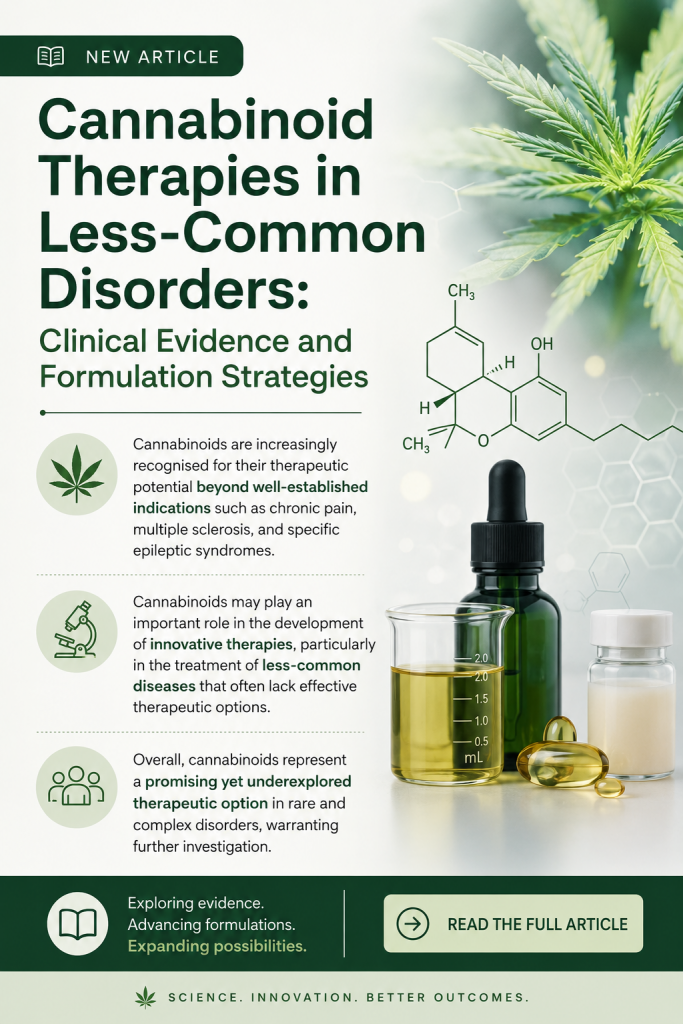
“Background/Objectives: Cannabinoids are increasingly recognised for their therapeutic potential beyond well-established indications such as chronic pain, multiple sclerosis, and specific epileptic syndromes. Recent advances have highlighted their possible role in less-common or orphan diseases, opening new avenues for pharmaceutical research and clinical application.
Methods: This review provides a critical synthesis of the most recent evidence (2020-2025), available in PubMed and Scopus, regarding the use of cannabinoids in conditions including refractory epilepsies beyond Dravet and Lennox-Gastaut syndromes, movement disorders such as dystonia and Tourette syndrome, rare dermatological diseases like epidermolysis bullosa, and emerging data in Crohn’s disease.
Results: Negative outcomes, such as those reported in Fragile X syndrome trials, are also discussed as instructive examples of methodological and pharmacological challenges. Particular attention is given to the optimisation of pharmaceutical formulations and advanced separation technologies, including oromucosal sprays, transdermal gels, and novel nanocarrier systems, which aim to overcome issues of bioavailability and variability in patient response. Finally, safety concerns, regulatory aspects, and the need for robust clinical trials are addressed.
Conclusions: Overall, cannabinoids represent a promising yet underexplored therapeutic option in rare and complex disorders, warranting further investigation supported by innovative pharmaceutical approaches.”
https://pubmed.ncbi.nlm.nih.gov/41745121

“Thus, cannabinoids may play an important role in the development of innovative therapies, particularly in the treatment of less-common diseases that often lack effective therapeutic options.”
https://www.mdpi.com/2079-9721/14/2/83
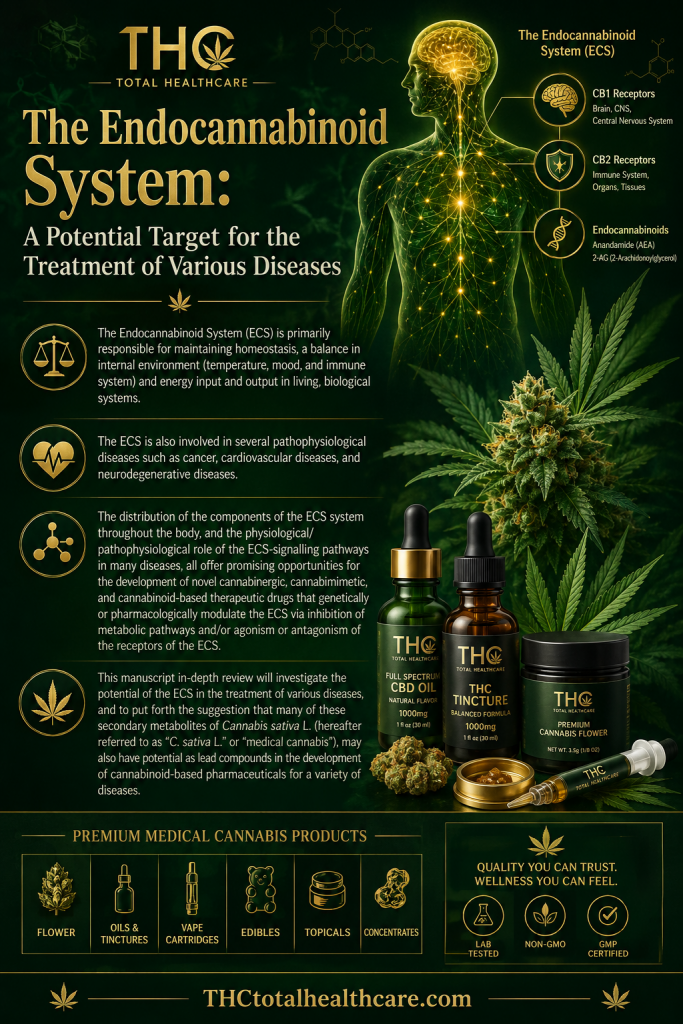
 “The Endocannabinoid System (ECS) is primarily responsible for maintaining homeostasis, a balance in internal environment (temperature, mood, and immune system) and energy input and output in living, biological systems.
 “Epidermolysis bullosa is a rare blistering skin disorder that is challenging to manage because skin fragility and repeated wound healing cause itching, pain, limited mobility, and recurrent infections.
