Acute effects of cannabis on core and co-occurring features associated with autism spectrum disorder in adults

pubmed logo

“Pharmacological interventions that treat core and co-occurring features of autism spectrum disorder (ASD) are a persistent unmet need.

As such, use of cannabis to manage ASD features is common in the autistic community. Yet, few studies have examined the acute effects of cannabis on symptoms associated with ASD. Therefore, we measured changes in symptom ratings from before to after cannabis use in a sample of 111 self-identified autistic adults.

Anonymized archival data sourced from the Strainprint® app were analyzed. A subset of tracked information that reflected changes in core and co-occurring symptoms associated with ASD (i.e., Sensory Sensitivity, Repetitive Behaviors, Mental Control, and Negative Affect) were used to assess the impacts of cannabis on symptom severity.

Overall, symptom severity ratings were reduced by 73.09% from before to after cannabis use. More severe symptoms were associated with greater reductions in severity ratings after use.

Higher doses predicted greater reductions in severity of Repetitive Behaviors, Mental Control, and Negative Affect but dose of cannabis used to manage all symptoms remained static across time.

Results from this first empirical examination of the perceived acute effects of cannabis in autistic adults suggest that cannabis provides temporary relief from symptoms associated with ASD.”

https://pubmed.ncbi.nlm.nih.gov/41233406/

“The present study represents the first to demonstrate acute perceived beneficial effects of inhaled cannabis on core and co-occurring symptoms associated with ASD in a large adult sample.”

“These findings indicate that well-powered placebo-controlled trials are warranted to examine the acute effects of various cannabinoids and manipulations of the endocannabinoid system on ASD symptoms.”

“In sum, data from clinical trials of children and adolescents presents an evidence base that supports a continued focus on the impact of CBD on ASD features, while the present data from cannabis-using autistic adults indicates that a sole focus on CBD may not fully capture the potential impact of cannabinoids as a pharmacological intervention for adults with ASD. Thus, additional placebo-controlled clinical trials are needed where THC, CBD, and other non-intoxicating cannabinoids (e.g., cannabigerol), terpenes, and/or medications that modulate the functioning of the endocannabinoid system are administered to autistic adults to determine their relative effects on symptoms associated with ASD.”

https://www.nature.com/articles/s41598-025-23472-3

Effects of Medical Cannabis Treatment for Autistic Children on Family Accommodation: An Open-Label Mixed-Methods Study

pubmed logo

“Background/objectives: Parents of autistic children often face behavioral and participation challenges of their children, leading them to make accommodations to maintain a stable daily family routine. These family accommodations (FA) involve adapting family routines, actively engaging with the child’s support needs and symptoms, and avoiding specific situations.

Methods: This open-label, mixed-methods study investigated the impact of CBD-rich cannabis treatment on FA. In the quantitative phase, analyses included 44 parents (from 87 initially recruited) who had complete FAS-RRB data at baseline, 3 months, and 6 months. In the following qualitative phase, 15 parents from the full sample participated in semi-structured interviews.

Results: Quantitative results showed reductions in FA frequency and parental distress at 3 and 6 months. Qualitative findings revealed positive changes in family routines, enhanced well-being, and improved parental engagement in meaningful activities and social interactions.

Conclusions: This study provides preliminary evidence that CBD-rich cannabis treatment may reduce family accommodation (FA) and parental distress, while improving family routines and well-being. However, given the open-label design and observed adverse events and withdrawals, the findings should be interpreted with caution.”

https://pubmed.ncbi.nlm.nih.gov/41153555/

https://www.mdpi.com/2227-9067/12/10/1373

“Highlights

  • CBD-rich cannabis treatment over 6 months was associated with reduced family accommodation (FA) and parental distress in families of autistic children.
  • Qualitative findings showed improved family routines, parental well-being, and greater engagement in meaningful activities and social interactions.

What are the main findings?

Implications

  • CBD-rich cannabis treatment may reduce FA and parental distress, while improving family routines and well-being.
  • These results provide preliminary support for CBD-rich cannabis treatment in autistic children, though further controlled studies are needed.”

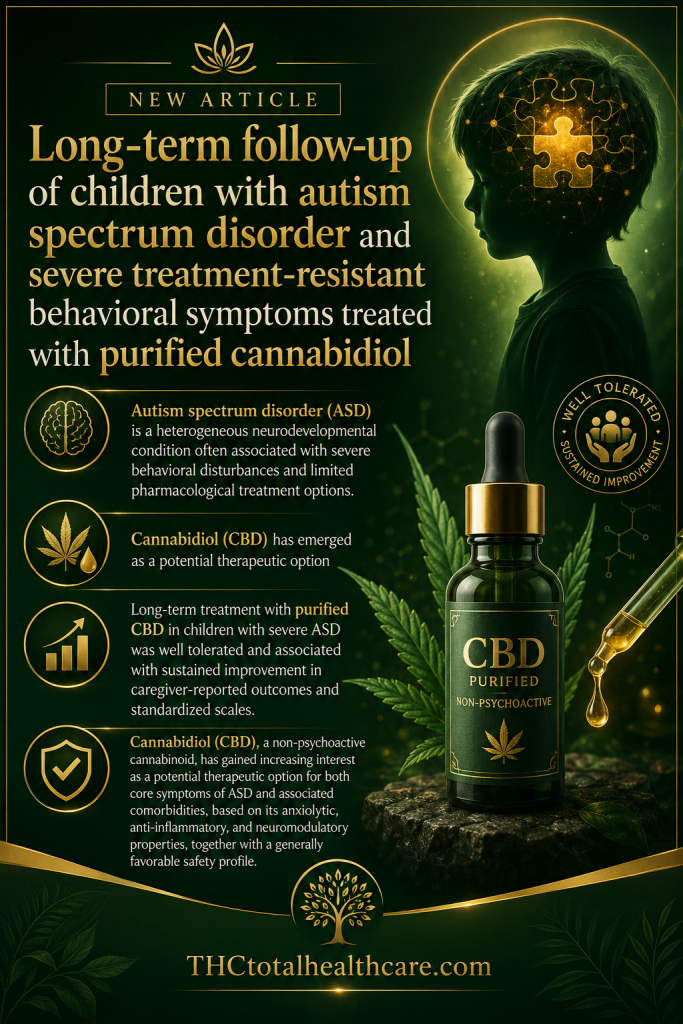
Cannabinoid treatment impacts adaptive behavior in autism patients and caregivers’ mental health: A prospective real-life cohort study

pubmed logo

“Introduction: Pharmacological interventions for behavioral symptoms of Autism Spectrum Disorder (ASD) are limited and recent studies point out benefits with the use of cannabinoids.

Method: This longitudinal observational study investigates ASD symptoms after 3 months of starting cannabidiol (CBD)-rich extract therapy and it’s impact on the mental health of caregivers. Assessment was based on clinical and socioeconomic questionnaire, Autism Treatment Evaluation Checklist (ATEC), Childhood Autism Rating Scale (CARS) and Vineland 3 Scale. The Brief Symptom Inventory (BSI) was applied to evaluate caregiver’s health.

Results: Sixteen patients with ASD who received cannabinoid treatment (CBD group) and seventeen patients with ASD without cannabinoid treatment (control group). CBD group was characterized as severe autism, ATEC total (SD) 85.5 ± 34.00, while controls as moderate, ATEC total (SD) 58.6 ± 25.53 (p = 0.047). After 3 months of treatment, CBD group showed a reduction in maladaptive behavior – internalizing (Vineland 3) (p = 0.008), and their caregivers a reduction in symptoms of Interpersonal Sensitivity (BSI) (p = 0.038), Global Severity Index (BSI) (p = 0.025) and Positive Symptom Distress Index (BSI) (p = 0.007), indicating reduction on mental health symptoms. For the control group, after 3 months there was a significant increase in scores for Daily Living Activities (Vineland 3) (p = 0.031) and Socialization (ATEC) (p = 0.037).

Conclusion: This study suggests that therapy with cannabidiol (CBD)-rich extract in severe ASD may have positive effects on anxious and depressive symptoms, potentially positively impacting on the mental health of their caregivers.”

https://pubmed.ncbi.nlm.nih.gov/40967683/

http://linkinghub.elsevier.com/retrieve/pii/S0079612325001311

Oromucosal as an Alternative Method for Administration of Cannabis Products in Rodents

pubmed logo

“Oral administration of drugs in laboratory rodents such as rats is conventionally performed using the gavage technique. Despite effectiveness, gavage can induce distress associated with restraint, especially following repeated animal handling.

To mitigate these adverse effects and reduce morbidity associated with traditional methods, we explored oromucosal/buccal administration of cannabidiol (CBD)-enriched Cannabis extract.

In this method, male rats were treated daily for 15 days with medium-chain triglycerides (TCM) derived from coconut oil or CBD-enriched Cannabis extract. Each treatment was administered individually while animals were gently immobilized using an affectionate touch technique. The administration involved the use of a micropipette to apply the oily formulation directly into the oral mucosa. The dosage was calculated based on the CBD concentration in the Cannabis extract, standardized at 3 mg/kg/day. To ensure accuracy, animals were weighed daily, allowing for dose adjustments in accordance with weight changes over the treatment period. This method offers non-invasive and stress-reducing treatment, potentially improving animal welfare in experimental settings.

The treatment with CBD-enriched Cannabis extract was safe, and the analysis of the hippocampus of these animals’ showed alterations in the expression levels of GluA1 and GFAP proteins, which are directly associated with glutamatergic receptor functionality and neuroinflammation, respectively. This suggests that Cannabis extract could be applied in pathological conditions where glutamatergic excitotoxicity and astrogliosis are observed.”

https://pubmed.ncbi.nlm.nih.gov/40920655/

https://app.jove.com/t/68104/oromucosal-as-an-alternative-method-for-administration-cannabis

Cannabinoid Receptors CB1 and CB2 Activation Restores Hippocampal Lipid Profiles and Alleviates Autism-Like Behaviors in Valproic Acid-Induced ASD Rats

pubmed logo

“Objective: Emerging evidence suggests lipid metabolism dysregulation contributes to autism spectrum disorders (ASD), with the endocannabinoid system (cannabinoid receptors CB1R/CB2R) implicated in lipid homeostasis. This study investigated whether CB1R/CB2R activation improves hippocampal lipid metabolism and ASD-like behaviors in a valproic acid (VPA)-induced ASD rat model.

Methods: Male offspring from dams exposed to VPA (600 mg/kg, i.p.) received the CB1R agonist ACPA (0.1 mg/kg) or the CB2R agonist AM1241 (3 mg/kg) from postnatal days 21-27. ASD-like behaviors (marble burying, self-grooming, social interaction, open-field tests) and hippocampal lipid profiles (UPLC-MS/MS) were analyzed.

Results: VPA-exposed rats displayed heightened repetitive behaviors, social deficits, and hyperactivity, all significantly alleviated by ACPA and AM1241. Lipidomics revealed marked reductions in hippocampal phosphatidylcholines, lysophosphatidylcholines, fatty acids, sphingomyelins, ceramides, and phosphatidylethanolamines in VPA rats. Both agonists restored lipid levels to near normal, comparable to controls.

Conclusions: CB1R/CB2R activation ameliorates behavioral abnormalities and rectifies hippocampal lipid dysregulation in VPA-induced ASD models, highlighting cannabinoid receptors as potential therapeutic targets for ASD-associated metabolic disturbances.”

https://pubmed.ncbi.nlm.nih.gov/40852923/

“This study provides new evidence linking ASD-like behaviors, lipid metabolism abnormalities, and endocannabinoid system regulation. Our results demonstrated that CB1R and CB2R activation alleviated VPA-induced ASD-like behaviors and restored disrupted lipid profiles in the hippocampus, suggesting a potential therapeutic approach for ASD. Further research should explore the molecular mechanisms underlying CB1R- and CB2R-mediated lipid regulation and their implications for ASD treatment strategies.”

https://onlinelibrary.wiley.com/doi/10.1111/cns.70591

Evaluating the impact of cannabis oil for autistic children with and without concomitant medications: Insights from an open-label study

pubmed logo

“Background: Although only two drugs are FDA approved for autism spectrum disorder (ASD), clinical practice treatment includes off-label use of medications to address the troubling symptoms of ASD. Several trials showed the beneficial effects of medical cannabis for alleviating symptoms of ASD. However, data are lacking regarding its safety and effectiveness as a single agent compared to add-on therapy.

Aims: To compare the safety and effectiveness of medical cannabis as a monotherapy and add-on therapy in autistic children.

Methods: An open-label trial recruiting autistic children was performed and treated with medical cannabis oil with a THC:CBD ratio of 1:20, respectively. Tests were conducted at baseline and after 6 months of therapy. A secondary analysis was done to compare physical and behavior parameters, using tests such as Autism Diagnostic Observation Schedule and Wechsler tests in the two groups.

Results: Out of 109 participants, 81 completed the treatment. Thirty received cannabis as add-on therapy to a pre-existing treatment, whereas 51 received cannabis as monotherapy, with no observed differences in baseline characteristics between the groups. The mean maximal CBD dose was 3.1 mg/kg/day in the monotherapy group, compared to 2.8 mg/kg/day in the add-on group (p = 0.40). In patients treated with drugs for psychosis, the mean maximal dose was 2.48 mg/kg/day (p = 0.12). No differences were observed in most physical and behavioral parameters. In addition, no differences in CBD blood levels were observed.

Conclusions: Add-on cannabis therapy is as safe as monotherapy treatment, without significant differences in efficacy.”

https://pubmed.ncbi.nlm.nih.gov/40613426/

https://journals.sagepub.com/doi/10.1177/02698811251332841

The endocannabinoidome-gut microbiome-brain axis as a novel therapeutic target for autism spectrum disorder

pubmed logo

“Introduction: Autism spectrum disorder (ASD) is characterized by disruption of the gut-brain axis, which leads to behavioral, psychiatric, metabolic and gastrointestinal symptoms. Effective ASD treatments are limited. Research highlights the roles of the endocannabinoidome (eCBome) and gut microbiome (GM), both crucial for brain and gut function. This review summarizes research on therapeutic targets within the eCBome-GM-brain axis for ASD and related comorbidities.

Discussion: Evidence suggests that reduced levels of eCBome mediators, like oleoylethanolamide and anandamide, and altered cannabinoid type 1 and type 2 (CB1 and CB2) receptors activity may contribute to ASD symptoms, making them promising targets. Modulating the eCBome-GM-brain axis with inhibitors of fatty acid amide hydrolase (FAAH), transient receptor potential vanilloid 1, and monoacylglycerol lipase (MAGL) may improve repetitive, stereotypical, and sensory behaviors, and alleviate sociability impairments, depression and anxiety. However, inhibition of FAAH and MAGL may also induce ADHD-like behaviors, which can be reversed by CB1 inverse agonists. Targeting metabotropic glutamate receptor 5 to increase levels of the eCBome mediator 2-arachidonoylglycerol (2-AG) may benefit ASD-related behaviors. eCBome mediators such as 2-AG, 1/2-palmitoylglycerol and palmitoylethanolamide may also help manage ASD- and GI-related symptoms, and systemic inflammation. Other potential therapeutic targets that deserve further investigation are eCBome-related receptors G-protein-coupled receptor 55 and peroxisome proliferator-activated receptors-alpha and -gamma, and the cyclooxygenase-2/prostaglandin E2 pathway, which may address hyperactivity and repetitive behaviors. Additionally, mucin-degrading genera like Akkermansia and Ruminococcus may improve ASD-related GI symptoms such as hypersensitivity and inflammation. Selective antibiotics against specific Clostridium strains may improve irritability and aggression. In ASD with ADHD and OCD, treatments may involve modulating the CB1 and CB2 receptor, and bacterial families like Ruminococcaceae and Lachnospiraceae. Lastly, modulating the abundance of anti-inflammatory genera like Prevotella and Anaeroplasma, and taxa associated with gut health such as Roseburia may also offer therapeutic value.

Conclusion: The eCBome-GM-brain axis is a promising target for ASD treatment, meriting further clinical and preclinical research.”

https://pubmed.ncbi.nlm.nih.gov/40605060/

“In conclusion, the eCBome–GM–brain axis represents a promising, multifaceted therapeutic target for ASD and its comorbidities, warranting further clinical and preclinical research to clarify its therapeutic potential and refine targeted interventions.”

https://jbiomedsci.biomedcentral.com/articles/10.1186/s12929-025-01145-7

Activation of CB1R alleviates autism spectrum disorder-like behavior and synaptic impairments

pubmed logo

“We previously found that enhancing the levels of 2-arachidonoylglycerol (2-AG) and anandamide (AEA) could improve autism spectrum disorder (ASD) symptoms. This study investigated the effect of cannabinoid type 1 receptor (CB1R) in ASD with pharmacological, genetic and brain-targeted intervention and the underlying mechanisms.

Results showed that blocking CB1R counteracted the beneficial effects of boosting 2-AG or AEA on ASD-like behaviors in valproic acid (VPA)-exposed mice. Besides, CB1R knockout mice exhibited ASD-like behaviors and synaptic deficits.

In CB1R-specific brain-targeted regulation, activating CB1R ameliorated synaptic dysfunction, including neuronal complexity, spine density, dendritic integrity, synaptic protein expression, and neuronal damage. Moreover, activating CB1R enhanced the expression and current density of Kir4.1, indicating that CB1R may influence synaptic activity by modulating Kir4.1.

Collectively, our findings indicated a critical role for CB1R in the improvement of ASD-like behavior and synaptic dysfunction, which may offer promising avenues for developing effective treatments for ASD.”

https://pubmed.ncbi.nlm.nih.gov/40484367/

“Brain-specific activation of CB1R improves synaptic impairments in ASD model mice.”

https://www.sciencedirect.com/science/article/abs/pii/S0024320525004321?via%3Dihub

Cannabis Oil Protects Against Valproic Acid-Induced Autism Spectrum Disorder by Reducing Oxidative Stress

pubmed logo

“Autism spectrum disorder (ASD) is characterized by persistent problems in speech, social interaction, restricted and repetitive behavior patterns, lack of interest, and intellectual disabilities. Currently, there is no effective treatment available for the core symptoms of ASD.

Among various treatments, herbal pharmacological treatments have shown promising results with fewer side effects, especially cannabidiol (CBD) treatment for the core symptoms and co-morbidities of ASD.

The current study was performed to explore the therapeutic potential of CBD oil supplementation against the valproic acid (VPA)-induced autism mouse model.

The autism mouse model was developed by exposing albino BALB/c mouse fetuses to VPA (600 mg/kg) on gestational day 13. On postnatal day (PND)-21, the male pups from both control and diseased groups were further divided into the following treatment groups: (I) control saline group, (II) VPA-exposed group, (III) VPA + CBD oil (100 mg/kg/day/orally) group, and (IV) standard group of VPA + risperidone (RISP) (0.5 mg/kg/day/orally) for 3 consecutive weeks. VPA mice displayed autistic behaviors upon delivery, such as increased anxiety levels, delayed response to painful stimuli, and impaired social interaction. VPA mice also showed depletion of glutathione and other antioxidant levels.

CBD oil improved these dysfunctions, as seen through biochemical analysis and morphological staining of the hippocampal region, prefrontal cortex, and Purkinje cells.

These findings showed that CBD oil treatment significantly improved behavioral abnormalities and lowered the oxidative stress in the autistic mouse model by acting as an antioxidant.”

https://pubmed.ncbi.nlm.nih.gov/40384294/

https://onlinelibrary.wiley.com/doi/10.1002/dneu.22969

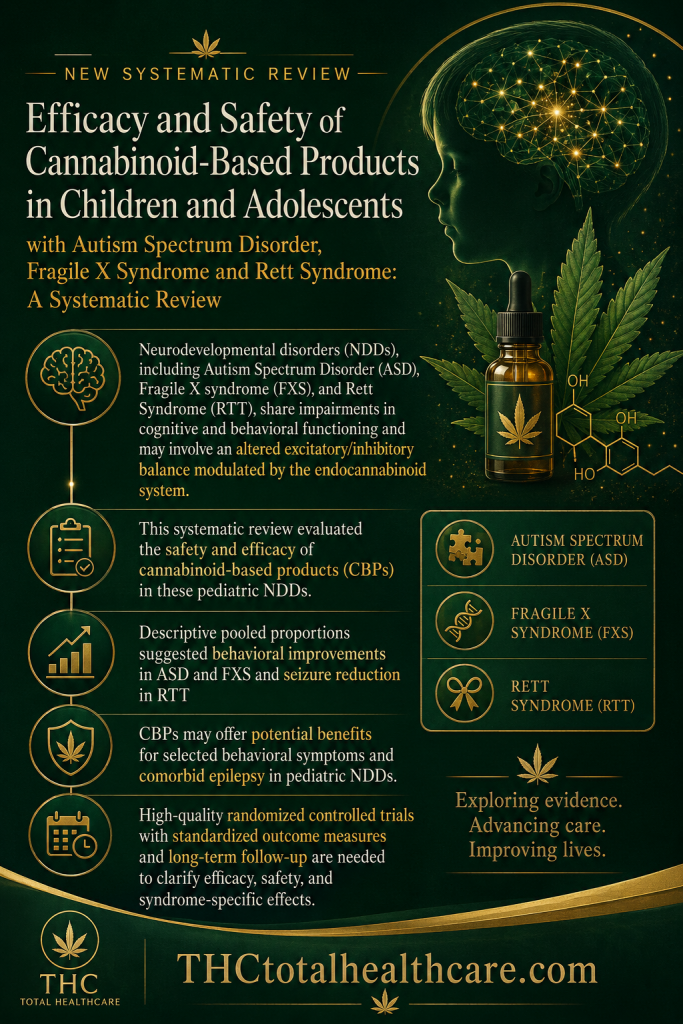
Efficacy and Safety of Cannabinoids for Autism Spectrum Disorder: An Updated Systematic Review

pubmed logo

“Autism Spectrum Disorder (ASD) lacks an established pharmacological treatment protocol, prompting interest in alternative therapeutic approaches, such as cannabidiol (CBD). This systematic review evaluates the potential efficacy and safety of CBD-rich formulations in managing ASD symptoms. A comprehensive search of PubMed, Embase, Scopus, Web of Science, and the Cochrane Library identified seven studies encompassing 494 patients from Brazil and Israel.

Preliminary findings suggest that CBD-rich formulations may provide modest benefits for sleep and social interaction, with a reduction in anxiety symptoms. Regarding core ASD symptoms and behavioral outcomes, cannabinoids demonstrated greater efficacy compared to placebo in some studies. However, adverse events varied, and response to treatment was inconsistent across individuals. While cannabinoids, particularly CBD-rich formulations, appear to be relatively safe and potentially beneficial, further large-scale, controlled trials comparing CBD to established ASD treatments are essential to clarify its role and long-term impact in ASD management.”

https://pubmed.ncbi.nlm.nih.gov/40248548/

https://www.cureus.com/articles/347254-efficacy-and-safety-of-cannabinoids-for-autism-spectrum-disorder-an-updated-systematic-review#!/