
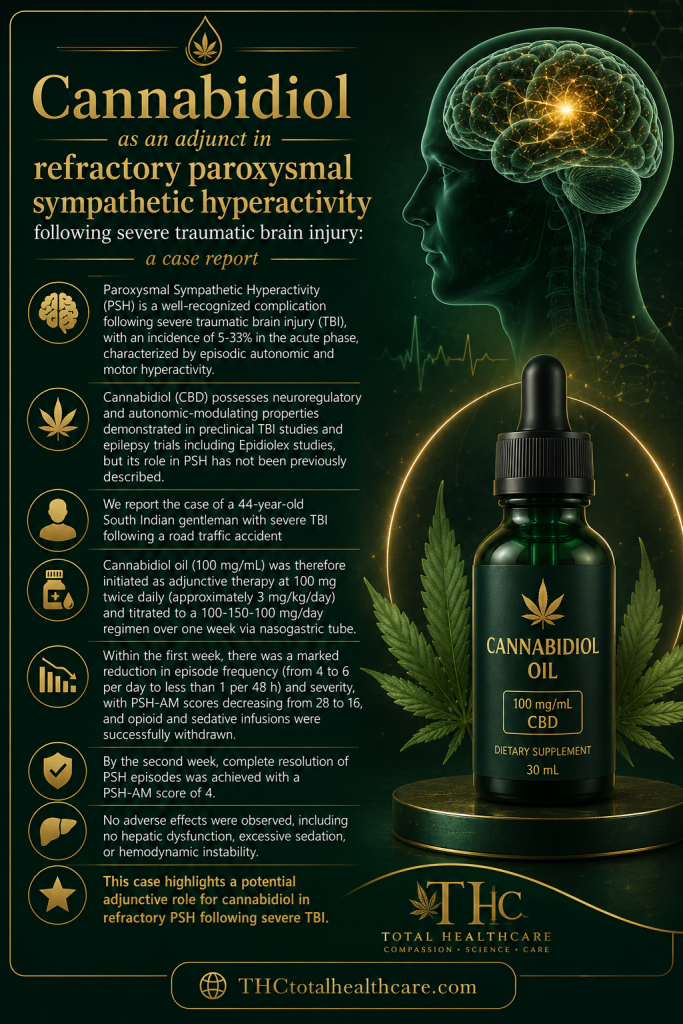
“Background: Paroxysmal Sympathetic Hyperactivity (PSH) is a well-recognized complication following severe traumatic brain injury (TBI), with an incidence of 5-33% in the acute phase, characterized by episodic autonomic and motor hyperactivity. Management is often challenging, and a subset of patients develop refractory PSH despite optimized first- and second-line therapies. Cannabidiol (CBD) possesses neuroregulatory and autonomic-modulating properties demonstrated in preclinical TBI studies and epilepsy trials including Epidiolex studies, but its role in PSH has not been previously described.
Case presentation: We report the case of a 44-year-old South Indian gentleman with severe TBI following a road traffic accident (GCS 5: E1V1M3) with CT brain showing bilateral frontotemporo-parietal acute subdural hematoma with mass effect. He underwent emergency bilateral decompressive craniectomy and required mechanical ventilation with tracheostomy. Three weeks post-injury, he developed recurrent PSH episodes (4-6 episodes per day) characterized by severe tachycardia (heart rate 140-180 bpm), hypertension (systolic blood pressure > 180 mmHg), hyperthermia (up to 40 °C), diaphoresis, and dystonic posturing. The diagnosis of PSH was established using the Paroxysmal Sympathetic Hyperactivity Assessment Measure (PSH-AM), with a total score of 28 (Clinical Feature Scale: 18, Diagnosis Likelihood Tool: 10), indicating probable PSH. Infective, metabolic, epileptic, and structural causes were excluded. Despite treatment with multiple conventional agents at maximum tolerated doses-including bromocriptine (titrated from 1.25 mg twice daily to 40 mg/day), baclofen (10 mg/day), gabapentin (titrated from 150 mg/day to 300 mg/day), propranolol (15 mg three times daily), clonidine (0.2 mg/day), dexmedetomidine infusion (72-h infusion), and fentanyl (infusion followed by patches)-the autonomic storms persisted, fulfilling criteria for refractory PSH.
Cannabidiol oil (100 mg/mL) was therefore initiated as adjunctive therapy at 100 mg twice daily (approximately 3 mg/kg/day) and titrated to a 100-150-100 mg/day regimen over one week via nasogastric tube. Within the first week, there was a marked reduction in episode frequency (from 4 to 6 per day to less than 1 per 48 h) and severity, with PSH-AM scores decreasing from 28 (CFS: 18, DLT: 10) to 16 (CFS: 6, DLT: 10), and opioid and sedative infusions were successfully withdrawn. By the second week, complete resolution of PSH episodes was achieved with a PSH-AM score of 4. No adverse effects were observed, including no hepatic dysfunction, excessive sedation, or hemodynamic instability.
Conclusions: This case highlights a potential adjunctive role for cannabidiol in refractory PSH following severe TBI. While causality cannot be inferred from a single observation, the sustained clinical improvement after failure of conventional therapies warrants further prospective investigation.”
https://pubmed.ncbi.nlm.nih.gov/42366387
https://link.springer.com/article/10.1186/s13256-026-06284-5