
“Respiratory system diseases represent a major global health burden, characterized by high prevalence and significant morbidity and mortality.
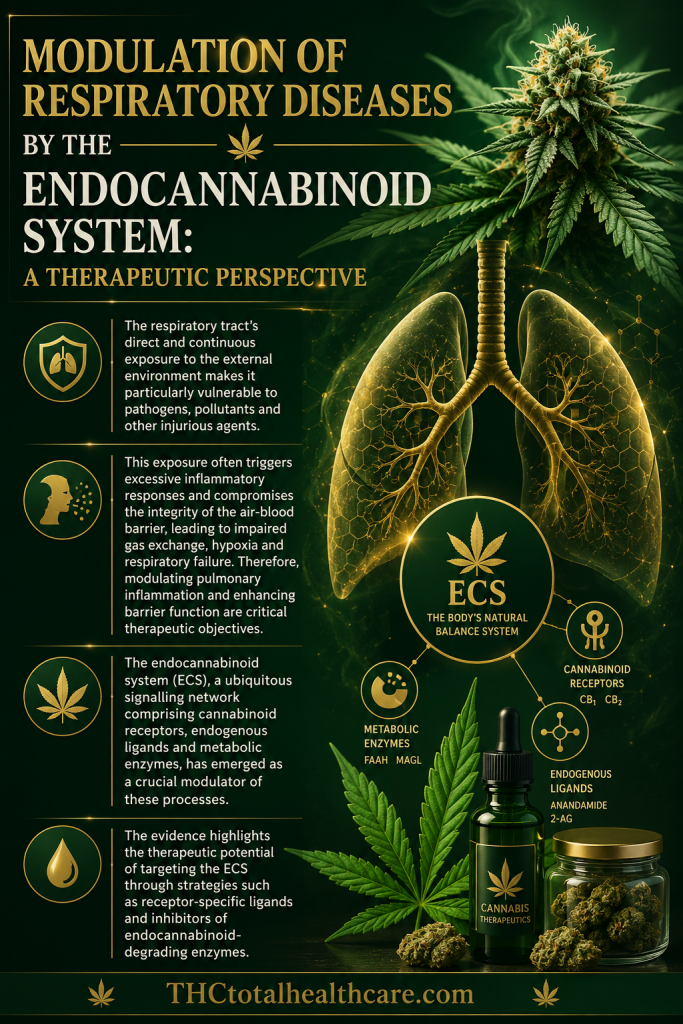
The respiratory tract’s direct and continuous exposure to the external environment makes it particularly vulnerable to pathogens, pollutants and other injurious agents. This exposure often triggers excessive inflammatory responses and compromises the integrity of the air-blood barrier, leading to impaired gas exchange, hypoxia and respiratory failure. Therefore, modulating pulmonary inflammation and enhancing barrier function are critical therapeutic objectives.
The endocannabinoid system, a ubiquitous signalling network comprising cannabinoid receptors, endogenous ligands and metabolic enzymes, has emerged as a crucial modulator of these processes.
This review summarizes the role of the ECS in major respiratory diseases, including asthma, pulmonary fibrosis, respiratory syncytial virus infection and acute lung injury.
The evidence highlights the therapeutic potential of targeting the ECS through strategies such as receptor-specific ligands and inhibitors of endocannabinoid-degrading enzymes. However, the context-dependent nature of ECS modulation necessitates precise intervention.
Future efforts should focus on developing selective therapeutics and validating their efficacy in clinical settings, positioning the ECS as a sophisticated target for innovative respiratory disease management.”
“Lung diseases such as asthma, fibrosis and infections are major health problems worldwide. The lungs are constantly exposed to the outside air, making them vulnerable to harmful substances that cause inflammation and damage. This review explores how a natural signalling system in our body—called the endocannabinoid system—helps control lung inflammation and repair. We summarize recent findings on how this system affects different lung diseases and discuss new treatment strategies that target it. While promising, these approaches need to be precisely targeted because the system works differently depending on the specific disease. Understanding this system could lead to better treatments for patients with lung diseases.”
https://pubmed.ncbi.nlm.nih.gov/42363690
“The endocannabinoid system plays a pivotal role in modulating key pathological processes in respiratory diseases, including inflammation, fibrosis, airway hyperresponsiveness and barrier dysfunction. CB2R activation generally exerts anti-inflammatory and anti-fibrotic effects, while CB1R influences airway tone and tissue remodelling. Enhancing endocannabinoid levels through inhibition of metabolic enzymes such as FAAH and MAGL also shows therapeutic potential in attenuating lung injury. However, the context-dependent and pleiotropic nature of ECS signalling necessitates precise, disease-specific targeting.
Future efforts should focus on developing receptor-selective agents and advancing translational studies to harness the ECS as a viable therapeutic strategy in respiratory medicine.”
https://onlinelibrary.wiley.com/doi/10.1111/bcpt.70267
“The potential of cannabinoids and inhibitors of endocannabinoid degradation in respiratory diseases”
https://pubmed.ncbi.nlm.nih.gov/34648805