“Fibromyalgia is a chronic disorder characterised by widespread pain and other symptoms that substantially impact the quality of life.
This double-blind, randomised, placebo-controlled trial primarily assessed feasibility (procedures and intervention adherence) and safety/tolerability of a 1:1 delta-9-tetrahydrocannabinol:cannabidiol (THC:CBD) cannabis oil (10 mg/mL each) in 24 adults with fibromyalgia, with secondary, preliminary assessment of efficacy across symptom domains.
Participants completed a 4-week dose titration followed by 12 weeks of stable dosing. Of 77 prescreened individuals, 24 were randomised, yielding a screening-to-enrolment ratio of approximately 3:1 (31.2%). Recruitment reached 66.7% of the target (24/36); the shortfall was mainly due to geographic and legal barriers. Retention was 91.7% (22/24) and adherence was high, with all participants taking ≥ 90% of the prescribed doses.
The study medication was well tolerated in this small sample, with adverse events mostly mild and no serious events observed.
Secondary outcomes suggested medium to large between-group effects favouring cannabis for pain reduction, improved sleep quality, and reduced fibromyalgia impact (FIQR), but findings should be interpreted cautiously given the small sample.
Clinically meaningful FIQR improvement (predefined MCID 45.5%) occurred in 40% of the cannabis-treated participants versus 10% with placebo.
For pain, 70% of the cannabis group reported ≥ 30% reduction post-titration and at Week 12 (Placebo 20% and 40%, respectively). Fatigue and anxiety/depression showed no significant changes.
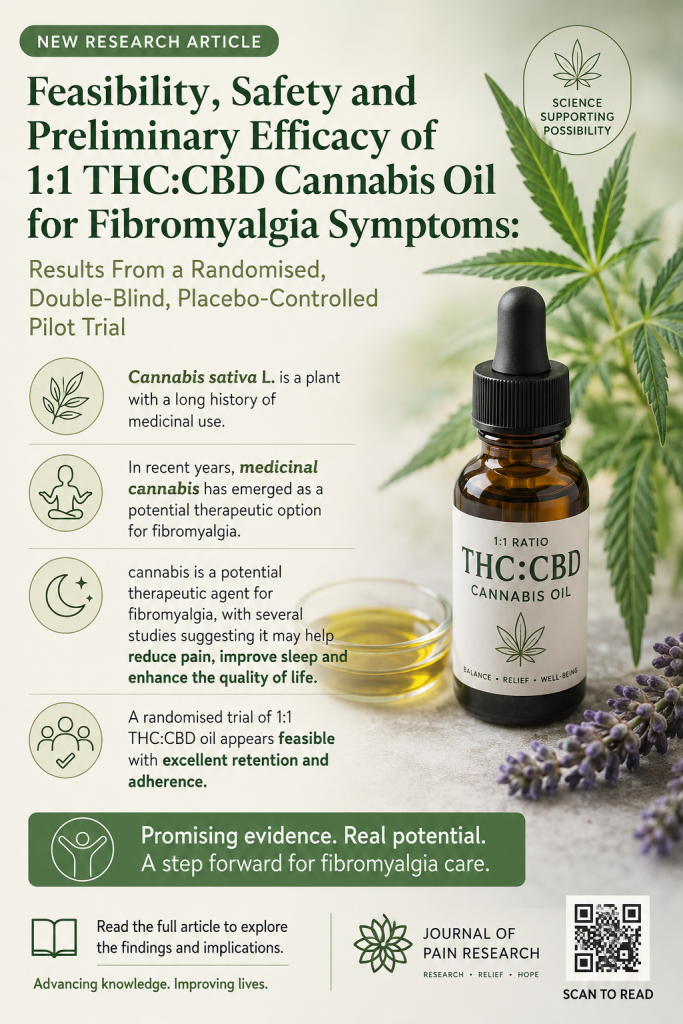
A randomised trial of 1:1 THC:CBD oil appears feasible with excellent retention and adherence, though recruitment barriers need addressing. Preliminary safety and efficacy signals warrant confirmation in larger, adequately powered trials.”
https://pubmed.ncbi.nlm.nih.gov/42142029
“In recent years, medicinal cannabis has emerged as a potential therapeutic option for fibromyalgia, with increasing patient interest in new treatment approaches [5]. Given fibromyalgia’s complexity and diverse manifestations, investigating multifaceted therapies such as medicinal cannabis is well justified.”
“Cannabis sativa L. is a plant with a long history of medicinal use, containing over 100 phytocannabinoids, including delta-9-tetrahydrocannabinol (THC) and cannabidiol (CBD) [6]. These compounds interact with the endocannabinoid system, which plays a critical role in modulating pain, mood and sleep—key domains affected in fibromyalgia [7–9]. Consequently, cannabis is being investigated as a potential therapeutic agent for fibromyalgia, with several studies suggesting it may help reduce pain, improve sleep and enhance the quality of life, although findings to date remain mixed and optimal dosing strategies, including the THC:CBD ratio and routes of administration, still require further investigation.”
https://onlinelibrary.wiley.com/doi/10.1155/prm/7311235