
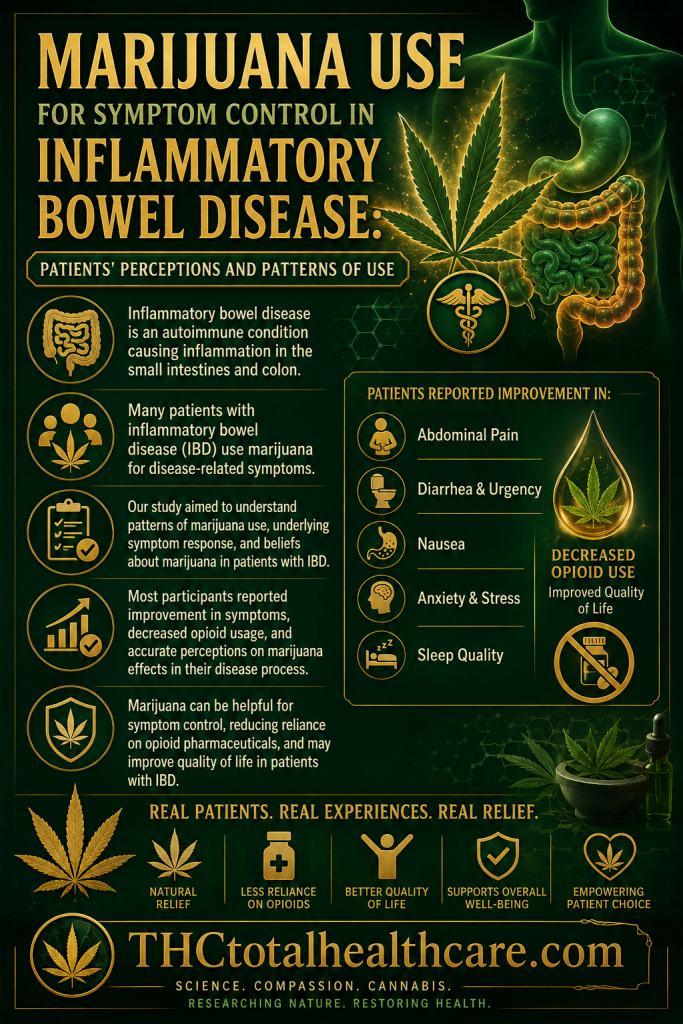
“Introduction: Many patients with inflammatory bowel disease (IBD) use marijuana for disease-related symptoms. Data regarding reasons for usage, impact, and perceptions on its effects is lacking. Our study aimed to understand patterns of marijuana use, underlying symptom response, and beliefs about marijuana in patients with IBD.
Methods: An anonymous REDCap survey comprised of 39 questions on demographics, disease features, patterns of marijuana use, symptoms, quality of life, and true/false statements about marijuana was administered to 108 participants recruited from University of Florida (UF) IBD clinic.
Results: Participants were 47.2% male and 51.9% female. While a significant percentage of subjects reported co-morbid depression/anxiety (61.1%), the percentages for PTSD and ADHD are both 19.4%. Patient characteristics are compared among three reasons of marijuana use (Recreational, Medical and Combination). There was a notable shift in reasons for use with both age (p = 0.0074) and duration of IBD diagnosis (p = 0.006): recreational use is more common among younger patients and those with a shorter duration of IBD diagnosis, medical use becomes predominant in middle-aged patients and those with an intermediate duration of diagnosis, and combination use increases among older patients and those with the longest duration of IBD diagnosis. Comparisons are also conducted based on the frequency of marijuana usage. Associations were found between marijuana use frequency and symptom relief. Daily or near-daily marijuana use was associated with self-reported relief of nausea/vomiting (82.1%; p = 0.003), arthralgias (81%; p = 0.013), and insomnia (80%; p = 0.02). Additionally, marijuana use was linked to an improved ability to live independently (p = 0.0075) and current employment (p = 0.04). Patients with a history of bowel surgery were more likely to report marijuana use lasting longer than 5 years (OR 21.94, CI [2.91, 250.18], p = 0.0059) and using marijuana at least once weekly (OR 11.13, CI [1.78, 97.69], p = 0.0163). Notably, 59.3% of respondents believed marijuana use had reduced their opioid consumption. Marijuana users with a history of IBD-related hospitalization had higher odds of reporting depression/anxiety (OR 14.3, CI [2.34, 143.2], p = 0.009) and diarrhea symptoms (OR 13.3, CI [2.2, 128.9], p = 0.01). When asked how marijuana use affected their ability to live independently, 61.3% of participants reported “improved.” Similarly, 87.6% respondents reported improvement in their quality of life with marijuana use.
Conclusions: Marijuana can be helpful for symptom control, reducing reliance on opioid pharmaceuticals, and may improve quality of life in patients with IBD. Participants demonstrated good insight regarding the role of marijuana in the management of their disease.”
https://pubmed.ncbi.nlm.nih.gov/42592634
“Inflammatory bowel disease is an autoimmune condition causing inflammation in the small intestines and colon. It can often lead to chronic pain, hospitalization, surgery, and poor quality of life. Data regarding marijuana use among patients with inflammatory bowel disease is lacking. We conducted an anonymous survey of 108 participants with inflammatory bowel disease who use marijuana. Most participants reported improvement in symptoms, decreased opioid usage, and accurate perceptions on marijuana effects in their disease process.”
https://karger.com/mca/article/9/1/211/951948/Marijuana-Use-for-Symptom-Control-in-Inflammatory