
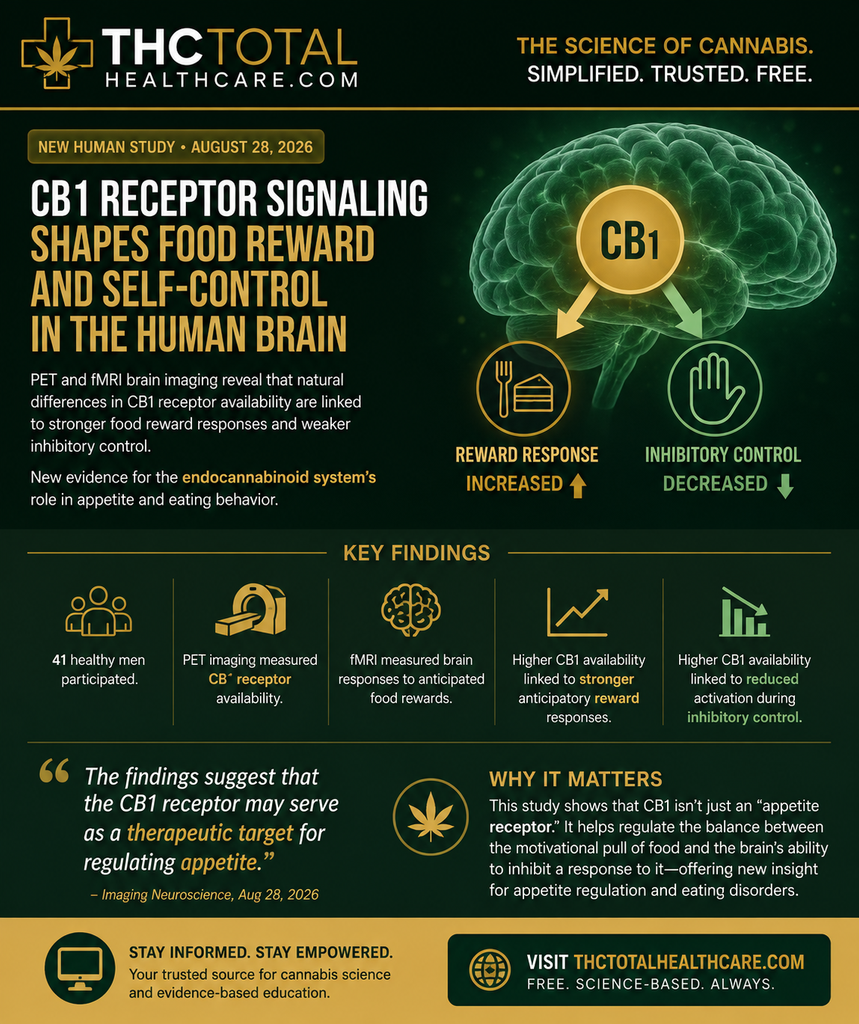
Researchers using PET and fMRI brain imaging found that natural differences in cannabinoid CB1 receptor availability are associated with how strongly the brain responds to anticipated food rewards and how it engages inhibitory-control systems. The findings provide new human evidence connecting the endocannabinoid system with appetite-related behavior and suggest CB1 signaling as a potential therapeutic target for eating disorders and appetite regulation.
“The central endocannabinoid system, particularly the in vivo cannabinoid type 1 (CB1) receptor signaling, presents a promising target for treating eating disorders. However, its precise role in appetite control remains unclear.
This study aimed to determine how CB1 receptor signaling contributes to key aspects of appetite regulation, specifically anticipatory food reward responses and inhibitory control.
Forty-one healthy male participants underwent [18F]FMPEP-d2 positron emission tomography (PET) to quantify CB1 receptor availability. Functional magnetic resonance imaging (fMRI) was used to assess anticipatory neural responses to food cues, while inhibitory control was measured using a go/nogo task.
Data show that individuals with higher CB1 receptor availability exhibited stronger anticipatory reward-related neural responses and reduced activation during inhibitory control. Therefore, CB1 receptor signaling plays a distinct role in modulating reward and inhibitory processes related to feeding behavior.
The findings suggest that the CB1 receptor may serve as a therapeutic target for regulating appetite.”
https://pubmed.ncbi.nlm.nih.gov/42662580
“Brain cannabinoid CB1 receptor availability modulates reward responses and inhibitory control, key neural mechanisms involved in appetite regulation. The findings suggest that individuals with elevated CB1 receptor availability may require increased engagement of inhibitory control mechanisms to counteract reward-driven responses triggered by external cues, as opposed to enhanced internal satiety signals.
These insights have potential implications for developing therapeutic strategies targeting the endogenous cannabinoid system to address obesity epidemic.”