
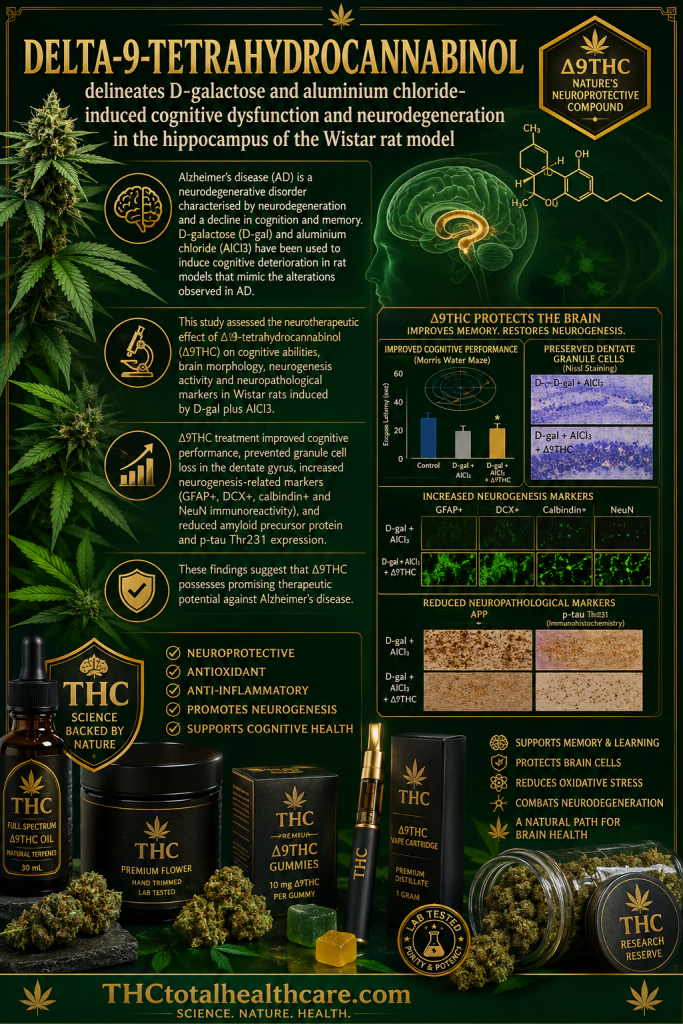
Cognitive decline and hippocampal neurodegeneration are closely linked to oxidative stress, inflammation, and neuronal damage. In this rat model, Δ9-THC improved learning and memory, reduced hippocampal neurodegeneration, and attenuated oxidative and inflammatory changes induced by D-galactose and aluminium chloride. The researchers concluded that THC showed neuroprotective potential and may warrant further investigation for disorders involving cognitive dysfunction and neurodegeneration.
“Alzheimer’s disease (AD) is a neurodegenerative disorder characterised by neurodegeneration and a decline in cognition and memory. D-galactose (D-gal) and aluminium chloride (AlCl3) have been used to induce cognitive deterioration in rat models that mimic the alterations observed in AD.
This study assessed the neurotherapeutic effect of Δ9-tetrahydrocannabinol (Δ9THC) on cognitive abilities, brain morphology, neurogenesis activity and neuropathological markers in Wistar rats induced by D-gal plus AlCl3.
Male albino Wistar rats received D-gal (60 mg/kg, intraperitoneally) and AlCl3 (200 mg/kg, orally) daily for 10 weeks. The rats were then treated with increasing concentrations of Δ9THC (0.75, 1.5 and 3.0 mg/kg) for 28 days. Cognitive performance was evaluated using the novel object recognition and modified elevated plus maze tests. Dentate gyrus viable granule cells, neurogenesis markers, amyloid precursor protein and phosphorylated tau (p‑tau Thr231) were assessed histologically and molecularly.
Δ9THC treatment improved cognitive performance, prevented granule cell loss in the dentate gyrus, increased neurogenesis-related markers (GFAP+, DCX+, calbindin+ and NeuN immunoreactivity), and reduced amyloid precursor protein and p‑tau Thr231 expression.
These findings suggest that Δ9THC possesses promising therapeutic potential against Alzheimer’s disease.”
https://pubmed.ncbi.nlm.nih.gov/42454694