
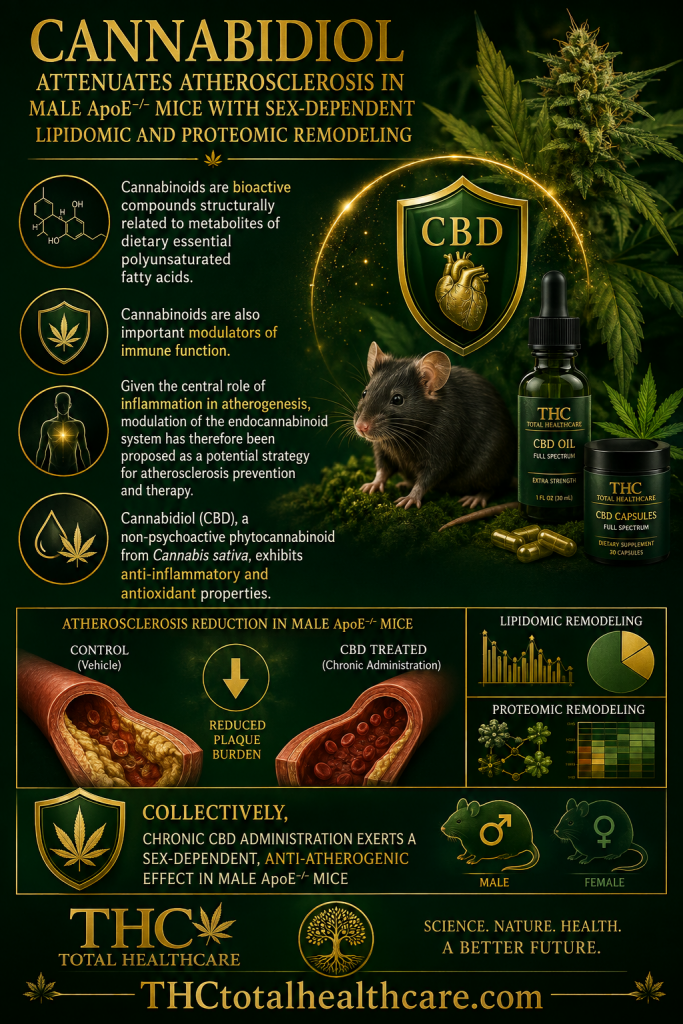
Cannabidiol (CBD) may influence cardiovascular disease through effects on inflammation, lipid metabolism, and vascular biology. In this mouse study, CBD reduced atherosclerotic plaque burden in males and produced distinct lipidomic and proteomic changes that differed by sex, highlighting both its potential cardiovascular effects and the importance of biological sex in cannabinoid research.
“Cannabidiol (CBD), a non-psychoactive phytocannabinoid from Cannabis sativa, exhibits anti-inflammatory and antioxidant properties.
We therefore hypothesized that CBD may modulate atherosclerosis development; however, preclinical evidence remains limited and sex-specific effects are poorly understood.
Male and female apolipoprotein E-deficient (ApoE–/–) mice were fed a Western-type diet for 12 weeks and received either a CBD nanoemulsion (≈80 mg/kg/day) or vehicle via drinking water. Atherosclerosis was quantified by aortic plaque area, and lipidomic profiling together with aortic root proteomics were used to characterize CBD-induced metabolic changes.
CBD treatment significantly reduced aortic plaque area in male but not female mice, without affecting body weight or standard serum lipid parameters.
Untargeted lipidomics revealed sex-specific remodeling of the serum lipidome in males, including enrichment of ether-linked triacylglycerols, a class connected to ether-lipid metabolism; however, no lipid class emerged as a robust correlate of plaque burden. Proteomic analysis identified male-specific downregulation of mitochondrial oxidative and stress-related pathways, consistent with reduced vascular oxidative burden.
In vitro, CBD attenuated oxLDL-induced oxidative stress and inflammatory activation in endothelial cells, supporting a direct vascular effect. CBD elicited no comparable molecular or plaque changes in females.
Collectively, chronic CBD administration exerts a sex-dependent, anti-atherogenic effect in male ApoE-/- mice, associated with downregulation of mitochondrial oxidative metabolism and attenuation of endothelial oxidative and inflammatory activation, alongside remodeling of ether-linked lipid metabolism whose contribution to plaque protection remains to be established.
These findings highlight the importance of incorporating sex-specific responses in future mechanistic and translational studies of CBD in atherosclerosis.”
https://pubmed.ncbi.nlm.nih.gov/42575282
“Cannabinoids are bioactive compounds structurally related to metabolites of dietary essential polyunsaturated fatty acids, collectively termed endocannabinoids. They bind, with variable affinity, to a broad spectrum of endocannabinoid receptors, that contributes to their pleiotropic and sometimes contradictory biological effects.
Cannabinoids are also important modulators of immune function.
Given the central role of inflammation in atherogenesis, modulation of the endocannabinoid system has therefore been proposed as a potential strategy for atherosclerosis prevention and therapy.”
https://www.jlr.org/article/S0022-2275(26)00150-1/fulltext