
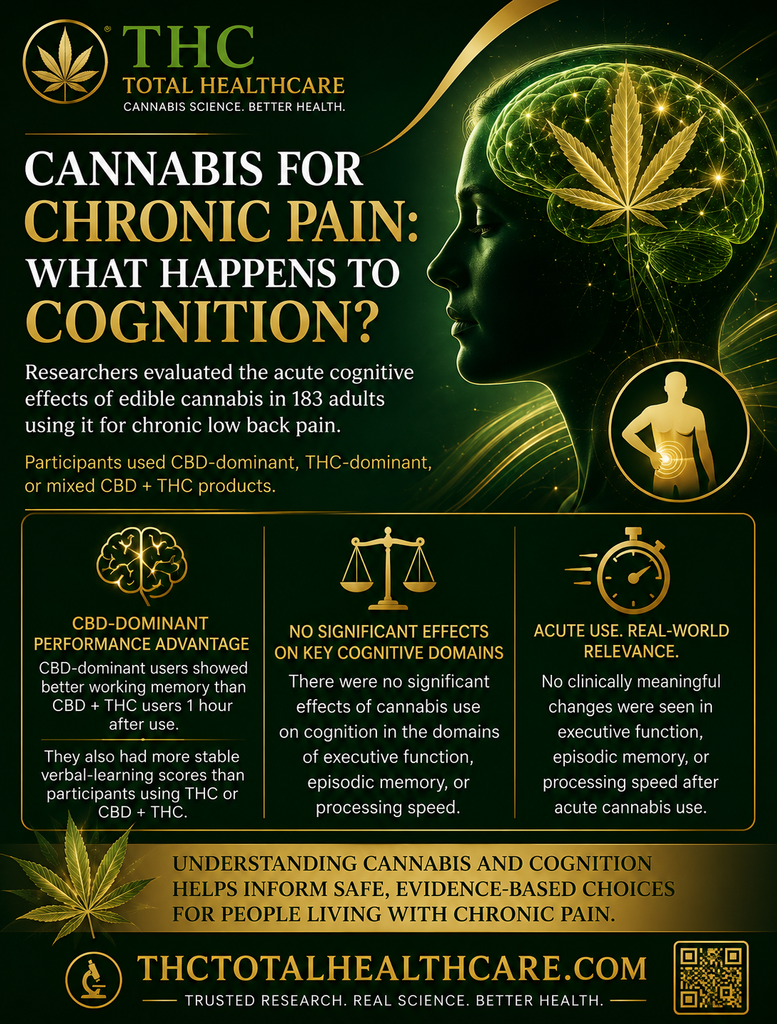
In a study of 183 adults using edible cannabis for chronic low back pain, researchers found no significant acute changes in executive function, episodic memory, or processing speed after cannabis use. Participants using CBD-dominant products performed better on working memory than those using CBD + THC one hour after use, while the CBD group also showed more stable verbal-learning scores than participants using THC or mixed CBD/THC products. The findings add useful evidence to the discussion of how different cannabinoid profiles may affect cognition when cannabis is used for chronic pain.
“Rationale: An estimated two-thirds of medical cannabis users in the United States are motivated by chronic pain, but clinical guidance remains guarded as to whether the potential benefit of cannabinoids for pain outweighs potential risks, such as effects on cognition.
Objectives: In a study where participants experienced benefits of cannabinoids for pain and tension, we evaluated cannabis effects on executive function, processing speed, memory, and verbal learning following acute use for chronic, non-specific low back pain.
Methods: Participants were in one of three self-selected edible cannabis groups: a) CBD-dominant, b) THC-dominant, or c) a mixed ratio of CBD to THC and completed a battery of cognitive tasks at pre-use, 1 h post-use use, and 2 h post-use.
Results: Among 183 participants (56.8% female; Mage = 45.6), those in the group using CBD outperformed participants using CBD + THC 1 h post use in working memory and produced more stable scores in verbal learning after use than participants using THC or CBD + THC. Additionally, while older age was associated with better working memory in the CBD group before use, that relationship was progressively attenuated over the subsequent timepoints. There were no significant effects of cannabis use on cognition in the domains of executive function, episodic memory, or processing speed.
Conclusions: Given the ubiquity of cannabis use for chronic pain and the ongoing call for more data, this study is relevant for informing clinical guidance on whether, and how, cannabis could be used in this context. In particular, understanding the acute impact on cognition from cannabis is critical, as cognitive functioning directly affects patients’ daily lives and quality of life.”
https://pubmed.ncbi.nlm.nih.gov/42678518
“In summary, these findings support CBD’s potential to preserve cognitive performance in the context of chronic pain, contrasting with the more variable effects of THC across cognitive domains. The observed influence of age, particularly among those using CBD, suggests that both cannabinoid composition and individual factors shape cognitive outcomes following acute cannabinoid use.”
https://link.springer.com/article/10.1007/s00213-026-07157-x