Evaluating the impact of cannabinoid extracts on chronic pain and quality of life in endometriosis patients – a pilot study

Women with endometriosis and chronic pelvic pain experienced significant improvements after adding a balanced oral THC cannabis extract to their existing treatment. In this prospective pilot study, 27 women completed three months of treatment, with benefits appearing within the first month and continuing through the study period.

Pain intensity fell significantly, along with the number of pain days and the need for conventional pain medicines. Use of both NSAIDs and opioid analgesics decreased, while fatigue, anxiety, central sensitization and pain-related disability also improved.

Quality of life improved across every measured EHP-30 domain, including pain, emotional well-being, work impairment, self-image and sexual relationships. The authors concluded that balanced THC cannabinoid medicines appear to be a potentially effective adjunct treatment for chronic pelvic pain and related symptoms in women with endometriosis.

“Endometriosis is a chronic gynecological disorder characterized by persistent pain and impaired quality of life, with limited effective treatment options. Emerging evidence indicates that cannabinoids may provide analgesic and symptom-relieving effects in chronic pain conditions.

This prospective single-center cohort study investigated the effects of standardized oral cannabis extracts (cannabinoid-based medicinal products, CBMPs) on pain and quality of life in women with endometriosis.

Thirty premenopausal women aged 18-45 years with confirmed endometriosis and chronic pelvic pain were enrolled; 27 completed the 3-month treatment period. Participants received oral CBMPs containing a balanced THC: CBD ratio. Pain intensity, frequency of pain episodes, analgesic use, fatigue, anxiety, central sensitization, disability, and quality of life were assessed using validated questionnaires (VAS, EHP-30, PDI, CFS, GAD-7, CSI).

Significant improvements were observed after one month of treatment, with continued benefit over three months. Pain intensity decreased markedly (p = 0.0004), accompanied by reductions in the number of pain days and analgesic use, including both NSAIDs (e.g., ibuprofen, diclofenac) and opioid analgesics (e.g., tramadol, tilidin, oxycodone) (p < 0.001). Fatigue (p = 0.0013), anxiety (p < 0.0001), central sensitization (p < 0.0001), disability (p < 0.0001), and overall quality of life (EHP-30) improved significantly.

Treatment was well tolerated; side effects were predominantly mild (severity score 1 on a 0-3 scale) and transient, occurring mainly during the titration phase and declining thereafter. Although limited by its single-center design, lack of placebo control, and short follow-up, this study provides preliminary evidence that oral CBMPs may represent a safe and effective adjunct therapy for managing pain and related symptoms in women with endometriosis. Larger randomized controlled trials are warranted to confirm these findings and establish optimal dosing strategies.”

https://pubmed.ncbi.nlm.nih.gov/42771648

“In conclusion, oral CBMPs with balanced THC: CBD ratios seem to be a safe and potentially effective adjunct therapy for chronic pelvic pain and related symptoms in women with endometriosis. By targeting both nociceptive and neuropsychological aspects of the condition, CBMPs can supplement existing pharmacological and lifestyle strategies, providing a more comprehensive approach to symptom management. These findings establish a basis for future controlled studies to refine dosing, investigate mechanisms, and assess long-term outcomes in this complex patient group.”

https://journals.plos.org/plosone/article?id=10.1371/journal.pone.0356768

(+)-Trans-Cannabidiol Is an Agonist at Human CB2 Receptors

A new 2026 study reports that (+)-trans-cannabidiol [(+)-CBD] acts as an agonist at human CB2 cannabinoid receptors, activating a major receptor of the endocannabinoid system involved in immune and inflammatory signaling.

Researchers found that (+)-CBD produced a strong, concentration-dependent CB2 response, reaching roughly 90% of the maximum effect produced by the reference cannabinoid agonist CP55940. Additional testing indicated that the compound acts through the receptor’s primary, or orthosteric, binding site.

The findings show that different molecular forms of cannabidiol can interact with cannabinoid receptors in very different ways. The researchers conclude that (+)-CBD may deserve further study in CB2-sensitive disease states, adding another layer to our understanding of how cannabinoid chemistry can influence the human endocannabinoid system.

“(-)-trans-Cannabidiol ((-)-CBD) is a principal phytocannabinoid from Cannabis sativa. (-)-CBD has complex pharmacology but is a relatively weak inhibitor of CB1 and CB2 receptor signaling. Cannabidiol has two chiral centres and thus four stereoisomers. (+)-trans-CBD ((+)-CBD) has a higher affinity than (-)-CBD at CB1 and CB2, but its pharmacodynamic effects at these receptors are incompletely described.

We examined the activity of (+)-CBD at human CB1 and CB2 receptors using a fluorescence-based assay of membrane potential in AtT20 cells stably expressing CB1 or CB2 receptors.

(+)-CBD produced a rapid, concentration-dependent hyperpolarization in CB2-expressing cells (pEC50 6.63 ± 0.08) with a maximal effect 90% of the response to CP55940. The CB2 response was blocked by pertussis toxin pretreatment and competitively inhibited by the CB2 antagonist AM630 (Schild slope 1.1 ± 0.1). (+)-CBD was a low-efficacy, low-potency CB1 agonist and inhibited somatostatin-receptor effects at high concentrations (10-30 μM). (+)-CBD had no effect on the membrane potential of AtT20 wild-type cells. In silico modeling of ligand interactions with CB2 indicated that (+)-CBD but not (-)-CBD formed an H-bond with Ser285, a residue crucial for agonist activation of CB2.

Our data suggests (+)-CBD acted as a CB2 agonist via the orthosteric binding site on the receptor. Synthetic CBD, including (+)-CBD, has previously been administered in clinical trials, presumably without consideration of its potential CB2 agonist activity.

Given the relative safety of (-)-CBD in people, (+)-CBD may be a useful drug to explore CB2-sensitive disease states.”

https://pubmed.ncbi.nlm.nih.gov/42745361

“This study emphasizes the importance of understanding the molecular actions of the enantiomers of chiral cannabinoids. Although the safety of (+)-CBD cannot simply be assumed to be the same as (−)-CBD, the identification of (+)-CBD as a robust CB2 agonist suggests that (+)-CBD may be worth exploring as a therapeutic agent in chronic inflammatory conditions or other diseases where CB2 activation may prove beneficial.”

https://bpspubs.onlinelibrary.wiley.com/doi/10.1002/prp2.70325

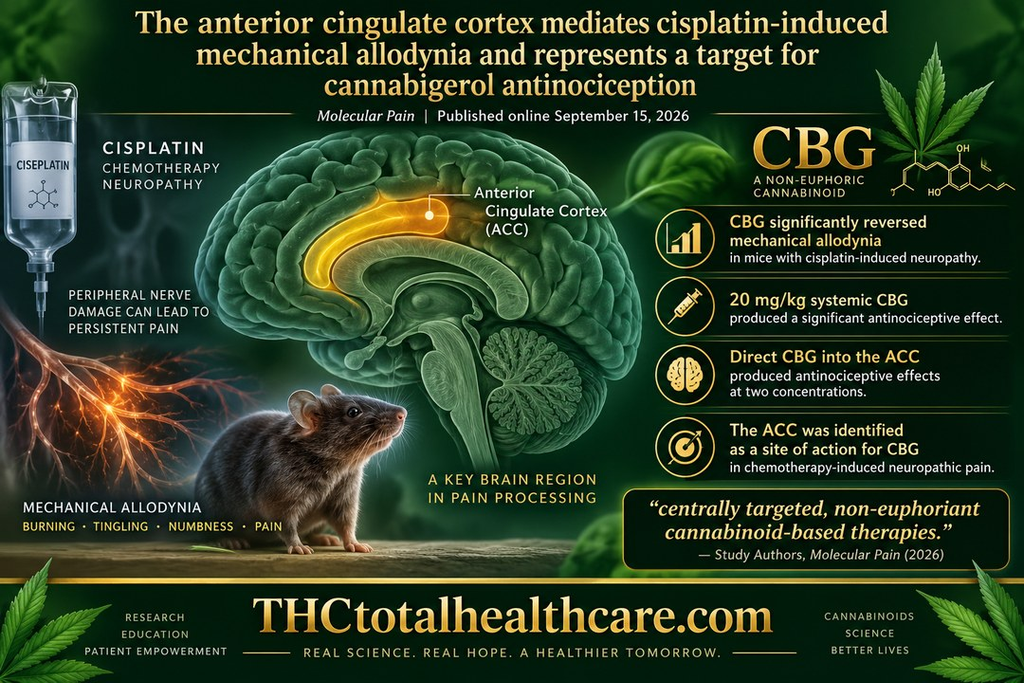
The anterior cingulate cortex mediates cisplatin-induced mechanical allodynia and represents a target for cannabigerol antinociception

Chemotherapy-induced peripheral neuropathy can cause persistent burning, tingling, numbness and pain long after cancer treatment ends. A new 2026 study investigated how the brain contributes to this neuropathic pain and whether cannabigerol (CBG), a non-euphoric cannabinoid, can reduce it.

Using a mouse model of cisplatin-induced neuropathy, researchers found that CBG significantly reversed mechanical allodynia. They also identified the anterior cingulate cortex, a brain region involved in processing pain, as an important part of the neuropathic pain response. Directly administering CBG into this region produced antinociceptive effects.

The findings suggest that CBG can act within central pain-processing circuits and identify the anterior cingulate cortex as a potential target for cannabinoid-based treatment of chemotherapy-induced neuropathic pain. The researchers say the results highlight the potential for “centrally targeted, non-euphoriant cannabinoid-based therapies.”

“Chemotherapy-induced peripheral neuropathy (CIPN) is a prevalent and debilitating consequence of cancer treatment with limited effective therapeutic options. While peripheral nerve injury is a key driver, emerging evidence suggests that maladaptive plasticity within central pain circuits, including the anterior cingulate cortex (ACC), contributes to the maintenance of neuropathic pain.

Here, we tested the hypothesis that the ACC is a critical substrate for cisplatin-induced mechanical allodynia and a target for cannabigerol (CBG)-mediated antinociception.

Adult male C57BL/6 mice received cisplatin (5 mg/kg, i.p., once weekly for four weeks) to induce CIPN. Mechanical allodynia was assessed using electronic von Frey testing.

Systemic administration of CBG (20 mg/kg, i.p.) significantly reversed mechanical allodynia in CIPN mice without affecting baseline thresholds in non-neuropathic animals, indicating a state-dependent effect. Chemogenetic inhibition of ACC neurons using hM4Di DREADDs similarly attenuated mechanical allodynia, identifying the ACC as a functionally relevant component of the CIPN pain state. To determine whether CBG acts within this circuit, bilateral intra-ACC microinjections of CBG (20 nM and 20 µM) were performed, both of which produced transient antinociceptive effects.

These findings demonstrate that the ACC contributes to the maintenance of mechanical allodynia in CIPN and establish this region as a site of action for CBG.

Together, our results support a model in which the ACC represents a convergent cortical mechanism underlying pathological pain and highlight the potential for centrally targeted, non-euphoriant cannabinoid-based therapies.”

https://pubmed.ncbi.nlm.nih.gov/42744343/

“In conclusion, this study identifies the ACC as a hub in the maintenance of mechanical allodynia in a model of CIPN. By demonstrating that chemogenetic inhibition of the ACC reverses hypersensitivity and that both systemic and local administration of CBG produce antinociceptive effects, our findings link circuit-level dysfunction to a pharmacologically targetable mechanism within this region. These results support a model in which increased or dysregulated ACC neuronal activity may represent a convergent feature of pathological pain states. Importantly, these findings demonstrate that CBG can act within the ACC to modulate mechanical allodynia. Future studies identifying the receptor targets and circuit mechanisms through which CBG acts within the ACC will be essential for refining therapeutic strategies for chronic pain.”

https://journals.sagepub.com/doi/10.1177/17448069261491110

Ten-year outcomes of medical cannabis for chronic low back pain: opioid reduction, pain relief, and functional improvement in 1,000 patients

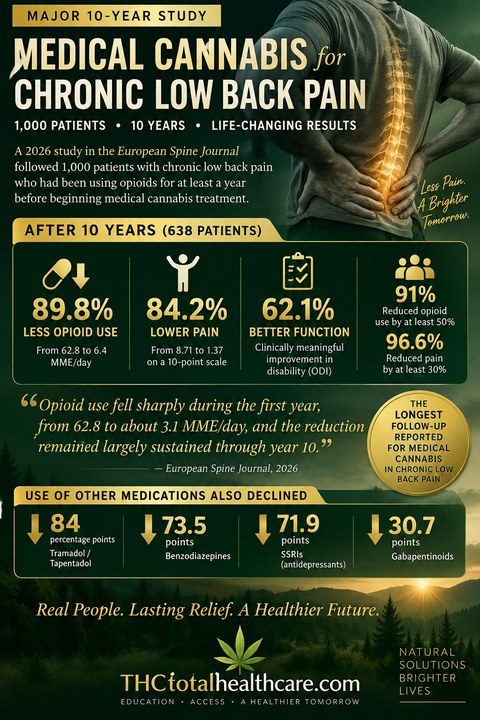
A 2026 study published in the European Spine Journal followed 1,000 patients with chronic low back pain who had been using opioids for at least a year before beginning medical cannabis treatment. Researchers tracked changes in opioid use, pain, disability, and other medications over as long as 10 years.

Among the 638 patients who completed the full 10-year follow-up, average opioid use fell by 89.8%, while pain scores dropped by 84.2%. More than 91% of patients achieved at least a 50% reduction in opioid use, and 96.6% achieved at least a 30% reduction in pain. Disability scores also improved substantially over the study period.

The reductions were not limited to opioids. Use of benzodiazepines, gabapentinoids, antidepressants, and other pain medications also declined. With a decade of follow-up, this study provides unusually long-term evidence that medical cannabis may play an important role in reducing pain, improving function, and decreasing dependence on multiple medications in people living with chronic low back pain.

“Purpose: To evaluate 10-year outcomes of medical cannabis therapy on opioid use, pain intensity, functional disability, concomitant medication use, and adverse events in cannabis-naïve chronic low back pain (CLBP) patients, with particular attention to clinically meaningful outcomes defined by established minimal clinically important difference (MCID) thresholds.

Methods: Single-center longitudinal observational study of 1,000 consecutive cannabis-naïve CLBP patients from a registry database (2015-2024), reported following STROBE guidelines.

Primary outcome: morphine milligram equivalents (MMEQ).

Secondary outcomes: Numeric Rating Scale (NRS) for pain intensity, Oswestry Disability Index (ODI) for functional disability, cannabis dosing patterns, adverse events, and concomitant medication use. Pre-specified MCID thresholds: ≥50% MMEQ reduction, ≥ 30% NRS reduction, ≥ 10-point ODI improvement. Statistical analyses included paired t-tests for completers and linear mixed-effects models for sensitivity analyses.

Results: Of 1,000 enrolled patients, 638 (63.8%) completed 10-year follow-up. Among completers, MMEQ decreased from 62.8 ± 35.7 to 6.4 ± 7.1 mg/day (- 89.8%, p < 0.001); NRS from 8.71 ± 1.23 to 1.37 ± 1.71 (- 84.2%, p < 0.001); ODI from 52.9 ± 11.9% to 36.8 ± 14.9% (16.1-point reduction, – 30.4%, p < 0.001). MCID responders: 91.2% for MMEQ, 96.6% for NRS, 62.1% for ODI. Substantial polypharmacy reductions occurred: tramadol/tapentadol – 84.0% points (pp), benzodiazepines – 73.5 pp, SSRIs – 71.9 pp, gabapentinoids – 30.7 pp. True tolerability adverse events occurred in 11.4% of visits; serious psychiatric events in 0.02%.

Conclusions: In this uncontrolled observational study, medical cannabis therapy was associated with reductions in opioid use, pain intensity, and functional disability over 10 years, accompanied by polypharmacy reduction and acceptable tolerability. Effect sizes substantially exceeded RCT benchmarks (e.g., – 0.6 NRS difference vs. placebo in a recent phase 3 trial), suggesting observational biases contribute to these findings. These hypothesis-generating data warrant validation in randomized controlled trials.”

https://pubmed.ncbi.nlm.nih.gov/42734834

“In this 10-year single-arm observational study, medical cannabis therapy was associated with reductions in opioid use (− 89.8%), pain intensity (− 84.2%), and functional disability (− 30.4%), with high proportions of patients achieving pre-specified MCID thresholds. Substantial polypharmacy reductions and acceptable tolerability were observed.”

https://link.springer.com/article/10.1007/s00586-026-10290-y

Analgesic effect of delta-9-tetrahydrocannabinol

A preliminary double-blind clinical trial found that oral delta-9-tetrahydrocannabinol (THC) produced significant pain relief in patients with cancer pain. In the 10-patient study, THC doses of 15 and 20 mg provided significantly greater analgesic effects than placebo.

The study’s main clinical takeaway is that THC showed a measurable analgesic effect at higher oral doses, but the benefit was accompanied by dose-limiting central nervous system side effects. In practical terms, the findings suggest a potential role for THC in cancer pain management while also underscoring the importance of balancing pain relief against sedation, cognitive impairment, and overall tolerability.

“A preliminary trial of oral delta-9-tetrahydrocannabinol (THC) demonstrated an analgesic effect of the drug in patients experiencing cancer pain. Placebo and 5, 10, 15, and 20 mg THC were administered double blind to ten patients. Pain relief significantly superior to placebo was demonstrated at high dose levels (15 and 20 mg). At these levels, substantial sedation and mental clouding were reported.”

https://pubmed.ncbi.nlm.nih.gov/1091664

https://accp1.onlinelibrary.wiley.com/doi/10.1002/j.1552-4604.1975.tb02348.x

Need this THC study explained? thcXplained.com

Cannabigerol and standardized full-spectrum cannabis extract effects in acute and chronic inflammatory pain models

Cannabigerol (CBG) and a standardized full-spectrum cannabis extract both reduced inflammatory pain and inflammation in a rat study, although their effects developed differently. The full-spectrum extract produced faster pain relief, while repeated CBG treatment eventually restored pain sensitivity to baseline and maintained a longer-lasting antinociceptive effect. Both treatments also prevented increases in the inflammatory marker TNF-α in the spinal cord and blood and helped protect against inflammation-related motor impairment.

“Background: Chronic inflammatory pain is associated with persistent sensory and immune dysregulation. We evaluated the therapeutic efficacy of two cannabinoids formulations-Cannabigerol (CBG) and Standardized Full-Spectrum Cannabis Extract (FULL) in a preclinical model of acute and Chronic inflammatory pain and examined their effects on peripheral and central inflammatory mediators.

Methods: Cannabinoid analgesic effects were assessed in male Wistar Hannover rats using acute (formalin) and chronic inflammatory pain (CFA) models. Treatments were administered at different doses before the formalin test and after CFA as a single dose or once daily for 21 days. Motor function and inflammatory markers (TNF-α and IL-10) were evaluated using actimeter test and ELISA.

Results: In the formalin test, both cannabinoids reduced nociceptive behaviors during Phase I, whereas only FULL produced sustained analgesia during Phase II. In the chronic model, single administration produced no significant effects; while repeated treatment (highest doses) improved mechanical thresholds. FULL (10 mg/kg) produced earlier analgesic effects (day 10), while CBG (10 mg/kg) fully restored baseline sensitivity from day 15 onward. In locomotor assessments, both compounds prevented CFA-induced motor impairments, except at the lowest CBG dose. CFA increased tumor necrosis factor-alpha (TNF-α) in the spinal cord, dorsal root ganglia (DRG), and plasma. Both cannabinoids prevented the CFA-induced increase in TNF-α levels in the spinal cord and plasma. Elevated TNF-α in the DRG persisted despite treatment, indicating region-specific regulation. Interleukin-10 (IL-10) levels were unaffected.

Conclusion: Both cannabinoids exert analgesic and anti-inflammatory effects, with FULL providing faster acute relief and CBG produced a more prolonged antinociceptive effect.”

https://pubmed.ncbi.nlm.nih.gov/42690319

“In conclusion, our study demonstrates that both cannabigerol (CBG) and the Standardized Full-Spectrum Cannabis Extract (FULL) exert significant antinociceptive and anti-inflammatory effects in models of acute and chronic chronic pain of inflammatory origin.”

https://link.springer.com/article/10.1007/s00213-026-07156-y

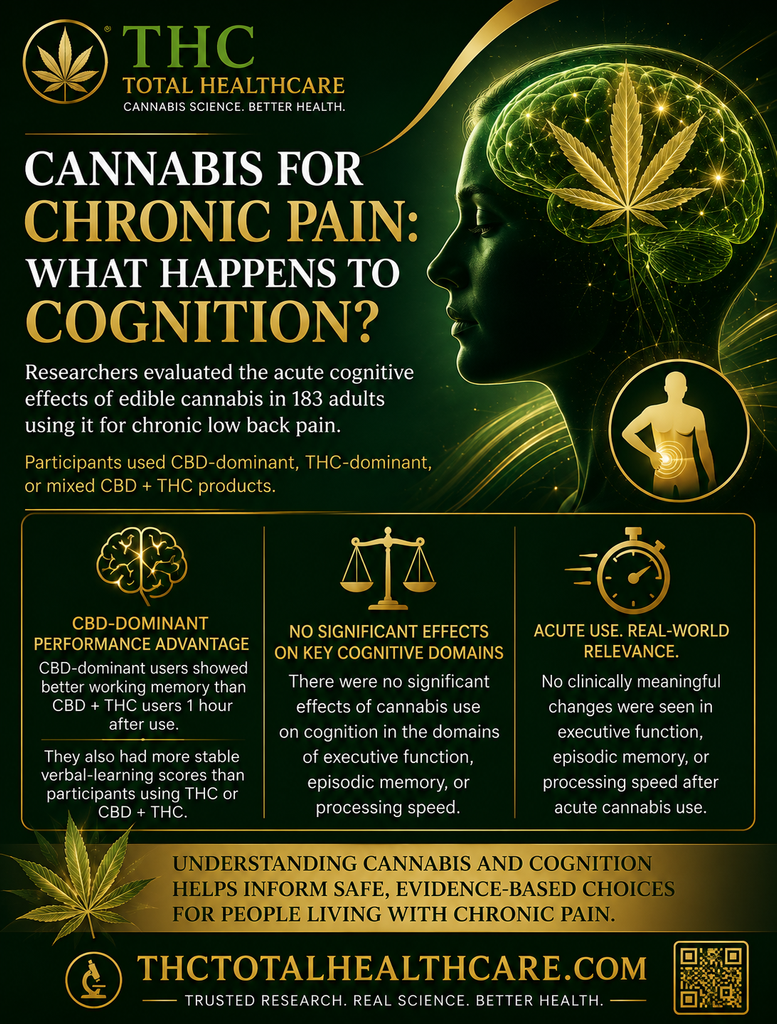
Effects of delta-9 tetrahydrocannabinol and cannabidiol on cognitive outcomes following acute use of cannabis for chronic pain

In a study of 183 adults using edible cannabis for chronic low back pain, researchers found no significant acute changes in executive function, episodic memory, or processing speed after cannabis use. Participants using CBD-dominant products performed better on working memory than those using CBD + THC one hour after use, while the CBD group also showed more stable verbal-learning scores than participants using THC or mixed CBD/THC products. The findings add useful evidence to the discussion of how different cannabinoid profiles may affect cognition when cannabis is used for chronic pain.

“Rationale: An estimated two-thirds of medical cannabis users in the United States are motivated by chronic pain, but clinical guidance remains guarded as to whether the potential benefit of cannabinoids for pain outweighs potential risks, such as effects on cognition.

Objectives: In a study where participants experienced benefits of cannabinoids for pain and tension, we evaluated cannabis effects on executive function, processing speed, memory, and verbal learning following acute use for chronic, non-specific low back pain.

Methods: Participants were in one of three self-selected edible cannabis groups: a) CBD-dominant, b) THC-dominant, or c) a mixed ratio of CBD to THC and completed a battery of cognitive tasks at pre-use, 1 h post-use use, and 2 h post-use.

Results: Among 183 participants (56.8% female; Mage = 45.6), those in the group using CBD outperformed participants using CBD + THC 1 h post use in working memory and produced more stable scores in verbal learning after use than participants using THC or CBD + THC. Additionally, while older age was associated with better working memory in the CBD group before use, that relationship was progressively attenuated over the subsequent timepoints. There were no significant effects of cannabis use on cognition in the domains of executive function, episodic memory, or processing speed.

Conclusions: Given the ubiquity of cannabis use for chronic pain and the ongoing call for more data, this study is relevant for informing clinical guidance on whether, and how, cannabis could be used in this context. In particular, understanding the acute impact on cognition from cannabis is critical, as cognitive functioning directly affects patients’ daily lives and quality of life.”

https://pubmed.ncbi.nlm.nih.gov/42678518

“In summary, these findings support CBD’s potential to preserve cognitive performance in the context of chronic pain, contrasting with the more variable effects of THC across cognitive domains. The observed influence of age, particularly among those using CBD, suggests that both cannabinoid composition and individual factors shape cognitive outcomes following acute cannabinoid use.”

https://link.springer.com/article/10.1007/s00213-026-07157-x

Cannabinoid efficacy for pain: dose, chronicity and route

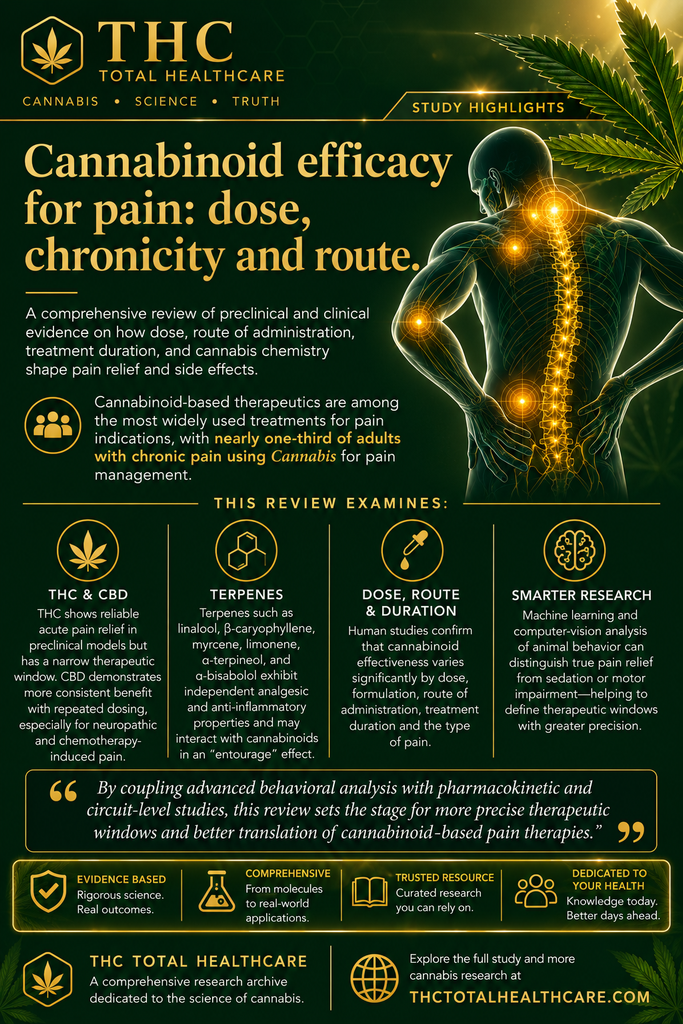
Cannabinoid pain relief depends on more than whether THC or CBD is used. Dose, route of administration, treatment duration and the type of pain can all influence whether a cannabis-based therapy provides meaningful analgesia or produces unwanted effects. This review examines those variables across preclinical and clinical research, while also considering the independent and combined roles of cannabis-derived terpenes.

“Cannabis-based therapies are widely used for chronic pain, yet their mechanisms and therapeutic windows remain incompletely defined. This review synthesizes preclinical and clinical evidence on how dose, route of administration, treatment duration, and chemical composition shape analgesic efficacy and adverse-effect liability for Δ9-tetrahydrocannabinol (THC), cannabidiol (CBD), and select cannabis-derived terpenes.

Across rodent pain models, acute THC reliably produces antinociception, but its therapeutic window is narrow because analgesic doses overlap with CB1 receptor-mediated side effects such as sedation, hypothermia, hyperphagia, and motor impairment. Repeated THC exposure leads to tolerance and dependence.

In contrast, CBD shows limited acute efficacy in naïve and inflammatory models but demonstrates more consistent benefit with repeated dosing in neuropathic and chemotherapy-induced pain, often without cannabimimetic adverse effects.

Terpenes such as linalool, β-caryophyllene, myrcene, limonene, α-terpineol, and α-bisabolol exhibit independent antinociceptive and anti-inflammatory properties and are thought to pharmacologically interact with cannabinoids in a dose-, ratio-, and route-dependent “entourage” effect that either enhance or constrain therapeutic benefit.

This review also focuses on integrating machine learning-based behavioral phenotyping of rodents to refine cannabinoid analgesia preclinical research. Computer vision pose-estimation and unsupervised clustering approaches enable high-resolution quantification of spontaneous and evoked natural behaviors, allowing the analytical dissociation of true analgesia from sedation, ataxia, or reduced exploration. By coupling these behavioral pipelines with pharmacokinetic and circuit-level analyses, emerging frameworks will define therapeutic windows with greater precision and improve the translational relevance of cannabinoid-based pain therapeutics.”

https://pubmed.ncbi.nlm.nih.gov/42661783

“Cannabinoid-based therapeutics are among the most widely used treatments for pain indications, with nearly one-third of adults with chronic pain using Cannabis for pain management.”

“Taken together, the studies reviewed here demonstrate that the analgesic efficacy of THC, CBD, and Cannabis-derived terepenes is dependent on dose, route of administration, treatment chronicity, and chemical composition.”

https://www.frontiersin.org/journals/neuroscience/articles/10.3389/fnins.2026.1888863/full

Long-term experiences of patients prescribed medicinal cannabis in Australia: a qualitative interview study 

As medicinal cannabis becomes more widely prescribed, long-term patient experiences can help show how it is actually being used outside controlled clinical trials.

In this Australian qualitative study, researchers interviewed patients who had been prescribed medicinal cannabis for chronic conditions and explored their experiences with symptom relief, side effects, treatment decisions and everyday use.

Participants commonly described improvements in symptoms such as pain, anxiety, spasticity, insomnia and depression, providing real-world insight into the perceived benefits and challenges of longer-term medicinal cannabis treatment.

“There is limited, but emerging, evidence supporting the use of medicinal cannabis (MC) to manage pain, anxiety, spasticity, insomnia and depression. Although Australian legislation changed in 2016 to provide access to unapproved MC products, clinical guidance on prescribing MC is limited because it is still mostly an unapproved therapy accessed under strict conditions. Since legislation changed, little is known about the long-term lived experience of patients being prescribed unapproved MC products in Australia. We aimed to explore, and obtain an in depth understanding of, the long-term experiences of patients prescribed MC.

Using an interpretive qualitative approach, participants were recruited from the Quality-of-Life Evaluation Study, a nationwide longitudinal study of patients with any chronic health condition prescribed orally administered MC oil over 1 year. Semi-structured interviews explored experiences of accessing and using MC during and since completing the Quality-of-Life Evaluation Study. Thematic analysis identified themes and subthemes from the data.

Results

Fifteen participants aged 33–78 years (nine female) who had completed the Quality-of-Life Evaluation Study and renewed MC oil prescriptions within the previous 6 months to manage chronic pain, insomnia, muscle spasticity, anxiety or depression were interviewed. Analysis identified four overarching themes: ‘This isn’t living’; ‘I was looking for a solution’; ‘It wasn’t to get high’; and ‘Everything’s much better’, and eight subthemes covering concerns, barriers, patient autonomy and benefits. Participants commonly used MC to reduce or replace conventional medications taken for their conditions, and viewed MC as a low-risk ‘natural’ alternative. Barriers to accessing MC included difficulties obtaining prescriptions and the cost of MC products. Participants reported symptom improvements that flowed on to benefit relationships, productivity and mental health over the long term. Although initially concerned about side-effects, participants self-managed these effectively, with perceived benefits outweighing side-effects. Participants described roadside drug testing as an ongoing concern.

Conclusions

This group of patients prescribed orally administered MC oil in Australia reported many benefits of MC, but faced ongoing barriers to MC access. Improved awareness and education, simplified prescribing processes, and less prohibitive driving laws could lead to wider acceptance of MC as a therapeutic option and improved patient-centred care.”

https://connectsci.au/py/article/32/4/PY25229/275611/Long-term-experiences-of-patients-prescribed

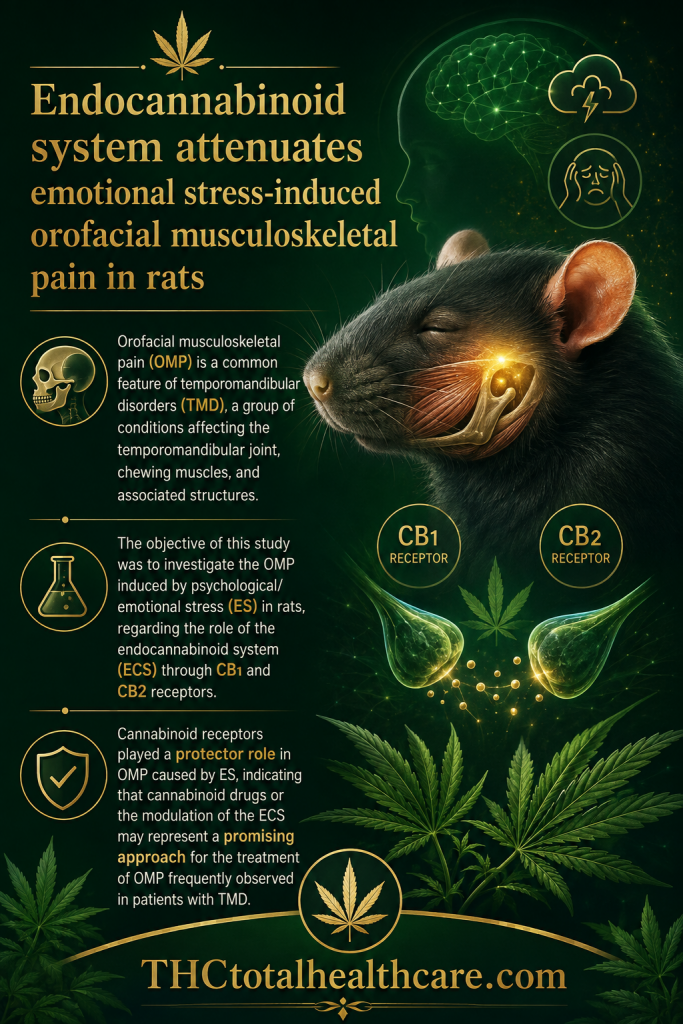
Endocannabinoid system attenuates emotional stress-induced orofacial musculoskeletal pain in rats

Emotional stress can intensify orofacial musculoskeletal pain, but the endocannabinoid system may help regulate that response. In this rat study, researchers found that activating cannabinoid signaling reduced stress-related facial pain, supporting a role for the endocannabinoid system in controlling the interaction between emotional stress and pain.

“Orofacial musculoskeletal pain (OMP) is a common feature of temporomandibular disorders (TMD), a group of conditions affecting the temporomandibular joint, chewing muscles, and associated structures.

The etiology of muscular TMD is currently understood within a biopsychosocial model of pain, highlighting the complexity related to OMP. In this context, the objective of this study was to investigate the OMP induced by psychological/emotional stress (ES) in rats, regarding the role of the endocannabinoid system (ECS) through CB1 and CB2 receptors.

Male Wistar rats were divided into Control and ES groups. OMP was induced by ES using the communication box model and evaluated through the mechanical threshold in masticatory muscles. c-Fos, CB1, and CB2 immunostaining was evaluated in the trigeminal ganglion (TG) and in the trigeminal nucleus caudalis (Sp5C). The selective CB1 or CB2 antagonist (AM251 or AM630, respectively) or the cannabinoid receptor non-selective agonist (WIN55,212-2) were administered to both groups, and the OMP was evaluated. The mechanical sensitivity of the masticatory muscles increased in the ES group, accompanied by increased c-Fos expression in the TG and Sp5C. AM251 and AM630 increased mechanical sensitivity, while WIN55,212-2 decreased the OMP. Furthermore, ES increased CB1 density in the TG and elevated both CB1 and CB2 in the Sp5C. Additionally, CB2 was increased in the masseter muscle.

Thus, cannabinoid receptors played a protector role in OMP caused by ES, indicating that cannabinoid drugs or the modulation of the ECS may represent a promising approach for the treatment of OMP frequently observed in patients with TMD.”

https://pubmed.ncbi.nlm.nih.gov/42585375

https://www.scielo.br/j/bjmbr/a/DHTkCSCk5bcNGJrbWcb67Jz/?lang=en