
Evaluating the impact of cannabinoid extracts on chronic pain and quality of life in endometriosis patients – a pilot study

Women with endometriosis and chronic pelvic pain experienced significant improvements after adding a balanced oral THC cannabis extract to their existing treatment. In this prospective pilot study, 27 women completed three months of treatment, with benefits appearing within the first month and continuing through the study period.

Pain intensity fell significantly, along with the number of pain days and the need for conventional pain medicines. Use of both NSAIDs and opioid analgesics decreased, while fatigue, anxiety, central sensitization and pain-related disability also improved.

Quality of life improved across every measured EHP-30 domain, including pain, emotional well-being, work impairment, self-image and sexual relationships. The authors concluded that balanced THC cannabinoid medicines appear to be a potentially effective adjunct treatment for chronic pelvic pain and related symptoms in women with endometriosis.

“Endometriosis is a chronic gynecological disorder characterized by persistent pain and impaired quality of life, with limited effective treatment options. Emerging evidence indicates that cannabinoids may provide analgesic and symptom-relieving effects in chronic pain conditions.

This prospective single-center cohort study investigated the effects of standardized oral cannabis extracts (cannabinoid-based medicinal products, CBMPs) on pain and quality of life in women with endometriosis.

Thirty premenopausal women aged 18-45 years with confirmed endometriosis and chronic pelvic pain were enrolled; 27 completed the 3-month treatment period. Participants received oral CBMPs containing a balanced THC: CBD ratio. Pain intensity, frequency of pain episodes, analgesic use, fatigue, anxiety, central sensitization, disability, and quality of life were assessed using validated questionnaires (VAS, EHP-30, PDI, CFS, GAD-7, CSI).

Significant improvements were observed after one month of treatment, with continued benefit over three months. Pain intensity decreased markedly (p = 0.0004), accompanied by reductions in the number of pain days and analgesic use, including both NSAIDs (e.g., ibuprofen, diclofenac) and opioid analgesics (e.g., tramadol, tilidin, oxycodone) (p < 0.001). Fatigue (p = 0.0013), anxiety (p < 0.0001), central sensitization (p < 0.0001), disability (p < 0.0001), and overall quality of life (EHP-30) improved significantly.

Treatment was well tolerated; side effects were predominantly mild (severity score 1 on a 0-3 scale) and transient, occurring mainly during the titration phase and declining thereafter. Although limited by its single-center design, lack of placebo control, and short follow-up, this study provides preliminary evidence that oral CBMPs may represent a safe and effective adjunct therapy for managing pain and related symptoms in women with endometriosis. Larger randomized controlled trials are warranted to confirm these findings and establish optimal dosing strategies.”

https://pubmed.ncbi.nlm.nih.gov/42771648

“In conclusion, oral CBMPs with balanced THC: CBD ratios seem to be a safe and potentially effective adjunct therapy for chronic pelvic pain and related symptoms in women with endometriosis. By targeting both nociceptive and neuropsychological aspects of the condition, CBMPs can supplement existing pharmacological and lifestyle strategies, providing a more comprehensive approach to symptom management. These findings establish a basis for future controlled studies to refine dosing, investigate mechanisms, and assess long-term outcomes in this complex patient group.”

https://journals.plos.org/plosone/article?id=10.1371/journal.pone.0356768
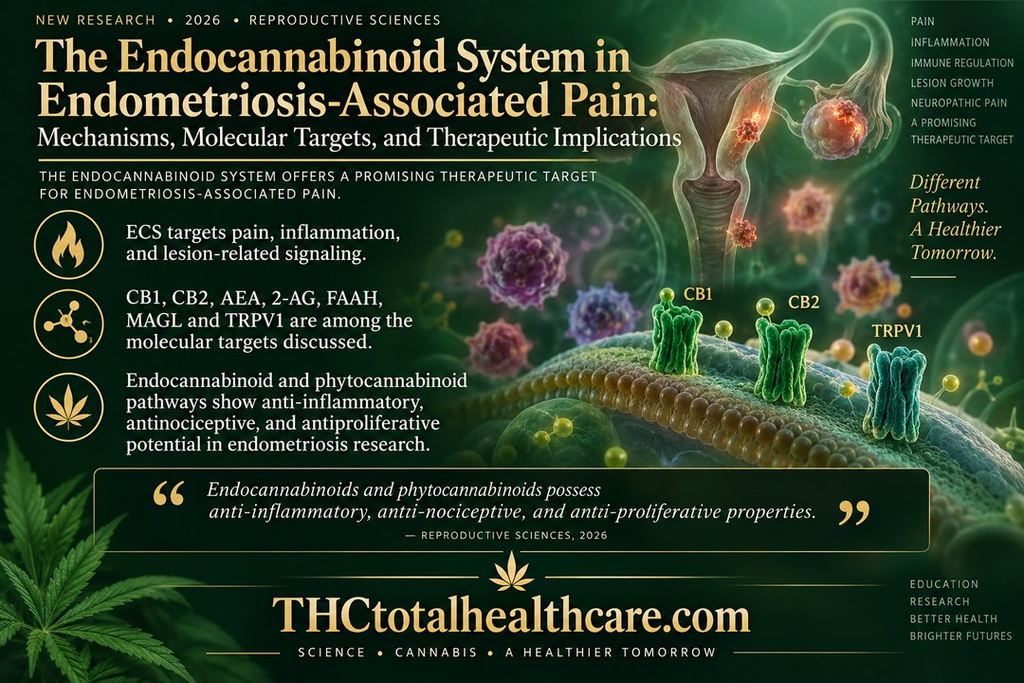
The Endocannabinoid System in Endometriosis-Associated Pain: Mechanisms, Molecular Targets, and Therapeutic Implications

A new 2026 review published in Reproductive Sciences examines the endocannabinoid system (ECS) as a therapeutic target for endometriosis-associated pain, a condition that can cause severe pelvic pain, painful menstruation, painful intercourse, and other chronic symptoms. The authors highlight the ECS because of its established roles in regulating pain, inflammation, and immune activity.

The review found that cannabinoids may influence three major mechanisms involved in endometriosis-associated pain: inflammation, pain signaling and sensitization, and the growth of endometriotic lesions. Cannabinoids interact with both cannabinoid and non-cannabinoid receptors found in endometriotic tissue, while also reducing inflammatory signaling from immune cells such as mast cells and macrophages.

The researchers conclude that the endocannabinoid system is a promising therapeutic target for endometriosis-associated pain, with cannabinoid therapies showing potential to regulate nociception, inflammation, and lesion proliferation. They call for clinical trials to further evaluate cannabinoid-based treatments for people living with endometriosis.

“Endometriosis is a chronic gynecological disorder affecting approximately 10% of reproductive-age women, characterized by the ectopic growth of endometrial tissue and severe pain, including dysmenorrhea, chronic pelvic pain, dyspareunia, dysuria, and dyschezia. Current treatments are limited in efficacy and associated with significant side effects, underscoring the urgent need for novel therapeutic strategies.

The endocannabinoid system (ECS) has emerged as a promising therapeutic target, given its well-established roles in pain modulation, inflammation, and immune regulation. Epidemiological evidence demonstrates that women with endometriosis increasingly use cannabis for symptom self-management, yet the underlying mechanisms remain poorly characterized.

This review integrates preclinical and human evidence to comprehensively evaluate the mechanistic basis of cannabinoid efficacy in endometriosis-associated pain. Evidence from in vitro studies and animal models indicates that cannabinoids target three main mechanisms of endometriosis-associated pain, including inflammation, nociceptive signaling, and lesion proliferation.

Cannabinoids suppress pain signaling and sensitization by interacting with cannabinoid and non-cannabinoid receptors expressed in endometriotic lesions. Cannabinoids attenuate endometriosis-induced inflammation by inhibiting proinflammatory cytokine signaling and reducing the release of inflammatory mediators by mast cells and peritoneal macrophages. Cannabinoids also exert antiproliferative effects in endometriosis models, thereby suppressing the growth of endometriotic lesions.

In conclusion, the ECS is a promising therapeutic target for endometriosis-associated pain, as it regulates nociception, inflammation, and proliferation. These promising findings highlight the potential therapeutic benefits of cannabinoids for endometriosis-associated pain, warranting the need for clinical trials to evaluate the safety and effectiveness of cannabinoid therapies in endometriosis.”

https://pubmed.ncbi.nlm.nih.gov/42745018

https://link.springer.com/article/10.1007/s43032-026-02201-9

Disease-modifying effects of natural Δ9-tetrahydrocannabinol in endometriosis-associated pain.

In a mouse model of endometriosis, daily treatment with Δ9-THC reduced abdominal mechanical hypersensitivity and the unpleasantness associated with pain. THC also restored cognitive function in animals that had developed substantial memory deficits associated with endometriosis.

The effects went beyond pain relief. THC altered uterine innervation and, most notably, inhibited the development of endometrial cysts, suggesting a potential disease-modifying effect rather than simply masking symptoms.

These findings are important because endometriosis is a chronic condition in which pain, abnormal tissue growth, and neurological effects can all contribute to disease burden. The researchers concluded that the results support clinical investigation of THC as a potential treatment for women with endometriosis.

“Endometriosis is a chronic painful disease highly prevalent in women that is defined by growth of endometrial tissue outside the uterine cavity and lacks adequate treatment.

Medical use of cannabis derivatives is a current hot topic and it is unknown whether phytocannabinoids may modify endometriosis symptoms and development.

Here we evaluate the effects of repeated exposure to Δ9-tetrahydrocannabinol (THC) in a mouse model of surgically-induced endometriosis.

In this model, female mice develop mechanical hypersensitivity in the caudal abdomen, mild anxiety-like behavior and substantial memory deficits associated with the presence of extrauterine endometrial cysts.

Interestingly, daily treatments with THC (2 mg/kg) alleviate mechanical hypersensitivity and pain unpleasantness, modify uterine innervation and restore cognitive function without altering the anxiogenic phenotype. Strikingly, THC also inhibits the development of endometrial cysts.

These data highlight the interest of scheduled clinical trials designed to investigate possible benefits of THC for women with endometriosis.”

https://www.ncbi.nlm.nih.gov/pubmed/31931958

“These experiments suggest that THC may be a useful treatment for patients with endometriosis.”

https://elifesciences.org/articles/50356

Need this THC study explained? thcXplained.com

Endometriosis: Marijuana Treatment

“Dr. Phillip Leveque has spent his life as a Combat Infantryman, Physician, Toxicologist and Pharmacologist.

(MOLALLA, Ore.) – I don’t think I have to explain what this is to anybody. If you have it, you know it. Endometriosis is graded in stages I,II, III & IV, with stage I being “minimized” inconvenience while stage IV is severe and usually requires surgery.

As a physician, I had known about endometriosis for years and that some women become narcotic addicts because of it. Pre Menstrual Tension (PMS) may be concurrent though different and I had many PMS patients as well. Some of them became addicts also. I was not surprised when lady patients came to our clinics offering chart notes that they had been prescribed every conceivable analgesic and other medications but they also told me marijuana works better than any regular prescription.

I have a severe pain problem myself caused by too high of a concentration of spinal anesthesia. I got disgusted by the anesthesiologist telling me he didn’t cause it but I got a new understanding for patients in pain.

If the patient says marijuana works for pain, I believe them. Actually in Oregon about sixty percent of patients have some chronic pain syndrome of nerve, muscle, joint, bone, intestinal or genitourinary. It doesn’t seem to matter whatever the source of pain, the bottom line is that MJ gives relief.

I presume stage I endometriosis and minor PMS are effectively treated with aspirin-like drugs, but when the pain etc. is in the moderate/severe level, the ladies have found out by themselves that marijuana/cannabis is effective without the hazard of narcotic addiction or alcoholism.

The U.S. government publicizes that as many as 77 million Americans have used marijuana and perhaps ten million use it frequently.

Marijuana as folk medicine has been used in the U.S. since the middle 1800’s and probably in Mexico and Latin America since the Spanish introduced it in the late 1500’s.

It is no longer amazing to me when a patient tells me of some new disease for which they have discovered marijuana treatment is beneficial.

It is time the DEA and its hoodlums backed off and allow the therapeutic use of medical marijuana, as more and more people are reverting to this tried and true “folk medicine” everyday.”

http://www.salem-news.com/articles/january032008/endo_med_1308.php

The molecular connections between the cannabinoid system and endometriosis.

Abstract

“The endocannabinoid system consists of an array of endogenously produced bioactive lipids that activate cannabinoid 1 (CB1) and 2 (CB2) receptors. Alterations of this system have been described in almost every category of disease. These changes can be protective or maladaptive, making the endocannabinoid network an attractive therapeutic target. Little is known about the potential role of endocannabinoids in endometriosis development although this is a topic worthy of further investigation since endocannabinoid modulators have recently been shown to affect specific mechanisms critical to endometriosis establishment and maintenance. A literature review was herein performed with the aim of defining the regulation and function of the endocannabinoid signaling in in vitro and animal models of endometriosis. The components of the endocannabinoid system, CB1 and CB2 receptors and the enzymes N-acylphosphatidylethanolamine-phospholipase D and fatty acid amide hydrolase are differentially regulated throughout the menstrual cycle in the endometrium and are expressed in deep endometriotic nodules and in sensory and sympathetic neurons innervating the lesions. Selective cannabinoid receptor agonists, such as WIN 55212-2, appear to have a favorable action in limiting cell proliferation and in controlling pain symptoms. Conversely, endometrial cell migration tends to be stimulated by receptor agonists. The phosphatidylinositol 3-kinase/Akt and extracellular signal-regulated kinase 1/2 pathways seem to be involved in these processes. However, the underlying mechanisms of action are only just beginning to unfold. Given the complexity of the system, further studies are needed to clarify whether the endocannabinoid system might represent a promising target for endometriosis.”

http://www.ncbi.nlm.nih.gov/pubmed/22923487

Δ(9) -Tetrahydrocannabinol and N-arachidonyl glycine are full agonists at GPR18 receptors and induce migration in human endometrial HEC-1B cells.

Abstract

“BACKGROUND AND PURPOSE:

Endometriosis is a disorder in which the endometrium forms growths outside the uterus and is associated with chronic pain. Recent evidence suggests that endometrial motility plays a role in the aetiology of endometriosis. The endocannabinoid system regulates cellular migration. Given the growing involvement of the endocannabinoids in reproduction, we investigated the role of the endocannabinoid system in migration of endometrial cells.

EXPERIMENTAL APPROACH:

Migration of the human endometrial HEC-1B cells was assayed. Standard PCR techniques were used to determine the presence of the GPCR, GPR18, in HEC-1B cells, and p44/42 MAPK was assayed in stably transfected HEK293-GPR18 cells to determine receptor specificity for known cannabinoid agonists and antagonists. N-arachidonoyl ethanolamine (AEA) metabolism was measured, using HPLC/MS/MS for lipid analysis.

KEY RESULTS:

AEA, Δ(9) -tetrahydrocannabinol (Δ(9) -THC) and N-arachidonoyl glycine (NAGly) induce migration of HEC-1B cells through cannabinoid CB(1) receptor-independent mechanisms. MAPK activation in HEK293-GPR18 cells revealed novel pharmacology for known CB(1) and CB(2) receptor ligands at GPR18 receptors, including Δ(9) -THC, which activates MAPK at nanomolar concentrations, whereas WIN 55212-2, CP55940, JWH-133 and JWH-015, and arachidonyl-1-hydroxy-2-propylamide (R1-methanandamide) had no effect. Moreover, HEC-1B migration and MAPK activation by NAGly and Δ(9) -THC were antagonized by Pertussis toxin, AM251 and cannabidiol.

CONCLUSIONS AND IMPLICATIONS:

An understanding of the function and regulation of GPR18 and its molecular interactions with endogenous ligands, and how phytocannabinoids play a role with GPR18 signalling is vital if we are to comprehensively assess the function of the cannabinoid signalling system in human health and disease. LINKED ARTICLES: This article is commented on by Alexander, pp. 2411-2413 of this issue and is part of a themed section on Cannabinoids in Biology and Medicine. To view Alexander visit http://dx.doi.org/10.1111/j.1476-5381.2011.01731.x. To view the other articles in this section visit http://dx.doi.org/10.1111/bph.2012.165.issue-8. To view Part I of Cannabinoids in Biology and Medicine visit http://dx.doi.org/10.1111/bph.2011.163.issue-7.”

http://www.ncbi.nlm.nih.gov/pubmed/21595653

Antiproliferative Effects of Cannabinoid Agonists on Deep Infiltrating Endometriosis

“Deep infiltrating endometriosis (DIE) is characterized by chronic pain, hyperproliferation of endometriotic cells and fibrosis. Since cannabinoids are endowed with antiproliferative and antifibrotic properties, in addition to their psychogenic and analgesic effects, cannabinoid agonists have been evaluated in DIE both in vitro and in vivo. The in vitro effects of the cannabinoid agonist WIN 55212-2 were evaluated on primary endometriotic and endometrial stromal and epithelial cell lines extracted from patients with or without DIE. Cell proliferation was determined by thymidine incorporation and production of reactive oxygen species by spectrofluorometry. ERK and Akt pathways were studied by immunoblotting. Immunoblotting of α-smooth muscle actin was studied as evidence of myofibroblastic transformation. The in vivo effects of WIN 55212-2 were evaluated on Nude mice implanted with human deep infiltrating endometriotic nodules. The in vitro treatment of stromal endometriotic cells by WIN 55212-2 decreased cell proliferation, reactive oxygen species production, and α-smooth muscle actin expression. The decrease in cell proliferation induced by WIN 55212-2 was not associated with a decrease in ERK activation, but was associated with the inhibition of Akt activation. WIN 55212-2 abrogated the growth of endometriotic tissue implanted in Nude mice. Cannabinoid agonists exert anti-proliferative effects on stromal endometriotic cells linked to the inhibition of the Akt pathway. These beneficial effects of cannabinoid agonists on DIE have been confirmed in vivo.”

“The cannabinoids are well known for their psychogenic effects and their role in inflammation and immunity. They are also endowed with properties that can be used in the control of three major aspects of DIE: hyperproliferation, fibrosis, and chronic pain. Because of their implication in proliferation, apoptosis, and angiogenesis, the cannabinoids control cell growth. Their antiproliferative effects result from the inhibition of growth factors and the deregulation of such signaling pathways as Ras-Raf-MKKK1-ERK1/2, PI3K-Akt/PKB-mTOR and c-Jun N-terminal kinase-MAPK. These mechanisms have suggested new targets in cancer treatment and also in endometriosis, since endometriotic cells have a hyperproliferative phenotype and pro-angiogenic properties. In addition, several experimental studies have reported an antifibrotic role of cannabinoid agonists. If such antifibrotic effect of cannabinoid agonists could be demonstrated in DIE it would allow a less extensive surgery. Finally, cannabinoids have analgesic properties and have been used for a long time in treating chronic pain.“

“Therefore, we have evaluated the effects of cannabinoid agonists in vitro on cells extracted from biopsies of deep infiltrating endometriosis and in vivo on a mouse model of endometriosis. We conclude from our data that cannabinoid agonists represent a promising approach in the treatment of DIE.”

“In conclusion, WIN 55212-2 has in vitro antiproliferative and antifibrotic effects in deep infiltrating endometriotic cells. The antiproliferative effect is linked to the inactivation of the Akt pathway. The effectiveness of WIN 55212-2 in vitro, confirmed in vivo in a mouse model of DIE, suggests that the cannabinoid agonists represent a promising therapeutic approach in the treatment of DIE.”

http://www.ncbi.nlm.nih.gov/pmc/articles/PMC2993285/


Endocannabinoid involvement in endometriosis

 “Endometriosis is a disease common in women that is defined by abnormal extrauteral growths of uterine endometrial tissue and associated with severe pain. Partly because how the abnormal growths become associated with pain is poorly understood, the pain is difficult to alleviate without resorting to hormones or surgery, which often produce intolerable side effects or fail to help. Recent studies in a rat model and women showed that sensory and sympathetic nerve fibers sprout branches to innervate the abnormal growths. This situation, together with knowledge that the endocannabinoid system is involved in uterine function and dysfunction and that exogenous cannabinoids were once used to alleviate endometriosis-associated pain, suggests that the endocannabinoid system is involved in both endometriosis and its associated pain. Here, using a rat model, we found that CB1 cannabinoid receptors are expressed on both the somata and fibers of both the sensory and sympathetic neurons that innervate endometriosis’s abnormal growths. We further found that CB1 receptor agonists decrease, whereas CB1 receptor antagonists increase, endometriosis-associated hyperalgesia. Together these findings suggest that the endocannabinoid system contributes to mechanisms underlying both the peripheral innervation of the abnormal growths and the pain associated with endometriosis, thereby providing a novel approach for the development of badly-needed new treatments.”

“These findings implicate involvement of the endocannabinoid system in reproductive function and dysfunction. The endocannabinoid system plays a key role in pain mechanisms, and, previously, cannabinoids were long used by women to alleviate dysmenorrhea.”

“Together the findings suggest that the endocannabinoid system is involved in endometriosis and its associated pain via CB1 receptors and innervation of the ectopic growths. Using the rat model, we performed a combination of immunohistochemical and pharmacological studies to test this hypothesis and assess the endocannabinoid system’s potential as a target for new therapies.”

 Summary and conclusions

“These studies in a rat model of endometriosis provide evidence that endocannabinoids might regulate the innervation of the disease’s abnormal growths and that exogenous cannabinoid agents can be effective in reducing endometriosis symptoms. The fact that CB1 receptor expression is greater in the cysts than healthy uterus from the same rats suggests that treatments to activate CB1 receptors (either directly by CB1 agonists or indirectly by increasing relevant endocannabinoid levels) could be developed with minimal effects on uterine function. Although the rat model parallels many aspects of endometriosis in women, there are of course significant differences. However, when considered together with the past history of successful use of cannabinoids for alleviation of gynecological pains, and insofar as findings in rats can model mechanisms of endometriosis-related signs and symptoms, the present results suggest that approaches targeted at the endocannbinoid system represent a promising new direction for developing badly-needed new treatments for pain suffered by women with endometriosis.”

http://www.ncbi.nlm.nih.gov/pmc/articles/PMC2972363/