(+)-Trans-Cannabidiol Is an Agonist at Human CB2 Receptors

A new 2026 study reports that (+)-trans-cannabidiol [(+)-CBD] acts as an agonist at human CB2 cannabinoid receptors, activating a major receptor of the endocannabinoid system involved in immune and inflammatory signaling.

Researchers found that (+)-CBD produced a strong, concentration-dependent CB2 response, reaching roughly 90% of the maximum effect produced by the reference cannabinoid agonist CP55940. Additional testing indicated that the compound acts through the receptor’s primary, or orthosteric, binding site.

The findings show that different molecular forms of cannabidiol can interact with cannabinoid receptors in very different ways. The researchers conclude that (+)-CBD may deserve further study in CB2-sensitive disease states, adding another layer to our understanding of how cannabinoid chemistry can influence the human endocannabinoid system.

“(-)-trans-Cannabidiol ((-)-CBD) is a principal phytocannabinoid from Cannabis sativa. (-)-CBD has complex pharmacology but is a relatively weak inhibitor of CB1 and CB2 receptor signaling. Cannabidiol has two chiral centres and thus four stereoisomers. (+)-trans-CBD ((+)-CBD) has a higher affinity than (-)-CBD at CB1 and CB2, but its pharmacodynamic effects at these receptors are incompletely described.

We examined the activity of (+)-CBD at human CB1 and CB2 receptors using a fluorescence-based assay of membrane potential in AtT20 cells stably expressing CB1 or CB2 receptors.

(+)-CBD produced a rapid, concentration-dependent hyperpolarization in CB2-expressing cells (pEC50 6.63 ± 0.08) with a maximal effect 90% of the response to CP55940. The CB2 response was blocked by pertussis toxin pretreatment and competitively inhibited by the CB2 antagonist AM630 (Schild slope 1.1 ± 0.1). (+)-CBD was a low-efficacy, low-potency CB1 agonist and inhibited somatostatin-receptor effects at high concentrations (10-30 μM). (+)-CBD had no effect on the membrane potential of AtT20 wild-type cells. In silico modeling of ligand interactions with CB2 indicated that (+)-CBD but not (-)-CBD formed an H-bond with Ser285, a residue crucial for agonist activation of CB2.

Our data suggests (+)-CBD acted as a CB2 agonist via the orthosteric binding site on the receptor. Synthetic CBD, including (+)-CBD, has previously been administered in clinical trials, presumably without consideration of its potential CB2 agonist activity.

Given the relative safety of (-)-CBD in people, (+)-CBD may be a useful drug to explore CB2-sensitive disease states.”

https://pubmed.ncbi.nlm.nih.gov/42745361

“This study emphasizes the importance of understanding the molecular actions of the enantiomers of chiral cannabinoids. Although the safety of (+)-CBD cannot simply be assumed to be the same as (−)-CBD, the identification of (+)-CBD as a robust CB2 agonist suggests that (+)-CBD may be worth exploring as a therapeutic agent in chronic inflammatory conditions or other diseases where CB2 activation may prove beneficial.”

https://bpspubs.onlinelibrary.wiley.com/doi/10.1002/prp2.70325
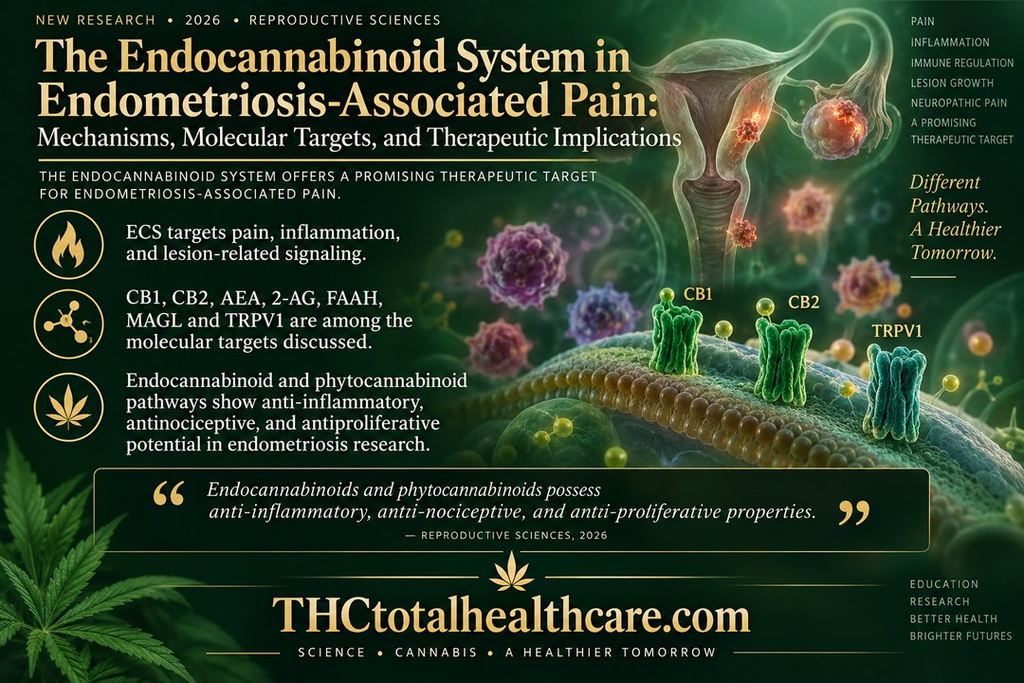
The Endocannabinoid System in Endometriosis-Associated Pain: Mechanisms, Molecular Targets, and Therapeutic Implications

A new 2026 review published in Reproductive Sciences examines the endocannabinoid system (ECS) as a therapeutic target for endometriosis-associated pain, a condition that can cause severe pelvic pain, painful menstruation, painful intercourse, and other chronic symptoms. The authors highlight the ECS because of its established roles in regulating pain, inflammation, and immune activity.

The review found that cannabinoids may influence three major mechanisms involved in endometriosis-associated pain: inflammation, pain signaling and sensitization, and the growth of endometriotic lesions. Cannabinoids interact with both cannabinoid and non-cannabinoid receptors found in endometriotic tissue, while also reducing inflammatory signaling from immune cells such as mast cells and macrophages.

The researchers conclude that the endocannabinoid system is a promising therapeutic target for endometriosis-associated pain, with cannabinoid therapies showing potential to regulate nociception, inflammation, and lesion proliferation. They call for clinical trials to further evaluate cannabinoid-based treatments for people living with endometriosis.

“Endometriosis is a chronic gynecological disorder affecting approximately 10% of reproductive-age women, characterized by the ectopic growth of endometrial tissue and severe pain, including dysmenorrhea, chronic pelvic pain, dyspareunia, dysuria, and dyschezia. Current treatments are limited in efficacy and associated with significant side effects, underscoring the urgent need for novel therapeutic strategies.

The endocannabinoid system (ECS) has emerged as a promising therapeutic target, given its well-established roles in pain modulation, inflammation, and immune regulation. Epidemiological evidence demonstrates that women with endometriosis increasingly use cannabis for symptom self-management, yet the underlying mechanisms remain poorly characterized.

This review integrates preclinical and human evidence to comprehensively evaluate the mechanistic basis of cannabinoid efficacy in endometriosis-associated pain. Evidence from in vitro studies and animal models indicates that cannabinoids target three main mechanisms of endometriosis-associated pain, including inflammation, nociceptive signaling, and lesion proliferation.

Cannabinoids suppress pain signaling and sensitization by interacting with cannabinoid and non-cannabinoid receptors expressed in endometriotic lesions. Cannabinoids attenuate endometriosis-induced inflammation by inhibiting proinflammatory cytokine signaling and reducing the release of inflammatory mediators by mast cells and peritoneal macrophages. Cannabinoids also exert antiproliferative effects in endometriosis models, thereby suppressing the growth of endometriotic lesions.

In conclusion, the ECS is a promising therapeutic target for endometriosis-associated pain, as it regulates nociception, inflammation, and proliferation. These promising findings highlight the potential therapeutic benefits of cannabinoids for endometriosis-associated pain, warranting the need for clinical trials to evaluate the safety and effectiveness of cannabinoid therapies in endometriosis.”

https://pubmed.ncbi.nlm.nih.gov/42745018

https://link.springer.com/article/10.1007/s43032-026-02201-9

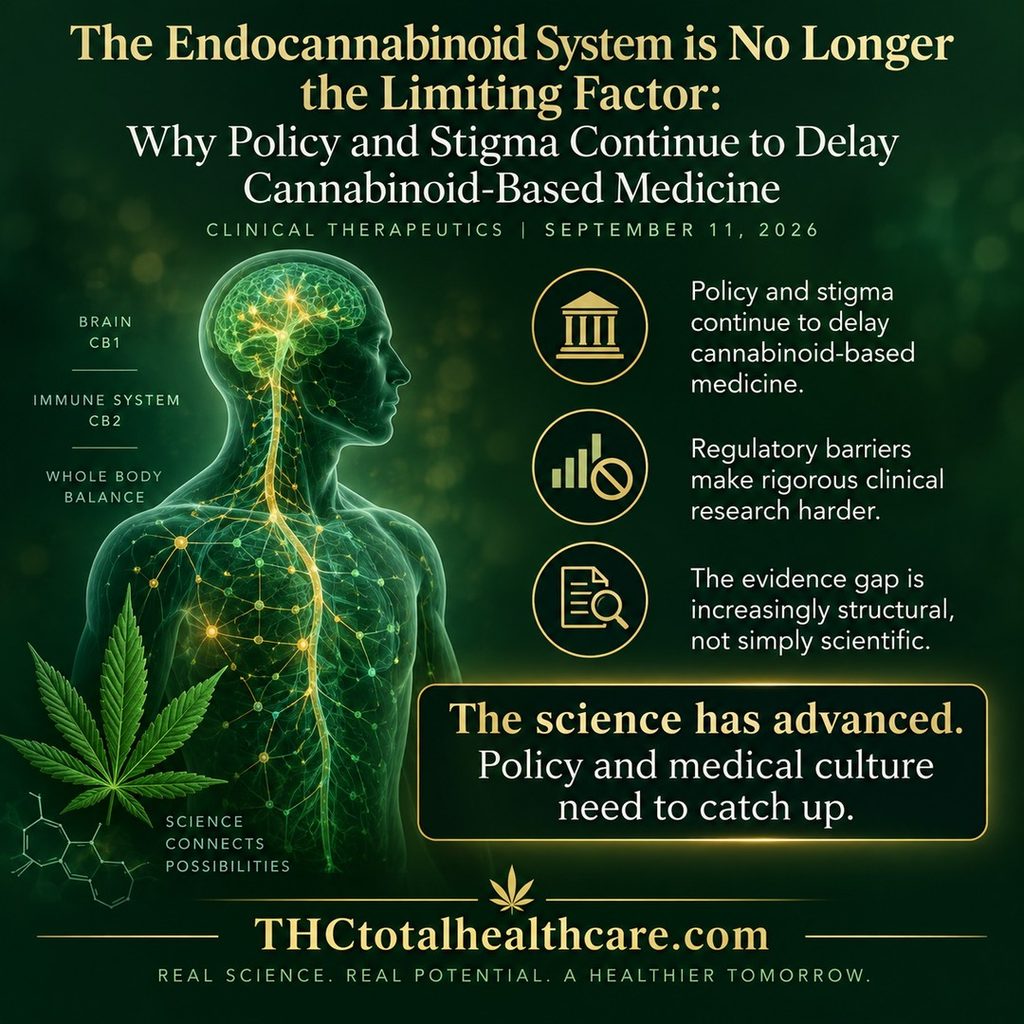
The Endocannabinoid System is No Longer the Limiting Factor: Why Policy and Stigma Continue to Delay Cannabinoid-Based Medicine

The science of the endocannabinoid system has advanced dramatically, but cannabinoid-based medicine is still being held back by forces outside the laboratory. This new Clinical Therapeutics commentary argues that the biological understanding of the endocannabinoid system is no longer the main limiting factor. The larger barriers are now policy, regulation, funding, access, and stigma.

According to the authors, restrictive and fragmented rules make cannabinoid research harder to conduct, while limited access to standardized products complicates rigorous clinical trials. At the same time, stigma within medicine can discourage research, education, prescribing, and open discussion with patients.

The message is simple: the remaining evidence gaps are not purely scientific. They are also structural. If cannabinoid-based medicine is going to move forward, policy and medical culture will have to catch up with what researchers already understand about the endocannabinoid system.

“Purpose: To examine whether the persistent gap between the extensive mechanistic knowledge of the Endocannabinoid System (ECS) and the limited number of high-quality randomized clinical trials of cannabinoid-based therapies primarily reflects scientific uncertainty or, instead, structural regulatory, economic, and social barriers.

Methods: This commentary critically synthesizes historical, regulatory, and contemporary evidence on cannabinoid research, integrating data from regulatory documents, international policy reports, clinical and observational studies, systematic reviews, and qualitative investigations. Particular emphasis is placed on barriers affecting access to standardized products, conduct of randomized clinical trials, public funding, product standardization, and healthcare professionals’ perceptions.

Findings: Although the ECS has been extensively characterized for more than three decades and cannabinoids demonstrate plausible pharmacological mechanisms across multiple therapeutic areas, clinical translation remains disproportionately limited. Persistent regulatory restrictions, inherited from prohibition policies, continue to delay access to standardized research material, increase the cost and complexity of clinical trials, and shift evidence generation toward observational designs. Regulatory fragmentation further compromises product standardization and study reproducibility, whereas persistent social and professional stigma reduces research activity, medical education, prescribing confidence, and patient disclosure, perpetuating a self-reinforcing cycle between limited evidence generation and clinical distrust.

Implications: The principal obstacle to cannabinoid-based medicine is no longer the biological understanding of the ECS but the structural environment surrounding cannabinoid research. Progress toward evidence-based clinical implementation will depend on regulatory harmonization, greater public investment in randomized clinical research, standardized pharmaceutical-quality products, and educational initiatives capable of reducing stigma among healthcare professionals. Recognizing the structural rather than scientific origin of the evidence gap is essential for informing future research priorities, editorial policies, and international regulatory strategies.”

https://pubmed.ncbi.nlm.nih.gov/42728140

“The ECS is no longer the main obstacle to cannabinoid therapeutics. Stigma and regulation continue to delay clinical translation. Standardized clinical research requires international regulatory reform. Medical education is crucial for evidence-based cannabinoid therapies.”

https://www.clinicaltherapeutics.com/article/S0149-2918(26)00317-6/fulltext

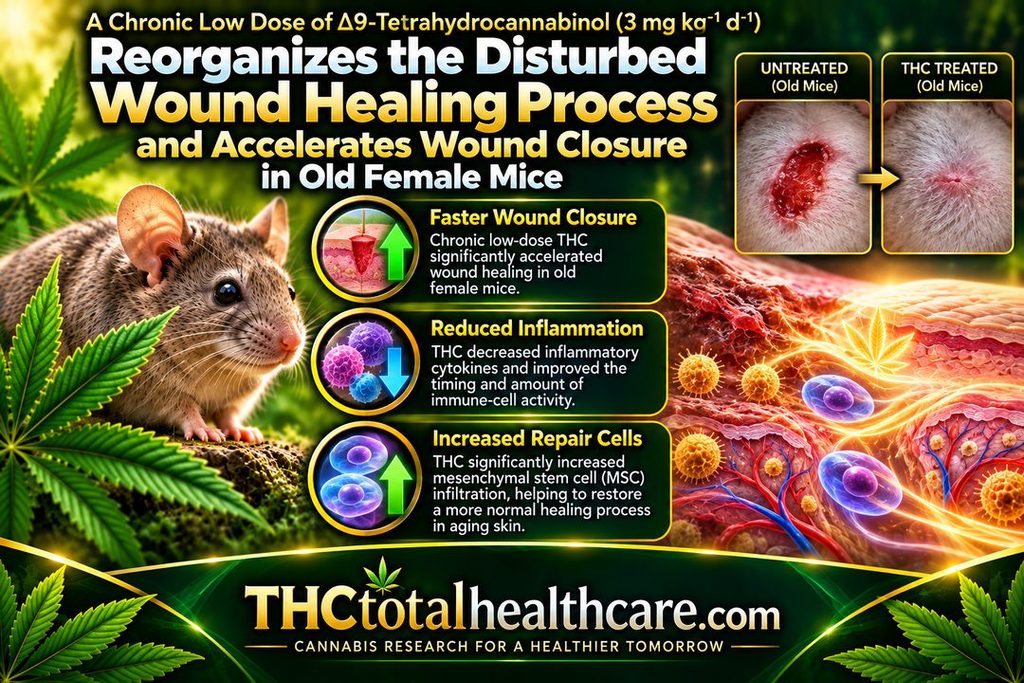
A chronic low dose of Δ9-tetrahydrocannabinol (3 mg / kg / 21 d) reorganizes the disturbed wound healing process and accelerates wound closure in old female mice

A chronic low dose of Δ9-THC accelerated wound closure in old female mice and helped reorganize an age-disrupted healing process. The biggest improvement occurred during the inflammatory phase, when aged wounds normally heal more slowly and remain inflamed longer.

THC changed the timing and amount of immune-cell activity in the wound, reduced inflammatory cytokines, and significantly increased infiltration of mesenchymal stem cells (MSCs) involved in tissue repair. The treatment did not increase growth-factor release, suggesting the benefit came mainly from better coordination of inflammation and cell migration.

The researchers concluded that THC improved wound healing by restoring a more normal sequence of immune-cell infiltration and cytokine release. The findings suggest that stimulating the aging endocannabinoid system may help support skin regeneration and tissue repair in older organisms.

“Wound healing in old mice is characterized by disturbed tissue homeostasis, manifested by delayed immune cell infiltration and reduced growth factor secretion, leading to a delayed onset and prolonged duration of the inflammatory phase.

The endocannabinoid system (ECS) is an important regulator of tissue homeostasis and cell migration and is also considered to be subject to aging processes, which may contribute to observable aging phenomena. Therefore, stimulating the aged ECS could represent a therapeutic option to support tissue regeneration in aging.

Female old mice received a low-dose of medical THC daily for 3 weeks, before four excisional full skin wounds were created. At day 1, 3 and 7 post-surgery, the wound closure rate was analyzed and wound samples were examined immunohistochemically for the numbers of granulocytes, M1-macrophages and mesenchymal stem cells (MSCs). The concentrations of inflammatory cytokines and regenerative growth factors were determined by ELISA.

Administration of THC improved the wound healing rate of old mice between day 1 and 7, which was associated with an altered timing and quantity of infiltrating immune cells and decreased levels of inflammatory cytokines in wound tissue on days 1 and 3 post-injury.

THC treatment significantly increased MSC infiltration but had no effect on the growth factor release.

The present study confirmed the anti-inflammatory activity of THC in vivo.

The THC-treatment improved wound healing in old mice by coordinating the temporal sequence of immune cell infiltration and cytokine release. Thus, restoration of ECS signaling could be an effective strategy to support age-related skin regeneration.”

https://pubmed.ncbi.nlm.nih.gov/40653209/

“A chronic low dose of THC accelerates the wound closure rate during the inflammatory phase in old mice.”

https://www.sciencedirect.com/science/article/pii/S0531556525001615?via%3Dihub

Meed this THC study explained? thcXplained.com

Effects of endocannabinoid and endovanilloid systems on aversive memory extinction.

“In contextual fear conditioning animals have to integrate various elemental stimuli into a coherent representation of the condition and then associate context representation with punishment. Although several studies indicated the modulating role of endocannabinoid system (ECS) on the associative learning, ECS effect on contextual fear conditioning requires further investigations. The present study assessed the effects of the increased endocannabinoid anandamide (AEA) tone on acquisition, retrieval and extinction of the contextual fear conditioning…

 The present study indicates that ECS controls the extinction of aversive memories in the contextual fear conditioning.”

http://www.ncbi.nlm.nih.gov/pubmed/23948212

The endocannabinoid system in the inflammatory and neurodegenerative processes of multiple sclerosis and of amyotrophic lateral sclerosis.

Abstract

“Multiple sclerosis (MS) and amyotrophic lateral sclerosis (ALS) are chronic diseases of the central nervous system (CNS), featured by a complex interplay between inflammation and neurodegeneration. Increasing evidence supports the involvement of the endocannabinoid system (ECS) in both inflammatory and neurodegenerative processes typical of these pathological conditions. Exogenous or endogenous cannabinoids regulate the function of immune system by limiting immune response. On the other hand, by preventing excitotoxic damage, cannabinoids protect neuronal integrity and function. Of note, the ECS not only plays a role as modulator of disease processes, but it can also be disrupted by the same diseases. Agents modulating cannabinoid receptors or endocannabinoid tone provide promising therapeutic opportunities in the treatment of inflammatory neurodegenerative disorders of the CNS.”

http://www.ncbi.nlm.nih.gov/pubmed/20353778

The (endo)cannabinoid system in multiple sclerosis and amyotrophic lateral sclerosis.

“Alterations of the endocannabinoid system (ECS) have been recently implicated in a number of neuroinflammatory and neurodegenerative conditions so that the pharmacological modulation of cannabinoid (CB) receptors and/or of the enzymes controlling synthesis, transport, and degradation of these substances has emerged as a valuable option to treat neurological diseases.

Here, we describe the current knowledge concerning the rearrangement of ECS in a primarily inflammatory disorder of the central nervous system such as multiple sclerosis (MS), and in a primarily degenerative condition such as amyotrophic lateral sclerosis (ALS).

 Furthermore, the data supporting a therapeutic role of agents modulating CB receptors or endocannabinoid tone in these disorders will also be reviewed. Complex changes of ECS take place in both diseases, influencing crucial aspects of their pathophysiology and clinical manifestations. Neuroinflammation, microglial activation, oxidative stress, and excitotoxicity are variably combined in MS and in ALS and can be modulated by endocannabinoids or by drugs targeting the ECS.”

http://www.ncbi.nlm.nih.gov/pubmed/17678961

[Endogenous cannabinoid system and depression].

Abstract

“Endogenous cannabinoid system (ECS) is highly conserved during evolution of the body’s endocrine network. It is a regulator of mood, cognitive, autonomic nervous system and movement control system. ECS dysfunction can promote the progress and maintain of depression, phobia, and extreme anxiety. The antidepressant drugs to enhance the activity of ECS may represent a new direction, but rarely reported research in this regard.”

http://www.ncbi.nlm.nih.gov/pubmed/23189618

Role of CB1 cannabinoid receptors on GABAergic neurons in brain aging

“Brain aging is associated with cognitive decline that is accompanied by progressive neuroinflammatory changes. The endocannabinoid system (ECS) is involved in the regulation of glial activity and influences the progression of age-related learning and memory deficits.

Mice lacking the Cnr1 gene (Cnr1−/−), which encodes the cannabinoid receptor 1 (CB1), showed an accelerated age-dependent deficit in spatial learning accompanied by a loss of principal neurons in the hippocampus. The age-dependent decrease in neuronal numbers in Cnr1−/− mice was not related to decreased neurogenesis or to epileptic seizures. However, enhanced neuroinflammation characterized by an increased density of astrocytes and activated microglia as well as an enhanced expression of the inflammatory cytokine IL-6 during aging was present in the hippocampus of Cnr1−/− mice. The ongoing process of pyramidal cell degeneration and neuroinflammation can exacerbate each other and both contribute to the cognitive deficits. Deletion of CB1 receptors from the forebrain GABAergic, but not from the glutamatergic neurons, led to a similar neuronal loss and increased neuroinflammation in the hippocampus as observed in animals lacking CB1 receptors in all cells.

Our results suggest that CB1 receptor activity on hippocampal GABAergic neurons protects against age-dependent cognitive decline by reducing pyramidal cell degeneration and neuroinflammation.”

The endocannabinoid system in peripheral lymphocytes as a mirror of neuroinflammatory diseases.

Abstract

“During immuno-mediated attack of the brain, activation of endocannabinoids represents a protective mechanism, aimed at reducing both neurodegenerative and inflammatory damage through various and partially converging mechanisms that involve neuronal and immune cells. Here, we review the main alterations of the endocannabinoid system (ECS) within the central nervous system and in peripheral blood mononuclear cells, in order to discuss the intriguing observation that elements of the peripheral ECS mirror central dysfunctions of endocannabinoid signaling. As a consequence, elements of blood ECS might serve as novel, non-invasive diagnostic tools of several neurological disorders, and targeting the ECS might be useful for therapeutic purposes. In addition, we discuss the appealing working hypothesis that the presence of type-1 cannabinoid receptors on the luminal side, and that of type-2 cannabinoid receptors on the abluminal side of the blood-brain barrier, could drive a unidirectional transport of AEA in the luminal –> abluminal direction (i.e., from blood to brain), thus implying that blood may be a reservoir of AEA for the brain. On this basis, it can be expected that an unbalance of the endogenous tone of AEA in the blood may sustain a similar unbalance of its level within the brain, as demonstrated in Huntington’s disease, Parkinson’s disease, multiple sclerosis, attention-deficit/hyperactivity disorder, schizophrenia, depression and headache.”

http://www.ncbi.nlm.nih.gov/pubmed/18781987