The Potential of Cannabidiol for the Treatment of Psychosis: Endocannabinoid Regulation of Serotonergic Neurotransmission via Serotonin 5-HT1A/2A Receptors

Psychosis involves complex changes in brain signaling, including systems regulated by serotonin and the endocannabinoid system. Cannabidiol (CBD) has drawn growing interest because it may influence both.

This review examines how CBD may affect serotonergic neurotransmission through 5-HT1A and 5-HT2A receptors, while also interacting with the endocannabinoid system in ways relevant to psychotic disorders.

The evidence supports continued investigation of CBD as a potential therapeutic approach for psychosis and related symptoms.

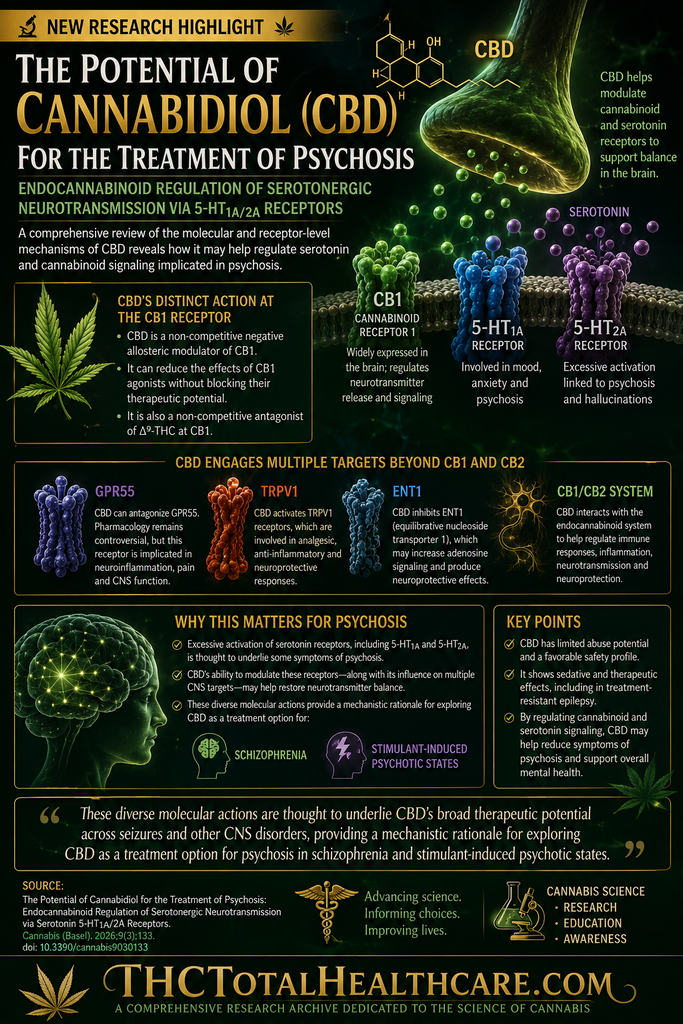
“Cannabis, widely used for both medical and non-medical purposes, primarily contains Δ9-tetrahydrocannabinol (Δ9-THC) and cannabidiol (CBD).

This review aims to clarify how the molecular and receptor-level mechanisms of CBD, compared with Δ9-THC, shape its distinct therapeutic profile and low liability for addiction, thereby informing the safer clinical application of CBD-containing interventions to schizophrenia.

CBD exerts sedative and therapeutic effects, including in treatment-resistant epilepsy, and acts in part via CB1 and CB2 receptors that also mediate Δ9-THC actions. While Δ9-THC activates these receptors as an agonist, triggering Gi-coupled signaling cascades such as MAPK pathways and suppressing presynaptic monoamine release, CBD functions as a non-competitive negative allosteric CB1 modulator and non-competitive antagonist of Δ9-THC. These distinct intracellular signaling mechanisms are considered to underlie the markedly different pharmacological profiles and abuse liabilities of Δ9-THC and CBD.

CBD also engages multiple CNS targets beyond CB1 and CB2, including GPR55, TRPV1 and ENT1, which are implicated in anticonvulsant, anti-inflammatory, analgesic and neuroprotective actions. Although GPR55 pharmacology remains controversial and Δ9-THC shows inconsistent activity at this receptor, converging evidence indicates that CBD can antagonize CB1/CB2 and modulate atypical cannabinoid-sensitive proteins. Excessive activation of certain serotonin receptors, including 5-HT1A/2A, are thought to underlie some symptoms of psychosis.

These diverse molecular actions are thought to underlie CBD’s broad therapeutic potential across seizures and other CNS disorders, providing a mechanistic rationale for exploring CBD as a treatment option for psychosis in schizophrenia and stimulant-induced psychotic states.”

https://pubmed.ncbi.nlm.nih.gov/42658346/

https://link.springer.com/article/10.1007/s11064-026-04860-1

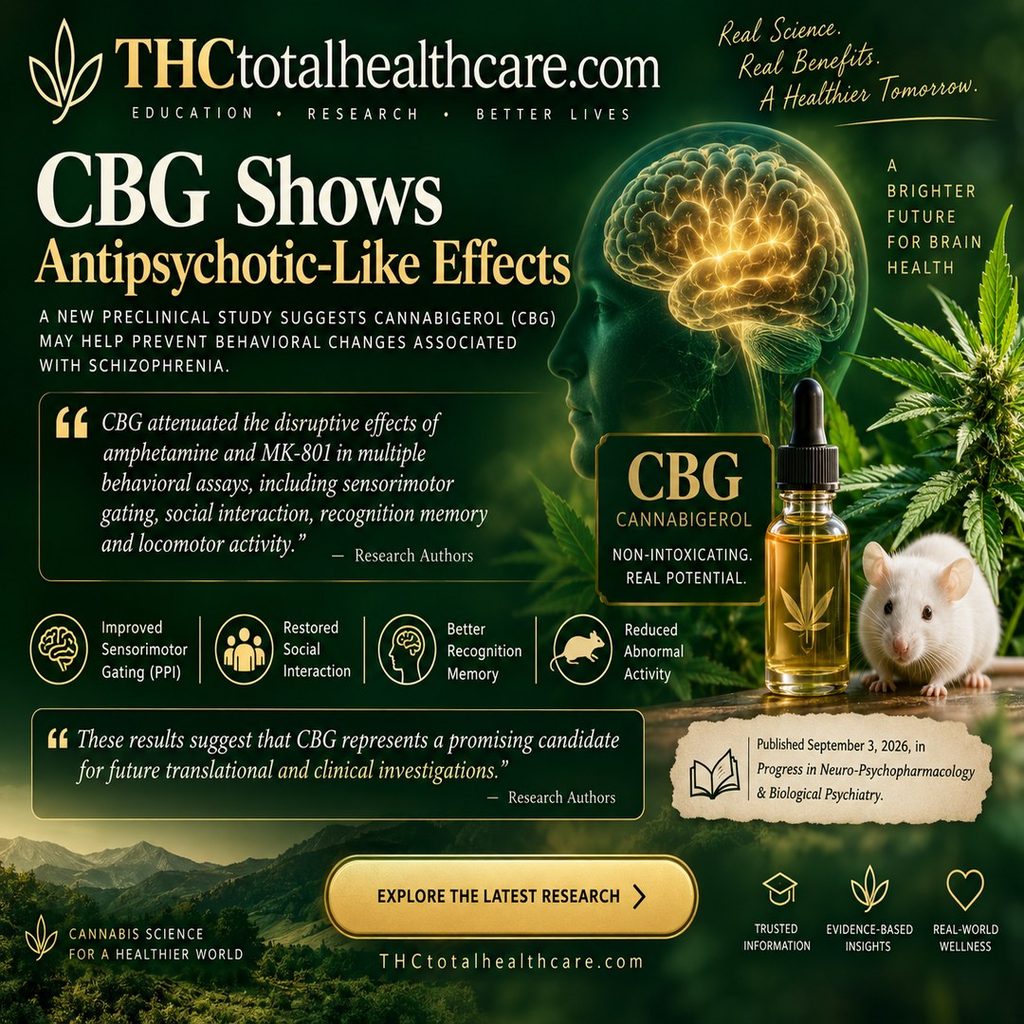
Cannabigerol improves MK-801-induced long-term recognition memory deficit in male rats through cortical TrkB-R signaling independently of changes in BDNF.

Cannabigerol (CBG) is gaining attention for its potential effects on brain function, including memory and cognition.

In this animal study, researchers found that CBG improved a long-term recognition memory deficit induced by MK-801 in male rats. The effect was linked to TrkB receptor signaling in the cortex and appeared to occur independently of changes in BDNF levels.

The findings add to emerging research on CBG’s neurological effects and suggest a potential role in pathways involved in memory impairment.

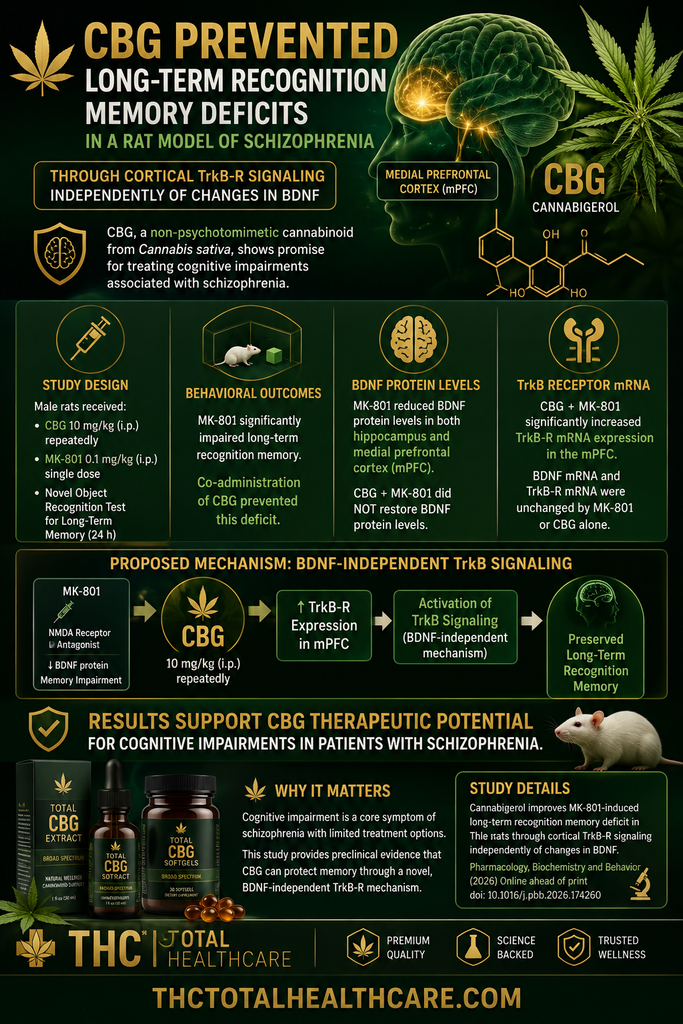
“Interest in the therapeutic potential of cannabigerol (CBG), a non-psychotomimetic cannabinoid derived from Cannabis sativa, has increased recently. However, preclinical studies examining its effects on cognitive impairment, a core symptom domain of schizophrenia, remain limited.

Based on the N-methyl-d-aspartate receptor (NMDA-R) hypofunction hypothesis of schizophrenia, MK-801, a potent NMDA-R antagonist, is widely used as a pharmacological model of schizophrenia that replicates the cognitive impairments observed in patients.

This study investigated whether repeated systemic administration of CBG (10 mg/kg/i.p.) could reverse long-term recognition memory (LTM) impairment induced by a single dose of MK-801 (0.1 mg/kg/i.p.) in male rats, using the novel object recognition paradigm. Additionally, we evaluated whether these effects were associated with changes in BDNF/TrkB receptor (TrkB-R) signaling.

ELISA and quantitative real-time PCR analyses were performed to evaluate BDNF protein levels and BDNF and TrkB-R mRNA expression in the hippocampus and medial prefrontal cortex (mPFC).

MK-801 significantly impaired LTM compared with control group, whereas co-administration of CBG prevented this deficit.

MK-801-induced memory impairment was associated with reduced hippocampal and cortical BDNF protein levels, without changes in BDNF or TrkB-R mRNA expression. CBG and MK-801 combined treatment did not restore BDNF mRNA expression and protein levels although it significantly increased TrkB-R mRNA expression in the mPFC.

These results suggest that activation of TrkB-R signaling through a BDNF-independent mechanism may contribute to the preservation of LTM by CBG.

Our results provide relevant evidence supporting the therapeutic potential of CBG for cognitive impairments associated with schizophrenia.”

https://pubmed.ncbi.nlm.nih.gov/42648374

“Results support CBG therapeutic potential for cognitive impairments in patients with schizophrenia.”

https://www.sciencedirect.com/science/article/abs/pii/S0091305726001152?via%3Dihub

The Paradoxical Effect of Cannabis Use on Cognition in Chronic Psychotic Disorders

Background/objectives: Cannabis use has a particularly high prevalence in individuals with psychotic disorders. Although cannabis use is generally associated with cognitive impairments in the general population, its impact on cognition in psychosis remains controversial. This study aimed to investigate the association between cannabis use and cognitive performance in a cohort of individuals affected by psychotic disorders.

Methods: A total of 105 inpatients with psychotic disorders (mean age: 40.3 years; 34 females) were recruited from the University Hospital Center “Mother Teresa” in Tirana. Data collection included socio-demographic and clinical variables. Cognitive functioning was evaluated using the Montreal Cognitive Assessment (MoCA), while psychopathology was assessed with the Brief Negative Symptom Scale (BNSS), the Calgary Depression Scale for Schizophrenia (CDSS), the Psychotic Symptom Rating Scales (PSYRATS), and the Scale for the Assessment of Thought, Language, and Communication (TLC).

Results: Cannabis users (CU) were more frequently male, younger, and exhibited an earlier onset of psychosis compared to non-users (No-CU). Importantly, CU demonstrated higher MoCA scores, with the most favorable outcomes observed among daily users.

Conclusions: Contrary to the prevailing assumption that cannabis use exacerbates cognitive decline, our findings indicate an unexpected association between cannabis use and preserved cognitive functioning in psychosis. These results underscore the need to consider dosage, frequency, and cannabinoid composition (THC/CBD ratio) when interpreting cannabis-related cognitive outcomes in psychotic disorders.”

https://pubmed.ncbi.nlm.nih.gov/41718389

“the present study highlights that, in certain cases, patients with psychosis who use cannabis may demonstrate relatively preserved or even superior cognitive performance compared with non-using patients. These results raise important clinical and research questions.”

https://www.mdpi.com/1873-149X/33/1/11

Cannabis use and cardiometabolic risk in schizophrenia

Purpose: Metabolic syndrome (MetS) is common in schizophrenia and drives cardiovascular risk. While cannabis use and potency are increasing, the impact of cannabis on cardiometabolic health in schizophrenia remains unclear. This study assessed the association between objectively measured cannabis use and MetS prevalence in a large schizophrenia cohort.

Methods: We conducted a cross-sectional analysis of 988 participants with DSM-IV schizophrenia from the CATIE study. Cannabis use was measured via hair testing for tetrahydrocannabinol (THC), the gold standard for long-term use detection. MetS was defined per International Diabetes Federation criteria using physical and biochemical data. Multivariable logistic regression, adjusting for demographic, clinical, and lifestyle confounders, assessed the association between THC use and MetS.

Results: THC-positive participants (14.8 %) exhibited a significantly lower prevalence of MetS compared to non-users (42.5 % vs. 60.5 %, p < 0.001). After adjusting for confounders including age, sex, ethnicity, smoking, and other substance use, cannabis use remained independently associated with reduced odds of MetS (adjusted OR 0.64, 95 %CI 0.44-0.93, p = 0.02). Among MetS components, cannabis users had significantly lower odds of elevated waist circumference after adjustment (adjusted OR 0.61, 95 %CI 0.41-0.91, p = 0.02). Cannabis use was also associated with lower weight, BMI and triglycerides and higher HDL in unadjusted analyses. No significant differences were found in blood pressure or fasting glucose.

Conclusions: In schizophrenia, cannabis use was associated with lower rates of both metabolic syndrome and central obesity. While these findings support emerging evidence of metabolic differences in cannabis users, the cross-sectional design precludes conclusions regarding causality. Longitudinal studies are needed to clarify long-term metabolic effects and guide targeted interventions.”

https://pubmed.ncbi.nlm.nih.gov/41265115

“Cannabis use is associated with better cardiometabolic health in the general population, with users showing lower fasting insulin and glucose levels, reduced waist circumference, lower BMI, reduced systolic blood pressure (SBP) and higher high-density lipoprotein (HDL) cholesterol compared to non-users.”

“Growing evidence suggests cannabis users with psychotic disorders may have better metabolic health compared to non-users.”

“In summary, our findings demonstrate a significant association between cannabis use and a lower prevalence of metabolic syndrome in individuals with schizophrenia.”

https://linkinghub.elsevier.com/retrieve/pii/S0920996425004037

Unraveling Cannabidiol’s Dual Modulatory Role in Schizophrenia: Network Pharmacology and In Vivo Validation of Neuroinflammatory and Behavioral Modulation

“Schizophrenia (SCZ), a chronic psychiatric disorder, is characterized by cognitive impairment, hallucinations, and delusions, with current antipsychotic treatments offering limited efficacy and considerable side effects.

Cannabidiol (CBD), a non-psychoactive compound from Cannabis sativa, has shown promise in treating neurological and psychiatric conditions, though its precise mechanisms in schizophrenia remain unclear.

Using network pharmacology, this study predicts CBD’s targets and pathways in schizophrenia, highlighting LPS-induced neuroinflammation and implicating 5-HT1AR-MAPK signaling as one potential contributor.

In vitro, CBD (10 mg/kg, i.p.) treatment significantly reduced pro-inflammatory cytokines (e.g., NO, IL-1β, IL-6, TNF-α) and modulated the 5HT1AR-MAPK pathway, including increased 5HT1AR expression and decreased MAPK/ERK1/2 phosphorylation (p < 0.05).

In vivo, CBD alleviated SCZ-like symptoms in a ketamine-induced animal model, reducing anxiety in the open field (p < 0.01) and elevated plus maze tests (p < 0.01), improving spatial memory in the Y-maze (p < 0.01) and social behavior (p < 0.0001) after 5 consecutive days of treatment. Critically, we validated CBD’s central anti-inflammatory effects by demonstrating reduced pro-inflammatory cytokine levels in both plasma and brain tissues (p < 0.05). Further correlation analysis established a direct link between brain cytokine suppression and behavioral improvements, integrating in vitro findings from BV2 microglial cells with in vivo neuroinflammatory and behavioral outcomes.

These findings suggest the potential therapeutic benefits of CBD for SCZ, though further research, particularly clinical trials, is required to validate its efficacy and establish it as a novel therapeutic strategy.”

https://pubmed.ncbi.nlm.nih.gov/41369966

“Cannabidiol (CBD), a non-intoxicating compound found in Cannabis sativa, has emerged as a promising remedy in the therapeutic landscape for a wide array of neuropsychiatric conditions.”

https://link.springer.com/article/10.1007/s12035-025-05608-8

A single dose of cannabidiol modulates the relationship between hippocampal glutamate and learning-related prefrontal activation in individuals at Clinical High Risk of Psychosis

Background: Cannabidiol (CBD) is being studied as a potential intervention for the people at clinical high risk for psychosis (CHR), though the mechanisms underlying its effects are not fully understood. Previous studies indicate that a single dose of CBD can normalize alterations in memory-related brain activation and modulate hippocampal glutamate levels in the early stages of psychosis. This study aimed to examine the acute effects of CBD on the relationship between hippocampal glutamate levels and brain activation during verbal memory in individuals at CHR.

Methods: A total of thirty-three participants (n = 33) at CHR were randomly assigned to receive a single 600 mg dose of CBD (CHR-CBD) or a placebo capsule (CHR-PLB). Age-matched healthy controls (HC) (n = 19) received no study drugs. Participants underwent MRI scanning while performing a verbal learning task, and proton magnetic resonance spectroscopy to measure hippocampal glutamate levels. Effect of group x hippocampal glutamate interactions on brain activation was tested.

Results: CHR-PLB showed positive correlation between hippocampal glutamate levels and dorsolateral prefrontal cortex (dlPFC) (Pcorr. = 0.0039) activation compared to HC during both verbal encoding and recall. Under a single dose of CBD, the glutamate-dlPFC activation relationship was negative and significantly different compared to placebo in CHR individuals (Pcorr. = 0.0001) during both verbal encoding and recall. The reversed correlation in CBD group was also observed in the parahippocampal gyrus (Pcorr. = 0.0022) and amygdala (Pcorr. = 0.0019) during verbal recall.

Conclusions: These findings suggest that CBD may normalise disrupted hippocampal-prefrontal glutamatergic coupling in CHR, highlighting its potential to target the neurochemical mechanisms underlying cognitive impairment.”

https://pubmed.ncbi.nlm.nih.gov/41337954

“To the best of our knowledge, this is the first study to demonstrate that a single dose of CBD may partially attenuate the altered relationship between hippocampal glutamate levels and activation in the prefrontal cortex, amygdala, and parahippocampal regions in individuals at CHR.”

“Single dose of CBD modulates hippocampal glutamate-prefrontal activation coupling in CHR.”

https://www.sciencedirect.com/science/article/abs/pii/S0925492725001507?via%3Dihub

The endocannabinoid system as a therapeutic target in prodromal psychosis: From molecular mechanisms to clinical applications

“This systematic review explores the role of the endocannabinoid system (ECS) in prodromal psychosis and its potential as a therapeutic target.

Following Preferred Reporting Items for Systematic Reviews and Meta-Analyses guidelines, 22 studies published between 2000 and 2025 were analyzed, comprising preclinical research, genetic studies, neuroimaging investigations, and clinical trials.

Converging evidence suggests that ECS alterations precede and potentially contribute to the development of psychotic symptoms, with CB1 receptor modifications and endocannabinoid levels correlating with symptom severity and transition risk to full-blown psychosis.

Neuroimaging studies revealed reduced CB1 receptor availability in key brain regions in high-risk subjects, and intervention studies, particularly with cannabidiol-though its therapeutic mechanisms likely extend beyond ECS modulation to include dopaminergic and other neurotransmitter pathways-have shown promising results.

Proposed mechanisms of action include stress response attenuation, neuroinflammatory modulation, neurodevelopmental stabilization, and normalization of the dopamine-glutamate interface.

Despite limitations of existing studies, primarily small size and short duration, this review provides a solid foundation for developing ECS-targeted interventions as a promising approach to modify disease trajectory during the prodromal phase, potentially offering safer and more effective therapeutic options for individuals at clinical high risk for psychosis.”

https://pubmed.ncbi.nlm.nih.gov/41328544

https://journals.sagepub.com/doi/10.1177/02698811251389574

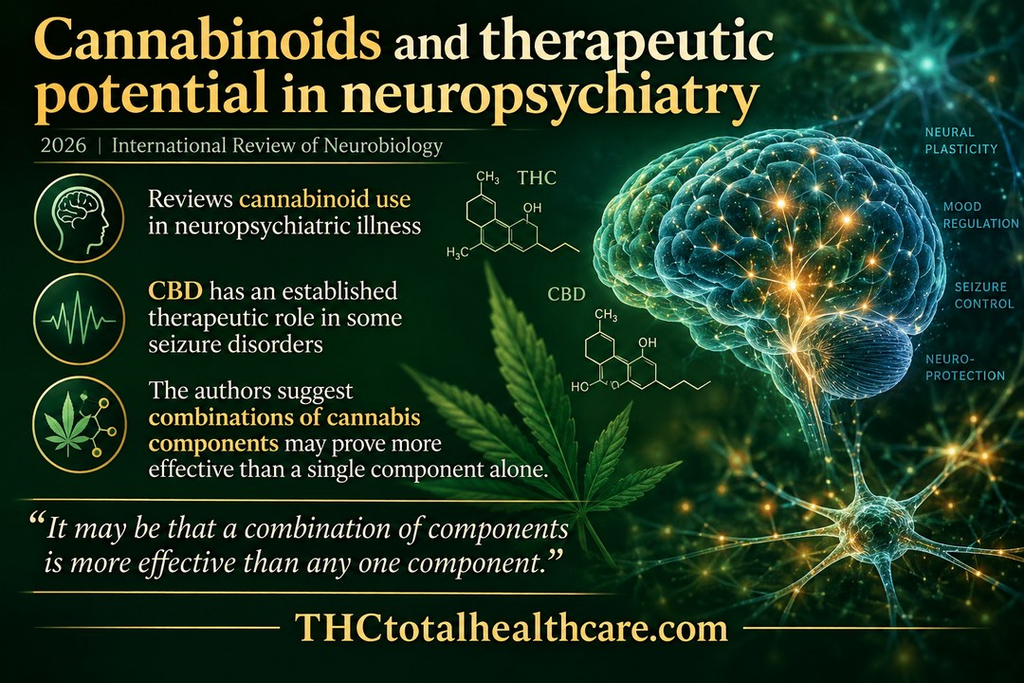
A Balanced Cannabinoids Mixture Protects Neural Stem/progenitor Cells from CoCl2 Induced Injury by Regulating Autophagy and Inflammation: An in Vitro Study

“Although tetrahydrocannabinol (THC) and cannabidiol (CBD) have been individually studied for their neuroprotective roles, few studies have addressed the effects of their balanced 1:1 formulation Satinex (STX) under pathologic conditions like hypoxia. Moreover, the effect of STX on embryonic neural stem/progenitor cells (ENS/PCs) derived from the rat embryonic brain, which are highly vulnerable during early development, remains unexplored.

Considering the pivotal role of hypoxia in numerous neuropathological situations, this study examined the impact of STX on rat ENS/PCs exposed to chemically induced hypoxia.

ENS/PCs were isolated from rat embryos and subjected to hypoxia using 100 µM cobalt (II) chloride hexahydrate (CoCl₂0.6 H₂O) for 48 h. Cytotoxic activity of STX andCoCl2was assessed using the 3-(4,5-Dimethyl-2-thiazolyl)-2,5-diphenyl-2 H-tetrazolium (MTT) assay, while stem cell identity was confirmed via flow cytometry (Nestin, SOX2). STX (0.1 and 0.5 µM) was applied under both normoxic and hypoxic conditions. Expression levels of hypoxia-inducible factor 1-alpha (Hif1α) mRNA, autophagy markers (Beclin-1, microtubule-associated protein 1 light chain 3-II [LC3-II]), and pro-inflammatory proteins nuclear factor kappa B [NF-κB], Toll-like receptor 2 [TLR2], Toll-like receptor 4 [TLR4]) were assessed using reverse transcription polymerase chain reaction (RT-PCR) and western blot techniques following STX treatment.

Based on flow cytometric assays, over 70% of cultivated cells were positive for Nestin and SOX2. Hypoxia significantly reduced cell viability and proliferation, accompanied by increased Hif1α mRNA expression. Treatment with STX (0.1 µM and 0.5 µM) significantly reversed these changes, restoring cell viability and proliferation while reducing Hif1α levels. Hypoxia also elevated autophagy markers (Beclin-1, LC3-II) and pro-inflammatory proteins (NF-κB, TLR2, TLR4), which STX suppressed in a dose-dependent manner.

This study provides novel evidence that STX mitigates hypoxia-induced neural damage by downregulating Hif1α and its downstream inflammatory and autophagic signaling pathways. The use of a clinically relevant cannabinoids mixture and a developmentally sensitive cell model underline the translational potential of balanced THC/CBD formulations in the treatment of hypoxia-related neurodegenerative and neurodevelopmental conditions.”

https://pubmed.ncbi.nlm.nih.gov/41240218

https://link.springer.com/article/10.1007/s12640-025-00770-2

Cannabidiol attenuates behavioral and electrophysiological changes in the MAM model of schizophrenia in male and female rats

pubmed logo

“Schizophrenia (SCZ) is a neurodevelopmental psychiatric disorder that typically emerges in late adolescence or early adulthood. In rats, administration of the DNA-alkylating agent methylazoxymethanol acetate (MAM) on gestational day (GD) 17 induces several features resembling those observed in SCZ patients.

Preclinical and clinical studies suggest that cannabidiol (CBD) has antipsychotic-like effects.

Here, we evaluated whether acute CBD treatment attenuates behavioral deficits and the enhanced dopamine (DA) system activity in the ventral tegmental area (VTA) of adult male and female MAM rats.

Pregnant rats received saline or MAM (20 mg/kg) on GD17. In adulthood, offspring were tested in the elevated plus-maze (EPM), novel object recognition (NOR) test, and locomotor responses to the NMDA receptor antagonist MK-801. The in vivo electrophysiological activity of VTA DA neurons was also recorded. CBD (60 mg/kg) was administered 1 h before each behavioral test and electrophysiological recording.

Male and female MAM rats exhibited anxiety-like behavior in the EPM, which was not reversed by CBD. In the NOR test, CBD reversed memory impairment in male MAM rats, whereas female MAM rats showed no deficits. Neither male nor female MAM rats exhibited increased locomotor responses to MK-801, and CBD did not affect this behavior. Both male and female MAM rats showed increased VTA DA neuron population activity, which was reversed by CBD in both sexes.

Our findings indicate that CBD attenuates cognitive deficits and enhanced DA system activity in the MAM model, supporting the hypothesis that CBD produces antipsychotic-like effects.”

https://pubmed.ncbi.nlm.nih.gov/41118689/

“Cannabidiol (CBD) is a non-psychotomimetic compound of the Cannabis sativa plant and has demonstrated antipsychotic-like properties in clinical (Leweke et al., 2012, Leweke et al., 2021; McGuire et al., 2018; Zuardi et al., 2006) and preclinical studies employing different animal models of SCZ (Gomes et al., 2015a, Gomes et al., 2015b; Long et al., 2012; Osborne et al., 2019; Osborne et al., 2017b; Rodrigues da Silva et al., 2020), including the MAM model (Stark et al., 2019, Stark et al., 2020; Thériault et al., 2021).”

https://www.sciencedirect.com/science/article/abs/pii/S0920996425003639?via%3Dihub

Oromucosal as an Alternative Method for Administration of Cannabis Products in Rodents

pubmed logo

“Oral administration of drugs in laboratory rodents such as rats is conventionally performed using the gavage technique. Despite effectiveness, gavage can induce distress associated with restraint, especially following repeated animal handling.

To mitigate these adverse effects and reduce morbidity associated with traditional methods, we explored oromucosal/buccal administration of cannabidiol (CBD)-enriched Cannabis extract.

In this method, male rats were treated daily for 15 days with medium-chain triglycerides (TCM) derived from coconut oil or CBD-enriched Cannabis extract. Each treatment was administered individually while animals were gently immobilized using an affectionate touch technique. The administration involved the use of a micropipette to apply the oily formulation directly into the oral mucosa. The dosage was calculated based on the CBD concentration in the Cannabis extract, standardized at 3 mg/kg/day. To ensure accuracy, animals were weighed daily, allowing for dose adjustments in accordance with weight changes over the treatment period. This method offers non-invasive and stress-reducing treatment, potentially improving animal welfare in experimental settings.

The treatment with CBD-enriched Cannabis extract was safe, and the analysis of the hippocampus of these animals’ showed alterations in the expression levels of GluA1 and GFAP proteins, which are directly associated with glutamatergic receptor functionality and neuroinflammation, respectively. This suggests that Cannabis extract could be applied in pathological conditions where glutamatergic excitotoxicity and astrogliosis are observed.”

https://pubmed.ncbi.nlm.nih.gov/40920655/

https://app.jove.com/t/68104/oromucosal-as-an-alternative-method-for-administration-cannabis