
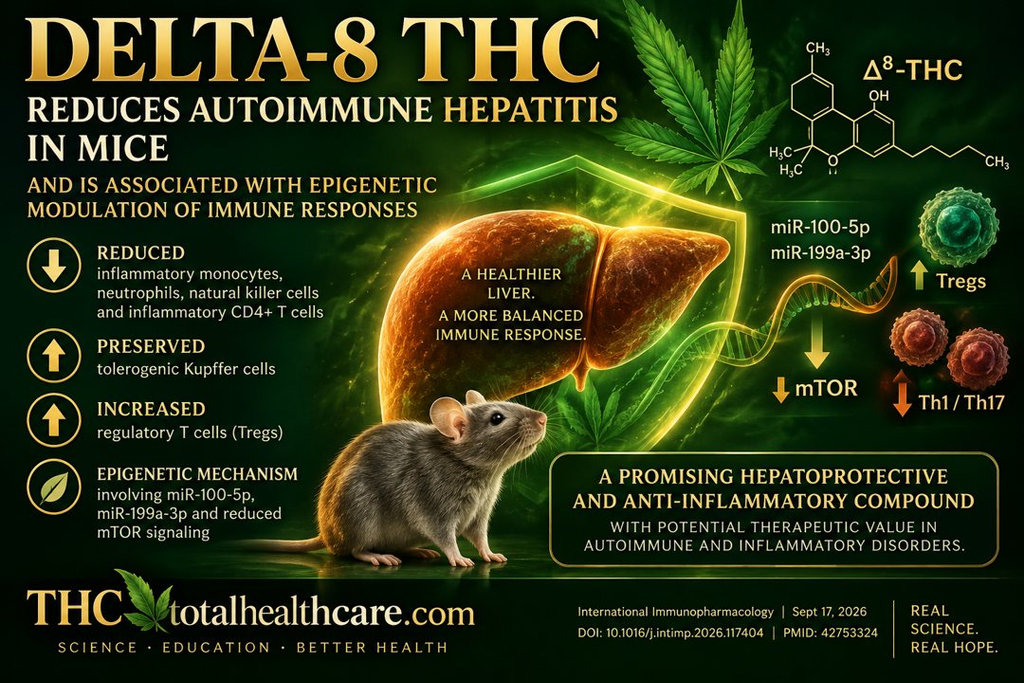
Delta-8-tetrahydrocannabinol ameliorates murine autoimmune hepatitis and is associated with epigenetic modulation of immune responses

A new 2026 study published in International Immunopharmacology found that delta-8-tetrahydrocannabinol (Δ8-THC) significantly reduced autoimmune hepatitis in mice while altering the immune responses responsible for liver inflammation. Researchers found that Δ8-THC reduced inflammatory immune cells and helped preserve immune cells involved in protecting the liver.

The researchers also uncovered a possible mechanism. Δ8-THC increased two microRNAs, miR-100-5p and miR-199a-3p, which suppressed mTOR signaling and shifted CD4+ T-cell development away from inflammatory Th1 and Th17 cells and toward regulatory T cells that help control excessive immune activity.

The authors concluded that Δ8-THC showed both hepatoprotective and anti-inflammatory activity and highlighted its potential therapeutic value for autoimmune and inflammatory disorders. The study adds new evidence that cannabinoids may influence disease not only by reducing inflammation, but by changing the molecular and epigenetic pathways that regulate immune responses.

“Aim of the study: Cannabinoids have gained attention for their ability to modulate immune responses and suppress inflammation. However, the effect of Δ8-THC, a minor cannabinoid found in Cannabis, has not been explored in autoimmune hepatitis. To address knowledge gap, the present study aimed to investigate the hepatoprotective and immunoregulatory properties of Δ8-THC in experimental autoimmune hepatitis and to identify molecular and epigenetic mechanisms underlying its immunoregulatory effects.

Methods: miRNA sequencing and flow cytometric analysis were performed using hepatic immune cells from female C57BL/6 mice treated with ConA (12.5 mg/kg, i.v.) and Δ8-THC (20 mg/kg, i.p.). Differential miRNA expressions were analyzed using the edgeR, and miRNA targets were predicted using Ingenuity Pathway Analysis. Target gene expression was validated by qRT-PCR and Western blot. Functional assays including miRNA mimic/inhibitor transfection and CD4+ T-cell differentiation were performed to validate target gene regulation by miRNAs and its role in CD4+ T-cell differentiation.

Results: Δ8-THC markedly suppressed ConA-induced autoimmune hepatitis by restoring immune homeostasis within the liver through suppression of inflammatory monocytes, neutrophils, and natural killer cells, and preservation of tolerogenic Kupffer cells. In addition, Δ8-THC reshaped the hepatic lymphoid compartment, diminishing inflammatory CD4+ T-cell responses while favoring regulatory T-cell expansion. These effects were associated with the preservation of miR-100-5p and miR-199a-3p expression in the liver, whereas both miRNAs were markedly downregulated following ConA treatment. mTOR, a central regulator of T-cell differentiation, was identified as a target of these miRNAs. Consistent with these findings, Δ8-THC reduced mTOR expression and upregulated hepatoprotective miRNAs in both in vivo and in vitro models. Functional analyses with miRNA overexpression and inhibition approaches verified the direct regulation of mTOR by these miRNAs in T cells and RAW 264.7 cells. In naïve CD4+ T cells, miRNA gain- and loss-of-function experiments demonstrated that miR-100-5p/miR-199a-3p-mediated suppression of mTOR promotes regulatory T-cell differentiation while limiting Th1 and Th17 polarization.

Conclusion: Our results identify Δ8-THC as a promising hepatoprotective and anti-inflammatory compound that ameliorates ConA-induced autoimmune hepatitis by influencing CD4+ T-cell differentiation potentially through the miR-100-5p/miR-199a-3p-mTOR axis, highlighting its potential therapeutic value in autoimmune and inflammatory disorders.”

https://pubmed.ncbi.nlm.nih.gov/42753324

“In conclusion, our findings suggest that Δ8-THC can mitigate ConA-induced hepatitis, potentially through epigenetic regulation involving microRNAs. Specifically, Δ8-THC improved liver function and reduced systemic and intrahepatic inflammation in ConA-exposed mice. These effects were associated with increased expression of miR-100-5p and miR-199a-3p in the liver, suggesting that these miRNAs may regulate mTOR signaling and contribute to the suppression of proinflammatory responses and promotion of anti-inflammatory pathways. Functional studies supported the involvement of these miRNAs in the regulation of mTOR signaling, CD4+ T-cell differentiation, and inflammatory responses.”

https://www.sciencedirect.com/science/article/pii/S1567576926012518?via%3Dihub

Cannabis Use Is Inversely Associated with Metabolic Disorders in Hepatitis C-Infected Patients (ANRS CO22 Hepather Cohort)

jcm-logo

“Background and aims: Hepatitis C virus (HCV) infection is associated with the onset of metabolic disorders which constitute risk factors for liver disease progression. Their impact may persist after the HCV infection has been cured. Cannabis use is associated with a lower risk of obesity and diabetes in both general and HCV populations. The associations between cannabis use and both dyslipidemia and hypertension have not yet been studied in persons with chronic HCV infection.

Methods: Using cross-sectional data from the French ANRS CO22 Hepather cohort, we used regression models to test for an inverse relationship between cannabis use and (i) dyslipidemia, (ii) hypertension, and (iii) the total number of metabolic disorders.

Results: Among the 6364 participants in the study population, both former and current cannabis use were associated with a lower risk of hypertension and fewer metabolic disorders. These results were independent of central obesity. Cannabis use was not associated with dyslipidemia.

Conclusions: In people chronically infected with HCV, cannabis use was associated with a lower risk of hypertension and a lower number of metabolic disorders. Post-HCV cure studies are needed to confirm these findings using longitudinal data and to test whether they translate into reduced mortality in this population.”

https://pubmed.ncbi.nlm.nih.gov/36294456/

“In a large cohort of people with chronic HCV infection living in France, current or former cannabis use was associated with a lower risk of hypertension and a lower number of metabolic disorders.”

https://www.mdpi.com/2077-0383/11/20/6135/htm

Cannabis Use as a Protective Factor Against Overweight in HIV-Hepatitis C Virus Co-Infected People (ANRS CO13 HEPAVIH Cohort)

Go to AIDS Education and Prevention

“Overweight is increasingly prevalent in people living with HIV (PLWH), and is a high risk factor for metabolic disorders in this population. PLWH co-infected with hepatitis C virus (HCV) have a higher risk of metabolic disorders than their mono-infected counterparts.

The putative relationship between cannabis use and body weight found in the general population has never been documented in HIV-HCV co-infected people. We tested whether cannabis use is associated with body mass index (BMI), overweight, and underweight in HCV co-infected PLWH (N = 992). Mixed-effects linear and logistic regression models were used to study the association between cannabis use and the three outcomes over time.

After multivariable adjustment, cannabis use was inversely associated with BMI. Cannabis use was associated with a lower and higher risk of overweight and underweight, respectively. Cannabis use should be assessed and taken into account in the clinical management of the HIV-HCV co-infected population.”

https://pubmed.ncbi.nlm.nih.gov/35994579/

https://guilfordjournals.com/doi/10.1521/aeap.2022.34.4.272

Cannabis use as a factor of lower corpulence in hepatitis C-infected patients: results from the ANRS CO22 Hepather cohort

“Background: Patients with chronic hepatitis C virus (HCV) infection are at greater risk of developing metabolic disorders. Obesity is a major risk factor for these disorders, and therefore, managing body weight is crucial. Cannabis use, which is common in these patients, has been associated with lower corpulence in various populations. However, this relationship has not yet been studied in persons with chronic HCV infection.

Methods: Using baseline data from the French ANRS CO22 Hepather cohort, we used binary logistic and multinomial logistic regression models to test for an inverse relationship between cannabis use (former/current) and (i) central obesity (i.e., large waist circumference) and (ii) overweight and obesity (i.e., elevated body mass index (BMI)) in patients from the cohort who had chronic HCV infection. We also tested for relationships between cannabis use and both waist circumference and BMI as continuous variables, using linear regression models.

Results: Among the 6348 participants in the study population, 55% had central obesity, 13.7% had obesity according to their BMI, and 12.4% were current cannabis users. After multivariable adjustment, current cannabis use was associated with lower risk of central obesity (adjusted odds ratio, aOR [95% confidence interval, CI]: 0.45 [0.37-0.55]), BMI-based obesity (adjusted relative risk ratio (aRRR) [95% CI]: 0.27 [0.19-0.39]), and overweight (aRRR [95% CI]: 0.47 [0.38-0.59]). This was also true for former use, but to a lesser extent. Former and current cannabis use were inversely associated with waist circumference and BMI.

Conclusions: We found that former and, to a greater extent, current cannabis use were consistently associated with smaller waist circumference, lower BMI, and lower risks of overweight, obesity, and central obesity in patients with chronic HCV infection. Longitudinal studies are needed to confirm these relationships and to assess the effect of cannabis use on corpulence and liver outcomes after HCV cure.”

https://pubmed.ncbi.nlm.nih.gov/35690798/

“To conclude, we found that both former and, to a greater extent, current cannabis use were consistently associated with lower waist circumference, lower BMI values, and lower risks of overweight, obesity, and central obesity in patients with chronic HCV infection.”

https://jcannabisresearch.biomedcentral.com/articles/10.1186/s42238-022-00138-9


Part of Springer Nature

Cannabis Use Is Inversely Associated with Overweight and Obesity in Hepatitis B Virus-Infected Patients (ANRS CO22 Hepather Cohort)

View details for Cannabis and Cannabinoid Research cover image“Chronic hepatitis B virus (HBV) infection may evolve into cirrhosis and hepatocellular carcinoma, and this progression may be accelerated by specific risk factors, including overweight and obesity. Although evidence for a protective effect of cannabis use on elevated body weight has been found for other populations, no data are available for HBV-infected patients. 
Aims: We aimed to identify risk factors (including cannabis use) for overweight and obesity in patients with HBV chronic infection. 

Methods: Using baseline data from the French ANRS CO22 Hepather cohort, we performed two separate analyses, one using “central obesity” (based on waist circumference) and the other “overweight” and “obesity” (based on body mass index) as outcomes. Logistic and multinomial regressions were used to model central obesity and overweight/obesity, respectively. 

Results: Among the 3706 patients in the study population, 50.8% had central obesity, 34.7% overweight, and 14.4% obesity. After multivariable adjustment, current cannabis use was associated with a 59% lower risk of central obesity compared with no lifetime use (adjusted odds ratio [95% CI]: 0.41 [0.24 to 0.70]). It was also associated with a 54% and 84% lower risk of overweight (adjusted relative risk ratio [95% CI]: 0.46 [0.27 to 0.76]) and obesity (0.16 [0.04 to 0.67]), respectively. 

Conclusions: Cannabis use was associated with lower risks of overweight and obesity in patients with HBV chronic infection. Future studies should test whether these potential benefits of cannabis and cannabinoid use translate into reduced liver disease progression in this high-risk population.”

https://pubmed.ncbi.nlm.nih.gov/34648718/

https://www.liebertpub.com/doi/10.1089/can.2021.0094

The Endocannabinoid System: A Potential Target for the Treatment of Various Diseases

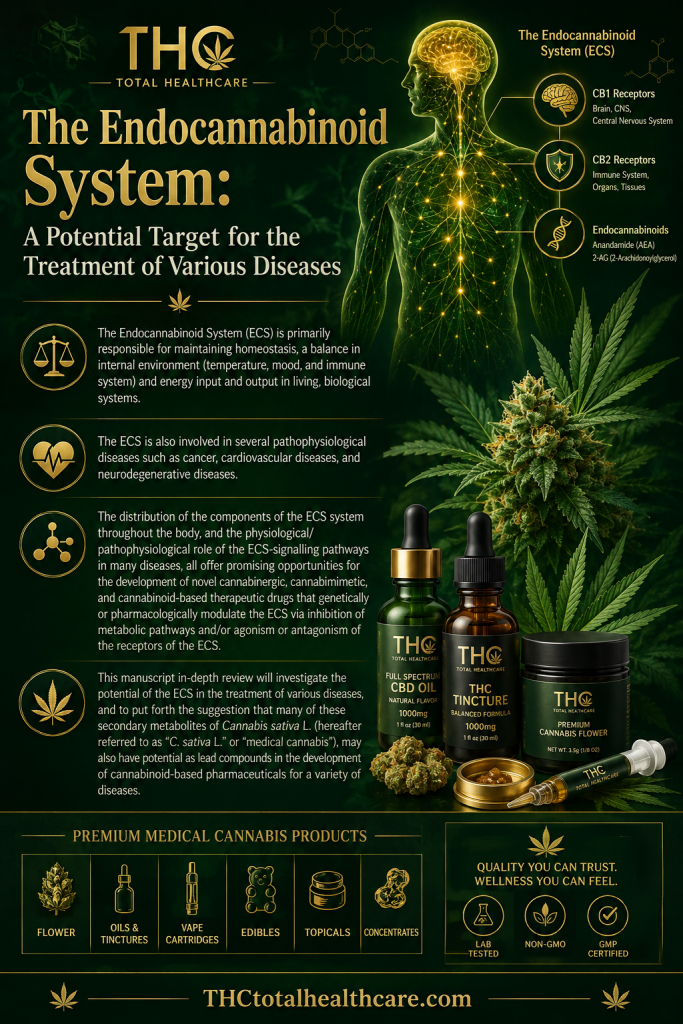
ijms-logo“The Endocannabinoid System (ECS) is primarily responsible for maintaining homeostasis, a balance in internal environment (temperature, mood, and immune system) and energy input and output in living, biological systems.

In addition to regulating physiological processes, the ECS directly influences anxiety, feeding behaviour/appetite, emotional behaviour, depression, nervous functions, neurogenesis, neuroprotection, reward, cognition, learning, memory, pain sensation, fertility, pregnancy, and pre-and post-natal development.

The ECS is also involved in several pathophysiological diseases such as cancer, cardiovascular diseases, and neurodegenerative diseases. In recent years, genetic and pharmacological manipulation of the ECS has gained significant interest in medicine, research, and drug discovery and development.

The distribution of the components of the ECS system throughout the body, and the physiological/pathophysiological role of the ECS-signalling pathways in many diseases, all offer promising opportunities for the development of novel cannabinergic, cannabimimetic, and cannabinoid-based therapeutic drugs that genetically or pharmacologically modulate the ECS via inhibition of metabolic pathways and/or agonism or antagonism of the receptors of the ECS. This modulation results in the differential expression/activity of the components of the ECS that may be beneficial in the treatment of a number of diseases.

This manuscript in-depth review will investigate the potential of the ECS in the treatment of various diseases, and to put forth the suggestion that many of these secondary metabolites of Cannabis sativa L. (hereafter referred to as “C. sativa L.” or “medical cannabis”), may also have potential as lead compounds in the development of cannabinoid-based pharmaceuticals for a variety of diseases.”

https://pubmed.ncbi.nlm.nih.gov/34502379/

https://www.mdpi.com/1422-0067/22/17/9472

“Cannabis sativa L. as a Natural Drug Meeting the Criteria of a Multitarget Approach to Treatment”

https://www.ncbi.nlm.nih.gov/pmc/articles/PMC7830475/

Cannabis use is associated with a lower risk of diabetes in chronic hepatitis C-infected patients (ANRS CO22 Hepather cohort)

 Medscape | J Viral Hepat - Content Listing“Chronic hepatitis C virus (HCV) infection is a risk factor of insulin resistance, and HCV-infected patients are at a high risk of developing diabetes.
In the general population, research has shown the potential benefit of cannabis use for the prevention of diabetes and related metabolic disorders.

We aimed to test whether cannabis use is associated with a lower risk of diabetes in chronic HCV-infected patients.

After multivariable adjustment, current (AOR [95%CI]: 0.49 [0.38-0.63]) and former (0.81 [0.67-0.98], p<.001) cannabis use were both associated with a reduced odds of diabetes. Conversely, male gender, tobacco use, elevated BMI, poverty, being a migrant and advanced fibrosis were associated with increased odds of diabetes. The association between cannabis use and diabetes was maintained in the stratified analysis.

In this large cross-sectional study of chronic HCV-infected patients, cannabis use was associated with a lower risk of diabetes independently of clinical and socio-behavioral factors. Further studies are needed to elucidate a potential causal link and shed light on cannabis compounds and mechanisms involved in this relationship.”

https://pubmed.ncbi.nlm.nih.gov/32810343/

Cannabidiol (CBD) Consumption and Perceived Impact on Extrahepatic Symptoms in Patients with Autoimmune Hepatitis.

 “Utilization and safety of cannabidiol (CBD) in patients with autoimmune hepatitis (AIH) are currently unknown.

We aimed to identify the frequency of CBD use, impact on symptoms, and safety profile.

The most common reason cited for CBD use was pain (68%), poor sleep (62%), and fatigue (38%). Most respondents using CBD for these symptoms reported a significant improvement in pain (82%), sleep (87%), and fatigue (61%).

In ever CBD users, 17.3% were able to stop a prescription medication because of CBD use: pain medication (47%), immunosuppression (24%), and sleep aids (12%).

Side effects attributed to CBD use were reported in 3% of CBD users, yet there were no reported emergency department visits or hospitalizations.

CBD use was not uncommon in patients with AIH, and its use was associated with reports of improvement in extrahepatic symptoms.”

https://www.ncbi.nlm.nih.gov/pubmed/31363952

https://link.springer.com/article/10.1007%2Fs10620-019-05756-7

HCV-Related Mortality Among HIV/HCV Co-infected Patients: The Importance of Behaviors in the HCV Cure Era (ANRS CO13 HEPAVIH Cohort).

 “Mortality among individuals co-infected with HIV and hepatitis C virus (HCV) is relatively high. We evaluated the association between psychoactive substance use and both HCV and non-HCV mortality in HIV/HCV co-infected patients in France, using Fine and Gray’s competing-risk model adjusted for socio-demographic, clinical predictors and confounding factors, while accounting for competing causes of death. Over a 5-year median follow-up period, 77 deaths occurred among 1028 patients.

Regular/daily cannabis use, elevated coffee intake, and not currently smoking were independently associated with reduced HCV-mortality (adjusted sub-hazard ratio [95% CI] 0.28 [0.10-0.83], 0.38 [0.15-0.95], and 0.28 [0.10-0.79], respectively). Obesity and severe thinness were associated with increased HCV-mortality (2.44 [1.00-5.93] and 7.25 [2.22-23.6] versus normal weight, respectively). Regular binge drinking was associated with increased non-HCV-mortality (2.19 [1.10-4.37]). Further research is needed to understand the causal mechanisms involved.

People living with HIV/HCV co-infection should be referred for tobacco, alcohol and weight control interventions and potential benefits of cannabis-based therapies investigated.”

https://www.ncbi.nlm.nih.gov/pubmed/31286317

https://link.springer.com/article/10.1007%2Fs10461-019-02585-7

Reduced Incidence and Better Liver Disease Outcomes among Chronic HCV Infected Patients Who Consume Cannabis.

“The effect of cannabis use on chronic liver disease (CLD) from Hepatitis C Virus (HCV) infection, the most common cause of CLD, has been controversial. Here, we investigated the impact of cannabis use on the prevalence of CLD among HCV infected individuals. Our study revealed that cannabis users (CUs) had decreased prevalence of liver cirrhosis, unfavorable discharge disposition, and lower total health care cost versus, compared to noncannabis users (NCUs). Among CUs, dependent cannabis use was associated with lower prevalence of liver cirrhosis, compared to nondependent use.

CONCLUSIONS:

Our findings suggest that cannabis use is associated with decreased incidence of liver cirrhosis, but no change in mortality nor LOS among HCV patients. These novel observations warrant further molecular mechanistic studies.” https://www.ncbi.nlm.nih.gov/pubmed/30345261]]>
