Toxic and repellent effects of hemp leaf extracts and cannabidiol against adult female yellow fever mosquitoes, Aedes aegypti

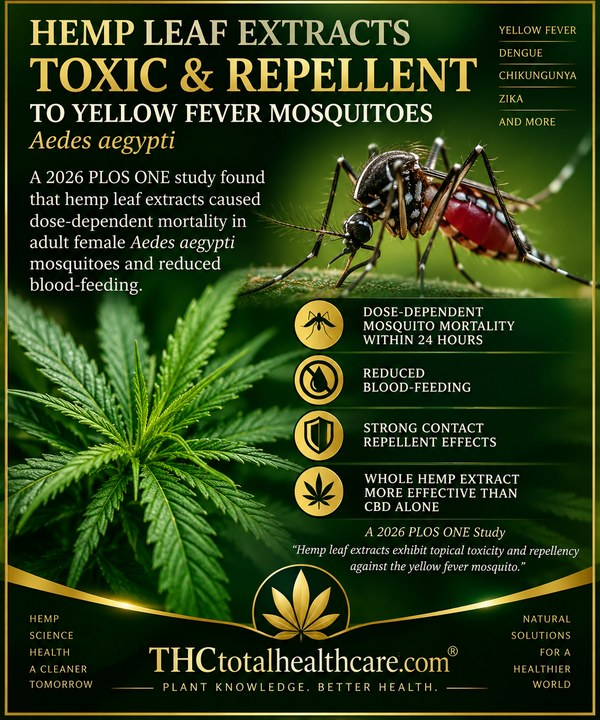
A 2026 study published in PLOS ONE found that hemp leaf extracts were both toxic and repellent to adult female Aedes aegypti mosquitoes, the species responsible for transmitting diseases including yellow fever, dengue and chikungunya. Researchers observed dose-dependent mosquito mortality within 24 hours after direct exposure to the hemp extract.

The hemp extract also reduced blood-feeding and produced strong contact-repellent effects. Importantly, isolated cannabidiol (CBD) did not reproduce the full activity of the whole extract, suggesting that other cannabinoids, terpenes or additional hemp compounds may contribute to the effect.

The findings add to growing research into hemp-derived compounds as potential plant-based tools for insect and mosquito control. The authors concluded that hemp leaf extracts showed both topical toxicity and repellency against yellow fever mosquitoes, with effects that could not be duplicated by CBD alone.

“Hemp (Cannabis sativa) derived products have emerged as potential sources of novel biopesticides.

We recently demonstrated that a hemp leaf extract was toxic to larvae of the yellow fever mosquito Aedes aegypti, and that cannabidiol (CBD) was the primary larvicidal component of the extract.

Here we evaluated the toxic and repellent effects of a hemp leaf extract and CBD against adult female Ae. aegypti.

Toxicity was assessed using an acute topical assay in which mosquitoes received a 500 nL application to the thorax and mortality was recorded at 24 h. Repellency was then evaluated using two complementary bioassays: (i) a no-choice membrane blood-feeding assay to quantify feeding deterrence, and (ii) a mosquito airborne repellency test (MART) to assess spatial repellency.

Topical application of CBD-rich hemp leaf extract induced dose-dependent mortality in adult Ae. aegypti with a LD50 of 22.13 µg/mosquito at 24 h. When CBD isolate was tested at its equivalent doses in the extract, it caused significantly lower mortality than the hemp extract.

In the membrane blood-feeding repellency assay, the hemp leaf extract repelled mosquitoes in a dose-dependent manner, whereas CBD produced weaker effects even at higher equivalent doses. In the MART assay, the hemp extract did not elicit spatial repellency, suggesting low volatility of the repellent compounds.

Taken together, our results demonstrate that CBD does not fully explain the adulticidal or repellent effects of the CBD-rich hemp leaf extract against adult female Ae. aegypti suggesting that other compounds contribute to the bioactivity of hemp leaf extracts against adult female mosquitoes.”

https://pubmed.ncbi.nlm.nih.gov/42743102

“This study demonstrates that hemp leaf extracts exhibit topical toxicity and repellency against the yellow fever mosquito, Ae. aegypti, and that these effects cannot be duplicated by CBD alone. The greater toxicity of the hemp leaf extract compared to the CBD isolate suggests important contributions by other compounds in the extracts. When repellency of the extract or CBD was evaluated, mosquitoes were only repelled when direct contact with the treated surface was allowed. Nevertheless, the hemp leaf extract was more effective than the CBD isolate, again pointing to the involvement of other compounds in adult repellency.

Our findings advance our understanding of the potential uses of hemp and CBD against adult female Ae. aegypti. Identifying the additional components of the leaf extract that contribute to toxicity and repellency in adult female mosquitoes will be essential for evaluating the potential of hemp-based products in integrated mosquito management strategies. In addition, future research evaluating the human and environmental safety of using hemp-derived products as biopesticides is needed.”

https://journals.plos.org/plosone/article?id=10.1371/journal.pone.0354696
Bioactive Compounds and In Vitro Antibacterial Activity of Hemp Leaves and Inflorescences as Potential Functional Feed Ingredients for Canine Nutrition

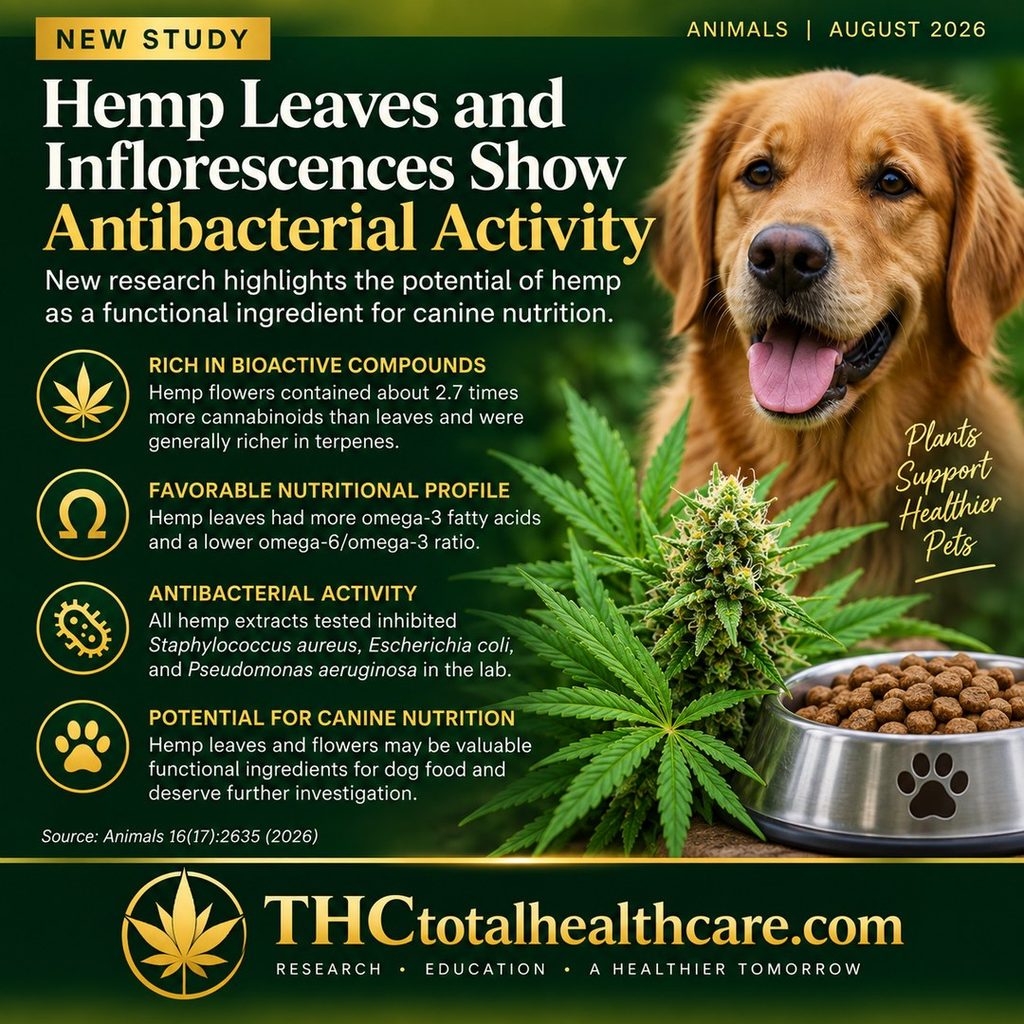
Hemp may have value far beyond its traditional uses. A 2026 study examining hemp leaves and inflorescences found that both plant parts contain bioactive compounds with potential nutritional value, while extracts from the plants also demonstrated antibacterial activity against several important bacterial species.

Researchers found that hemp flowers were especially rich in cannabinoids and terpenes, while the leaves offered a favorable fatty-acid profile. In laboratory testing, hemp extracts showed activity against Staphylococcus aureus, Escherichia coli, and Pseudomonas aeruginosa, highlighting another potential use for compounds naturally produced by the cannabis plant.

The researchers suggest that hemp leaves and flowers deserve further investigation as functional ingredients in canine nutrition. The findings add to growing evidence that parts of the cannabis plant often treated as agricultural byproducts may contain valuable nutritional and biologically active compounds.

“Hemp (Cannabis sativa L.) inflorescences have been extensively characterized for their bioactive compounds, whereas less information is available on hemp leaves despite their potential as a source of nutrients and phytochemicals.

This study compared leaves and inflorescences of four organically grown hemp cultivars (Finola, Futura 75, Dioica, and Kompolti) in terms of cannabinoid, terpene, and fatty acid profiles, lipid quality indices, and in vitro antibacterial activity.

Antibacterial activity against Staphylococcus aureus, Escherichia coli, and Pseudomonas aeruginosa was evaluated using MIC, MBC, and time-kill assays. Total cannabinoid content was approximately 2.7-fold higher in inflorescences than in leaves, which were also generally richer in terpenes. Leaves showed a more favorable fatty acid profile, with higher n-3 polyunsaturated fatty acid proportions and a lower n-6/n-3 ratio.

All extracts exhibited antibacterial activity. Among the tested bacteria, S. aureus was the most susceptible to the hemp extracts, with both growth inhibition and bactericidal activity observed at the lowest tested concentration (MIC/MBC = 0.005%), compared with 0.625% for E. coli and 1.25-2.5% for P. aeruginosa, depending on the extract. Finola and Kompolti inflorescence extracts showed the fastest bactericidal activity against S. aureus. 

These findings demonstrate distinct and complementary characteristics of hemp leaves and inflorescences and provide a basis for further investigation of their potential relevance to canine nutrition.”

https://pubmed.ncbi.nlm.nih.gov/42738424

“The pet food industry is increasingly looking for natural ingredients that can improve both the nutritional value and microbiological safety of dog diets while making better use of agricultural resources. Industrial hemp cultivation generates large amounts of leaves that are often underutilized, although they contain valuable natural compounds. This study compared hemp leaves and inflorescences from four industrial hemp cultivars to determine whether these plant materials could be useful in canine nutrition.

The results showed that leaves provide a favorable fatty acid profile, whereas inflorescences are richer in naturally occurring plant compounds such as cannabinoids and terpenes. Extracts from both plant parts also inhibited the growth of bacteria under laboratory conditions. These findings suggest that different hemp plant parts may have complementary roles as functional ingredients in dog foods while supporting more sustainable use of hemp biomass. Further studies in complete diets and feeding trials are needed before practical application.”

https://www.mdpi.com/2076-2615/16/17/2635

Hempseed (Cannabis sativa) offers effective alternative over statins in ameliorating hypercholesterolemia associated nephropathy

“A direct link between hypercholesterolemia (HC) and renal pathologies has been established. Statins, the drugs of choice for HC management, have been associated with various side effects and toxicities, including nephropathy and other renal insults. Thus, natural dietary products based-alternative strategies for HC and associated pathologies are being considered.

Objectives: Based on the unique nutritional composition and numerous health benefits of Hempseeds (Cannabis sativa), currently the potential anti-inflammatory and redox modulatory effects of hempseeds lipid extract (HEMP) against HC associated renal damage were evaluated and compared with statins (Simvastatin) in HFD induced experimental model of HC in rats.

Results: Not only, HEMP administration improved the lipid profiles and morphological signs of HC, but it also was safe compared to Simvastatin in terms of hepatic and renal function markers. Further, changes in renal histoarchitecture, biochemical markers of oxidative stress, and expression profiles of lipid metabolism and inflammatory pathways (Cox-1/2, PGDS, PGES) revealed that HEMP positively modulating the redox homeostasis activated the resolution pathways against HC associated renal insults.

Conclusion: The outcomes of the current study indicated HEMP’s ameliorative and therapeutic potential against hypercholesterolemia-associated nephropathies and other systemic effects.”

https://pubmed.ncbi.nlm.nih.gov/33861983/

Clinical Biochemistry


Cannabis, a Miracle Drug with Polyvalent Therapeutic Utility: Preclinical and Clinical-Based Evidence

/WebMaterial/ShowPic/1319420“Cannabis sativa L. is an annual herbaceous dioecious plant which was first cultivated by agricultural human societies in Asia. Over the period of time, various parts of the plant like leaf, flower, and seed were used for recreational as well as therapeutic purposes. The main chemical components of Cannabis sativa are termed as cannabinoids, among them the key psychoactive constituent is Δ-9-tetrahydrocannabinol and cannabidiol (CBD) as active nonpsychotic constituent. Upon doing extensive literature review, it was found that cannabis has been widely studied for a number of disorders. Very recently, a pure CBD formulation, named Epidiolex, got a green flag from both United States Food and Drug Administration and Drug Enforcement Administration for 2 rare types of epilepsies. This laid a milestone in medical cannabis research.

This review intends to give a basic and extensive assessment, from past till present, of the ethnological, plant, chemical, pharmacological, and legal aspects of C. sativa. Further, this review contemplates the evidence the studies obtained of cannabis components on Alzheimer’s, Parkinson’s, amyotrophic lateral sclerosis, multiple sclerosis, emesis, epilepsy, chronic pain, and cancer as a cytotoxic agent as well as a palliative therapy. The assessment in this study was done by reviewing in extensive details from studies on historical importance, ethnopharmacological aspects, and legal grounds of C. sativa from extensive literature available on the scientific databases, with a vision for elevating further pharmaceutical research to investigate its total potential as a therapeutic agent.”

https://pubmed.ncbi.nlm.nih.gov/34676349/

“This study has analyzed and reviewed the historical, botanical, chemical, ethnopharmacological, and legal aspects of C. sativa from the first human use to the present medical applications with an analysis of its multiple therapeutic applications for various diseased conditions in the contemporary scientific context. There is an abundance of support for its several medicative uses as well as a possible benefit in various diseased conditions. Extensive pharmacological examination is still needed to better understand the clinical significance and uses of active cannabinoids in the treatment and prevention of chronic diseases. Also, cannabis can be chemically standardized and under prescription can be used. With the majority of the United States currently legalizing medicinal cannabis and/or restricted CBD-only use, physicians need to be educated on the history and correct clinical use of cannabis, as a result of which patients can know more and more about possible treatment utilizing cannabis. Medical cannabis has shown to have clinical efficacy in our past, and in present, data show its therapeutic effects. Extensive research in the field of cannabis can be very fruitful for the medicine world.”

https://www.karger.com/Article/FullText/515042

Cannabinoids and Neurogenesis: The Promised Solution for Neurodegeneration?

molecules-logo“The concept of neurons as irreplaceable cells does not hold true today. Experiments and evidence of neurogenesis, also, in the adult brain give hope that some compounds or drugs can enhance this process, helping to reverse the outcomes of diseases or traumas that once were thought to be everlasting.

Cannabinoids, both from natural and artificial origins, already proved to have several beneficial effects (e.g., anti-inflammatory, anti-oxidants and analgesic action), but also capacity to increase neuronal population, by replacing the cells that were lost and/or regenerate a damaged nerve cell.

Neurogenesis is a process which is not highly represented in literature as neuroprotection, though it is as important as prevention of nervous system damage, because it can represent a possible solution when neuronal death is already present, such as in neurodegenerative diseases.

The aim of this review is to resume the experimental evidence of phyto- and synthetic cannabinoids effects on neurogenesis, both in vitro and in vivo, in order to elucidate if they possess also neurogenetic and neurorepairing properties.”

https://pubmed.ncbi.nlm.nih.gov/34684894/

“The current results of cannabinoids effects on neurogenesis are encouraging, and it is expectable that the amount of evidence continues to increase in the future with other experiments.”

https://www.mdpi.com/1420-3049/26/20/6313/htm

Effects of cannabis ingestion on endometriosis-associated pelvic pain and related symptoms

Ostovari, Yu research published in PLOS ONE - Healthcare Ergonomics  Analytics Lab - Purdue University“Background: The use of cannabis for symptoms of endometriosis was investigated utilising retrospective archival data from Strainprint Technologies Ltd., a Canadian data technology company with a mobile phone application that tracks a range of data including dose, mode of administration, chemovar and their effects on various self-reported outcomes, including pelvic pain.

Results: A total number of 252 participants identifying as suffering endometriosis recorded 16193 sessions using cannabis between April 2017 and February 2020. The most common method of ingestion was inhalation (n = 10914, 67.4%), with pain as the most common reported symptom being treated by cannabis (n = 9281, 57.3%). Gastrointestinal symptoms, though a less common reason for cannabis usage (15.2%), had the greatest self-reported improvement after use. Inhaled forms had higher efficacy for pain, while oral forms were superior for mood and gastrointestinal symptoms. Dosage varied across ingestion methods, with a median dose of 9 inhalations (IQR 5 to 11) for inhaled dosage forms and 1 mg/mL (IQR 0.5 to 2) for other ingested dosage forms. The ratio of THC to CBD had a statistically significant, yet clinically small, differential effect on efficacy, depending on method of ingestion.

Conclusions: Cannabis appears to be effective for pelvic pain, gastrointestinal issues and mood, with effectiveness differing based on method of ingestion. The greater propensity for use of an inhaled dosage delivery may be due to the rapid onset of pain-relieving effects versus the slower onset of oral products. Oral forms appeared to be superior compared to inhaled forms in the less commonly reported mood or gastrointestinal categories. Clinical trials investigating the tolerability and effectiveness of cannabis for endometriosis pain and associated symptoms are urgently required.”

“Recent studies have suggested that a dysfunction in the endocannabinoid system (ECS) is present in endometriosis patients, and that aspects of endometriosis-associated pain may be targeted by modulating the ECS .Previous research on the use of illicit cannabis in women with endometriosis has shown promise in the treatment of endometriosis pain and co-morbid symptoms such as poor sleep, gastrointestinal upset and mood disorders.”

https://journals.plos.org/plosone/article?id=10.1371/journal.pone.0258940

Perspectives of pediatric oncologists and palliative care physicians on the therapeutic use of cannabis in children with cancer

Cancer Reports“Background: Children with cancer are increasingly using cannabis therapeutically.
Aim: The purpose of this study was to determine the perspectives and practices of pediatric oncologists and palliative care physicians regarding the use of cannabis for medical purposes among children with cancer.

Methods: A self-administered, voluntary, cross-sectional, deidentified online survey was sent to all pediatric oncologists and palliative care physicians in Canada between June and August 2020. Survey domains included education, knowledge, and concerns about cannabis, views on its effectiveness, and the importance of cannabis-related research. Data were analyzed using descriptive statistics.

Results: In total, 122/259 (47.1%) physicians completed the survey. Although 62.2% of the physicians completed some form of training about medical cannabis, nearly all (95.8%) desired to know more about the dosing, side effects, and safety of cannabis. Physicians identified a potential role of cannabis in the management of nausea and vomiting (85.7%), chronic pain (72.3%), cachexia/poor appetite (67.2%), and anxiety or depression (42.9%). Only four (0.3%) physicians recognized cannabis to be potentially useful as an anticancer agent. Nearly all physicians reported that cannabis-related research for symptom relief is essential (91.5%) in pediatric oncology, whereas 51.7% expressed that future studies are necessary to determine the anticancer effects of cannabis.

Conclusions: Our findings indicate that most pediatric oncologists and palliative care physicians recognize a potential role for cannabis in symptom control in children with cancer. Well-conducted studies are required to create evidence for cannabis use and promote shared decision making with pediatric oncology patients and their caregivers.”

https://pubmed.ncbi.nlm.nih.gov/34672127/

“Several important implications from our findings include an urgent call for research and the development of clinical practice guidelines to support families and health care providers advising on the use of cannabis products in pediatric oncology. Funding agencies would be wise to provide direct funding opportunities for cannabis research in cancer, particularly among pediatric oncology populations where interest and use are rapidly outpacing the generation of rigorous evidence on dosing, efficacy, and safety.”

https://onlinelibrary.wiley.com/doi/10.1002/cnr2.1551

Health Outcomes among Adults Initiating Medical Cannabis for Chronic Pain: A 3-month Prospective Study Incorporating Ecological Momentary Assessment (EMA)

“In response to the need of more rigorous data on medical cannabis and chronic pain, we conducted a 3-month prospective study incorporating ecological momentary assessment (EMA) to examine the effects of medical cannabis on pain, anxiety/depression, sleep, and quality of life.

Data were collected from 46 adults (Mean age=55.7±11.9, 52.2% male) newly initiating medical cannabis treatment for chronic pain. Participants completed a baseline survey, EMA for approximately 1 week pre- and up to 3 weeks post- medical cannabis treatment, and a 3-month follow-up survey.

The self-reported EMA data (2535 random and 705 daily assessments) indicated significant reductions in momentary pain intensity (b = -16.5, p < .001, 16.5 points reduction on 0-100 visual analog) and anxiety (b = -0.89, p < .05), and significant increase in daily sleep duration (b = 0.34, p < .01) and sleep quality (b = 0.32, p <.001) after participants initiated medical cannabis for a few weeks.

At 3 months, self-reported survey data showed significantly lower levels of worst pain (t = -2.38, p < .05), pain interference (t = -3.82, p < .05), and depression (t = -3.43, p < .01), as well as increased sleep duration (t = 3.95, p < .001), sleep quality (t = -3.04, p < .01), and quality of life (t = 4.48, p < .001) compared to baseline.

In our sample of primarily middle-aged and older adults with chronic pain, medical cannabis was associated with reduced pain intensity/inference, lower anxiety/depression, and improved sleep and quality of life.”

https://pubmed.ncbi.nlm.nih.gov/34671723/

https://publications.sciences.ucf.edu/cannabis/index.php/Cannabis/article/view/97

Analgesic Potential of Terpenes Derived from Cannabis sativa

Pharmacological Reviews“Pain prevalence among adults in the United States has increased 25% over the past two decades, resulting in high health-care costs and impacts to patient quality of life. In the last 30 years, our understanding of pain circuits and (intra)cellular mechanisms has grown exponentially, but this understanding has not yet resulted in improved therapies. Options for pain management are limited. Many analgesics have poor efficacy and are accompanied by severe side effects such as addiction, resulting in a devastating opioid abuse and overdose epidemic. These problems have encouraged scientists to identify novel molecular targets and develop alternative pain therapeutics.

Increasing preclinical and clinical evidence suggests that cannabis has several beneficial pharmacological activities, including pain relief.

Cannabis sativa contains more than 500 chemical compounds, with two principle phytocannabinoids, Δ9-tetrahydrocannabinol (Δ9-THC) and cannabidiol (CBD). Beyond phytocannabinoids, more than 150 terpenes have been identified in different cannabis chemovars. Although the predominant cannabinoids, Δ9-THC and CBD, are thought to be the primary medicinal compounds, terpenes including the monoterpenes β-myrcene, α-pinene, limonene, and linalool, as well as the sesquiterpenes β-caryophyllene and α-humulene may contribute to many pharmacological properties of cannabis, including anti-inflammatory and antinociceptive effects.

The aim of this review is to summarize our current knowledge about terpene compounds in cannabis and to analyze the available scientific evidence for a role of cannabis-derived terpenes in modern pain management.

SIGNIFICANCE STATEMENT: Decades of research have improved our knowledge of cannabis polypharmacy and contributing phytochemicals, including terpenes. Reform of the legal status for cannabis possession and increased availability (medicinal and recreational) have resulted in cannabis use to combat the increasing prevalence of pain and may help to address the opioid crisis. Better understanding of the pharmacological effects of cannabis and its active components, including terpenes, may assist in identifying new therapeutic approaches and optimizing the use of cannabis and/or terpenes as analgesic agents.”

https://pubmed.ncbi.nlm.nih.gov/34663685/

“Cannabis sativa has been used for medical, recreational, and spiritual purposes for thousands of years. Modern scientific studies have provided increasing amounts of preclinical and clinical evidence about its beneficial pharmacological effects, including pain relief. Recent changes in the legislation of cannabis usage and possession have resulted in cannabis-based products becoming widely used alternatives in fighting against many different illnesses. Medical marijuana has been applied to treat a host of indications, but the most frequent, and evidence-backed indication, is pain. Overall, cannabis terpenes have a high potential for pain management, alone or as adjunctive therapeutics, and are attractive compounds for the development of terpene-based analgesics given their generally-recognized-as-safe status with low side effect and toxicity profiles.”

Inflammaging and Cannabinoids

Ageing Research Reviews“Aging is a complex phenomenon associated with a wide spectrum of physical and physiological changes affecting every part of all metazoans, if they escape death prior to reaching maturity. Critical to survival, the immune system evolved as the principal component of response to injury and defense against pathogen invasions. Because how significantly immune system affects and is affected by aging, several neologisms now appear to encapsulate these reciprocal relationships, such as Immunosenescence. The central part of Immunosenescence is Inflammaging -a sustained, low-grade, sterile inflammation occurring after reaching reproductive prime. Once initiated, the impact of Inflammaging and its adverse effects determine the direction and magnitudes of further Inflammaging. In this article, we review the nature of this vicious cycle, we will propose that phytocannabinoids as immune regulators may possess the potential as effective adjunctive therapies to slow and, in certain cases, reverse the pathologic senescence to permit a more healthy aging.”

https://pubmed.ncbi.nlm.nih.gov/34662745/

“The beneficial effects of cannabinoids may be considered as alternative therapy in treating age-related diseases.”

https://www.sciencedirect.com/science/article/pii/S1568163721002348?via%3Dihub