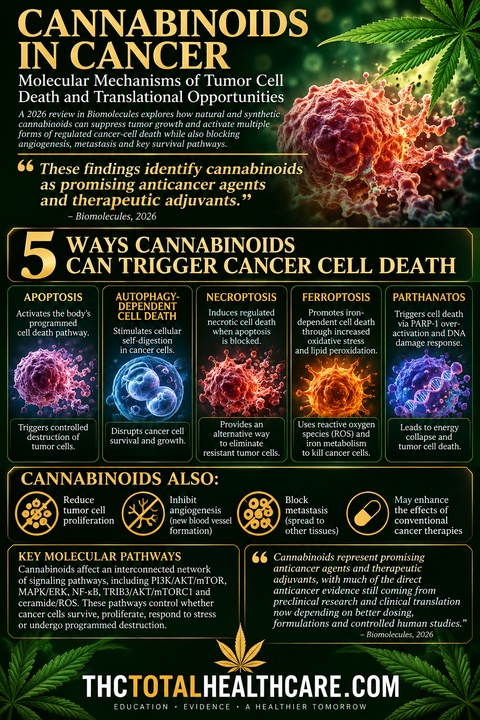
Cannabinoids in Cancer: Molecular Mechanisms of Tumor Cell Death and Translational Opportunities

Cannabinoids can attack cancer cells through far more than a single mechanism. This 2026 review describes how natural and synthetic cannabinoids can suppress tumor-cell growth, angiogenesis and metastasis while activating multiple forms of regulated cancer-cell death, including apoptosis, autophagy-dependent cell death, necroptosis, ferroptosis and parthanatos.

The researchers detail an interconnected network of molecular pathways affected by cannabinoids, including PI3K/AKT/mTOR, MAPK/ERK, NF-κB, TRIB3/AKT/mTORC1 and ceramide/ROS signaling. These pathways control whether cancer cells survive, proliferate, respond to stress or undergo programmed destruction, giving cannabinoids multiple potential points of attack against malignant cells.

The review also finds that cannabinoids may enhance conventional anticancer treatments by engaging complementary cell-death pathways. The authors conclude that cannabinoids represent promising anticancer agents and therapeutic adjuvants, with much of the direct anticancer evidence still coming from preclinical research and clinical translation now depending on better dosing, formulations and controlled human studies.

“Cannabinoids are terpenophenolic compounds derived from Cannabis sativa L. that exert a broad range of biological and pharmacological activities. Increasing evidence highlights their potential as modulators of cancer progression specifically through the suppression of tumor cell growth, angiogenesis, and metastasis across multiple tumor models.

This review provides a comprehensive overview of the molecular mechanisms by which natural and synthetic cannabinoids induce regulated cancer cell death.

Current evidence demonstrates that cannabinoids regulate multiple forms of cancer cell death, including apoptosis, autophagy-dependent cell death, necroptosis, ferroptosis, and parthanatos. These effects are mediated through complex and interconnected signaling pathways such as TRIB3/AKT/mTORC1, PI3K/AKT/mTOR, MAPK/ERK, NF-κB, ERK/JNK/p38-MAPK, and ceramide/Raf1/ERK/ROS.

In addition to their direct antitumor effects, cannabinoids can enhance the efficacy of conventional anticancer therapies through the coordinated regulation of complementary cell death pathways. They also provide clinically relevant supportive benefits in palliative care, alleviating chemotherapy-induced nausea, cachexia, and mood or sleep disturbances.

Collectively, these findings identify cannabinoids as promising anticancer agents and therapeutic adjuvants, predominantly in the preclinical setting. However, significant challenges remain regarding their safety, optimal dosing, formulation, and clinical efficacy. Further mechanistic studies, rigorous preclinical research, and well-designed clinical trials are required to establish the translation of cannabinoid-based therapies into precision oncology.”

https://pubmed.ncbi.nlm.nih.gov/42793092

“The cannabis plant, a member of the Cannabaceae family, has been traditionally utilized for centuries for spiritual and remedial healing.”

“The anticancer activity of cannabinoids was discovered in 1975 by Munson et al.. Cannabinoids suppress cancer cell proliferation, angiogenesis, tumor invasion, metastasis, and stemness while inducing different modes of cell death pathways.”

“In summary, this review highlights the growing body of evidence supporting the ability of cannabinoids to induce multiple forms of cell death across a broad spectrum of cancer types. Through the modulation of diverse molecular and signaling pathways, cannabinoids have emerged as promising anticancer agents, mostly in preclinical models, with the potential to target tumor growth, survival, and progression, ultimately triggering diverse cell death mechanisms.”
https://www.mdpi.com/2218-273X/16/9/1260

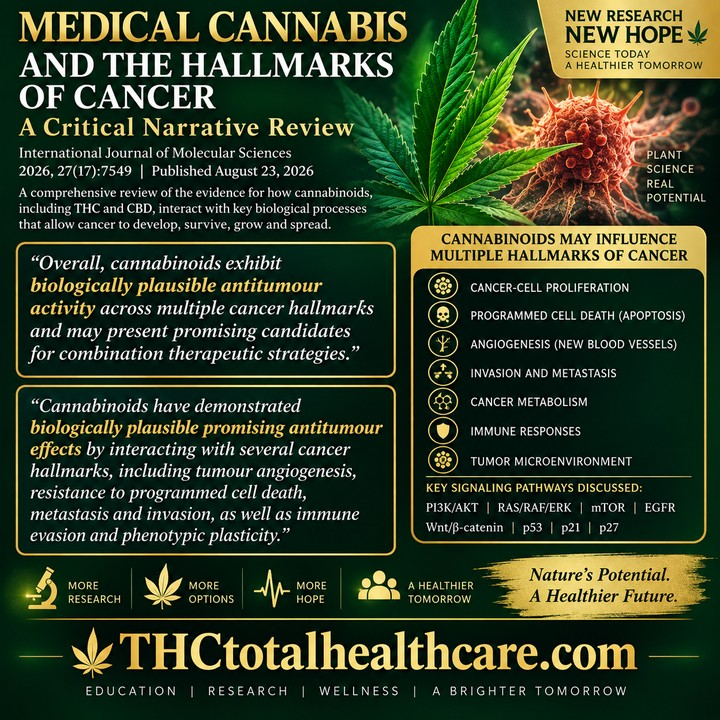
Medical Cannabis and the Hallmarks of Cancer: A Critical Narrative Review

A 2026 critical narrative review examines medical cannabis through one of the most important frameworks in cancer biology: the hallmarks of cancer. Rather than looking only at symptom relief, the authors reviewed evidence for how cannabinoids, including THC and CBD, may interact with biological processes that allow cancer to develop, survive, grow and spread.

The review discusses cannabinoid effects involving cancer-cell proliferation, programmed cell death, angiogenesis, invasion, metastasis, tumor metabolism, immune responses and the tumor microenvironment. It also examines major cancer-related signaling pathways, including PI3K/AKT, RAS/RAF/ERK, mTOR, EGFR, Wnt/β-catenin and p53.

Taken together, the research shows that cannabinoids can influence multiple hallmarks of cancer through several interconnected mechanisms. The authors describe the evidence as showing biologically plausible antitumor activity and highlight cannabinoids as an important area for continued cancer research and development.

“Cancer remains a highly complex and heterogeneous disease, causing major morbidity and mortality worldwide despite advances in diagnosis and treatment. The hallmarks of cancer enlighten the biological mechanisms supporting tumourigenesis and malignant evolution, while helping to identify potential therapeutic targets.

Medical cannabis has mostly been used in oncology for supportive care, but increasing preclinical evidence suggests interference with cancer-related signalling pathways.

This narrative review summarizes the current evidence on cannabinoids, in particular the phytocannabinoids cannabidiol (CBD) and Δ9-tetrahydrocannabinol (THC), framing their prospective anticancer effects in the hallmarks of cancer.

Preclinical studies imply that CBD exerts antiproliferative effects by modulating oncogenic signalling pathways, including EGFR, PI3K/AKT, RAS/RAF/ERK, mTOR and Wnt/β-catenin, while also influencing tumour suppressor pathways involving p53, p21 and p27, causing cell cycle arrest. CBD has additionally been shown to promote programmed cell death via mitochondrial dysfunction and autophagy, altering cancer metabolism as well. Furthermore, CBD has shown anti-invasive and antiangiogenic properties and also appears to modulate immune responses and interactions with the tumour microenvironment, including emerging links with the microbiome.

Overall, cannabinoids exhibit biologically plausible antitumour activity across multiple cancer hallmarks and may present promising candidates for combination therapeutic strategies.

Nonetheless, the current evidence remains predominantly preclinical, and robust translational studies and clinical trials are needed to clarify their pharmacokinetic and pharmacodynamic profiles, determine their clinical efficacy and safety while assessing their potential integration into multimodal cancer treatment.”

https://pubmed.ncbi.nlm.nih.gov/42737454/

“Cannabinoids have demonstrated biologically plausible promising antitumour effects by interacting with several cancer hallmarks, including tumour angiogenesis, resistance to programmed cell death, metastasis and invasion, as well as immune evasion and phenotypic plasticity.”

“Cannabinoids can interfere with several biological mechanisms involved in cancer development and progression and even though their role in oncology remains mostly supportive with predominance in symptom control, preclinical studies increasingly suggest that cannabis can also influence tumour biology.”

https://www.mdpi.com/1422-0067/27/17/7549

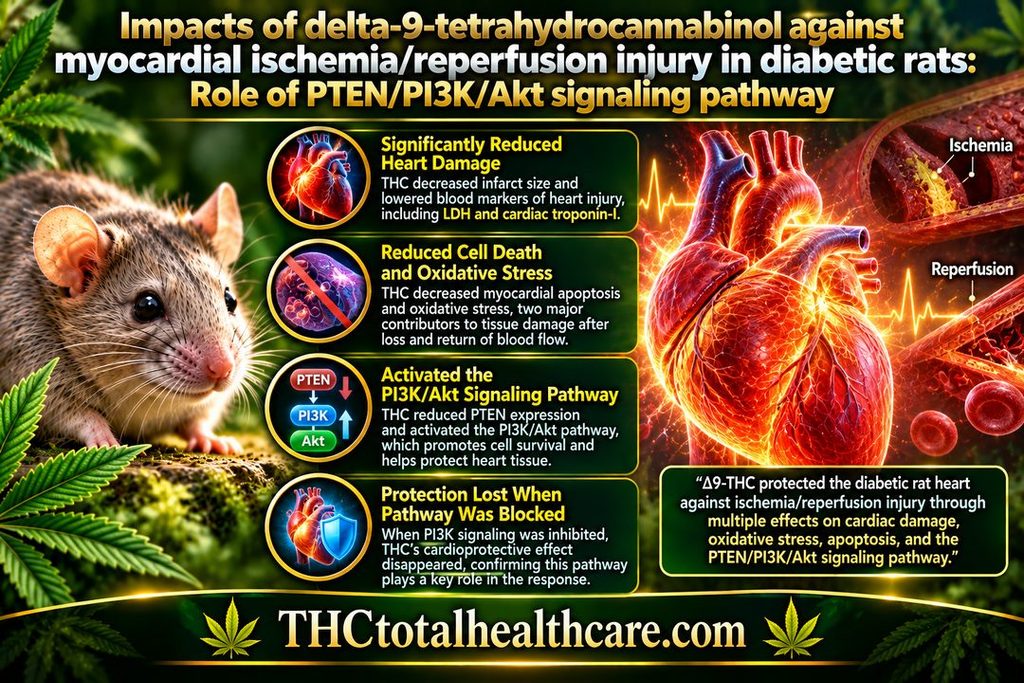
Impacts of delta 9-tetrahydrocannabinol against myocardial ischemia/reperfusion injury in diabetic rats: Role of PTEN/PI3K/Akt signaling pathway

In diabetic rats with myocardial ischemia/reperfusion injury, Δ9-THC significantly reduced heart damage and improved cardiac function. THC pretreatment decreased infarct size as well as blood markers of heart injury, including LDH and cardiac troponin-I.

THC also reduced myocardial apoptosis and oxidative stress, two major contributors to tissue damage when blood flow returns to the heart after a period of ischemia. These protective effects were accompanied by reduced PTEN expression and activation of the PI3K/Akt signaling pathway, which is involved in cell survival.

When researchers blocked PI3K signaling, THC’s cardioprotective effect disappeared, strengthening the evidence that this pathway played an important role in the response. The findings show that THC protected the diabetic rat heart against ischemia/reperfusion injury through multiple measurable effects on cardiac damage, oxidative stress, cell death, and survival signaling.

“Despite the current optimal therapy, patients with myocardial ischemia/reperfusion (IR) injury still experience a high mortality rate, especially when diabetes mellitus is present as a comorbidity. Investigating potential treatments aimed at improving the outcomes of myocardial IR injury in diabetic patients is necessary.

Our objective was to ascertain the cardioprotective effect of delta 9-tetrahydrocannabinol (THC) against myocardial IR injury in diabetic rats and examine the role of phosphatase and tensin homolog (PTEN)/phosphatidylinositol 3-kinase (PI3K)/protein kinase B (Akt) signaling pathway in mediating this effect.

Diabetes was induced in male Wistar rats (8-10 weeks old, 200-250 g; n = 60) by a single injection of streptozotocin. The duration of the diabetic period was 10 weeks. During the last 4 weeks of diabetic period, rats were treated with THC (1.5 mg/kg/day; intraperitoneally), either alone or in combination with LY294002, and then underwent IR intervention. After 24 h of reperfusion, infarct size, cardiac function, lactate dehydrogenase (LDH) and cardiac-specific isoform of troponin-I (cTn-I) levels, myocardial apoptosis, oxidative stress markers, and expression of PTEN, PI3K, and Akt proteins were evaluated.

THC pretreatment resulted in significant improvements in infarct size and cardiac function and decreases in LDH and cTn-I levels (P < 0.05). It also reduced myocardial apoptosis and oxidative stress, accompanied by the downregulation of PTEN expression and activation of the PI3K/Akt signaling pathway (P < 0.05). LY294002 pretreatment abolished the cardioprotective action of THC.

This study revealed the cardioprotective effects of THC against IR-induced myocardial injury in diabetic rats and also suggested that the mechanism may be associated with enhanced activity of the PI3K/Akt signaling pathway through the reduction of PTEN phosphorylation.”

https://pubmed.ncbi.nlm.nih.gov/38149557/

“Delta 9-tetrahydrocannabinol (THC) is the main psychoactive component of cannabis and has been shown to have potential therapeutic effects in various medical conditions. THC has been shown to have anti-inflammatory and antioxidant properties, which may reduce the inflammation and oxidative stress associated with myocardial IR injury. Recent studies have suggested that THC improves glucose metabolism and insulin sensitivity and reduces blood glucose concentrations, oxidative stress, and inflammation associated with diabetic cardiomyopathy.”

https://www.cjphysiology.org/article.asp?issn=0304-4920;year=2023;volume=66;issue=6;spage=446;epage=455;aulast=Zhao

Need this THC study explained? thcXplained.com

β-Caryophyllene Induces Apoptosis and Inhibits Angiogenesis in Colorectal Cancer Models

ijms-logo“Beta-Caryophyllene (BCP), a naturally occurring sesquiterpene abundantly found in cloves, hops, and cannabis, is the active candidate of a relatively new group of vascular-inhibiting compounds that aim to block existing tumor blood vessels.

Previously, we have reported the anti-cancer properties of BCP by utilizing a series of in-vitro anti-tumor-related assays using human colorectal carcinoma cells. The present study aimed to investigate the effects of BCP on in-vitro, ex-vivo, and in-vivo models of anti-angiogenic assays and evaluate its anti-cancer activity in xenograft tumor (both ectopic and orthotopic) mice models of human colorectal cancer.

BCP showed a remarkable reduction in tumor size and fluorescence molecular tomography signal intensity in all the mice treated with BCP, in a dose-dependent relationship, in ectopic and orthotopic tumor xenograft models, respectively. The histological analysis of the tumor from BCP-treated mice revealed a clear reduction of the density of vascularization. In addition, BCP induced apoptosis through downregulation of HSP60, HTRA, survivin, and XIAP, along with the upregulation of p21 expressions.

These results suggest that BCP acts at multiple stages of angiogenesis and could be used as a promising therapeutic candidate to halt the growth of colorectal tumor cells.”

https://pubmed.ncbi.nlm.nih.gov/34638895/

https://www.mdpi.com/1422-0067/22/19/10550

“β-caryophyllene (BCP) is a common constitute of the essential oils of numerous spice, food plants and major component in Cannabis.”   http://www.ncbi.nlm.nih.gov/pubmed/23138934

“Beta-caryophyllene is a dietary cannabinoid.”   https://www.ncbi.nlm.nih.gov/pubmed/18574142

The antitumor activity of cannabidiol on lung cancer cell lines A549 and H1299: the role of apoptosis

Publication Cover“In the recent years, the application of new antitumor drugs has focused on the replacement of conventional chemotherapeutics with compounds derived from natural products.

Cannabidiol (CBD) is one of the 113 cannabinoids derived from the plant Cannabis sativa and is characterized with complex and not entirely understood biological function. Unlike the other most abundant cannabinoid in Cannabis sativa – tetrahydrocannabinol, cannabidiol has low affinity to the endocannabinoid receptors and the manifestation of its activity does not appear to rely on the endocannabinoid system.

Cannabidiol is used in the treatment of many diseases including some types of cancer.

The aim of our study was to evaluate the cytotoxic activity of cannabidiol and its effect on the process of programmed cell death. This process is directly involved in the antitumor effect of many drugs.

We found that CBD treatment led to a dose-dependant apoptosis increase in p53 positive A549 cells.

Several studies have demonstrated that cannabinoids also have antineoplastic effect and are usually accompanied with no negative side effects such as the ones produced by the conventional chemotherapy treatment.”

https://www.tandfonline.com/doi/full/10.1080/13102818.2021.1915870

Cannabidiol Induces Apoptosis and Perturbs Mitochondrial Function in Human and Canine Glioma Cells

Frontiers in Pharmacology (@FrontPharmacol) | Twitter“Cannabidiol (CBD), the major non-psychoactive compound found in cannabis, is frequently used both as a nutraceutical and therapeutic.
Despite anecdotal evidence as an anticancer agent, little is known about the effect CBD has on cancer cells. Given the intractability and poor prognoses of brain cancers in human and veterinary medicine, we sought to characterize the in vitro cytotoxicity of CBD on human and canine gliomas.

Glioma cells treated with CBD showed a range of cytotoxicity from 4.9 to 8.2 μg/ml; canine cells appeared to be more sensitive than human.

These results demonstrate the cytotoxic nature of CBD in human and canine glioma cells and suggest a mechanism of action involving dysregulation of calcium homeostasis and mitochondrial activity.”

https://pubmed.ncbi.nlm.nih.gov/34456736/

“In this present study, we demonstrate that highly purified CBD isolate reduced proliferation and induced caspase-mediated cell death, suggestive of apoptosis, in both canine glioma cell lines SDT3G and J3TBG as well as the human glioma cell lines U87MG and U373MG Uppsala. The growing body of knowledge of the pharmacology, anticancer effects, and other therapeutically relevant properties of cannabidiol reveal the exciting potential of CBD as a potential clinical therapeutic.”

https://www.frontiersin.org/articles/10.3389/fphar.2021.725136/full

Searching for a New Anti-Cancer Drug: Investigation of KY Hemp-Induced Apoptosis in Ovarian Cancer Cells

“Marijuana (cannabis sativa) is a schedule 1 drug that has been recently approved by some states in the US for its therapeutic benefit.

Although there are a few reports about its anti-cancer potential, currently it has been used mainly for treatment-resistant epilepsy and to alleviate pain.

Hemp, which belongs to the same genus and species as marijuana, shows similar therapeutic benefits without addictive potential.

Our laboratory is interested in examining for unconventional therapies for ovarian cancer.

The main objective of the current study is to investigate hemp-induced modulation of A2780 ovarian cancer cell apoptosis.

Based on the data here we conclude that KY hemp has anti-cancer potential against ovarian cancer.”

https://faseb.onlinelibrary.wiley.com/doi/abs/10.1096/fasebj.2018.32.1_supplement.616.1

New Insights on Hemp Oil Enriched in Cannabidiol: Decarboxylation, Antioxidant Properties and In Vitro Anticancer Effect

antioxidants-logo“This study aimed to obtain and characterize extracted hemp oil enriched in cannabidiol (CBD) by decarboxylation of cannabidiolic acid (CBDA) and to give new insights into its antioxidant and anticancer effects.

CBD-enriched oil promoted NHDF proliferation at up to 15 µg CBD/mL, while inducing apoptosis and ROS production and modulating antioxidant enzymes’ gene expression in cancer cells, being selective for osteosarcoma cells, and induced apoptosis by p53- and ROS-independent mechanisms.

CBD-enriched hemp oil demonstrated antioxidant properties in oxidative conditions and promoted normal fibroblasts’ proliferation, while inducing apoptosis and ROS production in cancer cells.”

https://pubmed.ncbi.nlm.nih.gov/34067035/

https://www.mdpi.com/2076-3921/10/5/738

Cannabidiol Modulates Mitochondrial Redox and Dynamics in MCF7 Cancer Cells: A Study Using Fluorescence Lifetime Imaging Microscopy of NAD(P)H

Archive of "Frontiers in Molecular Biosciences".“The cannabinoid, cannabidiol (CBD), is part of the plant’s natural defense system that when given to animals has many useful medicinal properties, including activity against cancer cells, modulation of the immune system, and efficacy in epilepsy.
Our results support the use of NAD(P)H autofluorescence as an investigative tool and provide further evidence that CBD can modulate mitochondrial function and morphology in a dose-dependent manner, with clear evidence of it inducing oxidative stress at higher concentrations.

This continues to support emerging data in the literature and may provide further insight into its overall mode of action, not only in cancer, but potentially its function in the plant and why it can act as a medicine.”

https://pubmed.ncbi.nlm.nih.gov/34046425/

“Uncontrolled cell growth, or cancer, is frequently associated with increased aerobic glycolysis (the Warburg effect) and alterations in mitochondrial function.

A plant’s ability to develop tumors could explain why so many secondary plant phenolic compounds appear to have anticancer activity in both plant and animal models; over 3,000 species of plants have anticancer activity in animals, with many modulating mitochondrial function and apoptosis

CBD, along with Δ9-tetrahydrocannabinol (THC), is a major phytocannabinoid and both are well described components of medicines.

A growing number of studies have demonstrated the anticancer properties of CBD, in both in vitro and in vivo models.”

https://www.frontiersin.org/articles/10.3389/fmolb.2021.630107/full

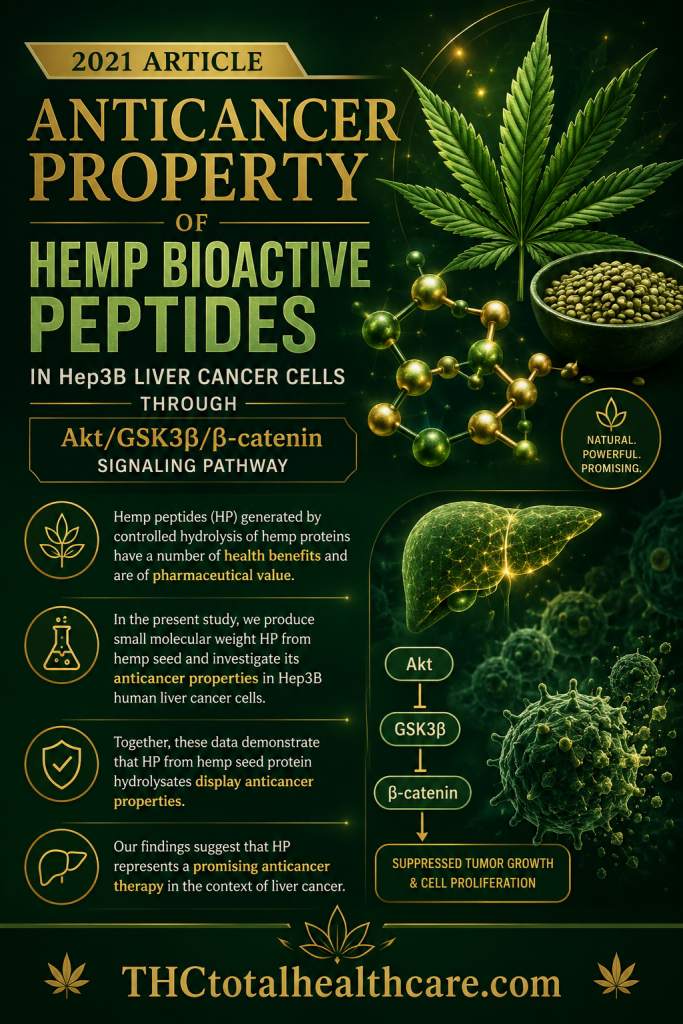
Anticancer property of Hemp Bioactive Peptides in Hep3B liver cancer cells through Akt/GSK3β/β-catenin signaling pathway

“Foodborne protein hydrolysates exhibit biological activity that may be therapeutic in a number of human disease settings. Hemp peptides (HP) generated by controlled hydrolysis of hemp proteins have a number of health benefits and are of pharmaceutical value.

In the present study, we produce small molecular weight HP from hemp seed and investigate its anticancer properties in Hep3B human liver cancer cells.

We demonstrate that HP treatment increased apoptosis, reduced cell viability, and reduced cell migration in Hep3B human liver cancer cells without affecting the normal liver cell line L02. We correlate these phenotypes with increased cellular ROS levels, upregulation of cleaved caspase 3 and Bad, and downregulation of antiapoptotic Bcl-2. HP treatment led to increased Akt and GSK-3β phosphorylation, with subsequent downregulation of β-catenin, suggesting β-catenin signaling modulation as a critical mechanism by which HP exhibits anticancer properties.

Our findings suggest HP are of potential therapeutic interest for liver cancer treatment.”

https://pubmed.ncbi.nlm.nih.gov/33841802

“Together, these data demonstrate that HP from hemp seed protein hydrolysates display anticancer properties. Increase in cellular ROS levels represents a crucial mechanism by which HP exerts its antiproliferative and proapoptotic activity and HP treatment modulates activity of the Akt/GSK/β‐catenin signaling pathway.

Our findings suggest that HP represents a promising anticancer therapy in the context of liver cancer; further investigation of the anticancer properties of foodborne protein hydrolysates is warranted.”

https://onlinelibrary.wiley.com/doi/10.1002/fsn3.1976