From Biological Activity to Precision Cannabinoid Oncology

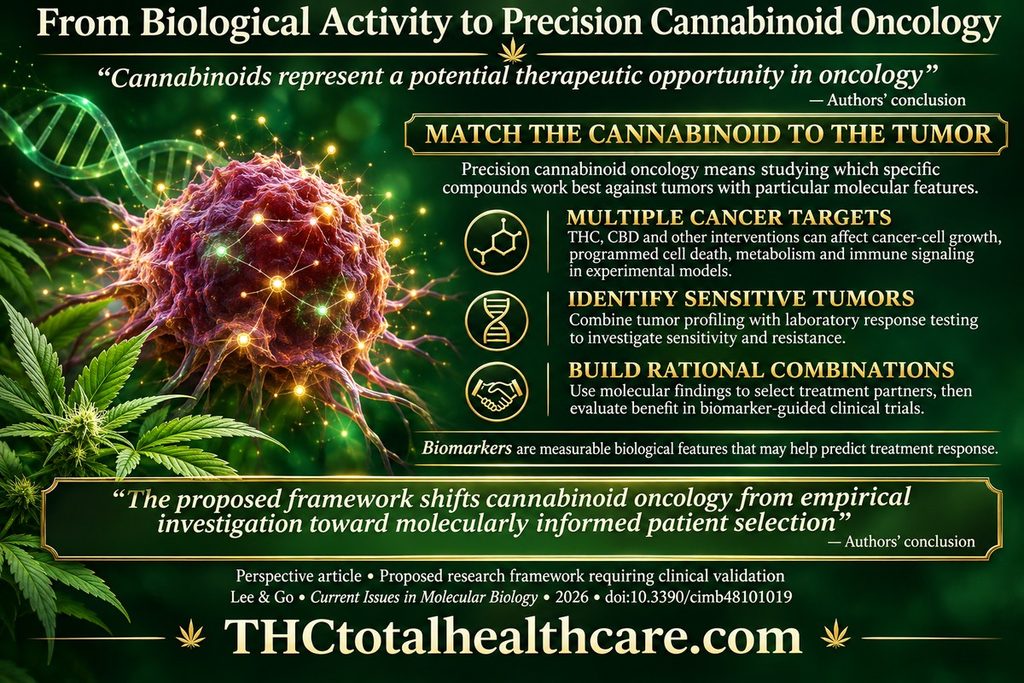
Matching specific cannabinoids to the molecular features of individual tumors could help advance cannabis-based cancer research toward more personalized treatment. This perspective article proposes “precision cannabinoid oncology”: identifying which tumors are most likely to respond to a particular cannabinoid, formulation, or treatment combination.

The authors examine how THC, CBD, and other cannabinoid interventions affect cancer-related processes, including cell growth, programmed cell death, metabolism, and immune signaling. Responses vary with the compound, dose, tumor biology, and cellular environment. Their proposed approach combines tumor profiling with laboratory response testing to identify biomarkers—measurable biological features that could help predict treatment sensitivity.

The goal is to connect promising anticancer activity with carefully selected patients and rational treatment combinations. The framework calls for prospective clinical trials to establish whether these molecular features predict meaningful benefit; cannabinoid-response biomarkers remain candidates requiring validation.

“Cannabinoids have gained increasing attention as potential anticancer agents because of their ability to modulate diverse cancer-associated signaling pathways and biological processes.:

Cannabinoids, including cannabidiol (CBD) and Δ9-tetrahydrocannabinol (THC), can influence tumor proliferation, apoptosis, angiogenesis, metabolism, immune regulation, and tumor-microenvironment interactions. However, clinical translation remains limited, as evidence of anticancer efficacy is derived predominantly from preclinical studies.

Major knowledge gaps include the absence of validated predictive biomarkers, unclear criteria for patient selection, and limited evidence regarding optimal therapeutic and combination strategies. Thus, the central challenge is to identify the patients and tumor contexts most likely to benefit from cannabinoid-based therapy.

We propose a precision cannabinoid oncology framework that integrates molecular characterization, molecular classification, predictive biomarker development, rational combination strategies, and prospective clinical validation.

This approach may provide a conceptual foundation for moving cannabinoid oncology from broadly empirical investigation toward molecularly informed patient selection and prospective validation of cannabinoid-based therapies in molecularly defined patient populations.”

https://pubmed.ncbi.nlm.nih.gov/42939557

“Cannabinoids represent a potential therapeutic opportunity in oncology because their biological effects extend across multiple signaling, metabolic, stress-response, and tumor–microenvironmental pathways.”
https://www.mdpi.com/1467-3045/48/10/1019

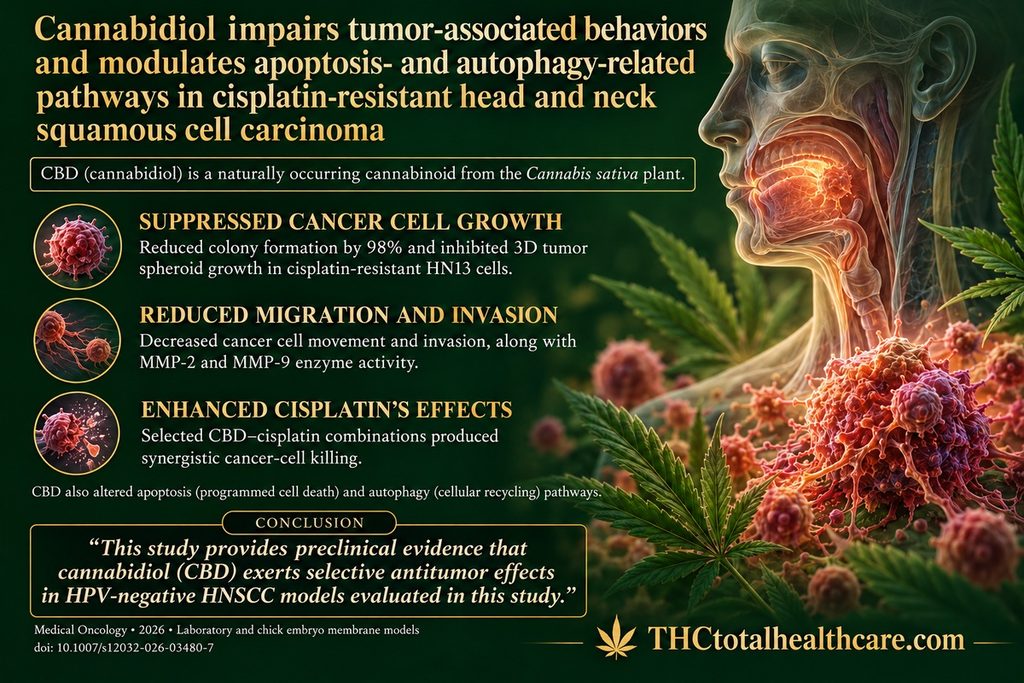
Cannabidiol impairs tumor-associated behaviors and modulates apoptosis- and autophagy-related pathways in cisplatin-resistant head and neck squamous cell carcinoma

Cannabidiol (CBD), a naturally occurring cannabinoid found in the Cannabis plant, reduced the survival, movement, and invasion of cisplatin-resistant head and neck cancer cells. In the HPV-negative HN13 cell model, CBD reduced colony formation by 98% and suppressed the growth of three-dimensional tumor spheroids.

CBD preferentially affected cancer cells compared with the non-tumor cells tested and reduced MMP-2 and MMP-9 activity—enzymes that help cancer cells invade surrounding tissue. It also altered pathways involved in programmed cell death, cellular recycling, and cell-cycle regulation.

CBD reduced tumor growth and blood-vessel area in a chick embryo membrane model without causing vascular irritation. Selected combinations of CBD and cisplatin produced synergistic cancer-cell killing, supporting further investigation of CBD as a potential addition to treatment for chemotherapy-resistant head and neck cancer.

“Head and neck squamous cell carcinoma (HNSCC) remains a challenge due to recurrence, metastasis, and resistance to conventional therapies, particularly in human papillomavirus (HPV)-negative tumors.

Cannabidiol (CBD), a non-psychoactive phytocannabinoid, has demonstrated antitumor activity in several cancer models; however, its effects in chemoresistant HNSCC are not well established.

This study evaluates the antitumor effects of CBD and cellular mechanisms in a cisplatin -resistant, HPV-negative HNSCC model.

Cytotoxic effects of CBD were assessed in HN13 cells and compared with fibroblasts and keratinocytes using MTT and selectivity index analysis. Migration, invasion, metalloproteinase activity, clonogenic survival, and cytotoxicity on 3D spheroids were evaluated. Cell death-related mechanisms were investigated using acridine orange/propidium iodide staining and Western blot analysis of apoptosis, autophagy, and cell-cycle regulation. Antitumor activity and vascular safety were further assessed using the chorioallantoic membrane model and HET-CAM assay. The combined effect of CBD and CIS was evaluated using the combination index analysis.

CBD exhibited selective cytotoxicity toward HN13 cells and reduced migration, invasion, matrix metalloproteinase-2/9 activity, clonogenic survival, and 3D spheroid growth. CBD altered proteins associated with apoptosis, autophagy, and cell-cycle regulation. Pharmacological inhibition with 3-MA enhanced CBD-associated apoptotic signaling, increasing PARP and caspase-3 cleavage. In the CAM, CBD reduced tumor growth and vascular area without inducing vascular irritation. Furthermore, CBD and CIS demonstrated synergistic cytotoxic effects in HN13 cells. CBD exerted selective antitumor effects on CIS-resistant HN13 HNSCC cells, affecting tumor-associated behaviors and modulating apoptosis and autophagy-related signaling, while acting synergistically with cisplatin.

These findings support further preclinical investigation of CBD as a potential adjunct approach in HNSCC, particularly in chemoresistant settings.”

https://pubmed.ncbi.nlm.nih.gov/42932045

“This study provides preclinical evidence that cannabidiol (CBD) exerts selective antitumor effects in HPV-negative HNSCC models evaluated in this study.

CBD reduced tumor cell viability, impaired migration, invasion and clonogenic capacity, modulated matrix metalloproteinase activity, reduced the area of 3D spheroids and was associated with modulation of apoptosis- and autophagy-related signaling pathways in vitro. Furthermore, it acted synergistically with the chemotherapeutic agent CIS. In vivo, CBD reduced tumor growth and vascular area in the chorioallantoic membrane model without inducing vascular irritation.

Collectively, these findings support CBD as a potential candidate for further investigation in HNSCC, particularly in chemoresistant settings.”

https://link.springer.com/article/10.1007/s12032-026-03480-7

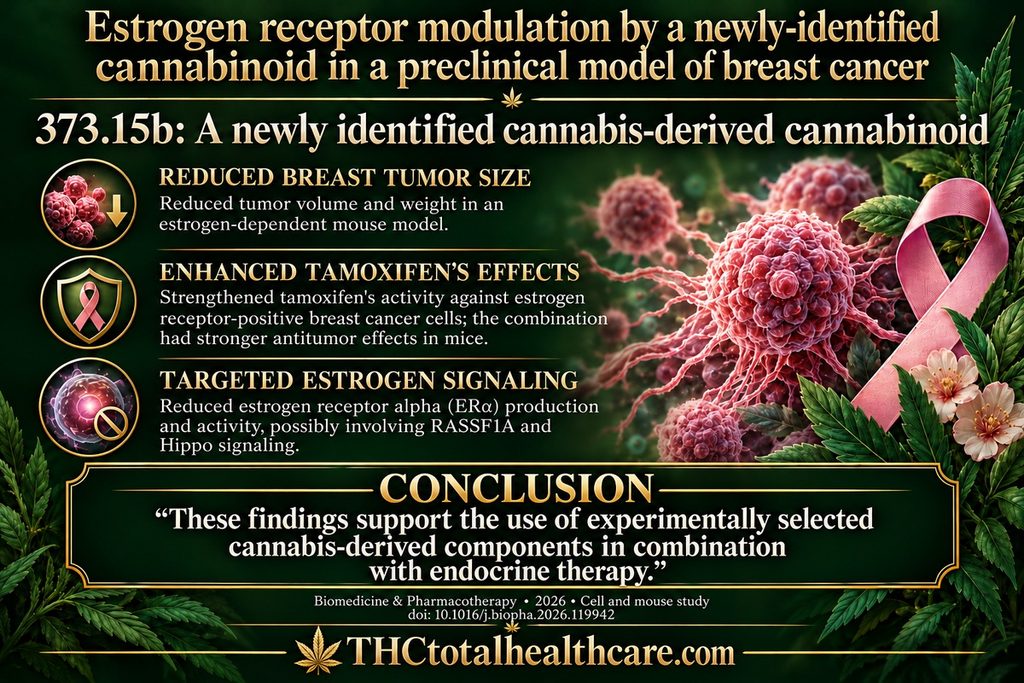
Estrogen receptor modulation by a newly-identified cannabinoid in a preclinical model of breast cancer

A newly identified cannabis-derived cannabinoid, 373.15b, reduced breast tumor volume and weight in mice, with stronger effects when combined with tamoxifen. Researchers isolated the compound from a cannabis extract called CANN14, which increased the sensitivity of estrogen receptor-positive breast cancer cells to tamoxifen.

The cannabinoid reduced the production and activity of estrogen receptor alpha (ERα), a protein that helps estrogen drive cancer growth. Its effects may involve RASSF1A and the Hippo signaling pathway, which help regulate cell growth.

These findings identify a potential way to strengthen hormone therapy for estrogen-dependent breast cancer. The researchers suggest that combining 373.15b with drugs such as tamoxifen could eventually permit lower treatment doses and fewer adverse effects—a possibility requiring clinical testing.

“Background: Breast cancer is a diverse group of diseases comprising subtypes with distinct behavior and response to therapy. Tumors that express estrogen receptor alpha (ERα) and depend on estrogen constitute ∼65% of all breast cancer cases. Common endocrine therapy for this kind of breast cancer includes Selective Estrogen Receptor Modulators (SERMs) such as tamoxifen. However, despite the clear benefits, many patients do not complete the recommended 5 and sometimes 10 years of treatment because of adverse effects. Medical cannabis is increasingly used by cancer patients, primarily for palliative care, yet its direct antitumor potential in breast cancer remains poorly understood.

Purpose: Examine whether cannabis-derived compounds exert selective antitumor effects in breast cancer and elucidate the underlying molecular mechanisms.

Study design: A combination of in vitro experiments in multiple ER-positive breast cancer cell lines with in vivo validation in an estrogen-dependent xenograft mouse model.

Methods: Breast cancer cell lines representing different molecular subtypes were evaluated. A panel of chemically distinct cannabis extracts was initially screened for cytotoxic activity and subsequently tested in combination with SERMs. Extracts were chemically profiled using ESI-LC/MS. Phytocannabinoid fractionation, chemical analyses, and structural elucidation were performed to isolate and characterize the bioactive phytocannabinoid in the only cannabis extract identified in the initial screen as effective in combination with tamoxifen. The mechanism of action of this phytocannabinoid was investigated in vitro using molecular and biochemical assays. Finally, antitumor efficacy was assessed in vivo using an estrogen-dependent ER-positive breast cancer xenograft mouse model.

Results: We found a unique cannabis extract, CANN14, capable of sensitizing ER-positive breast cancer cells to the cytotoxic effect of tamoxifen. We identified a novel phytocannabinoid 373.15b that mimicked the effect of the whole extract without any toxicity by itself. It has a unique structure of a dihydroxyphenol with an acetate group attached to the aromatic ring, distinguishing it from known cannabinoid scaffolds. Cannabinoid 373.15b modulated estrogen signaling by decreasing the mRNA and protein expression levels of ERα, as well as its transcriptional activity, possibly through a signaling pathway involving RASSF1A and Hippo signaling components. In an in vivo mouse model, treatment with 373.15b reduced tumor volume and weight, with a more profound effect when combined with tamoxifen.

Conclusion: The work presented here identifies a novel cannabinoid that modulates ERα signaling and enhances the antitumor efficacy of SERMs. The findings suggests that co-therapy of 373.15b with SERMs may allow dose reduction of conventional therapy, and by that, diminish the associated adverse effects and improve patient quality of life.

One-sentence summary: The newly identified cannabinoid 373.15b reduces ERα expression and activity through RASSF1A and Hippo signaling pathway thus exerting antitumor effects.”

https://pubmed.ncbi.nlm.nih.gov/42927724

“Overall, our findings demonstrate that a specific cannabis-derived compound can decrease ER signaling and inhibit ER-positive breast cancer, particularly in combination with tamoxifen. Our initial screen further highlights the substantial variability between cannabis cultivars, showing that even extracts with similar major cannabinoid compositions can produce different biological outcomes.

Through fractionation and chemical characterization, we identified a previously uncharacterized phytocannabinoid, 373.15b, which modulates ERα expression and activity. Based on our preliminary results, we hypothesize that the reduction in ERα expression occurs through a mechanism involving RASSF1A and the Hippo signaling pathway.

Both the CANN14 extract and purified 373.15b significantly inhibited tumor progression in vivo, with a more pronounced effect when combined with tamoxifen.

These findings support the use of experimentally selected cannabis-derived components in combination with endocrine therapy. In ER-positive breast cancer, enhancing therapeutic efficacy may allow dose reduction of SERMs, potentially mitigating adverse effects and improving patient adherence and quality of life.”

https://www.sciencedirect.com/science/article/pii/S0753332226009789?via%3Dihub

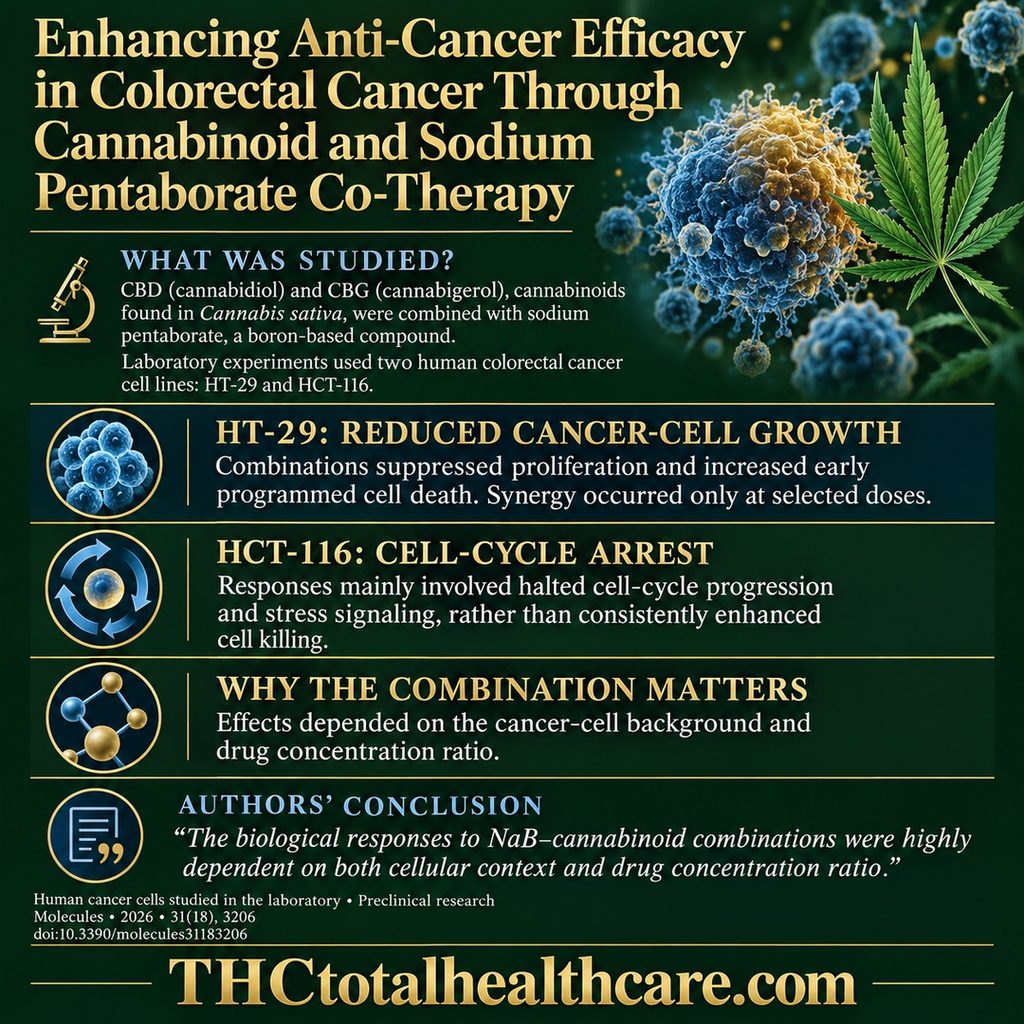
Enhancing Anti-Cancer Efficacy in Colorectal Cancer Through Cannabinoid and Sodium Pentaborate Co-Therapy

Cannabidiol (CBD) and cannabigerol (CBG), naturally occurring cannabinoids found in the Cannabis sativa plant, enhanced growth-suppressing effects at selected doses when combined with sodium pentaborate, a boron-based compound, in laboratory-grown human colorectal cancer cells. Researchers tested two cell lines, HT-29 and HCT-116, and found that responses depended strongly on the cancer cells’ characteristics and the combination used.

In HT-29 cells, the combinations reduced cell proliferation and increased early apoptosis—programmed cell death—with synergistic effects occurring only at certain dose combinations. HCT-116 cells responded mainly by arresting the cell cycle and activating stress-response pathways, rather than showing consistently enhanced cell killing.

The treatments also altered genes involved in oxidative balance and iron metabolism, processes associated with ferroptosis, an iron-dependent form of cell death. These findings support further investigation of boron–cannabinoid combinations tailored to tumor biology, with validation in three-dimensional tumor models and animal studies identified as the next steps.

“Background: Colorectal cancer (CRC) is characterized by pronounced genetic and phenotypic heterogeneity, which substantially influences therapeutic response and limits the efficacy of uniform treatment strategies. Cannabinoid-derived phytochemicals and boron-based compounds have independently been reported to modulate cancer cell proliferation, survival, and redox balance. However, the extent to which these agents interact at the cellular level and whether such interactions are dependent on tumor-specific molecular contexts remains poorly defined.

Methods: Sodium pentaborate (NaB) was combined with non-cytotoxic concentrations of cannabidiol (CBD) or cannabigerol (CBG) and evaluated in HCT-116 and HT-29 colorectal cancer cell lines. Cell viability and drug interactions were assessed by MTS and combination index analyses. Apoptotic responses were examined by Annexin V/PI staining, caspase-3/7 activity assays, and transcriptional profiling of apoptosis-related genes. Cell cycle dynamics and proliferation-associated markers were analyzed by flow cytometry and quantitative PCR. In parallel, ferroptosis-associated gene expression patterns were investigated to evaluate alterations in redox and iron metabolism pathways.

Results: NaB-cannabinoid combinations produced divergent biological outcomes depending on cellular background. HT-29 cells exhibited dose-dependent antiproliferative responses to NaB + CBD and NaB + CBG, with synergistic interactions observed only at selected dose combinations accompanied by increased early apoptosis. In contrast, HCT-116 cells primarily responded with cell cycle arrest and transcriptional stress signaling rather than enhanced cytotoxicity. Modulation of ferroptosis-related gene expression further indicated differential redox adaptation between the two cell models.

Conclusions: NaB-cannabinoid combinations elicit distinct biological outcomes in colorectal cancer cells that are strongly determined by cellular context. While HT-29 cells are selectively sensitized to combination dose level, HCT-116 cells predominantly respond through cell cycle arrest and adaptive stress-response pathway activation. These findings emphasize the necessity of context-aware combination strategies and provide a mechanistic framework for the further development of boron-cannabinoid-based therapeutic approaches in colorectal cancer.”

https://pubmed.ncbi.nlm.nih.gov/42796493

“In conclusion, our findings indicate that co-treatment with NaB and phytocannabinoids provides a cell line-specific therapeutic strategy in colorectal cancer.”

https://www.mdpi.com/1420-3049/31/18/3206

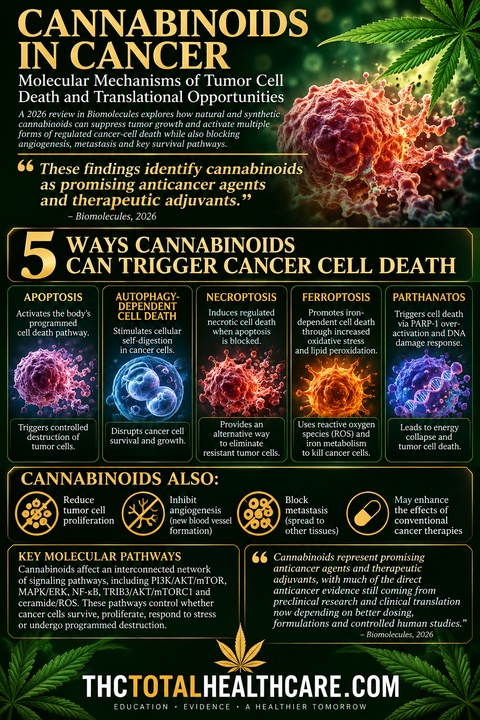
Cannabinoids in Cancer: Molecular Mechanisms of Tumor Cell Death and Translational Opportunities

Cannabinoids can attack cancer cells through far more than a single mechanism. This 2026 review describes how natural and synthetic cannabinoids can suppress tumor-cell growth, angiogenesis and metastasis while activating multiple forms of regulated cancer-cell death, including apoptosis, autophagy-dependent cell death, necroptosis, ferroptosis and parthanatos.

The researchers detail an interconnected network of molecular pathways affected by cannabinoids, including PI3K/AKT/mTOR, MAPK/ERK, NF-κB, TRIB3/AKT/mTORC1 and ceramide/ROS signaling. These pathways control whether cancer cells survive, proliferate, respond to stress or undergo programmed destruction, giving cannabinoids multiple potential points of attack against malignant cells.

The review also finds that cannabinoids may enhance conventional anticancer treatments by engaging complementary cell-death pathways. The authors conclude that cannabinoids represent promising anticancer agents and therapeutic adjuvants, with much of the direct anticancer evidence still coming from preclinical research and clinical translation now depending on better dosing, formulations and controlled human studies.

“Cannabinoids are terpenophenolic compounds derived from Cannabis sativa L. that exert a broad range of biological and pharmacological activities. Increasing evidence highlights their potential as modulators of cancer progression specifically through the suppression of tumor cell growth, angiogenesis, and metastasis across multiple tumor models.

This review provides a comprehensive overview of the molecular mechanisms by which natural and synthetic cannabinoids induce regulated cancer cell death.

Current evidence demonstrates that cannabinoids regulate multiple forms of cancer cell death, including apoptosis, autophagy-dependent cell death, necroptosis, ferroptosis, and parthanatos. These effects are mediated through complex and interconnected signaling pathways such as TRIB3/AKT/mTORC1, PI3K/AKT/mTOR, MAPK/ERK, NF-κB, ERK/JNK/p38-MAPK, and ceramide/Raf1/ERK/ROS.

In addition to their direct antitumor effects, cannabinoids can enhance the efficacy of conventional anticancer therapies through the coordinated regulation of complementary cell death pathways. They also provide clinically relevant supportive benefits in palliative care, alleviating chemotherapy-induced nausea, cachexia, and mood or sleep disturbances.

Collectively, these findings identify cannabinoids as promising anticancer agents and therapeutic adjuvants, predominantly in the preclinical setting. However, significant challenges remain regarding their safety, optimal dosing, formulation, and clinical efficacy. Further mechanistic studies, rigorous preclinical research, and well-designed clinical trials are required to establish the translation of cannabinoid-based therapies into precision oncology.”

https://pubmed.ncbi.nlm.nih.gov/42793092

“The cannabis plant, a member of the Cannabaceae family, has been traditionally utilized for centuries for spiritual and remedial healing.”

“The anticancer activity of cannabinoids was discovered in 1975 by Munson et al.. Cannabinoids suppress cancer cell proliferation, angiogenesis, tumor invasion, metastasis, and stemness while inducing different modes of cell death pathways.”

“In summary, this review highlights the growing body of evidence supporting the ability of cannabinoids to induce multiple forms of cell death across a broad spectrum of cancer types. Through the modulation of diverse molecular and signaling pathways, cannabinoids have emerged as promising anticancer agents, mostly in preclinical models, with the potential to target tumor growth, survival, and progression, ultimately triggering diverse cell death mechanisms.”

https://www.mdpi.com/2218-273X/16/9/1260

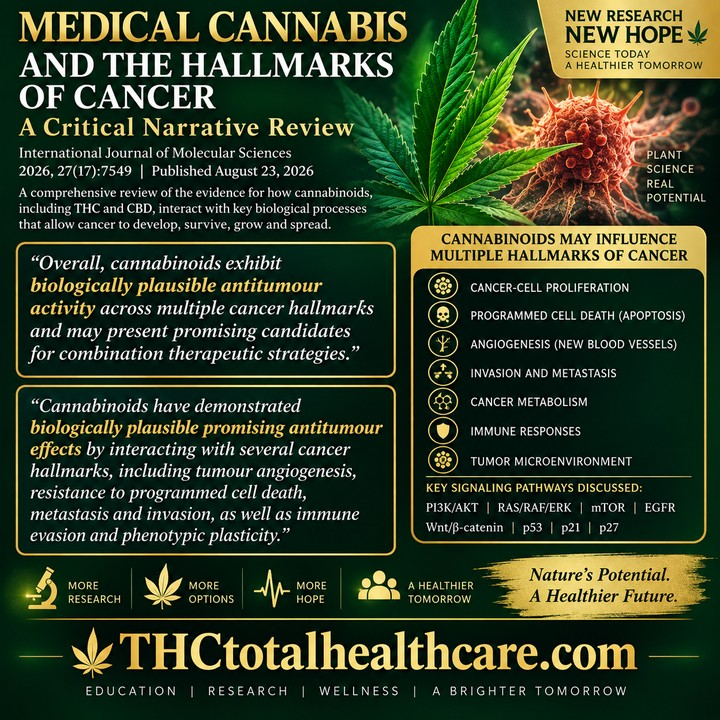
Medical Cannabis and the Hallmarks of Cancer: A Critical Narrative Review

A 2026 critical narrative review examines medical cannabis through one of the most important frameworks in cancer biology: the hallmarks of cancer. Rather than looking only at symptom relief, the authors reviewed evidence for how cannabinoids, including THC and CBD, may interact with biological processes that allow cancer to develop, survive, grow and spread.

The review discusses cannabinoid effects involving cancer-cell proliferation, programmed cell death, angiogenesis, invasion, metastasis, tumor metabolism, immune responses and the tumor microenvironment. It also examines major cancer-related signaling pathways, including PI3K/AKT, RAS/RAF/ERK, mTOR, EGFR, Wnt/β-catenin and p53.

Taken together, the research shows that cannabinoids can influence multiple hallmarks of cancer through several interconnected mechanisms. The authors describe the evidence as showing biologically plausible antitumor activity and highlight cannabinoids as an important area for continued cancer research and development.

“Cancer remains a highly complex and heterogeneous disease, causing major morbidity and mortality worldwide despite advances in diagnosis and treatment. The hallmarks of cancer enlighten the biological mechanisms supporting tumourigenesis and malignant evolution, while helping to identify potential therapeutic targets.

Medical cannabis has mostly been used in oncology for supportive care, but increasing preclinical evidence suggests interference with cancer-related signalling pathways.

This narrative review summarizes the current evidence on cannabinoids, in particular the phytocannabinoids cannabidiol (CBD) and Δ9-tetrahydrocannabinol (THC), framing their prospective anticancer effects in the hallmarks of cancer.

Preclinical studies imply that CBD exerts antiproliferative effects by modulating oncogenic signalling pathways, including EGFR, PI3K/AKT, RAS/RAF/ERK, mTOR and Wnt/β-catenin, while also influencing tumour suppressor pathways involving p53, p21 and p27, causing cell cycle arrest. CBD has additionally been shown to promote programmed cell death via mitochondrial dysfunction and autophagy, altering cancer metabolism as well. Furthermore, CBD has shown anti-invasive and antiangiogenic properties and also appears to modulate immune responses and interactions with the tumour microenvironment, including emerging links with the microbiome.

Overall, cannabinoids exhibit biologically plausible antitumour activity across multiple cancer hallmarks and may present promising candidates for combination therapeutic strategies.

Nonetheless, the current evidence remains predominantly preclinical, and robust translational studies and clinical trials are needed to clarify their pharmacokinetic and pharmacodynamic profiles, determine their clinical efficacy and safety while assessing their potential integration into multimodal cancer treatment.”

https://pubmed.ncbi.nlm.nih.gov/42737454/

“Cannabinoids have demonstrated biologically plausible promising antitumour effects by interacting with several cancer hallmarks, including tumour angiogenesis, resistance to programmed cell death, metastasis and invasion, as well as immune evasion and phenotypic plasticity.”

“Cannabinoids can interfere with several biological mechanisms involved in cancer development and progression and even though their role in oncology remains mostly supportive with predominance in symptom control, preclinical studies increasingly suggest that cannabis can also influence tumour biology.”

https://www.mdpi.com/1422-0067/27/17/7549