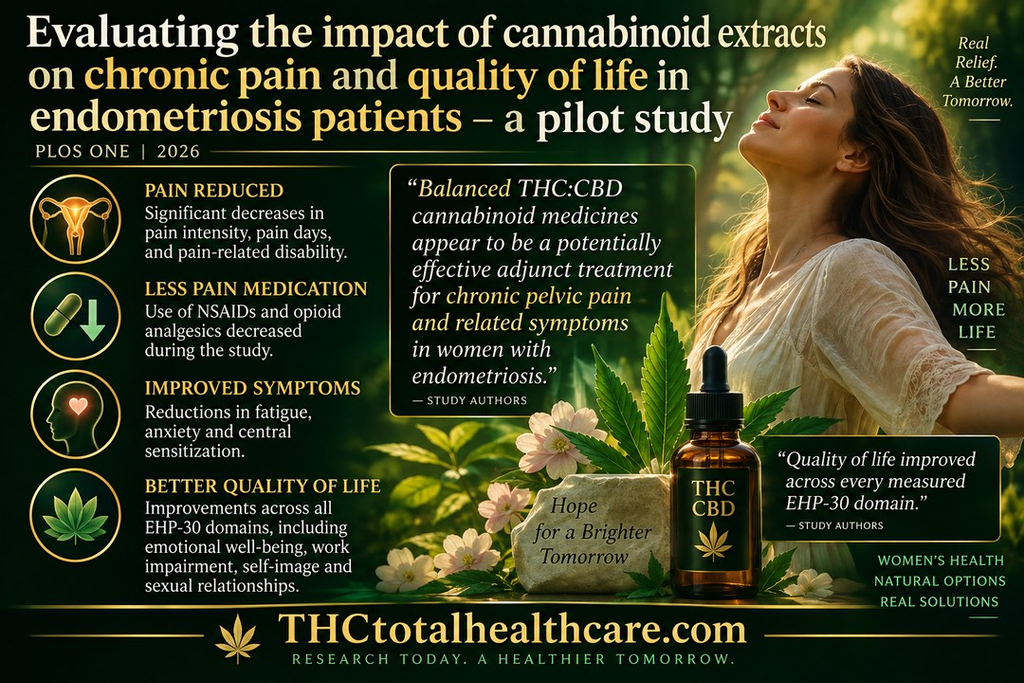
Evaluating the impact of cannabinoid extracts on chronic pain and quality of life in endometriosis patients – a pilot study

Women with endometriosis and chronic pelvic pain experienced significant improvements after adding a balanced oral THC cannabis extract to their existing treatment. In this prospective pilot study, 27 women completed three months of treatment, with benefits appearing within the first month and continuing through the study period.

Pain intensity fell significantly, along with the number of pain days and the need for conventional pain medicines. Use of both NSAIDs and opioid analgesics decreased, while fatigue, anxiety, central sensitization and pain-related disability also improved.

Quality of life improved across every measured EHP-30 domain, including pain, emotional well-being, work impairment, self-image and sexual relationships. The authors concluded that balanced THC cannabinoid medicines appear to be a potentially effective adjunct treatment for chronic pelvic pain and related symptoms in women with endometriosis.

“Endometriosis is a chronic gynecological disorder characterized by persistent pain and impaired quality of life, with limited effective treatment options. Emerging evidence indicates that cannabinoids may provide analgesic and symptom-relieving effects in chronic pain conditions.

This prospective single-center cohort study investigated the effects of standardized oral cannabis extracts (cannabinoid-based medicinal products, CBMPs) on pain and quality of life in women with endometriosis.

Thirty premenopausal women aged 18-45 years with confirmed endometriosis and chronic pelvic pain were enrolled; 27 completed the 3-month treatment period. Participants received oral CBMPs containing a balanced THC: CBD ratio. Pain intensity, frequency of pain episodes, analgesic use, fatigue, anxiety, central sensitization, disability, and quality of life were assessed using validated questionnaires (VAS, EHP-30, PDI, CFS, GAD-7, CSI).

Significant improvements were observed after one month of treatment, with continued benefit over three months. Pain intensity decreased markedly (p = 0.0004), accompanied by reductions in the number of pain days and analgesic use, including both NSAIDs (e.g., ibuprofen, diclofenac) and opioid analgesics (e.g., tramadol, tilidin, oxycodone) (p < 0.001). Fatigue (p = 0.0013), anxiety (p < 0.0001), central sensitization (p < 0.0001), disability (p < 0.0001), and overall quality of life (EHP-30) improved significantly.

Treatment was well tolerated; side effects were predominantly mild (severity score 1 on a 0-3 scale) and transient, occurring mainly during the titration phase and declining thereafter. Although limited by its single-center design, lack of placebo control, and short follow-up, this study provides preliminary evidence that oral CBMPs may represent a safe and effective adjunct therapy for managing pain and related symptoms in women with endometriosis. Larger randomized controlled trials are warranted to confirm these findings and establish optimal dosing strategies.”

https://pubmed.ncbi.nlm.nih.gov/42771648

“In conclusion, oral CBMPs with balanced THC: CBD ratios seem to be a safe and potentially effective adjunct therapy for chronic pelvic pain and related symptoms in women with endometriosis. By targeting both nociceptive and neuropsychological aspects of the condition, CBMPs can supplement existing pharmacological and lifestyle strategies, providing a more comprehensive approach to symptom management. These findings establish a basis for future controlled studies to refine dosing, investigate mechanisms, and assess long-term outcomes in this complex patient group.”

https://journals.plos.org/plosone/article?id=10.1371/journal.pone.0356768
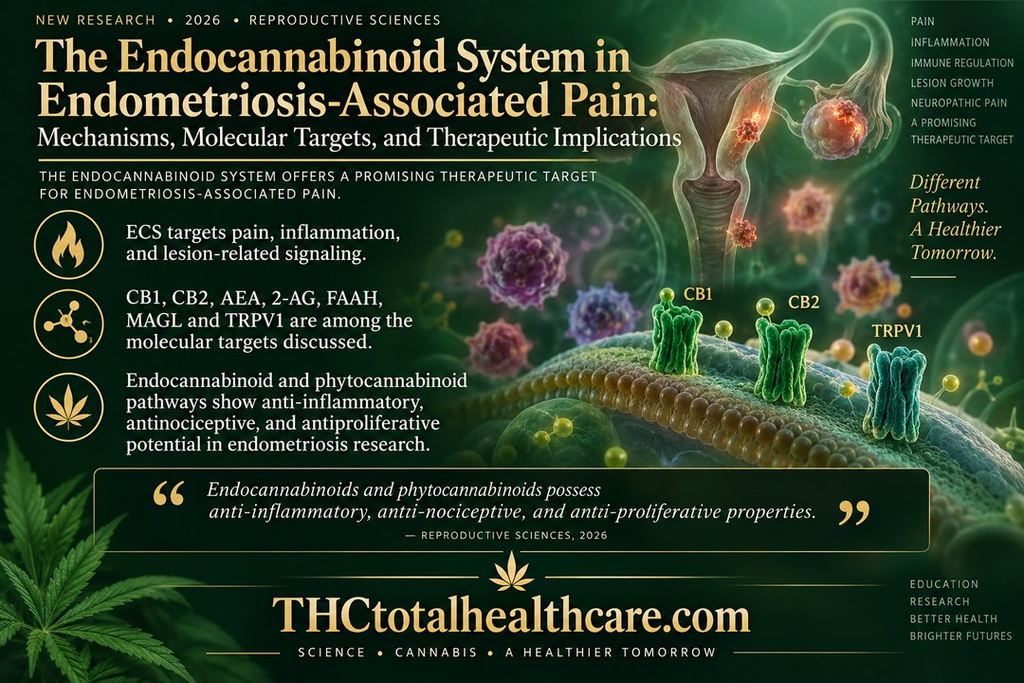
The Endocannabinoid System in Endometriosis-Associated Pain: Mechanisms, Molecular Targets, and Therapeutic Implications

A new 2026 review published in Reproductive Sciences examines the endocannabinoid system (ECS) as a therapeutic target for endometriosis-associated pain, a condition that can cause severe pelvic pain, painful menstruation, painful intercourse, and other chronic symptoms. The authors highlight the ECS because of its established roles in regulating pain, inflammation, and immune activity.

The review found that cannabinoids may influence three major mechanisms involved in endometriosis-associated pain: inflammation, pain signaling and sensitization, and the growth of endometriotic lesions. Cannabinoids interact with both cannabinoid and non-cannabinoid receptors found in endometriotic tissue, while also reducing inflammatory signaling from immune cells such as mast cells and macrophages.

The researchers conclude that the endocannabinoid system is a promising therapeutic target for endometriosis-associated pain, with cannabinoid therapies showing potential to regulate nociception, inflammation, and lesion proliferation. They call for clinical trials to further evaluate cannabinoid-based treatments for people living with endometriosis.

“Endometriosis is a chronic gynecological disorder affecting approximately 10% of reproductive-age women, characterized by the ectopic growth of endometrial tissue and severe pain, including dysmenorrhea, chronic pelvic pain, dyspareunia, dysuria, and dyschezia. Current treatments are limited in efficacy and associated with significant side effects, underscoring the urgent need for novel therapeutic strategies.

The endocannabinoid system (ECS) has emerged as a promising therapeutic target, given its well-established roles in pain modulation, inflammation, and immune regulation. Epidemiological evidence demonstrates that women with endometriosis increasingly use cannabis for symptom self-management, yet the underlying mechanisms remain poorly characterized.

This review integrates preclinical and human evidence to comprehensively evaluate the mechanistic basis of cannabinoid efficacy in endometriosis-associated pain. Evidence from in vitro studies and animal models indicates that cannabinoids target three main mechanisms of endometriosis-associated pain, including inflammation, nociceptive signaling, and lesion proliferation.

Cannabinoids suppress pain signaling and sensitization by interacting with cannabinoid and non-cannabinoid receptors expressed in endometriotic lesions. Cannabinoids attenuate endometriosis-induced inflammation by inhibiting proinflammatory cytokine signaling and reducing the release of inflammatory mediators by mast cells and peritoneal macrophages. Cannabinoids also exert antiproliferative effects in endometriosis models, thereby suppressing the growth of endometriotic lesions.

In conclusion, the ECS is a promising therapeutic target for endometriosis-associated pain, as it regulates nociception, inflammation, and proliferation. These promising findings highlight the potential therapeutic benefits of cannabinoids for endometriosis-associated pain, warranting the need for clinical trials to evaluate the safety and effectiveness of cannabinoid therapies in endometriosis.”

https://pubmed.ncbi.nlm.nih.gov/42745018

https://link.springer.com/article/10.1007/s43032-026-02201-9

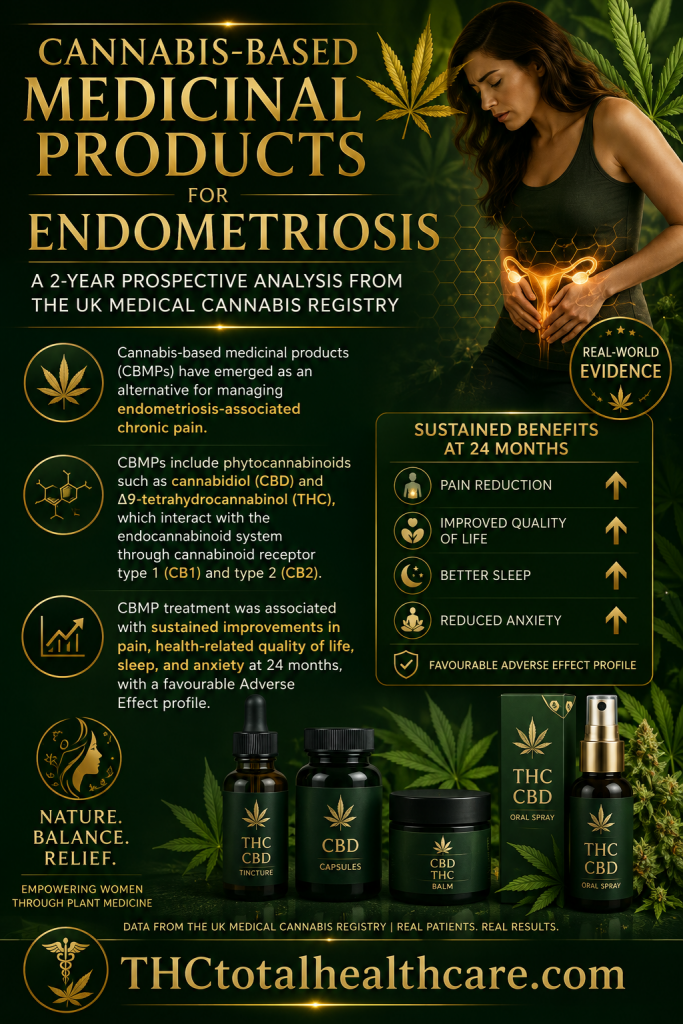
Cannabis-Based Medicinal Products for Endometriosis: A 2-Year Prospective Analysis From the UK Medical Cannabis Registry

Endometriosis can cause persistent pelvic pain, sleep disturbance, and reduced quality of life despite conventional treatment. In this prospective registry study, patients prescribed cannabis-based medicinal products reported sustained improvements in pain, sleep, anxiety, and overall quality of life over two years, with adverse effects generally mild to moderate.

“Background: Endometriosis affects up to 10% of biological females of reproductive age. Current treatment options are limited and often unsuitable for prolonged use. Cannabis-based medicinal products (CBMPs) have emerged as an alternative for pain management.

Aims: To analyse changes in patient-reported outcome measures (PrOMs), prescribed opioid burden, and the prevalence of adverse events (AEs) in patients prescribed CBMPs for endometriosis-associated pain.

Materials and methods: This was an observational analysis of prospectively collected data from the UK Medical Cannabis Registry. Biological females (≥ 18 years) with a primary diagnosis of endometriosis, enrolled ≥ 2 years prior to data extraction on 06/01/2025, were included. PrOMs and prescribed oral morphine equivalents (OME) were assessed between baseline and 1, 3, 6, 12, 18, and 24 months. Changes from baseline were assessed by repeated-measures ANOVA and Bonferroni-adjusted post hoc pairwise t-tests. p < 0.050 was considered statistically significant.

Results: One hundred and one patients were included. Improvements from baseline were observed in BPI Severity, BPI Interference, SF-MPQ-2 Total, Pain VAS, EQ-5D-5L Index, GAD-7, and SQS at all follow-ups (p < 0.001). Mean prescribed OME decreased from 19.9 ± 17.2 mg/day at baseline to 14.8 ± 15.9 mg/day at 24 months. Eighteen participants (17.8%) reported 165 AEs, of which 84 (50.9%) were mild. The most frequent were fatigue (n = 16; 15.8%), lethargy (n = 15; 14.9%), and headache (n = 13; 12.9%).

Conclusion: CBMP treatment was associated with sustained improvements in pain, health-related quality of life, sleep, and anxiety at 24 months, with a favourable AE profile. Randomised controlled trials are required to establish efficacy and safety.”

https://pubmed.ncbi.nlm.nih.gov/42576801

“Cannabis-based medicinal products (CBMPs) have emerged as an alternative for managing endometriosis-associated chronic pain.

CBMPs include phytocannabinoids such as cannabidiol (CBD) and Δ9-tetrahydrocannabinol (THC), which interact with the endocannabinoid system through cannabinoid receptor type 1 (CB1) and type 2 (CB2).

Anandamide, an endogenous cannabinoid, binds to these receptors to modulate pain. THC is a partial agonist of CB1 and CB2, while CBD increases anandamide by inhibiting its breakdown.”

https://obgyn.onlinelibrary.wiley.com/doi/10.1111/ajo.70173

Perceived impact of medicinal cannabis on pelvic pain and endometriosis related symptoms in Aotearoa New Zealand: an observational cohort study

“Endometriosis, characterised by the growth of endometrial-like tissue outside the uterus, often causes severe pelvic pain, dysmenorrhea, and fatigue. Current medical treatments frequently provide incomplete symptom control and/or significant side effects. Many individuals with endometriosis report symptom improvements with cannabis use, but high-quality evidence remains limited.

Methods

A prospective, mixed-methods cohort study was conducted. Participants aged 18–50 years with surgically or clinically diagnosed endometriosis self-engaged with a specialist consultant and were prescribed medicinal cannabis (cannabidiol [CBD] oil alone or in combination with dried cannabis flower). Weekly pain scores, and health-related quality of life (measured by the Endometriosis Health Profile-30 [EHP-30]) were assessed via surveys and standardised questionnaires over three months. Completion interviews were conducted to explore participants’ experiences with medicinal cannabis in greater depth.

Results

Participants reported limited adverse events during the study period. Pelvic pain scores decreased over 12 weeks: ‘overall’ pain reduced from 5.46 ± 1.55 (95% CI 0.57) to 3.77 ± 2.25 (95% CI 0.83), and ‘worst’ pain decreased from 7.62 ± 1.51 (95% CI 0.56) to 5.38 ± 2.69 (95% CI 1.00). The mean total EHP-30 score significantly decreased from 68.77 ± 15.17 (95% CI 5.61) to 37.40 ± 16.66 (95% CI 6.17). Qualitative analysis identified four major themes: motivations for seeking medicinal cannabis, experiences of use, barriers to use, and stigma.

Conclusions

Medicinal cannabis use was associated with reduction in pain measures and improvements in quality of life among some individuals with endometriosis during this study. Qualitative findings highlighted both perceived benefits and ongoing challenges related to access, dosage and social stigma. These results support the need for larger controlled studies to further evaluate the safety, efficacy, and long-term outcomes of medicinal cannabis as an adjunctive therapy for endometriosis-related pain.”

https://pubmed.ncbi.nlm.nih.gov/41566248

https://link.springer.com/article/10.1186/s12906-025-05189-y

A Longitudinal Assessment of Endometriosis Patients Prescribed Cannabis-Based Medicinal Products: A Case Series From the UK Medical Cannabis Registry

pubmed logo

“Background: Although there is growing evidence supporting the use of cannabis-based medicinal products (CBMPs) for the management of chronic pain, there is a paucity of data on their effect on endometriosis-associated chronic pain.

Aims: This study aimed to perform an analysis of pain-specific and general health-related quality of life (HRQoL) outcomes for patients with endometriosis-associated chronic pain treated with CBMPs.

Materials and methods: Primary outcomes included changes in patient-reported outcome measures (PrOMs) from baseline to 1, 3, 6, 12 and 18 months. A repeated measures ANOVA was applied to assess changes in PrOMs at 1 to 18 months from baseline. Secondary outcomes included incidence and frequency of adverse events (AEs).

Results: Sixty-three patients met inclusion criteria. Initiation of CBMPs was associated with improvements in all pain-specific PrOMs from baseline to 18 months (p < 0.050). EQ-5D-5L index value showed improvements between baseline and all months (p < 0.050). Anxiety and sleep quality PrOMs showed improvements from baseline to 18 months (p < 0.050). Minimal clinically significant differences (11%-37%), moderately important improvements (5%-22%) and substantial improvements (0%-11%) were observed in the Brief Pain Inventory (BPI) and pain severity visual analogue scale. Sixty-two adverse events were reported by 16 (25.40%) participants.

Conclusions: This study observed an association between CBMP treatment and improvements in pain and HRQoL in patients with endometriosis. Causality cannot be inferred due to the nature of this observational study; however, these findings provide complementary evidence for the development of randomised controlled trials to assess the efficacy of CBMPs for endometriosis-associated chronic pain.”

https://pubmed.ncbi.nlm.nih.gov/41305963

“Cannabis-based medicinal products (CBMPs) that contain phytocannabinoids, such as (−)-trans-Δ9-tetrahydrocannabinol (Δ9-THC) and cannabidiol (CBD), have been identified with potential to manage endometriosis-related pain.”

“Overall, these results provide a signal towards improvement in short-term pain severity and interference for endometriosis patients after the initiation of CMBP treatment, although there was diversity at different pain intervals.”

https://obgyn.onlinelibrary.wiley.com/doi/10.1111/ajo.70078

Cannabidiol and ∆9-Tetrahydrocannabinol in Endometriosis: A Literature Review on Therapeutic Applications and Mechanisms

pubmed logo

“Endometriosis is a chronic, inflammatory, and multifactorial disease characterized by the presence of endometrial tissue outside the uterine cavity, often associated with debilitating symptoms. It affects approximately 10% of women of reproductive age and is also related to infertility. Endometriosis can be classified as peritoneal, ovarian, or deep endometriosis, with primary symptoms including chronic pelvic pain, dysmenorrhea, and dyspareunia. Diagnosis and treatment are challenging, with laparoscopy and biopsy of ectopic tissue being the gold standard.

Cannabidiol (CBD) and ∆9-tetrahydrocannabinol (THC) are two major cannabinoids found in the Cannabis sativa plant, widely known for their medicinal properties.

An experimental study conducted in rats demonstrated the anti-inflammatory, antioxidant, and antiangiogenic effects of intraperitoneal CBD use in the treatment of endometriosis. The objective of the present study was to conduct a literature review on the therapeutic potential of Cannabidiol (CBD) and ∆9-Tetrahydrocannabinol (THC) in the signs and symptoms of endometriosis. Research on PubMed, Embase, and Scopus platforms was conducted to determine the reproducibility and safety of treatment in humans, including dosage and administration route, as the current use is off-label.”

https://pubmed.ncbi.nlm.nih.gov/41248202


Should cannabis be used in the management of endometriosis?

pubmed logo

“Introduction: Endometriosis is a chronic inflammatory condition that affects around 1 in 7 women of reproductive age. Current medical treatments tend to be sub-optimal to manage the range of symptoms, with low levels of patient satisfaction. Cross-sectional and retrospective data suggests that people with endometriosis are consuming cannabis to help manage their symptoms.

Areas covered: This review discusses the evidence for consumption of medicinal cannabis to help manage endometriosis symptoms, including potential mechanisms of action from both animal models and human studies, usage in the community, the current evidence from clinical trials and observational studies, and the safety and potential drug interactions.

Expert opinion: While there is a lack of high-quality clinical trial evidence, significant self-reported evidence from cross-sectional surveys and retrospective observational data suggests that those consuming medicinal cannabis report reductions in endometriosis symptoms such as pelvic pain, dysmenorrhea and gastrointestinal symptoms, and improve mental health and sleep. Given the low levels of satisfaction with current treatment options, consideration should be given to trialing medicinal cannabis as part of the interdisciplinary management of endometriosis in those who express interest and who do not demonstrate any significant contraindications.”

https://pubmed.ncbi.nlm.nih.gov/41070712/

  • “Less than 25% of women with endometriosis report satisfaction with current conventional treatments with high discontinuation rates due to ineffectiveness and side effects.
  • Dysregulation of the endocannabinoid system in endometriosis, including reduced CB₁ receptors and elevated endocannabinoid levels, provides biological plausibility for therapeutic intervention through TRPV1 modulation and PPARγ activation.
  • Cannabis consumption is associated with self-reported reductions in pain, gastrointestinal symptoms and nausea, and improvements in sleep quality and mental health.
  • Cannabis consumption is associated with reductions in potentially addictive medications such as opioids and benzodiazepines; however these reductions should be done under the guidance of a physician.
  • Despite promising preclinical data and substantial observational evidence, robust randomized controlled trial data in humans remains lacking, preventing recommendation of more widespread adoption as a treatment.”

https://www.tandfonline.com/doi/full/10.1080/17446651.2025.2572339

Endocannabinoids and their receptors modulate endometriosis pathogenesis and immune response

pubmed logo

“Endometriosis (EM), characterized by the presence of endometrial-like tissue outside the uterus, is the leading cause of chronic pelvic pain and infertility in females of reproductive age. Despite its high prevalence, the molecular mechanisms underlying EM pathogenesis remain poorly understood.

The endocannabinoid system (ECS) is known to influence several cardinal features of this complex disease including pain, vascularization, and overall lesion survival, but the exact mechanisms are not known. Utilizing CNR1 knockout (k/o), CNR2 k/o, and wild-type (WT) mouse models of EM, we reveal contributions of ECS and these receptors in disease initiation, progression, and immune modulation. Particularly, we identified EM-specific T cell dysfunction in the CNR2 k/o mouse model of EM. We also demonstrate the impact of decidualization-induced changes on ECS components, and the unique disease-associated transcriptional landscape of ECS components in EM. Imaging mass cytometry (IMC) analysis revealed distinct features of the microenvironment between CNR1, CNR2, and WT genotypes in the presence or absence of decidualization.

This study, for the first time, provides an in-depth analysis of the involvement of the ECS in EM pathogenesis and lays the foundation for the development of novel therapeutic interventions to alleviate the burden of this debilitating condition.”

https://pubmed.ncbi.nlm.nih.gov/39120997/

“In conclusion, our study offers evidence for the involvement of CNR1 and CNR2 dysregulation in EM pathogenesis. Through an integrative analysis of transcriptomic profiles, immune cell dynamics, and spatial relationships within EM lesions from mice, we unveil the intricate interactions between ECS, immune responses, and cellular changes in EM. By identifying potential mechanisms through which ECS disruption could impact EM, our research provides a foundation for the development of targeted therapies addressing the ECS’s influence on EM. These findings will advance our understanding of EM and lead to innovative therapeutic strategies to manage this complex disorder.”

https://elifesciences.org/articles/96523

Cannabidiol as a possible treatment for endometriosis through suppression of inflammation and angiogenesis

pubmed logo

“Background: Endometriosis is associated with a wide variety of signs and symptoms and can lead to infertility, embryo death, and even miscarriage. Although the exact pathogenesis and etiology of endometriosis is still unclear, it has been shown that it has a chronic inflammatory nature and angiogenesis is also involved in it.

Objective: This review aims to explore the role of inflammation and angiogenesis in endometriosis and suggest a potential treatment targeting these pathways.

Findings: Among the pro-inflammatory cytokines, studies have shown solid roles for interleukin 1β (IL-β), IL-6, and tumor necrosis factor α (TNF-α) in the pathogenesis of this condition. Other than inflammation, angiogenesis, the formation of new blood vessels from pre-existing capillaries, is also involved in the pathogenesis of endometriosis. Among angiogenic factors, vascular endothelial growth factor (VEGF), hypoxia-inducible factor 1α (HIF-1α), transforming growth factor β1 (TGF-β1), and matrix metalloproteinases (MMPs) are more essential in the pathogenesis of endometriosis. Interestingly, it has been shown that inflammation and angiogenesis share some similar pathways with each other that could be potentially targeted for treatment of diseases caused by these two processes. Cannabidiol (CBD) is a non-psychoactive member of cannabinoids which has well-known and notable anti-inflammatory and antiangiogenic properties. This agent has been shown to decrease IL-1β, IL-6, TNF-α, VEGF, TGFβ, and MMPs in different animal models of diseases.

Conclusion: It seems that CBD could be a possible treatment for endometriosis due to its anti-inflammatory and antiangiogenic activity, however, further studies are needed.”

https://pubmed.ncbi.nlm.nih.gov/39110084/

“So far, the exact mechanism of endometriosis is not fully understood. However, this phenomenon is known as a chronic inflammatory condition accompanied with angiogenesis. Herein, we reviewed the inflammatory aspects of this disease with an eye on angiogenesis. As we showed, the molecular pathways of angiogenesis and inflammation have a lot in common. Thus, it seems that targeting inflammation could be considered hitting two birds with one stone. Considering the potent anti-inflammatory and antiangiogenic effects of CBD under various other conditions, authors suggest in vitro and in vivo studies on CBD and endometriosis.”

https://onlinelibrary.wiley.com/doi/10.1002/iid3.1370

Cannabis and Endometriosis: The Roles of the Gut Microbiota and the Endocannabinoid System

pubmed logo

“Endometriosis, a chronic condition affecting around 10-14% of women, is challenging to manage, due to its complex pathogenesis and limited treatment options. Research has suggested a potential role of the gut microbiota and the endocannabinoid system in the development and progression of endometriosis. This narrative review aims to explore the role of, and any potential interactions between, the endocannabinoid system (ECS) and the gut microbiota in endometriosis. This review found that both the ECS and microbiota influence endometriosis, with the former regulating inflammation and pain perception and the latter influencing immune responses and hormonal balance. There is evidence that a dysregulation of the endocannabinoid system and the gut microbiota influence endometriosis symptoms and progression via changes in CB1 receptor expression and increased circulating levels of endocannabinoids. Microbial imbalances in the gut, such as increases in Prevotella, have been directly correlated to increased bloating, a common endometriosis symptom, while increases in E. coli have supported the bacterial contamination hypothesis as a potential pathway for endometriosis pathogenesis. These microbial imbalances have been correlated with increases in inflammatory markers such as TNF-α and IL-6, both often raised in those with endometriosis. Protective effects of the ECS on the gut were observed by increases in endocannabinoids, including 2-AG, resulting in decreased inflammation and improved gut permeability. Given these findings, both the ECS and the gut microbiota may be targets for therapeutic interventions for endometriosis; however, clinical studies are required to determine effectiveness.”

https://pubmed.ncbi.nlm.nih.gov/38002684/

https://www.mdpi.com/2077-0383/12/22/7071