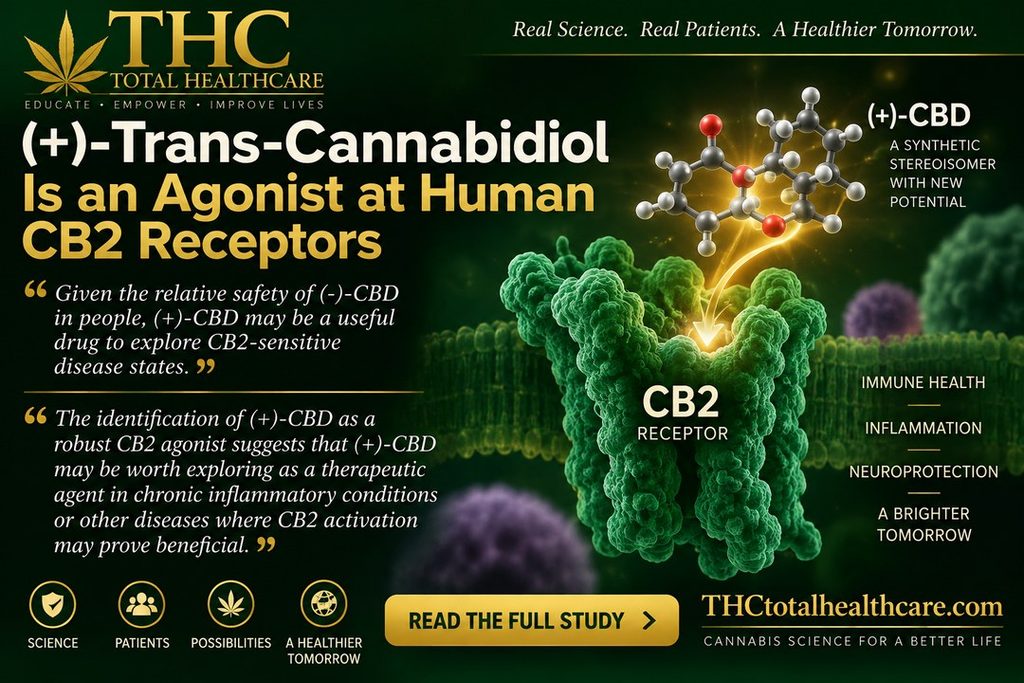
(+)-Trans-Cannabidiol Is an Agonist at Human CB2 Receptors

A new 2026 study reports that (+)-trans-cannabidiol [(+)-CBD] acts as an agonist at human CB2 cannabinoid receptors, activating a major receptor of the endocannabinoid system involved in immune and inflammatory signaling.

Researchers found that (+)-CBD produced a strong, concentration-dependent CB2 response, reaching roughly 90% of the maximum effect produced by the reference cannabinoid agonist CP55940. Additional testing indicated that the compound acts through the receptor’s primary, or orthosteric, binding site.

The findings show that different molecular forms of cannabidiol can interact with cannabinoid receptors in very different ways. The researchers conclude that (+)-CBD may deserve further study in CB2-sensitive disease states, adding another layer to our understanding of how cannabinoid chemistry can influence the human endocannabinoid system.

“(-)-trans-Cannabidiol ((-)-CBD) is a principal phytocannabinoid from Cannabis sativa. (-)-CBD has complex pharmacology but is a relatively weak inhibitor of CB1 and CB2 receptor signaling. Cannabidiol has two chiral centres and thus four stereoisomers. (+)-trans-CBD ((+)-CBD) has a higher affinity than (-)-CBD at CB1 and CB2, but its pharmacodynamic effects at these receptors are incompletely described.

We examined the activity of (+)-CBD at human CB1 and CB2 receptors using a fluorescence-based assay of membrane potential in AtT20 cells stably expressing CB1 or CB2 receptors.

(+)-CBD produced a rapid, concentration-dependent hyperpolarization in CB2-expressing cells (pEC50 6.63 ± 0.08) with a maximal effect 90% of the response to CP55940. The CB2 response was blocked by pertussis toxin pretreatment and competitively inhibited by the CB2 antagonist AM630 (Schild slope 1.1 ± 0.1). (+)-CBD was a low-efficacy, low-potency CB1 agonist and inhibited somatostatin-receptor effects at high concentrations (10-30 μM). (+)-CBD had no effect on the membrane potential of AtT20 wild-type cells. In silico modeling of ligand interactions with CB2 indicated that (+)-CBD but not (-)-CBD formed an H-bond with Ser285, a residue crucial for agonist activation of CB2.

Our data suggests (+)-CBD acted as a CB2 agonist via the orthosteric binding site on the receptor. Synthetic CBD, including (+)-CBD, has previously been administered in clinical trials, presumably without consideration of its potential CB2 agonist activity.

Given the relative safety of (-)-CBD in people, (+)-CBD may be a useful drug to explore CB2-sensitive disease states.”

https://pubmed.ncbi.nlm.nih.gov/42745361

“This study emphasizes the importance of understanding the molecular actions of the enantiomers of chiral cannabinoids. Although the safety of (+)-CBD cannot simply be assumed to be the same as (−)-CBD, the identification of (+)-CBD as a robust CB2 agonist suggests that (+)-CBD may be worth exploring as a therapeutic agent in chronic inflammatory conditions or other diseases where CB2 activation may prove beneficial.”

https://bpspubs.onlinelibrary.wiley.com/doi/10.1002/prp2.70325
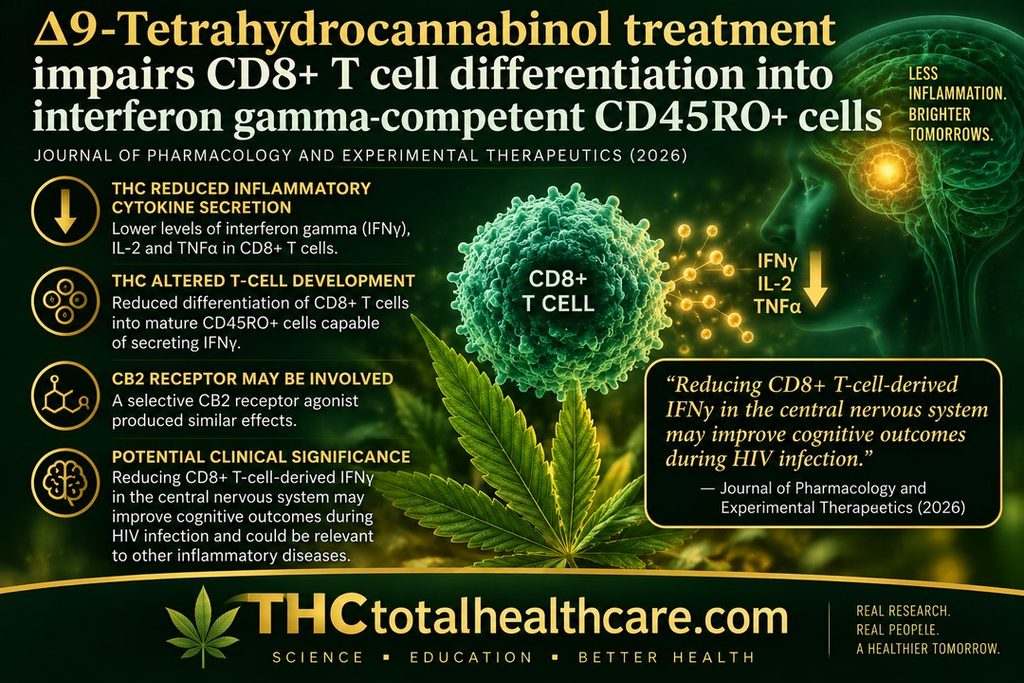
Δ9-Tetrahydrocannabinol treatment impairs CD8+ T cell differentiation into interferon gamma-competent CD45RO+ cells

New research published in The Journal of Pharmacology and Experimental Therapeutics shows that Δ9-tetrahydrocannabinol (THC) can alter the development of CD8+ T cells involved in inflammatory immune responses. Researchers found that THC reduced secretion of interferon gamma (IFNγ), interleukin-2 (IL-2), and tumor necrosis factor alpha (TNFα), three signaling molecules involved in immune activation and inflammation.

Rather than simply preventing cells from producing IFNγ, THC appeared to change how the T cells developed. THC reduced the differentiation of CD8+ T cells into mature CD45RO+ cells capable of secreting IFNγ. A selective CB2 receptor agonist produced similar effects, suggesting that activation of the cannabinoid CB2 receptor may play an important role in THC’s immune-modulating activity.

The researchers examined these effects partly because IFNγ-producing CD8+ T cells contribute to persistent neuroinflammation associated with HIV-associated neurocognitive disorders. They concluded that reducing CD8+ T-cell-derived IFNγ in the central nervous system may potentially improve cognitive outcomes during HIV infection, while noting that the findings may also have relevance to other inflammatory diseases involving IFNγ-producing CD8+ T cells.

“Chronic human immunodeficiency virus (HIV) infection results in a persistent state of neuroinflammation, even with combined antiretroviral therapy. Neuroinflammation contributes to pathology termed HIV-associated neurocognitive disorder, which is exacerbated by interferon gamma (IFNγ)-producing CD8+ T cells in the central nervous system.

Many people living with HIV self-report using Cannabis sativa to mitigate symptoms of chronic infection and side effects of treatment. C. sativa is composed of various phytocannabinoids, including Δ9-tetrahydrocannbinol (THC), which possesses immune-modulating properties.

This study aims to determine whether C. sativa use by people living with HIV, and specifically THC, affects IFNγ secretion by CD8+ T cells.

We found that HIV status does not influence T cell IFNγ responses, and C sativa use modestly reduces the average secretion of IFNγ by CD8+ T cells from HIV+ donors. Treatment of CD8+ T cells with THC and the selective cannabinoid receptor 2 agonist, JWH-015, reduced T-cell cytokine secretion, with THC eliciting greater suppression than cannabidiol.

These results suggest that THC treatment does not directly impair IFNγ gene expression or protein production, as determined by polymerase chain reaction and flow cytometry. However, THC treatment impaired CD8+ T cell differentiation into IFNγ-competent CD45RO+ cells.

These studies are of clinical relevance because reduction of CD8+ T-cell-derived IFNγ in the central nervous system may improve cognitive outcomes during HIV infection. Furthermore, these findings may be generalizable to other inflammatory diseases in which IFNγ-producing CD8+ T cells have been implicated.

SIGNIFICANCE STATEMENT: Δ9-Tetrahydrocannbinol (THC) treatment reduces CD8+ T cell interferon gamma (IFNγ) secretion isolated from HIV- and HIV+ individuals. THC and the selective cannabinoid receptor 2 agonist, JWH-015, both reduced CD8+ T cell secretion of IFNγ, interleukin 2, and tumor necrosis factor α, suggesting the involvement of cannabinoid receptor 2. Although THC treatment does not suppress IFNγ mRNA or protein levels, it reduces the number of IFNγ-secreting cells by impairing CD8+ T-cell differentiation into IFNγ-competent CD45RO+ cells.”

https://pubmed.ncbi.nlm.nih.gov/42748512

https://jpet.aspetjournals.org/article/S0022-3565(26)01210-3/abstract

Need this THC study explained? thcXplained.com

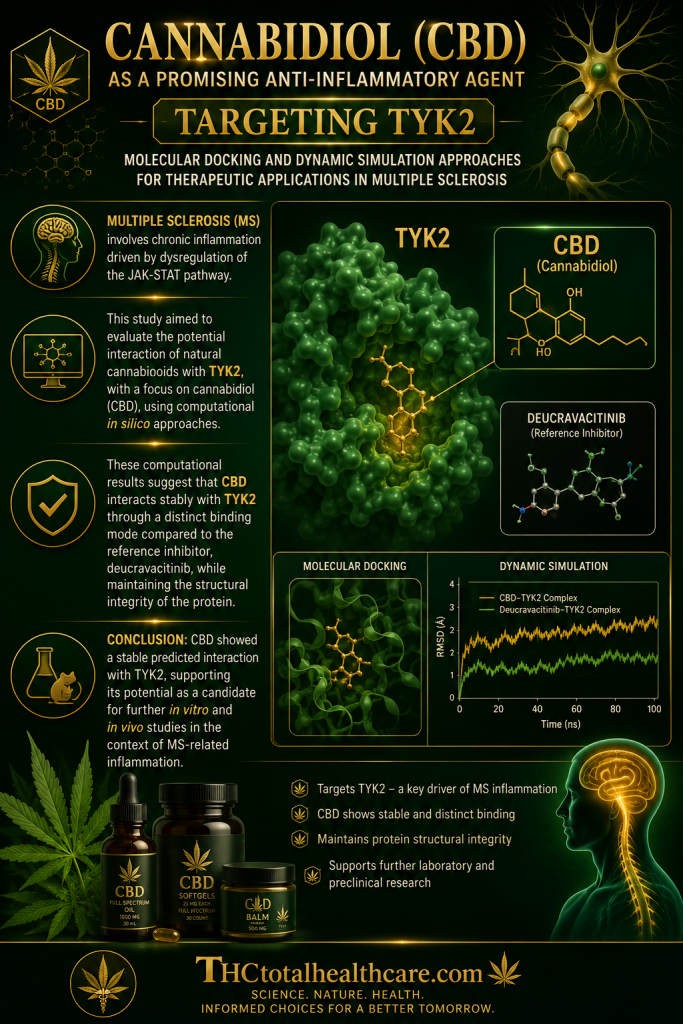
Cannabidiol as a Promising Anti-Inflammatory Agent Targeting TYK2: Molecular Docking and Dynamic Simulation Approaches for Therapeutic Applications in Multiple Sclerosis

TYK2 is an important regulator of inflammatory signaling and has emerged as a therapeutic target in autoimmune diseases including multiple sclerosis. In this computational study, cannabidiol (CBD) showed favorable binding and stable interactions with TYK2, supporting further investigation of CBD as a potential anti-inflammatory compound targeting pathways involved in MS.

“Introduction: Multiple sclerosis (MS) involves chronic inflammation driven by dysregulation of the JAK-STAT pathway. This study aimed to evaluate the potential interaction of natural cannabinoids with TYK2, with a focus on cannabidiol (CBD), using computational in silico approaches.

Methods: A combined molecular docking and molecular dynamics (MD) workflow was used. Cannabinoid ligands and the TYK2 structure (JH2 domain) were prepared and docked in MOE, followed by 20 ns MD simulations under NVT and NPT conditions in GROMACS. Complex stability and ligand-protein interactions were analysed.

Results: CBD showed a competitive docking score (-7.31 kcal/mol) and a refined RMSD of 0.9198 Å. MD simulations revealed a stable CBD-TYK2 complex, with RMSD fluctuations of 0.15-0.20 nm, which were lower than those observed for the reference inhibitor, deucravacitinib. RMSF analysis revealed a slight increase in local flexibility in specific regions without affecting the overall stability of the protein. The radius of gyration remained stable throughout the simulation, indicating that the protein’s compactness was preserved. Hydrogen bond analysis showed fewer but transient interactions for CBD, consistent with a binding mode dominated by hydrophobic interactions.

Discussion: These computational results suggest that CBD interacts stably with TYK2 through a distinct binding mode compared to the reference inhibitor, deucravacitinib, while maintaining the structural integrity of the protein.

Conclusion: CBD showed a stable predicted interaction with TYK2, supporting its potential as a candidate for further in vitro and in vivo studies in the context of MS-related inflammation.”

https://pubmed.ncbi.nlm.nih.gov/42576587

https://www.eurekaselect.com/article/157501

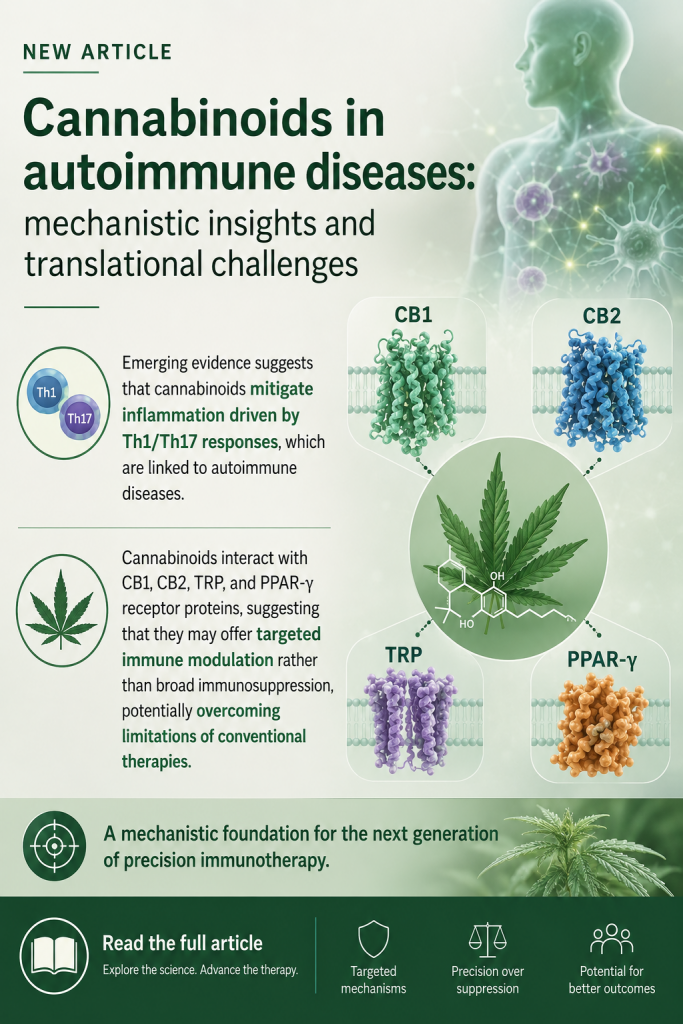
Cannabinoids in autoimmune diseases: mechanistic insights and translational challenges

Cannabinoids are increasingly being investigated in autoimmune disease because of their ability to influence immune-cell activity, inflammatory signaling, and the balance between immune activation and tolerance. This review examines evidence across conditions such as multiple sclerosis, rheumatoid arthritis, inflammatory bowel disease, and other immune-mediated disorders, highlighting how cannabinoid receptors and related pathways can suppress excessive inflammation and modulate abnormal immune responses. The findings support the endocannabinoid system as an important therapeutic target and show that cannabinoid-based treatments may have broad potential across several autoimmune conditions.

“Cannabinoids are traditionally recognized for their effect on the nervous system. Emerging evidence suggests that cannabinoids mitigate inflammation driven by Th1/Th17 responses, which are linked to autoimmune diseases.

In addition to their symptomatic, and analgesic effects, cannabinoids suppress the immune response by modulating regulatory T-cell activity, reducing microglial activation, and help in maintaining the integrity of the epithelial barrier. These findings suggest that cannabinoids may be involved in immune, and metabolic regulatory pathways.

Despite the promising preclinical data, translating these findings into effective treatments for autoimmune disorders has proven challenging. Current human studies have primarily focused on symptomatic relief such as reducing spasticity, managing pain, improving sleep quality, and boosting appetite. However, few trials have included immune profiling, i.e., assessed cytokine panels, performed immune cell phenotyping, tracked relapses, or utilized inflammation-focused imaging endpoints. Consequently, documented benefits are primarily symptomatic, while potential disease-modifying effects are not yet adequately studied.

Cannabinoids interact with CB1, CB2, TRP, and PPAR-γ receptor proteins, suggesting that they may offer targeted immune modulation rather than broad immunosuppression, potentially overcoming limitations of conventional therapies.

Moreover, new compounds like cannabigerol (CBG), cannabidivarin (CBV), and CB2-selective agonists with minimal psychoactivity offer expanded therapeutic options. However, challenges persist due to variability in formulations, bioavailability issues, regulatory hurdles, and a lack of long-term safety data. Future clinical development will require standardised GMP-grade preparations, robust pharmacokinetic evaluation, and trials that include immune-related endpoints such as T-cell polarisation, inflammasome markers, oxidative stress profiles, microbiome signatures, and longitudinal imaging, to clarify their therapeutic potential in autoimmune diseases.”

https://pubmed.ncbi.nlm.nih.gov/42105814

“Cannabinoids are versatile bioactive compounds that modulate immune function, and inflammation through classical (CB1, CB2), and non-classical pathways [(TRP channels; TRPV1, TRPA1), PPAR-γ), and orphan GPCRs (GPR55, GPR18)]. They engage interconnected signalling networks rather than a single dominant mechanism, collectively influencing immune cell function.”

https://www.sciencedirect.com/science/article/abs/pii/S0006295226003655?via%3Dihub

“List of Autoimmune Diseases”

https://www.ncbi.nlm.nih.gov/books/NBK605867


Cannabinoids in immune system-related diseases: From bench to clinic

pubmed logo

“As a psychoactive drug, marijuana is used for recreational purposes. Given its addictive nature and the serious damage it causes to both individual health and social stability, marijuana has been banned in most countries worldwide. In recent years, with the continuous improvement of basic research, researchers have discovered the vital role of cannabinoids, the primary active ingredient in marijuana, in multiple human systems.

Research found that cannabinoids play roles in regulating immune system function and have therapeutic potential in immune system-related diseases.

However, the use of cannabinoids still poses certain hazards. For instance, the abuse of cannabinoids by pregnant women can exert certain impacts on fetal nervous system development; cannabinoids use can lead to adverse reactions such as dizziness, nausea, and dry mouth. Moreover, there are still numerous contradictions in current research on the effects of cannabinoids, and the mechanisms by which cannabinoids exert protective effects in certain diseases remain unelucidated.

In this review, we systematically discuss the endocannabinoid system and summarize the molecular and cellular bases of cannabinoid function in the immune system, and elucidate the effects of cannabinoids on immune system-related diseases.”

https://pubmed.ncbi.nlm.nih.gov/41146433/

“These findings collectively demonstrate the protective roles of CB1 agonists in immune system-related diseases.”

“These findings underscore the broad therapeutic efficacy of CB2 agonists in immune system-related diseases.”

“Cannabinoids exert immunoregulatory effects by inducing the apoptosis of immune cells, inhibiting immune cell proliferation, suppressing the production of proinflammatory cytokines, and regulating the functions of immune cells such as B cells, NK cells, and Treg cells.”

https://journals.lww.com/cmj/fulltext/9900/cannabinoids_in_immune_system_related_diseases_.1774.aspx

Orally Administered CBD/CBG Hemp Extract Reduces Severity of Ulcerative Colitis and Pain in a Murine Model

“Background: Ulcerative colitis (UC) is an autoimmune disorder characterized by inflammation of the mucosa that gives rise to a disrupted epithelial morphology. Persistent or recurrent inflammation and the debilitating nature of the associated symptoms make treatment of UC challenging. Cannabinoids derived from Cannabis sativa L. have been used for treatment of gastrointestinal disorders due to the wide-ranging therapeutic benefits of these compounds. 

Methods: We evaluated a commercial hemp extract, high in cannabigerol (CBG) and cannabidiol (CBD), as a novel treatment for UC symptoms using the dextran sodium sulfate (DSS) model in mice. Hemp extract was administered via two different routes of administration, intraperitoneal (i.p) and oral (p.o). 

Results: Specifically, we observed that cannabinoid treatment reduced damage to the colonic epithelium. We also observed that CBG/CBD rich hemp extracts help reduce pain-related responses in these animals. 

Conclusions: Together, the data suggest that cannabinoid administration has the potential to be an effective alternate therapeutic option for UC management.”

https://pubmed.ncbi.nlm.nih.gov/40943856/

“Our current findings suggest that minor cannabinoids, particularly CBD and CBG, may prove to be useful, novel therapies for treating IBD. These findings are important because patients already report using cannabis and cannabinoid-based products for managing their symptoms, despite little clinical data to support the use of high-THC products for treating IBD.

In conclusion, our data suggest that HE enriched for CBD and CBG may offer therapeutic potential as a treatment for IBD patients.”

https://www.mdpi.com/2077-0383/14/17/6095

Exploring therapeutic potential of Cannabis based therapy in autoimmune and rheumatic disorders

pubmed logo

“The medical use of cannabis is expanding across many countries, with some legalizing its use outright and others implementing medical licensure systems to approve treatment for eligible patients.

Despite this growing interest and utilization, there remains a lack of solid scientific evidence supporting its medical use, even though cannabis has been used therapeutically for thousands of years.

The goal of the following communication is to present updated data on the potential roles of cannabis-based treatments in various autoimmune and rheumatic conditions.

The information highlights that incorporating cannabis into the therapeutic armamentarium may offer benefits.

However, in many cases, despite encouraging perspectives and outcomes, the supporting evidence remains insufficient and requires further validation.

Due to social and legal barriers, the conduct of such rigorous clinical trials has been hindered, limiting the availability of high-quality evidence to guide medical practice.”

https://pubmed.ncbi.nlm.nih.gov/40907777/

https://www.sciencedirect.com/science/article/abs/pii/S1568997225001867?via%3Dihub

Cannabinoid receptor ligands with potential therapeutic applications and mechanisms of action: a versatile natural therapeutic agent

pubmed logo

“The endocannabinoid system (ECS) is a complex signaling network essential for regulating various physiological processes in the body. Selective cannabinoid receptor ligands have been developed to modulate specific ECS signaling pathways, offering potential therapeutic benefits. These ligands, with high selectivity and affinity for cannabinoid receptors, demonstrate potential in managing diverse medical conditions. Standardizing dosing is crucial to ensure reliable therapeutic effects, as cannabinoids may exhibit biphasic effects. Combination strategies involving both CB1 and CB2 receptor modulation show promise in managing complex conditions, including chronic pain, autoimmune disorders, and neurodegenerative diseases.”

https://pubmed.ncbi.nlm.nih.gov/40600897/

https://www.tandfonline.com/doi/full/10.1080/10286020.2025.2522396

Cannabidiol as an immune modulator: A comprehensive review

pubmed logo

“Cannabidiol (CBD), a non-psychoactive phytocannabinoid derived from Cannabis sativa, has emerged as a promising therapeutic agent due to its diverse pharmacological properties, including potent anti-inflammatory, neuroprotective, and immunomodulatory effects.

CBD modulates immune responses, including the regulation of T cell activity, induction of macrophage apoptosis, suppression of pro-inflammatory cytokines, and modulation of signaling pathways involved in inflammation and immune homeostasis. A comprehensive literature search was conducted using PubMed, Scopus, and Web of Science databases to identify relevant preclinical and clinical studies on CBD’s immunomodulatory effects.

Preclinical and clinical studies demonstrate its efficacy in treating autoimmune diseases such as Type 1 diabetes, multiple sclerosis, rheumatoid arthritis, and inflammatory bowel disease, along with its potential in neuropathic pain and cancer therapy.

Recent advancements in nanotechnology-based delivery systems have further enhanced CBD’s therapeutic potential by improving its solubility, bioavailability, and targeted delivery, enabling innovative approaches for wound healing, inflammation management, and cancer treatment. However, challenges such as variability in immune responses, limited long-term safety data, and potential drug-drug interactions persist.

This review comprehensively examines CBD’s pharmacokinetics, pharmacodynamics, and immunomodulatory mechanisms, highlighting its clinical potential, existing limitations, and future directions in advancing its integration into precision medicine and immune regulation.”

https://pubmed.ncbi.nlm.nih.gov/40407987/

“Given the multifaceted pharmacological properties of CBD, it holds significant promise as a therapeutic agent.”

https://link.springer.com/article/10.1007/s44446-025-00005-7

Efficacy of a Neuroimmune Therapy Including Pineal Methoxyindoles, Angiotensin 1-7, and Endocannabinoids in Cancer, Autoimmune, and Neurodegenerative Diseases

pubmed logo

“Purpose: Recent advancements in psycho-neuro-endocrine-immunology indicate that numerous noncommunicable diseases (NCDs) originate from disruptions in the cytokine immune network, resulting in chronic inflammatory responses. This persistent low-degree inflammation is attributed to deficiencies in crucial endogenous anti-inflammatory neuroendocrine systems, including the pineal gland, the endocannabinoid system, and the angiotensin-converting enzyme 2 / angiotensin 1-7 axis.

The administration of pineal methoxyindoles (melatonin, 5-methoxytryptamine), cannabinoids, and angiotensin 1-7 may entail potential therapeutic benefits for NCDs, particularly for patients who do not respond to conventional treatments.

Patients and methods: This study evaluates the safety and efficacy of a neuroimmune regimen comprising melatonin (100 mg/day at night), 5-methoxytryptamine (30 mg in the early afternoon), angiotensin 1-7 (0.5 mg twice daily), and cannabidiol (20 mg twice daily) in 306 patients with NCDs, including advanced cancer, autoimmune diseases, neurodegenerative disorders, depression, and cardiovascular disease.

Results: The neuroimmune regimen successfully halted cancer progression in 68% of cancer patients, who also reported improvements in mood, sleep, and relief from anxiety, pain, and fatigue. In patients with autoimmune diseases, the treatment effectively controlled the disease process, remarkable in cases of multiple sclerosis. Additionally, positive outcomes were observed in patients with Parkinson’s disease, Alzheimer’s disease, and depression.

Conclusion: Randomized controlled trials are required to assess this therapeutic approach for NCDs that includes endogenous neuroendocrine molecules regulating immune responses in an anti-inflammatory manner.”

https://pubmed.ncbi.nlm.nih.gov/40330271/

“This study highlights the potential of leveraging endogenous molecules to treat NCDs by modulating cell proliferation, inflammation, immune responses, metabolism, and neurological functions. The findings suggest that a neuroimmune regimen incorporating melatonin, angiotensin 1–7, and other bioactive compounds could offer a low-cost, minimally toxic therapeutic approach.”

https://www.dovepress.com/efficacy-of-a-neuroimmune-therapy-including-pineal-methoxyindoles-angi-peer-reviewed-fulltext-article-CIA