Cannabinoid efficacy for pain: dose, chronicity and route

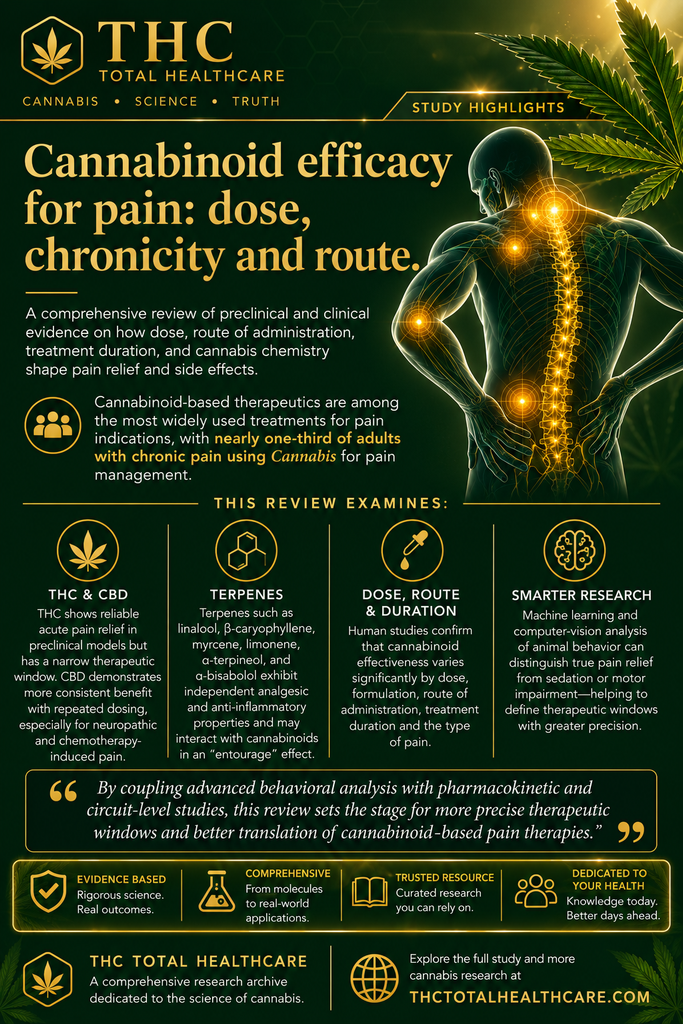
Cannabinoid pain relief depends on more than whether THC or CBD is used. Dose, route of administration, treatment duration and the type of pain can all influence whether a cannabis-based therapy provides meaningful analgesia or produces unwanted effects. This review examines those variables across preclinical and clinical research, while also considering the independent and combined roles of cannabis-derived terpenes.

Cannabis-based therapies are widely used for chronic pain, yet their mechanisms and therapeutic windows remain incompletely defined. This review synthesizes preclinical and clinical evidence on how dose, route of administration, treatment duration, and chemical composition shape analgesic efficacy and adverse-effect liability for Δ9-tetrahydrocannabinol (THC), cannabidiol (CBD), and select cannabis-derived terpenes.

Across rodent pain models, acute THC reliably produces antinociception, but its therapeutic window is narrow because analgesic doses overlap with CB1 receptor-mediated side effects such as sedation, hypothermia, hyperphagia, and motor impairment. Repeated THC exposure leads to tolerance and dependence.

In contrast, CBD shows limited acute efficacy in naïve and inflammatory models but demonstrates more consistent benefit with repeated dosing in neuropathic and chemotherapy-induced pain, often without cannabimimetic adverse effects.

Terpenes such as linalool, β-caryophyllene, myrcene, limonene, α-terpineol, and α-bisabolol exhibit independent antinociceptive and anti-inflammatory properties and are thought to pharmacologically interact with cannabinoids in a dose-, ratio-, and route-dependent “entourage” effect that either enhance or constrain therapeutic benefit.

This review also focuses on integrating machine learning-based behavioral phenotyping of rodents to refine cannabinoid analgesia preclinical research. Computer vision pose-estimation and unsupervised clustering approaches enable high-resolution quantification of spontaneous and evoked natural behaviors, allowing the analytical dissociation of true analgesia from sedation, ataxia, or reduced exploration. By coupling these behavioral pipelines with pharmacokinetic and circuit-level analyses, emerging frameworks will define therapeutic windows with greater precision and improve the translational relevance of cannabinoid-based pain therapeutics.”

https://pubmed.ncbi.nlm.nih.gov/42661783

“Cannabinoid-based therapeutics are among the most widely used treatments for pain indications, with nearly one-third of adults with chronic pain using Cannabis for pain management.”

“Taken together, the studies reviewed here demonstrate that the analgesic efficacy of THC, CBD, and Cannabis-derived terepenes is dependent on dose, route of administration, treatment chronicity, and chemical composition.”

https://www.frontiersin.org/journals/neuroscience/articles/10.3389/fnins.2026.1888863/full

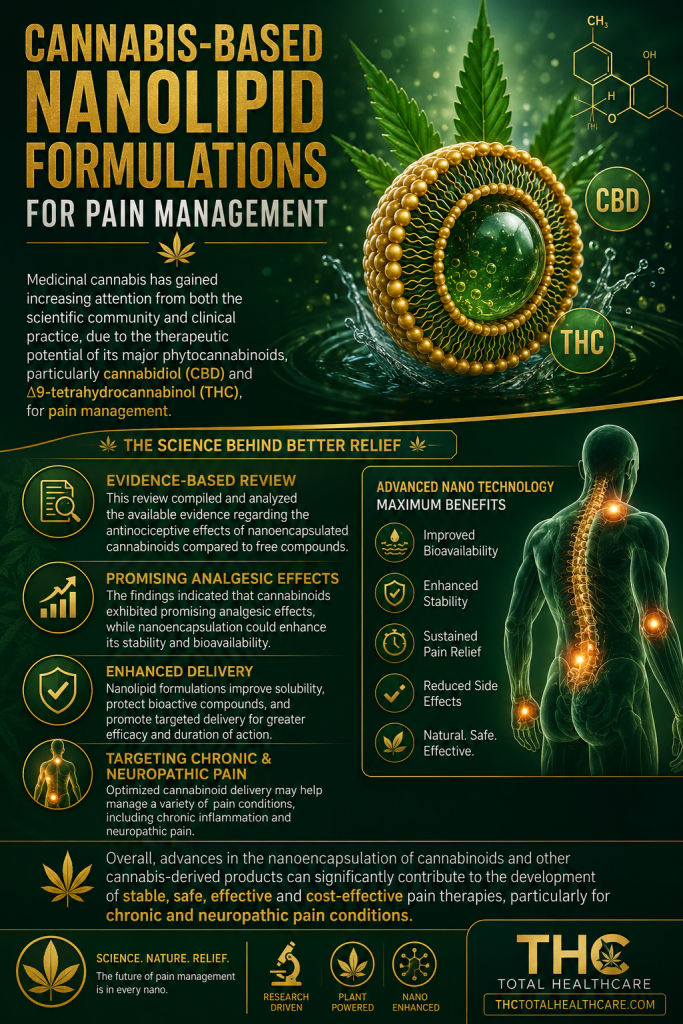
Cannabis-Based Nanolipid Formulations for Pain Management

Cannabinoids such as CBD and THC show promising analgesic effects, but poor stability and bioavailability can limit their therapeutic performance. This review found that nanoencapsulation may improve cannabinoid stability, delivery, and pain-relieving potential across acute, chronic, and neuropathic pain models. The authors concluded that cannabinoid nanoformulations could help support the development of more stable, safe, effective, and accessible therapies, particularly for chronic and neuropathic pain.

“Medicinal cannabis has gained increasing attention from both the scientific community and clinical practice, due to the therapeutic potential of its major phytocannabinoids, particularly cannabidiol (CBD) and Δ9-tetrahydrocannabinol (THC), for pain management.

This review compiled and analyzed the available evidence regarding the antinociceptive effects of nanoencapsulated cannabinoids compared to free compounds. The published works have explored some pharmaceutical formulations and administration routes on different acute, chronic and neuropathic pain experimental models.

The findings indicated that cannabinoids exhibited promising analgesic effects, while nanoencapsulation could enhance its stability and bioavailability.

Despite these advances, the number of reports investigating nanostructured cannabinoid-based systems remains limited, with a predominance of preclinical research. A recurrent lack of structural information and quality control data for such works was also noted. Furthermore, there were not identified any research regarding the nanoencapsulation of full-spectrum cannabis oils or whole cannabis extracts, highlighting a significant gap in the current literature.

Overall, nanoencapsulation emerges as a versatile strategy to overcome the intrinsic limitations of cannabinoids and expand its clinical applicability for pain treatment. Nevertheless, further efforts are required to determine standardized methodologies, facilitating the translation of preclinical findings into clinical practice, in order to provide stable, safe, effective and more accessible cannabinoid-based therapies.”

https://pubmed.ncbi.nlm.nih.gov/42514922

“Overall, advances in the nanoencapsulation of cannabinoids and other cannabis-derived products can significantly contribute to the development of stable, safe, effective and cost-effective pain therapies, particularly for chronic and neuropathic pain conditions.”

https://www.mdpi.com/1999-4923/18/7/844


Cannabidiol in the anterior insular cortex attenuates chronic neuropathic pain and comorbid anxiety- and depression-like behaviors: involvement of CB1 and 5-HT1A receptor signaling

Chronic neuropathic pain often occurs alongside anxiety and depression, making treatment more difficult than addressing pain alone. In this preclinical study, researchers examined CBD activity within the anterior insular cortex, a brain region involved in pain perception and emotional processing. CBD reduced neuropathic pain while also improving anxiety- and depression-like behaviors, with the effects linked to CB1 and 5-HT1A receptor signaling. The findings suggest that CBD may influence overlapping neural pathways involved in both chronic pain and its emotional consequences, supporting further investigation of cannabinoid-based approaches for complex pain conditions.

Background: Chronic neuropathic pain (NP) is frequently accompanied by anxiety- and depression‑like symptoms, reflecting maladaptive interactions between nociceptive and affective brain networks. The anterior insular cortex (AIC) integrates sensory and emotional dimensions of pain and represents a potential target for pharmacological modulation. Cannabidiol (CBD) exhibits analgesic and anxiolytic/antidepressant‑like properties through interactions with endocannabinoid and serotonergic systems.

Objectives: We investigated whether CBD microinjection into the AIC modulates NP and its affective comorbidities, and whether these effects depend on CB1 and 5‑HT1A receptors.

Methods: Male Wistar rats were subjected to chronic constriction injury (CCI) of the sciatic nerve. Fourteen days later, guide cannulae were implanted into the AIC. On day 21 post‑CCI, animals received intra‑AIC microinjections of CBD (15, 30, or 60 nmol/200 nL) or vehicle. Mechanical (von Frey test) and cold (acetone test) allodynia, anxiety‑like behavior (open field and elevated plus maze tests), and depression‑like behavior (forced swim and sucrose spray tests) were assessed by different psychobiological tests. The role of cannabinoid and serotonergic receptors was addressed by intra‑AIC pretreatment with either the CB1 receptor antagonist AM251 or the 5‑HT1A receptor antagonist WAY-100,635 in independent groups.

Results: AIC pretreatment with CBD dose‑dependently reduced mechanical and cold allodynia and anxiety‑ and depression‑like behaviors, with the most robust effects observed at 60 nmol. AIC Pretreatment with either AM251 or WAY-100,635 abolished the antinociceptive and affective effects of CBD.

Conclusion: CBD administration within the AIC produces integrated analgesic, anxiolytic, and antidepressant-like effects in a model of neuropathic pain. These effects are consistent with the involvement of CB1 and 5-HT1A receptor signaling. The findings identify the AIC as a relevant cortical substrate linking nociceptive and affective processes and support CBD as a promising psychopharmacological strategy for NP associated with emotional comorbidities.”

https://pubmed.ncbi.nlm.nih.gov/42390818

“In conclusion, this study demonstrates that CBD microinjection into the AIC attenuates mechanical and cold allodynia while also reducing anxiety- and depression-like behaviors in an experimental model of NP.”

“Overall, these findings highlight the AIC as a potential neural substrate involved in the interaction between chronic pain and its emotional comorbidities and identify CBD as a promising psychopharmacological approach for NP conditions associated with affective dysfunction.”

https://link.springer.com/article/10.1007/s00213-026-07116-6

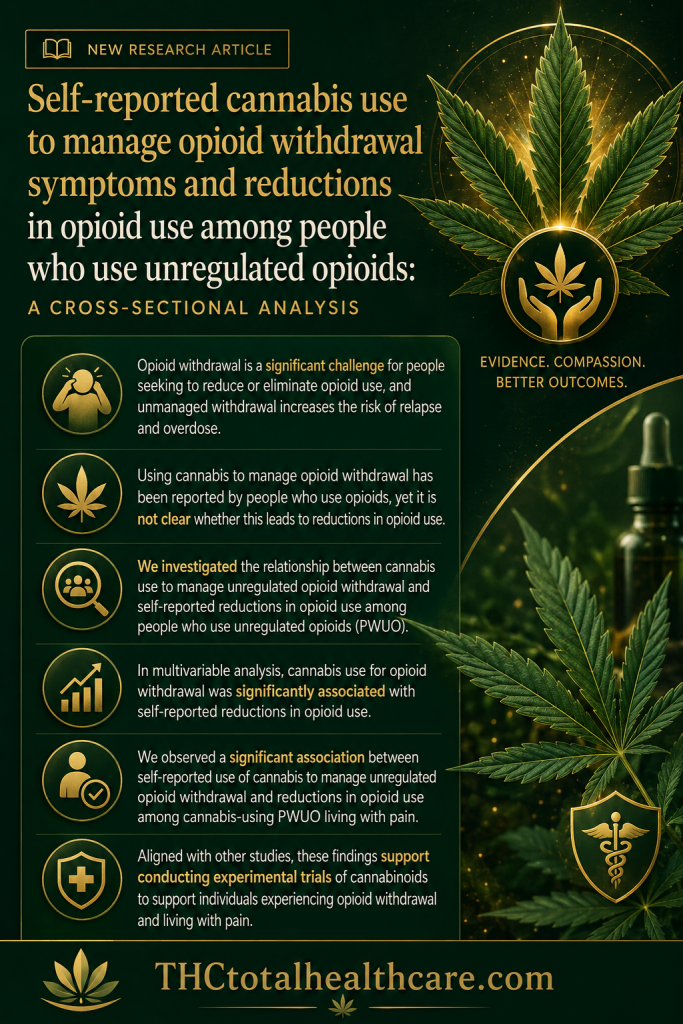
Self-reported cannabis use to manage opioid withdrawal symptoms and reductions in opioid use among people who use unregulated opioids: a cross-sectional analysis

As the opioid crisis continues, researchers are examining whether cannabis may play a role in reducing withdrawal symptoms or helping some people decrease opioid use. In this cross-sectional study of people using unregulated opioids, many participants reported using cannabis specifically to manage withdrawal-related symptoms, and some also reported reductions in opioid consumption. The findings add real-world evidence that people are already using cannabis as a self-directed strategy during opioid withdrawal. The study supports further research into whether cannabinoid-based approaches could have a formal role in harm reduction or opioid-use treatment.

Background: Opioid withdrawal is a significant challenge for people seeking to reduce or eliminate opioid use, and unmanaged withdrawal increases the risk of relapse and overdose. Using cannabis to manage opioid withdrawal has been reported by people who use opioids, yet it is not clear whether this leads to reductions in opioid use. Moreover, because pain is prevalent among people who use unregulated opioids (PWUO) and may contribute to ongoing opioid use, the effects of cannabis use to manage withdrawal symptoms may differ among individuals experiencing moderate to severe pain. We investigated the relationship between cannabis use to manage unregulated opioid withdrawal and self-reported reductions in opioid use among PWUO.

Methods: Data were derived from a cross-sectional questionnaire administered to cannabis-using PWUO in Vancouver, Canada, between December 2019 and November 2021. Multivariable logistic regression estimated the associations between cannabis use for opioid withdrawal and self-reported reductions in opioid use. A sub-analysis explored if these associations varied among participants living with and without moderate to severe pain.

Results: Among 197 participants, 89 (45.2%) reported cannabis use to manage symptoms of opioid withdrawal in the past six months. In multivariable analysis, cannabis use for opioid withdrawal was significantly associated with self-reported reductions in opioid use (adjusted Odds Ratio [AOR] = 2.16, 95% Confidence Interval [CI]: 1.13-4.19) in the same time period. In a sub-analysis, this association was only significant among participants with moderate to severe pain (AOR = 6.55; 95% CI: 2.44-19.63).

Conclusions: We observed a significant association between self-reported use of cannabis to manage unregulated opioid withdrawal and reductions in opioid use among cannabis-using PWUO living with pain. Aligned with other studies, these findings support conducting experimental trials of cannabinoids to support individuals experiencing opioid withdrawal and living with pain.”

https://pubmed.ncbi.nlm.nih.gov/42343486

https://link.springer.com/article/10.1186/s42238-026-00458-0

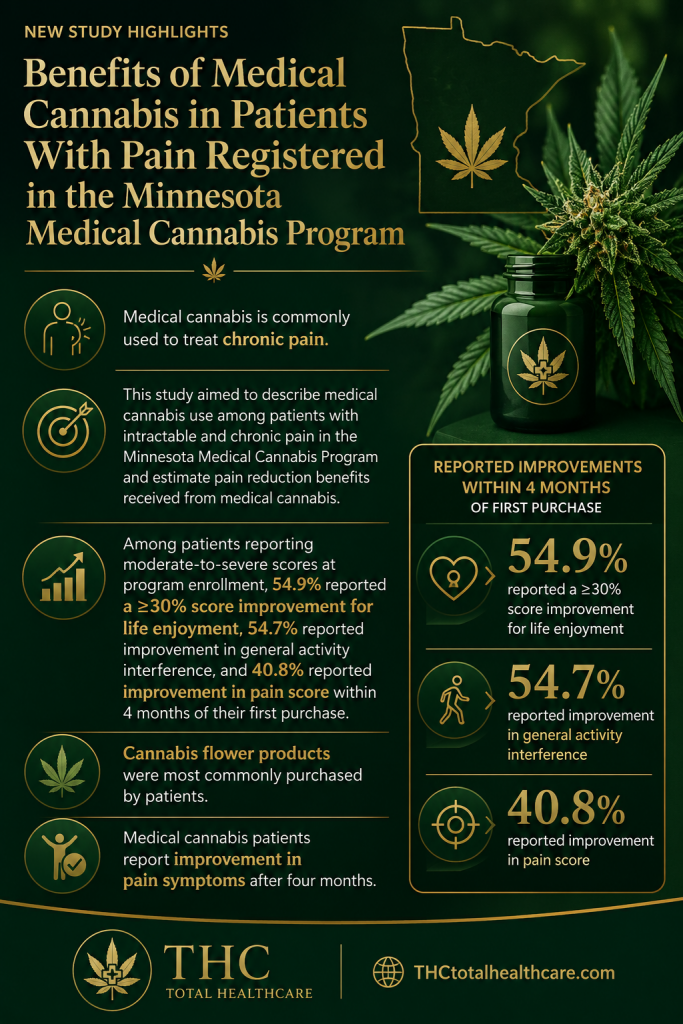
Benefits of Medical Cannabis in Patients With Pain Registered in the Minnesota Medical Cannabis Program

Real-world medical cannabis programs provide an important opportunity to examine how patients with chronic pain respond outside tightly controlled clinical trials. This analysis of participants in Minnesota’s Medical Cannabis Program found that many patients reported meaningful improvements in pain and related symptoms after beginning medical cannabis treatment. Benefits were also reflected in measures of daily functioning and quality of life, suggesting that cannabis may provide broader relief than pain reduction alone for some patients. The findings add large-scale, real-world evidence supporting the role of medical cannabis as a treatment option for people living with persistent pain

Purpose: Medical cannabis is commonly used to treat chronic pain. Clinical trials typically use only one type and dosage of medical cannabis product, which is not reflective of real-world use. The use of a state-run medical cannabis program can bridge the gap between clinical research and real-world use of medical cannabis to estimate the benefits of cannabis use on patient symptoms. This study aimed to describe medical cannabis use among patients with intractable and chronic pain in the Minnesota Medical Cannabis Program and estimate pain reduction benefits received from medical cannabis.

Methods: Patients who enrolled in the Minnesota Medical Cannabis Program between March 2022 and February 2023 for chronic pain and purchased medical cannabis for at least 8 months were included in this study. Patients were required to complete the Patient Self-Evaluation before each medical cannabis purchase, which included the PEG (Pain, Enjoyment of Life, and General Activity) scale. The main outcome of this analysis was a ≥30% change in PEG component score within 4 months of first medical cannabis purchase. The proportion of patients who maintained that reduction for an additional 4 months was also calculated. Medical cannabis product purchases were queried from the first 4 months in the program and categorized by route of administration and tetrahydrocannabinol:cannabidiol ratio. Medical cannabis purchasing profiles were created using k-means clustering to group patients who purchased similar proportions of product types. Adjusted logistic regression models were run to investigate the association between medical cannabis purchasing profile and reporting ≥30% reduction in PEG score.

Findings: Among patients reporting moderate-to-severe scores at program enrollment, 54.9% reported a ≥30% score improvement for life enjoyment, 54.7% reported improvement in general activity interference, and 40.8% reported improvement in pain score within 4 months of their first purchase. Cannabis flower products were most commonly purchased by patients. High tetrahydrocannabinol:cannabidiol products were the most commonly purchased in all medical cannabis product categories. K-means clustering created 5 product purchasing profiles, which were not associated with PEG score improvement outcomes after adjustment for number of purchasing transactions.

Implications: Medical cannabis patients report reduction in PEG scores within 4 months of first medical cannabis purchase using a variety of medical cannabis products. Future research on medical cannabis should determine the frequency of use of different products and administration methods to further investigate how cannabis can be used for effective pain management in patients with chronic pain.”

https://pubmed.ncbi.nlm.nih.gov/42303550

“Medical cannabis patients report improvement in pain symptoms after four months.”

https://www.clinicaltherapeutics.com/article/S0149-2918(26)00187-6/fulltext

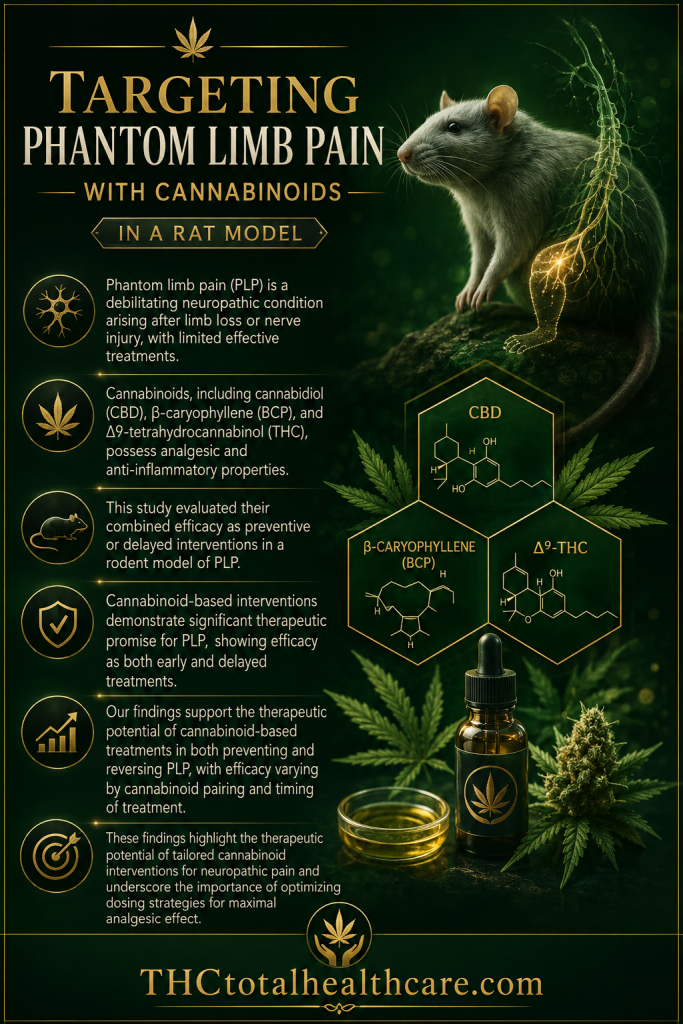
Targeting Phantom Limb Pain with Cannabinoids in a Rat Model

Phantom limb pain can be severe and difficult to treat because the pain persists even after the affected limb is gone. In this preclinical study, researchers tested cannabinoids in a rat model of phantom limb pain and found meaningful reductions in pain-related behaviors. The results suggest that cannabinoid signaling can modify the abnormal nerve activity involved in post-amputation pain, supporting the potential of cannabinoids as a new approach for managing phantom limb pain and other forms of neuropathic pain.

“Introduction: Phantom limb pain (PLP) is a debilitating neuropathic condition arising after limb loss or nerve injury, with limited effective treatments. Cannabinoids, including cannabidiol (CBD), β-caryophyllene (BCP), and Δ9-tetrahydrocannabinol (THC), possess analgesic and anti-inflammatory properties. This study evaluated their combined efficacy as preventive or delayed interventions in a rodent model of PLP.

Methods: To model PLP, a chronic constriction injury was used to mimic pre-amputation pain, followed by formalin-induced localized inflammation and complete sciatic nerve transection to simulate extremity amputation. Cannabinoid treatments (CBD/BCP/THC, CBD/BCP, or THC) or vehicle control were administered either preemptively on the day of axotomy (prevention paradigm) or after the emergence of pain behaviors (reversal paradigm). Progression of pain behaviors were assessed over a 72-day period, and modulation of spinal cytokine levels, glial reactivity, and GABAergic signaling was evaluated.

Results: Preemptive THC or CBD/BCP reduced PLP onset and severity, while the full combination was less effective. In contrast, with delayed treatment, CBD/BCP and the CBD/BCP/THC combination were most effective in mitigating PLP. Pain reduction was correlated with restoration of spinal GABAergic inhibition. All cannabinoid treatments decreased microglial and astrocyte reactivity and shifted cytokines toward an anti-inflammatory state.

Conclusion: Cannabinoid-based interventions demonstrate significant therapeutic promise for PLP, showing efficacy as both early and delayed treatments. Findings suggest that THC may exert greater therapeutic effects when administered pre-emptively, while CBD and BCP may offer greater therapeutic advantages in established pain states. These findings highlight the therapeutic potential of tailored cannabinoid interventions for neuropathic pain and underscore the importance of optimizing dosing strategies for maximal analgesic effect.”

https://pubmed.ncbi.nlm.nih.gov/42267080

“Cannabis contains a complex mixture of cannabinoids, terpenes, and flavonoids that have demonstrated therapeutic potential in a variety of pathologies and conditions. Their anti-inflammatory, analgesic, and antioxidant activities are believed to play a central role in mediating pain relief.”

“Our findings support the therapeutic potential of cannabinoid-based treatments in both preventing and reversing PLP, with efficacy varying by cannabinoid pairing and timing of treatment.

Together, these results underscore the therapeutic promise of cannabinoid-based treatments while highlighting the need to carefully consider how specific compounds and dosing strategies interact in different stages of pain.”

https://karger.com/mca/article/9/1/92/946968/Targeting-Phantom-Limb-Pain-with-Cannabinoids-in-a

Endocannabinoid system modulation in acute, chronic, and neuropathic pain: reviewing experimental models, clinical evidence, and nanotechnology delivery

The endocannabinoid system is a major regulator of pain signaling, making it an important therapeutic target across acute, chronic, and neuropathic pain conditions. This review brings together experimental and clinical evidence showing that cannabinoid receptor modulation can reduce pain through effects on inflammation, nerve signaling, and central pain processing. It also highlights emerging nanotechnology-based delivery systems designed to improve cannabinoid targeting, absorption, and treatment efficiency. The findings support cannabinoid and endocannabinoid-based strategies as a broad and increasingly sophisticated approach to pain management.

“Chronic pain is highly prevalent and inadequately managed by current therapeutic strategies, which present significant limitations such as the development of tolerance, dependence, and cognitive impairment. Therefore, searching for new pain management strategies is an ultimate goal.

The endocannabinoid system (ECS), is a broad crucial regulatory network in central nervous system’s development and in modulating various physiological and cognitive functions. It comprises endogenous cannabinoids, cannabinoid receptors, and the enzymes governing cannabinoid production and breakdown.

Recently, cannabinoids, particularly medical cannabis, have garnered renewed interest for their possibilities in treating different medical conditions, including chronic pain.

Although the risk of lethal overdose is negligible, the prevalence of non-serious adverse effects is significant and requires careful clinical consideration. Currently, there is a paucity of sufficient efficacy and long-term safety data to fully support the systematic use of medical cannabis for chronic non-malignant pain conditions.

Further research is crucial to unlock the future potential of these approaches and to delineate essential directions for exploring the ECS and its role in pain management. Advances in nanotechnology have enabled novel delivery platforms that address key limitations of cannabinoid-based therapies.

Nanocarriers, including lipid and polymeric nanoparticles, nanoemulsions, and self-emulsifying systems, can improve cannabinoid solubility, stability, bioavailability, and targeted delivery. Through controlled release and site-specific targeting, these systems hold promise for enhancing the analgesic efficacy and safety of cannabinoid therapeutics.”

https://pubmed.ncbi.nlm.nih.gov/42154330

https://link.springer.com/article/10.1007/s11011-026-01862-4

Medical Cannabis as an Opiate Alternative: A Prospective Observational Cohort Study

Medical cannabis is increasingly being studied as a way to reduce reliance on opioid medications in people with chronic pain. In this prospective observational cohort study, patients who used medical cannabis reported meaningful reductions in opioid use alongside improvements in pain and overall quality of life. The findings support the role of cannabis as a potential opioid-sparing treatment option, particularly for patients seeking alternatives to long-term opiate therapy.

“Opioid use for chronic pain has contributed to an epidemic of overdoses and deaths in the United States.

Some clinical studies suggest that medical cannabis may help alleviate pain and improve quality of life. However, cost can be a barrier to patients accessing medical cannabis.

This is the first prospective observational study evaluating medical cannabis as an alternative to opioids in a setting where cost was removed as a major barrier.

Methods: Twenty-nine patients were recruited from a university-based outpatient chronic pain clinic. Each patient underwent monthly pain assessments using the Numeric Pain Rating Scale (NRS). Daily opioid use, measured in morphine milligram equivalents (MMEs), was recorded and monitored over five months. Pain-related quality of life was assessed using the SF-36 Health Survey at baseline, and again at two and five months.

Results: Daily opioid use decreased from baseline to one month (from 46.8 MMEs to 16.2 MMEs, a 65% reduction), and this reduction was maintained through five months. The mean NRS score decreased by two points from baseline to one month (from 7.03 to 5.07; p < 0.0001), and this improvement was sustained at five months. The SF-36 Physical Functioning score increased from 15.3 at baseline to 21.4 at one month and was maintained at five months (p < 0.03 for both comparisons).

Conclusion: These results suggest that medical cannabis may be a useful adjunct therapy for reducing opioid use, relieving chronic pain, and improving health-related quality of life.”

https://pubmed.ncbi.nlm.nih.gov/42153072

“Opioids are associated with serious adverse events, including death, particularly at higher dosages or when used in combination with benzodiazepines.

In contrast, medical cannabis has not been associated with mortality from overdose. When used under appropriate medical supervision, medical cannabis may represent an effective adjunctive strategy for reducing opioid use among patients receiving long-term opioid therapy.

“Although cannabis has historically been characterized as a potential “gateway drug,” it may also serve as a harm-reduction tool for some patients seeking to reduce reliance on higher-risk opioid medications.”

https://www.cureus.com/articles/432327-medical-cannabis-as-an-opiate-alternative-a-prospective-observational-cohort-study#!

Effect of cannabidiol, cannabinol and tetrahydrocannabivarin in managing inflammatory pain

Cannabinoid research on inflammatory pain is expanding beyond THC to include lesser-known compounds with distinct biological effects. In this study, cannabidiol (CBD), cannabinol (CBN), and tetrahydrocannabivarin (THCV) each showed potential to reduce inflammatory pain through cannabinoid-related and anti-inflammatory mechanisms. The findings suggest that these cannabinoids may offer different but complementary approaches to controlling pain and inflammation, broadening the range of cannabis-derived compounds being investigated for analgesic therapy.

“Current medications used to treat the inflammatory pain either have limited effectiveness or may be associated with serious side effects. Non-psychoactive phytocannabinoids may have a better safety profile and could be used as an alternative approach to treat this condition.

The aim of this study was to test the potential of three phytocannabinoids, cannabinol (CBN), tetrahydrocannabivarin (THCV) and cannabidiol (CBD), in treating inflammatory pain.

The inflammatory pain was triggered in male rats by a single intra-articular knee injection of the complete Freund’s adjuvant (CFA). One week later, rats were given four daily administrations of ibuprofen, CBN, THCV or CBD. Our data demonstrated that CFA injection triggered an inflammatory response expressed as damage of the synovial tissue, reduced locomotor activity, increased mechanical and, to a lesser extent, thermal pain sensitivity, and loss of body weight.

All phytocannabinoids reduced mechanical hyperalgesia and had no or a minor effect on locomotor activity.

Treatment with CBN also lowered thermal hypersensitivity. Treatment with CBN and THCV recovered the body weight of CFA-injected rats. However, administration of CBD reduced body weight and elevated blood monocyte and granulocyte levels above those of the CFA-injected control animal group.

We conclude that CBN and THCV may have potential in managing inflammatory pain.”

https://pubmed.ncbi.nlm.nih.gov/42151379

https://www.nature.com/articles/s41598-026-51275-7

Assessing the Efficacy of Cannabinoid Compositions for Treating 3 Classes of Chronic Pain: A Real-World Evidence Study

Cannabinoid therapies may provide broad benefits across very different forms of chronic pain. In this 12-week real-world study involving people with fibromyalgia, rheumatoid arthritis, and osteoarthritis, participants using three different cannabinoid formulations showed significant improvements across nearly every measured symptom, with effects ranging from small to large. Benefits were seen across pain-related symptoms, mental health, physical functioning, and sleep, while one formulation containing THCA, CBDA, CBG, and CBC also reduced neuropathic pain intensity. The findings suggest that both intoxicating and nonintoxicating cannabinoid combinations can provide meaningful relief across multiple chronic pain conditions.

Purpose: Cannabis has been determined to be effective at treating chronic pain, although research on the effects of specific cannabinoids, especially for different mechanisms of chronic pain, is limited. This study examined therapeutic efficacy for combinations of intoxicating and nonintoxicating cannabinoids for symptoms of 3 different types of chronic pain conditions.

Methods: We recruited adult California residents diagnosed with fibromyalgia (n = 64), rheumatoid arthritis (n = 25), and osteoarthritis of the knee and/or hip (n = 75). Participants in each group were randomly assigned to receive a 12-week supply of oral capsules with 3 different cannabinoid compositions: product 1-12.5 mg cannabidiol (CBD) and 12.5 mg tetrahydrocannabinol (n = 45); product 2-10 mg tetrahydrocannabinolic acid, 10 mg cannabidiolic acid (CBDa), 5 mg cannabigerol, and 3 mg cannabichromene (n = 57); and product 3-10 mg CBD and 10 mg CBDa (n = 62). Participants completed validated self-report questionnaires assessing pain characteristics, mental health and cognitive functioning, and physical functioning at baseline and 12-week timepoints.

Findings: Of 276 individuals recruited, 168 (60.9%) completed all survey questionnaires. Four individuals who completed the questionnaires but discontinued study product use were removed from the dataset. Per-protocol analyses identified significant improvements across all symptoms except cognitive function abilities. Effects ranged from small to large; most did not differ in magnitude across product or type of chronic pain. Products differed in effectiveness for sleep disturbance, and participants taking product 2 reported reductions in neuropathic pain intensity.

Implications: These findings suggest that various cannabinoid combinations may have beneficial effects across 3 different types of chronic pain. Nonintoxicating cannabinoids such as CBD and CBDa may provide relief from pain and related symptoms and may be utilized when cannabis intoxication is undesirable or problematic.”

https://pubmed.ncbi.nlm.nih.gov/42140793

“Various cannabinoid combinations may have therapeutic benefits across 3 different types of chronic pain.”

https://www.clinicaltherapeutics.com/article/S0149-2918(26)00136-0/abstract