Cannabinoids in Cancer: Molecular Mechanisms of Tumor Cell Death and Translational Opportunities

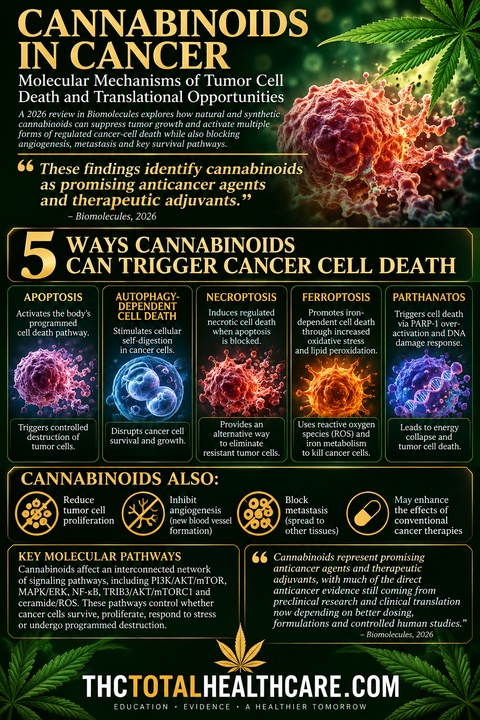
Cannabinoids can attack cancer cells through far more than a single mechanism. This 2026 review describes how natural and synthetic cannabinoids can suppress tumor-cell growth, angiogenesis and metastasis while activating multiple forms of regulated cancer-cell death, including apoptosis, autophagy-dependent cell death, necroptosis, ferroptosis and parthanatos.

The researchers detail an interconnected network of molecular pathways affected by cannabinoids, including PI3K/AKT/mTOR, MAPK/ERK, NF-κB, TRIB3/AKT/mTORC1 and ceramide/ROS signaling. These pathways control whether cancer cells survive, proliferate, respond to stress or undergo programmed destruction, giving cannabinoids multiple potential points of attack against malignant cells.

The review also finds that cannabinoids may enhance conventional anticancer treatments by engaging complementary cell-death pathways. The authors conclude that cannabinoids represent promising anticancer agents and therapeutic adjuvants, with much of the direct anticancer evidence still coming from preclinical research and clinical translation now depending on better dosing, formulations and controlled human studies.

“Cannabinoids are terpenophenolic compounds derived from Cannabis sativa L. that exert a broad range of biological and pharmacological activities. Increasing evidence highlights their potential as modulators of cancer progression specifically through the suppression of tumor cell growth, angiogenesis, and metastasis across multiple tumor models.

This review provides a comprehensive overview of the molecular mechanisms by which natural and synthetic cannabinoids induce regulated cancer cell death.

Current evidence demonstrates that cannabinoids regulate multiple forms of cancer cell death, including apoptosis, autophagy-dependent cell death, necroptosis, ferroptosis, and parthanatos. These effects are mediated through complex and interconnected signaling pathways such as TRIB3/AKT/mTORC1, PI3K/AKT/mTOR, MAPK/ERK, NF-κB, ERK/JNK/p38-MAPK, and ceramide/Raf1/ERK/ROS.

In addition to their direct antitumor effects, cannabinoids can enhance the efficacy of conventional anticancer therapies through the coordinated regulation of complementary cell death pathways. They also provide clinically relevant supportive benefits in palliative care, alleviating chemotherapy-induced nausea, cachexia, and mood or sleep disturbances.

Collectively, these findings identify cannabinoids as promising anticancer agents and therapeutic adjuvants, predominantly in the preclinical setting. However, significant challenges remain regarding their safety, optimal dosing, formulation, and clinical efficacy. Further mechanistic studies, rigorous preclinical research, and well-designed clinical trials are required to establish the translation of cannabinoid-based therapies into precision oncology.”

https://pubmed.ncbi.nlm.nih.gov/42793092

“The cannabis plant, a member of the Cannabaceae family, has been traditionally utilized for centuries for spiritual and remedial healing.”

“The anticancer activity of cannabinoids was discovered in 1975 by Munson et al.. Cannabinoids suppress cancer cell proliferation, angiogenesis, tumor invasion, metastasis, and stemness while inducing different modes of cell death pathways.”

“In summary, this review highlights the growing body of evidence supporting the ability of cannabinoids to induce multiple forms of cell death across a broad spectrum of cancer types. Through the modulation of diverse molecular and signaling pathways, cannabinoids have emerged as promising anticancer agents, mostly in preclinical models, with the potential to target tumor growth, survival, and progression, ultimately triggering diverse cell death mechanisms.”
https://www.mdpi.com/2218-273X/16/9/1260

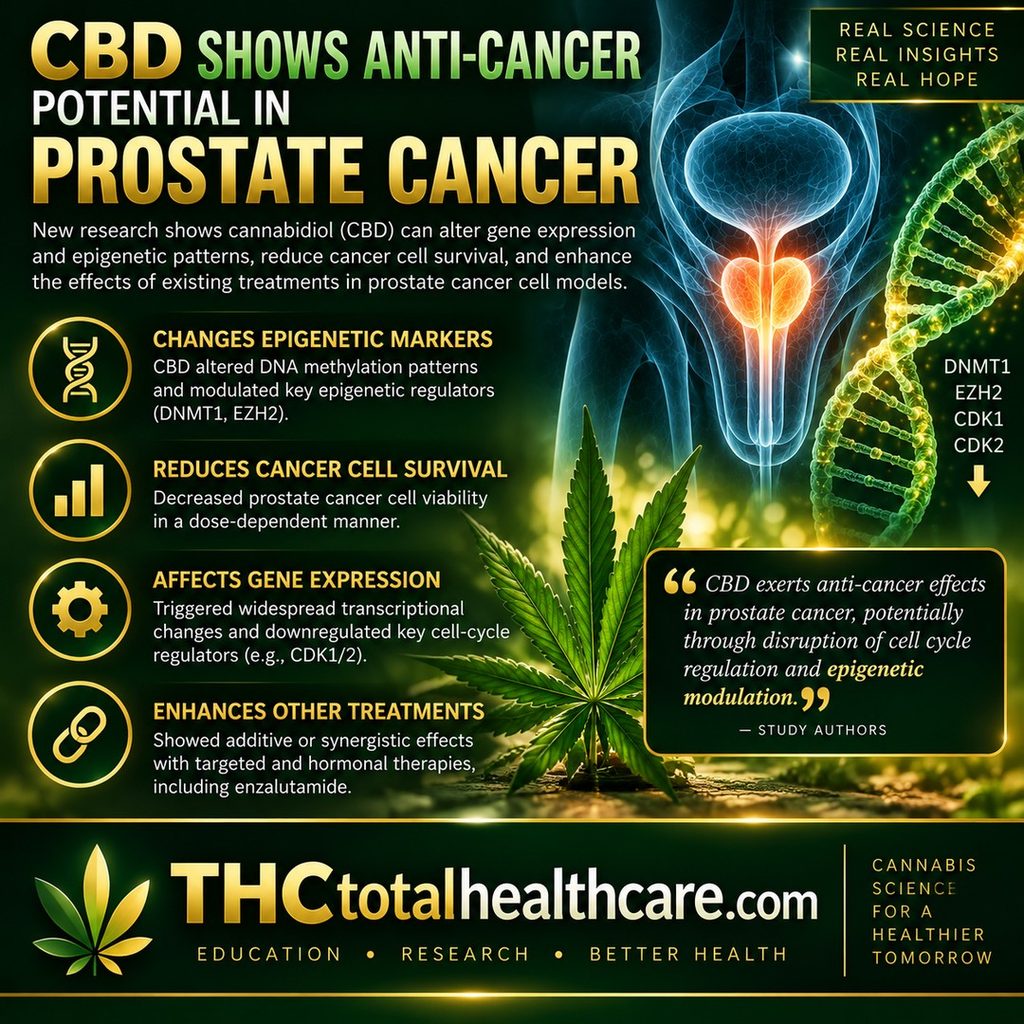
Cannabidiol alters the epigenome of hormone-dependent prostate cancer cells

Cannabidiol (CBD) is a naturally occurring cannabinoid found in the Cannabis sativa plant.

New research suggests CBD may interfere with prostate cancer through several biological pathways, including changes in gene expression and the epigenome. In laboratory prostate cancer cell models, CBD reduced cell viability in a dose-dependent manner, altered DNA methylation patterns, affected the expression of epigenetic regulators including DNMT1 and EZH2, and downregulated important cell-cycle regulators such as CDK1 and CDK2.

Researchers also reported additive or synergistic effects when CBD was combined with targeted and hormonal cancer therapies, including enzalutamide. The findings suggest CBD’s anticancer activity in prostate cancer may involve disruption of cell-cycle regulation and epigenetic modulation, supporting further investigation of CBD both alone and in combination with established treatments.

“Background: Cannabidiol (CBD) shows promising anti-cancer effects, including reducing proliferation and migration and inducing cell death. However, its impact on cancer gene regulation and epigenetic mechanisms remains poorly understood, particularly in prostate cancer, a disease characterised by widespread epigenetic alterations.

Purpose: This study investigated whether CBD exerts anti-cancer effects in prostate cancer by modulating cell viability, gene expression, and the epigenome and whether it enhances the efficacy of targeted and hormonal agents.

Study design/methods: Prostate cancer cell lines (DU145, PC3, LNCaP) were treated with varying concentrations of CBD, Talazoparib, GSK126 and enzalutamide. Cell viability was assessed by MTT. Transcriptomic changes were analysed by RNAseq and qRT-PCR, and epigenetic effects were evaluated by the Infinium MethylationEpic V2.0 BeadChip array. Analysis of total 5mC and expression/activity of EZH2 were assessed by ELIZA and Western blot respectively.

Results: Epigenetically, CBD altered methylation patterns in LNCaP cells, while modulating DNMT1 and EZH2 expression across models. However, EZH2 catalytic activity was unchanged. CBD induced widespread transcriptional changes, particularly in LNCaP cells, with enrichment of cell cycle pathways and downregulation of key regulators (e.g., CDK1/2). CBD reduced cell viability in a dose-dependent manner, showing additive or synergistic effects with both targeted and hormonal therapies.

Conclusion: CBD exerts anti-cancer effects in prostate cancer, potentially through disruption of cell cycle regulation and epigenetic modulation. These findings support its potential as a therapeutic agent, particularly in combination with targeted treatments.”

https://pubmed.ncbi.nlm.nih.gov/42691574

“Cannabidiol (CBD) is one of the best known and abundant phytocannabinoids. Numerous studies have demonstrated CBD’s anti-cancer effects, detailing its ability to inhibit cancer cell growth, proliferation, invasion, and migration in vitro, and reduce tumour volume in vivo.”

“To our knowledge, this study provides the first systematic characterisation of CBD’s effects on the prostate cancer epigenome, addressing a significant gap given the disease’s strong epigenetic basis.“

http://linkinghub.elsevier.com/retrieve/pii/S0753332226009273

Quantitative analysis of Cannabinoid Therapy in Prostate Cancer: Integrating Biomarkers, Imaging and Patient Outcomes

“Cannabinoids are increasingly used by cancer patients for symptom relief, yet clinical evidence on their effect in prostate cancer remains limited. This study evaluated the association between cannabinoid therapy and disease activity, pain, and quality of life in men with prostate cancer.

The objectives were to assess the influence of cannabinoids on PSA levels, metabolic activity, tumour size via PET/CT scans, and patient-reported outcomes including pain levels and quality of life.

Methods: Ninety men with confirmed prostate cancer were prospectively followed in three groups: chemotherapy-only, cannabis-only, and combined chemotherapy + cannabis. PSA, PET/CT findings, and patient-reported outcomes (BPI, EQ-5D) were assessed at baseline, 3 months, and 6 months. Longitudinal changes were analysed using linear mixed-effects regression with group × time interactions, and between-group differences were tested with ANOVA. PET/CT categorical outcomes were evaluated using multinomial logistic regression to generate adjusted odds ratios

Results: Significant temporal differences in PSA levels were detected among groups (p < 0.001); both cannabis-containing regimens showed faster PSA decline, but final values were comparable across treatments. PET/CT analyses indicated a higher likelihood of remission or tumour reduction in the combined group (p = 0.013).

Cannabis use, alone or combined was associated with greater reductions in pain and improved emotional well-being compared with chemotherapy alone, while improvements in self-care and usual-activity scores were also observed.

Conclusion: Cannabinoid therapy, whether used independently or alongside chemotherapy, was associated with improved pain control and some indicators of tumour response, without evidence of harm. The findings warrant cautious interpretation and support further randomized studies to clarify cannabinoids’ adjunctive role in prostate cancer management.”

https://karger.com/mca/article/doi/10.1159/000550792/946276/Quantitative-analysis-of-Cannabinoid-Therapy-in

Tobacco and marijuana use and their association with serum prostate-specific antigen levels among African American men in Chicago

pubmed logo

“African American (AA) men experience more than twice the prostate cancer mortality as White men yet are under-represented in academic research involving prostate-specific antigen (PSA), a biomarker of prostate cancer aggressiveness.

We examined the impact of self-reported tobacco (cigarette pack-years and current tobacco use including e-cigarettes) and current regular marijuana use on serum PSA level based on clinical laboratory testing among 928 AA men interviewed 2013-2018 in Chicago. We defined outcome of elevated PSA ≥ 4.0 ng/mL for logistic regression models and continuous PSA increases for general linear models. All models were adjusted for age, sociodemographic characteristics, healthcare utilization, body mass index, and self-reported health.

Among 431 AA men age ≥ 55 years, we observed ∼ 5 times the odds of elevated PSA among those with > 1 pack-years of cigarette smoking vs. never-smokers (odds ratio [OR] = 5.09; 95% confidence interval [CI] = 1.57-16.6) and a quarter the odds of elevated PSA among current marijuana users vs. non-users (OR = 0.27; 95% CI = 0.08-0.96). PSA increased on average 1.20 ng/mL among other current tobacco users vs. non-users.

Among older AA men, cigarette smoking history and current tobacco use were positively associated with an increase in PSA levels and current marijuana use were inversely associated with PSA levels.

Future work with studies of diverse patient populations with cancer outcomes are needed to assess whether these behavioral characteristics contribute to racial/ ethnic disparities in prostate cancer outcomes.

Our study provides novel evidence regarding potential differences in PSA levels among older AA men according to behavioral characteristics.”

https://pubmed.ncbi.nlm.nih.gov/33088675/

“Tobacco use was associated with an increase in PSA among older AA men.”

“Marijuana use was associated with a decrease in PSA among older AA men.”

https://www.sciencedirect.com/science/article/pii/S2211335520301339


Cannabidiol Suppresses Metastatic Castration-Resistant Prostate Cancer Progression and Recurrence through Modulating Tryptophan Catabolism

pubmed logo

“Metastatic castration-resistant prostate cancer (mCRPC) is an aggressive phenotype of prostate cancer (PC). Tryptophan oxidative catabolism by indoleamine 2,3-dioxygenase-1 (IDO1) cleaves the indole ring to kynurenine (Kyn), an endogenous ligand for the aryl hydrocarbon receptor (AhR), which activates multiple tumorigenesis pathways. The IDO1-Kyn-AhR axis is aberrantly dysregulated in mCRPC. (-)-

Cannabidiol (CBD) is a nonpsychoactive phytocannabinoid. CBD showed antitumor activities against human malignancies, including PC.

CBD showed potent in vitro dose-dependent reduction of viability and clonogenicity of diverse human PC cell lines. CBD reduced the expression of IDO1 and AhR in PC cells. A daily 15 mg/kg oral dose of CBD for 30 days effectively suppressed the progression of the mCRPC CWR-R1ca-Luc cells xenografted in male nude mice. Continued CBD oral dosing for an additional 45 days suppressed the CWR-R1ca-Luc tumor locoregional and distant recurrences after the primary tumors’ surgical excision.

Collected CBD-treated tumors showed a reduced level of IDO1 expression. CBD-treated mice displayed a significant systemic reduction of Kyn.

CBD is a novel, nonpsychoactive phytocannabinoid lead useful for the control of mCRPC via targeting the tryptophan catabolism.”

https://pubmed.ncbi.nlm.nih.gov/39698265/

https://pubs.acs.org/doi/10.1021/acsptsci.4c00448

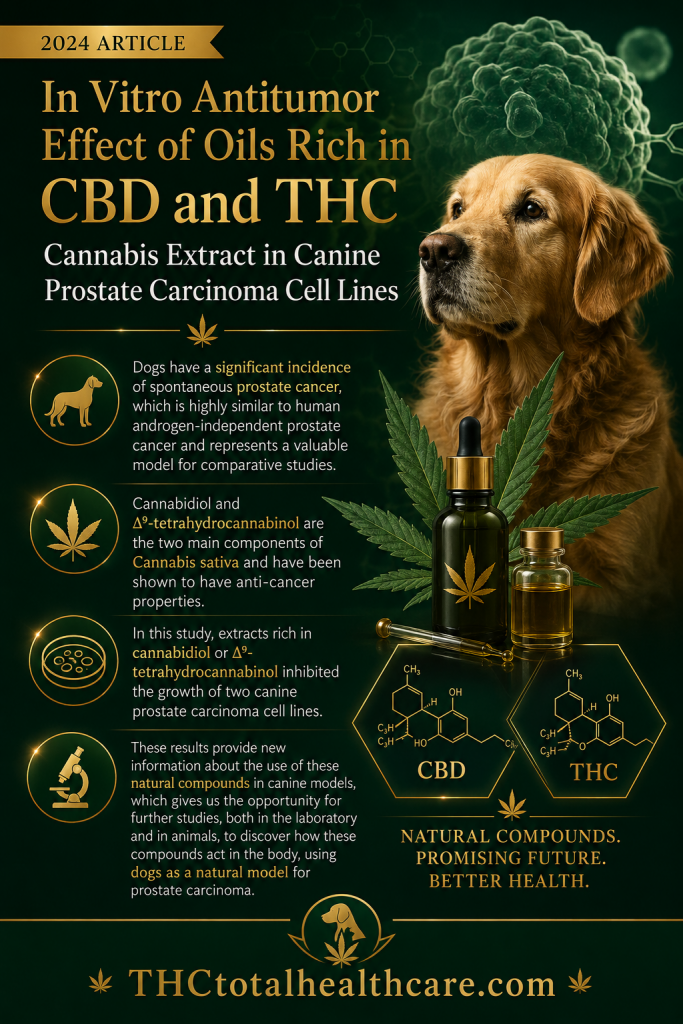
In Vitro Antitumor Effect of Oils Rich in CBD and THC Cannabis Extract in Canine Prostate Carcinoma Cell Lines

“Prostate cancer is one of the leading causes of cancer-related deaths worldwide, even when diagnosed at an early stage in humans and dogs. Dogs have a significant incidence of spontaneous prostate cancer, which is highly similar to human androgen-independent prostate cancer and represents a valuable model for comparative studies.

Cannabidiol (CBD) and Δ9-tetrahydrocannabinol (THC) are the two main cannabinoids extracted from Cannabis sativa and have demonstrated antiproliferative and anti-invasive properties in different tumor types.

In this study, CBD or THC-rich extracts inhibited the proliferation of two canine prostatic carcinoma cell lines, PC1 and PC2, showing an IC50 of 3.43 and 3.57 μM for CBD rich extracts, and 4.90 and 4.48 μM THC rich extracts, respectively. Cell death was also observed with both Annexin V and Propidium iodide staining for the canine cell lines.

These results provide new information concerning the use of rich oil in canine PC and open a promising opportunity for further in vitro and in vivo studies to establish the mechanisms of action of these compounds using dogs as a natural model for prostatic carcinoma.”

https://pubmed.ncbi.nlm.nih.gov/39453093/

“Cannabidiol and Δ9-tetrahydrocannabinol are the two main components of Cannabis sativa and have been shown to have anti-cancer properties. In this study, extracts rich in cannabidiol or Δ9-tetrahydrocannabinol inhibited the growth of two canine prostate carcinoma cell lines. These results provide new information about the use of these natural compounds in canine models, which gives us the opportunity for further studies, both in the laboratory and in animals, to discover how these compounds act in the body, using dogs as a natural model for prostate carcinoma.”

https://www.mdpi.com/2306-7381/11/10/501

Cannabidiol Enhances the Anticancer Activity of Etoposide on Prostate Cancer Cells

pubmed logo

“Introduction: Cannabis sativa extract has been used as an herbal medicine since ancient times. It is one of the most researched extracts, especially among supportive treatments against cancer. Prostate cancer is one of the most frequently diagnosed cancer types in men worldwide and an estimated 288,300 new cases were diagnosed in 2023. Today, many advanced therapeutic approaches are used for prostate cancer, such as immunotherapy and chemotherapy, but acquired drug resistance, long-term drug usage and differentiation of cancer cells mostly restricted the efficiency of therapies. Therefore, it is thought that the use of natural products to overcome these limitations and improve the effectiveness of existing therapies may offer promising approaches. The present study focused on the investigation of the possible enhancer role of cannabidiol (CBD), which is a potent ingredient compound of Cannabis, on the chemotherapeutic agent etoposide in prostate cancer cells. 

Methods: Herein, we tested the potentiator role of CBD on etoposide in prostate cancer cells by testing the cytotoxic effect, morphological alterations, apoptotic effects, autophagy, unfolded protein response (UPR) signaling, endoplasmic reticulum-associated degradation mechanism (ERAD), angiogenic and androgenic factors, and epithelial-mesenchymal transition (EMT). In addition, we examined the combined treatment of CBD and etoposide on colonial growth, migrative, invasive capability, 3D tumor formation, and cellular senescence. 

Results: Our findings demonstrated that cotreatment of etoposide with CBD importantly suppressed autophagic flux and induced ERAD and UPR signaling in LNCaP cells. Also, CBD strongly enhanced the etoposide-mediated suppression of androgenic signaling, angiogenic factor VEGF-A, protooncogene c-Myc, EMT, and also induced apoptosis through activation caspase-3 and PARP-1. Moreover, coadministration markedly decreased tumorigenic properties, such as proliferative capacity, colonial growth, migration, and 3D tumor formation and also induced senescence. Altogether, our data revealed that CBD has a potent enhancer effect on etoposide-associated anticancer activities. 

Conclusion: The present study suggests that the use of CBD as a supportive therapy in existing chemotherapeutic approaches may be a promising option, but this effectiveness needs to be investigated on a large scale.”

https://pubmed.ncbi.nlm.nih.gov/39161998/

https://www.liebertpub.com/doi/10.1089/can.2023.0284

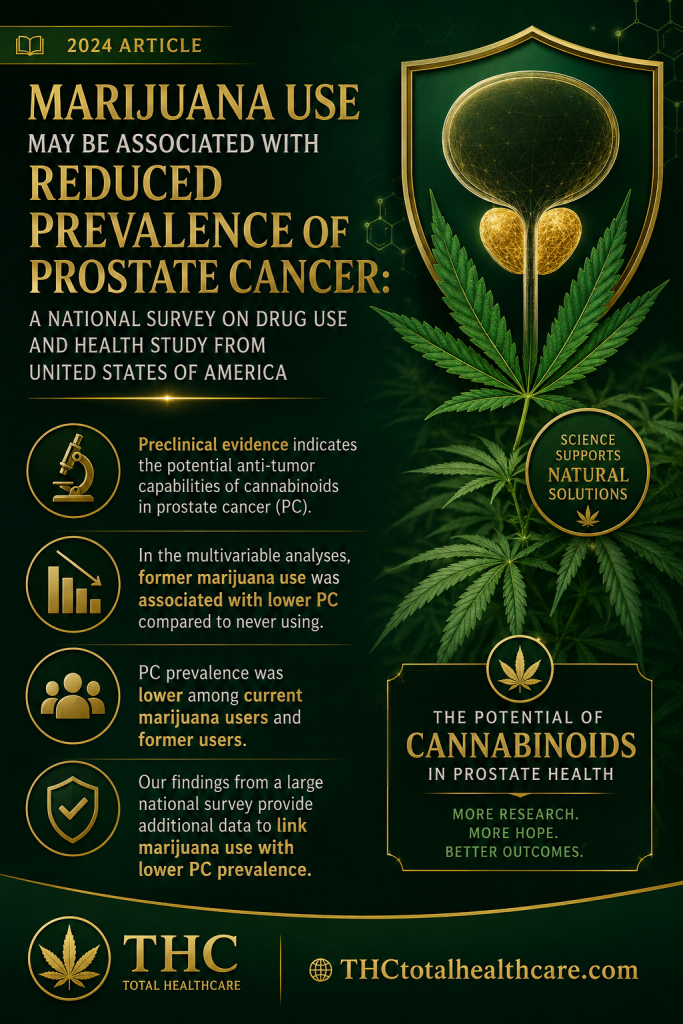
Marijuana Use May Be Associated with Reduced Prevalence of Prostate Cancer: A National Survey on Drug Use and Health Study from United States of America

“Preclinical evidence indicates the potential anti-tumor capabilities of cannabinoids in prostate cancer (PC).

We undertook a cross-sectional study using National Survey on Drug Use and Health data from 2002 to 2020, involving 2503 participants in the USA. The independent variable was marijuana use status (current, former, never), while the dependent variable was self-reported PC (yes, no). Eleven other demographic variables were assessed as covariates.

PC prevalence was lower among current marijuana users (46/145, 31.7%) and former users (323/1021, 31.6%) compared to non-users (534/1337, 39.9%, p < 0.001). PC prevalence was lower among users versus non-users in the elderly (≥65) (36.4% vs. 42.4%, p = 0.016) and non-Hispanic white subgroups (28.9% vs. 38.3%, p < 0.001). There were no significant PC prevalence differences between users and non-users in the younger population (50-64) or other race/ethnicity.

In the multivariable analyses, former marijuana use was associated with lower PC compared to never using (odd ratio = 0.74, 95% CI 0.62-0.90, p = 0.001). Current use was also suggestive of reduced prevalence but was not statistically significant (odd ratio = 0.77, 95% CI 0.52-1.14, p = 0.198), possibly due to low sample size.

Our findings from a large national survey provide additional data to link marijuana use with lower PC prevalence.”

https://pubmed.ncbi.nlm.nih.gov/38790970/

https://www.mdpi.com/2227-9059/12/5/1008

Cannabis and cancer: unveiling the potential of a green ally in breast, colorectal, and prostate cancer

pubmed logo

“Cancer comes in second place on the list of causes of death worldwide. In 2018, the 5-year prevalence of breast cancer (BC), prostate cancer (PC), and colorectal cancer (CRC) were 30%, 12.3%, and 10.9%, respectively.

Cannabinoids are chemicals derived from the Cannabis sativa plant; the most investigated cannabinoids are cannabinol, delta 9-tetrahydrocannabinol (Δ9-THC), and cannabidiol. In humans, the endogenous endocannabinoid system consists of endocannabinoids, cannabinoids receptors (CBs), and enzymes that degrade the endocannabinoids.

In this review, we will review the most recent literature for evidence that discusses the role of cannabis in the treatment of the three types of neoplasms mentioned.

Studies have proved that BC cells express CB receptors; many in-vivo studies showed that cannabinoids cause apoptosis and inhibit proliferation and migration. Also, researchers found that treating BC mice with THC and JWH-133 (CB2 receptor agonist) slowed the tumor growth.

Regarding CRC, cannabidiol was found to decrease the viability of chemotherapy-resistant CRC cells and inhibit metastasis by antagonizing the G-protein-coupled receptor 55 (GPR55; a novel cannabinoid receptor) necessary for metastasis. Moreover, cannabidiol had anti-angiogenetic effects by reducing the expression of vascular endothelial growth factor (VEGF) in addition to anti-inflammatory effects.

Finally, studies demonstrated that PC cells highly express CB1 and CB2 receptors and that cannabinoids are capable of inhibiting the release of exosomes and microvesicles related to cancer progression. Cannabinoids also have antiproliferative, anti-invasive, anti-fibroblastic, cell cycle arrest, and proapoptotic effects on PC cells.”

https://pubmed.ncbi.nlm.nih.gov/38755733/

“There is growing evidence supporting the role of Cannabinoids in numerous pathological conditions, including their role in several cancer types such as breast, colorectal, and prostate cancer. Accordingly, cannabinoids could have a promising potential as adjunctive therapy for the treatment of these types of cancers.”

https://jcannabisresearch.biomedcentral.com/articles/10.1186/s42238-024-00233-z

Cannabinoids in Treating Chemotherapy-Induced Nausea and Vomiting, Cancer-Associated Pain, and Tumor Growth

pubmed logo

“Cannabis has been used as an herbal remedy for thousands of years, and recent research indicates promising new uses in medicine. So far, some studies have shown cannabinoids to be safe in helping mitigate some cancer-associated complications, including chemotherapy-induced nausea and vomiting, cancer-associated pain, and tumor growth.

Researchers have been particularly interested in the potential uses of cannabinoids in treating cancer due to their ability to regulate cancer-related cell cycle pathways, prompting many beneficial effects, such as tumor growth prevention, cell cycle obstruction, and cell death.

Cannabinoids have been found to affect tumors of the brain, prostate, colon and rectum, breast, uterus, cervix, thyroid, skin, pancreas, and lymph. However, the full potential of cannabinoids is yet to be understood.

This review discusses current knowledge on the promising applications of cannabinoids in treating three different side effects of cancer-chemotherapy-induced nausea and vomiting, cancer-associated pain, and tumor development.

The findings suggest that cannabinoids can be used to address some side effects of cancer and to limit the growth of tumors, though a lack of supporting clinical trials presents a challenge for use on actual patients. An additional challenge will be examining whether any of the over one hundred naturally occurring cannabinoids or dozens of synthetic compounds also exhibit useful clinical properties.

Currently, clinical trials are underway; however, no regulatory agencies have approved cannabinoid use for any cancer symptoms beyond antinausea.”

https://pubmed.ncbi.nlm.nih.gov/38203245/

https://www.mdpi.com/1422-0067/25/1/74