Effect of solvent polarity on phenolic antioxidant extraction from Cannabis sativa L. leaves and inflorescences: mixture design optimization and HPLC-DAD/ESI-MS2 profiling

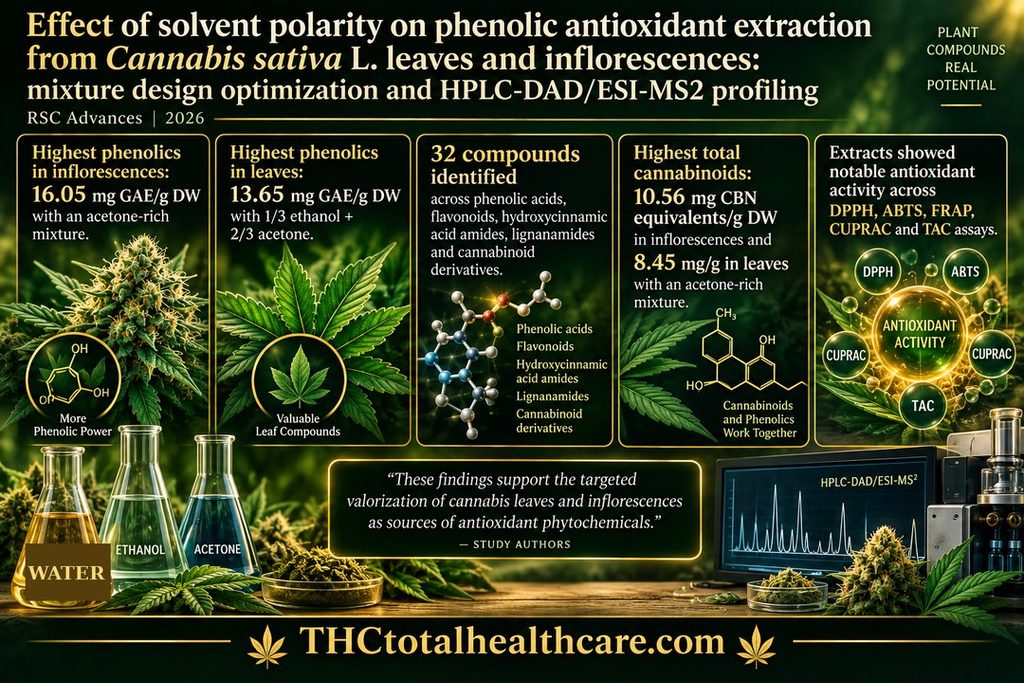
A new 2026 study shows that how cannabis is extracted can dramatically change which beneficial compounds are recovered. Researchers tested water, ethanol and acetone mixtures on Cannabis sativa leaves and inflorescences and found that solvent composition significantly affected total phenolics, cannabinoids and antioxidant activity.

Inflorescences produced their highest total phenolic content — 16.05 mg GAE/g dry weight — with an acetone-rich mixture, while leaves reached 13.65 mg GAE/g with one-third ethanol and two-thirds acetone. Chemical profiling identified 32 compounds, including phenolic acids, flavonoids, hydroxycinnamic acid amides, lignanamides and cannabinoid derivatives.

The extracts also showed notable antioxidant activity across DPPH, ABTS, FRAP, CUPRAC and TAC assays. The authors concluded that cannabis leaves and flowers may be valuable targeted sources of antioxidant phytochemicals for pharmaceutical, nutraceutical and cosmetic applications.

“Cannabis (Cannabis sativa L.) is a source of bioactive compounds with promising applications in the nutraceutical, pharmaceutical, and cosmetic fields.

Applying a mixture design approach with three solvents (water, acetone and ethanol), this study investigated how solvent composition modulates the recovery of phenolic compounds from cannabis inflorescences and leaves. Extracts were assessed for total phenolic content (TPC) and antioxidant activities using DPPH, ABTS, FRAP, CUPRAC, and TAC assays, and their chemical profiles were characterized by HPLC-DAD/ESI-MS2.

Solvent composition significantly affected extraction efficiency across plant organs. For inflorescences, the highest TPC value (16.05 mg GAE per g dry weight) was obtained with an acetone-enriched mixture (1/6 water-1/6 ethanol-2/3 acetone), whereas leaves reached their maximum (13.65 mg GAE per g DW) with 1/3 ethanol-2/3 acetone.

Multi-response optimization identified 1/3 water-1/3 ethanol-1/3 acetone for inflorescences and 50% water-30% ethanol-20% acetone for leaves as the optimal solvent mixtures.

HPLC-DAD/ESI-MS2 analysis identified 32 compounds belonging to several classes, including phenolic acids, flavonoids, hydroxycinnamic acid amides, lignanamides, and cannabinoid derivatives. These classes showed diverse content depending on the solvent and plant matrix. The acetone rich mixture produced the highest total cannabinoids (10.56 and 8.45 mg CBN equivalents per g dry weight) for inflorescences and leaves, respectively.

These results reveal clear organ and solvent-dependent selectivity in Moroccan Cannabis. These differences were reflected in the antioxidant activities, with extracts showing notable reducing and radical-scavenging capacities across DPPH, ABTS, FRAP, CUPRAC, and TAC assays.

These findings support the targeted valorization of cannabis leaves and inflorescences as sources of antioxidant phytochemicals for pharmaceutical and cosmetic applications.”

https://pubmed.ncbi.nlm.nih.gov/42751042

“The chemical diversity of Cannabis sativa metabolites has stimulated extensive research into their extraction and characterization. In this study, water, ethanol, and acetone were combined to enhance the extraction of phenolic compounds and antioxidants from Cannabis sativa L. leaves and inflorescences.

Multi-response optimization showed that each plant matrix required a specific optimal solvent mixture, confirming matrix-dependent extraction behavior: 1/3 water–1/3 acetone–1/3 ethanol for inflorescences and 50% water–30% ethanol–20% acetone for leaves. HPLC-DAD/ESI-MS2 enabled the tentative identification of several compound classes, including cannabinoids, hydroxycinnamic acid amides, flavonoids, and lignanamides. Inflorescences were characterized by higher total cannabinoid contents, whereas leaves contained higher levels of hydroxycinnamic acid amides. These differences highlight both the importance of solvent selection and the distinct chemical composition of Cannabis sativa L. organs.

Overall, these results support the potential valorization of the optimized Cannabis sativa leaf and inflorescence extracts as sources of antioxidant and bioactive compounds for prospective applications in natural cosmetic formulations, such as antioxidant creams, serums or other topical skincare products, as well as in nutraceutical formulations, including functional supplements enriched with plant-derived antioxidants. However, additional studies on formulation stability, bioavailability, efficacy, and safety are required before practical application.”
https://pubs.rsc.org/ra/article/doi/10.1039/d6ra05874d/1356587/Effect-of-solvent-polarity-on-phenolic-antioxidant

Standardized Curcuma longa-Cannabis sativa extract derived from a traditional Thai formulation for psoriasis: anti-inflammatory activity, keratinocyte modulation, and skin-targeted delivery

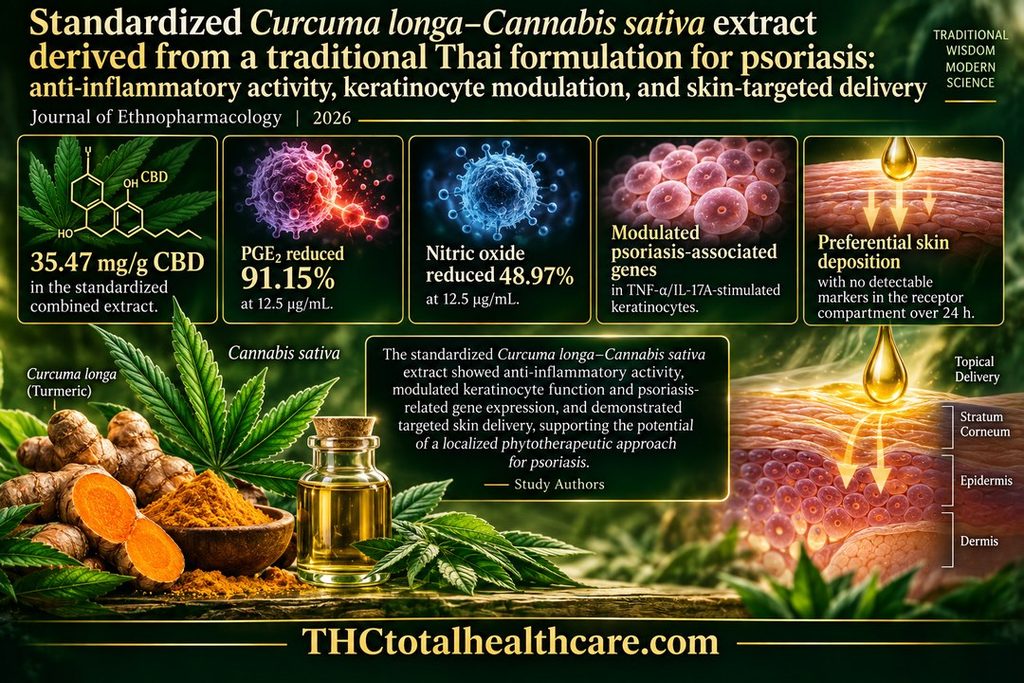
A new study tested a standardized combination of Curcuma longa (turmeric) and Cannabis sativa derived from a traditional Thai topical formulation for psoriasis. The combined extract contained curcuminoids, ar-turmerone and cannabidiol, including 35.47 mg/g CBD, and was evaluated for anti-inflammatory activity, effects on psoriasis-related keratinocytes and its ability to remain concentrated in the skin.

At 12.5 µg/mL, the combined extract reduced nitric oxide production by 48.97% and PGE₂ production by 91.15%. It also altered psoriasis-associated gene expression in TNF-α/IL-17A-stimulated keratinocytes, showing activity against several biological processes involved in psoriasis.

The skin-delivery experiments found strong deposition of the extract’s markers in the skin, with none detected in the receptor compartment during the 24-hour test. The authors concluded that the standardized turmeric–cannabis combination showed anti-inflammatory, psoriasis-relevant and skin-targeted activity supporting further development as a localized phytotherapeutic approach for psoriasis.

“Ethnopharmacological relevance: Curcuma longa rhizomes and Cannabis sativa leaves are traditionally combined in Thai topical remedies using cottonseed oil. However, the pharmacological basis and dermal delivery of this combination remain unclear.

Aim of the study: This study evaluated a standardized Thai CL-CS combined extract (CLCS) by integrating phytochemical characterization, psoriasis-relevant biological activities, and ex vivo skin deposition and permeation, with comparison to the single extracts.

Materials and methods: CLCS was standardized by validated HPLC using curcuminoids, ar-turmerone, and cannabidiol as markers. Anti-inflammatory activity was evaluated in RAW264.7 macrophages, while psoriasis-relevant activity was assessed in TNF-α/IL-17A-stimulated HaCaT keratinocytes. Skin deposition and permeation were evaluated using porcine ear skin and Franz diffusion cells.

Results: CLCS contained bisdemethoxycurcumin (18.79 ± 1.54 mg/g), demethoxycurcumin (12.89 ± 1.02 mg/g), curcumin (22.12 ± 1.62 mg/g), ar-turmerone (75.35 ± 3.94 mg/g), and cannabidiol (35.47 ± 2.39 mg/g). IC50 values were 41.22 ± 1.70 and 22.91 ± 0.51 μg/mL in HaCaT and RAW264.7 cells, respectively. At 12.5 μg/mL, CLCS inhibited NO and PGE2 production by 48.97 ± 0.88% and 91.15 ± 3.66%, respectively, and modulated psoriasis-associated genes. Cottonseed oil containing 20% DG achieved the highest skin deposition of BCM, DCM, and CM, with no detectable markers in the receptor compartment over 24 h.

Conclusions: Standardized CLCS exhibited anti-inflammatory and psoriasis-relevant activities and preferential skin deposition, supporting its potential as a localized phytotherapeutic approach for psoriasis.”

https://pubmed.ncbi.nlm.nih.gov/42772617

“The present study provides an integrated chemical, biological, and skin-targeted delivery evaluation of a standardized CLCS co-extract derived from a traditional Thai topical formulation. The extract was successfully standardized by its characteristic bioactive constituents derived from both botanical components. CLCS demonstrated anti-inflammatory and psoriasis-relevant biological activities”

https://www.sciencedirect.com/science/article/abs/pii/S0378874126012833?via%3Dihub

Computational and Comparative In Vitro Evaluation of GC-MS Profiled Cannabis sativa Inflorescence Extracts’ Metabolites on Selected Diabetes Therapeutic Targets

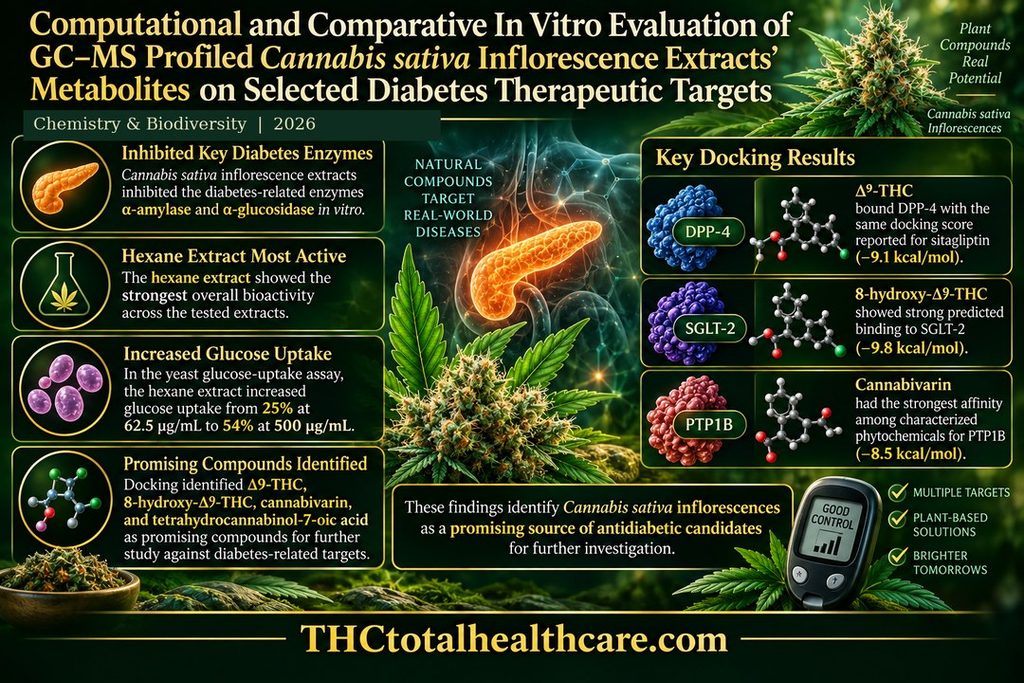
A new 2026 study found that Cannabis sativa flower extracts showed activity against several biological targets involved in diabetes. Researchers tested the extracts for effects on carbohydrate-digesting enzymes, glucose uptake and oxidative stress, then used computational modeling to examine how 36 cannabis metabolites interacted with diabetes-related proteins.

The hexane extract showed the strongest overall activity, including inhibition of α-amylase and α-glucosidase and the greatest increase in glucose uptake in the yeast model. Glucose uptake with the hexane extract rose from 25% at 62.5 µg/mL to 54% at 500 µg/mL.

The docking analysis identified several cannabinoids — including Δ9-THC, 8-hydroxy-Δ9-THC, cannabivarin and tetrahydrocannabinol-7-oic acid — as promising candidates for further study against diabetes-related targets such as DPP-4, SGLT-2 and PTP1B. The authors concluded that cannabis inflorescences may be a promising source of compounds for future antidiabetic drug research.

“Cannabis sativa, a medicinal plant rich in cannabinoids, terpenoids, and flavonoids, has been shown to have various pharmacological activities.

This study investigated the antidiabetic potential of C. sativa inflorescence extracts using in vitro and computational models.

Dried C. sativa inflorescences were extracted sequentially with hexane, dichloromethane, and methanol, before their metabolites were identified by GC-MS. The extracts were tested for α-amylase and α-glucosidase inhibition, glucose uptake activity, and antioxidant effects using DPPH and nitric oxide (NO) inhibition assays. Thirty-six metabolites were further docked against diabetes-related proteins.

Among the extracts, the hexane extract showed the strongest bioactivity with notable α-amylase inhibition (IC50: 727 µg/mL), DPPH free radical scavenging (IC50: 478.62 µg/mL), and nitric oxide inhibition activity (IC50: 356.51 µg/mL). Docking analyses revealed strong binding affinities for 8-hydroxy-delta-9-THC, cannabivarin, and 9-tetrahydrocannabinol with DPP-4, PTP1B, and other target proteins.

These findings highlight the potential of C. sativa inflorescences as a source of antidiabetic agents, warranting further in vivo and clinical validation.”

https://pubmed.ncbi.nlm.nih.gov/42763912

“This study provides preliminary evidence that C. sativa inflorescence extracts contain phytoconstituents with antioxidant, enzyme-inhibitory, and potential antidiabetic activities under the experimental conditions investigated. Among the extracts, the hexane extract exhibited the strongest enzyme inhibition and capacity to interact with free radicals.

In addition, compounds including Δ9-tetrahydrocannabinol, 8-hydroxy-Δ9-THC, cannabivarin, and tetrahydrocannabinol-7-oic acid exhibited favorable binding affinities toward diabetes-related protein targets, identifying them as promising candidates for further investigation.”

https://onlinelibrary.wiley.com/doi/10.1002/cbdv.71684

Toxic and repellent effects of hemp leaf extracts and cannabidiol against adult female yellow fever mosquitoes, Aedes aegypti

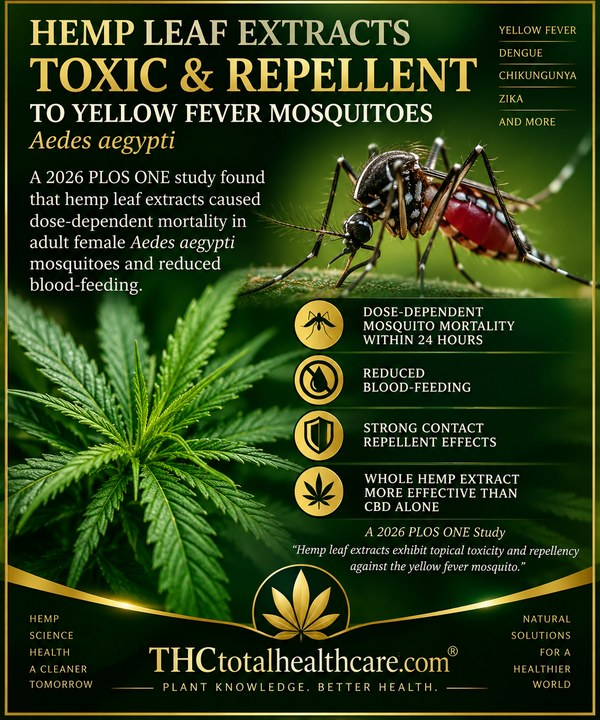
A 2026 study published in PLOS ONE found that hemp leaf extracts were both toxic and repellent to adult female Aedes aegypti mosquitoes, the species responsible for transmitting diseases including yellow fever, dengue and chikungunya. Researchers observed dose-dependent mosquito mortality within 24 hours after direct exposure to the hemp extract.

The hemp extract also reduced blood-feeding and produced strong contact-repellent effects. Importantly, isolated cannabidiol (CBD) did not reproduce the full activity of the whole extract, suggesting that other cannabinoids, terpenes or additional hemp compounds may contribute to the effect.

The findings add to growing research into hemp-derived compounds as potential plant-based tools for insect and mosquito control. The authors concluded that hemp leaf extracts showed both topical toxicity and repellency against yellow fever mosquitoes, with effects that could not be duplicated by CBD alone.

“Hemp (Cannabis sativa) derived products have emerged as potential sources of novel biopesticides.

We recently demonstrated that a hemp leaf extract was toxic to larvae of the yellow fever mosquito Aedes aegypti, and that cannabidiol (CBD) was the primary larvicidal component of the extract.

Here we evaluated the toxic and repellent effects of a hemp leaf extract and CBD against adult female Ae. aegypti.

Toxicity was assessed using an acute topical assay in which mosquitoes received a 500 nL application to the thorax and mortality was recorded at 24 h. Repellency was then evaluated using two complementary bioassays: (i) a no-choice membrane blood-feeding assay to quantify feeding deterrence, and (ii) a mosquito airborne repellency test (MART) to assess spatial repellency.

Topical application of CBD-rich hemp leaf extract induced dose-dependent mortality in adult Ae. aegypti with a LD50 of 22.13 µg/mosquito at 24 h. When CBD isolate was tested at its equivalent doses in the extract, it caused significantly lower mortality than the hemp extract.

In the membrane blood-feeding repellency assay, the hemp leaf extract repelled mosquitoes in a dose-dependent manner, whereas CBD produced weaker effects even at higher equivalent doses. In the MART assay, the hemp extract did not elicit spatial repellency, suggesting low volatility of the repellent compounds.

Taken together, our results demonstrate that CBD does not fully explain the adulticidal or repellent effects of the CBD-rich hemp leaf extract against adult female Ae. aegypti suggesting that other compounds contribute to the bioactivity of hemp leaf extracts against adult female mosquitoes.”

https://pubmed.ncbi.nlm.nih.gov/42743102

“This study demonstrates that hemp leaf extracts exhibit topical toxicity and repellency against the yellow fever mosquito, Ae. aegypti, and that these effects cannot be duplicated by CBD alone. The greater toxicity of the hemp leaf extract compared to the CBD isolate suggests important contributions by other compounds in the extracts. When repellency of the extract or CBD was evaluated, mosquitoes were only repelled when direct contact with the treated surface was allowed. Nevertheless, the hemp leaf extract was more effective than the CBD isolate, again pointing to the involvement of other compounds in adult repellency.

Our findings advance our understanding of the potential uses of hemp and CBD against adult female Ae. aegypti. Identifying the additional components of the leaf extract that contribute to toxicity and repellency in adult female mosquitoes will be essential for evaluating the potential of hemp-based products in integrated mosquito management strategies. In addition, future research evaluating the human and environmental safety of using hemp-derived products as biopesticides is needed.”

https://journals.plos.org/plosone/article?id=10.1371/journal.pone.0354696

Cannabis as a source of novel therapeutics: A computational study combining LBDD and structure-based docking/dynamics to identify novel drug-like compounds for colorectal cancer

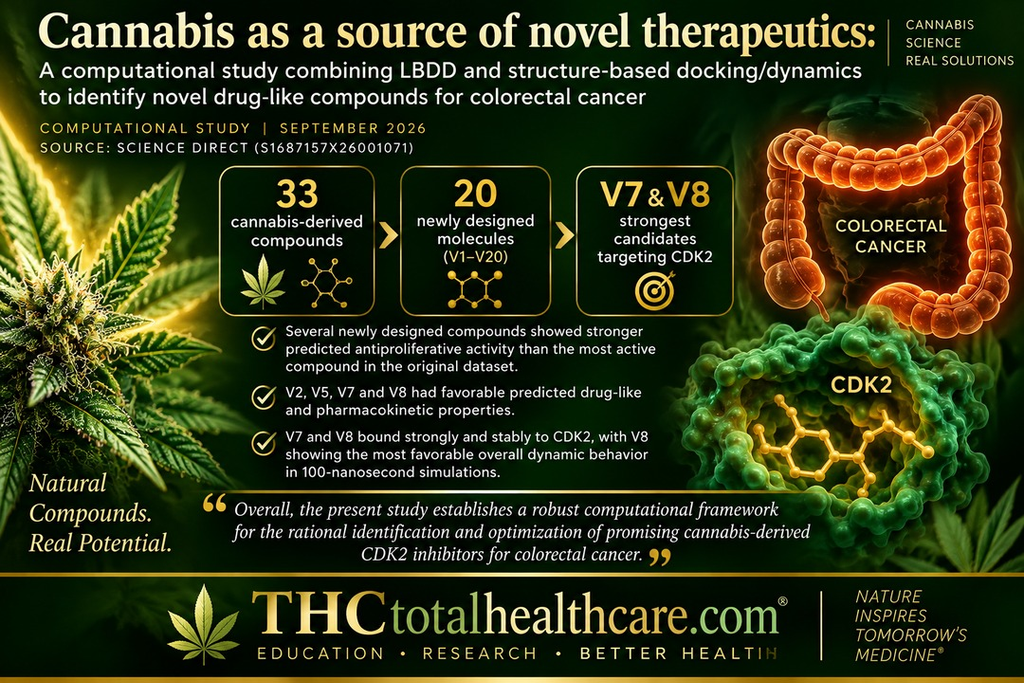
Cannabis continues to provide researchers with chemical starting points for the development of new cancer therapies. In this 2026 study, scientists examined 33 cannabis-derived compounds with reported antiproliferative activity against HCT-116 colorectal cancer cells, then used computational modeling to investigate their potential interactions with CDK2, an enzyme involved in cell-cycle regulation and cancer-cell proliferation.

Using those cannabis compounds as a foundation, the researchers designed 20 new drug-like molecules. Several were predicted to have stronger antiproliferative activity than the most active compound in the original cannabis-derived dataset, with four candidates — V2, V5, V7 and V8 — also showing favorable predicted pharmacokinetic and drug-like properties.

V7 and V8 emerged as the strongest candidates. Molecular docking and 100-nanosecond molecular-dynamics simulations indicated stable interactions with the active site of CDK2, with V8 showing particularly favorable behavior. The findings suggest that compounds inspired by cannabis chemistry could provide promising leads for the development of new therapeutics targeting colorectal cancer.

“Cannabis represents a valuable source of bioactive compounds with significant therapeutic potential, thanks to its rich phytochemical profile, making it a prime candidate for cancer research.

Our study investigates the potential of cannabis-derived compounds to inhibit cyclin-dependent kinase 2 (CDK2), a crucial regulator of cell-cycle progression and colorectal cancer cell proliferation.

A comprehensive computational workflow integrating 3D-QSAR modeling, molecular docking, molecular dynamics simulations, drug-likeness assessment, and ADMET prediction was employed to investigate a dataset of 33 cannabis-derived compounds. The robustness and predictive performance of the generated CoMFA and CoMSIA models were confirmed through internal and external validation, leave-one-out cross-validation (LOOCV), and Y-randomization tests, yielding excellent statistical parameters for CoMFA (Q2=0.651, R2=0.986, SEE=0.069) and CoMSIA (Q2=0.665, R2=0.985, SEE=0.071).

Using contour map analysis, twenty new molecules (V1-V20) with enhanced antiproliferative activity against the HCT-116 colorectal cancer cell line were developed, and outperformed the original dataset’s most active one. Following drug-likeness screening and ADMET profiling, compounds V2, V5, V7, and V8 emerged as the most promising candidates, exhibiting favorable pharmacokinetic properties and drug-like characteristics.

Molecular docking studies revealed that V7 and V8 exhibit high stability within the CDK2 active site and possess stronger binding affinity than the reference compound. Furthermore, 100 ns molecular dynamics simulations demonstrated that both protein-ligand complexes reached stable conformational states, as confirmed by converged backbone RMSD profiles, low residue fluctuations (RMSF), persistent protein-ligand interactions, and complementary structural descriptors including radius of gyration (Rg), solvent-accessible surface area (SASA), and molecular surface area (MolSA).

Collectively, these analyses confirmed the structural stability and compactness of the investigated complexes throughout the simulation period, with V8 exhibiting the most favorable dynamic behavior.”

https://pubmed.ncbi.nlm.nih.gov/42749433

 “Overall, the present study establishes a robust computational framework for the rational identification and optimization of promising cannabis-derived CDK2 inhibitors for colorectal cancer.”

https://www.sciencedirect.com/science/article/pii/S1687157X26001071?via%3Dihub

Bioactive Compounds and In Vitro Antibacterial Activity of Hemp Leaves and Inflorescences as Potential Functional Feed Ingredients for Canine Nutrition

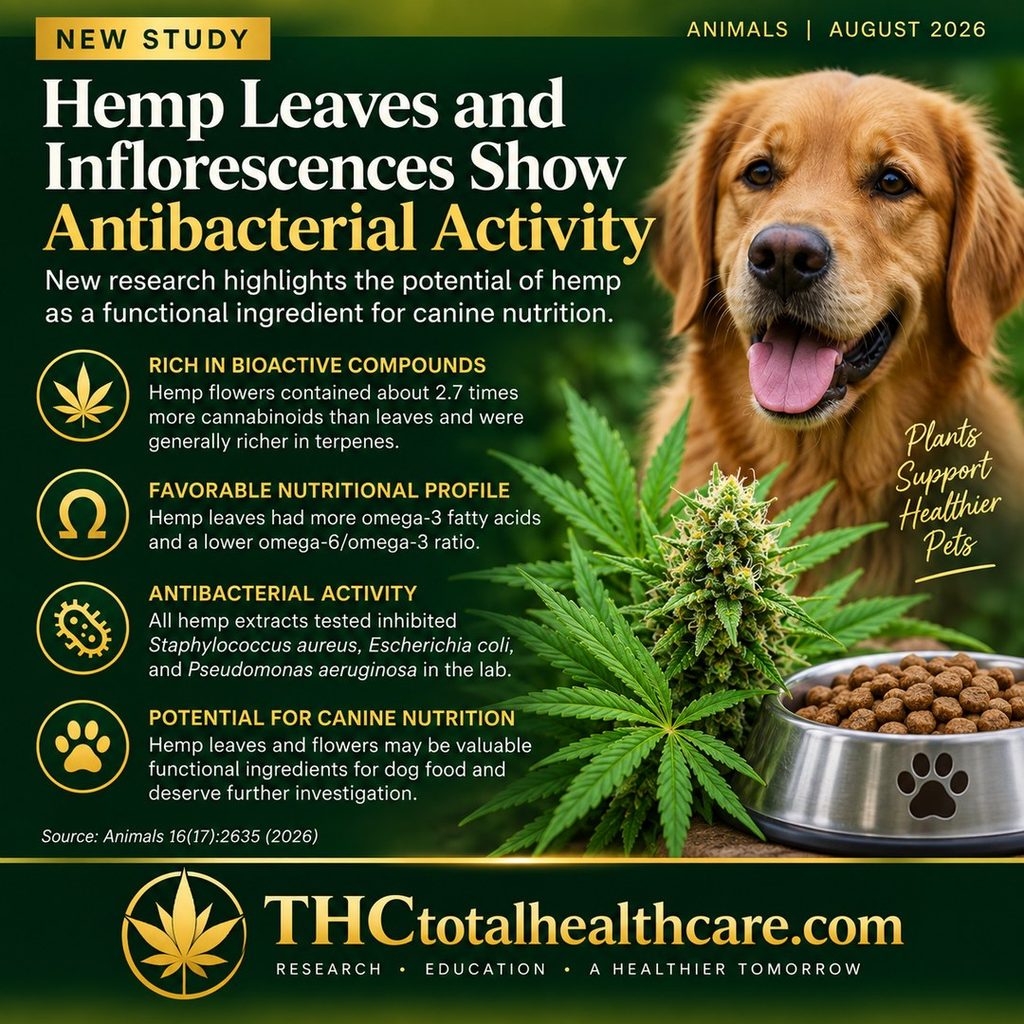
Hemp may have value far beyond its traditional uses. A 2026 study examining hemp leaves and inflorescences found that both plant parts contain bioactive compounds with potential nutritional value, while extracts from the plants also demonstrated antibacterial activity against several important bacterial species.

Researchers found that hemp flowers were especially rich in cannabinoids and terpenes, while the leaves offered a favorable fatty-acid profile. In laboratory testing, hemp extracts showed activity against Staphylococcus aureus, Escherichia coli, and Pseudomonas aeruginosa, highlighting another potential use for compounds naturally produced by the cannabis plant.

The researchers suggest that hemp leaves and flowers deserve further investigation as functional ingredients in canine nutrition. The findings add to growing evidence that parts of the cannabis plant often treated as agricultural byproducts may contain valuable nutritional and biologically active compounds.

“Hemp (Cannabis sativa L.) inflorescences have been extensively characterized for their bioactive compounds, whereas less information is available on hemp leaves despite their potential as a source of nutrients and phytochemicals.

This study compared leaves and inflorescences of four organically grown hemp cultivars (Finola, Futura 75, Dioica, and Kompolti) in terms of cannabinoid, terpene, and fatty acid profiles, lipid quality indices, and in vitro antibacterial activity.

Antibacterial activity against Staphylococcus aureus, Escherichia coli, and Pseudomonas aeruginosa was evaluated using MIC, MBC, and time-kill assays. Total cannabinoid content was approximately 2.7-fold higher in inflorescences than in leaves, which were also generally richer in terpenes. Leaves showed a more favorable fatty acid profile, with higher n-3 polyunsaturated fatty acid proportions and a lower n-6/n-3 ratio.

All extracts exhibited antibacterial activity. Among the tested bacteria, S. aureus was the most susceptible to the hemp extracts, with both growth inhibition and bactericidal activity observed at the lowest tested concentration (MIC/MBC = 0.005%), compared with 0.625% for E. coli and 1.25-2.5% for P. aeruginosa, depending on the extract. Finola and Kompolti inflorescence extracts showed the fastest bactericidal activity against S. aureus. 

These findings demonstrate distinct and complementary characteristics of hemp leaves and inflorescences and provide a basis for further investigation of their potential relevance to canine nutrition.”

https://pubmed.ncbi.nlm.nih.gov/42738424

“The pet food industry is increasingly looking for natural ingredients that can improve both the nutritional value and microbiological safety of dog diets while making better use of agricultural resources. Industrial hemp cultivation generates large amounts of leaves that are often underutilized, although they contain valuable natural compounds. This study compared hemp leaves and inflorescences from four industrial hemp cultivars to determine whether these plant materials could be useful in canine nutrition.

The results showed that leaves provide a favorable fatty acid profile, whereas inflorescences are richer in naturally occurring plant compounds such as cannabinoids and terpenes. Extracts from both plant parts also inhibited the growth of bacteria under laboratory conditions. These findings suggest that different hemp plant parts may have complementary roles as functional ingredients in dog foods while supporting more sustainable use of hemp biomass. Further studies in complete diets and feeding trials are needed before practical application.”

https://www.mdpi.com/2076-2615/16/17/2635

Cannabinoids.

Cover of StatPearls“Cannabinoids, broadly speaking, are a class of biological compounds that bind to cannabinoid receptors. They are most frequently sourced from and associated with the plants of the Cannabis genus, including Cannabis sativa, Cannabis indica, and Cannabis ruderalis.

The earliest known use of cannabinoids dates back 5,000 years ago in modern Romania, while the documentation of the earliest medical dates back to around 400 AD. However, formal extraction, isolation, and structural elucidation of cannabinoids have taken place rather recently in the late 19th and early 20th centuries. Since then, numerous advancements have been made in further isolating naturally occurring cannabinoids, synthesizing artificial equivalents, and discovering the endogenous the endocannabinoid system in mammals, reptiles, fish, and birds.”

https://www.ncbi.nlm.nih.gov/pubmed/32310522

https://www.ncbi.nlm.nih.gov/books/NBK556062/

Characterization of Lignanamides from Hemp (Cannabis sativa L. ) Seed and their Antioxidant and Acetylcholinesterase Inhibitory Activities.

Image result for J Agric Food Chem.

“Hempseed is known for its content in fatty acids, proteins and fiber, which contribute to its nutritional value.

Here we studied the secondary metabolites of hempseed aiming at identifying bioactive compounds that could contribute to its health benefits.

This investigation led to the isolation of four new lignanamides cannabisin M, 2, cannabisin N, 5, cannabisin O, 8 and 3,3′-demethyl-heliotropamide, 10, together with ten known lignanamides, among which 4 was identified for the first time from hempseed.

Structures were established on the basis of NMR, HR-MS, UV, IR as well as by comparison with the literature data.

Lignanamides 2, 7, 9-14 showed good antioxidant activity among which 7, 10 and 13 also inhibited acetylcholinesterase in vitro.

The new identified compounds in this study added to the diversity of hempseed composition and the bioassays implied that hempseed, with lignanamides as nutrients, may be a good source of bioactive and protective compounds.”  http://www.ncbi.nlm.nih.gov/pubmed/26585089

“Alzheimer’s Disease (AD) is the most common single cause of dementia in our ageing society. On full assessment and diagnosis of AD, initiation of an AChe inhibitor is recommended as early as possible, it is important that AChe inhibitor therapy is considered for patients with mild to moderate AD.” https://www.ncbi.nlm.nih.gov/pmc/articles/PMC2014378/

 “The Effects of Hempseed Meal Intake and Linoleic Acid on Drosophila Models of Neurodegenerative Diseases and Hypercholesterolemia. Our results indicate that hempseed meal (HSM) and linoleic acid are potential candidates for the treatment of Alzheimer’s disease (AD) and cardiovascular disease. These results show that HSM may prove of great utility as a health food, with potential for the prevention of AD and cardiovascular disease.” https://www.ncbi.nlm.nih.gov/pmc/articles/PMC3933972/

Dietary Supplement Therapies for Inflammatory Bowel Disease: Crohn’s Disease and Ulcerative Colitis.

“Inflammatory bowel disease (IBD) including ulcerative colitis and Crohn’s disease are chronic relapsing and remitting chronic diseases for which there is no cure.

The treatment of IBD frequently requires immunosuppressive and biologic therapies which carry an increased risk of infections and possible malignancy.

There is a continued search for safer and more natural therapies in the treatment of IBD.

This review aims to summarize the most current literature on the use of dietary supplements for the treatment of IBD. Specifically, the efficacy and adverse effects of vitamin D, fish oil, probiotics, prebiotics, curcumin, Boswellia serrata, aloe vera and cannabis sativa are reviewed.”

http://www.ncbi.nlm.nih.gov/pubmed/26561079

Production of Δ9-tetrahydrocannabinolic acid from cannabigerolic acid by whole cells of Pichia (Komagataella) pastoris expressing Δ9-tetrahydrocannabinolic acid synthase from Cannabis sativa L.

“The Δ9-tetrahydrocannabinolic acid synthase (THCAS) from Cannabis sativa was expressed intracellularly in different organisms to investigate the potential of a biotechnological production of Δ9-tetrahydrocannabinolic acid (THCA) using whole cells…

CONCLUSION:

Whole cells of P. pastoris offer the capability of synthesizing pharmaceutical THCA production.”

http://www.ncbi.nlm.nih.gov/pubmed/25994576