Multiple binding modes underlie Cannabis sativa cannabinoids recognition by peroxisome proliferator-activated receptor gamma

Cannabinoids interact with more than the classical cannabinoid receptors CB1 and CB2. One important target is PPARγ, a nuclear receptor involved in metabolism, inflammation, insulin sensitivity and several disease-related pathways.

In this study, researchers examined how multiple Cannabis sativa cannabinoids bind to and activate PPARγ. The results showed that different cannabinoids can engage the receptor through multiple binding modes, with acidic cannabinoids such as THCA and CBDA showing particularly strong activity.

The findings help clarify another molecular pathway through which cannabis compounds may influence biological processes relevant to metabolic, inflammatory and other disorders.

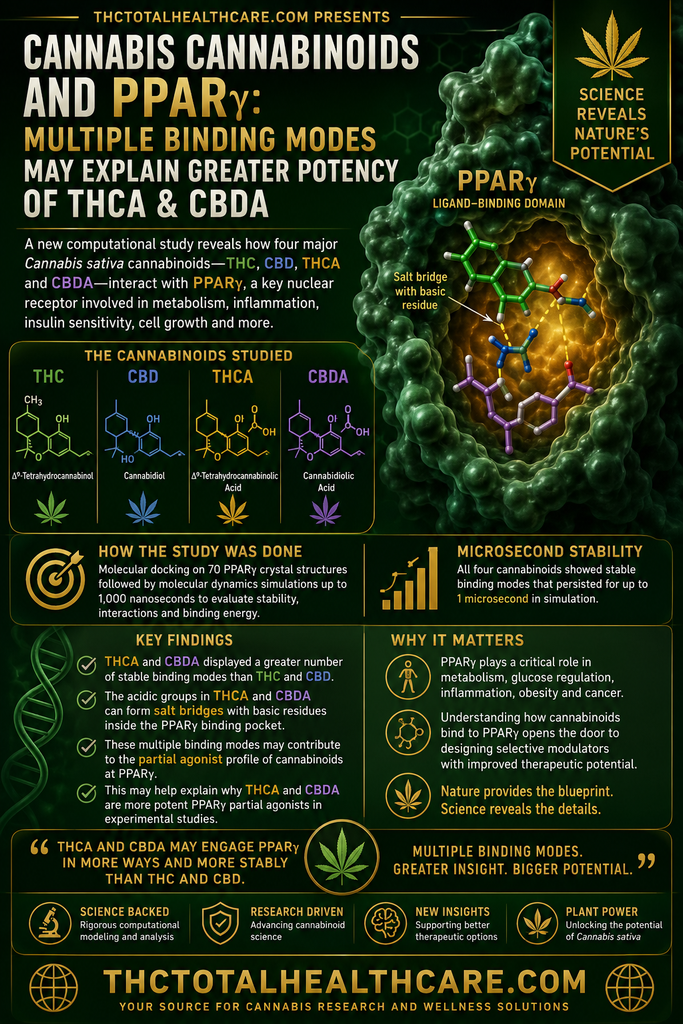
Introduction: Peroxisome proliferator-activated receptor gamma (PPARγ) is a ligand-activated nuclear receptor with broad therapeutic relevance across various pathologies, including type 2 diabetes, obesity, cancer, and inflammatory disorders. Cannabinoids are a class of terpene-phenolic compounds from Cannabis sativa L. that have been shown to act as partial agonists of PPARγ. Among them, the acidic forms Δ9-tetrahydrocannabinolic acid (THCA) and cannabidiolic acid (CBDA) display higher potency than their decarboxylated counterp arts Δ9-tetrahydrocannabinol (THC) and cannabidiol (CBD). Despite experimental evidence supporting direct PPARγ-cannabinoid interaction, the molecular determinants governing ligand recognition within the binding pocket have not yet been comprehensively investigated.

Methods: A combination of molecular docking and molecular dynamics simulations was employed to characterize the binding modes of THC, CBD, THCA, and CBDA within the PPARγ ligand-binding domain. Docking calculations were performed on a curated set of 70 PPARγ crystal structures co-crystallized with structurally diverse ligands, exploiting thus the conformational variability of the binding pocket. The best-ranked solutions were subjected to 500 ns MD simulations and evaluated on the basis of ligand stability, persistence of polar and aromatic-aromatic interactions with the receptor, and energetic contributions estimated by MM/GBSA. Three candidate binding modes per ligand were selected and their trajectories extended to 1,000 ns.

Results: All four cannabinoids yielded at least one stable binding mode at the microsecond timescale. The cannabinoids THCA and CBDA displayed a greater number of stable binding modes than THC and CBD, a result consistent with the higher potency previously reported for these compounds in experimental studies. This behavior may be attributable to the formation of salt bridges with basic residues in the binding pocket.

Conclusion: Our findings provide a structural framework for understanding cannabinoid recognition by PPARγ. The ability of these compounds to adopt multiple binding modes may contribute to their partial agonist profile, opening new avenues for the rational design of selective PPARγ modulators with improved therapeutic properties.”

https://pubmed.ncbi.nlm.nih.gov/42639023

“This work provides a foundation for future studies addressing the molecular basis of cannabinoid action on PPARγ.

Moreover, these findings could serve as a starting point to explore the allosteric mechanism by which these small lipophilic molecules influence receptor structure and dynamics.

Finally, the strategy described here may also be applied to determine the binding modes of these natural compounds in other members of the nuclear receptor family, including PPARα and PPARδ, as well as to investigate the binding modes of minor cannabinoids, such as cannabichromene and cannabigerol.”

https://www.frontiersin.org/journals/bioinformatics/articles/10.3389/fbinf.2026.1893303/full


The beneficial properties of CBDA in diet-induced neuroinflammation

Cannabidiolic acid (CBDA), the natural acidic precursor of CBD, is drawing increasing attention for its own biological effects.

In this study, researchers examined CBDA in a model of diet-induced neuroinflammation and found evidence that it may help reduce inflammatory changes in the brain associated with an unhealthy diet.

The findings add to growing research showing that acidic cannabinoids such as CBDA may have therapeutic properties distinct from their better-known neutral forms.

“Cannabidiolic acid (CBDA) is a phytocannabinoid found in the Cannabis plant. Understanding the effects of CBDA is essential to uncover its full potential and possible health benefits.

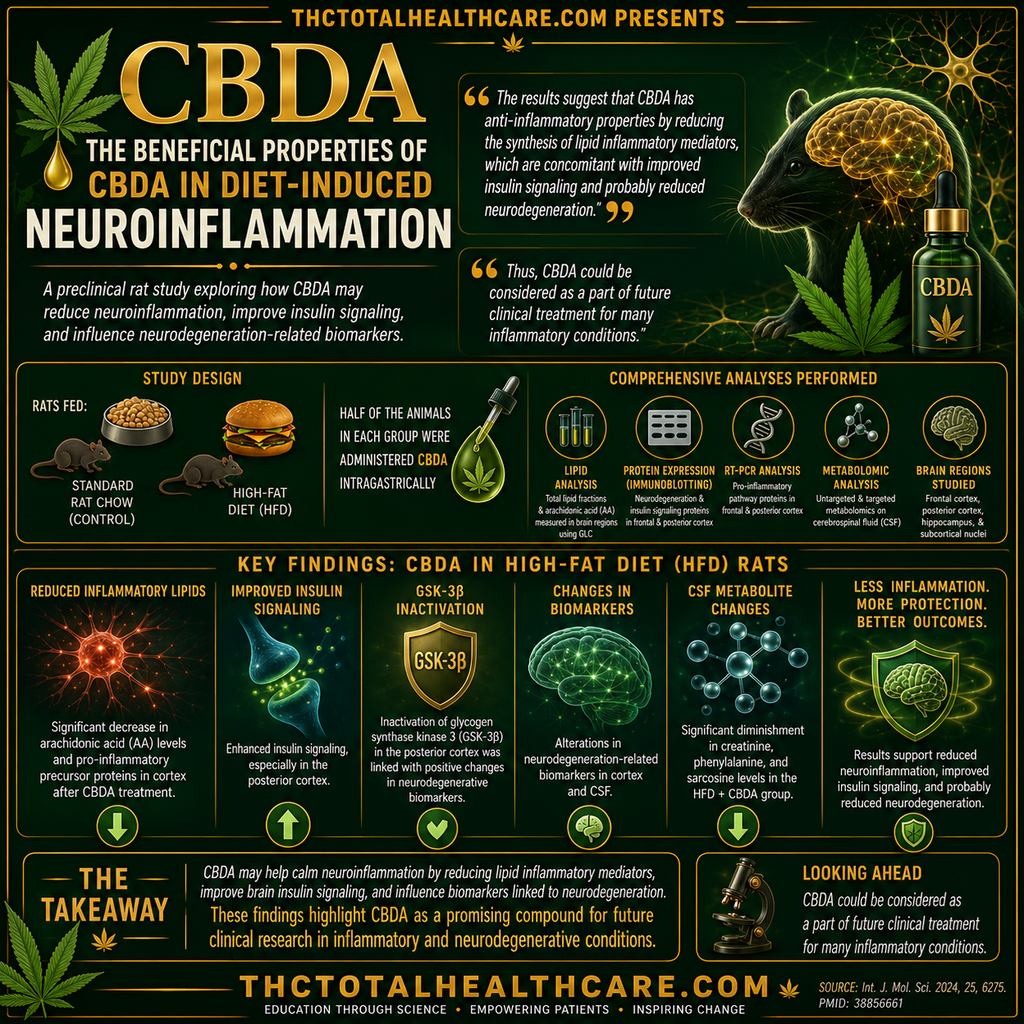
The study was conducted on rats receiving standard rat chow (control) and a high-fat diet (HFD).

Half of the animals in each group were administered CBDA intragastrically. The total lipid fractions and arachidonic acid (AA) contents were measured in the frontal and posterior cortex, hippocampus, and subcortical nuclei using gas-liquid chromatography. The expression of proteins involved in neurodegenerative diseases and insulin signaling pathway proteins in the frontal and posterior cortex was measured using Immunoblotting. RT-PCR was used to assess the expression of pro-inflammatory pathway proteins in the same regions. Additionally, untargeted and targeted metabolomic analyses were performed on cerebrospinal fluid (CSF).

The results showed that a decrease in arachidonic acid levels and pro-inflammatory precursor proteins after CBDA treatment in high-fat-fed rats was simultaneous with improved insulin signaling, particularly in the posterior cortex.

Inactivation of glycogen synthase kinase 3 (GSK-3β) in this region was concomitant with changes in neurodegenerative biomarkers in the cortex and CSF. Metabolomic studies revealed a significant diminishment in creatinine, phenylalanine, and sarcosine levels in the HFD+CBDA group, suggesting it plays an important role in neurological disorders.

The results suggest that CBDA has anti-inflammatory properties by reducing the synthesis of lipid inflammatory mediators, which are concomitant with improved insulin signaling and probably reduced neurodegeneration.

Thus, CBDA could be considered as a part of future clinical treatment for many inflammatory conditions.”

https://pubmed.ncbi.nlm.nih.gov/42627619

“Our study demonstrated a preliminary analysis of the impact of CBDA on the inflammatory profile of the brain under conditions of excess calories from fat. The results suggest an anti-inflammatory role for this cannabinoid, particularly in inhibiting the synthesis of lipid inflammatory mediators.”

https://link.springer.com/article/10.1007/s10787-026-02358-4

Cannabidiol and skeletal muscle insulin resistance: translational implications for exercise and rehabilitation medicine

Cannabidiol (CBD) is being studied for effects that extend beyond the nervous system, including its potential influence on metabolism and skeletal muscle function.

This review examines how CBD may affect insulin resistance in skeletal muscle, with particular attention to inflammation, oxidative stress, mitochondrial function and glucose metabolism. It also considers how these effects could relate to exercise and rehabilitation medicine.

The findings highlight a potential role for CBD in metabolic health and muscle recovery that warrants further investigation.

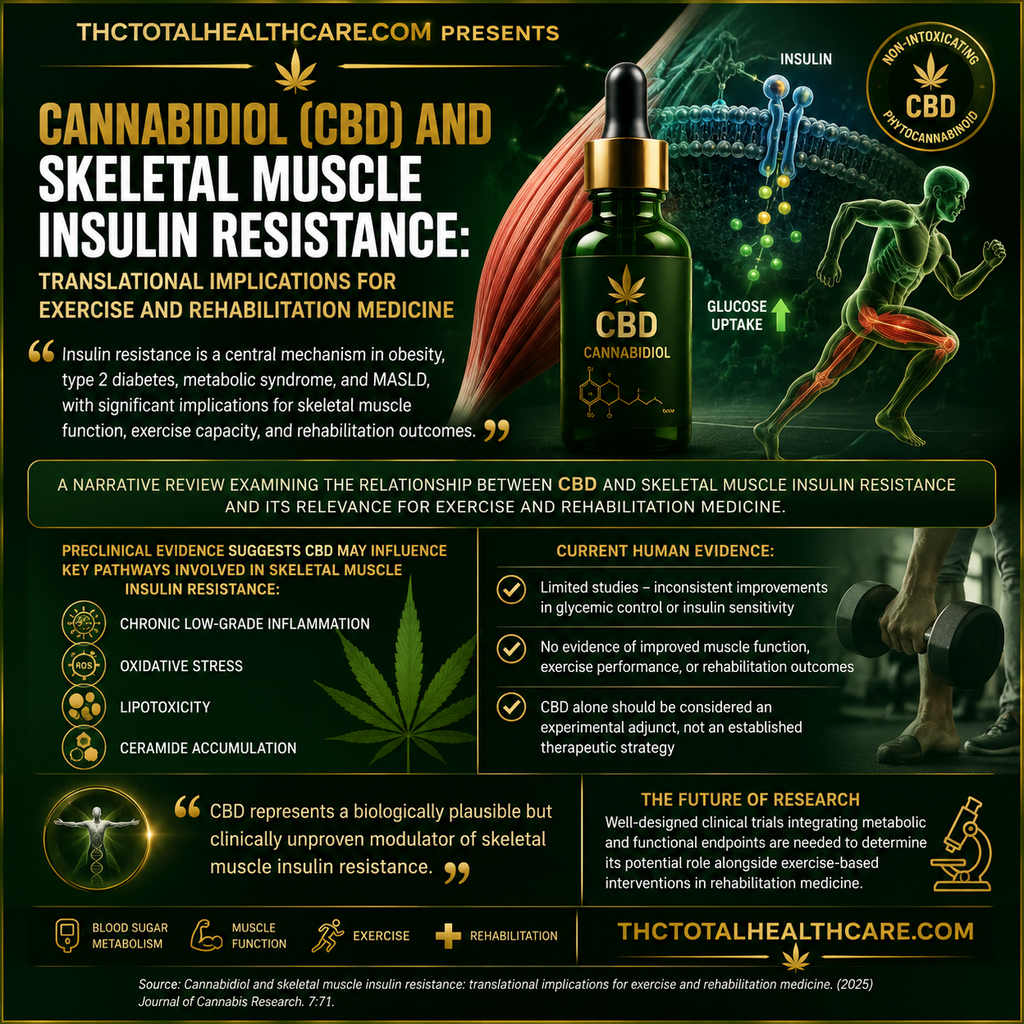
“Insulin Resistance (IR) is a central pathophysiological mechanism underlying obesity, type 2 diabetes mellitus, metabolic syndrome, and metabolic dysfunction-associated steatotic liver disease, with significant implications for skeletal muscle function, exercise capacity, and rehabilitation outcomes. Because skeletal muscle represents the primary site of insulin-stimulated glucose disposal, muscle insulin resistance is a key determinant of both metabolic health and physical performance.

Cannabidiol (CBD), a non-intoxicating phytocannabinoid derived from Cannabis sativa, has attracted increasing scientific interest due to its anti-inflammatory, antioxidant, and pleiotropic signaling properties.

This narrative review aims to examine the relationship between CBD and insulin resistance, with a particular focus on skeletal muscle biology and its relevance for exercise and rehabilitation medicine.

A structured literature search was conducted using major biomedical databases, including PubMed, Scopus, and Web of Science, to identify relevant preclinical and clinical studies. Evidence was synthesized narratively, with emphasis on skeletal muscle insulin resistance, endocannabinoid system signaling, potential mechanisms of CBD action, and clinical outcomes.

Preclinical data suggest that CBD may influence several pathways involved in skeletal muscle insulin resistance, including chronic low-grade inflammation, oxidative stress, lipotoxicity, and ceramide accumulation. However, current human studies remain limited and do not demonstrate consistent improvements in glycemic control or insulin sensitivity with CBD alone. Furthermore, evidence regarding its effects on muscle function, exercise performance, or rehabilitation outcomes is lacking.

In conclusion, CBD represents a biologically plausible but clinically unproven modulator of skeletal muscle insulin resistance. At present, it should be considered an experimental adjunct rather than an established therapeutic strategy. Future research should focus on well-designed clinical trials integrating metabolic and functional endpoints to determine its potential role alongside exercise-based interventions in rehabilitation medicine.”

https://pubmed.ncbi.nlm.nih.gov/42615071

https://www.pagepressjournals.org/bam/article/view/15541

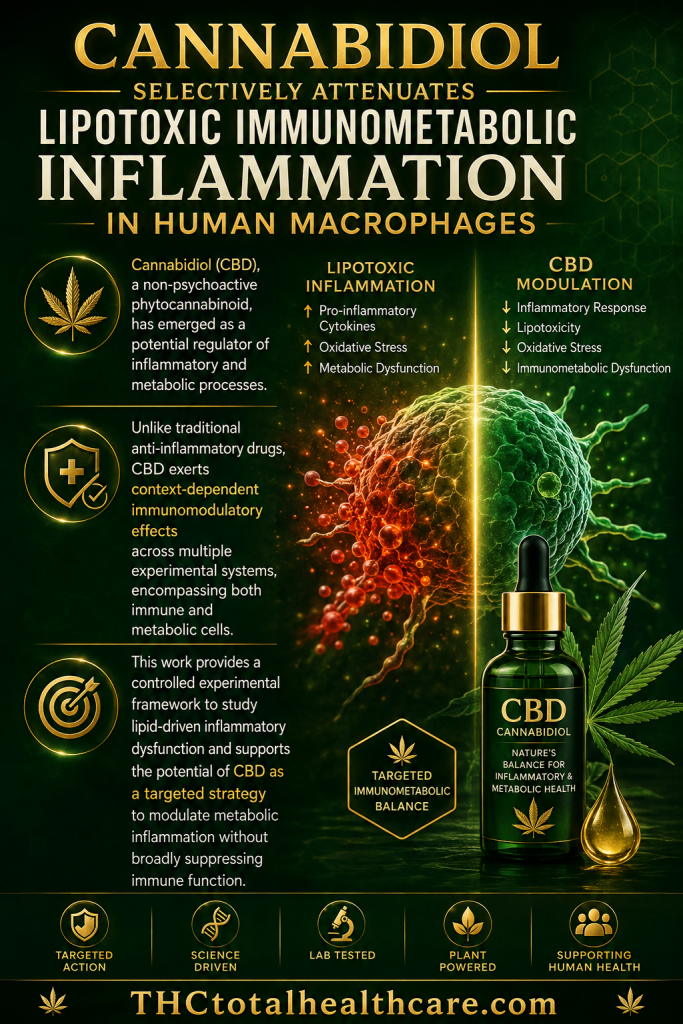
Cannabidiol selectively attenuates lipotoxic immunometabolic inflammation in human macrophages

Lipotoxic inflammation caused by excess fatty acids can drive metabolic disease by altering immune-cell function. In human macrophages, cannabidiol (CBD) selectively reduced inflammatory and immunometabolic responses triggered by lipotoxic stress without broadly suppressing normal immune activity. The researchers concluded that CBD may have therapeutic potential for metabolic disorders characterized by chronic lipid-driven inflammation.

“The role of saturated fatty acid-induced immunometabolic stress in macrophage dysfunction during metabolic disease remains incompletely understood, particularly the interplay between inflammatory signaling and intracellular lipid handling.

We employed a tightly controlled palmitic acid (PA)-based lipotoxicity model in PMA-differentiated U937-derived human macrophage-like cells to investigate how lipid excess reshapes inflammatory responses and to evaluate the modulatory effects of cannabidiol (CBD).

PA exposure induced a metabolically stressed yet viable macrophage phenotype, characterized by a broad cytokine remodeling profile. This included induction of classical proinflammatory cytokines such as interleukin (IL)-6, together with activation of inflammasome-associated cytokines IL-1β and IL-18 and additional immunoregulatory mediators, while tumor necrosis factor alpha (TNF-α) contributed to the overall inflammatory profile in a multivariate analysis. These changes were accompanied by a significant, time-dependent storage of intracellular triglycerides (TG) consistent with lipid overload and altered lipid handling.

CBD co-treatment did not compromise cell viability but selectively attenuated PA-induced inflammatory response in a cytokine-dependent manner, with the most significant reduction observed at higher concentrations. In parallel, CBD significantly reduced intracellular TG accumulation under lipotoxic conditions.

Collectively, these findings define a lipotoxicity-associated macrophage phenotype driven by saturated fatty acids and identify CBD as a context-dependent modulator of immunometabolic inflammation.

This work provides a controlled experimental framework to study lipid-driven inflammatory dysfunction and supports the potential of CBD as a targeted strategy to modulate metabolic inflammation without broadly suppressing immune function.”

https://pubmed.ncbi.nlm.nih.gov/42534637

“Cannabidiol (CBD), a non-psychoactive phytocannabinoid, has emerged as a potential regulator of inflammatory and metabolic processes. Unlike traditional anti-inflammatory drugs, CBD exerts context-dependent immunomodulatory effects across multiple experimental systems, encompassing both immune and metabolic cells.”

“Overall, this work supports CBD as a context-dependent modulator of immunometabolism response in PMA-differentiated U937-derived macrophages and provides a controlled experimental framework for studying lipid-driven inflammatory dysfunction in U937-derived macrophages.”

https://www.frontiersin.org/journals/immunology/articles/10.3389/fimmu.2026.1873494/full

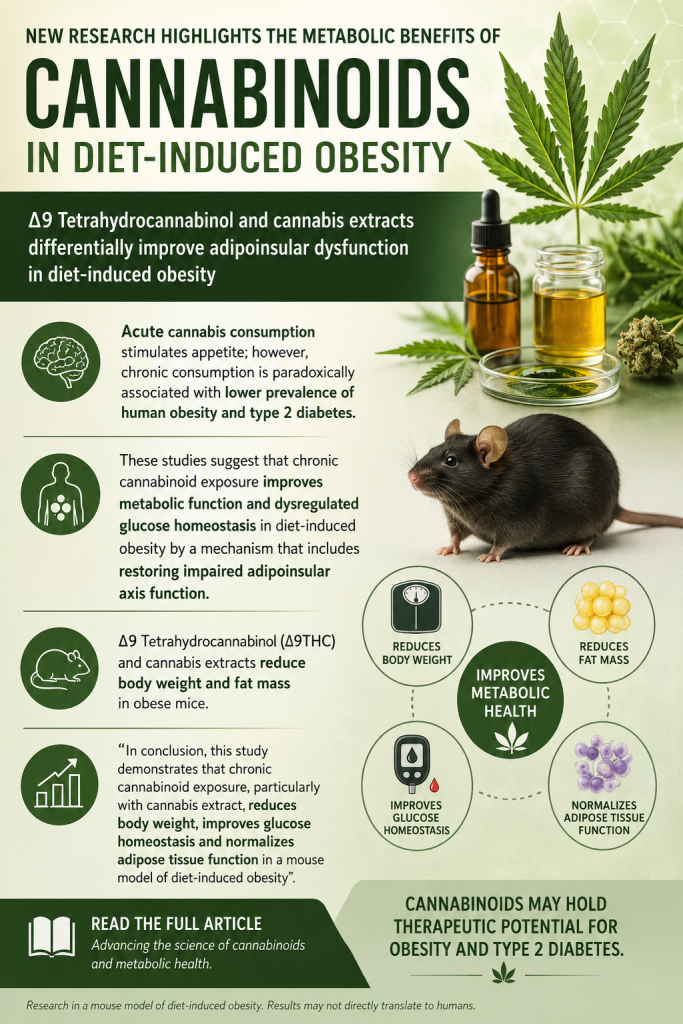
Δ9 Tetrahydrocannabinol and cannabis extracts differentially improve adipoinsular dysfunction in diet-induced obesity

THC and cannabis extracts may have important effects on obesity-related metabolic dysfunction. In this study, both THC and cannabis extracts reduced body weight and fat mass in diet-induced obese mice while improving abnormalities in adipose-tissue signaling. Cannabis extracts produced the strongest metabolic effects, more effectively normalizing adipokine expression and restoring glucose clearance to levels seen in lean mice, an effect not achieved by THC alone. The findings suggest that chronic cannabinoid exposure—particularly whole cannabis extracts—can improve glucose homeostasis, adipose function, and metabolic regulation in obesity.

“Diet-induced obesity (DIO) is associated with dysregulated adipoinsular axis and endocannabinoid system (eCBS) function. Acute cannabis consumption stimulates appetite; however, chronic consumption is paradoxically associated with lower prevalence of human obesity and type 2 diabetes.

We investigated the impact of chronic exposure to Δ9 tetrahydrocannabinol (THC) and cannabis extracts on DIO and glucose homeostasis in mice.

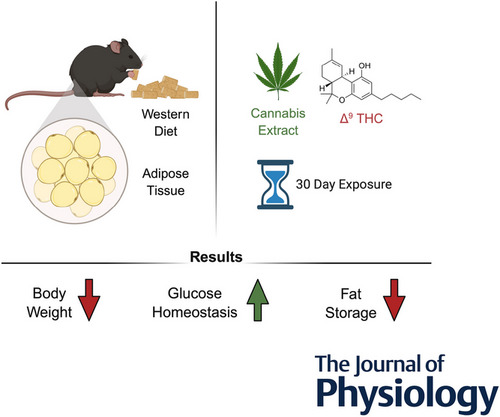
Male mice were fed a high-fat/sucrose diet or a low-fat/no-sucrose diet for 60 days. At day 30, mice were administered THC (5 mg/kg) or cannabis extracts matched for THC content daily for 30 days. We assessed adipocyte biology, glucose tolerance, insulin sensitivity, eCBS expression, body weight, food intake and motor activity. Roles for the eCBS in cannabis-induced changes in metabolic processes, including cellular bioenergetics, were analysed in 3T3-L1 adipocytes.

THC and extracts reduced body weight and fat mass in DIO mice, and reversed DIO-associated changes in expression of adipokines that regulate the adipoinsular axis. Extracts normalized expression of adipokines more effectively than THC. Notably, extracts – but not THC – normalized glucose clearance in DIO mice to levels found in lean mice. In addition, THC and extracts promoted anti-adipogenic effects and changes in energy metabolism in 3T3-L1 cells in a concentration-dependent manner.

These studies suggest that chronic cannabinoid exposure improves metabolic function and dysregulated glucose homeostasis in DIO by a mechanism that includes restoring impaired adipoinsular axis function.

KEY POINTS: Δ9 Tetrahydrocannabinol (Δ9THC) and cannabis extracts reduce body weight and fat mass in obese mice. Cannabis extracts, but not Δ9THC alone, improve glucose homeostasis in obese mice. Extracts more effectively normalize expression of components of the adipoinsular axis in obese mice. Δ9THC and extracts promote anti-adipogenic effects in 3T3-L1 cells. Δ9THC and extracts alter cellular bioenergetics in 3T3-L1 cells.”

https://pubmed.ncbi.nlm.nih.gov/42113966

“In conclusion, this study demonstrates that chronic cannabinoid exposure, particularly with cannabis extract, reduces body weight, improves glucose homeostasis and normalizes adipose tissue function in a mouse model of DIO. Our findings highlight the potential therapeutic value of cannabinoids in managing obesity and related metabolic disorders, though further research is needed to fully understand the underlying mechanisms and translate these findings into clinical applications.”

https://physoc.onlinelibrary.wiley.com/doi/10.1113/JP290431

Cannabisin A and B from hemp seed hulls improve glucose homeostasis by re-engaging insulin, leptin, and AMPK pathways via selective PTP1B inhibition

Background: Protein-tyrosine phosphatase 1B (PTP1B) is a master negative regulator of insulin and leptin receptor tyrosine kinase (RTK) signaling, and its chronic overactivation is strongly implicated in metabolic dysfunction. However, natural compounds capable of simultaneously inhibiting PTP1B and stimulating AMPK-the two major metabolic control nodes-remain scarce.

Methods: Two phenylpropionamide lignanamides, Cannabisin A (CA) and Cannabisin B (CB), were isolated from hemp seed hulls and their functions were evaluated using a multimodal workflow integrating molecular docking (AutoDock 4.2), mixed-type Lineweaver-Burk kinetic modeling, and 100 ns molecular dynamics simulations (CHARMM36/TIP3P). Functional assays included in vitro models such as enzyme inhibition, insulin- and leptin-stimulated glucose uptake assays in C2C12 myotubes and hepatocytes (Hepa1C1C7 and primary hepatocytes from high-fat diet mice), and in vivo models such as a multiple low-dose streptozotocin (MLD-STZ)-induced diabetic mouse model (C57BL/6J). In silico analyses of human transcriptomic and GWAS data (GEO, HuGeAMP) were conducted to assess translational relevance. BioTransformer-based metabolic predictions were used to explore absorption feasibility.

Results: CA and CB inhibited PTP1B with IC₅₀ values of 0.37 and 0.84 μM, respectively. Kinetic analysis demonstrated competitive-dominant (CA) and mixed-type (CB) inhibition, while MD simulations confirmed stable binding via catalytic-site residues (Asp48, Asp181, Arg221, Phe182). In PA-challenged C2C12 cells, both compounds restored glucose uptake and reactivated p-IRS-1, p-AKT, p-AMPK, and p-JAK2/STAT3. Similar recovery was observed in hepatocyte models, including suppression of SREBP-1c and enhancement of GLUT2 in primary HFD hepatocytes. In vivo, oral administration of CA/CB (1.5 and 3 mg/kg) in MLD-STZ diabetic mice improved fasting glucose in a dose-dependent manner, restored OGTT and ITT responses, and reactivated IRS-1/AKT/JAK2 signaling in skeletal muscle and AMPK/AKT/GLUT2 signaling in liver. Human transcriptome data and BioTransformer PK modeling showed that orally administered CA and CB can acquire sufficient polarity through O-demethylation and hydroxylation to exert PTP1B inhibitory effects in obesity and type 2 diabetes.

Conclusion: CA and CB are natural dual-target antidiabetic agents that inhibit PTP1B while activating AMPK, enabling coordinated re-engagement of insulin, leptin, and metabolic signaling. Their multi-tissue efficacy in vitro, ex vivo, and in vivo, combined with human-dataset alignment, highlights their translational potential as first-in-class insulin/leptin sensitizers derived from hemp seed hulls.”

https://pubmed.ncbi.nlm.nih.gov/41831381

Cannabis sativa L. (Cannabaceae) has long been cultivated for fiber, seed oil, and medicinal uses.”

“In this study, we identified two phenylpropionamides—Cannabisin A (CA) and Cannabisin B (CB)—from hemp seed hulls as first-in-class dual-node metabolic regulators.”

https://www.sciencedirect.com/science/article/abs/pii/S0944711326002904?via%3Dihub

Cannabidiol and diabetic heart disease: Mechanistic evidence and translational challenges

“Diabetic heart disease (DHD) is a major contributor to global cardiovascular morbidity, driven by a complex interplay of metabolic, inflammatory, oxidative, and fibrotic mechanisms. These interconnected pathways are not fully addressed by current cardiometabolic therapies, highlighting the need for novel multi-target interventions.

Cannabidiol (CBD), a non-psychoactive phytocannabinoid, has emerged as a potential modulator of several key processes implicated in DHD pathogenesis.

Preclinical evidence demonstrates that CBD attenuates oxidative stress by reducing reactive oxygen species (ROS) production, suppresses nuclear factor-κB (NF-κB)-mediated inflammatory signaling, preserves endothelial function by improving nitric oxide (NO) bioavailability, and inhibits transforming growth factor-β (TGF-β)-driven fibrotic remodeling.

These effects have been observed across in vitro and in vivo models of diabetic cardiomyopathy, where CBD improves both myocardial and vascular function. Mechanistically, CBD exerts its actions through negative allosteric modulation of CB₁ receptors and interaction with non-cannabinoid targets, including transient receptor potential vanilloid 1 (TRPV1), peroxisome proliferator-activated receptor gamma (PPARγ), and G protein-coupled receptor 55 (GPR55).

Despite this robust preclinical foundation, clinical evidence supporting the efficacy of CBD in DHD remains limited. Existing human studies are largely restricted to non-diabetic populations or short-term metabolic and hemodynamic outcomes, and do not address disease-specific cardiac endpoints. Furthermore, translational challenges, including variability in dosing, product standardization, and potential drug-drug interactions, remain significant barriers to clinical implementation.

Collectively, CBD represents a promising investigational candidate with multi-target potential to modulate the core pathophysiology of DHD. However, well-designed, disease-specific clinical trials are required to establish its therapeutic relevance and safety in diabetic populations.”

https://pubmed.ncbi.nlm.nih.gov/41966803

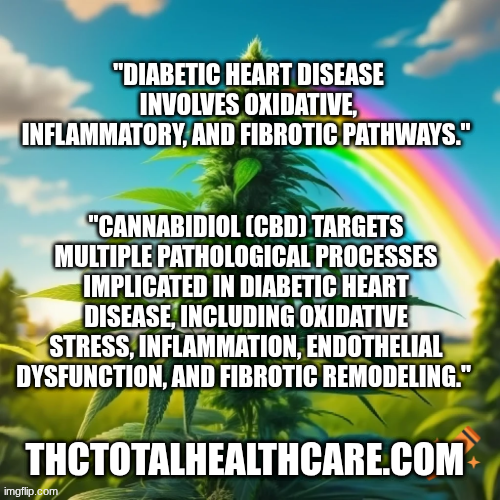
“Diabetic heart disease involves oxidative, inflammatory, and fibrotic pathways.”

“Cannabidiol (CBD) targets multiple pathological processes implicated in diabetic heart disease, including oxidative stress, inflammation, endothelial dysfunction, and fibrotic remodeling.”

“Cannabidiol (CBD), a non-psychoactive phytocannabinoid derived from Cannabis sativa, has attracted increasing interest due to its pleiotropic pharmacological actions across multiple molecular targets.”

https://www.sciencedirect.com/science/article/pii/S0753332226003872?via%3Dihub

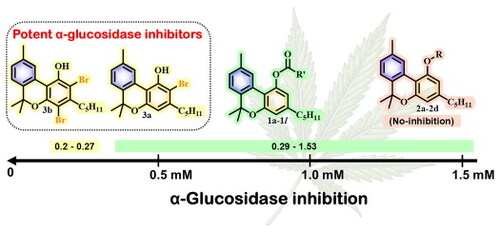
Cannabinol derivatives, a new series of α-glucosidase inhibitors: synthesis, structure-activity relationship, and kinetic study

“A new series of cannabinol derivatives was synthesised and assessed for their inhibitory effects against α-glucosidase. Of nineteen derivatives evaluated, the brominated analogues (3a and 3b) demonstrated the most potent inhibition against rat intestinal α-glucosidase. Structure-activity relationship analysis suggested that the phenolic hydroxy group and the introduced bromine atoms play crucial roles in enhancing inhibitory potency. Enzyme kinetic studies further revealed that 3a and 3b retarded both maltase and sucrase via a non-competitive mechanism.”

https://pubmed.ncbi.nlm.nih.gov/41785417

https://www.tandfonline.com/doi/full/10.1080/14786419.2026.2638950

“Three new α-glucosidase inhibitors from aqueous extract of Cannabis sativa leaves: isolation, characterisation, and kinetic study”

https://pubmed.ncbi.nlm.nih.gov/39756038

Alpha-glucosidase inhibitors are oral antidiabetic medications used to treat type 2 diabetes”

Medical Cannabis for the Treatment of Peripheral Neuropathy due to Diabetes: A Systematic Review

Introduction: This systematic review evaluated randomized controlled trials (RCTs) conducted specifically in participants with diabetes and painful peripheral neuropathy to assess the effectiveness and safety of medical cannabis, isolated cannabinoids, or nationally approved cannabis-based medicines as adjuvant treatment, compared with placebo or baseline.

Materials and methods: Controlled clinical studies and RCTs in adults with diabetic peripheral neuropathy were eligible. Animal and in vitro studies were excluded. We searched PubMed, Google Scholar, Cochrane Library, and Scopus and screened 15,377 records; 35 full-text articles were assessed for eligibility, and 4 RCTs were included in the qualitative synthesis.

Results: Three of four studies reported statistically significant reductions in neuropathic pain with cannabinoid-based interventions compared with placebo, whereas one trial did not demonstrate superiority. In two trials using vaporized or sublingual Δ9-tetrahydrocannabinol (THC), doses in the range of approximately 16-18 mg were associated with clinically meaningful pain relief in participants. Adverse effects, including dizziness and cognitive symptoms, were common but generally mild-to-moderate, and discontinuations due to adverse effects varied across studies.

Discussion/conclusion: Evidence from four small, heterogeneous RCTs suggests that cannabinoid-based therapies may reduce pain in some patients with diabetic peripheral neuropathy; however, the limited number of studies, variability in formulations and comparators, and risk of bias preclude firm conclusions regarding efficacy. Observed THC doses around 16-18 mg/day delivered via vaporized or sublingual routes should be viewed as preliminary, hypothesis-generating ranges rather than definitive recommendations. Larger, contemporary RCTs with rigorous risk-of-bias control, standardized outcomes, and detailed safety reporting are needed.”

https://pubmed.ncbi.nlm.nih.gov/41714301

“three of four identified studies demonstrated statistically significant reductions in pain compared with placebo or baseline, suggesting that cannabinoid-based interventions may offer analgesic benefit for some patients with diabetic peripheral neuropathy.”

https://journals.sagepub.com/doi/10.1177/25785125261425444

Bioactive metabolites and antidiabetic activity of Cannabis sativa-derived endophytic fungi

“Cannabis sativa L. (Cannabaceae) has long been valued in traditional medicine, including Ayurveda, for managing disorders such as diabetes, cancer, and kidney diseases.

Although the plant itself is known to influence glucose metabolism, the therapeutic potential of its associated endophytic fungi remains underexplored. In this study, 56 fungal isolates were obtained from different tissues of C. sativa and evaluated for antidiabetic activity.

Two isolates, identified by ITS1/4 rDNA sequencing as Aspergillus micronesiensis and Nodulisporium verrucosum, exhibited strong inhibitory effects on α-amylase, α-glucosidase, DPP-IV, and lipase (IC₅₀ < 100 µg/mL). Their ethyl acetate extracts demonstrated low cytotoxicity, enhanced cell viability, and significantly promoted insulin secretion in MIN6 pancreatic β-cells. GC-MS analysis revealed bioactive metabolites, including 1-butyl-4-tert-butylbenzene, 7,9-di-tert-butyl-1-oxaspiro (4,5) deca-6,9-diene-2,8-dione, 2-methylcinnamic acid, and tetraneurin-A, which are reported to possess antidiabetic potential. FTIR further confirmed the presence of functional groups corresponding to these compounds.

Together, these findings highlight C. sativa-derived endophytic fungi as promising sources of novel antidiabetic agents, bridging traditional knowledge with modern drug discovery.”

https://pubmed.ncbi.nlm.nih.gov/41249583

https://link.springer.com/article/10.1007/s00203-025-04539-1

“The term “endophytic fungi” refers to fungi that live in plant tissues throughout the entire or partial life cycle by establishing a mutually beneficial symbiotic relationship with its host plant without causing any adverse effect or disease.” https://pmc.ncbi.nlm.nih.gov/articles/PMC8877053/