
Computational and Comparative In Vitro Evaluation of GC-MS Profiled Cannabis sativa Inflorescence Extracts’ Metabolites on Selected Diabetes Therapeutic Targets

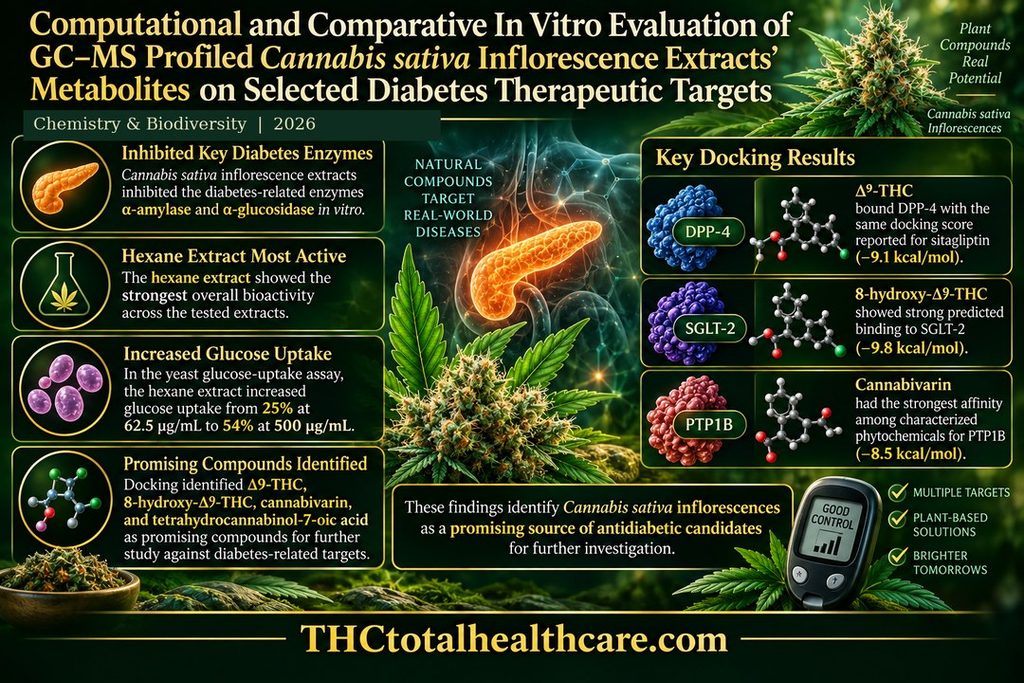
A new 2026 study found that Cannabis sativa flower extracts showed activity against several biological targets involved in diabetes. Researchers tested the extracts for effects on carbohydrate-digesting enzymes, glucose uptake and oxidative stress, then used computational modeling to examine how 36 cannabis metabolites interacted with diabetes-related proteins.

The hexane extract showed the strongest overall activity, including inhibition of α-amylase and α-glucosidase and the greatest increase in glucose uptake in the yeast model. Glucose uptake with the hexane extract rose from 25% at 62.5 µg/mL to 54% at 500 µg/mL.

The docking analysis identified several cannabinoids — including Δ9-THC, 8-hydroxy-Δ9-THC, cannabivarin and tetrahydrocannabinol-7-oic acid — as promising candidates for further study against diabetes-related targets such as DPP-4, SGLT-2 and PTP1B. The authors concluded that cannabis inflorescences may be a promising source of compounds for future antidiabetic drug research.

“Cannabis sativa, a medicinal plant rich in cannabinoids, terpenoids, and flavonoids, has been shown to have various pharmacological activities.

This study investigated the antidiabetic potential of C. sativa inflorescence extracts using in vitro and computational models.

Dried C. sativa inflorescences were extracted sequentially with hexane, dichloromethane, and methanol, before their metabolites were identified by GC-MS. The extracts were tested for α-amylase and α-glucosidase inhibition, glucose uptake activity, and antioxidant effects using DPPH and nitric oxide (NO) inhibition assays. Thirty-six metabolites were further docked against diabetes-related proteins.

Among the extracts, the hexane extract showed the strongest bioactivity with notable α-amylase inhibition (IC50: 727 µg/mL), DPPH free radical scavenging (IC50: 478.62 µg/mL), and nitric oxide inhibition activity (IC50: 356.51 µg/mL). Docking analyses revealed strong binding affinities for 8-hydroxy-delta-9-THC, cannabivarin, and 9-tetrahydrocannabinol with DPP-4, PTP1B, and other target proteins.

These findings highlight the potential of C. sativa inflorescences as a source of antidiabetic agents, warranting further in vivo and clinical validation.”

https://pubmed.ncbi.nlm.nih.gov/42763912

“This study provides preliminary evidence that C. sativa inflorescence extracts contain phytoconstituents with antioxidant, enzyme-inhibitory, and potential antidiabetic activities under the experimental conditions investigated. Among the extracts, the hexane extract exhibited the strongest enzyme inhibition and capacity to interact with free radicals.

In addition, compounds including Δ9-tetrahydrocannabinol, 8-hydroxy-Δ9-THC, cannabivarin, and tetrahydrocannabinol-7-oic acid exhibited favorable binding affinities toward diabetes-related protein targets, identifying them as promising candidates for further investigation.”
https://onlinelibrary.wiley.com/doi/10.1002/cbdv.71684

Delta-9-tetrahydrocannabinol alleviates inflammation by modulating immune responses in LPS-induced murine inflammation model

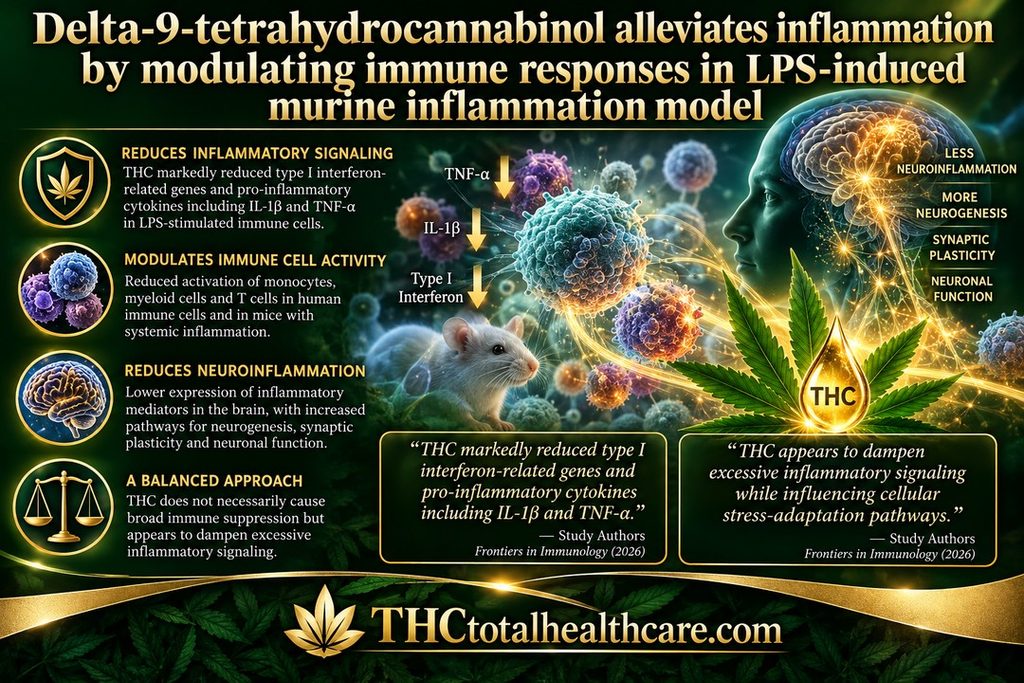
Delta-9-THC reduced inflammatory immune signaling across human immune cells and a mouse model of systemic inflammation. In LPS-stimulated cells, THC markedly suppressed type I interferon-related genes and pro-inflammatory cytokines including IL-1β and TNF-α, while also reducing immune-cell activation markers.

The effects extended beyond isolated cells. In mice exposed to systemic inflammation, THC reduced activation of splenic myeloid cells and T cells. Brain analysis also showed reduced neuroinflammatory signaling, including lower expression of inflammatory mediators, while pathways associated with neurogenesis, synaptic plasticity and neuronal function were enriched.

Importantly, the researchers describe THC’s effects as modulation rather than indiscriminate immune suppression, concluding that THC appears to dampen excessive inflammatory signaling while influencing cellular stress-adaptation pathways. They say these findings support further investigation of cannabinoid signaling in chronic inflammatory, neuroimmune and neurodegenerative disorders.

“Introduction: Δ9-Tetrahydrocannabinol (THC), the primary psychoactive component of cannabis, has been reported to modulate immune responses; however, its effects on complex innate immune signaling pathways and inflammation remain incompletely understood. Here, we investigated the immunomodulatory effects of THC on lipopolysaccharide (LPS)-induced inflammation across cellular and in vivo models.

Methods: We integrated transcriptomic, cellular, and in vivo approaches to characterize the effects of THC on innate immune activation. Human THP-1 monocytic cells were treated with THC in the presence or absence of LPS, followed by transcriptomic and gene expression analyses to evaluate inflammatory, type I interferon, unfolded protein response (UPR), and autophagy pathways. Findings were validated in primary human monocytes by assessing immune activation markers. The effects of chronic THC exposure were further evaluated in a murine model of systemic inflammation by examining splenic myeloid and T-cell activation. RNA sequencing of brain tissue was performed to assess the effects of THC on neuroinflammatory and neuronal pathways.

Results: THC induced a stress-adaptive transcriptional program in THP-1 cells, characterized by upregulation of genes associated with the UPR and autophagy pathways. In contrast, THC markedly suppressed LPS-induced type I interferon-stimulated genes (ISGs) and pro-inflammatory cytokines, including IL-1β and TNF-α. In primary human monocytes, THC significantly reduced the expression of activation markers CD80, CD83, and CD209. Consistent with these findings, chronic THC exposure attenuated the activation of splenic myeloid and T cells in mice subjected to systemic inflammation. Brain transcriptomic analysis further demonstrated reduced expression of neuroinflammatory pathways following THC exposure, accompanied by enrichment of pathways associated with neurogenesis and synaptic plasticity.

Discussion: Our findings demonstrate that THC exerts broad immunomodulatory effects characterized by suppression of inflammatory and type I interferon responses while promoting cellular stress-adaptation pathways. These effects were observed across human monocytic cells, primary monocytes, and peripheral immune populations in vivo, and were accompanied by reduced neuroinflammatory signaling and increased neuronal plasticity-associated pathways in the brain. Together, these findings provide mechanistic insight into the immunomodulatory actions of THC and support further investigation of cannabinoid signaling as a potential regulator of chronic inflammatory and neuroimmune disorders.”

https://pubmed.ncbi.nlm.nih.gov/42818626

“Chronic THC exposure reduces LPS-induced immune activation in vivo.”

https://www.frontiersin.org/journals/immunology/articles/10.3389/fimmu.2026.1856131/full

Need this THC study explained? thcXplained.com

Combined Cannabidiol and Δ9-Tetrahydrocannabinol Modulate Inflammation and Nociceptive Signaling in Human Dental Pulp Cells

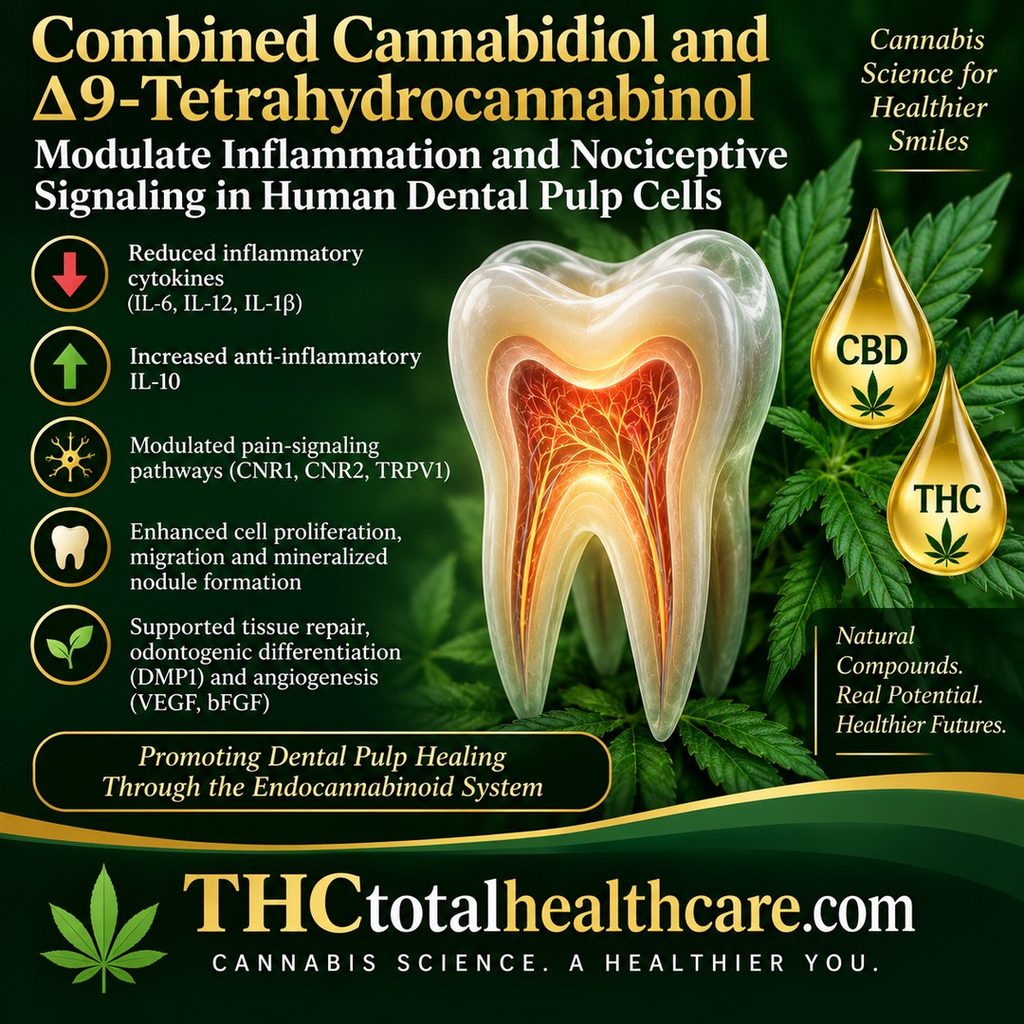
A new study using human dental pulp cells found that combining cannabidiol (CBD) and Δ9-tetrahydrocannabinol (THC) produced stronger anti-inflammatory effects than either cannabinoid alone. The combination reduced the pro-inflammatory cytokines IL-6, IL-12, and IL-1β while increasing the anti-inflammatory cytokine IL-10.

CBD and THC together also influenced important pathways involved in pain signaling and healing. Researchers reported increased expression of the cannabinoid receptors CNR1 and CNR2, modulation of TRPV1, and enhanced cell proliferation and migration. The combination also promoted mineralized nodule formation and increased markers associated with odontogenic differentiation and new blood-vessel formation.

The researchers concluded that combined CBD and THC show promise for promoting dental pulp healing by simultaneously influencing inflammation, nociceptive signaling, tissue repair, angiogenesis, and cell migration. The findings provide new evidence that cannabinoids may have potential applications in future vital pulp therapies designed to preserve and regenerate living dental tissue.

“Introduction: Dental pulp inflammation, caused by caries, trauma, or restorative operations, produces pain and slows regeneration. Cannabidiol (CBD) and Δ9-tetrahydrocannabinol (THC), cannabinoids of Cannabis sativa, have effects on inflammation and pain relief. However, the impact of these factors on dental pulp healing is not understood. This study investigated the combined effects of CBD and THC in controlling inflammation and nociception during dental pulp repair.

Methods: Human dental pulp cells were stimulated with lipopolysaccharide (LPS) and treated with CBD (2.5 μg/mL), THC (0.6 μg/mL), and their combination. Pro-inflammatory cytokines (IL-6, IL-12 and IL-1β) and anti-inflammatory cytokine IL-10 were analysed using qPCR and ELISA, while anti-nociceptive markers (CNR1, CNR2, and TRPV1) were evaluated by qPCR and Western blot. Cell viability, proliferation, and migration assays were performed to evaluate treatment effects on cellular behaviours associated with pulpal repair and regenerative potential.

Results: Compared with either treatment alone, the CBD/THC combination more effectively attenuated pro-inflammatory cytokines IL-6, IL-12, and IL-1β, enhanced CNR1 and CNR2 expression, modulated TRPV1, and increased IL-10 expression. Viability assays determined optimal non-cytotoxic concentrations for treatment. The combination enhanced cell proliferation and migration, promoted mineralized nodule formation, and significantly upregulated markers associated with tissue repair, odontogenic differentiation (DMP1), and angiogenesis (VEGF and bFGF).

Conclusion: Combined CBD and THC show promise for promoting dental pulp healing by modulating inflammation and nociceptive signaling, while supporting odontogenic differentiation, angiogenesis, and cell migration in human dental pulp cells. These findings provide in vitro evidence supporting combined cannabinoid treatment as a therapeutic strategy for vital pulp therapies.”

https://pubmed.ncbi.nlm.nih.gov/42722230

https://www.jendodon.com/article/S0099-2399(26)00500-5/abstract