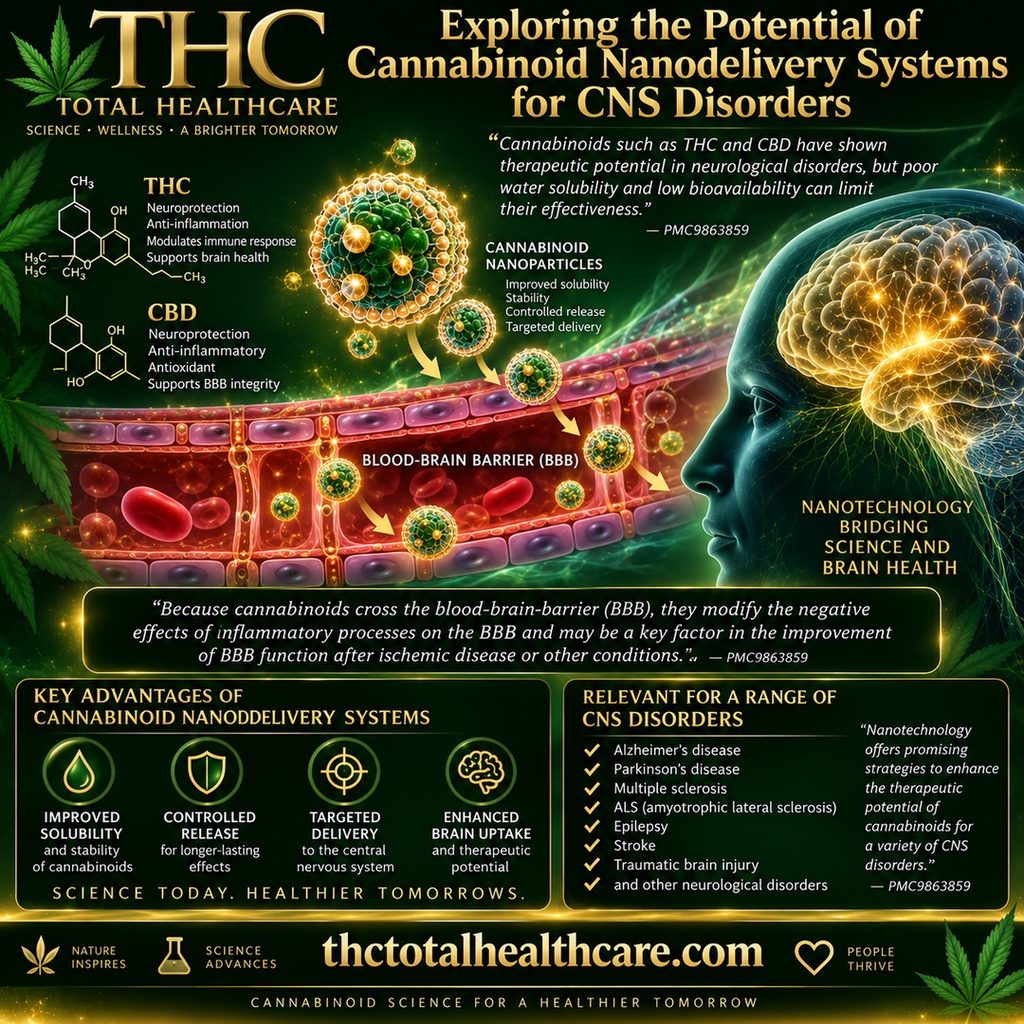
Exploring the Potential of Cannabinoid Nanodelivery Systems for CNS Disorders

Cannabinoids such as THC and CBD have shown therapeutic potential in neurological disorders, but poor water solubility and low bioavailability can limit their effectiveness. This review explores how nanotechnology may overcome these barriers by improving cannabinoid stability, controlled release and targeted delivery to the central nervous system, including strategies designed to enhance passage across the blood-brain barrier.

“Cannabinoids have a major therapeutic value in a variety of disorders. The concepts of cannabinoids are difficult to develop, but they can be used and are advantageous for a number of diseases that are not sufficiently managed by existing treatments. Nanoconjugation and encapsulation techniques have been shown to be effective in improving the delivery and the therapeutic effectiveness of drugs that are poorly soluble in water. Because the bioavailability of cannabinoids is low, the challenge is to explore different administration methods to improve their effectiveness. Because cannabinoids cross the blood-brain-barrier (BBB), they modify the negative effects of inflammatory processes on the BBB and may be a key factor in the improvement of BBB function after ischemic disease or other conditions. This review discusses various types of cannabinoid administration, as well as nanotechnologies used to improve the bioavailability of these compounds in CNS diseases.”

“The growing acceptance of Cannabis and cannabinoids has led to an increasing number of clinical trials testing various nanoproducts. CNS disorders are key therapeutic targets for cannabinoids, and nanoformulation platforms for cannabinoid nanoconjugates provide efficient transport across the BBB. Selected examples of cannabinoid nanoconjugates have shown enhanced bioavailability and improved bio-efficacy with promising outcomes in biomedical applications. We expect to see many results from clinical trials in the near future to evaluate the adverse effects and effectiveness of this treatment. However, precise delivery of these nanoformulations to pathological sites inside the brain remains a challenge.”

https://pmc.ncbi.nlm.nih.gov/articles/PMC9863859/

Structural characterization, physicochemical properties and hypolipidemic activity of hemp (Cannabis sativa L.) protein hydrolysates prepared via enzyme-microbial synergy

“This study aims to prepare hemp protein hydrolysate (HPH) with hypolipidemic activity using an enzyme-bacterial synergistic approach and to investigate its mechanism of action.

We found that enzymatic hydrolysis and fermentation altered the secondary and tertiary structures of hemp protein (HP). Particularly, the reduction of the α-helical structure and the increase of β-sheet endow HPH with better functional properties.

In vitro experiments demonstrated that HPH exhibited potent inhibitory activity against pancreatic lipase and cholesterol esterase, with IC₅₀ values of 1.999 ± 0.142 mg/mL and 3.046 ± 0.102 mg/mL, respectively. In free fatty acid-induced HepG2 cells, high concentrations of HPH reduced total cholesterol, triglycerides, and low-density lipoprotein cholesterol levels by 39.71%, 30.84%, and 21.94%, respectively, while increasing high-density lipoprotein cholesterol levels by 1.4-fold. Additionally, WB results demonstrated that HPH activated the AMPK signaling pathway and regulated the SREBP1/PPARα/HMGCR/PCSK9-LDLR metabolic pathway, ultimately improving intracellular lipid accumulation.

These results demonstrated that HP may be a promising natural source candidate drug for the prevention and treatment of hyperlipidemia.”

https://pubmed.ncbi.nlm.nih.gov/41763749

“Hemp Protein is an excellent source for the development of hypolipidemic peptides.”

https://www.sciencedirect.com/science/article/abs/pii/S0963996926000293?via%3Dihub

“Hyperlipidemia is a common condition characterized by high levels of lipids (cholesterol and triglycerides) in the blood, often causing no symptoms but significantly increasing risks of stroke, heart attack, and cardiovascular disease.”

Beyond neurons: Impact of cannabidiol on glial cells in ischemic stroke

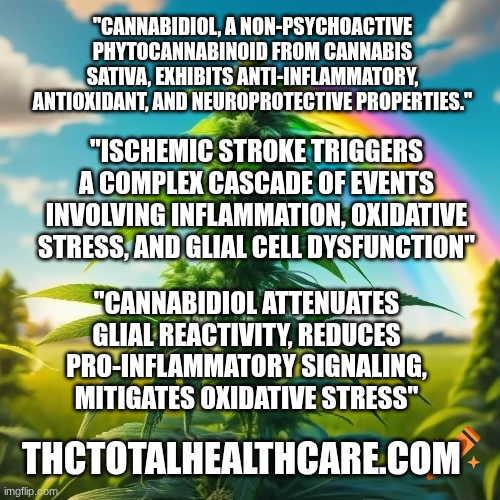
“Ischemic stroke triggers a complex cascade of events involving inflammation, oxidative stress, and glial cell dysfunction, all of which contribute to neuronal damage and impaired recovery. Glial cells (e.g., astrocytes, microglia, and oligodendrocytes) play key roles in neuroinflammatory responses, making them attractive targets for therapeutic modulation.

Cannabidiol, a non-psychoactive phytocannabinoid from Cannabis sativa, exhibits anti-inflammatory, antioxidant, and neuroprotective properties.

Preclinical evidence indicates that cannabidiol attenuates glial reactivity, reduces pro-inflammatory signaling, mitigates oxidative stress, and preserves blood-brain and intestinal barrier integrity in stroke models. Moreover, cannabidiol modulates key molecular pathways (e.g., nuclear factor-κB, tumor necrosis factor, and calcium-related signaling), contributing to reduced infarct volume and improved neurological function. Despite these promising effects, clinical translation is hindered by a lack of standardized formulations, dosing regimens, and human trials.

This review highlights the impact of cannabidiol on glial cell activity in ischemic stroke, proposing it as a multi-target agent with therapeutic potential in post-stroke recovery and neuroprotection.”

https://pubmed.ncbi.nlm.nih.gov/41622458

https://journals.lww.com/nrronline/abstract/9900/beyond_neurons__impact_of_cannabidiol_on_glial.1148.aspx

Sustained Reduction of Dystonic Tremor and Pain after Cannabis Oil Administration and Physiotherapy in Thalamic Ischemia: A One-Year Case Report

“Introduction: Post-stroke tremor and post-stroke thalamic pain (PS-TP) are common and often refractory conditions that significantly impact patients’ quality of life. Conventional pharmacotherapy frequently provides inadequate relief, while cannabis has shown potential for managing movement disorders and pain; however, evidence supporting its efficacy remains limited. On the other hand, physiotherapy is well-documented as an effective therapeutic intervention.

Case presentation: This case report aimed to evaluate the combined effects of cannabis oil and physiotherapy on dystonic-tremor and PS-TP in a female subject with a history of thalamic ischemia. The patient was monitored over a 1-year follow-up period with assessments focused on pain intensity, tremor severity, and overall functional improvements. After twelve months of treatment, the patient demonstrated a 60% reduction in pain and a 56.88% reduction in tremor severity, accompanied by enhanced motor function. Furthermore, quality of life improved significantly, with a 27.6% increase in the mental component and a 45.46% increase in the motor component. No serious adverse effects were reported during the treatment period.

Conclusion: This case report highlights the potential benefits of combining cannabis oil with physiotherapy for managing post-stroke dystonic tremor and PS-TP. The sustained efficacy of this treatment combination over a prolonged period could constitute a therapeutic novelty and an important advancement in the management of these conditions. These findings suggest the need for further research with larger cohorts and studies of higher methodological rigor to establish the efficacy and safety of this therapeutic approach.”

https://pubmed.ncbi.nlm.nih.gov/41603171

https://www.eurekaselect.com/article/152910

Exploring the neuroprotective effects of phytocannabinoids on oxygen-glucose deprived neurons in an in vitro model of stroke

“Stroke is a leading cause of death and disability worldwide, but therapeutic options to reduce or prevent neuronal damage are extremely limited.

Cannabinoids exhibit antioxidant, anti-inflammatory, and receptor modulatory actions that may offer neuroprotection.

While research on the potential of cannabinoids has expanded in epilepsy and neurodegeneration, the neuroprotective potential of this class of natural compounds in stroke remains underexplored. Here, we evaluated a panel of phytocannabinoids (PCs) for their ability to mitigate ischemia–reperfusion injury in an in vitro human model of stroke.

Methods

Human induced pluripotent stem cell (iPSC)-derived cortical neurons were subjected to 60 min of oxygen–glucose deprivation (OGD) followed by reperfusion. Neuronal survival was quantified over seven days using longitudinal live-cell imaging. Twenty-eight PCs were screened for their effect on reducing neuronal death.

Results

Among 28 PCs screened, seven demonstrated modest effects, with cannabigerorcinic acid (CBGOA) significantly improving post-OGD neuronal survival. While OGD exposure led to increased cell death via activation of caspase 3, CBGOA treatment did not impact that pathway, suggesting that other caspase-independent pathways may be implicated.

Conclusions

This pilot study identifies CBGOA as a candidate cannabinoid with neuroprotective potential in an in vitro model of ischemic stroke. The use of iPSC-derived human cortical neurons strengthens translational relevance, but the modest effects observed, and the limitations of in vitro systems, underscore the need for in vivo validation and further mechanistic studies.

Collectively, these results provide a foundation for exploring CBGOA and related cannabinoids as potential neuroprotective agents in stroke.”

https://pubmed.ncbi.nlm.nih.gov/41578349

https://link.springer.com/article/10.1186/s42238-026-00393-0

Exploring the neuroprotective effects and underlying mechanisms of medical cannabinoids in ischemic stroke: a systematic meta-analysis with bibliometric mapping of cerebral ischemia research

“Background: Ischemic stroke is an acute neurological disorder with limited treatment options. Medical cannabinoids (MCs), primary bioactive compounds extracted from cannabis plants, have shown therapeutic prospects for ischemic stroke. This study integrates bibliometrics and meta-analysis to comprehensively summarize the research landscape of MCs in cerebral ischemia and thoroughly investigate their role and potential mechanisms in ischemic stroke.

Methods: Bibliometric analysis was performed based on literature retrieved from Web of Science Core Collection (WoSCC), PubMed, and Scopus. For meta-analysis, a comprehensive search was conducted across four databases (WoSCC, PubMed, Embase, and Cochrane Library) and grey literature repositories. Studies were screened according to predefined criteria. Pooled standardized mean differences with 95% confidence interval were calculated, followed by subgroup analysis.

Results: A total of 241 publications were identified for bibliometric analysis. From 2000 to June 2025, the annual publication output on MCs in cerebral ischemia displayed a fluctuating yet overall upward trend. Keyword co-occurrence analysis revealed three major research topics: neuroprotective mechanisms of MCs, pathological models of cerebral ischemia, and bioactive components of MCs. Meta-analysis of 26 studies demonstrated that MCs provided significant neuroprotection in animal models of ischemic stroke, including cerebral infarct volume, neurological function score (NFS), cerebral blood flow (CBF), blood-brain barrier (BBB) permeability, brain water content, apoptosis (TUNEL-positive cells), oxidative stress markers, inflammation (TNF-α, IL-1β), and excitotoxicity (Glu/NAA, Lac/NAA ratio). Subgroup analysis revealed that intraperitoneal administration and a full-course of cannabidiol (CBD) treatment were associated with reduced heterogeneity and enhanced therapeutic benefit. Isoflurane was identified as a potentially suitable anesthetic.

Conclusion: MCs exert multi-target neuroprotection in ischemic stroke by improving CBF, reducing brain edema and BBB permeability, and inhibiting oxidative stress, neuroinflammation, apoptosis, and excitotoxicity. Future research should focus on high-quality clinical trials to validate these findings and translate MCs into clinical practice.”

https://pubmed.ncbi.nlm.nih.gov/41551042

“THC produces anti-inflammatory effects, reduces neuronal damage, and promotes hippocampal neurogenesis.”

“CBD acts as a negative allosteric modulator of cannabinoid receptors (CBR) and exerts brain-protective effects through multi-target regulatory properties “

 “Moreover, the results of meta-analysis consolidate preclinical evidence, demonstrating that MCs confer neuroprotection by mitigating multiple pathological processes, including cerebral tissue perfusion, BBB permeability and cerebral edema, oxidative stress, excitotoxicity, inflammatory responses, and apoptosis.”

https://www.frontiersin.org/journals/neuroscience/articles/10.3389/fnins.2025.1731738/full

Administration of Δ9-Tetrahydrocannabinol Following Controlled Cortical Impact Restores Hippocampal-Dependent Working Memory and Locomotor Function

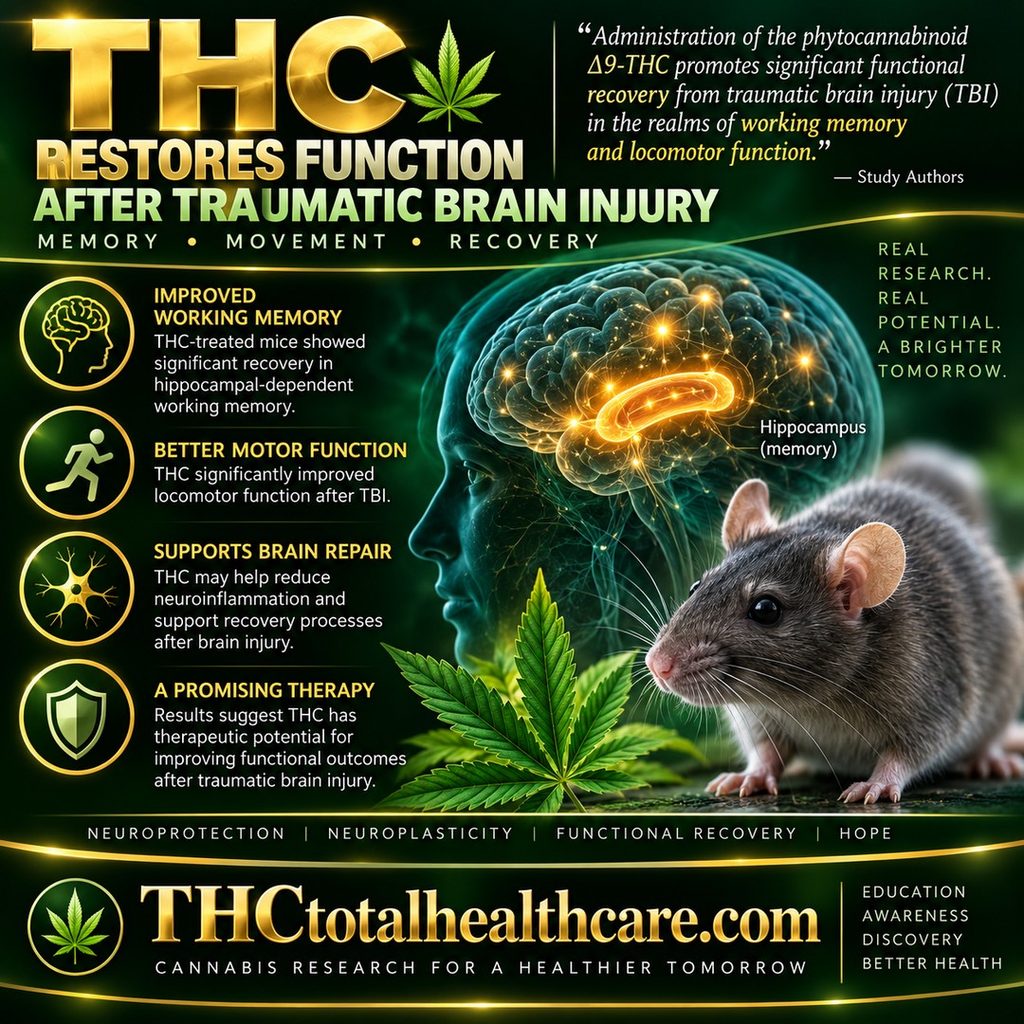
Researchers tested Δ9-THC after traumatic brain injury in mice and found significant recovery in both working memory and movement. THC-treated mice performed better on memory tests and recovered normal motor performance within two weeks. The treatment also increased several brain-repair factors, including BDNF, GDNF and G-CSF, suggesting THC may support the brain’s recovery processes after injury.

“Hypothesis: Administration of the phytocannabinoid Δ9-tetrahydrocannabinol (Δ9-THC) will enhance brain repair and improve short-term spatial working memory in mice following controlled cortical impact (CCI) by upregulating granulocyte colony-stimulating factor (G-CSF) and other neurotrophic factors (brain-derived neurotrophic factor [BDNF], glial-derived neurotrophic factor [GDNF]) in hippocampus (HP), cerebral cortex, and striatum. 

Materials and Methods: C57BL/6J mice underwent CCI and were treated for 3 days with Δ9-THC 3 mg/kg intraperitoneally (i.p.). Short-term working memory was determined using the spontaneous alternations test during exploratory behavior in a Y-maze. Locomotor function was measured as latency to fall from a rotating drum (rotometry). These behaviors were recorded at baseline and 3, 7, and 14 days after CCI. Groups of mice were euthanized at 7 and 14 days. Extent of microgliosis, astrocytosis, and G-CSF, BDNF, and GDNF expression were measured at 7 and 14 days in cerebral cortex, striatum, and HP on the side of the trauma. Levels of the most abundant endocannabinoid (2-arachidonoyl-glycerol [2-AG]) was also measured at these times. 

Results: Δ9-THC-treated mice exhibited marked improvement in performance on the Y-maze indicating that treatment with the phytocannabinoid could reverse the deficit in working memory caused by the CCI. Δ9-THC-treated mice ran on the rotarod longer than vehicle-treated mice and recovered to normal rotarod performance levels at 2 weeks. Δ9-THC-treated mice, compared with vehicle-treated animals, exhibited significant upregulation of G-CSF as well as BDNF and GDNF in the cerebral cortex, striatum, and HP. Levels of 2-AG were also increased in the Δ9-THC-treated mice. 

Conclusion: Administration of the phytocannabinoid Δ9-THC promotes significant functional recovery from traumatic brain injury (TBI) in the realms of working memory and locomotor function. This beneficial effect is associated with upregulation of brain 2-AG, G-CSF, BDNF, and GDNF. The latter three neurotrophic factors have been previously shown to mediate brain self-repair following TBI and stroke.”

https://pubmed.ncbi.nlm.nih.gov/34747647

https://www.liebertpub.com/doi/10.1089/can.2021.0053

Need this THC study explained? thcXplained.com

Cannabidiol releases CB1R from A2AR repression in ischemic stroke

pubmed logo

“Cannabidiol (CBD) is a phytocannabinoid with potential in one of the most prevalent syndromes occurring at birth, the hypoxia of the neonate.

CBD targets a variety of proteins, adenosine A2AR and cannabinoid CB1R receptors included. These two receptors may interact to form heteromers (A2AR-CB1R Hets) that are also a target of CBD. Thus, we aimed to assess whether the expression and function of A2AR-CB1R-Hets is affected by CBD in animal models of hypoxia of the neonate and in glucose- and oxygen deprived (GOD) neurons and microglial cells.

Results indicated that the formation of A2AR-CB1R heteromers increased A2AR affinity for its selective agonist CGS21680. Moreover, resonance energy transfer assays showed that CBD and cannabigerol (CBG) affected the structure of the heteromer. Regarding functionallity, CBD partially bloked A2AR induced signalling in transfected HEK-293 T cells, while it recovered CB1R signalling in glucose/oxygen-deprived neurons and microglial cells. The expression of A2AR-CB1R Hets increased in GOD neurons and microglial cells.

This increase was counteracted with a pre-treatment with CBD and CBG. Importantly, in brain sections of a hypoxia/ischemia animal model, administration of CBD led to a significant reduction in the expression of A2AR-CB1R Hets.

In conclusion, CBD effects in the hypoxia of the neonate can be mediated by A2AR-CB1R complex. CBD partially blocks A2AR signalling while potentiates the neuroprotective effect of CB1R in hypoxic-ischemic conditions.”

https://pubmed.ncbi.nlm.nih.gov/41046105/

“In conclusion, the relevance of A2A-CB1 heteromers formations lies in the fact that these receptors can regulate each other. At the first stages after the injury A2A acquires a more important role, while days after CB1R signalling would provide an improvement.

Interestingly, CBD treatment plays an important effect by controlling A2AR and CB1R competition. This compound could be really beneficial to fight ischemic stroke by regulating A1R-CB1R complex function in the different stages of the disease.”

https://www.sciencedirect.com/science/article/pii/S0969996125003481?via%3Dihub

Oromucosal as an Alternative Method for Administration of Cannabis Products in Rodents

pubmed logo

“Oral administration of drugs in laboratory rodents such as rats is conventionally performed using the gavage technique. Despite effectiveness, gavage can induce distress associated with restraint, especially following repeated animal handling.

To mitigate these adverse effects and reduce morbidity associated with traditional methods, we explored oromucosal/buccal administration of cannabidiol (CBD)-enriched Cannabis extract.

In this method, male rats were treated daily for 15 days with medium-chain triglycerides (TCM) derived from coconut oil or CBD-enriched Cannabis extract. Each treatment was administered individually while animals were gently immobilized using an affectionate touch technique. The administration involved the use of a micropipette to apply the oily formulation directly into the oral mucosa. The dosage was calculated based on the CBD concentration in the Cannabis extract, standardized at 3 mg/kg/day. To ensure accuracy, animals were weighed daily, allowing for dose adjustments in accordance with weight changes over the treatment period. This method offers non-invasive and stress-reducing treatment, potentially improving animal welfare in experimental settings.

The treatment with CBD-enriched Cannabis extract was safe, and the analysis of the hippocampus of these animals’ showed alterations in the expression levels of GluA1 and GFAP proteins, which are directly associated with glutamatergic receptor functionality and neuroinflammation, respectively. This suggests that Cannabis extract could be applied in pathological conditions where glutamatergic excitotoxicity and astrogliosis are observed.”

https://pubmed.ncbi.nlm.nih.gov/40920655/

https://app.jove.com/t/68104/oromucosal-as-an-alternative-method-for-administration-cannabis

Cannabinoid Receptor Modulation in Focal Ischemic Stroke: A Systematic Review and Meta-Analysis of Infarct Volume and Behavioral Deficits in Animal Models

pubmed logo

“Introduction: Stroke is a leading cause of morbidity and mortality worldwide, with ischemic stroke accounting for the majority of cases. The endocannabinoid system (ECS), comprising cannabinoid receptors CB1 and CB2, has been implicated in regulating physiological processes and has shown potential neuroprotective effects in preclinical studies. However, the precise impact of cannabinoid receptor modulation on stroke outcomes remains unclear. This systematic review and meta-analysis aimed to evaluate the impact of cannabinoid receptor modulation on infarct volume and behavioral deficits in animal models of focal ischemic stroke, with a primary focus on infarct outcomes.

Method: A comprehensive literature search was conducted following Preferred Reporting Items for Systematic Reviews and Meta-Analyses (PRISMA) guidelines, yielding 29 eligible studies for inclusion.

Results: The analysis revealed significant reductions in infarct volume with cannabinoid agonists, particularly CB1 and CB2 agonists, indicating their potential as neuroprotective agents. Subgroup analyses further highlighted specific agonists, such as ACEA and KN38-72717, as particularly effective in reducing infarct volume. Additionally, CB antagonists, particularly CB1 antagonists, such as SR141716, showed promising results in reducing infarct volume. Although improvements in neurological scores were observed with both agonists and antagonists, statistical significance was not reached, indicating the need for further investigation.

Conclusion: These results highlight the potential of cannabinoid receptor modulation as a neuroprotective strategy in ischemic strokes and underscore the need for further research to elucidate the underlying mechanisms and optimize therapeutic approaches.”

https://pubmed.ncbi.nlm.nih.gov/40706582/

https://karger.com/mpp/article/doi/10.1159/000547277/930925/Cannabinoid-Receptor-Modulation-in-Focal-Ischemic