
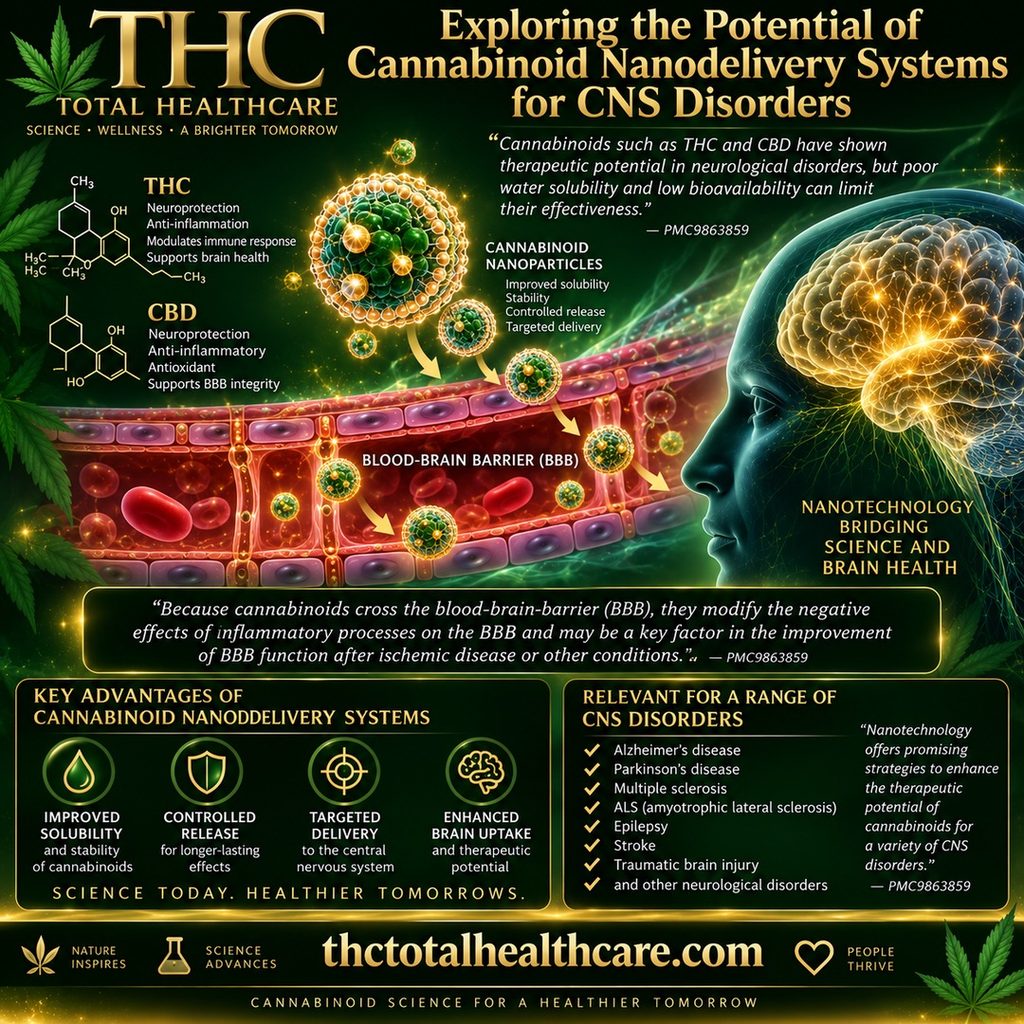
Cannabinoids such as THC and CBD have shown therapeutic potential in neurological disorders, but poor water solubility and low bioavailability can limit their effectiveness. This review explores how nanotechnology may overcome these barriers by improving cannabinoid stability, controlled release and targeted delivery to the central nervous system, including strategies designed to enhance passage across the blood-brain barrier.
“Cannabinoids have a major therapeutic value in a variety of disorders. The concepts of cannabinoids are difficult to develop, but they can be used and are advantageous for a number of diseases that are not sufficiently managed by existing treatments. Nanoconjugation and encapsulation techniques have been shown to be effective in improving the delivery and the therapeutic effectiveness of drugs that are poorly soluble in water. Because the bioavailability of cannabinoids is low, the challenge is to explore different administration methods to improve their effectiveness. Because cannabinoids cross the blood-brain-barrier (BBB), they modify the negative effects of inflammatory processes on the BBB and may be a key factor in the improvement of BBB function after ischemic disease or other conditions. This review discusses various types of cannabinoid administration, as well as nanotechnologies used to improve the bioavailability of these compounds in CNS diseases.”
“The growing acceptance of Cannabis and cannabinoids has led to an increasing number of clinical trials testing various nanoproducts. CNS disorders are key therapeutic targets for cannabinoids, and nanoformulation platforms for cannabinoid nanoconjugates provide efficient transport across the BBB. Selected examples of cannabinoid nanoconjugates have shown enhanced bioavailability and improved bio-efficacy with promising outcomes in biomedical applications. We expect to see many results from clinical trials in the near future to evaluate the adverse effects and effectiveness of this treatment. However, precise delivery of these nanoformulations to pathological sites inside the brain remains a challenge.”