
Cannabinoids in Cancer: Molecular Mechanisms of Tumor Cell Death and Translational Opportunities

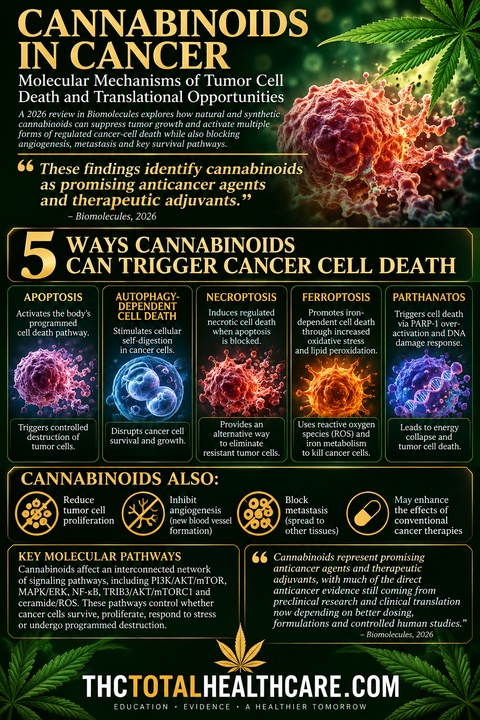
Cannabinoids can attack cancer cells through far more than a single mechanism. This 2026 review describes how natural and synthetic cannabinoids can suppress tumor-cell growth, angiogenesis and metastasis while activating multiple forms of regulated cancer-cell death, including apoptosis, autophagy-dependent cell death, necroptosis, ferroptosis and parthanatos.

The researchers detail an interconnected network of molecular pathways affected by cannabinoids, including PI3K/AKT/mTOR, MAPK/ERK, NF-κB, TRIB3/AKT/mTORC1 and ceramide/ROS signaling. These pathways control whether cancer cells survive, proliferate, respond to stress or undergo programmed destruction, giving cannabinoids multiple potential points of attack against malignant cells.

The review also finds that cannabinoids may enhance conventional anticancer treatments by engaging complementary cell-death pathways. The authors conclude that cannabinoids represent promising anticancer agents and therapeutic adjuvants, with much of the direct anticancer evidence still coming from preclinical research and clinical translation now depending on better dosing, formulations and controlled human studies.

“Cannabinoids are terpenophenolic compounds derived from Cannabis sativa L. that exert a broad range of biological and pharmacological activities. Increasing evidence highlights their potential as modulators of cancer progression specifically through the suppression of tumor cell growth, angiogenesis, and metastasis across multiple tumor models.

This review provides a comprehensive overview of the molecular mechanisms by which natural and synthetic cannabinoids induce regulated cancer cell death.

Current evidence demonstrates that cannabinoids regulate multiple forms of cancer cell death, including apoptosis, autophagy-dependent cell death, necroptosis, ferroptosis, and parthanatos. These effects are mediated through complex and interconnected signaling pathways such as TRIB3/AKT/mTORC1, PI3K/AKT/mTOR, MAPK/ERK, NF-κB, ERK/JNK/p38-MAPK, and ceramide/Raf1/ERK/ROS.

In addition to their direct antitumor effects, cannabinoids can enhance the efficacy of conventional anticancer therapies through the coordinated regulation of complementary cell death pathways. They also provide clinically relevant supportive benefits in palliative care, alleviating chemotherapy-induced nausea, cachexia, and mood or sleep disturbances.

Collectively, these findings identify cannabinoids as promising anticancer agents and therapeutic adjuvants, predominantly in the preclinical setting. However, significant challenges remain regarding their safety, optimal dosing, formulation, and clinical efficacy. Further mechanistic studies, rigorous preclinical research, and well-designed clinical trials are required to establish the translation of cannabinoid-based therapies into precision oncology.”

https://pubmed.ncbi.nlm.nih.gov/42793092

“The cannabis plant, a member of the Cannabaceae family, has been traditionally utilized for centuries for spiritual and remedial healing.”

“The anticancer activity of cannabinoids was discovered in 1975 by Munson et al.. Cannabinoids suppress cancer cell proliferation, angiogenesis, tumor invasion, metastasis, and stemness while inducing different modes of cell death pathways.”

“In summary, this review highlights the growing body of evidence supporting the ability of cannabinoids to induce multiple forms of cell death across a broad spectrum of cancer types. Through the modulation of diverse molecular and signaling pathways, cannabinoids have emerged as promising anticancer agents, mostly in preclinical models, with the potential to target tumor growth, survival, and progression, ultimately triggering diverse cell death mechanisms.”

https://www.mdpi.com/2218-273X/16/9/1260

The Effectiveness and Safety of Medical Cannabis for Treating Cancer Related Symptoms in Oncology Patients

Frontiers in Pain Research (@FrontPain) / Twitter

“The use of medical cannabis (MC) to treat cancer-related symptoms is rising. However, there is a lack of long-term trials to assess the benefits and safety of MC treatment in this population. In this work, we followed up prospectively and longitudinally on the effectiveness and safety of MC treatment.

Oncology patients reported on multiple symptoms before and after MC treatment initiation at one-, three-, and 6-month follow-ups. Oncologists reported on the patients’ disease characteristics. Intention-to-treat models were used to assess changes in outcomes from baseline. MC treatment was initiated by 324 patients and 212, 158 and 126 reported at follow-ups.

Most outcome measures improved significantly during MC treatment for most patients (p < 0.005). Specifically, at 6 months, total cancer symptoms burden declined from baseline by a median of 18%, from 122 (82–157) at baseline to 89 (45–138) at endpoint (−18.98; 95%CI= −26.95 to −11.00; p < 0.001). Reported adverse effects were common but mostly non-serious and remained stable during MC treatment.

The results of this study suggest that MC treatment is generally safe for oncology patients and can potentially reduce the burden of associated symptoms with no serious MC-related adverse effects.

The main finding of the current study is that most cancer comorbid symptoms improved significantly during 6 months of MC treatment.

Additionally, we found that MC treatment in cancer patients was well tolerated and safe.”

https://pubmed.ncbi.nlm.nih.gov/35669038/

https://www.frontiersin.org/articles/10.3389/fpain.2022.861037/full?utm_source=fweb

“Cancer Pain Treatment Using Marijuana Safe and Effective, Large Study Finds”

https://www.newsweek.com/cannabis-medicinal-cancer-patient-symptoms-pain-relief-1711981


Plant-derived cannabinoids as anticancer agents

“Substantial preclinical evidence demonstrates the antiproliferative, cytotoxic, and antimetastatic properties of plant-derived cannabinoids (phytocannabinoids) such as cannabidiol and tetrahydrocannabinol. The cumulative body of research into the intracellular mechanisms and phenotypic effects of these compounds supports a logical, judicious progression to large-scale phase II/III clinical trials in certain cancer types to truly assess the efficacy of phytocannabinoids as anticancer agents.”

https://pubmed.ncbi.nlm.nih.gov/35260379/

Cannabinoids as anticancer drugs: current status of preclinical research

“Drugs that target the endocannabinoid system are of interest as pharmacological options to combat cancer and to improve the life quality of cancer patients. From this perspective, cannabinoid compounds have been successfully tested as a systemic therapeutic option in a number of preclinical models over the past decades. As a result of these efforts, a large body of data suggests that the anticancer effects of cannabinoids are exerted at multiple levels of tumour progression via different signal transduction mechanisms. Accordingly, there is considerable evidence for cannabinoid-mediated inhibition of tumour cell proliferation, tumour invasion and metastasis, angiogenesis and chemoresistance, as well as induction of apoptosis and autophagy. Further studies showed that cannabinoids could be potential combination partners for established chemotherapeutic agents or other therapeutic interventions in cancer treatment. Research in recent years has yielded several compounds that exert promising effects on tumour cells and tissues in addition to the psychoactive Δ9-tetrahydrocannabinol, such as the non-psychoactive phytocannabinoid cannabidiol and inhibitors of endocannabinoid degradation. This review provides an up-to-date overview of the potential of cannabinoids as inhibitors of tumour growth and spread as demonstrated in preclinical studies.”

https://pubmed.ncbi.nlm.nih.gov/35277658/

Cannabidiol and Other Phytocannabinoids as Cancer Therapeutics

“Preclinical models provided ample evidence that cannabinoids are cytotoxic against cancer cells. Among the best studied phytocannabinoids, cannabidiol (CBD) is most promising for the treatment of cancer as it lacks the psychotomimetic properties of delta-9-tetrahydrocannabinol (THC). In vitro studies and animal experiments point to a concentration- (dose-)dependent anticancer effect. The effectiveness of pure compounds versus extracts is the subject of an ongoing debate. Actual results demonstrate that CBD-rich hemp extracts must be distinguished from THC-rich cannabis preparations. Whereas pure CBD was superior to CBD-rich extracts in most in vitro experiments, the opposite was observed for pure THC and THC-rich extracts, although exceptions were noted. The cytotoxic effects of CBD, THC and extracts seem to depend not only on the nature of cannabinoids and the presence of other phytochemicals but also largely on the nature of cell lines and test conditions. Neither CBD nor THC are universally efficacious in reducing cancer cell viability. The combination of pure cannabinoids may have advantages over single agents, although the optimal ratio seems to depend on the nature of cancer cells; the existence of a ‘one size fits all’ ratio is very unlikely. As cannabinoids interfere with the endocannabinoid system (ECS), a better understanding of the circadian rhythmicity of the ECS, particularly endocannabinoids and receptors, as well as of the rhythmicity of biological processes related to the growth of cancer cells, could enhance the efficacy of a therapy with cannabinoids by optimization of the timing of the administration, as has already been reported for some of the canonical chemotherapeutics. Theoretically, a CBD dose administered at noon could increase the peak of anandamide and therefore the effects triggered by this agent. Despite the abundance of preclinical articles published over the last 2 decades, well-designed controlled clinical trials on CBD in cancer are still missing. The number of observations in cancer patients, paired with the anticancer activity repeatedly reported in preclinical in vitro and in vivo studies warrants serious scientific exploration moving forward.”

https://pubmed.ncbi.nlm.nih.gov/35244889/

Cannabis as a potential compound against various malignancies, legal aspects, advancement by exploiting nanotechnology and clinical trials

“Various preclinical and clinical studies exhibited the potential of cannabis against various diseases, including cancer and related pain. Subsequently, many efforts have been made to establish and develop cannabis-related products and make them available as prescription products. Moreover, FDA has already approved some cannabis-related products, and more advancement in this aspect is still going on. However, the approved product of cannabis is in oral dosage form, which exerts various limitations to achieve maximum therapeutic effects. A considerable translation is on a hike to improve bioavailability, and ultimately, the therapeutic efficacy of cannabis by the employment of nanotechnology. Besides the well-known psychotropic effects of cannabis upon the use at high doses, literature has also shown the importance of cannabis and its constituents in minimising the lethality of cancer in the preclinical models. This review discusses the history of cannabis, its legal aspect, safety profile, the mechanism by which cannabis combats with cancer, and the advancement of clinical therapy by exploiting nanotechnology. A brief discussion related to the role of cannabinoid in various cancers has also been incorporated. Lastly, the information regarding completed and ongoing trials have also been elaborated.”

https://pubmed.ncbi.nlm.nih.gov/35321629/

The Endocannabinoid System: A Potential Target for the Treatment of Various Diseases

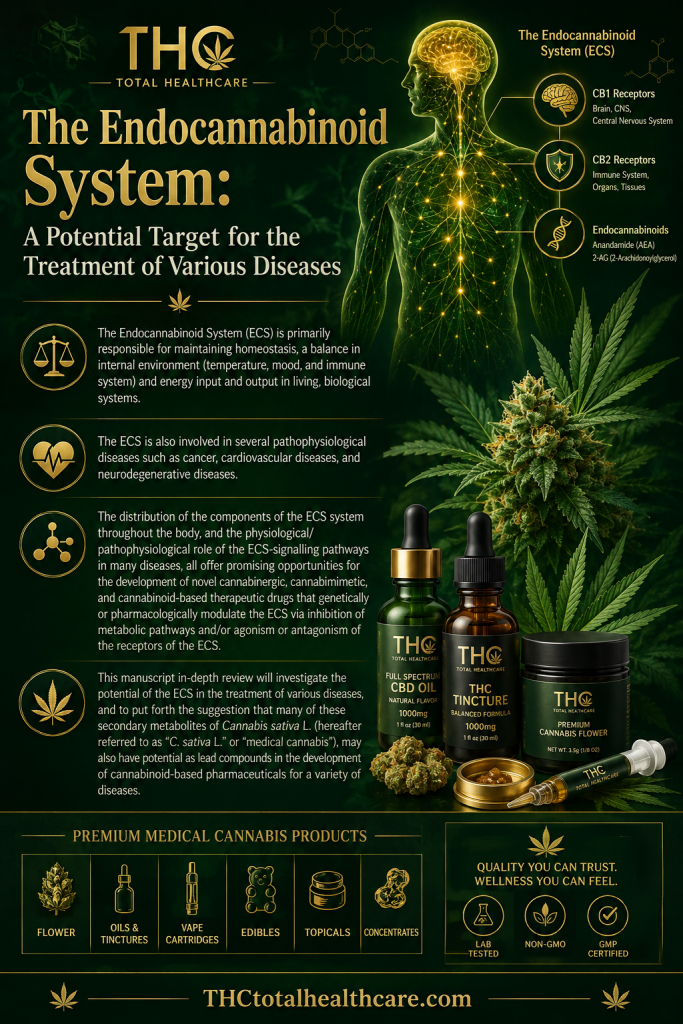
ijms-logo“The Endocannabinoid System (ECS) is primarily responsible for maintaining homeostasis, a balance in internal environment (temperature, mood, and immune system) and energy input and output in living, biological systems.

In addition to regulating physiological processes, the ECS directly influences anxiety, feeding behaviour/appetite, emotional behaviour, depression, nervous functions, neurogenesis, neuroprotection, reward, cognition, learning, memory, pain sensation, fertility, pregnancy, and pre-and post-natal development.

The ECS is also involved in several pathophysiological diseases such as cancer, cardiovascular diseases, and neurodegenerative diseases. In recent years, genetic and pharmacological manipulation of the ECS has gained significant interest in medicine, research, and drug discovery and development.

The distribution of the components of the ECS system throughout the body, and the physiological/pathophysiological role of the ECS-signalling pathways in many diseases, all offer promising opportunities for the development of novel cannabinergic, cannabimimetic, and cannabinoid-based therapeutic drugs that genetically or pharmacologically modulate the ECS via inhibition of metabolic pathways and/or agonism or antagonism of the receptors of the ECS. This modulation results in the differential expression/activity of the components of the ECS that may be beneficial in the treatment of a number of diseases.

This manuscript in-depth review will investigate the potential of the ECS in the treatment of various diseases, and to put forth the suggestion that many of these secondary metabolites of Cannabis sativa L. (hereafter referred to as “C. sativa L.” or “medical cannabis”), may also have potential as lead compounds in the development of cannabinoid-based pharmaceuticals for a variety of diseases.”

https://pubmed.ncbi.nlm.nih.gov/34502379/

https://www.mdpi.com/1422-0067/22/17/9472

“Cannabis sativa L. as a Natural Drug Meeting the Criteria of a Multitarget Approach to Treatment”

https://www.ncbi.nlm.nih.gov/pmc/articles/PMC7830475/

Anti-Cancer Potential of Cannabinoids, Terpenes, and Flavonoids Present in Cannabis

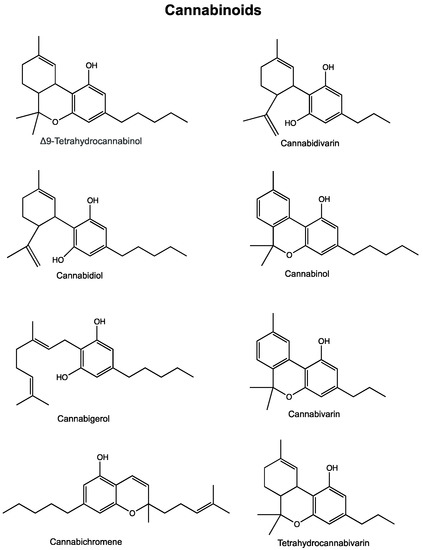
cancers-logo“In recent years, and even more since its legalization in several jurisdictions, cannabis and the endocannabinoid system have received an increasing amount of interest related to their potential exploitation in clinical settings. Cannabinoids have been suggested and shown to be effective in the treatment of various conditions. In cancer, the endocannabinoid system is altered in numerous types of tumours and can relate to cancer prognosis and disease outcome. Additionally, cannabinoids display anticancer effects in several models by suppressing the proliferation, migration and/or invasion of cancer cells, as well as tumour angiogenesis. However, the therapeutic use of cannabinoids is currently limited to the treatment of symptoms and pain associated with chemotherapy, while their potential use as cytotoxic drugs in chemotherapy still requires validation in patients. Along with cannabinoids, cannabis contains several other compounds that have also been shown to exert anti-tumorigenic actions. The potential anti-cancer effects of cannabinoids, terpenes and flavonoids, present in cannabis, are explored in this literature review.”
https://pubmed.ncbi.nlm.nih.gov/32708138/

https://www.mdpi.com/2072-6694/12/7/1985

The Expression Level of Cannabinoid Receptors Type 1 and 2 in the Different Types of Astrocytomas

 SpringerLink“Astrocytomas, the most prevalent primary brain tumors, can be divided by histology and malignancy levels into four following types: pilocytic astrocytoma (grade I), diffuse fibrillary astrocytoma (grade II), anaplastic astrocytoma (grade III), and glioblastoma multiforme (grade IV). For high grade astrocytomas (grade III and grade IV), blood vessels formation is considered as the most important property.

The distribution of cannabinoid receptors type 1 (CB1) and cannabinoid receptor type 2 (CB2) in blood vessels and tumor tissue of astrocytoma is still controversial. Asrocytoma tissues were collected from 45 patients under the condition of tumor-related neurosurgical operation. The expression of CB1 and CB2 receptors was assessed using immunofluorescence, quantitative real-time RT-PCR and western blotting.

The results indicated an increased expression of CB1 receptors in tumor tissue. There was a significant difference in the mount of CB2 receptors in blood vessels. More was observed in the grade III and glioblastoma (grade IV) than astrocytoma of grade II and control.

This study suggested that, the expression increase of cannabinoid receptors is an index for astrocytoma malignancy and can be targeted as a therapeutic approach for the inhibition of astrocytoma growth among patients.”

https://pubmed.ncbi.nlm.nih.gov/32623617/

https://link.springer.com/article/10.1007%2Fs11033-020-05636-8

Cannabinoids as anticancer therapeutic agents.

Cell Cycle Journal are Co-Sponsoring #ACCM15 – The Cell Division Lab “The recent announcement of marijuana legalization in Canada spiked many discussions about potential health benefits of Cannabis sativa. Cannabinoids are active chemical compounds produced by cannabis, and their numerous effects on the human body are primarily exerted through interactions with cannabinoid receptor types 1 (CB1) and 2 (CB2). Cannabinoids are broadly classified as endo-, phyto-, and synthetic cannabinoids. In this review, we will describe the activity of cannabinoids on the cellular level, comprehensively summarize the activity of all groups of cannabinoids on various cancers and propose several potential mechanisms of action of cannabinoids on cancer cells.”

https://www.ncbi.nlm.nih.gov/pubmed/32249682

“Endocannabinoids and phytocannabinoids can be used for cancer therapy. Cannabis extracts have stronger anti-tumor capacity than single cannabinoids. Combination of several cannabinoids may have more potent effect on cancer.”

https://www.tandfonline.com/doi/abs/10.1080/15384101.2020.1742952?journalCode=kccy20
