
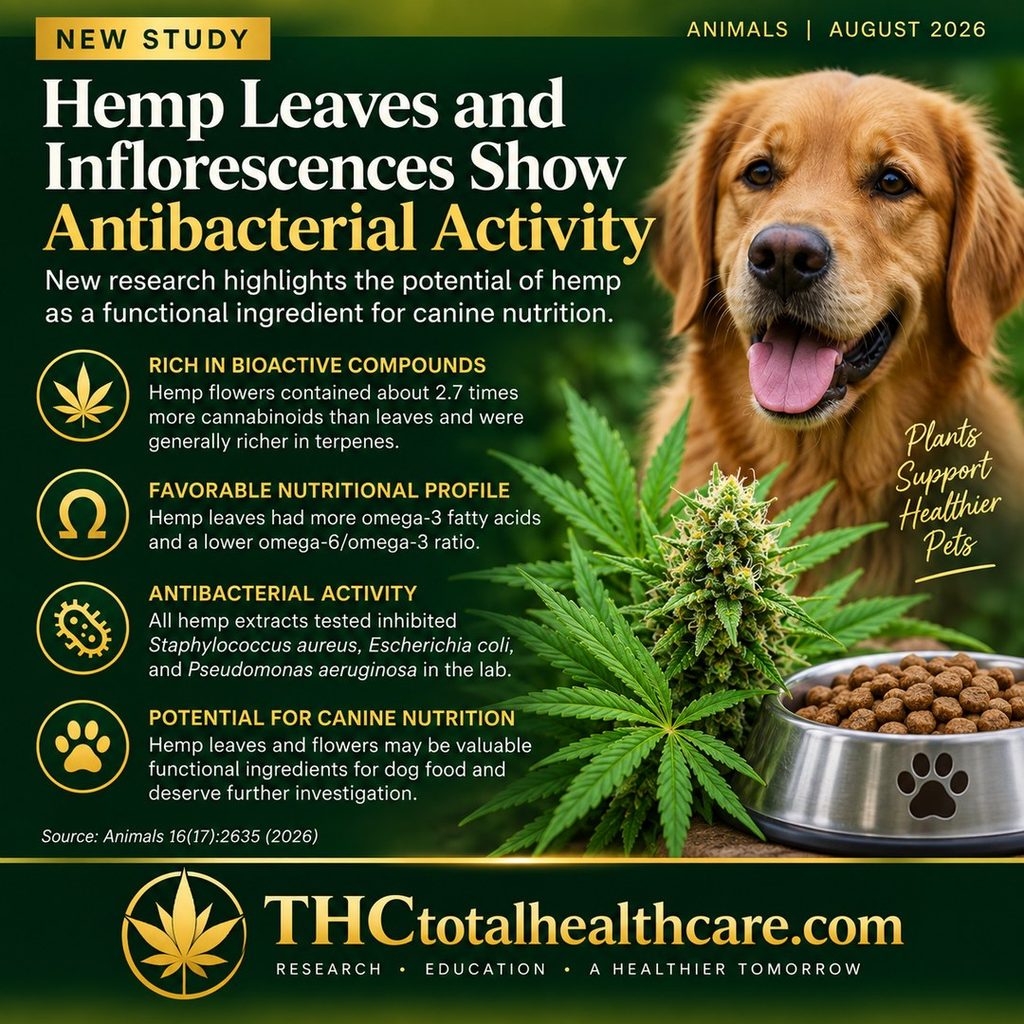
Hemp may have value far beyond its traditional uses. A 2026 study examining hemp leaves and inflorescences found that both plant parts contain bioactive compounds with potential nutritional value, while extracts from the plants also demonstrated antibacterial activity against several important bacterial species.
Researchers found that hemp flowers were especially rich in cannabinoids and terpenes, while the leaves offered a favorable fatty-acid profile. In laboratory testing, hemp extracts showed activity against Staphylococcus aureus, Escherichia coli, and Pseudomonas aeruginosa, highlighting another potential use for compounds naturally produced by the cannabis plant.
The researchers suggest that hemp leaves and flowers deserve further investigation as functional ingredients in canine nutrition. The findings add to growing evidence that parts of the cannabis plant often treated as agricultural byproducts may contain valuable nutritional and biologically active compounds.
“Hemp (Cannabis sativa L.) inflorescences have been extensively characterized for their bioactive compounds, whereas less information is available on hemp leaves despite their potential as a source of nutrients and phytochemicals.
This study compared leaves and inflorescences of four organically grown hemp cultivars (Finola, Futura 75, Dioica, and Kompolti) in terms of cannabinoid, terpene, and fatty acid profiles, lipid quality indices, and in vitro antibacterial activity.
Antibacterial activity against Staphylococcus aureus, Escherichia coli, and Pseudomonas aeruginosa was evaluated using MIC, MBC, and time-kill assays. Total cannabinoid content was approximately 2.7-fold higher in inflorescences than in leaves, which were also generally richer in terpenes. Leaves showed a more favorable fatty acid profile, with higher n-3 polyunsaturated fatty acid proportions and a lower n-6/n-3 ratio.
All extracts exhibited antibacterial activity. Among the tested bacteria, S. aureus was the most susceptible to the hemp extracts, with both growth inhibition and bactericidal activity observed at the lowest tested concentration (MIC/MBC = 0.005%), compared with 0.625% for E. coli and 1.25-2.5% for P. aeruginosa, depending on the extract. Finola and Kompolti inflorescence extracts showed the fastest bactericidal activity against S. aureus.
These findings demonstrate distinct and complementary characteristics of hemp leaves and inflorescences and provide a basis for further investigation of their potential relevance to canine nutrition.”
https://pubmed.ncbi.nlm.nih.gov/42738424
“The pet food industry is increasingly looking for natural ingredients that can improve both the nutritional value and microbiological safety of dog diets while making better use of agricultural resources. Industrial hemp cultivation generates large amounts of leaves that are often underutilized, although they contain valuable natural compounds. This study compared hemp leaves and inflorescences from four industrial hemp cultivars to determine whether these plant materials could be useful in canine nutrition.
The results showed that leaves provide a favorable fatty acid profile, whereas inflorescences are richer in naturally occurring plant compounds such as cannabinoids and terpenes. Extracts from both plant parts also inhibited the growth of bacteria under laboratory conditions. These findings suggest that different hemp plant parts may have complementary roles as functional ingredients in dog foods while supporting more sustainable use of hemp biomass. Further studies in complete diets and feeding trials are needed before practical application.”
 “Pain prevalence among adults in the United States has increased 25% over the past two decades, resulting in high health-care costs and impacts to patient quality of life. In the last 30 years, our understanding of pain circuits and (intra)cellular mechanisms has grown exponentially, but this understanding has not yet resulted in improved therapies. Options for pain management are limited. Many analgesics have poor efficacy and are accompanied by severe side effects such as addiction, resulting in a devastating opioid abuse and overdose epidemic. These problems have encouraged scientists to identify novel molecular targets and develop alternative pain therapeutics.
 “”Medicinal cannabis” is defined as the use of cannabis-based products for the treatment of an illness. Investigations of cannabis compounds in psychiatric and neurological illnesses primarily focus on the major cannabinoids, cannabidiol (CBD) and Δ
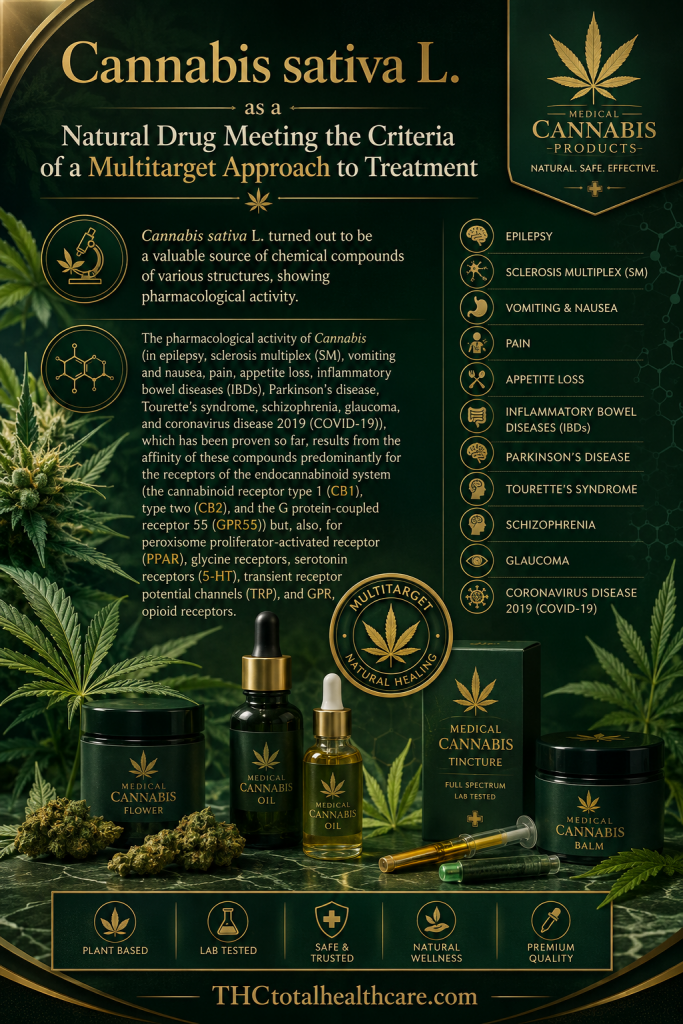
 “Cannabis sativa
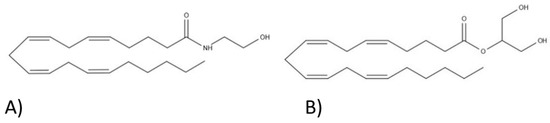
 “The Cannabis sativa plant has been used medicinally and recreationally for thousands of years, but recently only relatively some of its constituents have been identified.
 “The activity of a new, terpene-based formulation, code-named NT-VRL-1, against Human Coronavirus (HCoV) strain 229E was evaluated in human lung fibroblasts (MRC-5 cells), with and without the addition of cannabidiol (CBD). The main constituents in the terpene formulation used for the experiment were beta caryophyllene, eucalyptol, and citral. The tested formulation exhibited an antiviral effect when it was pre-incubated with the host cells prior to virus infection. The combination of NT-VRL-1 with CBD potentiated the antiviral effect better than the positive controls pyrazofurin and glycyrrhizin. There was a strong correlation between the quantitative results from a cell-viability assay and the cytopathic effect seen under the microscope after 72 h. To the best of our knowledge, this is the first report of activity of a combination of terpenes and CBD against a coronavirus.”
 “The cannabis plant (Cannabis sativa L.) produces an estimated 545 chemical compounds of different biogenetic classes. In addition to economic value, many of these phytochemicals have medicinal and physiological activity. The plant is most popularly known for its two most-prominent and most-studied secondary metabolites-Δ9-tetrahydrocannabinol (Δ9-THC) and cannabidiol (CBD). Both Δ9-THC and CBD have a wide therapeutic window across many ailments and form part of a class of secondary metabolites called cannabinoids-of which approximately over 104 exist.
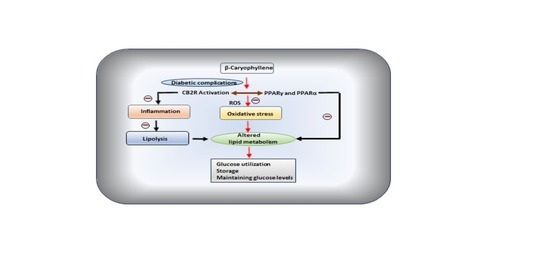
 “Diabetes mellitus (DM), a metabolic disorder is one of the most prevalent chronic diseases worldwide across developed as well as developing nations. Hyperglycemia is the core feature of the type 1 diabetes mellitus (T1DM) and type 2 diabetes mellitus (T2DM), following insulin deficiency and impaired insulin secretion or sensitivity leads insulin resistance (IR), respectively. Genetic and environmental factors attributed to the pathogenesis of DM and various therapeutic strategies are available for the prevention and treatment of T2DM.
 “Non-Uremic Calciphylaxis (NUC) is a rare condition that often manifests as intractable and painful integumentary wounds, afflicting patients with a high burden of co-morbidity.

 “Hemp (Cannabis sativa) is an angiosperm plant belonging to the Cannabaceae family. Its cultivation dates back to centuries. It has always been cultivated due to the possibility of exploiting almost all the parts of the plant: paper, fabrics, ropes, bio-compounds with excellent insulating capacity, fuel, biodegradable plastic, antibacterial detergents, and food products, such as flour, oils, seeds, herbal teas, and beer, are indeed obtained from hemp.