
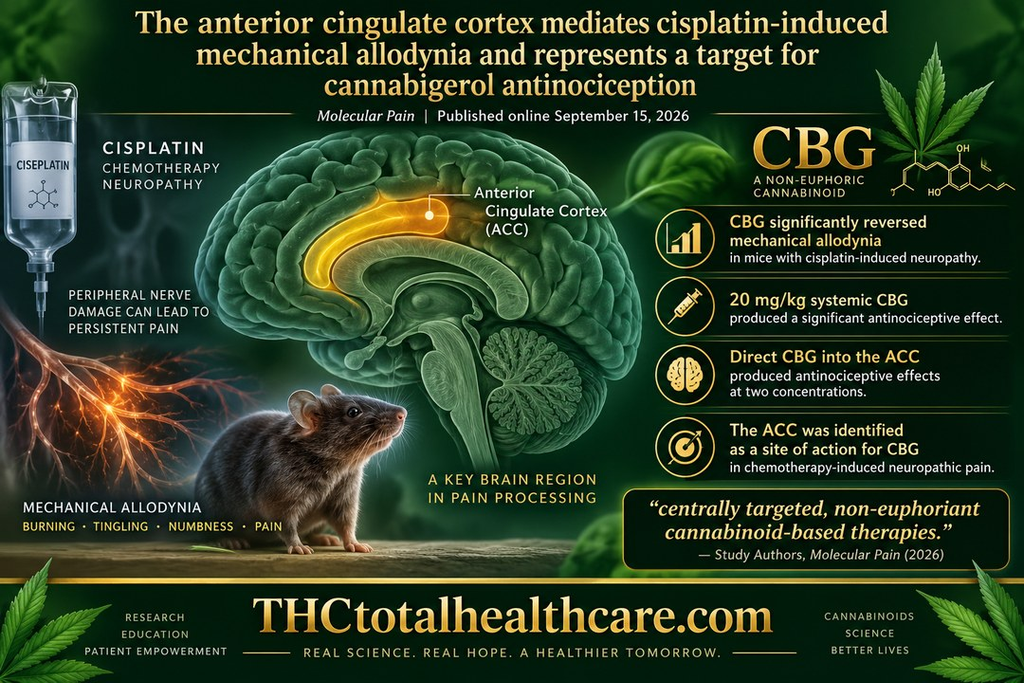
The anterior cingulate cortex mediates cisplatin-induced mechanical allodynia and represents a target for cannabigerol antinociception

Chemotherapy-induced peripheral neuropathy can cause persistent burning, tingling, numbness and pain long after cancer treatment ends. A new 2026 study investigated how the brain contributes to this neuropathic pain and whether cannabigerol (CBG), a non-euphoric cannabinoid, can reduce it.

Using a mouse model of cisplatin-induced neuropathy, researchers found that CBG significantly reversed mechanical allodynia. They also identified the anterior cingulate cortex, a brain region involved in processing pain, as an important part of the neuropathic pain response. Directly administering CBG into this region produced antinociceptive effects.

The findings suggest that CBG can act within central pain-processing circuits and identify the anterior cingulate cortex as a potential target for cannabinoid-based treatment of chemotherapy-induced neuropathic pain. The researchers say the results highlight the potential for “centrally targeted, non-euphoriant cannabinoid-based therapies.”

“Chemotherapy-induced peripheral neuropathy (CIPN) is a prevalent and debilitating consequence of cancer treatment with limited effective therapeutic options. While peripheral nerve injury is a key driver, emerging evidence suggests that maladaptive plasticity within central pain circuits, including the anterior cingulate cortex (ACC), contributes to the maintenance of neuropathic pain.

Here, we tested the hypothesis that the ACC is a critical substrate for cisplatin-induced mechanical allodynia and a target for cannabigerol (CBG)-mediated antinociception.

Adult male C57BL/6 mice received cisplatin (5 mg/kg, i.p., once weekly for four weeks) to induce CIPN. Mechanical allodynia was assessed using electronic von Frey testing.

Systemic administration of CBG (20 mg/kg, i.p.) significantly reversed mechanical allodynia in CIPN mice without affecting baseline thresholds in non-neuropathic animals, indicating a state-dependent effect. Chemogenetic inhibition of ACC neurons using hM4Di DREADDs similarly attenuated mechanical allodynia, identifying the ACC as a functionally relevant component of the CIPN pain state. To determine whether CBG acts within this circuit, bilateral intra-ACC microinjections of CBG (20 nM and 20 µM) were performed, both of which produced transient antinociceptive effects.

These findings demonstrate that the ACC contributes to the maintenance of mechanical allodynia in CIPN and establish this region as a site of action for CBG.

Together, our results support a model in which the ACC represents a convergent cortical mechanism underlying pathological pain and highlight the potential for centrally targeted, non-euphoriant cannabinoid-based therapies.”

https://pubmed.ncbi.nlm.nih.gov/42744343/

“In conclusion, this study identifies the ACC as a hub in the maintenance of mechanical allodynia in a model of CIPN. By demonstrating that chemogenetic inhibition of the ACC reverses hypersensitivity and that both systemic and local administration of CBG produce antinociceptive effects, our findings link circuit-level dysfunction to a pharmacologically targetable mechanism within this region. These results support a model in which increased or dysregulated ACC neuronal activity may represent a convergent feature of pathological pain states. Importantly, these findings demonstrate that CBG can act within the ACC to modulate mechanical allodynia. Future studies identifying the receptor targets and circuit mechanisms through which CBG acts within the ACC will be essential for refining therapeutic strategies for chronic pain.”
https://journals.sagepub.com/doi/10.1177/17448069261491110

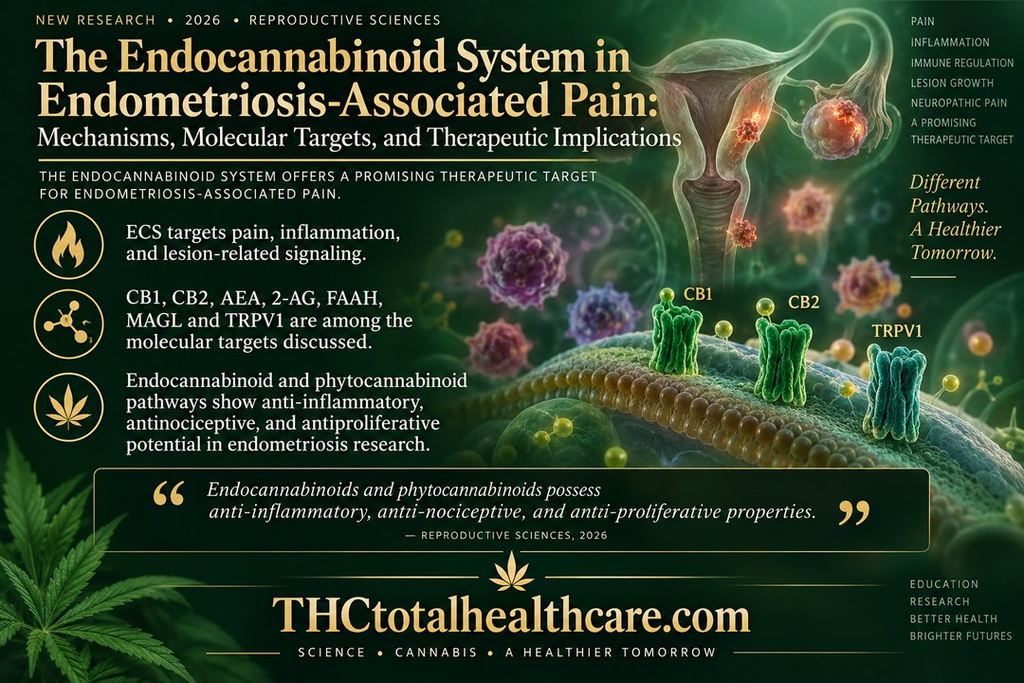
The Endocannabinoid System in Endometriosis-Associated Pain: Mechanisms, Molecular Targets, and Therapeutic Implications

A new 2026 review published in Reproductive Sciences examines the endocannabinoid system (ECS) as a therapeutic target for endometriosis-associated pain, a condition that can cause severe pelvic pain, painful menstruation, painful intercourse, and other chronic symptoms. The authors highlight the ECS because of its established roles in regulating pain, inflammation, and immune activity.

The review found that cannabinoids may influence three major mechanisms involved in endometriosis-associated pain: inflammation, pain signaling and sensitization, and the growth of endometriotic lesions. Cannabinoids interact with both cannabinoid and non-cannabinoid receptors found in endometriotic tissue, while also reducing inflammatory signaling from immune cells such as mast cells and macrophages.

The researchers conclude that the endocannabinoid system is a promising therapeutic target for endometriosis-associated pain, with cannabinoid therapies showing potential to regulate nociception, inflammation, and lesion proliferation. They call for clinical trials to further evaluate cannabinoid-based treatments for people living with endometriosis.

“Endometriosis is a chronic gynecological disorder affecting approximately 10% of reproductive-age women, characterized by the ectopic growth of endometrial tissue and severe pain, including dysmenorrhea, chronic pelvic pain, dyspareunia, dysuria, and dyschezia. Current treatments are limited in efficacy and associated with significant side effects, underscoring the urgent need for novel therapeutic strategies.

The endocannabinoid system (ECS) has emerged as a promising therapeutic target, given its well-established roles in pain modulation, inflammation, and immune regulation. Epidemiological evidence demonstrates that women with endometriosis increasingly use cannabis for symptom self-management, yet the underlying mechanisms remain poorly characterized.

This review integrates preclinical and human evidence to comprehensively evaluate the mechanistic basis of cannabinoid efficacy in endometriosis-associated pain. Evidence from in vitro studies and animal models indicates that cannabinoids target three main mechanisms of endometriosis-associated pain, including inflammation, nociceptive signaling, and lesion proliferation.

Cannabinoids suppress pain signaling and sensitization by interacting with cannabinoid and non-cannabinoid receptors expressed in endometriotic lesions. Cannabinoids attenuate endometriosis-induced inflammation by inhibiting proinflammatory cytokine signaling and reducing the release of inflammatory mediators by mast cells and peritoneal macrophages. Cannabinoids also exert antiproliferative effects in endometriosis models, thereby suppressing the growth of endometriotic lesions.

In conclusion, the ECS is a promising therapeutic target for endometriosis-associated pain, as it regulates nociception, inflammation, and proliferation. These promising findings highlight the potential therapeutic benefits of cannabinoids for endometriosis-associated pain, warranting the need for clinical trials to evaluate the safety and effectiveness of cannabinoid therapies in endometriosis.”

https://pubmed.ncbi.nlm.nih.gov/42745018

https://link.springer.com/article/10.1007/s43032-026-02201-9

Smoked cannabis proven effective in treating neuropathic pain.

UC San Diego Health

“Smoked cannabis eased pain induced in healthy volunteers, according to a study by researchers at the University of California, San Diego (UCSD) Center for Medical Cannabis Research (CMCR.) However, the researchers found that less may be more.”

“The results, showing a medium-dose (4% THC by weight) of cannabis to be an effective analgesic, converged with results from the CMCR’s first published study, a paper by UCSF researcher Donald Abrams, M.D. published in the journal Neurology in February 2007. In that randomized placebo-controlled trial, patients smoking the same dose of cannabis experienced a 34% reduction in HIV-associated sensory neuropathy pain—twice the rate experienced by patients receiving a placebo.”

““This study helps to build a case that cannabis does have therapeutic value at a medium-dose level,” said Grant. “It also suggests that higher doses aren’t necessarily better in certain situations – something also observed with other medications, such as antidepressants.””

Read more: http://phys.org/news112456382.html

“Smoked Cannabis Proven Effective In Treating Neuropathic Pain”  https://www.sciencedaily.com/releases/2007/10/071024141745.htm

“Smoked cannabis proven effective in treating neuropathic pain”  https://medicalxpress.com/news/2007-10-cannabis-proven-effective-neuropathic-pain.html

“Smoked Cannabis Proven Effective in Treating Neuropathic Pain”  https://health.ucsd.edu/news/2007/pages/10-24-medical-cannabis.aspx

Smoked Medical Cannabis May Be Beneficial as Treatment for Chronic Neuropathic Pain, Study Suggests.

“Medicinal marijuana. A new study provides evidence that cannabis may offer relief to patients suffering from chronic neuropathic pain. (Credit: iStockphoto)”
 

“The medicinal use of cannabis has been debated by clinicians, researchers, legislators and the public at large for many years as an alternative to standard pharmaceutical treatments for pain, which may not always be effective and may have unwanted side effects. A new study by McGill University Health Centre (MUHC) and McGill University researchers provides evidence that cannabis may offer relief to patients suffering from chronic neuropathic pain.”

“This is the first trial to be conducted where patients have been allowed to smoke cannabis at home and to monitor their responses, daily,” says Dr. Mark Ware, lead author of the study, who is also Director of Clinical Research at the Alan Edwards Pain Management Unit at the MUHC and an assistant professor of anesthesia in McGill University’s Faculty of Medicine, and neuroscience researcher at the Research Institute of the MUHC.

In this study, low doses (25mg) of inhaled cannabis containing approximately 10% THC (the active ingredient in cannabis), smoked as a single inhalation using a pipe three times daily over a period of five days, offered modest pain reduction in patients suffering from chronic neuropathic pain (pain associated with nerve injury) within the first few days. The results also suggest that cannabis improved moods and helped patients sleep better. The effects were less pronounced in cannabis strains containing less than 10% THC.

“The patients we followed suffered from pain caused by injuries to the nervous system from post-traumatic (e.g. traffic accidents) or post-surgical (e.g. cut nerves) events, and which was not controlled using standard therapies” explains Dr. Ware. “This kind of pain occurs more frequently than many people recognize, and there are few effective treatments available. For these patients, medical cannabis is sometimes seen as their last hope.”

“This study marks an important step forward because it demonstrates the analgesic effects of cannabis at a low dose over a shot period of time for patients suffering from chronic neuropathic pain,” adds Dr. Ware. The study used herbal cannabis from Prairie Plant Systems (under contract to Health Canada to provide cannabis for research and medical purposes), and a 0% THC ‘placebo’ cannabis from the USA.”

Read more:http://www.sciencedaily.com/releases/2010/08/100830094926.htm

Marijuana May Be Effective For Neuropathic Pain.

“The growing body of evidence that marijuana (cannabis) may be effective as a pain reliever has been expanded with publication of a new study in The Journal of Pain reporting that patients with nerve pain showed reduced pain intensity from smoking marijuana.

Researchers at University of California Davis examined whether marijuana produces analgesia for patients with neuropathic pain. Thirty-eight patients were examined. They were given either high-dose (7%), low-dose (3.5%) or placebo cannabis.

The authors reported that identical levels of analgesia were produced at each cumulative dose level by both concentrations of the agent. As with opioids, cannabis does not rely on a relaxing or tranquilizing effect, but reduces the core component of nociception and the emotional aspect of the pain experience to an equal degree. There were undesirable consequences observed from cannabis smoking, such as feeing high or impaired, but they did not inhibit tolerability or cause anyone to withdraw from the study. In general, side effects and mood changes were inconsequential.

It was noted by the authors that since high and low dose cannabis produced equal analgesic efficacy, a case could be made for testing lower concentrations to determine if the analgesic profile can be maintained while reducing potential cognitive decline.

In addition, the authors said further research could probe whether adding the lowest effective dose of cannabis to another analgesic drug might lead to more effective neuropathic pain treatment for patients who otherwise are treatment-resistant.”

http://www.sciencedaily.com/releases/2008/06/080626150628.htm

Self-medication of a cannabinoid CB2 agonist in an animal model of neuropathic pain.

“Neuropathic pain is caused by injury to the peripheral or central nervous system (CNS)…”

“…novel approaches for identifying safe and effective analgesics with limited abuse liability are necessary.”

“Cannabinoids share the same target as the psychoactive ingredient in maijuana. Cannabinoids suppress neuropathic nociception through CB1 and CB2 mechanisms. CB1 is predominantly located within the CNS… CB2 activation is not associated with CNS side-effects linked to CB1. However, abuse potential of CB2 agonists is unknown.”

“We used a drug self-administration approach to ask whether rats with a spared nerve injury (SNI) would self-medicate with a CB2 agonist to attenuate a neuropathic pain state…”

 “Our results suggest that cannabinoid CB2 agonists may be exploited to treat neuropathic pain with limited drug abuse liability and central nervous system (CNS) side-effects. These studies validate the use of drug self-administration methods for identifying nonpsychotropic analgesics possessing limited abuse potential…”

http://www.ncbi.nlm.nih.gov/pmc/articles/PMC3157548/

Role of cannabinoids in the management of neuropathic pain.

Abstract

“The treatment of pain, particularly neuropathic pain, is one of the therapeutic applications of cannabis and cannabinoids that is currently under investigation and that stimulates interest among clinicians and basic researchers. Animal pain models, including models of acute, antinociceptive, inflammatory and neuropathic pain, have demonstrated the antinociceptive efficacy of cannabinoids without causing serious alterations in animal behaviour. These data, together with the historic and current empiric use of cannabinoids, support the interest in the analysis of their effectiveness in treating neuropathic pain. The evaluation of controlled trials that focus on the effect of cannabinoids on neuropathic pain reveals that this class of drugs is able to significantly reduce pain perception. Nevertheless, this effect is generally weak and clinical relevance remains under evaluation. Moreover, there is a lack of controlled trials and, in particular, comparisons with other drugs generally used in the treatment of neuropathic pain. Despite the fact that further research is required to achieve a definitive assessment, current data obtained from basic research and from analysis of the available controlled trials indicate that cannabinoids can be accepted as a useful option in the treatment of neuropathic pain.”

http://www.ncbi.nlm.nih.gov/pubmed/18601303

More evidence cannabis can help in neuropathic pain.

“It’s good to see the trial of smoked cannabis in neuropathic pain reported by Ware and colleagues because smoking is the most common way in which patients try this drug. The authors should be congratulated for tackling the question of whether cannabis helps in neuropathic pain, particularly given that the regulatory hurdles for their trial must have been a nightmare. The question is worth investigating because of the ongoing publicity — which patients see, hear and read — that suggests an analgesic activity of cannabis in neuropathic pain, and because of the paucity of robust evidence for such an analgesic effect. If patients are not achieving a good response with conventional treatment of their pain, then they may, reasonably, wish to try cannabis. If medical cannabis is not available where a patient lives, then obtaining it will take the patient outside of the law, often for the first time in his or her life. Good evidence would at least buttress that decision.”

“This trial adds to the three previous studies of smoked cannabis in neuropathic pain that I could find using PubMed and reference lists…”

“Putting together the four trials of smoked cannabis, the provisional conclusions are that an analgesic effect is evident, that this effect, though not great, may be of use to some patients, and that it often carries with it some adverse effects on the central nervous system (though not obviously so in this trial). These conclusions make biological sense, given that cannabinoids taken orally have shown the same sorts of effects. Interestingly, the “moderate” analgesic effect shown here for neuropathic pain seems to hold true for nociceptive pain.”

http://www.ncbi.nlm.nih.gov/pmc/articles/PMC2950178/

Analgesic effect of the synthetic cannabinoid CT-3 on chronic neuropathic pain: a randomized controlled trial.

“1′,1’dimethylheptyl-Delta8-tetrahydrocannabinol-11-oic acid (CT-3), a potent analog of THC-11-oic acid, produces marked antiallodynic and analgesic effects in animals without evoking the typical effects described in models of cannabinoids. Therefore, CT-3 may be an effective analgesic for poorly controlled resistant neuropathic pain.”


“OBJECTIVE: To examine the analgesic efficacy and safety of CT-3 in chronic neuropathic pain in humans.”


“CONCLUSIONS: In this preliminary study, CT-3 was effective in reducing chronic neuropathic pain compared with placebo. No major adverse effects were observed.”


http://www.ncbi.nlm.nih.gov/pubmed/14519710

Smoked Medicinal Cannabis for Neuropathic Pain in HIV: A Randomized, Crossover Clinical Trial.

“In 1999, a report of the United States Institute of Medicine recommended further investigations of the possible benefits of cannabis (marijuana) as a medicinal agent for a variety of conditions, including neuropathic pain due to HIV distal sensory polyneuropathy (DSPN). The most abundant active ingredient in cannabis, tetrahydro-cannabinol (THC), and its synthetic derivatives, produce effective analgesia in most animal models of pain. The antinociceptive effects of THC are mediated through cannabinoid receptors (CB1, CB2) in the central and peripheral nervous systems, which in turn interact with noradrenergic and κ-opioid systems in the spinal cord to modulate the perception of painful stimuli. The endogenous ligand of CB1, anandamide, itself is an effective antinociceptive agent. In open-label clinical trials and one recent controlled trial, medicinal cannabis has shown preliminary efficacy in relieving neuropathic pain.”

“We conducted a clinical trial to assess the impact of smoked cannabis on neuropathic pain in HIV. This was a phase II, double-blind, placebo-controlled, crossover trial of analgesia with smoked cannabis in HIV-associated distal sensory predominant polyneuropathy (DSPN).”

 “…pain relief was greater with cannabis than placebo…”

 “Smoked cannabis was generally well tolerated and effective when added to concomitant analgesic therapy in patients with medically refractory pain due to HIV DSPN.”

“Our findings suggest that cannabinoid therapy may be an effective option for pain relief in patients with medically intractable pain due to HIV-associated DSPN.”

http://www.ncbi.nlm.nih.gov/pmc/articles/PMC3066045/