
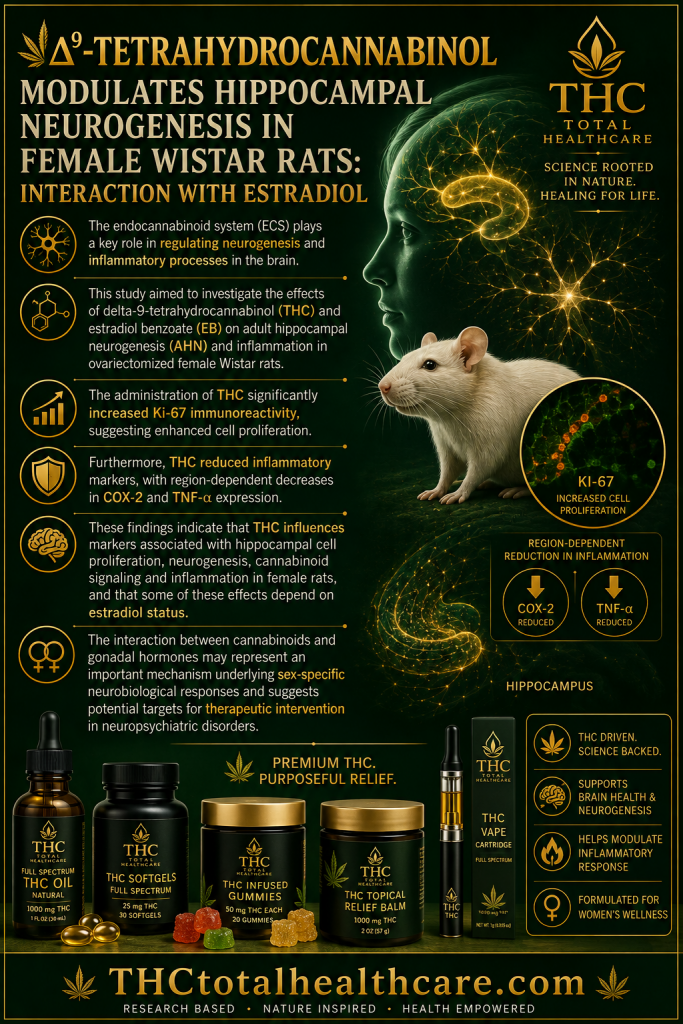
THC may influence the female brain through both neurogenic and anti-inflammatory mechanisms. In ovariectomized female rats, Δ9-THC significantly increased hippocampal cell proliferation, showed evidence of enhanced neurogenesis, and reduced the inflammatory markers COX-2 and TNF-α. The effects also interacted with estradiol, highlighting the importance of hormonal status in determining THC’s actions in the brain.
“The endocannabinoid system (ECS) plays a key role in regulating neurogenesis and inflammatory processes in the brain.
The increasing prevalence of Cannabis use among women highlights the importance of understanding sex-specific effects of cannabinoids, particularly in the context of hormonal interactions.
This study aimed to investigate the effects of delta-9-tetrahydrocannabinol (THC) and estradiol benzoate (EB) on adult hippocampal neurogenesis (AHN) and inflammation in ovariectomized female Wistar rats.
Sixteen rats were allocated to four experimental groups receiving THC, EB, both treatments, and vehicle. Immunohistochemical analyses were conducted to evaluate markers of proliferation (Ki-67), neurogenesis (doublecortin and PSA-NCAM), cannabinoid receptor expression (CB1), and inflammation (COX-2 and TNF-α) in the hippocampal formation.
The administration of THC significantly increased Ki-67 immunoreactivity, suggesting enhanced cell proliferation. A trend toward increased doublecortin expression was observed, particularly in EB-treated animals. THC also modulated CB1 receptor expression, with significant increases in the dentate gyrus and hilus following combined THC and EB treatment. Furthermore, THC reduced inflammatory markers, with region-dependent decreases in COX-2 and TNF-α expression.
These findings indicate that THC influences markers associated with hippocampal cell proliferation, neurogenesis, cannabinoid signaling and inflammation in female rats, and that some of these effects depend on estradiol status.
The interaction between cannabinoids and gonadal hormones may represent an important mechanism underlying sex-specific neurobiological responses and suggests potential targets for therapeutic intervention in neuropsychiatric disorders.”
https://pubmed.ncbi.nlm.nih.gov/42570151
https://link.springer.com/article/10.1007/s11064-026-04857-w

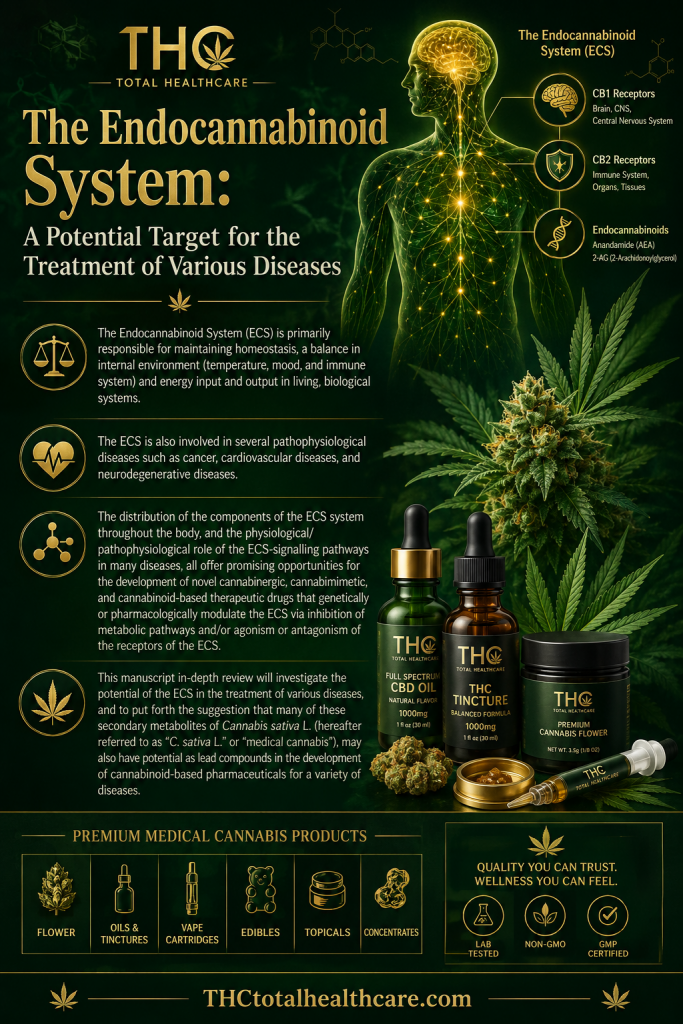
 “The Endocannabinoid System (ECS) is primarily responsible for maintaining homeostasis, a balance in internal environment (temperature, mood, and immune system) and energy input and output in living, biological systems.
 “Borderline Personality Disorder (BPD) is a chronic debilitating psychiatric disorder characterized mainly by emotional instability, chaotic interpersonal relationships, cognitive disturbance (e.g. dissociation and suicidal thoughts) and maladaptive behaviors. BPD has a high rate of comorbidity with other mental disorders and high burden on society.
 “This review is to summarize most recent evidence published in the last 18 months on medical and recreational use of cannabis and
  “Mood disorders are the most prevalent mental conditions encountered in psychiatric practice. Numerous patients suffering from mood disorders present with treatment-resistant forms of depression, co-morbid anxiety, other psychiatric disorders and bipolar disorders.
 “Bipolar disorder (BD) is a debilitating, lifelong neuropsychiatric illness characterised by unsteady mood states which vacillate from (hypo)mania to depression. Despite the availability of pharmaceutical agents which can be effective in ameliorating the acute affective symptoms and prevent episodic relapse, BD is inadequately treated in a subset of patients.
 “The present review will provide an overview of the neurobiology, epidemiology, clinical impact, and treatment of cannabis use disorder (CUD) in mood disorders.