Δ9-Tetrahydrocannabinol treatment impairs CD8+ T cell differentiation into interferon gamma-competent CD45RO+ cells

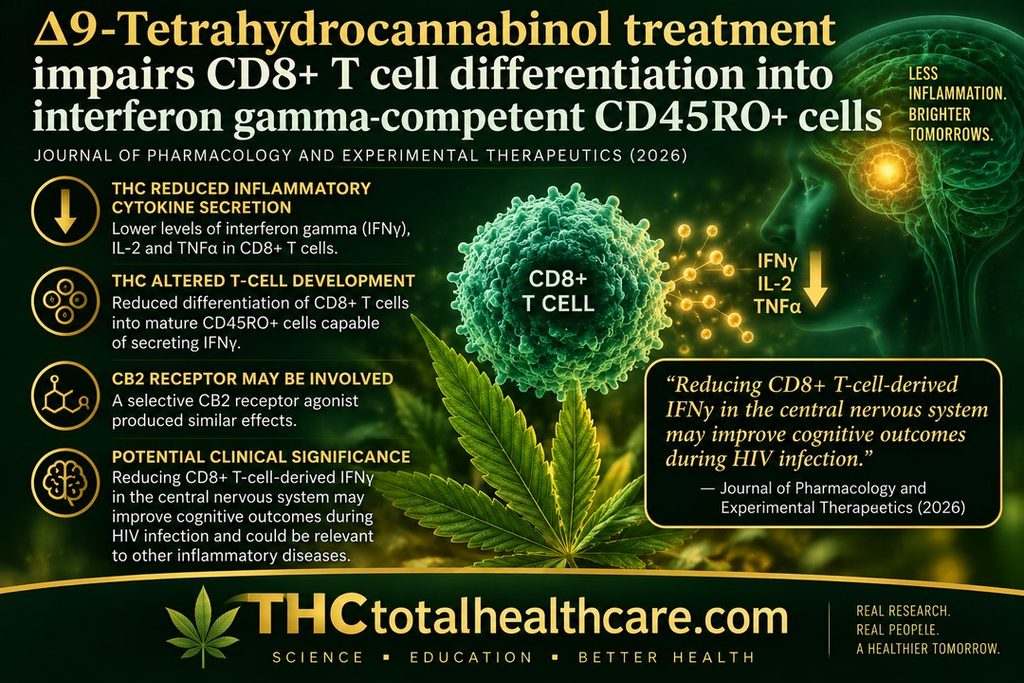
New research published in The Journal of Pharmacology and Experimental Therapeutics shows that Δ9-tetrahydrocannabinol (THC) can alter the development of CD8+ T cells involved in inflammatory immune responses. Researchers found that THC reduced secretion of interferon gamma (IFNγ), interleukin-2 (IL-2), and tumor necrosis factor alpha (TNFα), three signaling molecules involved in immune activation and inflammation.

Rather than simply preventing cells from producing IFNγ, THC appeared to change how the T cells developed. THC reduced the differentiation of CD8+ T cells into mature CD45RO+ cells capable of secreting IFNγ. A selective CB2 receptor agonist produced similar effects, suggesting that activation of the cannabinoid CB2 receptor may play an important role in THC’s immune-modulating activity.

The researchers examined these effects partly because IFNγ-producing CD8+ T cells contribute to persistent neuroinflammation associated with HIV-associated neurocognitive disorders. They concluded that reducing CD8+ T-cell-derived IFNγ in the central nervous system may potentially improve cognitive outcomes during HIV infection, while noting that the findings may also have relevance to other inflammatory diseases involving IFNγ-producing CD8+ T cells.

“Chronic human immunodeficiency virus (HIV) infection results in a persistent state of neuroinflammation, even with combined antiretroviral therapy. Neuroinflammation contributes to pathology termed HIV-associated neurocognitive disorder, which is exacerbated by interferon gamma (IFNγ)-producing CD8+ T cells in the central nervous system.

Many people living with HIV self-report using Cannabis sativa to mitigate symptoms of chronic infection and side effects of treatment. C. sativa is composed of various phytocannabinoids, including Δ9-tetrahydrocannbinol (THC), which possesses immune-modulating properties.

This study aims to determine whether C. sativa use by people living with HIV, and specifically THC, affects IFNγ secretion by CD8+ T cells.

We found that HIV status does not influence T cell IFNγ responses, and C sativa use modestly reduces the average secretion of IFNγ by CD8+ T cells from HIV+ donors. Treatment of CD8+ T cells with THC and the selective cannabinoid receptor 2 agonist, JWH-015, reduced T-cell cytokine secretion, with THC eliciting greater suppression than cannabidiol.

These results suggest that THC treatment does not directly impair IFNγ gene expression or protein production, as determined by polymerase chain reaction and flow cytometry. However, THC treatment impaired CD8+ T cell differentiation into IFNγ-competent CD45RO+ cells.

These studies are of clinical relevance because reduction of CD8+ T-cell-derived IFNγ in the central nervous system may improve cognitive outcomes during HIV infection. Furthermore, these findings may be generalizable to other inflammatory diseases in which IFNγ-producing CD8+ T cells have been implicated.

SIGNIFICANCE STATEMENT: Δ9-Tetrahydrocannbinol (THC) treatment reduces CD8+ T cell interferon gamma (IFNγ) secretion isolated from HIV- and HIV+ individuals. THC and the selective cannabinoid receptor 2 agonist, JWH-015, both reduced CD8+ T cell secretion of IFNγ, interleukin 2, and tumor necrosis factor α, suggesting the involvement of cannabinoid receptor 2. Although THC treatment does not suppress IFNγ mRNA or protein levels, it reduces the number of IFNγ-secreting cells by impairing CD8+ T-cell differentiation into IFNγ-competent CD45RO+ cells.”

https://pubmed.ncbi.nlm.nih.gov/42748512

https://jpet.aspetjournals.org/article/S0022-3565(26)01210-3/abstract

Need this THC study explained? thcXplained.com
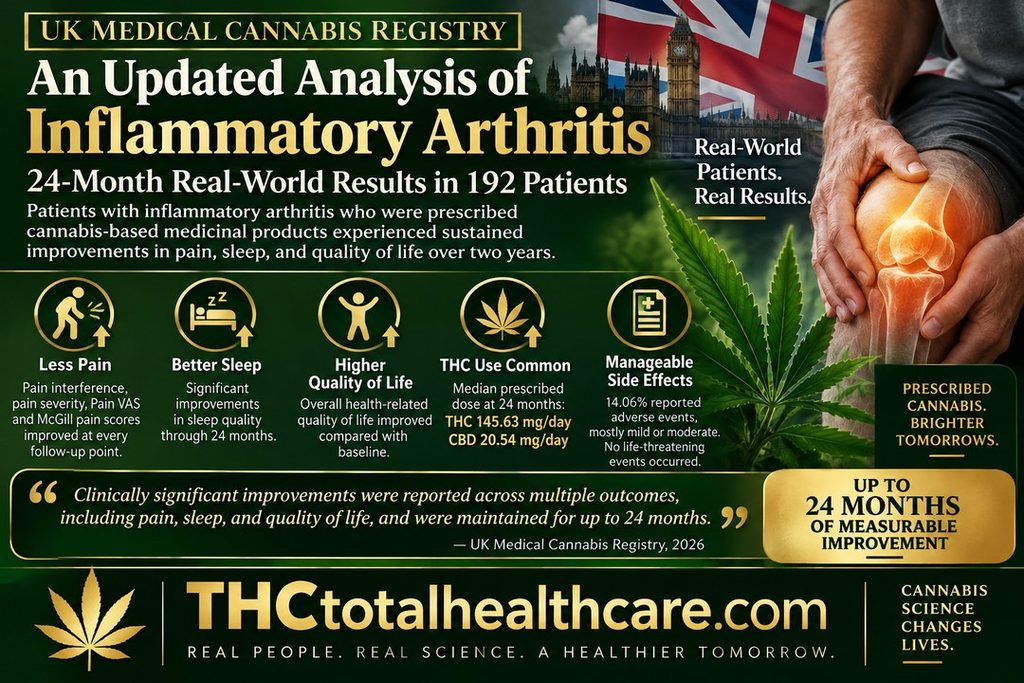
UK Medical Cannabis Registry: An Updated Analysis of Inflammatory Arthritis

A new analysis from the UK Medical Cannabis Registry reports sustained improvements in pain, sleep, and health-related quality of life among patients with inflammatory arthritis who were prescribed cannabis-based medicinal products.

The study followed 192 patients for up to 24 months. Improvements were reported across multiple pain measures at every follow-up point, including pain severity, pain interference, and overall pain scores. Sleep quality and general quality of life also improved compared with baseline.

Notably, many patients were prescribed THC-containing products, including dried cannabis flower and oils. The findings add long-term real-world evidence that prescribed cannabis medicines may help some people living with inflammatory arthritis.

“Aim: Cannabis-based medicinal products (CBMPs) are an emerging therapeutic option for pain in inflammatory arthritis, yet clinical evidence remains limited. This study aimed to evaluate changes in pain-specific and general health-related outcomes in patients with inflammatory arthritis treated with CBMPs and to characterize the safety profile by examining the incidence and nature of adverse events.

Methods: Patients treated with CBMPs for inflammatory arthritis-associated pain for ⩾24 months were identified from the UK Medical Cannabis Registry. Primary outcomes included changes in patient-reported measures: Brief Pain Inventory (BPI), Pain Visual Analogue Scale (Pain VAS), Short-Form McGill Pain Questionnaire 2 (SF-MPQ-2), EuroQol 5-dimension 5-level (EQ-5D-5L), Generalized Anxiety Disorder-7 (GAD-7), and Single-Item Sleep Quality Scale (SQS) at 1, 3, 6, 12, 18, and 24 months vs baseline. Adverse events were recorded and analysed. Statistical significance was set at P < .050.

Results: A total of 192 patients met inclusion criteria. The CBMP initiation was associated with improvements in BPI Interference, BPI Severity, Pain VAS, SF-MPQ-2, SQS, and EQ-5D-5L index values at all follow-up time points (P < .010) and in GAD-7 scores up to 3 months (P < .001). Twenty-seven patients (14.06%) reported 296 adverse events: 126 (42.57%) mild, 132 (44.59%) moderate, and 38 (12.84%) severe. No life-threatening events occurred.

Conclusion: The CBMP therapy was associated with reductions in pain and improvements in health-related quality of life among individuals with inflammatory arthritis. Although causality cannot be inferred from this observational design, these findings support the need for randomized controlled trials to determine the efficacy of CBMPs for inflammatory arthritis-related pain.”

https://pubmed.ncbi.nlm.nih.gov/42724108

“Overall, results of this study demonstrate reductions in pain severity and improvements in HRQoL for patients receiving CBMP treatment for chronic pain linked to inflammatory arthritis over a period of 24 months of follow-up. The CBMPs were generally well-tolerated, although the risk of AE and individual responses should be considered before commencing CBMP treatment.”

https://journals.sagepub.com/doi/10.1177/11795441261480709

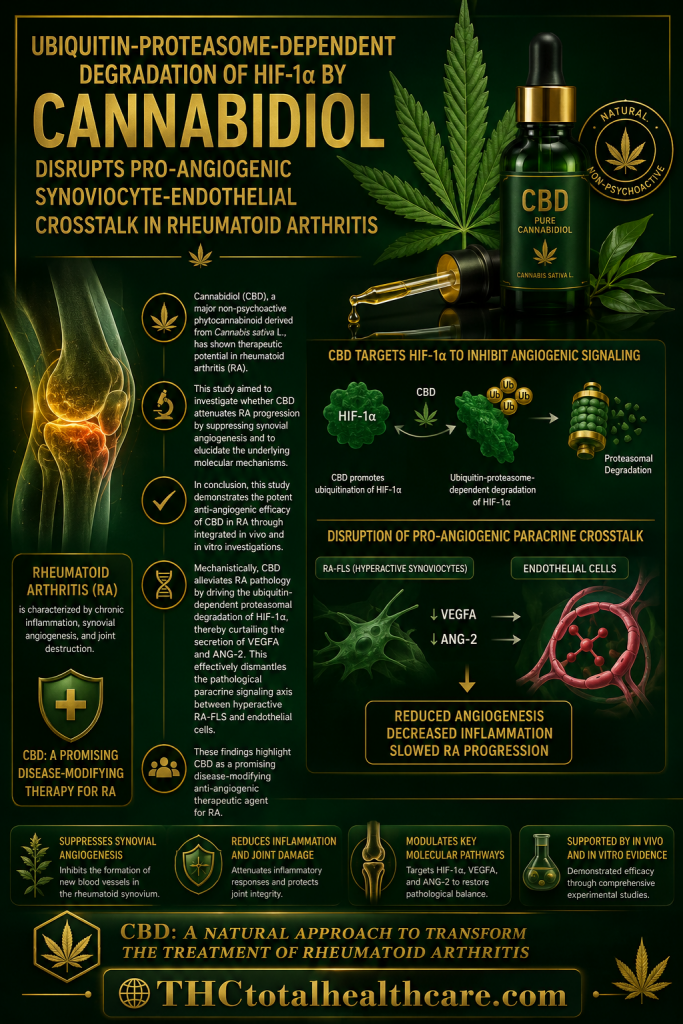
Ubiquitin-proteasome-dependent degradation of HIF-1α by cannabidiol disrupts pro-angiogenic synoviocyte-endothelial crosstalk in rheumatoid arthritis

Rheumatoid arthritis is driven in part by abnormal synovial inflammation and the formation of new blood vessels that sustain diseased tissue. In this study, cannabidiol (CBD) reduced joint inflammation, synovial angiogenesis, and bone destruction while suppressing abnormal fibroblast activity. The researchers concluded that CBD disrupts pro-angiogenic signaling through HIF-1α degradation and may represent a promising disease-modifying anti-angiogenic therapeutic agent for rheumatoid arthritis.

“Background: Cannabidiol (CBD), a major non-psychoactive phytocannabinoid derived from Cannabis sativa L., has shown therapeutic potential in rheumatoid arthritis (RA). However, the mechanisms by which CBD modulates synovial angiogenesis remain unclear.

Purpose: This study aimed to investigate whether CBD attenuates RA progression by suppressing synovial angiogenesis and to elucidate the underlying molecular mechanisms.

Methods: An adjuvant-induced arthritis (AIA) rat model was established to evaluate the therapeutic effects of CBD in vivo using arthritis scoring, micro-CT, and histopathological, immunohistochemical, and immunofluorescence analyses. In vitro, cytotoxicity was determined using the CCK-8 assay, followed by evaluations of CBD’s direct effects on the proliferation, migration, invasion, and inflammatory responses of RA fibroblast-like synoviocytes (RA-FLS) were evaluated, alongside Cell Counting Kit-8 (CCK-8) for cytotoxicity screening. Furthermore, the paracrine regulation of angiogenesis was assessed using a conditioned medium (CM) transfer system from hypoxia-stimulated RA-FLS applied to human umbilical vein endothelial cells (HUVECs). Molecular mechanisms were analyzed via Western blotting, RT-qPCR, ELISA, co-immunoprecipitation (Co-IP), molecular docking, and targeted proteasome inhibition (MG132).

Results: In vivo, CBD (5 and 10 mg/kg) treatment markedly alleviated joint inflammation, synovial angiogenesis, and structural bone destruction in AIA rats. In vitro, non-cytotoxic concentrations of CBD (2.4-4.8 μM) significantly suppressed aberrant RA-FLS proliferation, migration, invasion, and pro-inflammatory cytokine secretion. Mechanistically, CBD abrogated the hypoxia-induced accumulation of hypoxia-inducible factor-1α (HIF-1α) protein in RA-FLS without significantly altering HIF1A mRNA expression. This reduction was effectively reversed by MG132. Co-IP and molecular docking analyses revealed that CBD directly enhances the polyubiquitination of HIF-1α through stable structural interactions, driving a ubiquitin-proteasome-dependent degradation mechanism. Consequently, CBD dose-dependently decreased the extracellular secretion of vascular endothelial growth factor A (VEGFA) and angiopoietin-2 (ANG-2) from RA-FLS. Functionally, CM from CBD-treated RA-FLS disrupted the pro-angiogenic paracrine crosstalk-independent of direct CBD carryover-significantly impairing HUVEC migration, capillary-like tube formation, and downstream VEGFR2 (Tyr1175) phosphorylation.

Conclusion: CBD attenuates RA pathogenesis not only by directly suppressing RA-FLS hyperactivity but also by severing the pro-angiogenic paracrine crosstalk between RA-FLS and endothelial cells. These effects are driven by the ubiquitin-proteasome-dependent degradation of HIF-1α in RA-FLS via direct structural engagement, which depletes VEGFA/ANG-2 production and subsequent endothelial VEGFR2 activation. These findings highlight CBD as a promising disease-modifying anti-angiogenic therapeutic agent for RA.”

https://pubmed.ncbi.nlm.nih.gov/42542056

“In conclusion, this study demonstrates the potent anti-angiogenic efficacy of CBD in RA through integrated in vivo and in vitro investigations. Mechanistically, CBD alleviates RA pathology by driving the ubiquitin-dependent proteasomal degradation of HIF-1α, thereby curtailing the secretion of VEGFA and ANG-2. This effectively dismantles the pathological paracrine signaling axis between hyperactive RA-FLS and endothelial cells.”

https://www.sciencedirect.com/science/article/abs/pii/S0944711326008925?via%3Dihub

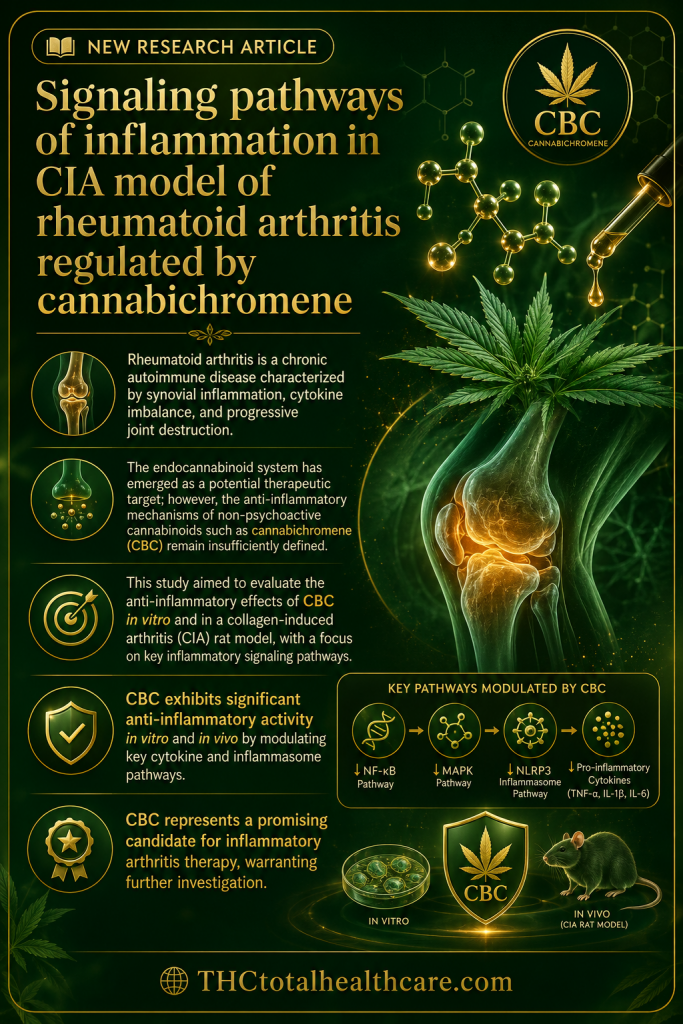
Signaling pathways of inflammation in CIA model of rheumatoid arthritis regulated by cannabichromene

Cannabichromene (CBC) is one of the lesser-studied cannabinoids in Cannabis sativa, but emerging research suggests it may have significant anti-inflammatory activity. In this preclinical rheumatoid arthritis study, researchers examined CBC in a collagen-induced arthritis model and found that it reduced inflammatory responses associated with joint disease. The effects were linked to regulation of key signaling pathways involved in cytokine production and immune activation, providing a clearer mechanistic explanation for CBC’s potential anti-arthritic activity. The findings broaden cannabinoid research in rheumatoid arthritis beyond THC and CBD and support further investigation of CBC as a potential modulator of chronic inflammatory disease.

“Background: Rheumatoid arthritis is a chronic autoimmune disease characterized by synovial inflammation, cytokine imbalance, and progressive joint destruction. The endocannabinoid system has emerged as a potential therapeutic target; however, the anti-inflammatory mechanisms of non-psychoactive cannabinoids such as cannabichromene (CBC) remain insufficiently defined. This study aimed to evaluate the anti-inflammatory effects of CBC in vitro and in a collagen-induced arthritis (CIA) rat model, with a focus on key inflammatory signaling pathways.

Methods: CBC effects were assessed in LPS-stimulated HUVEC cells by qPCR analysis of inflammatory markers. In vivo, female Wistar rats were assigned to four groups: CIA + saline (placebo), CIA + CBC, CIA + methylprednisolone, and non-immunized controls receiving saline. Disease progression was evaluated using clinical scoring, paw thickness, and body weight. Synovial tissues and serum were analyzed by qPCR, Western blotting, and ELISA to assess cytokines, inflammasome components, and signaling pathways, including NF-κB and JAK/STAT.

Results: CBC reduced TNF-α expression in vitro at low micromolar concentrations. In vivo, CBC significantly decreased arthritis scores compared to placebo and attenuated weight loss, although it did not significantly reduce paw swelling. Molecular analyses revealed downregulation of IL-6, STAT3, and IL-17 A, indicating suppression of the TNF-NF-κB-IL-6-STAT3-Th17 axis. CBC also significantly inhibited inflammasome components (NLRP3, NLRP1A, caspase-11). However, MMP-3 and MMP-9 levels were not significantly affected.

Conclusions: CBC exhibits significant anti-inflammatory activity in vitro and in vivo by modulating key cytokine and inflammasome pathways. While its effects on structural joint damage markers were limited, CBC represents a promising candidate for inflammatory arthritis therapy, warranting further investigation.”

https://pubmed.ncbi.nlm.nih.gov/42343451

https://link.springer.com/article/10.1186/s42238-026-00464-2

Cannabigerol (CBG) Modulates Neutrophil Activity and Ameliorates Rheumatoid Arthritis Pathogenesis

Cannabigerol (CBG) is emerging as an important anti-inflammatory cannabinoid with potential relevance to autoimmune disease. In this study, CBG reduced rheumatoid arthritis severity by modulating neutrophil activity and suppressing inflammatory processes involved in joint damage. The treatment improved disease-related pathology while influencing immune pathways that drive chronic inflammation. The findings identify neutrophils as an important target of CBG and strengthen evidence for its potential therapeutic role in rheumatoid arthritis.

“Background/Objectives: Rheumatoid arthritis (RA) is a chronic, inflammatory, autoimmune disease that primarily affects the joints. Current treatments aim to relieve pain and limit joint damage; however, many are associated with significant side effects or high costs. Neutrophils play a critical role in RA development and progression by driving synovial inflammation and tissue damage, yet no approved therapies directly target neutrophil-mediated pathogenic mechanisms. Cannabinoids have demonstrated anti-inflammatory potential. Although cannabinoids have been studied in RA, the direct modulation of neutrophil-driven mechanisms by purified CBG has not been systematically addressed. To harness the cannabinoid potential, we investigated the effects of the purified cannabinoid Cannabigerol (CBG) on neutrophil-mediated immune responses in RA. 

Methods: We assessed the effects of CBG on human blood isolated neutrophil cytokine secretion, signal transduction and migration as ex vivo models. In addition, collagen antibody-induced arthritis (CAIA) was applied in C57BL/6 wt mice, and immune-cell recruitment and cytokine secretion were examined after CBG treatment. 

Results: Ex vivo experiments demonstrated that CBG hampered the secretion of pro-inflammatory cytokines from human neutrophils in a dose-dependent manner (TNF-α and IL-6 by 68% and 72%, respectively). Furthermore, CBG downregulated inflammatory signal transduction, such as P38-MAPK, ERK1/2 and Akt phosphorylationpost neutrophil activation by 41%, 54% and 78%, respectively. Importantly, 60% of the CBG downregulation of IL-6 was consistent with the CB2 receptor axis in a selective way. In addition, CBG attenuated neutrophil migration toward IL-8 by 67%. To further evaluate CBG therapeutic capacity, we used CAIA as an in vivo model. CBG treatment resulted in improving mice arthritis clinical scores and body weight in comparison to RA-diseased mice. Moreover, CBG reduced leukocyte recruitment to the inflamed joints by 48%, primarily through the inhibition of neutrophil and monocyte cells to 27% and 49%, respectively. Additionally, CBG showed its anti-inflammatory effect by decreasing inflammatory cytokines like IL-6 and IL-1β by 98% and 60% in the blood. Also, CBG reduced MCP-1 and IL-1β cytokines in the joints by 22% and 38%, respectively. 

Conclusions: These results show that CBG has anti-inflammatory capacity and therapeutic potential in regulating neutrophil-mediated immunity in RA. These findings are preclinical and require further validation before therapeutic positioning.”

https://pubmed.ncbi.nlm.nih.gov/42075816

“So far, these findings highlight CBG as an effective preclinical modulator candidate for affecting neutrophil-mediated immune responses and attenuating inflammation in rheumatoid arthritis.”

https://www.mdpi.com/1424-8247/19/4/560

Cannabidiol synergizes with methotrexate to attenuate rheumatoid arthritis via STAT3/NF-κB signalling-mediated M1 macrophage polarization

“Background: Methotrexate (MTX) is the anchor drug for rheumatoid arthritis (RA) treatment, but its clinical application is limited by dose-dependent adverse events, such as hepatotoxicity and gastrointestinal intolerance, and incomplete efficacy in some patients. Cannabidiol (CBD) is a nonpsychotropic cannabinoid that has powerful therapeutic efficacy in alleviating pain and inflammation, as well as favourable safety and tolerability profiles. However, whether CBD can synergize with MTX to enhance therapeutic outcomes and mitigate toxicity remains unclear. This study aimed to investigate the synergistic efficacy, safety profile, and underlying molecular mechanism of the CBD-MTX combination in the treatment of RA.

Methods: Mice were randomly divided into 8 groups (n = 5 per group): a normal control group (NC), a model control group (MC), 3 MTX monotherapy groups (low/medium/high dose), and 3 CBD + MTX combination groups (low/medium/high dose). Arthritis severity was assessed by clinical scoring and micro-CT. Systemic safety was evaluated via histopathological examination of the liver, kidney, and testis. Flow cytometry, ELISA and Western blotting were used to validate the mechanisms involved. Network pharmacology and molecular docking were used to predict potential targets.

Results: Compared with MTX monotherapy, the CBD-MTX combination had dose-dependent synergistic effects, significantly attenuating joint swelling, inflammation, and bone erosion. The medium-dose combination approached the efficacy of high-dose MTX (dose-sparing effect). CBD mitigated MTX-induced testicular toxicity and spermatogenic failure. Mechanistically, the combination suppressed M1 macrophage polarization and proinflammatory cytokine (TNF-α, IL-6, and IL-1β) secretion by inhibiting STAT3 and NF-κB signalling (downregulation of p-STAT3 and p-NF-κB p65).

Conclusion: The CBD-MTX combination exerts superior antiarthritic effects by inhibiting STAT3/NF-κB-mediated M1 macrophage polarization and protecting against MTX-induced reproductive toxicity. This study provides a preclinical rationale for this novel combination strategy in RA management.”

https://pubmed.ncbi.nlm.nih.gov/41955700

“In summary, our findings identify the combination of CBD and MTX as a robust therapeutic strategy for RA management. We demonstrate that this regimen exerts synergistic antiarthritic effects by inhibiting the STAT3/NF-κB axis and suppressing M1 macrophage polarization. Importantly, CBD not only enhances MTX efficacy but also mitigates MTX-induced reproductive toxicity.”

https://www.sciencedirect.com/science/article/abs/pii/S1567576926004728?via%3Dihub

Exploring therapeutic potential of Cannabis based therapy in autoimmune and rheumatic disorders

pubmed logo

“The medical use of cannabis is expanding across many countries, with some legalizing its use outright and others implementing medical licensure systems to approve treatment for eligible patients.

Despite this growing interest and utilization, there remains a lack of solid scientific evidence supporting its medical use, even though cannabis has been used therapeutically for thousands of years.

The goal of the following communication is to present updated data on the potential roles of cannabis-based treatments in various autoimmune and rheumatic conditions.

The information highlights that incorporating cannabis into the therapeutic armamentarium may offer benefits.

However, in many cases, despite encouraging perspectives and outcomes, the supporting evidence remains insufficient and requires further validation.

Due to social and legal barriers, the conduct of such rigorous clinical trials has been hindered, limiting the availability of high-quality evidence to guide medical practice.”

https://pubmed.ncbi.nlm.nih.gov/40907777/

https://www.sciencedirect.com/science/article/abs/pii/S1568997225001867?via%3Dihub

High CBD extract (CBD-X) modulates inflammation and immune cell activity in rheumatoid arthritis

pubmed logo

“Introduction: Rheumatoid arthritis (RA) is a debilitating autoimmune disease affecting approximately 1% of the global population and is associated with significant morbidity and mortality. Given the known anti-inflammatory effects of cannabinoids, we investigated the therapeutic potential of a high-CBD extract, termed CBD-X, by assessing its effects on immune cells and disease progression. This study investigates the therapeutic potential of a high-CBD extract (CBD-X) in RA.

Methods: We evaluated the effects of CBD-X on cells involved in RA pathogenesis using macrophages and primary human neutrophils as ex vivo models. In addition, two murine models of RA were applied: collagen-induced arthritis (CIA) and collagen antibody-induced arthritis (CAIA).

Results: Ex vivo experiments demonstrated that CBD-X inhibited the secretion of pro-inflammatory cytokines, including IL-1β from macrophages and IL-8, IL-6, and TNF-α from human neutrophils, suggesting its potential to modulate inflammatory responses. Moreover, CBD-X attenuated NF-κB p65 and Akt phosphorylation downstream LPS-activation signal in neutrophils. To further evaluate its therapeutic effects, we employed two murine models of RA: collagen-induced arthritis (CIA) and collagen antibody-induced arthritis (CAIA). In both models, CBD-X treatment resulted in a significant reduction of leukocyte levels in the blood, primarily through the suppression of neutrophil and monocyte populations, which play a central role in RA pathogenesis. Additionally, CBD-X reduced neutrophil migration to the joints in the CAIA model, highlighting its potential to alleviate joint inflammation. Furthermore, it modulated the neutrophil-to-macrophage ratio (NMR), an important marker of RA progression, an effect that was not observed with dexamethasone treatment, suggesting a distinct mechanism of immune regulation. Notably, CBD-X promoted the pro-resolving macrophages to the rheumatic joints. Importantly, CBD-X exerted its anti-inflammatory effect by downregulating TNF-α and MCP-1 while upregulating IL-10, a key anti-inflammatory cytokine involved in immune homeostasis.

Discussion: These findings indicate that CBD-X has a significant potential as a therapeutic agent for RA, offering a promising approach to modulate immune responses and reduce inflammation in RA patients.”

https://pubmed.ncbi.nlm.nih.gov/40709173/

“Cannabinoids, including CBD, have demonstrated anti-inflammatory effects in conditions like severe COVID-19 and may help prevent disease progression from mild to severe stages.”

“These results demonstrate that CBD-X treatment exerts an anti-inflammatory effect by reducing pro-inflammatory cytokines also enhances anti-inflammatory IL-10 levels highlighting its therapeutic potential in RA management.”

https://www.frontiersin.org/journals/immunology/articles/10.3389/fimmu.2025.1599109/full

Cannabidiol as an immune modulator: A comprehensive review

pubmed logo

“Cannabidiol (CBD), a non-psychoactive phytocannabinoid derived from Cannabis sativa, has emerged as a promising therapeutic agent due to its diverse pharmacological properties, including potent anti-inflammatory, neuroprotective, and immunomodulatory effects.

CBD modulates immune responses, including the regulation of T cell activity, induction of macrophage apoptosis, suppression of pro-inflammatory cytokines, and modulation of signaling pathways involved in inflammation and immune homeostasis. A comprehensive literature search was conducted using PubMed, Scopus, and Web of Science databases to identify relevant preclinical and clinical studies on CBD’s immunomodulatory effects.

Preclinical and clinical studies demonstrate its efficacy in treating autoimmune diseases such as Type 1 diabetes, multiple sclerosis, rheumatoid arthritis, and inflammatory bowel disease, along with its potential in neuropathic pain and cancer therapy.

Recent advancements in nanotechnology-based delivery systems have further enhanced CBD’s therapeutic potential by improving its solubility, bioavailability, and targeted delivery, enabling innovative approaches for wound healing, inflammation management, and cancer treatment. However, challenges such as variability in immune responses, limited long-term safety data, and potential drug-drug interactions persist.

This review comprehensively examines CBD’s pharmacokinetics, pharmacodynamics, and immunomodulatory mechanisms, highlighting its clinical potential, existing limitations, and future directions in advancing its integration into precision medicine and immune regulation.”

https://pubmed.ncbi.nlm.nih.gov/40407987/

“Given the multifaceted pharmacological properties of CBD, it holds significant promise as a therapeutic agent.”

https://link.springer.com/article/10.1007/s44446-025-00005-7

Medicinal Cannabis and the Intestinal Microbiome

pubmed logo

“Historically, the multiple uses of cannabis as a medicine, food, and for recreational purposes as a psychoactive drug span several centuries.

The various components of the plant (i.e., seeds, roots, leaves and flowers) have been utilized to alleviate symptoms of inflammation and pain (e.g., osteoarthritis, rheumatoid arthritis), mood disorders such as anxiety, and intestinal problems such as nausea, vomiting, abdominal pain and diarrhea.

It has been established that the intestinal microbiota progresses neurological, endocrine, and immunological network effects through the gut-microbiota-brain axis, serving as a bilateral communication pathway between the central and enteric nervous systems.

An expanding body of clinical evidence emphasizes that the endocannabinoid system has a fundamental connection in regulating immune responses. This is exemplified by its pivotal role in intestinal metabolic and immunity equilibrium and intestinal barrier integrity.

This neuromodulator system responds to internal and external environmental signals while also serving as a homeostatic effector system, participating in a reciprocal association with the intestinal microbiota.

We advance an exogenous cannabinoid-intestinal microbiota-endocannabinoid system axis potentiated by the intestinal microbiome and medicinal cannabinoids supporting the mechanism of action of the endocannabinoid system. An integrative medicine model of patient care is advanced that may provide patients with beneficial health outcomes when prescribed medicinal cannabis.”

https://pubmed.ncbi.nlm.nih.gov/39770543/

“Furthermore, other modes of delivery of medicinal cannabis, such as oro-buccal, sublingual and inhaled/smoked alternatives, provide cannabinoids that have rapid access to the systemic circulation, bypassing the intestinal tract.”

https://www.mdpi.com/1424-8247/17/12/1702