Quality by Design-Driven Formulation Development of Cannabidiol Orally Disintegrating Tablets

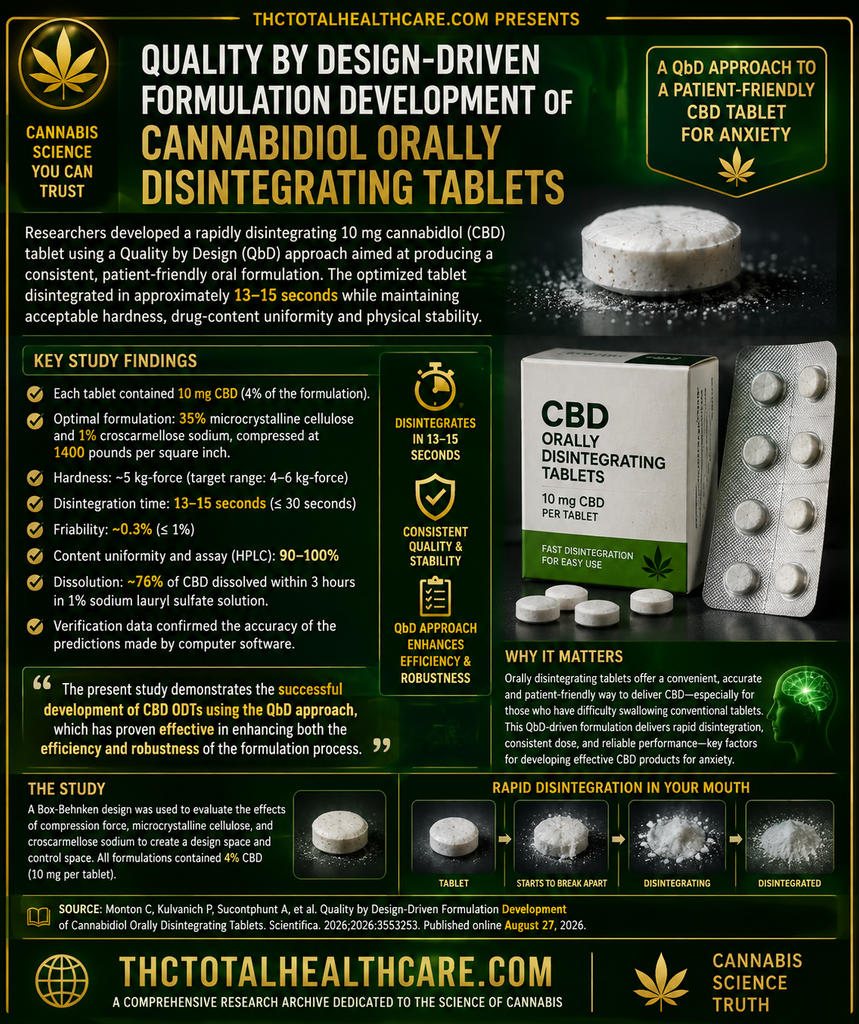
Orally disintegrating tablets may offer a more convenient way to deliver cannabidiol, particularly for people who have difficulty swallowing conventional pills. In this study, researchers used a Quality by Design approach to optimize a CBD tablet formulation for rapid disintegration, dose consistency, and reliable pharmaceutical performance.

“The development of cannabidiol (CBD) orally disintegrating tablets (ODTs) is effective in treating anxiety in a patient-friendly manner. The application of Quality by Design (QbD) enhances the efficiency and robustness of the pharmaceutical development of CBD ODTs.

The objective of this work was to develop a formulation for CBD ODTs using a QbD-driven approach. Quality target product profile, critical quality attributes, and an initial risk assessment were identified and evaluated. Subsequently, a Box-Behnken design was employed to analyze the effects of varied compression force, the quantity of microcrystalline cellulose, and the quantity of croscarmellose sodium to create a design space and control space.

Results indicated that the design and control spaces produced tablets with hardness ranging from 4 to 6 kg-force, a disintegration time (DT) ≤ 30 s, and a friability ≤ 1%. All formulations contained 4% CBD (or 10 mg per tablet). The optimal formulation consisted of 35% microcrystalline cellulose and 1% croscarmellose sodium and was compressed at 1400 pounds per square inch.

This formulation exhibited a hardness of approximately 5 kg-force, a DT of 13-15 s, and a friability of approximately 0.3%. Verification data confirmed the accuracy of the predictions made by computer software. The content uniformity and assay determined using validated high-performance liquid chromatography ranged between 90% and 100%. CBD was released from the CBD ODT in 1% sodium lauryl sulfate solution, with approximately 76% dissolved within 3 h in the dissolution study.

In conclusion, the QbD-driven approach successfully facilitated the formulation development of CBD ODTs with the desired properties for the treatment of anxiety in a patient-friendly manner.”

https://pubmed.ncbi.nlm.nih.gov/42662497

“The present study demonstrates the successful development of CBD ODTs using the QbD approach, which has proven effective in enhancing both the efficiency and robustness of the formulation process.

Overall, this study demonstrates the successful implementation of a QbD-driven strategy for laboratory-scale formulation development and optimization of CBD ODTs.

The findings contribute to pharmaceutical development efforts involving cannabinoid-based formulations and may provide useful guidance for future studies related to scale-up, stability evaluation, and in vivo performance.

https://onlinelibrary.wiley.com/doi/10.1155/sci5/3553253


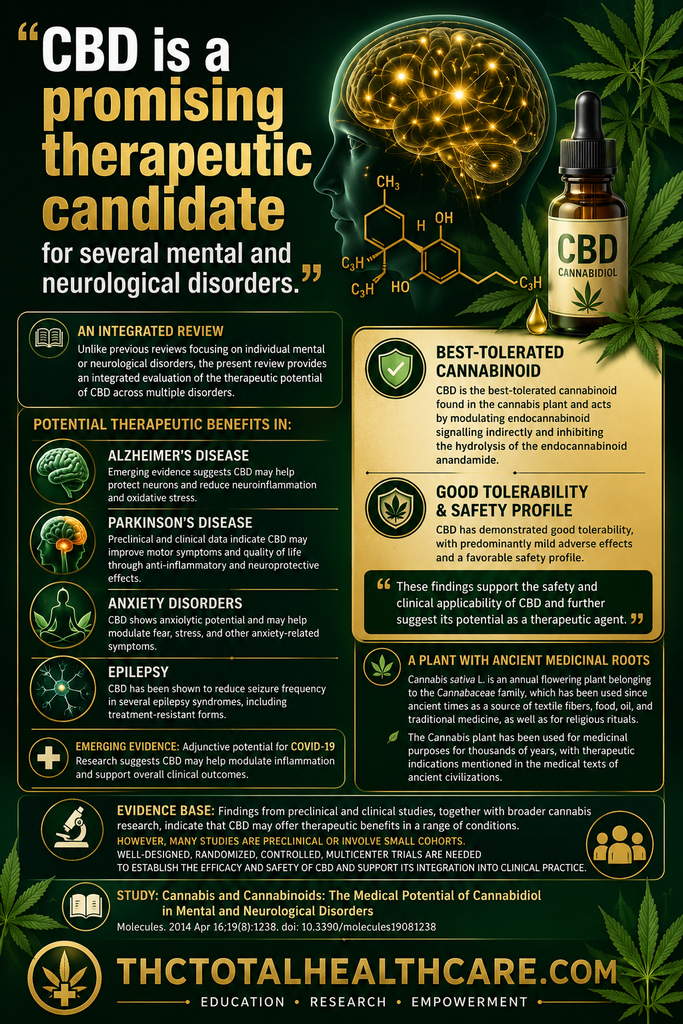
Cannabis and Cannabinoids: The Medical Potential of Cannabidiol in Mental and Neurological Disorders

Cannabidiol (CBD) has become one of the most widely studied cannabis compounds for its potential effects on the brain and nervous system.

This review examines evidence across a range of mental and neurological disorders, including anxiety, depression, psychosis, epilepsy, neurodegenerative diseases and other conditions involving altered brain signaling or inflammation.

The research highlights CBD’s broad therapeutic potential while helping clarify the biological mechanisms that may underlie its effects.

Background/Objectives: Mental and neurological disorders contribute substantially to the global burden of disease, affecting people of all ages and backgrounds. As their prevalence increases with age, their overall impact is expected to grow in the coming decades. Although psychological and pharmacological treatments are available, many patients fail to achieve satisfactory outcomes, underscoring the need for improved therapeutic strategies. Cannabis sativa L. has been used for medicinal purposes for centuries, and cannabidiol (CBD) has attracted increasing attention because of its broad therapeutic potential. Scientific studies indicate that CBD may be beneficial in several mental and neurological disorders. 

Methods: A comprehensive literature search was conducted to identify articles investigating the therapeutic potential of CBD and cannabis in selected disorders. 

Results: Evidence from preclinical and clinical studies, together with findings from the broader cannabis literature, indicates that CBD may offer therapeutic benefits in a range of conditions, including Alzheimer’s and Parkinson’s disease, anxiety disorders, and epilepsy. Emerging data also support its potential use as an adjunctive therapy for COVID-19. Current research has improved understanding of the neurobiological mechanisms underlying these disorders and the molecular pathways through which CBD may exert its effects. CBD has demonstrated good tolerability, with predominantly mild adverse effects and a favorable safety profile. 

Conclusions: Despite promising findings, many available studies are preclinical or involve small patient cohorts, and the mechanisms underlying the therapeutic effects of CBD remain incompletely understood. Further well-designed, randomized, controlled, multicenter trials are needed to establish the efficacy and safety of CBD and support its integration into clinical practice.”

https://pubmed.ncbi.nlm.nih.gov/42653735

“The Cannabis plant has been used for medicinal purposes for thousands of years, with therapeutic indications mentioned in the medical texts of ancient civilizations.”

“These findings support the safety and clinical applicability of CBD and further suggest its potential as a therapeutic agent.”

“CBD is a promising therapeutic candidate for several mental and neurological disorders.”,

https://www.mdpi.com/1424-8247/19/8/1238


Long-term experiences of patients prescribed medicinal cannabis in Australia: a qualitative interview study 

As medicinal cannabis becomes more widely prescribed, long-term patient experiences can help show how it is actually being used outside controlled clinical trials.

In this Australian qualitative study, researchers interviewed patients who had been prescribed medicinal cannabis for chronic conditions and explored their experiences with symptom relief, side effects, treatment decisions and everyday use.

Participants commonly described improvements in symptoms such as pain, anxiety, spasticity, insomnia and depression, providing real-world insight into the perceived benefits and challenges of longer-term medicinal cannabis treatment.

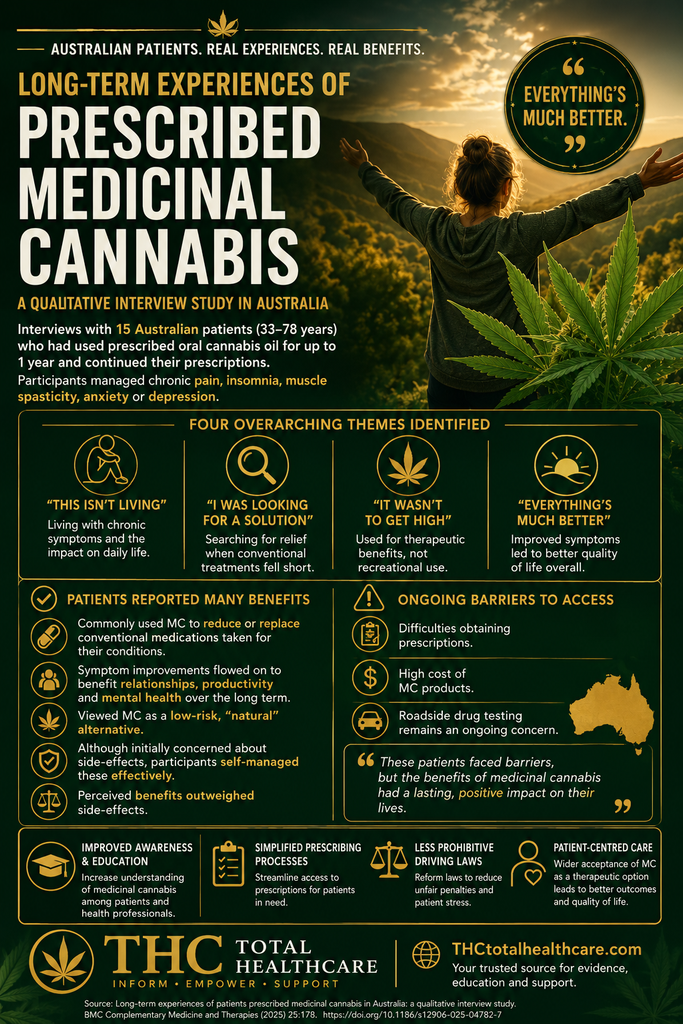
“There is limited, but emerging, evidence supporting the use of medicinal cannabis (MC) to manage pain, anxiety, spasticity, insomnia and depression. Although Australian legislation changed in 2016 to provide access to unapproved MC products, clinical guidance on prescribing MC is limited because it is still mostly an unapproved therapy accessed under strict conditions. Since legislation changed, little is known about the long-term lived experience of patients being prescribed unapproved MC products in Australia. We aimed to explore, and obtain an in depth understanding of, the long-term experiences of patients prescribed MC.

Using an interpretive qualitative approach, participants were recruited from the Quality-of-Life Evaluation Study, a nationwide longitudinal study of patients with any chronic health condition prescribed orally administered MC oil over 1 year. Semi-structured interviews explored experiences of accessing and using MC during and since completing the Quality-of-Life Evaluation Study. Thematic analysis identified themes and subthemes from the data.

Results

Fifteen participants aged 33–78 years (nine female) who had completed the Quality-of-Life Evaluation Study and renewed MC oil prescriptions within the previous 6 months to manage chronic pain, insomnia, muscle spasticity, anxiety or depression were interviewed. Analysis identified four overarching themes: ‘This isn’t living’; ‘I was looking for a solution’; ‘It wasn’t to get high’; and ‘Everything’s much better’, and eight subthemes covering concerns, barriers, patient autonomy and benefits. Participants commonly used MC to reduce or replace conventional medications taken for their conditions, and viewed MC as a low-risk ‘natural’ alternative. Barriers to accessing MC included difficulties obtaining prescriptions and the cost of MC products. Participants reported symptom improvements that flowed on to benefit relationships, productivity and mental health over the long term. Although initially concerned about side-effects, participants self-managed these effectively, with perceived benefits outweighing side-effects. Participants described roadside drug testing as an ongoing concern.

Conclusions

This group of patients prescribed orally administered MC oil in Australia reported many benefits of MC, but faced ongoing barriers to MC access. Improved awareness and education, simplified prescribing processes, and less prohibitive driving laws could lead to wider acceptance of MC as a therapeutic option and improved patient-centred care.”

https://connectsci.au/py/article/32/4/PY25229/275611/Long-term-experiences-of-patients-prescribed

Δ9-Tetrahydrocannabinol Modulates Hippocampal Neurogenesis in Female Wistar Rats: Interaction with Estradiol

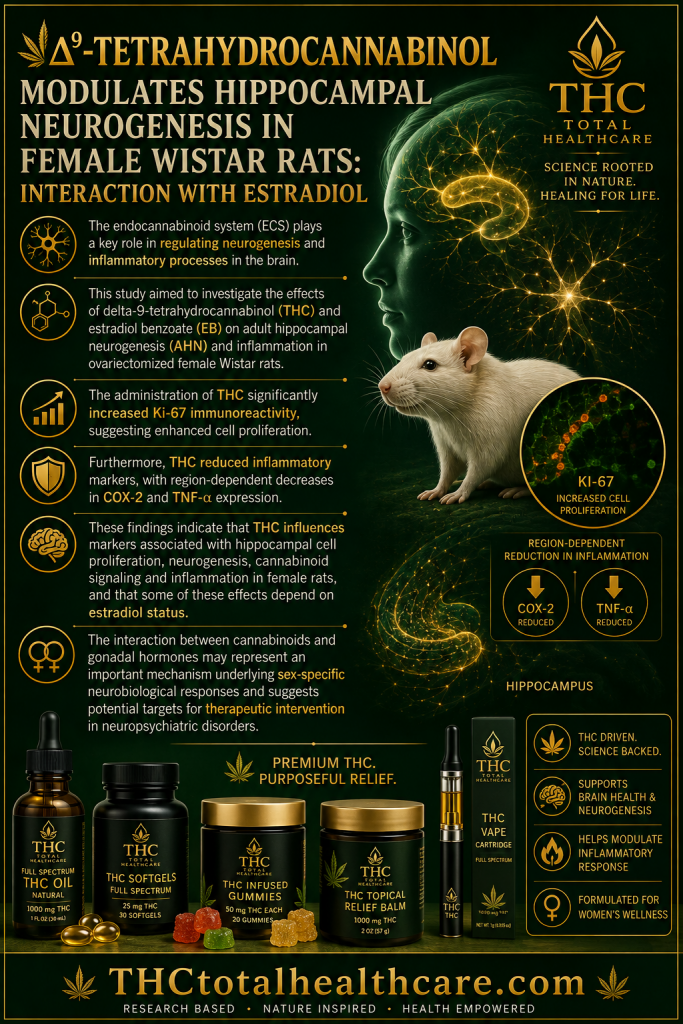
THC may influence the female brain through both neurogenic and anti-inflammatory mechanisms. In ovariectomized female rats, Δ9-THC significantly increased hippocampal cell proliferation, showed evidence of enhanced neurogenesis, and reduced the inflammatory markers COX-2 and TNF-α. The effects also interacted with estradiol, highlighting the importance of hormonal status in determining THC’s actions in the brain.

“The endocannabinoid system (ECS) plays a key role in regulating neurogenesis and inflammatory processes in the brain.

The increasing prevalence of Cannabis use among women highlights the importance of understanding sex-specific effects of cannabinoids, particularly in the context of hormonal interactions.

This study aimed to investigate the effects of delta-9-tetrahydrocannabinol (THC) and estradiol benzoate (EB) on adult hippocampal neurogenesis (AHN) and inflammation in ovariectomized female Wistar rats.

Sixteen rats were allocated to four experimental groups receiving THC, EB, both treatments, and vehicle. Immunohistochemical analyses were conducted to evaluate markers of proliferation (Ki-67), neurogenesis (doublecortin and PSA-NCAM), cannabinoid receptor expression (CB1), and inflammation (COX-2 and TNF-α) in the hippocampal formation.

The administration of THC significantly increased Ki-67 immunoreactivity, suggesting enhanced cell proliferation. A trend toward increased doublecortin expression was observed, particularly in EB-treated animals. THC also modulated CB1 receptor expression, with significant increases in the dentate gyrus and hilus following combined THC and EB treatment. Furthermore, THC reduced inflammatory markers, with region-dependent decreases in COX-2 and TNF-α expression.

These findings indicate that THC influences markers associated with hippocampal cell proliferation, neurogenesis, cannabinoid signaling and inflammation in female rats, and that some of these effects depend on estradiol status.

The interaction between cannabinoids and gonadal hormones may represent an important mechanism underlying sex-specific neurobiological responses and suggests potential targets for therapeutic intervention in neuropsychiatric disorders.”

https://pubmed.ncbi.nlm.nih.gov/42570151

https://link.springer.com/article/10.1007/s11064-026-04857-w


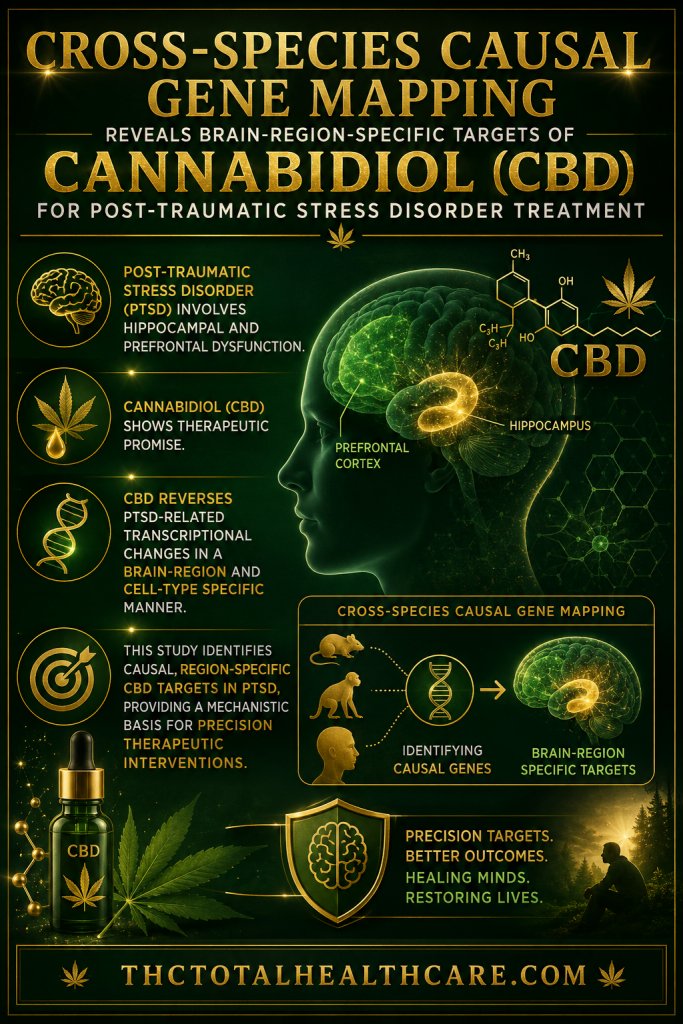
Cross-species causal gene mapping reveals brain-region-specific targets of Cannabidiol for post-traumatic stress disorder treatment

Post-traumatic stress disorder involves complex changes across multiple brain regions, and cannabidiol (CBD) has emerged as a potential treatment candidate. Using cross-species causal gene mapping, researchers found that CBD reverses PTSD-related transcriptional changes in a brain-region and cell-type specific manner, while also identifying molecular targets that may help explain its therapeutic effects and guide future PTSD treatment development.

Purpose: Post-traumatic stress disorder (PTSD) involves hippocampal and prefrontal dysfunction. Cannabidiol (CBD) shows therapeutic promise, but its cell-type-specific and causal mechanisms remain unclear.

Methods: We performed single-cell RNA sequencing of hippocampal and prefrontal cortices from PTSD mice, healthy controls, and CBD-treated PTSD mice. Genes dysregulated in PTSD and reversed by CBD were integrated with human PTSD GWAS and brain eQTL datasets using summary-data-based Mendelian randomization (SMR) to identify causal risk targets. Molecular docking assessed direct CBD-protein interactions.

Results: PTSD induced extensive transcriptional alterations, most prominent in excitatory neurons. SMR analysis identified 15 potential causal risk genes linked to PTSD. Among these, 7 high-confidence targets were confirmed to be transcriptionally responsive to CBD treatment. In the hippocampus, key causal targets included LYNX1 (OR = 0.75, 95% CI: 0.57-0.98, P = 0.038), RAB3C (OR = 1.291, 95% CI: 1.052-1.584, P = 0.015), MAGI2 (OR = 1.15, 95% CI: 1.00-1.31, P = 0.048), LINGO2 (OR = 1.48, 95% CI: 1.07-2.03, P = 0.017), and UNC5D (OR = 1.41, 95% CI: 1.03-1.93, P = 0.032). In the prefrontal cortex, identified targets were CNTN3 (OR = 0.78, 95% CI: 0.62-0.98, P = 0.036), IGSF21 (OR = 1.22, 95% CI: 1.04-1.42, P = 0.012). While SEPTIN3 (OR = 1.25, 95% CI: 1.01-1.56, P = 0.043) was identified as a causal risk gene, its expression was not reversed by CBD. Molecular docking indicated that all 15 SMR-identified candidates possess strong binding affinity to CBD, including RAB3C (-8.636 kcal/mol), CNTN3 (-7.216 kcal/mol), and LINGO2 (-6.222 kcal/mol), which suggests a direct pharmacological interaction.

Conclusion: This study identifies causal, region-specific CBD targets in PTSD, providing a mechanistic basis for precision therapeutic interventions.”

https://pubmed.ncbi.nlm.nih.gov/42542041

“CBD reverses PTSD-related transcriptional changes in a brain-region and cell-type specific manner.”

https://www.sciencedirect.com/science/article/abs/pii/S0006291X26011113?via%3Dihub

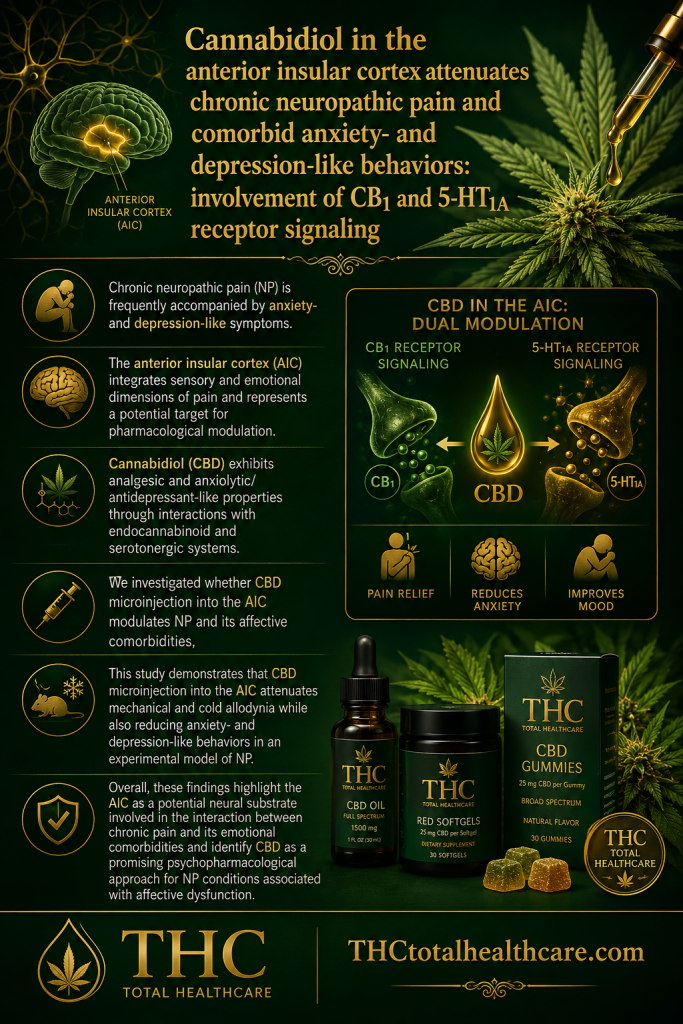
Cannabidiol in the anterior insular cortex attenuates chronic neuropathic pain and comorbid anxiety- and depression-like behaviors: involvement of CB1 and 5-HT1A receptor signaling

Chronic neuropathic pain often occurs alongside anxiety and depression, making treatment more difficult than addressing pain alone. In this preclinical study, researchers examined CBD activity within the anterior insular cortex, a brain region involved in pain perception and emotional processing. CBD reduced neuropathic pain while also improving anxiety- and depression-like behaviors, with the effects linked to CB1 and 5-HT1A receptor signaling. The findings suggest that CBD may influence overlapping neural pathways involved in both chronic pain and its emotional consequences, supporting further investigation of cannabinoid-based approaches for complex pain conditions.

Background: Chronic neuropathic pain (NP) is frequently accompanied by anxiety- and depression‑like symptoms, reflecting maladaptive interactions between nociceptive and affective brain networks. The anterior insular cortex (AIC) integrates sensory and emotional dimensions of pain and represents a potential target for pharmacological modulation. Cannabidiol (CBD) exhibits analgesic and anxiolytic/antidepressant‑like properties through interactions with endocannabinoid and serotonergic systems.

Objectives: We investigated whether CBD microinjection into the AIC modulates NP and its affective comorbidities, and whether these effects depend on CB1 and 5‑HT1A receptors.

Methods: Male Wistar rats were subjected to chronic constriction injury (CCI) of the sciatic nerve. Fourteen days later, guide cannulae were implanted into the AIC. On day 21 post‑CCI, animals received intra‑AIC microinjections of CBD (15, 30, or 60 nmol/200 nL) or vehicle. Mechanical (von Frey test) and cold (acetone test) allodynia, anxiety‑like behavior (open field and elevated plus maze tests), and depression‑like behavior (forced swim and sucrose spray tests) were assessed by different psychobiological tests. The role of cannabinoid and serotonergic receptors was addressed by intra‑AIC pretreatment with either the CB1 receptor antagonist AM251 or the 5‑HT1A receptor antagonist WAY-100,635 in independent groups.

Results: AIC pretreatment with CBD dose‑dependently reduced mechanical and cold allodynia and anxiety‑ and depression‑like behaviors, with the most robust effects observed at 60 nmol. AIC Pretreatment with either AM251 or WAY-100,635 abolished the antinociceptive and affective effects of CBD.

Conclusion: CBD administration within the AIC produces integrated analgesic, anxiolytic, and antidepressant-like effects in a model of neuropathic pain. These effects are consistent with the involvement of CB1 and 5-HT1A receptor signaling. The findings identify the AIC as a relevant cortical substrate linking nociceptive and affective processes and support CBD as a promising psychopharmacological strategy for NP associated with emotional comorbidities.”

https://pubmed.ncbi.nlm.nih.gov/42390818

“In conclusion, this study demonstrates that CBD microinjection into the AIC attenuates mechanical and cold allodynia while also reducing anxiety- and depression-like behaviors in an experimental model of NP.”

“Overall, these findings highlight the AIC as a potential neural substrate involved in the interaction between chronic pain and its emotional comorbidities and identify CBD as a promising psychopharmacological approach for NP conditions associated with affective dysfunction.”

https://link.springer.com/article/10.1007/s00213-026-07116-6

Preliminary Prospective Study of Pharmaceutical-Grade Cannabidiol for Seizure Frequency, Anxiety, and Comorbid Symptoms in Pediatric Epilepsy: Associations With Circulating Endocannabinoids and Lipid Biomarkers

Pharmaceutical-grade cannabidiol is being studied in pediatric epilepsy not only for seizure control, but also for its effects on anxiety and other common comorbid symptoms. In this prospective study, CBD treatment was associated with reductions in seizure frequency together with improvements in anxiety and related behavioral symptoms. Researchers also identified changes in circulating endocannabinoids and lipid mediators, linking the clinical improvements with measurable biological effects on the body’s cannabinoid-related signaling systems. The findings strengthen evidence that CBD may provide benefits across both seizure activity and broader neurological symptoms in children with epilepsy.

“Anxiety commonly co-occurs with childhood epilepsy, yet treatments targeting both are limited.

Epidiolex (cannabidiol, CBD) is an FDA-approved treatment for seizures associated with rare pediatric epilepsies and may have anxiolytic effects. We evaluated its effects on seizures and anxiety in pediatric patients with refractory epilepsy, representing diverse seizure etiologies and circulating endocannabinoids and related biomarkers.

Twelve participants (12.17 ± 5.17 years; 6 female) initiated Epidiolex for 4-6 weeks. Caregivers completed pre- and post-treatment seizure diaries; validated anxiety and quality-of-life assessments; and plasma endocannabinoids, related lipids, and CBD metabolites-including 7-hydroxycannabidiol (7-OH-CBD)-were measured.

Post-treatment, 73% of caregivers reported improvements in anxiety and seizure frequency with minimal side effects and improved sleep. Plasma 2-arachidonoylglycerol increased from baseline to study end, with greater elevations in those with lower baseline concentrations. Plasma 7-OH-CBD increased from baseline to study end, confirming systemic CBD exposure.

Epidiolex may provide anxiolytic benefits across pediatric epilepsy, potentially involving endocannabinoids.”

https://pubmed.ncbi.nlm.nih.gov/42033397

https://journals.sagepub.com/doi/10.1177/08830738261439213

The Endocannabinoid System: Pharmacological Targets and Therapeutic Potential in CNS Disorders

“The endocannabinoid system (ECS) influences a wide range of brain functions, including synaptic transmission, neuroplasticity, emotion, and immune regulation within the central nervous system, with CB1 and CB2 receptors mediating various neurophysiological and pathophysiological outcomes. Thus, growing interest in its therapeutic potential has prompted extensive research into how cannabinoid receptors contribute to the pathophysiology of neurological and psychiatric disorders, particularly CB1 and CB2.

This review has integrated findings from studies published between 2015 and 2025, covering conditions, like depression, anxiety, pain, multiple sclerosis, and Parkinson’s disease. We have also examined recent advances in receptor pharmacology and experimental technologies, including cryo-EM, optogenetics, and chemogenetics.

Although ECS-targeted therapeutics hold considerable promise, some key challenges remain in establishing safe and effective dosing protocols and integrating these approaches into clinical frameworks.

This review has provided an updated perspective on the system’s role in brain health and its potential to inform future therapeutic directions. Thus, ECS-targeted strategies may become increasingly important in managing and treating central nervous system disorders.”

https://pubmed.ncbi.nlm.nih.gov/41178765/

https://www.eurekaselect.com/article/151549

Measuring the Effects of Cannabis on Anxiety and Depression Among Cancer Patients

pubmed logo

“Introduction: Cancer patients are increasingly turning to cannabis products to modulate physical and psychological symptoms despite limited evidence supporting their efficacy. We aimed to explore cancer patients’ self-reported anxiety and depression symptoms in response to cannabis use.

Methods: This longitudinal study examined how patient-reported anxiety and depression symptoms varied according to the dose, ratio of tetrahydrocannabinol (THC) to cannabidiol (CBD), and route of administration of cannabis products among cancer patients. Change in self-reported anxiety and depression symptoms was evaluated in 1962 cancer patients after 30 days of enrollment in the Minnesota Medical Cannabis Program.

Results: Anxiety scores improved more in patients taking higher doses of CBD (> 14.3 mg/day) compared to those taking lower doses (< 4.6 mg/day) and among patients using enteral cannabis products. Depression scores also improved more for patients taking enteral products.

Discussion: Anxiety scores varied according to the dose of cannabis, the ratio of THC to CBD, and the route of administration of cannabis products. In contrast, depression scores only varied according to the route of administration.

Conclusions: This study of cancer patients in Minnesota suggests that patterns of cannabis use that include relatively higher doses of CBD taken enterally may improve the quality of life of cancer survivors who report anxiety and depression. This study constructs a foundation for future research to improve the tailoring of cannabis-related educational materials to patients’ needs and inform the training of healthcare professionals on how to recommend cannabis products for cancer survivors.”

https://pubmed.ncbi.nlm.nih.gov/41163433/

“Given the high prevalence of anxiety and depression symptoms among cancer patients, along with the potential for cannabis products to alleviate these serious psychological symptoms, this study suggests specific patterns of use that may improve the quality of life of cancer survivors.”

https://onlinelibrary.wiley.com/doi/10.1002/cam4.71342

Cannabidiol attenuates diet-induced metabolic endotoxemia, neuroinflammation, and anxiety-like behaviors in male aged rats

pubmed logo

“Obesity and aging synergistically reinforce neuroinflammation and disruption of homeostatic mechanisms, triggering pathological behaviors such as increased anxiety.

Cannabidiol (CBD) has been reported to exert anxiolytic, anti-inflammatory, and neuroprotective effects, supporting the hypothesis that it may attenuate the detrimental consequences of obesity, even in aged animals.

To test this hypothesis, 18-month-old male Wistar rats were divided into four experimental groups: control + vehicle (CT + vehicle), CT + CBD, cafeteria diet + vehicle (CAF + vehicle) and CAF + CBD. The animals were fed their diets for 8 weeks. Oral treatment with CBD (15 mg/kg/day) or vehicle began in the 9th week and continued until the end of the experiment, concurrently with the ongoing diet.

We found that the CAF increased anxiety-like behaviors in the open field and elevated plus maze tests, while CBD mitigated these behaviors in the open field. Obesogenic diet also increased circulating levels of lipopolysaccharide, which were reduced by CBD. In the prefrontal cortex, CAF increased levels of interleukin-6 (IL-6), which were decreased by CBD. Additionally, CBD reduced the expression of tumor necrosis factor-α (TNF-α) and toll-like receptor 4 (TLR4). CAF feeding also caused a reduction in the main endocannabinoids, 2-Arachidonoylglycerol (2-AG) and anandamide (AEA). In the prefrontal cortex, CAF increased transcripts of cannabinoid receptor 1 (CB1) and reduced those of cannabinoid receptor 2 (CB2) and serotonin receptor 5-Hydroxytryptamine receptor 1A (5-HT1A). Moreover, levels of triggering receptor expressed on myeloid cells 2 (TREM2) were reduced by the diet.

These findings support the notion that obesity, through its metabolic and inflammatory consequences, exacerbates neuroinflammation and contributes to the dysregulation of the endocannabinoid system in aged animals. Notably, CBD demonstrated the ability to attenuate inflammatory markers and improve anxiety-like behavior, suggesting its potential as a therapeutic strategy to counteract obesity-induced neurobiological alterations in aging.”

https://pubmed.ncbi.nlm.nih.gov/41022293/

“CBD reversed systemic and central inflammatory effects of obesity.”

https://linkinghub.elsevier.com/retrieve/pii/S0889159125003630