
Effectiveness and safety of cannabidiol in adult patients with epilepsy: A multicenter, retrospective study

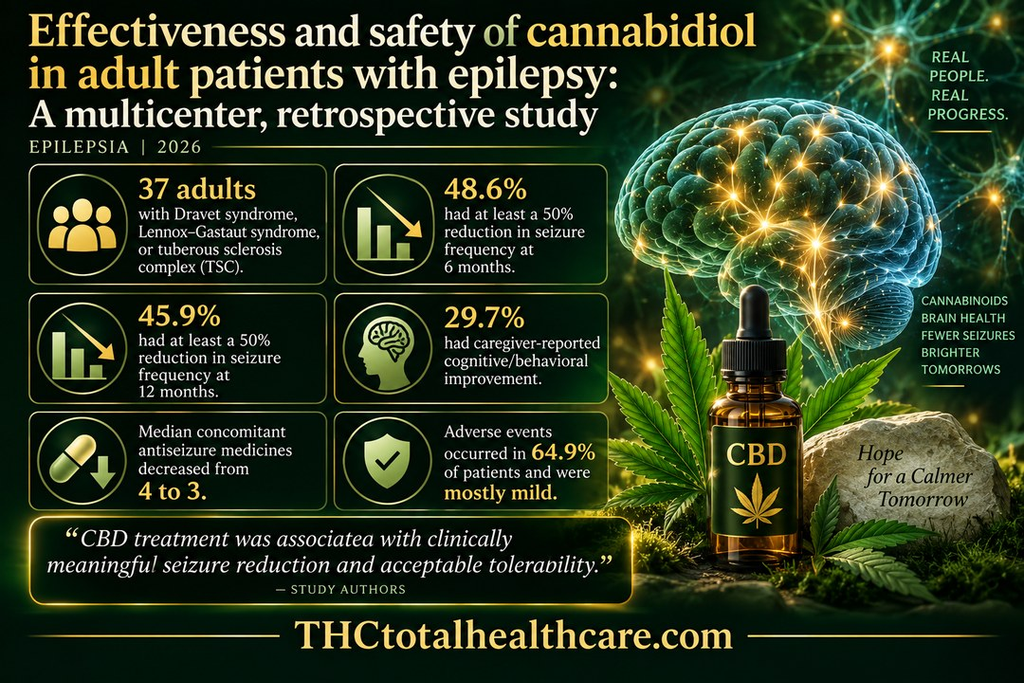
A new multicenter study found that cannabidiol was associated with substantial seizure reductions in adults living with severe, drug-resistant forms of epilepsy. The study followed 37 adults with Dravet syndrome, Lennox–Gastaut syndrome, or tuberous sclerosis complex who received CBD for at least 12 months.

After six months, 48.6% of patients had at least a 50% reduction in seizure frequency; after 12 months, 45.9% still met that threshold. Caregivers also reported improvements in alertness, behavior, interaction, or daily functioning in 29.7% of patients, while the median number of other antiseizure medications fell from four to three.

The authors concluded that CBD was associated with “clinically meaningful seizure reduction and acceptable tolerability” in this real-world adult population. Adverse events occurred in 64.9% of patients but were mostly mild, and 81.1% remained on CBD at 12 months.

“Objective: Cannabidiol (CBD) has demonstrated promising effectiveness and tolerability as adjunctive treatment in patients with severe childhood epilepsies. This study investigated the effectiveness and tolerability of CBD in adults with a history of Dravet syndrome (DS), Lennox-Gastaut syndrome (LGS), or tuberous sclerosis complex (TSC).

Methods: This was a multicenter, retrospective, observational study in adults with diagnosis of DS, LGS or TSC who received at least 12 months of CBD treatment. Medical records were reviewed and baseline characteristics, treatment retention, seizure frequency, cognitive behavioral improvements, concomitant ASM usage, and adverse events were assessed.

Results: Thirty-seven patients (median age 25 years; 67.5% male) with diagnosis of DS, LGS or TSC received CBD for at least 12 months. The CBD median maintenance dose was 10.45 mg/kg/day (IQR 7.455 – 13.975) (median maximum dose 11 mg/kg/day); median follow-up time was 28 months (IQR 22.75-58.25). Seizure frequency was reduced by ≥50% in 48.6% of patients at 6 months and 45.9% at 12 months. No statistically significant differences in median maintenance dose were observed across seizure reduction categories. During CBD treatment, caregivers reported subjective improvements in cognition in 29.7% of patients. Treatment with CBD was significantly associated with a reduction in the median number of concomitant ASMs at the end of follow-up (4 [3, 4]) vs. 3 [3, 4] (p = 0.022). AEs occurred in 64.9% of patients and were mostly mild; 16.2% had AEs leading to treatment discontinuation.

Significance: We present a series of adult patients treated with CBD according to label. The results are similar to those described in children. CBD treatment was associated with clinically meaningful seizure reduction and acceptable tolerability in this real-world cohort of adults with drug-resistant developmental and epileptic encephalopathies. These findings support the potential role of CBD in complex adult DEE populations while highlighting the need for prospective controlled studies to better define its independent treatment effect.

Plain language summary: This study looked at the long-term use of cannabidiol (CBD) in 37 adults with Dravet syndrome, Lennox-Gastaut syndrome, or tuberous sclerosis complex. After 12 months, almost half of the patients had at least a 50% reduction in seizures. Some caregivers also reported improvements in cognition and behavior. Patients were able to reduce the number of other antiseizure medicines they were taking. Side effects were common but mostly mild, although a small number of patients stopped treatment because of them. Overall, CBD appeared effective and reasonably well tolerated, but further controlled studies are needed.”

https://pubmed.ncbi.nlm.nih.gov/42765195

“CBD has demonstrated promising effectiveness and tolerability in adult patients with a history of DS, LGS, or TSC. Treatment with CBD was associated with reductions in seizure frequency and in concomitant ASMs, which could improve treatment retention and reduce AEs. The findings support a growing body of evidence highlighting the efficacy of CBD across age groups and epilepsy etiologies in real-world clinical practice.”
https://onlinelibrary.wiley.com/doi/10.1002/epi4.70331

Cannabinoids and therapeutic potential in neuropsychiatry

Cannabinoids are already used therapeutically in several areas of medicine, and a new review examines how that potential may extend into neuropsychiatry. The authors look beyond cannabis as a single drug, focusing instead on its individual cannabinoids and how different components may contribute to neurological and psychiatric effects.

The review highlights cannabidiol as the cannabinoid with the clearest established role in certain seizure disorders, while examining the broader literature on cannabinoids in neuropsychiatric illness. The authors argue that cannabis is more pharmacologically complicated than any one cannabinoid and that its therapeutic potential may depend on interactions among multiple plant components.

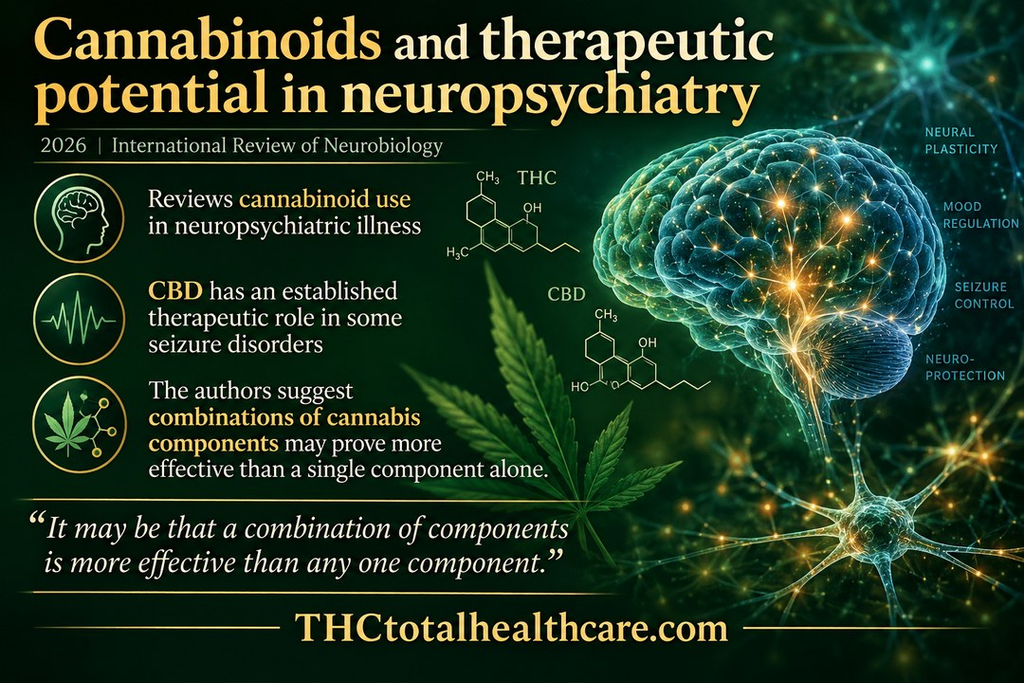
One of the review’s most important points is that combinations of cannabis components may ultimately prove more useful than isolated compounds alone. Rather than dismissing cannabis as having no medical utility in neuropsychiatry, the authors call for approaches that better investigate and use the therapeutic attributes of the plant.

“Cannabinoids have therapeutic utility in some specific areas of medicine, including as an anti-nausea adjunct for chemotherapy and as an anti-inflammatory agent, among others. However, as a therapeutic agent in neuropsychiatric conditions, the data is more limited. Cannabis itself is viewed as a recreational drug of abuse with no medical utility; however, the reality may be more complex when considering individual components of the plant.

Cannabinoid components may have some benefit as therapeutic agents in neuropsychiatry, with cannabidiol most often purported to be a therapeutic agent for some seizure disorders. However, recent studies suggest that the cannabis plant is proving to be broader and more complicated in how it delivers potential therapeutic effects. It may be that a combination of components is more effective than any one component.

This chapter reviews the medical usage of cannabinoids in neuropsychiatric illness, as reported in the literature, and proposes future approaches that may more effectively avail the attributes of this plant.”

https://pubmed.ncbi.nlm.nih.gov/42767714

“Cannabinoid treatments are carving a noteworthy niche in the pharmaceutical repertoire, offering new hope for conditions that have been historically difficult to manage, such as comorbid anxiety and epilepsy.”

https://www.sciencedirect.com/science/chapter/bookseries/abs/pii/S0074774226001303?via%3Dihub

New Study: Cannabinoids Protect the Brain and Heart From Injury

“Cannabis is in the news again for its purported medicinal benefits, with researchers in Israel last week indicating it may help prevent trauma to the brain in certain circumstances and may also help with cardiac problems. A few months ago an English pharmaceutical company that manufactures cannabinoids announced it was developing a new treatment for epilepsy using them.”

Los Angeles City Council Votes To Ban Medical Marijuana Dispensaries

“Prof. Yosef Sarne in the Adelson Center for the Biology of Addictive Diseases in the Department of Physiology and Pharmacology at Tel Aviv University says that cannabis has neuro-protective qualities. He has found that extremely low doses of tetrahydrocannabinol or THC- the psychoactive component of marijuana- can protect the brain from long-term cognitive damage in the wake of injury from hypoxia (lack of oxygen), seizures, or toxic drugs.”

More: http://jewishbusinessnews.com/2013/06/09/new-study-cannabinoids-protect-the-brain-and-heart-from-injury/

Seizure exacerbation in two patients with focal epilepsy following marijuana cessation.

Abstract

“While animal models of epilepsy suggest that exogenous cannabinoids may have anticonvulsant properties, scant evidence exists for these compounds’ efficacy in humans. Here, we report on two patients whose focal epilepsy was nearly controlled through regular outpatient marijuana use. Both stopped marijuana upon admission to our epilepsy monitoring unit (EMU) and developed a dramatic increase in seizure frequency documented by video-EEG telemetry. These seizures occurred in the absence of other provocative procedures, including changes to anticonvulsant medications. We review these cases and discuss mechanisms for the potentially anticonvulsant properties of cannabis, based on a review of the literature.”

http://www.ncbi.nlm.nih.gov/pubmed/23159379

Cannabis and endocannabinoid modulators: Therapeutic promises and challenges

Abstract

  “The discovery that botanical cannabinoids such as delta-9 tetrahydrocannabinol exert some of their effect through binding specific cannabinoid receptor sites has led to the discovery of an endocannabinoid signaling system, which in turn has spurred research into the mechanisms of action and addiction potential of cannabis on the one hand, while opening the possibility of developing novel therapeutic agents on the other. This paper reviews current understanding of CB1, CB2, and other possible cannabinoid receptors, their arachidonic acid derived ligands (e.g. anandamide; 2 arachidonoyl glycerol), and their possible physiological roles. CB1 is heavily represented in the central nervous system, but is found in other tissues as well; CB2 tends to be localized to immune cells. Activation of the endocannabinoid system can result in enhanced or dampened activity in various neural circuits depending on their own state of activation. This suggests that one function of the endocannabinoid system may be to maintain steady state. The therapeutic action of botanical cannabis or of synthetic molecules that are agonists, antagonists, or which may otherwise modify endocannabinoid metabolism and activity indicates they may have promise as neuroprotectants, and may be of value in the treatment of certain types of pain, epilepsy, spasticity, eating disorders, inflammation, and possibly blood pressure control.”

Summary

“The discovery of an endocannabinoid signaling system has opened new possibilities for research into understanding the mechanisms of marijuana actions, the role of the endocannabinoid system in homeostasis, and the development of treatment approaches based either on the phytocannabinoids or novel molecules. CB1 agonists may have roles in the treatment of neuropathic pain, spasticity, nausea and emesis, cachexia, and potentially neuroprotection after stroke or head injury. Agonists and antagonists of peripheral CB receptors may be useful in the treatment of inflammatory and autoimmune disorders, as well as hypertension and other cardiovascular diseases. CB1 antagonists may find utility in management of obesity and drug craving. Other novel agents that may not be active at CB receptor sites, but might otherwise modify cannabinoid transport or metabolism, may also have a role in therapeutic modification of the endocannabinoid system. While the short and long term toxicities of the newer compounds are not known, one must expect that at least some of the acute effects (psychotropic effects; hypotension) may be shared by CB agonists. While there are few, long-term serious toxicities attributable to marijuana, extrapolation to newer and more potent agonists, antagonists, and cannabinoid system modulators cannot be assumed. CB1 agonists have the potential in animal models to produce drug preference and drug seeking behaviors as well as tolerance and abstinence phenomena similar to, though not generally as severe as those of other drugs of addiction. There is increasing evidence from human observations that withdrawal from the phytocannabinoids can produce an abstinence syndrome characterized primarily by irritability, sleep disturbance, mood disturbance, and appetite disturbance in chronic heavy users, therefore, such possible effects will need to be considered in the evaluation of newer shorter acting and more potent agonists.”

http://www.ncbi.nlm.nih.gov/pmc/articles/PMC2544377/

Compound in cannabis may help treat epilepsy, researchers say

“British researchers have determined that a little-studied chemical in the cannabis plant could lead to effective treatments for epilepsy, with few to no side effects.

The team at Britain’s University of Reading, working with GW Pharmaceuticals and Otsuka Pharmaceuticals, tested cannabidivarin, or CBDV, in rats and mice afflicted with six types of epilepsy and found it “strongly suppressed seizures” without causing the uncontrollable shaking and other side effects of existing anti-epilepsy drugs.

The casual use of marijuana — or cannabis — to control seizures dates back to ancient times. Its most prominent component, THC, is among those shown in animal studies to have strong anti-convulsant properties…”

http://articles.latimes.com/2012/sep/14/news/la-sn-cannabis-cbdv-epilepsy-20120914

Cannabis anti-convulsant shakes up epilepsy treatment

 by Douglas Heaven

“The versatile cannabis plant may have a new use: it could be used to control epileptic seizures with fewer side effects than currently prescribed anti-convulsants.

Ben Whalley at the University of Reading, UK, and colleagues worked with GW Pharmaceuticals in Wiltshire, UK, to investigate the anti-convulsant properties of cannabidivarin (CBDV), a little-studied chemical found in cannabis and some other plants.

There is “big, historical, anecdotal evidence” that cannabinoids can be used to control human seizures, says Whalley, but the “side-effect baggage” means there have been relatively few studies of its pharmaceutical effect on this condition.

The team investigated the effectiveness of CBDV – one of around 100 non-psychoactive cannabinoids found in cannabis – as an anti-convulsant. They induced seizures in live rats and mice that had been given the drug. These animals experienced less severe seizures and lower mortality compared with animals given a placebo. The drug also had fewer side effects and was better tolerated than three of the most widely prescribed anticonvulsants.

Epileptic seizures affect about one per cent of the population. Left uncontrolled, they can lead to depression, cognitive decline and death. If you control the seizures, says Whalley, “the chances of death drop away completely”. The decision about whether to test the drug in humans will be made next year.

“This is a very positive result,” says Ley Sander, an epilepsy specialist at University College London, UK, who was not involved in the study. “We need new drugs,” he says. “For 20-30 per cent of people with epilepsy, nothing seems to work.”

But he urges caution. “The animals in the study are made epileptic,” he says, which is not how epilepsy is acquired in humans. He adds that what you see in animal models doesn’t always translate directly into humans.

“Most compounds showing promise in preclinical studies never reach market,” warns Mark Richardson of the Epilepsy Research Group at King’s College London. “But I agree that these results justify progressing further down the drug development pipeline.””

http://www.newscientist.com/article/dn22263-cannabis-anticonvulsant-shakes-up-epilepsy-treatment.html

Epileptiform seizures in domestic fowl. V. The anticonvulsant activity of delta9-tetrahydrocannabinol.

Abstract

“The anticonvulsant activity of delta9-tetrahydrocannabinol (delta9-THC) has been determined against seizures induced in epileptic chickens by intermittent photic stimulation (IPS) and in epileptic and nonepileptic chickens by Metrazol. Intravenous administration of the drug reduced both the severity and incidence of seizures evoked by IPS in epileptic chickens. This anticonvulsant action was accompanied by a reduction in frequency of inter-ictal slow-wave high-voltage electroencephalographic activity and by the absence of spiking during IPS. delta9-THC did not affect the incidence of Metrazol-induced seizures in epileptic or nonepileptic chickens.”

http://www.ncbi.nlm.nih.gov/pubmed/1222370

Anticonvulsant activity of delta9-tetrahydrocannabinol compared with three other drugs.

Abstract

“Delta9-tetrahydrocannabinol (THC) was compared with diphenylhydantoin (DPH), phenobarbital (PB) and chlordiazepoxide (CDP) using several standard laboratory procedures to determine anticonvulsant activity in mice, i.e., the maximal electroshock test (MES), and seizures induced by pentylenetetrazol, strychnine and nicotine. In the MES test, THC was the least potent and DPH the most potent blocker of hind limb tonic extensor convulsions whereas THC was the most potent and DPH the least potent in increasing the latency to this response and in preventing mortality. Seizures and mortality induced by pentylenetetrazol or by strychnine were enhanced by THC and DPH and were blocked by PB and CDP. In the test with nicotine, none of the four anticonvulsant agents prevented seizures; DPH was the only one which failed to increase latency; THC and DPH were less potent than PB and CDP in preventing mortality. THC most closely resembled DPH in the tests with chemical convulsant agents, but a sedative action of THC, resembling that of PB and CDP, was indicated by low ED5 0 for increased latency and for prevention of mortality in the MES test.”

http://www.ncbi.nlm.nih.gov/pubmed/1253828

Marijuana use and epilepsy: prevalance in patients of a tertiary care epilepsy center.

Abstract

“The authors sought to determine the prevalence of marijuana use in patients with epilepsy by performing a telephone survey in a tertiary care epilepsy center. Twenty-one percent of subjects had used marijuana in the past year with the majority of active users reporting beneficial effects on seizures. Twenty-four percent of all subjects believed marijuana was an effective therapy for epilepsy. Despite limited evidence of efficacy, many patients with epilepsy believe marijuana is an effective therapy for epilepsy and are actively using it.”

http://www.ncbi.nlm.nih.gov/pubmed/15184622