
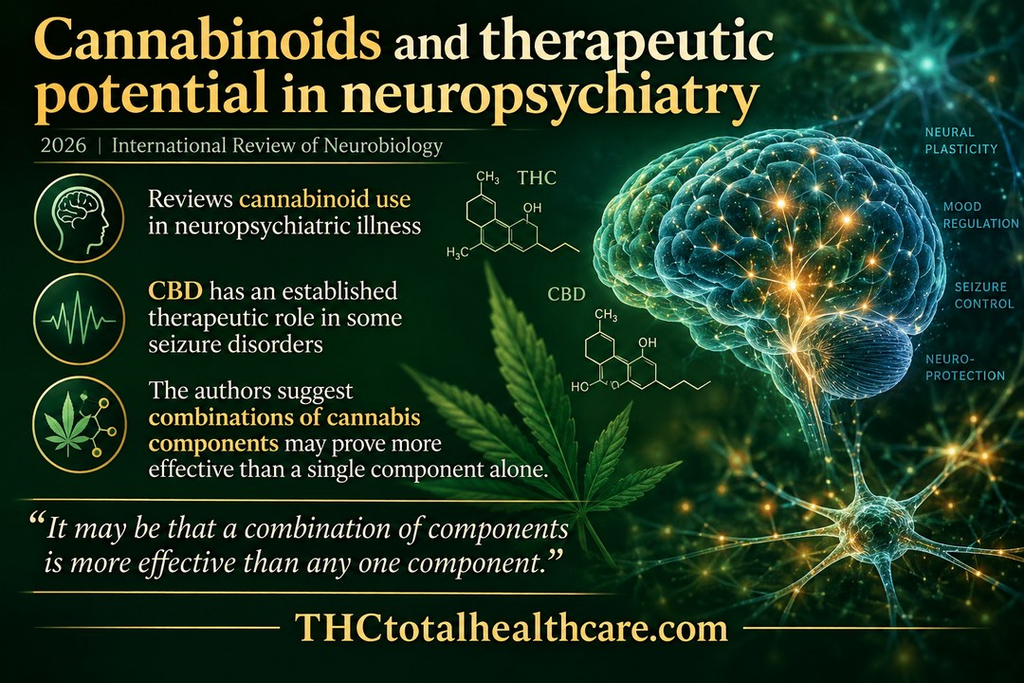
Cannabinoids are already used therapeutically in several areas of medicine, and a new review examines how that potential may extend into neuropsychiatry. The authors look beyond cannabis as a single drug, focusing instead on its individual cannabinoids and how different components may contribute to neurological and psychiatric effects.
The review highlights cannabidiol as the cannabinoid with the clearest established role in certain seizure disorders, while examining the broader literature on cannabinoids in neuropsychiatric illness. The authors argue that cannabis is more pharmacologically complicated than any one cannabinoid and that its therapeutic potential may depend on interactions among multiple plant components.
One of the review’s most important points is that combinations of cannabis components may ultimately prove more useful than isolated compounds alone. Rather than dismissing cannabis as having no medical utility in neuropsychiatry, the authors call for approaches that better investigate and use the therapeutic attributes of the plant.
“Cannabinoids have therapeutic utility in some specific areas of medicine, including as an anti-nausea adjunct for chemotherapy and as an anti-inflammatory agent, among others. However, as a therapeutic agent in neuropsychiatric conditions, the data is more limited. Cannabis itself is viewed as a recreational drug of abuse with no medical utility; however, the reality may be more complex when considering individual components of the plant.
Cannabinoid components may have some benefit as therapeutic agents in neuropsychiatry, with cannabidiol most often purported to be a therapeutic agent for some seizure disorders. However, recent studies suggest that the cannabis plant is proving to be broader and more complicated in how it delivers potential therapeutic effects. It may be that a combination of components is more effective than any one component.
This chapter reviews the medical usage of cannabinoids in neuropsychiatric illness, as reported in the literature, and proposes future approaches that may more effectively avail the attributes of this plant.”
https://pubmed.ncbi.nlm.nih.gov/42767714
“Cannabinoid treatments are carving a noteworthy niche in the pharmaceutical repertoire, offering new hope for conditions that have been historically difficult to manage, such as comorbid anxiety and epilepsy.”
https://www.sciencedirect.com/science/chapter/bookseries/abs/pii/S0074774226001303?via%3Dihub